Hodges' Model: Welcome to the QUAD: Search results for peace

Hodges' model is a conceptual framework to support reflection and critical thinking. Situated, the model can help integrate all disciplines (academic and professional). Amid news items, are posts that illustrate the scope and application of the model. A bibliography and A4 template are provided in the sidebar. Welcome to the QUAD ...

Showing posts sorted by date for query peace. Sort by relevance Show all posts

Friday, May 08, 2026

iv WCCS26: World Conference on Complex Systems 20-22nd April

Day 1: Panel 2 - Rethinking Knowledge in the Age of Complexity

  • Helena Knyazeva - Dancing with Complexity: How the World Thinks Through Us
  • Carlos Gershenson - The Implications of Complexity
  • Leonardo Rodríguez Zoya - Can Statistics Think? Complexity, Future, and Freedom in the Age of Large Language Models
    Panel Chair: Nigel Gilbert 

Courage is one of the 6Cs in nursing, and was on display at WCCS26.

Carlos Gershon began by offering two references, the first:

De Domenico, et al., (2019). Complexity explained: A grassroot collaborative initiative to create a set of essential concepts of complex systems. https://complexityexplained.github.io

This is a brief 20 pages, larger text, and provides a helpful primer to complexity and related concepts covering:

Interactions
Emergence 
Dynamics 
Self-organization
Adaptation
Interdisciplinarity
Methods

For each concept, the authors explain:

Definition/Description
Examples
Relevant Concepts
References

Plus, secondly:

Gershenson, C. The Implications of Interactions for Science and Philosophy. Found Sci 18, 781–790 (2013). https://doi.org/10.1007/s10699-012-9305-8

I liked the practical feel here, the encouragement to think anew, and perhaps taste the "flavors of emergence": synchronic - space; diachronic - time, weak and strong feedback, transversal of scale - upwards and downwards.

There is further conference on complexity later this year (and also online!):

CCS 2026:
The 2026 Conference on Complex Systems
OCTOBER 9 - 16, 2026 BINGHAMTON, NY, USA & ONLINE

In my search I also found:

Carlos Gershenson; Complexity, Artificial Life, and Artificial Intelligence. Artif Life 2025; 31 (3): 289–303. doi:https://doi.org/10.1162/artl_a_00462

Gershenson, C. Self-organizing systems: what, how, and why?. npj Complex 2, 10 (2025). https://doi.org/10.1038/s44260-025-00031-5

Leonardo Rodríguez Zoya's presentation helpfully connected social practice, interdisciplinary bridges, statistical rationality, complex (human) rationality and the future(s): desirable, possible, latent and probable.

individual
|
INTERPERSONAL : SCIENCES
humanistic ------------------------------- mechanistic
SOCIOLOGY : POLITICAL
|
group
COMPLEX (HUMAN) RATIONALITY
 
cognition

STATISTICAL RATIONALITY
Techopraxis
LLMs - technology

socio-
HUMAN PROBLEMS
SOCIAL PRACTICE
PRACTICE (one of the 4Ps)

ELECTION - CAMPAIGN SPENDING
PEACE NEGOTIATIONS
ISLAND ECONOMY
CRYPTOCURRENCY

To answer the prompt - 

"Give me a less likely but more fruitful interpretation of this [concept]*."

*Replace with a significant concept in your practice

Would it might help to have a simple, and yet complexity (and simplicity!) primed conceptual framework to assist reflection, argumentation, and progress?
 
I missed the poster at the afternoon break, and followed track 1. I greatly enjoyed Julian Arevalo's - Adaptive Readiness: an Agent-Based Model of Peace Negotiations. Perhaps this accounts for my having no notes or photos for this track except for one. I realise now we did speak, sitting together for the conference dinner. I'm sure I remember Negotiation Lab 1.0 - 

https://www.comses.net/codebases/1256dc74-9ae4-4f49-a235-1ec129be1930/releases/1.0.0/
 
This past week I heard discussion (BBC Radio 4) of the 'income' Norway obtains from its expertise and engagement in peace negotiations.
 
Nicholas Roxburgh, and colleagues Rachel Creaney, Mindi Premarathne and Ruth Wilson through 
Exploring Interdependencies in an Island Economy, reminded me of public engagement in research. Especially when it involves their community; and that community is somewhat rural, or remote.
 
Remah Dahdoul, with Jan Korbel and Stefan Thurner presented -
Campaign-Spending Driven Polarization Transition in a Double-Random Field Model of Elections. The following paper brings home the mathematics in complex systems. The reference is:
 
Jan Korbel and Remah Dahdoul and Stefan Thurner. (2026) Empirical validation of the polarization transition in a double-random field model of elections. arXiv. https://arxiv.org/abs/2510.00612.  doi.org/10.1103/9gjj-1df6.
 
The paper by Saida Hachimi El Idrissi and Mohamed Nemiche is not open access, but the abstract follows. 
 
S. H. El Idrissi and M. Nemiche, "Formation of Complex Societies: An Agent-Based Model Inspired by Freudian Theory," 2024 World Conference on Complex Systems (WCCS), Mohammedia, Morocco, 2024, pp.1-6, doi: 10.1109/WCCS62745.2024.10765573.
Abstract: The rise and emergence of complex societies in the Old World mark a pivotal chapter in human history, characterized by the transition from small, kin-based communities to large, hierarchical states. This transformation raises fundamental questions: How did human societies progress from small, cohesive groups characterized by face-to-face cooperation to the expansive, anonymous societies of today, often organized as states? What factors account for the significant variation in different human populations' capacity to construct stable and functional state structures? To address these questions, we developed an agent-based model grounded in Freud's hypothesis, which posits that civilization could neither emerge nor evolve without the repression of human desires. In the context of social evolution, this repression of desires can be interpreted as the repression of intra-societal competition, ultimately strengthening the society and facilitating the formation of complex social structures. We implemented this model within a realistic representation of the Afroeurasian landmass, incorporating various geographical factors. To validate our model, we compared our simulated results with historical data. The model-predicted pattern of expansion of complex societies demonstrated remarkable congruence with the observed historical patterns in the Old World. The emergence, growth, and distribution of large-scale societies predicted by our computational model showed remarkable consistency with the archaeological and historical record.

keywords: {Analytical models; Computational modeling; Predictive models; Data models; Agriculture; Rivers; History; Complex systems; component; Agent-based Modeling; Repression of satisfaction; cooperation; competition; Social Simulation},
URL: https://ieeexplore.ieee.org/stamp/stamp.jsp?tp=&arnumber=10765573&isnumber=10765499 
Unless you are a microsurgeon (increasingly with robotic co-workers), is the word practice, more likely to manifest what is larger, the big picture, a sense of space, even at a societal or continental scale? In reading, I came across four forms of attractors. For me, how they fit into the question of scale makes this paper worthy of seeking out. 

M. Nemiche was unable to attend the conference, and was greatly missed.
Saturday, March 07, 2026

A definition of the 'Psycho-Political'

Clearing books, magazines and journals (to make space for a few new acquisitions) on a trip to Hay-on-Wye, I bought a secondhand copy of:

Weizsacker, Carl Friedrich von. (1980). The Unity of Nature.

I noticed chapters on the definition of health and illness, and information.

Models of Health and Illness, Good and Evil, Truth and Falseness

Chapter  Jun 2014 
https://doi.org/10.1007/978-3-319-03671-7
In book: Carl Friedrich von Weizsäcker: Major Texts in Philosophy (pp.74-89)

Abstract

This essay is the core of our reflections on cybernetics. It is the only essay in this Part that tries to describe concretely what cybernetics can achieve. Written in the fall of 1967 but unpublished until now, it was inspired by a lecture on “Peacelessness as Mental Illness” delivered in Bethel in 1967 (published in Der ungesicherte Friede; Göttingen: Vandenhoeck & Ruprecht, 1969). On that occasion the question arose whether it is medically justifiable, or merely metaphoric, to call the inability to maintain peace an illness. As far as I can see, contemporary medicine lacks a sufficiently clear concept of illness to decide this question. Since I had no desire to merely skirt the issue, I was faced with the task of outlining a scientifically justifiable definition of illness. The result is presented in Sect. 6.2 of this essay; its social application is very briefly sketched in Sect. 6.4.

(My emphasis)
Unfortunately, I cannot find a copy of the lecture. In my softback copy the title is "Lack of Peace as Psychic Illness".

We don't tend to think of mental illness in the collective, but history provides many examples within and extended across communities - 'mass psychogenic illness'. More recently there is a literature on the mental health, competency of global leaders, also known as 'hubris syndrome' previously. Even the history of Carl Friedrich von Weizsäcker is controversial, his World War II record and knowledge of nuclear physics.

We have a veritable storm across all the domains of Hodges' model (including the spiritual) that point to the model's ongoing  relevance, consider:

  • climate crisis;
  • pollution (air, water ...)
  • geopolitics;
  • disruption of the international rules-based order;
  • the status and reputation of global organisations (were they ever 'international'?);
  • the record of current global political leadership;
  • the need to protect Political titles (not just Professional titles, Dr, Nurse, ...)?;
  • the rise of artificial intelligence.


Link: 
https://www.researchgate.net/publication/300477492_Models_of_Health_and_Illness_Good_and_Evil_Truth_and_Falseness?

Tuesday, February 24, 2026

c/o RollingStone UK - "U2 surprise-drop politically charged ‘Days of Ash’ EP with six new songs"

The collection delves into ICE, Israel, the West Bank, Ukraine, Iran — and features a guest vocal by Ed Sheeran

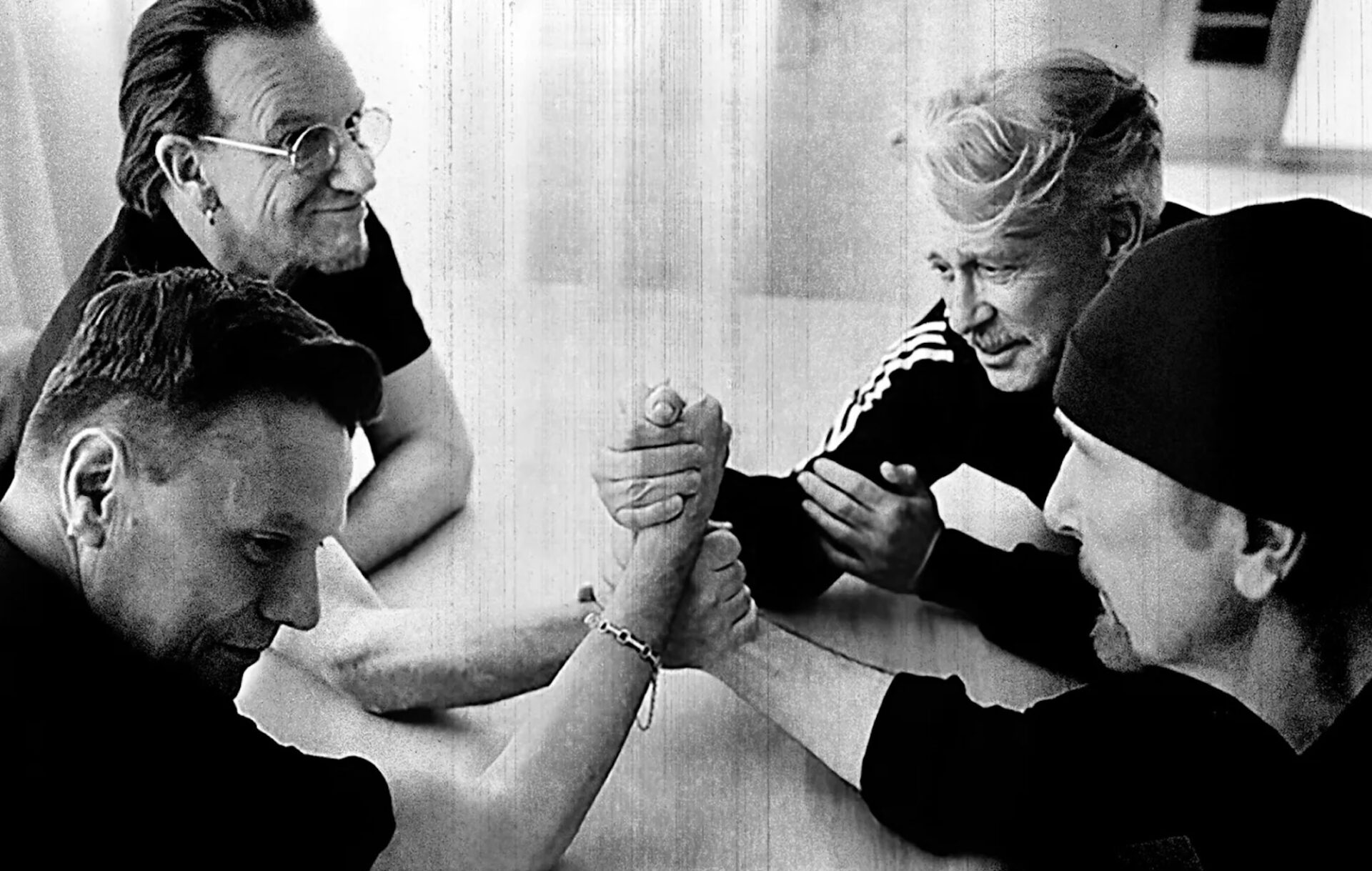
U2 (RollingStone UK - Picture: Anton Corbijn) 

By Andy Greene

'U2 have emerged from a long hiatus with a surprise six-song EP, Days of Ash, available now, in which they address political flashpoints around the world, including ICE raids in the US, the Iranian uprisings, the war in Ukraine, and Israeli settlements in the West Bank.

The six songs — ‘American Obituary’, ‘The Tears of Things’, ‘Song of the Future’, ‘Wildpeace’, ‘One Life at a Time’ and ‘Yours Eternally’ (featuring Ed Sheeran and Taras Topolia) — are all on streaming platforms. They’ve also created lyric videos for each one.' 

Continued ...


Previously: conflict : war : hope : peace

Thursday, January 01, 2026

NEW YEAR: Ongoing support for the 17 SDGs UN

Individual
|
     INTERPERSONAL    :     SCIENCES               
HUMANISTIC  --------------------------------------  MECHANISTIC      
 SOCIOLOGY  :    POLITICAL 
|
Group

security & peace

security & peace
security & peace


See also:
Jones P, Wirnitzer K. Hodges’ model: the Sustainable Development Goals and public health – universal health coverage demands a universal framework. BMJ Nutrition, Prevention & Health 2022;5: doi:10.1136/bmjnph-2021-000254 
https://nutrition.bmj.com/content/5/2/358
 

Source: https://x.com/UNDP/status/2006591346522599746?s=20

See also: 'SDGs' : 'security' : 'poverty' : 'nutrition' : 'water'

Friday, October 10, 2025

The 2025 peace laureate

The 2025 peace laureate

'The Norwegian Nobel Committee has decided to award the Nobel Peace Prize for 2025 to Maria Corina Machado “for her tireless work promoting democratic rights for the people of Venezuela and for her struggle to achieve a just and peaceful transition from dictatorship to democracy.”

In the past year, Ms Machado has been forced to live in hiding. Despite serious threats against her life she has remained in the country, a choice that has inspired millions of people. She has brought her country’s opposition together. She has never wavered in resisting the militarisation of Venezuelan society. She has been steadfast in her support for a peaceful transition to democracy.'
Individual
|
      INTERPERSONAL    :     SCIENCES               
HUMANISTIC =========================  MECHANISTIC      
 SOCIOLOGY  :    POLITICAL 
|

Wednesday, August 06, 2025

'The Bells of Nagasaki' by Takashi Nagai

Individual
|
      INTERPERSONAL    :     SCIENCES               
HUMANISTIC  --------------------------------------  MECHANISTIC      
 SOCIOLOGY  :    POLITICAL 
|


Takashi Nagai, William Johnston (Translator), Richard Lloyd Parry (Introducer). The Bells of Nagasaki. London: Penguin.
https://www.penguin.co.uk/books/469083/the-bells-of-nagasaki-by-nagai-takashi/9781529952605

My source:
Olivia Ward-Jackson. What one man saw in the ruins of Nagasaki, Review, The Daily Telegraph. 26 July 2025. pp.6-7.

See also:


Jones, P. (1994) An Enthusiast's View of CAL. (Problems in production of CAL - Simulation effects of Nuclear Weapons - conversion of GWBASIC to BBC BASIC from BYTE - with original author's permission - J Fanchi). IT in Nursing. 6,2.

Saturday, May 10, 2025

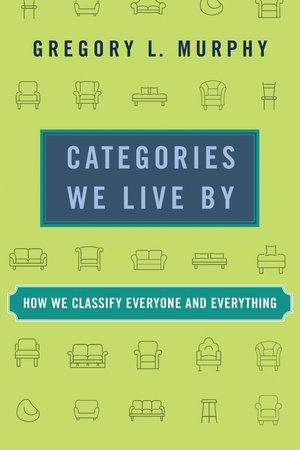
v Book review: 'Categories we live by'

Our lives and careers (hopefully) are full of bridges, some recognised, but not taken, others passed-by on our way (and unseen). Before I completed my training as a student mental health nurse beginning in 1977, I saw a critical bridge between the knowledge and skills on mental health nursing and general nursing. Crossing this bridge was essential (for me) to being a registered 'nurse'.

Chapter 6 on Psychodiagnostic Categories is a gift therefore. It's a gift because another bridge emerged in 1980-1981 with the Sinclair microcomputers and advent of 'home computing'. With a ZX81 there was going to be a need to navigate this space between the what is human and what is machine. Two categories that remain key concerns today.

The DSM (Diagnostic and Statistical Manual of Mental Disorders - published by the American Psychiatric Association [APA] ) is on the chapter's first page, plus the patient, researchers, psychiatrists and the conditions learned during their medical education, contrasted with individual psychiatrist's clinical encounters with patients. 

Very quickly (the next page p.86) Murphy identifies the 'circumstantial factors' that cause mental illness. This is very positive as acknowledging the determinants across health is key, however framed, e.g. social determinants, economic, educational we must take into account all of them. Otherwise our assessment must be considered as incomplete, or at least lacking?

The utility of Prof. Murphy's short book is in how prior to the case studies we see the problem of definitions. And how what is determined is often a matter of convenience. This is a non-trivial matter - especially in health, economics, sciences, politics, future and peace studies: you get the idea...

Of immediate relevance in the USA is the need for categories for insurance purposes. It is an industry. Yes, indeed: 'The truth is that psychiatric patients vary in every possible way', p.86. Computers of course are well-equipped to help us in the creation, revision and publication - access to categories; with classification, taxonomy, nomenclature ... also in the mix. I was reminded of WHO's history of classification (see below) which I point students and colleagues to.

The way DSM is applied is explained and the politics duly noted (especially in Chap. 7). Resort to 'miscellaneous' is described as a sign that 'the categories are not necessarily picking out 'natural kinds'. I remember in the 90s, our PICK database on a community mental health project had Murphy's 'X' not otherwise specified. I don't think I read the word 'caseness', but there is a lot 'inside'!? References are ongoing. I wondered if there could be more recent examples, but perhaps this is in turn symptomatic of categorisation tending to be the rear car? Fuzziness is discussed. Plus, the observation that 'a few psychiatric categories may be true natural kinds, like gold or rainbow trout.' p.89. 

'Change' is a mantra for all disciplines in the NHS and global healthcare. So pragmatic to see how revision and change in the DSM can be used by - dare I mention - anti-psychiatry advocates and clinicians as to what change represents to these respective interest groups? At a time when research is experiencing funding changes, Murphy contrasts how DSM was developed for the use of clinicians to identify people with similar profiles, but they were not developed to identify (research - Nat. Inst. for Mental Health) underlying causes. Raising the determinants once again, p.91.

It is obvious but as personnel and Brits may look at private medicine with coding purposed for insurance purposes; there is within the NHS (public-funded healthcare) and psychiatry (a single domain too) within and the need by patients for diagnosis, and the welfare system. Here in the UK the rise of mental health in young adults, autism and waiting lists for assessment for ADHD are a moot point.  

Through Hodges' model we some possibly fascinating bridges, that are much less-travelled these days? In many cultures, even if we do not need permission to be sick, it needs to be recognised socially - and so politically. Society needs to deal with individuals who are ill, infirm, disabled. It's interesting then to reflect on this issue and phenomena through the lens of anthropology and medical sociology. Murphy warns to of the dangers 'of thinking of something as being the category'. In medicine a new approach is needed, as Murphy also notes. A nice bridge to chapter 7 Categories and Power.
'The case studies discussed in the previous chapters remind us that categories can be political and social tools. An old department chair of mine had the saying, "She who sets the agenda controls the meeting." We might coin a new one, "Those who make the categories control the outcomes." If your psychodiagnostic categories are made by working therapists and physicians, they might facilitate treatment- -and also benefit those practitioners. If they are made by researchers, they might not be very useful for treatment at all. And if they are made by insurance companies, all bets are off.' p.95.
Trying to take my attempts to find theoretical underpinning (category 'trying to clever') I've a diagram scribbled here. Nearby, p.100, I picked up on 'the cost of losing information or distorting reality to some degree.' Murphy picks up on the ICD Int. Classification of Diseases here. Twitter is still twitter here - thumbs up for that! There is a useful example of the impact of categories in age, pregnancy and medical attention provided.

From Chapter 8, I picked out: Naming Nature: The Clash Between Instinct and Science, by Carol Kaesuk Yoon. W. W. Norton: 2009. 352 pp. £19.99/$27.95 9780393061970 | ISBN: 978-0-3930-6197-0; and checking, I remember the book's cover. Murphy's book overall highlights the convenience of our categories, the ongoing challenges and everyday conundrums they present though the remaining chapters on Species (8); Peanut Butter, Potato Chips, Almond Milk... (9); Racial Categories (10). These all contribute, still building a coherent picture, chapter 10 vital among them with a url provided (which may have changed):

https://anthropology-tutorials-nggs7.kinsta.page/adapt/adapt_4.htm


The one-drop rule (David, 1991) on p.126, is deeply troubling. Especially so given some examples of human reasoning even today. Medicine, by way of blood tests, features again. I smiled wryly reading how people from different countries have different rates of disease, e.g. 'heart disease in Scotland'. Instantly, and crackling - a deep-fried Mars bar popped into my mind. 

The things people do. You - really could read this book! 

Murphy, Gregory L. Categories we live by: how we classify everyone and everything. Cambridge, MA: The MIT Press, 2024.

Many thanks again to MIT Press for the review copy and Prof Murphy for a great read.

Previously: DSM : fuzzy : categories

Monday, January 13, 2025

NPR: What is your wish to improve life on earth in 2025?

Dola Sun for NPR


With thanks to NPR, 'an independent, nonprofit media organization that was founded on a mission to create a more informed public'. NPR asked 11 global health professionals to share their wishes for 2025.

Read in full here:
https://www.npr.org/sections/goats-and-soda/2025/01/06/g-s1-40820/2025-world-wishes-haiti-bird-flu

We asked global thinkers how to improve life on earth in 2025. Here are their wishes

My wish: Honor the legacy of Jimmy Carter Dr. Ifeanyi M. Nsofor, project director, VaxSocial HPV Vaccination Initiative, Nigeria

My wish: World, awaken to the medical emergency in Haiti Dr. Ousmane Abdoulaye, Port-au-Prince in Haiti, medical coordinator, Haiti Mission, ALIMA — The Alliance for International Medical Action

My wish: Nothing too grand. Just a small wish that things for us go back as they were three years ago — when women could go to parks or markets but most of all go to school. Maryam S., Afghanistan, former Master's student of Pashto literature. She asked to be identified by her first name only out of fear that her criticism of Taliban policies would put her and her family in danger.

My wish: Make monumental strides in using advanced technology to detect emerging pathogens Dr. Abraar Karan, physician and researcher, Division of Infectious Diseases & Geographic Medicine, Stanford University

My wish: Let us recognize that violence has never been the true solution to conflict KR Raja, Madurai, India, lawyer advocating for criminal justice reform and the founder of the Indian charity Global Network for Equality, which supports children orphaned by crime

My wish: I dream of a future where there are safe and healthy conditions for workers, where they are free of discrimination and can earn a fair wage. Ashila Dandeniya, Colombo, Sri Lanka, founder and director of the Stand Up Movement, a women-led organization that advocates for workers' rights.

My wish: Make progress in developing treatments to reduce deaths and complications from dengue André Siqueira, head of the Dengue Global Programme at Drugs for Neglected Diseases Initiative and public health researcher at the Oswaldo Cruz Foundation's National Infectious Diseases Institute in Brazil

My wish: For trekkers and travelers to help clean up the waste they leave behind — and to help protect our natural treasures Raj Kumar Shrestha, trekking guide, Kathmandu, Nepal, and founder of Let's Clean Up Nepal, an environmental conservation organization

My wish: Use digital innovation to enable health workers to deliver their care, especially in places where resources are constrained Dr. Junaid Nabi, public health researcher specializing in health-care reform and innovation, and a senior fellow at the Aspen Institute and a Millennium Fellow at the Atlantic Council

My wish: May the year bring peace to the world Dr. Atsbha Merhawit, Ayder Hospital, specialty in endocrinology and diabetes, Mekelle, Ethiopia

My wish: Follow the rules of war regarding the welfare of children Joe English, New York, N.Y., emergency communication specialist for UNICEF ==

What is your wish for 2025?

Best wishes, Neil

HIFA profile: Neil Pakenham-Walsh is coordinator of HIFA (Healthcare Information For All), a global health community that brings all stakeholders together around the shared goal of universal access to reliable healthcare information. HIFA has 20,000 members in 180 countries, interacting in four languages and representing all parts of the global evidence ecosystem. HIFA is administered by Global Healthcare Information Network, a UK-based nonprofit in official relations with the World Health Organization. Email: neil AT hifa.org

n.b. My wish: That "Hodges' Health Career - Care Domains - Model" continues to emerge as a generic conceptual framework shared and understood by all learners for lifelong learning.

Thanks Neil. I will post this with HIFA link.

Wednesday, December 25, 2024

Praying ... for PEACE

INDIVIDUAL
|
INTERPERSONAL : SCIENCES              
humanistic ------------------------------- mechanistic
SOCIOLOGY : POLITICAL   
|
GROUP

PRAY


PREY

PRAY

PREY


Thursday, December 05, 2024

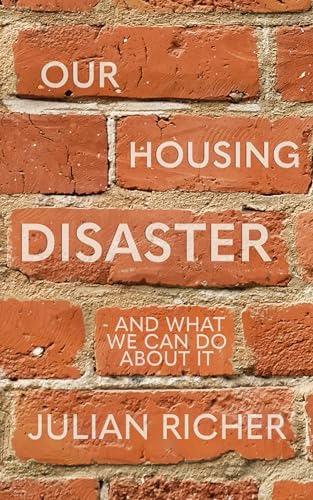
iii 'Our Housing Disaster'

'Our Housing Disaster'
Image: Goodreads

Here on W2tQ many posts have referred to 'common sense' over the years. Apparently, there is no such thing - which may be another blog post).

https://www.psychologytoday.com/gb/blog/too-many-goals/202005/theres-no-such-thing-common-sense

In 'Our Housing Disaster' Julian Richer is simultaneously analytic in identifying problems and potential solutions, logical and to me commonsensical. There is a need for debate and decisions at a political level. Residents, must also be involved, have a say. Chapter 10 lists shorter-term actions and longer-term. 

The history of this disaster is tackled in chapter 3. Chapter 4 links very well explaining the rise of renting. If there was ever to be another edition - which the book and issue well-deserve; it would be good to a nod to evidence-based housing policy? This is suggested, as is integrating the many threads of housing; work, transport, infrastructure, shops, water and services. I've posted here about the number of All-Party Parliamentary Groups and talk of joined-up government. Housing is anything but joined-up. You could argue all MPs and Lords should read this book. 

Overall, the book is well produced, the text very readable, large size and well laid out. The 'references' for each chapter are in the form of links. Needless to say, I have only tried a few. The book seems smaller - narrower than a standard paperback, so may have fewer words / line. For posts i & ii, I extracted text from photos, which is a challenge without stressing the book's spine (as I've written before no doubt, I'm squeamish when it comes to books).

In the UK, the Right to Buy and Help to Buy, have long been a feature of housing policy. Of Help To Buy, it has 'cost taxpayers £29 billion in cash terms by 2023' (p.45) and has additional consequences. Milton Keynes is the 'right-to-buy-to-let' capital of England (2017, p.48). Surely, it is time to move on -  and quickly. The history of how we got here is fascinating, like a slow car-crash with critical events that accelerated the inevitable. Taxpayers and citizens all: we have missed out. There is mention of preventing corruption (but yes, more effort on money-laundering and tax evasion please!). The need for buildings inspection, standards of construction and materials and responding to the climate crisis and high energy costs are also stressed.

Richer's stance is tempered, and sets an effective tone. He is not preaching, even as he points to land owned by the Church of England. I remember the NHS selling estate, and yet there is more. While the book is not long, an index would help. I like the final summarising and concluding sentences for each chapter. Physically, they are bound to be there obviously, but there's a welcome sensible thread to these imho. With an index, perhaps I could check back to look up 'productivity, reduced', a problem that has plagued the UK economy. To what extent does housing contribute to this now; since the 1960s? The King's Fund and many other organisations and commentators advocate daily for social care. While it is acknowledged, social care is not one of the government's 5 key 'missions', and now (5th Dec.) there are milestones. Richer refers to the problem of bed-blocking in the NHS, and the need for suitable future housing so older adults can continue to 'live' in their homes.

So often in health we are taught, and learn to assess, plan, intervene, and evaluate a person-centred set of needs, a patient's needs, and a carer's needs. It is welcome to see a collective - population-based focus on needs. The book delivers on the title. So there are no details of nations (or cities) that have a  much better housing system and controls. Over the years it's been interesting and encouraging to read about Vienna in the FT. Below I have mapped/associated selected concepts to the care / knowledge domains of Hodges' model:

INDIVIDUAL
|
INTERPERSONAL : SCIENCES              
humanistic ------------------------------- mechanistic
SOCIOLOGY : POLITICAL   
|
GROUP
psychological security
mental health
'my' home, my space
identity
peace of mind when costs met
facilitate well-being
memories
LAND - the 'hope' value
sense of continuity / permanence
children being safe making friends
access to 'GREEN' spaces
my life course - personal history
Cognitive assurance: my area -
family & friends / pets /school / work -
attachment

LAND - UK geography
physical shelter
physical health (NO damp, mould, noise...)
House building targets/programmes
my space/room
having an address - identity
displacement
public/environment health
eviction
house building - infrastructure
land - costs
transport links
bed-blocking in hospitals
Climate Change

place to make a home
raise a family
belonging
sense of community
friends & neighbours
 anti-social behaviour by tenants
social care - older adults
social care disabled
access to work, schools
resources to service a community
lack of spare capacity to support people & families in need/crisis

the economy: interest/mortgage rates
indebtedness - poverty
housing POLICY :: COSTS
national housing & land assets
inspection and building standards
forms of tenure: private, rented, housing assoc.
LAW - housing & land legislation
housing rights
migration, refugees
independent advocacy / NGOs
compulsory purchase


Thank you Mr Richer for an excellent read and synopsis. I do hope the government listens! My daughter's partner works in estate agency, so I know where my copy is heading: a new home!


Saturday, October 19, 2024

Nobel Peace Prize 2024


'The Norwegian Nobel Committee has decided to award the Nobel Peace Prize for 2024 to the Japanese organisation Nihon Hidankyo. This grassroots movement of atomic bomb survivors from Hiroshima and Nagasaki, also known as Hibakusha, is receiving the Peace Prize for its efforts to achieve a world free of nuclear weapons and for demonstrating through witness testimony that nuclear weapons must never be used again.

In response to the atomic bomb attacks of August 1945, a global movement arose whose members have worked tirelessly to raise awareness about the catastrophic humanitarian consequences of using nuclear weapons. Gradually, a powerful international norm developed, stigmatising the use of nuclear weapons as morally unacceptable. This norm has become known as “the nuclear taboo”.

The testimony of the Hibakusha – the survivors of Hiroshima and Nagasaki – is unique in this larger context. ...'


Press release. NobelPrize.org. Nobel Prize Outreach AB 2024. Sat. 19 Oct 2024. <https://www.nobelprize.org/prizes/peace/2024/press-release/>


Previously: Nobel Prize :: peace

1989 SHADES OF GREY, Computer Aided Learning program, BBC Micro. Simulation of nuclear weapons, Based on Fanchi, J. Local effects of nuclear weapons, BYTE, Volume 11. Issue 13. Dec., pp. 143–155. Computer Aided Learning program, BBC Micro, published by Open Software Limited.
https://hodges-model.blogspot.com/2024/03/jones-publications-list.html

Tuesday, October 15, 2024

Bridging more than theory |-----| practice

individual
|
INTERPERSONAL : SCIENCES
humanistic ------------------------------- mechanistic
SOCIOLOGY : POLITICAL
|
group


A purpose of Hodges' model 
is to help bridge
the theory-practice gap.


Theory-

'

BRIDGES TO PROSPERITY

'We've built more than 500 trail bridges, serving over 1.8 million community members throughout the world. At Bridges to Prosperity, we envision a world where poverty caused by rural isolation no longer exists.'


Practice

Communities
Histories

BRIDGES
to PEACE


https://bridgestoprosperity.org/

Suqi, R. Bridge the GAP, HTSI. Autumn Design Special. FTWeekend, 14 October 2023, p.67.

Wednesday, April 17, 2024

Policy Dialogue - Water, Conflict and Peace in the Middle East: online

Dear colleagues,

I am delighted to invite you to the next Policy Dialogues from the JHU-UPF Public Policy Center:

Water, Conflict and Peace in the Middle East
Thursday 25th April, 6pm CEST
Online via Zoom (registration required)
Language: English

The Middle East is a region of both severe water problems, and acute political instability. But what is the relationship between these two things? This Policy Dialogue will provide an opportunity to reflect on this question and its implications. It will overview the region’s water problems, and consider how these problems are – or are not – contributing to conflict. It will also examine, conversely, how war and violence are affecting patterns of water resource degradation and water insecurities, and will reflect on opportunities for water-related peace-building, including on how water for peace initiatives might best be pursued.

We are delighted to invite Natasha Carmi (Water Peace Programme Manager at the Geneva Water Hub) and Jan Selby (Professor of International Politics and Climate Change at the University of Leeds, UK) to share their expertise during this session.

We invite you to join us and explore the complexities of this extremely important issue. You can register here. Please also share this invitation within your networks.

Best regards,
Aeve

Aeve Ribbons
she/her

Educational Projects Manager of JHU-UPF Public Policy Center (UPF-BSM)
Managing Editor of the International Journal of Social Determinants of Health and Health Services (IJSDOHS)

My working days are Monday-Thursday / Mis días laborables son de lunes a jueves.

Website: http://www.upf.edu/jhu-ppc/

Twitter: https://twitter.com/pubpolcenter


My source:

Politics of Health Group Mail List Messages

Visit the PoHG website for lots of interesting links and publications: http://www.pohg.org.uk/

Visit PoHG on Facebook: https://www.facebook.com/282761111845400

Follow us on Twitter: @pohguk

Thursday, March 28, 2024

European Public Health Week - Health is a political choice!


European Public Health Week

13-17 May 2024

Health is a political choice! 


"The European Public Health Week (EUPHW) 2024 will focus on the overarching topic - Health is a political choice! - highlighting the interplay between politics and health to create sustainable change for better health in the future. 
We will open the dialogue online and in person in Brussels on Monday, May 13, at the European Observatory on Health Systems and Policies, discussing how to integrate health into the political agenda effectively. We will address health within the context of crises and explore the concepts of a well-being economy and politics. Additionally, we'll delve into the importance of community participation in health politics, implementing Health-in-All-Policies, and the broader application of health considerations across all policy areas. This day aims to set the stage for a week of fruitful discussions, laying the groundwork for actionable insights and strategies to ensure health is prioritised across all levels of political decision-making. Stay tuned for more information on this event!. ..."
INDIVIDUAL
|
      INTERPERSONAL    :     SCIENCES               
HUMANISTIC  --------------------------------------  MECHANISTIC      
 SOCIOLOGY  :    POLITICAL 
|
GROUP

Mental health
Self-esteem
Personal and Cultural Identity
Sense of security: Crisis <> Peace
Public mental health & well-being
Individual health literacy

Planetary health
Global pandemics - Local inequities
Environment - Cities, Rural, Remote
Pollution control
Evidence (across policy contexts)
Nutrition
local, glocal, global [Geo*]
Social policy
Housing: Climate/Demographic mitigation
Healthy societies, Living alone, Families
Inclusive communities
Social media - Information provenance

Elections - National/International *Politics
Economics
Policy, Regulation
Health systems
Yes, health is a political choice!


Monday, January 22, 2024

When you 'give no quarter'^


When the only thing
on the table is your history,
there is no space, even as corners multiply.
No longer is there space for a future,
no longer space for hope,
no space for a peace to be thought of -
let-alone shared.


When you give - absolutely! - no quarter
and act to prove the same,
Yes, you stand.
But how do you stand?
You stand to lose insight,
and so much more - 
you stand to lose
humanity


 Individual
   |
      INTERPERSONAL    :     SCIENCES               
 HUMANISTIC  --------------------------------------  MECHANISTIC      
 SOCIOLOGY  :   POLITICAL 
|
Group
CON-SCIENCE

SCIENCE

geo-

Time & Land

politics

PEACE?


^Easy for me - many of us - to say?

Listen also:

BBC Radio 4 Start the Week War crimes justice
https://www.bbc.co.uk/sounds/play/m001vktw

Where do you/we find peace? Discuss.

Saturday, October 14, 2023

"I'd like to Teach the World to Sing ..."


INDIVIDUAL
|
     INTERPERSONAL    :     SCIENCES               
HUMANISTIC --------------------------------------  MECHANISTIC      
SOCIOLOGY  :   POLITICAL 
|
GROUP

intelligence


ARTIFICIAL

Peoples

Communities

Societies

Peace

 "Joseph Votel, a recently retired head of the Pentagon's Central Command, said last year he was struck by how Israeli forces mounting strikes in Gaza in May had been integrating AI into their operations and by "the impact that is having on their targeting cycles". He says Israel is using AI to generate a large range of potential targets for surveillance to whittle down. This lets its forces "disrupt enemy attacks without the need for a lengthy development period or a longer campaign."

 America's armed forces, helped by Palantir (an AI company which, like Anduril, takes its name from "The Lord of the Rings") and other contractors, is trying to build such technology into a system which can narrow down a huge range of potential targets and pass information about them freely to where it is most needed. Given the finite capacity of communication systems, not to mention the vulnerability, this requires that an increasing amount of processing be done "on the edge" - that is, on the platform carrying the sensor.

 In 2016 a Pentagon project called Maven started trying to address the "lots of surveillance but not much to show for it" problem identified by General Ryan. The idea was to automate the identification of people and objects in the petabytes of video footage sent back by surveillance drones. It ended up producing software efficient enough to run on the drones themselves. In Scarlet Dragon, a recent-AI focused American exercise in which a wide range of systems were used to comb a large area for a small target, things were greatly speeded up by allowing satellites to provide estimates of where a target might be in a compact format readable by another sensor or a targeting system, rather than transmitting high-definition pictures of the sort humans look at.

 In a world where bandwidth is often the biggest constraint such parsimony is a boon. It speeds up kill chains while reducing vulnerability to jamming. At the same time, it puts a greater burden on the automated parts of the system to provide reliable synopses of what they see, which is a worry for people keen to ensure that fully informed and responsible human beings stay on top of all decisions about where and when to blow things up." p.9. 


 Signals from Noise. Heads in the clouds. The Economist Technology Quarterly, Defence technology, Hide and seek. January 29th 2022. 442: 9281. pp. 9-10.

https://www.youtube.com/watch?v=mR_7Swtv0XM

Friday, October 06, 2023

Committing Ecocide to Hodges' model ...

INDIVIDUAL
|
     INTERPERSONAL    :     SCIENCES               
HUMANISTIC --------------------------------------  MECHANISTIC      
SOCIOLOGY  :   POLITICAL 
|
GROUP


Psychological -

 "Shock of the NewS"

Anxiety

Eco-anxiety - Climate anxiety

Anti-natalism


Polly

No planet B


Where Might We Find Ecologically Intact Communities?

How much of Earth's land is ecologically intact, in a pre-industrial and pristine state?

The answer: 3% [Plumptre, et al.].


ECOCIDE

NATURE ...
Higgins


'conscientious protector'
civil disobience


"Such a law would not only seek retribution and deterrence but also draw moral red lines."


civil society


... CRIMES AGAINST


Environmental activism

GENOCIDE

ECOCIDE - as law?

"I will leave the last word to Polly Higgins, a barrister who gave up a career in corporate law to become one of the most effective backers for criminalising ecocide. As she wrote in 2013, 'For now, in law outside of wartime, it is not a crime to cause mass destruction or loss of ecosystems. Our world has normalised... ecocide'." p.24.

"Like laws for crimes against peace, an ecocide law would trace its roots to wartime atrocities, in this case the annihilation of forests in South-East Asia, first by the UK's Royal Air Force during the guerrilla war known as the Malayan Emergency and later by the US Air Force in the Vietnam war. In 1970, the destruction inspired Arthur Galston, a plant biologist at Yale University whose PhD had led to development of agent orange, to coin the word 'ecocide'." p.24.

Plumptre AJ, Baisero D, Belote RT, Vázquez-Domínguez E, Faurby S, Jȩdrzejewski W, Kiara H, Kühl H, Benítez-López A, Luna-Aranguré C, Voigt M, Wich S, Wint W, Gallego-Zamorano J and Boyd C (2021) Where Might We Find Ecologically Intact Communities? Front. For. Glob. Change 4:626635. doi: 10.3389/ffgc.2021.626635

My sources:

Lawton, G. (2021) Crimes Against Nature, New Scientist, 250: 3333. p.24.

Obituaries. Polly Higgins. Register, The Times. May 2, 2019. p.53.
https://www.thetimes.co.uk/article/polly-higgins-obituary-92z6zd3ps

See also:

Eradicating Ecocide (2010).

Earth is Our Business (2012).

Sunday, August 13, 2023

History: Hepatoscopy and the Census


INDIVIDUAL
|
     INTERPERSONAL    :     SCIENCES               
HUMANISTIC --------------------------------------  MECHANISTIC      
SOCIOLOGY  :   POLITICAL 
|
GROUP

"Perhaps it was merely an oversight of this historian that he failed to mention another religious practice, hepatoscopy. For this, the Romans down to imperial times relied on Etruscans. Divination from the liver of sacrificed animals was a most complicated business. 


To get the interpretation right required a sound knowledge not only of astronomy but also of anatomy and pathology.

In 1877 at Piacenza a bronze model of a liver was found. It was evidently a model used in a priests' school for teaching the art of haruspicy, and of a fairly late period. On the upper surface are marked sixteen divisions in which are inscribed the names of some thirty gods, some more than once. Each of the sixteen divisions corresponded to a section of the heavens, for the Etruscans regarded the liver as an image of the cosmos, as a microcosm of the universe. The liver, it was believed, exactly reproduced the heavenly firmament with its sacred laws and controlling divinities and its division, first into four, by the intersecting axes and then into sixteen subdivisions." p.87.

 
The Etruscans

"Censuses for purposes of taxation and military service still exist. But not many know that it was an Etruscan king who first legally established such a registration in Rome, from whence, with the rise of the Roman empire, it spread throughout Europe." 

"What this measure was is stated by Livy thus: 'The population was divided into classes and 'centuries' according to a scale based on the census, and suitable for both peace and war." p.146.


Keller, W. (1975) The Etruscans. Norfolk: Book Club Associates. [Cover image: AbeBooks]

Sunday, April 03, 2022

MEMO TO: New College of Humanities and London Interdisciplinary School

Re. "Introduction to Lifelong Learning 101"

Since 1998, when I first went 'online' I've always been conscious of etiquette and note how this has changed - developed - over the years. The email associated with the former website domain p-jones.demon.co.uk saw a lot of emails to quite a diverse range of mail lists. Should I? Should I not? These questions remain a key consideration in trying to spread the thought and word on Hodges' model.

Stepping on toes a couple of times, someone also asked about links to blog posts on LinkedIn. Not had those queries recently so I think readers understand the 2x2 table is critical to the post in representing the model. Twitter presents its own challenges [ #WasteOfTime ]. So please pardon my shouting, but there's an important message here about an important resource.

I've lapsed again with no progress on the new site - maybe it is not just vapourware but a dream.

The creation of new education institutions: 

the New College of Humanities and London Interdisciplinary School

- is encouraging for the work here:

"The London Interdisciplinary School wants its students to be problem solvers with a wide range of academic interests."
(Nicola Woolcock, Polymaths plan to teach universities a thing or two. The Times, October 2, 2021. p.17.)

Does it, really - and by implication the NCH, plus New Model Institute for Technology and Engineering (NMITE) and others?

The Times Education Commission with proposals for reform due in June, adds further impetus and evidence ...

I read this evidence as supporting the argument that education and health are and always will be 'legacy issues', that is in need of change, investment, policy. All disciplines of study and knowledge are always dynamic and should be challenging, personally and collectively.

If institutions can distract themselves from fiscal incentive of the bums on seats for a few moments and policy makers look up from the dotting of  I's and crossing of T's then student's learning can be energised by Hodges' model: a generic bootstrap for lifelong learning.

Just to be clear. This model is NOT about boxes, it is about being aware of boundaries and being prepared to cross and use these journeys.

In the 21st century we are humbled by what now constitutes the pantology - the system of all knowledge. No individual can take in - apprehend and master it all, but we should have a means to at least conceptually touch this incredible gift.

INDIVIDUAL
|
 INTERPERSONAL    :     SCIENCES               
HUMANISTIC --------------------------------------  MECHANISTIC      
SOCIOLOGY  :   POLITICAL 
|
GROUP
Education
Philosophy (Ethics, Logic)
Psychology: (Applied, Child, Clinical,
Criminal - Forensic,
Occupational,
Artificial Intelligence ...
Cognitive Sciences
Theology
Arts
Creativity and Design
Eco-Anxiety
Happiness - Metrics
...

Sciences: Biology, Physics, Chemistry*
Health: (Medicine, Nursing ...)
Occupational Professions
Computer Science, Information
Mathematics
[macro - nano] Engineering
Architecture
Design and Creativity
Environmental Studies
Hydrology
Land use: Forestry ...

Arts (Music, Dance, Drama ...)
Literature
Anthropology, Archaelogy
Languages
Ancient-History, History
Future Studies
Social Work
Sociology (Culture, Ethnography ...)
Anthropology
Gender Studies
Philanthropy
...

Politics, Government
Security
Law & Crime - Fraud/Corruption
Policing - Law Enforcement
News and Media studies
Political Science - Citizenry
Economics
Socio-Economics
International Development
Peace Studies
Administration
Leadership and Management
War and Conflict ...


I am pleased to see that the post re. Nicholas Maxwell's work is popular here:

"How Universities Have Betrayed Reason and Humanity—And What's to Be Done About It" c/o Nicholas Maxwell 

*So many sub-disciplines: Climate studies, Epidemiology, Marine biology, Quantum Computing / Physics, Exobiology, Astronomy, Materials, Demographics, Geology, Genomics, Cybernetics, Systems, Epigenetics, Exobiology, Neuroscience, Public (Mental) Health, Allied Health Professions ...