Hodges' Model: Welcome to the QUAD: Search results for narrative

Hodges' model is a conceptual framework to support reflection and critical thinking. Situated, the model can help integrate all disciplines (academic and professional). Amid news items, are posts that illustrate the scope and application of the model. A bibliography and A4 template are provided in the sidebar. Welcome to the QUAD ...

Showing posts sorted by date for query narrative. Sort by relevance Show all posts

Friday, September 04, 2026

Call for Submissions: Fall-Winter 2026 Intima Journal of Narrative Medicine


OUR CALL FOR SUBMISSIONS  FOR OUR FALL-WINTER 2026
JOURNAL IS OPEN. SUBMIT YOUR WORK TODAY.


Intima: A Journal of Narrative Medicine
is a literary journal dedicated to promoting the theory and practice of narrative medicine, an interdisciplinary field that enhances healthcare through the effective communication, empathy and understanding between clinicians, caregivers and patients. Our name Intima has a specific resonance in the field: For us, narrative involves the intimate interface between people, who yield and gain from the experience of stories involving the clinical encounter.

 The word itself has an anatomical reality: intima is  the thin layer lining a blood vessel, speeding blood to the heart and brain, an apt analogy for the kind of narratives we publish that speak to the emotions and the intellect, the feelings and facts that engage the senses in stories with meaning and impact..


individual
|
INTERPERSONAL
: SCIENCES             
humanistic ------------------------------- mechanistic
SOCIOLOGY : POLITICAL   
|
group


©The Art of Anatomy by Khalil Harbie.
Intima, Fall 2013


Art - https://www.theintima.org/missionandvison also reminded of Escher and Byte Magazine.

My source: Intima list

Previously: 'creativity' : 'crossroads' : 'narrative'

Saturday, July 18, 2026

Hodges' conceptual framework: A model for Narrative Medicine ...

Abstract

The effective practice of medicine requires narrative competence, that is, the ability to acknowledge, absorb, interpret, and act on the stories and plights of others. Medicine practiced with narrative competence, called narrative medicine, is proposed as a model for humane and effective medical practice. Adopting methods such as close reading of literature and reflective writing allows narrative medicine to examine and illuminate 4 of medicine's central narrative situations: physician and patient, physician and self, physician and colleagues, and physicians and society. With narrative competence, physicians can reach and join their patients in illness, recognize their own personal journeys through medicine, acknowledge kinship with and duties toward other health care professionals, and inaugurate consequential discourse with the public about health care. By bridging the divides that separate physicians from patients, themselves, colleagues, and society, narrative medicine offers fresh opportunities for respectful, empathic, and nourishing medical care. ...


Charon R. Narrative Medicine: A Model for Empathy, Reflection, Profession, and Trust. JAMA. 2001;286(15):1897–1902. doi:10.1001/jama.286.15.1897 

With my emphasis.

#Identity #Group #Individual #Collective #Mind #Body #TheOdysseyHasBegun

Thursday, July 16, 2026

How is your Odyssey (thus far ...)?

THE ODYSSEY

As a tool for lifelong learning Hodges' model must be capable of providing a structure through which a narrative can woven. A person's career, as in work, is another distinct example. And again the 'health career' through health, illness, physical and mental trials and tribulations is perhaps the prime example. As the example, it forms the basis of myth underpinning the world's cultures, pre- and ancient histories.

Tomorrow, is the day of "Two Odysseys". No: this is not 2001, 2010, 2061 or 3001.

One odyssey, heads off to the South West, to a place where the land ends, apparently. Memories to be made, a story to unfold.

The other, is based on a voyage: an incredible tale, an epic journey - the epic (in the west). This ODYSSEY will be found in the cinema (and not on a phone, TV, PC, laptop ...); and vitally also in an amazing book. Recounting, what was originally the oral tale of Odysseus on his fantastical 10-year journey home after the Trojan War.

Hodges' model provides a structure to weave this narrative, the twists and turns of patients, carers, students and personnel - all the narrative forms.

Image: https://www.rottentomatoes.com/m/the_odyssey_2026

See also: The Hero's Journey and Joseph Campbell

Saturday, May 23, 2026

The alchemy of terminology, symbols, and signs ...

Or, 'What is a nurse doing … in a chemistry class?' [Ack. See Estrada]

In reading, I was reminded that chemistry adopted mathematical symbols for its own use. Not only that, but as a core science (with physics and biology, emerging from natural philosophy) there is a historical development from the time of alchemy:

Please see (with a graphical abstract):

C.Wentrup, The Transition from Alchemical to Modern Chemical Symbolism: from Bergman and Guiton de Morveau to Hassenfratz and Adet, Higgins, Richter, Dalton, and Berzelius. ChemPlusChem. 2024, 89, e202400033. https://doi.org/10.1002/cplu.202400033

This journey matters today as the use of symbols, in mathematics or other fields can be a barrier to learning and hence personal and disciplinary progress:

Ollie Hunter. Lost in translation: Demystify scientific symbolic language to help your chemistry students overcome any potential learning barriers. Royal Society of Chemistry, 23 May 2022.

As acknowledged many times, it is easy to take a word, or concept from one discipline and 'fit' it to - or in another. Or is it? Estrada concludes:

The complexities of modern science and modern society have created a need for scientific generalists, for men trained in many fields of science.” This is a paradigm of science in the XXI century, where the advent of such fields like the study of complex systems requires multidisciplinary approaches. But the previous phrase was not written in the XXI century. It is the starting sentence in The education of a scientific generalist” published in Science in 1949 (Bode et al. 1949).' p.161. 

'Mathematics has been defined as the science of patterns. Thus, mathematicians search for “numerical patterns, patterns of shape, patterns of motion, patterns of behavior, voting patterns in a population, patterns of repeating chance events, and so on” (Byers 2010). Once a pattern is identified either in chemistry or in mathematics, the researcher can proceed to the clarification of the systematic rule which is behind that pattern. This is evident in the analogy used here between code-breaking and structure elucidation. This attachment to patterns makes both chemists and mathematicians very prone to the use of pictures. An organic chemist hardly can say anything about the chemical reactivity (or any physical or chemical property) of a molecule from its exact quantum-mechanical Hamiltonian. However, she will construct a complete narrative about the physical and chemical properties of a molecular structure drawn in a piece of paper, even if such a molecule is completely imagined. The power of pictures in mathematics is discussed in the book Mathematics and the Unexpected by Ivar Ekeland (1990) where its value is recognized as fundamental in the early stages of the development of mathematical ideas. This also introduces a very important analogy among chemists and mathematicians. Namely, that they use a proper language in their respective fields. While physicists use the mathematical language in their investigations, chemists use the sophisticated language of chemical formulas and specific symbols to represent charges, rearrangements, partial equilibria, etc. These “invented” languages mainly appear only in Chemistry and in Mathematics, making them unique intellectual activities.' p.162.

With thanks to the author, Ernesto Estrada IFISC for additional thoughts and insights:

Estrada, E. What is a mathematician doing…in a chemistry class?. Found Chem 26, 141–166 (2024). https://doi.org/10.1007/s10698-023-09497-4

Sunday, April 19, 2026

c/o HIFA "Help Shape Global Guidance for Rural & Remote Health"

Guidance on Evidence-Based Healthcare Strategies 
to Serve Rural & Remote Communities

Rural and remote communities are not peripheral — they are central to the fabric of our societies.

Through the Communities of Practice for Remote and Rural Health, in collaboration with Rural Wonca, The National Center for Rural Health Professions, Rural Coordination Centre of British Columbia, and Rural Doctors Network, we have developed a draft Guidance on Evidence-Based Healthcare Strategies to Serve Rural and Remote Communities.

Now, we are inviting the wider TUFH Network to help strengthen it.

This draft Guidance: 

  • Brings a rural lens to global health systems 
  • Focuses on access as the defining challenge in rural health 
  • Addresses funding, workforce, infrastructure, culture, and equity 
  • Recognizes socioeconomic overlays and preventable disease burdens 
  • Highlights vulnerable groups, including Indigenous communities, women, the elderly, and people with Disabilities
  • Draws on global case studies from Canada, Australia, South Africa, Thailand, Ethiopia, and beyond
  • Proposes actionable, adaptable strategies grounded in evidence and expert consensus

Importantly, the paper intentionally shifts away from a deficit narrative toward one that recognizes rural strengths, resilience, and community-driven solutions.

We Need Your Input

We are seeking feedback that helps us ensure this Guidance is: 

  • Globally relevant across diverse rural contexts 
  • Practical and implementable 
  • Inclusive of LMIC realities 
  • Clear in its recommendations 
  • Strengthened by lived experience and frontline practice

Through the consultation survey, we are specifically inviting your reflections on: 

  • Clarity of definitions (e.g., rurality, generalist workforce, access)
  • Gaps in evidence or missing priority issues 
  • Feasibility of implementation strategies 
  • Cultural responsiveness and community engagement 
  • Additional case studies or models to include 
  • Areas needing further research or clarification

Your expertise — whether as a policymaker, academic, practitioner, community leader, or advocate — is essential.

We request your input in any of the following forms by April 30th.

Specific Feedback Forms (Deadline for Feedback is April 30th)

Access Draft Paper 📑<https://thenetworktufh.us9.list-manage.com/track/click?u=742357d7350b0bf9f9591c8ab&id=2d170bf5cf&e=95c553a647>

1. If you have any suggestions on specific content, additional references to cite existing or new information, or other updates, please fill out this form:

Guidance Document - Content Body – Fill out form 📝<https://thenetworktufh.us9.list-manage.com/track/click?u=742357d7350b0bf9f9591c8ab&id=ff3084197e&e=95c553a647>

2. If you have any specific information that can be used to include solutions and successes that could better reflect rural realities for each of the document sections, please fill out this form:

Guidance on evidence-based healthcare strategies to serve rural and remote communities. – Fill out form 📝<https://thenetworktufh.us9.list-manage.com/track/click?u=742357d7350b0bf9f9591c8ab&id=392220cca9&e=95c553a647>

3. If you have specific lessons from regions that can be included in the Guidance Document, please fill out this form:

Guidance Document - Lessons Learned from Different Regions – Fill out form 📝
<https://thenetworktufh.us9.list-manage.com/track/click?u=742357d7350b0bf9f9591c8ab&id=de2ab21951&e=95c553a647>

4. If you have specific evidence that can be used to describe the relative contribution of patient factors and access factors in rural disease, please fill out this form:

Evidence-based relative contribution of patient and access factors for rural disease – Fill out form 📝<https://thenetworktufh.us9.list-manage.com/track/click?u=742357d7350b0bf9f9591c8ab&id=3d8527953c&e=95c553a647> 

Communities of Practice

Why This Matters

Health disparities in rural and remote communities are rarely about incidence alone. They are about access, equity, and systems design.

This Guidance aims to support: 

  • Policymakers designing rural-responsive systems 
  • Health workforce planners 
  • Universities and training institutions 
  • Community health leaders 
  • Global partners advancing Universal Health Coverage

Join us at TUFH 2026 in Manila, Philippines
https://tufh2026.com/

We look forward to welcoming you for TUFH 2026! 

If you need assistance with registration or have any other questions, please contact -
secretariat AT thenetworktufh.org

Join The Network: Towards Unity For Health (TUFH): https://thenetworktufh.org/

You are receiving this e-mail from the Office of the Secretariat from The Network: Towards Unity For Health

Our mailing address is: The Network: Toward Unity for Health (TUFH) 970 Sproul Road Bryn Mawr, PA 19010

My source:  David Cawthorpe via HIFA -
HIFA profile: David Cawthorpe is Adjunct Assistant Professor at the University of Calgary, Canada. His professional interests include: Human Development, Developmental Psychopathology, and Delivery of low bandwidth medical education curriculum. cawthord AT ucalgary.ca

Tuesday, July 29, 2025

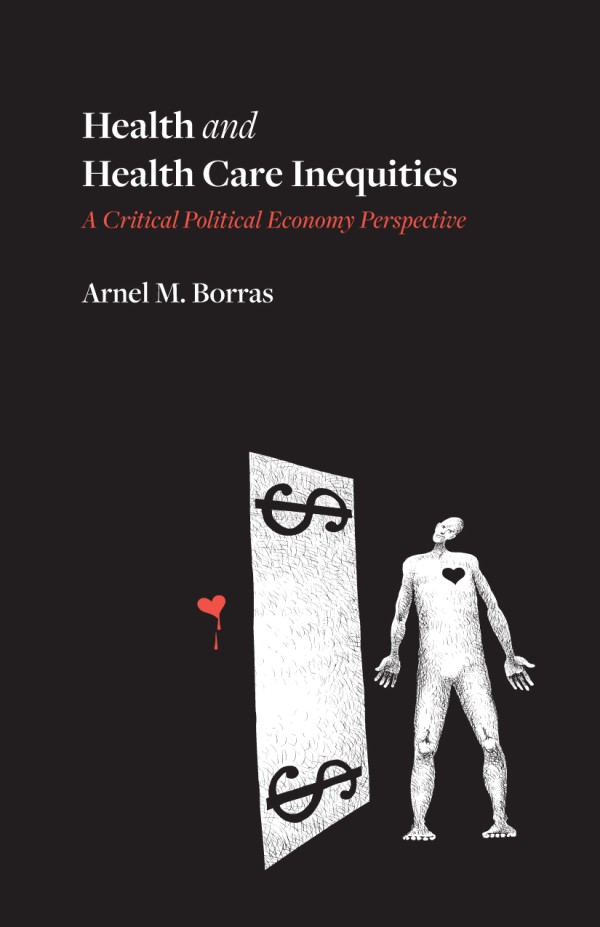
Book: iii 'Health and Health Care Inequities'


This book, or similar should be read by 3rd year student nurses and other healthcare learners. I wondered if, for students, a brief glossary might be useful. But key terms are explained and clearly, with typologies numbered and expanded when needed. There seems an aversion in nursing academia to avoid the acutely 'political'. Even though of course in psychiatry, the need for considersation of human rights, consent, capacity, law, personal and public safety, risk is inevitable. Should we only learn of the politics of our role on a post-registration/license course of learning? As mentioned in post i, Borras duly notes the asymmetric impact COVID. The disproportinate deaths of frontline healthcare workers from ethnic minority groups (UK). A sign of the impact, is reflected in COVID recurring through the text.

The device of using axes, e.g. Class-Gender-Health (p.11) rightly draws in commentary on nutrition, pay gaps - heterosexual white men, terms of employment, and design and occupational health for woman. Gender politics is also reflected in the text. The relational dimensions of this discussion also stands out. The Class-Race-Health axis (had me return to the question of parity, but beyond the mental - physical divide. 

These axes employed by Borras seemingly traverse a path and are extensible (across pages). Briefly, in Hodges' model the domains and axes act as stepping stones: 

We can ‘walk’ the model:

Humanistic INTERPERSONAL Individual SCIENCES Mechanistic: adding - Humanistic SOCIOLOGY Group POLITICAL Mechanistic 

A global perspective is matained, even though the focus is Canadian health, government, policy and policy. The press have often highlighted the global nature of the housing crisis. Canada is not immune; as discussed in chapter 2. For what is in many nations a 'housing disaster', Borras covers the history too. Reflecting on: 
'Around the world, neoliberal programs have resulted in over a billion people living in slums (Davis 2017, 23). In wealthier countries, there was rampant privatization of social housing units.' p.25. 
- you feel like a nodding dog toy. Where is the leadership, the strategy and integrity to provide housing for all? Arnel also stresses the link between mental health status and housing. The SDGs place emphasis on security (yes, at the level of what is happening in Ukraine, Gaza, South Sudan...), then housing follows. And with climate refugees to follow ...! I have seen gentrification, and listened to an account in 2007 as Manchester started to experience high-rise growth. I used to try to walk to community visits with students when possible. Observational skills come in many forms, safety still depends upon them. With no place to call home, safety and security is a stark issue for people. A foundation for health, wellbeing and ironically productivity. The rise of foodbanks is also damning. 

Gambling is not indexed, but there appears a denial in the UK government, with other nations 'folding' to the influence of lobbying and corporate influence reducing or removing restrictions in gambling and crucially: advertising. What's the denial you say? Yes, well governments seem to be in denial that there are vulnerable groups in their respective populations. It is laudable that they bestow upon the citizenry the freedom of choice, but that can spell trouble.

If Canada - Ontario has its housing scandal:
'Housing insecurity and homelessness occur because the state and its goencies support real estate and banking corporations that continuously increase housing prices. This setup is a huge problem because these enti- ties focus on generating profit and capital accumulation. The Greenbelt Scandal in Ontario revealed how the government made decisions that served the interests of big companies instead of the public (McGrath 2023; Office of the Auditor General of Ontario 2023). This scandal is an example of neoliberalism and a corrupt style of governance (Moscrop 2023). We need to stop using neoliberal strategies and focus on socialized housing.' p.27.

So does the UK: Grenfell Tower Inquiry No doubt, other nations have their tragic examples. It seems 'international Standards', quality, integrity can never be taken for quality. They too are precarious, vulnerable. Borras's work in chapter 2 on housing security, and differenciation of core housing need is laudable, informative and welcome. Re-reading Arnel's point: 'There is no doubt that housing insecurity affects health'. p.28. His book as a whole makes the point that of course more evidence will always be needed. In healthcare for decades the basics of public health have been identified, studied, established, placed in models and frameworks. Yet we find we are found wanting (UK - Awaab's Law) dragged back to the first steps; and despite the urgent issues we now face.

"Universal health care" is not exactly new:

The Canadian Association of Social Workers. (1961). The Social Worker, Volume 29, Numbers 1 to 2. 29(1to2), 1to78. The Canadian Association of Social Workers. The Social Worker - Le travailleur social. Canadian Association of Social Workers. https://jstor.org/stable/community.39672572.

Borras is correct to write of 'The Continuing Private War against Universal Health Care' (p.36). Looking at NGRAM it appears the private sector has been winning in recent decades. Working previously as a community mental health nurse for older adults, chapter 3 explores Canada's health care systems. Table 3.1 compares the ownership of long-term care homes in figures. The discussion deals with the quality of care and variation. Policy intentions, plans, research and what follows in practice is also debated. Is there any comfort  in learning that Canada is not alone in being skilled at kicking-can-down-the-road. To be fair many developed nations face the same demographic cliff (whichever way you it!), just one of the urgent issues noted above. The contribution of informal carers is also highlighted.

Here in the UK the commissioner - provider split and models of care at the finance level are a maze: amazing in their bureaucracy. Borras does a marvellous job, in providing enough detail without weighing the narrative flow, and losing the reader. The close of chapter 3 offers hope that Hodges' model will continue to be found:
'Therefore, shifting away from neoliberalism toward a new societal system where health care is seen as a fundamental human need and a universal right, not a profit-driven commodity, is crucial. This alternative system requires a new societal framework built on solidarity, fairness, and humanity, prioritizing health over financial and personal gain.' p.50.
See also: Post i : Post ii : Post iv : Post v (to follow)

Arnel M. Borras. (2025) Health and Health Care Inequities - A Critical Political Economy Perspective. Fernwood Publishing.

In addition:

Messing, K., & de Grosbois, S. (2001). Women Workers Confront One-Eyed Science: Building Alliances to Improve Women’s Occupational Health. Women & Health, 33(1–2), 125–141. https://doi.org/10.1300/J013v33n01_08  (Borras - pp.11-12).

https://nhsrho.org/news/tender-maternal-and-neonatal-image-library/

Monday, June 23, 2025

Entry to the Theatre of Nursing & Space

I do understand that reading theatre related texts, joining a theatre group, my writing a play is still pi in the sky. It's the journey, that's all. In Hodges' model I've differentiated between structure and content. This is the center of the stage about which Hodges' model turns. In the guided discovery by which students and audiences can discover the model,  these are the bases to touch in turn.


Sir Alan's focus on construction in writing: is narrative, time, location, characters (p.12). The overall message for me is, the frequently uttered - less is more. I must take heed and listen. During Ayckbourn's career, he has encountered the full retinue of writers and directors young and 'experienced'. Reading this, it is nice to be both 'new old-er' -
'Then there is the new old playwright. Far more difficult to deal with. They have probably nursed this script for twenty-five years and they're damned if you're going to mess it up for them when they've waited so long. Especially someone your age who wasn't even born when their harrowing play about World War Two was still raging, dammit.' p.110. (My emphasis in bold.)
Thinking about 1959 and the start of Sir Alan's career, his reference to WWII, made me recall nursing assistant and student nurse studies and placements at Winwick Hospital in 1977. On the geriatric wards for entertainment it was WWI songs were often sung, or records played. Long players, indeed.

In health we are usually accustomed to stopping before the 'true' end, with the exception of palliative care, although even then the ending should be 'better' than what it would otherwise have been.

If I am nursing Hodges' model, I've been doing so ever since 1987-88. As Sir Alan also observes of writers, while passionate about the utility of the model - my project - not my model; I am filled with self-doubt. Is this an over-valued idea - in my hands (and mind!)?

In other reading - Stagecraft. The Complete Guide To Theatrical Practice, by Griffiths Trevor R. 1982, I came across the word 'proscenium'.

'Incidentally, when we came to stage [the play in question is 'Woman in Mind' PJ] the London proscenium version this was far more difficult to achieve. Proscenium theatres generally make scenic statements whether they want to or not; the round makes none unless called upon to do so.' p.32. 

There are many insights into sets, design, and the various pros and cons. In May and earlier this month, with three other cast members I performed a role 8-9mins in a Living Newspaper (40-50 mins in total). It was fascinating to watch the various aspects developing from the initial reading in January. With Hodges' model an idea, the question of set design is not straight forward. But as with over-valued ideas, I am probably over-thinking (as usual) making things more complicated than necessary.

One golden nugget of advice, is if you are the writer and write well, well you don't have to think the set design. That is a problem for someone else to solve. Hopefully you will be impressed by the interpretation and realisation (often in film credits) of your work.

That is, unless you're unlucky and find yourself on the receiving end of Obvious Rule No. 13:

Beware of competitive set designers, particularly those with a 'concept'.

The name Ayckbourn is synonomous with The Stephen Joseph Theatre, which is in the round:

'The Round provides a truly unique experience as the audience is seated all around the stage. Not only does the audience see the performance from every angle, it also brings the actor into the same space as the audience.'

"Let’s have the actors in the same room as the audience, let’s have four front rows, let’s get really excited about this acting business!"

Stephen Joseph, 1959 - https://sjt.uk.com/about-us

From the mid-1980s and 90s I used to visit Bolton's Octagon quite regularly. Performances were frequently in the round. Last month, Abigail's Party was too (the last night).

Whatever, the staging, set, I'd be interested to see the 'concept'. On directing:

'As regards interpretation. you may need to tread more warily. As I said earlier, many playwrights are not naturally theatre creatures - certainly they are rarely visual theatre creatures, I have seen them sit there and watch their play physically anfold with a look of total amazement. pordering sometimes on delight, sometimes on dismay. What was in their head has been made three-dimensional flesh.' p.111.

Space has been and remains fundamental to my thinking about Hodges' model. Even pushing the envelope to topology, this is well beyond my ken. But not other gifted researchers. Hodges' model provides inter- multi- transdisciplinary bridges: we need to Before the time of schools becoming fenced and patrolled sites, we used to play cricket, tennis and football. There was a large wall at front of a former school, great for tennis, but not return of serve. Now a projection shared in the round - so everyone sees the same thing (yes, another rule!) might hold potential. There's acknowledgement that technology moves on too (p.123). And room for comedy, Ayckbourn's starting point. 

'Designers, it has been said, even the best of them, sometimes get hold of the wrong end of the stick. ... Always get to look at drawings, ground plans and, most helpfully, scale models of what they intend.' p.120.

The Crafty Art of Playmaking by Alan Ayckbourn. Faber, 2004, softcover, ISBN 0571215106.

https://www.concordtheatricals.co.uk/s/45898/the-crafty-art-of-playmaking

Tuesday, December 03, 2024

'Our Housing Disaster'

Our Housing Disaster

I must finish the spring and summer's reading as pictured, with another two books in the wings. While the smallest text Our Housing Disaster is cheap to buy, an important read and insightful.

Politically, in the UK and many other nations, housing and its opposite -  homelessness, and the supply and cost of housing are ongoing issues.

Julian Richer's book is low cost £4.99 post free with a promo-code; even as I obtained a free copy, learning of the book in Business section of The Sunday Times. 


Our Housing Disaster gets off to a flying start:

'Falling or stagnant house prices are seen as national 'ill' that we must recover from but, in fact, fast-rising house prices and interest rates have proved to be the real ill, destroying the dream of a property-owning democracy that was supposed to benefit all.

Britain's housing policy, such as it is, has failed on its own terms.' p.9.

I remember when Grand Designs appeared on our TVs. Especially the episode with the wood-frame eco-house by Ben Law. This seemed sustainable and time-limited too. Julian Richer really nails the housing problem without delay. Unfortunately, the audience appeal of TV programmes like Grand Designs, Location, ... seem to me symptomatic of the issue Richer raises above. I used to think that the 'middle class' were shooting themselves in the foot; as house prices rose and rose. There was a collapse at one point with the trap of negative equity that my family almost got caught in (had we bought a new home). Richer corrects this view, with a national perspective across ten chapters and 180 pages.

 If the link between health and housing needs to amplified Richer ably achieves this, and quickly:

'Poor housing is harming the nation's health. The housing ombudsman, Richard Blakeway, whose office deals with complaints from social housing tenants about disrepair and mould and damp in their homes, problems recognised now to be a threat to health, has found the situation to be so bad that he has called for a Royal Commission to look at the links between housing, health, and welfare. Too often, the various agencies in housing, health and social care tend not to link up, or even know what the others are doing. which can end up making people's housing situation worse. Someone who has been homeless or who has mental health needs, for example, can require a lot of support once they are housed so that they can pay the rent and maintain the tenancy. If they just get housed and then left to cope on their own, they can struggle, lose the tenancy, become homeless and whole cycle starts again, with all that waste of money and damage to lives.' p.16.
'In addition to the 8m, there must be millions more who are not in crisis, but who have a blight on their future: typically, young, working people, perhaps with children, who are living in private rented accommodation, with a roof over their heads but always worrying they might be evicted. The insecurity and uncertainty that they experience is not good for them or their children. Just as job insecurity makes it hard for people to build a career, housing insecurity makes it hard for people to establish a life.' p.19.
The statistics flow thick and fast but as readable as they are focussed they weave an effective narrative referring to the history of just how we got to this point. The text make stark the dire crisis and need for action and an urgent government response. 

More to follow.

Wednesday, November 13, 2024

Simplifying universal health coverage to achieve political action

'The narrative on universal health coverage should be centred around four core elements: universality, equity, adequate financing, and preparedness in public health emergencies, write Katri Bertram and Justin Koonin'.
Bertram K, Koonin J. Simplifying the universal health coverage narrative can help to achieve political action BMJ 2024; 387 :q2441 doi:10.1136/bmj.q2441

A RESPONSE* 

Can this be true? Why, this is absolutely marvellous! I?
Yes! Me

I do count! I'm seen, heard and included in the health care system and can have a voice in the service's development (1.). 

Not only that, but everyone in my - our community - has access - too (2.) ...

client - person - individual - self - patient - citizen
|
INTERPERSONAL : SCIENCES              
humanistic ------------------------------- mechanistic
SOCIOLOGY : POLITICAL   
|
couple - family - group - community - village/town - city
1. UNIVERSALITY

4. PREPAREDNESS


2. EQUITY

3. ADEQUATE FINANCING

... Now that health and social care are properly funded, they've finally done it! They've taken the key step to include education. This is crucial, critical to preventing poor health. Whenever possible we want people to self-care. The mother of all us has always whispered of the safety net. Now she shouts and rages. We all must listen to the stories of old.  Children should be brought up to be health and media... literate and recognise for them as an individual, the merit, the joy of health and well-being.

At last - the power's-that-be are addressing policy. Not just policy on paper, but implementing it, to assure the quality and cost of food, baby-formula, the air and water (3.).

What does this mean?^ It means health budgets can be better managed. Being prepared does not mean we reach immediately for the technical solution, write the prescription (for antibiotics). No. Being prepared means wising-up too. Together, we are ready to face each other, and right across the world: S-N and E-W. Now we can look to the future, climate change and Gaia: as ONE (4-5).


^O’Connell T, Rasanathan K, Chopra M. What does universal health coverage mean? Lancet 2014;383:277-9. doi:10.1016/S0140-6736(13)60955-1 pmid:23953765

(Cited by Bertram & Koonin)

5. Spiritual.

*A response, that is both too simple and too complex. Discuss.

Wednesday, September 11, 2024

THE GRID by Eli Payne Mandel

individual
|
INTERPERSONAL : SCIENCES
humanistic ------------------------------- mechanistic
SOCIOLOGY : POLITICAL
|
group

[125]
'Therefore, a mathematician babbles when he refers to cutting a given line in two. The actual line that he shows to us on the abacus has length and width. But the line he has in mind is a stroke with length and no width. What is drawn on the abacus cannot be such a stroke, and he who goes about cutting it cuts not the line that is but the line that is not.'

(Sextus Empiricus, Against the Mathematicians 9.282)
(n.b. The above is printed upside-down on the page.)

Scatter the trace of the vessel from the ash. Pythagoras here is riddling about confusion and mental cloudiness, for if one wants to do philosophy one must pass over physical and sensible demonstration in favor of abstract argumentation. The ash is analogous to the dust on the abacus in which diagrams are delimited and proofs brought to an end. 

(Iamblichus, Exhortation to Philosophy 34)' p.55


'[1] In ancient Greek, an abacus is a sand table. 'The abacist draws lines and maybe moves pebbles around the lines. When done, she wipes the sand blank. 


[2] A board or slab for drawing, computation, games; a cutting board. Technical term, likely to be a loanword, but conjectured origin in Hebrew abãq "dust" remains unproven. --  Pierre Chantraine, Dictionnaire etymologique de la langue greque.' p.10.

'[122] The abacus computes and it erases. It tells a life. Then gambles it away. Achilles and Ajax sit down to play a game of dice. They have hung up their shields. They lean on their spears. They are tired. The Anatolian air is cold off the water. Attendants wrap them each in wool cloaks thick with eight-pointed stars. The stars wander along eddies and meanders. The only straight lines are servants of error. Their fingers are on the abacus, but Achilles and Ajax do not play, do not speak, lost in the maze of their cloaks.

[124] The first reference in Western literature to written language is in the Iliad. An unsuspecting  man in a story is carrying semata lygra / grapsas en pinaki ptukto thymophthora polla: baleful signs written on a folded tablet, utterly soul-  destroying. The words, which some scholars conjecture to be Linear B, spell out the man's death, and the reader murders  the unreading man. After the murder, Death Wipes the tablet  blank and folds it back again.' p.54.

'[3] Because dust blows away and only the slab remains, an abacus is also the part of a column in immediate contact with what it supports. If that structure no longer survives, the abacus upholds the edifice of the sky.' p.10.


THE GRID by Eli Payne Mandel, Carcanet Press. 2023.

https://www.elipmandel.com/

Previously on W2tQ (with overlap):

arts :: drama :: poetry :: literature :: narrative

Wednesday, September 04, 2024

Laughter and Medicine Conference

Manon, Laughing Gas, 2019, installation, Kunsthaus Zürich
photographer: Franca Candrian, 2022.

British Academy/Wellcome Trust Conferences bring together scholars and specialists from around the world to explore themes related to health and wellbeing.

'Connecting knowledge across the disciplines, this conference will put practicing doctors in direct dialogue with researchers in the humanities – especially scholars of literature, cinema and cultural history. Together, they will seek to understand the social, diagnostic, therapeutic and physiological implications of laughter, inside and outside the clinic. Laughter is not always the 'best medicine', nor is it linked only to comedy and enjoyment. 'Healing laughter' differs markedly from pathological laughter, hysterical laughter, forced or bitter laughter, laughter aimed at mitigating awkwardness in unsuccessful communication, laughter intended to deceive, or laughter signifying fear, discomfort or aggression. Irony and other double-coded signifiers that abound in comic and parodic representations of medical practitioners and their patients often reveal medicine’s paradoxical place in various cultural imaginaries and in individual and collective experience.

This conference will study the diverse forms of laughter occurring around medicine in particular eras and cultural environments alongside comparative analysis of patterns and problematics over the long history of Western medicine and its representations.'

         https://www.thebritishacademy.ac.uk/events/british-academy-conferences/laughter-and-medicine/

individual
|
INTERPERSONAL : SCIENCES
humanistic ------------------------------- mechanistic
SOCIOLOGY : POLITICAL
|
group

I don't find this funny!


 I laughed so much it hurt! 


"All the world's a stage"

Politics is a running joke - that's never funny.

The human epic of triumph and tragedy.

Previously (with overlap):

arts :: drama :: poetry :: literature :: narrative

Saturday, August 24, 2024

"In HIFA - let's save a space to make sense of mountains of data"

Dear All, (HIFA mail list)

While rather expansive in scope not just reaching to the arts but also referencing nature and mountains, the following blog post may be of interest:

"Health & Care results in mountains of data: c/o Burke & Cao 2024"

https://hodges-model.blogspot.com/2024/08/nan-shepherd-.html

While the focus and purposes for HIFA are clear, in practice 'information' (data, facts, knowledge, wisdom) must always be contextualised, situated, and (potentially) justified.

In addition to relying on the sciences, medicine, nursing and healing practices are also characterised as arts.

See also, the digital humanities and more specifically - 'Intima: A Journal of Narrative Medicine' https://www.theintima.org/

There have been many posts about records recently, but of course it what goes into the record that is critical.

Salience, what we pay attention to is key.*

The record is critical if something goes wrong and a professional finds themselves in a Coroner's court, and/or disciplinary hearing. The previous posts also discuss the patient's access to their medical record.

I'm not sure if the point has been made but even before 'health literacy' is taken into account, given access a patient may identify many mistakes/errors within the record on many details including demographics and procedures, treatments, diagnoses applied. (There are studies confirming the same - a benefit of IT systems.)

In mental health service - England the care programme approach (CPA) has ended - been retired. Some argue this has been done 'quietly'.

While the emphasis on documentation since 1990s has been onerous for some practitioners in the need for a 'comprehensive' record, the principles of CPA are well-based in practice: Patients (families) are entitled to - 1. A care assessment 2. A care plan 3. A named care-coordinator - keyworker 4. A review 6 monthly; annually as a minimum

For more than a year 1995.., I worked full and p/t as CPA co-ordinator for Chorley and South Ribble Health Authority; and produced a report highlighting the potential benefits of information technology in data gathering and processing and information reporting. (A conference was also organised with 60+ delegates, and 10 software vendors demonstrating their wares.)

The news drove the development and introduction of CPA during the late 1980s, with often stigmatising headlines for many people affected with mental illness - including psychosis it must be added. Recent events are troubling for society and services now, and in terms of history repeating itself:

"On average over a hundred people in Britain a year are killed by someone with serious mental illness. On the day the NHS is Nottingham is found to have missed opportunities to stop Valdo Calocane killing 3 people we ask why lessons aren’t being learned." 'X' https://x.com/BeckyJohnsonSky/status/1823459379846271002

"Between May 2020 and February 2022, eight risk assessments were completed for Calocane by the trust, which the CQC said appear to have been carried out for each of his admissions to hospital and updated at other times during his care. The regulator said that while some risks were highlighted, other assessments “minimised or omitted key details”. https://careappointments.com/care-news/england/211213/cqc-review-of-nottingham-killers-care-finds-key-risk-details-minimised-or-omitted/

The state of mental health services in the UK is much debated and here too 'information' is critical, especially 'seeing' the person and the nuances of interpersonal communication skills. These are often encountered through non-verbal communication and 'clinical intuition' which must be related to professional experience.

So information must simultaneously be recognised as a mechanistic and humanistic melange of processes, purposes, practices and policies (4P's in Hodges' model).

As highlighted before we can also contrast HIFA's and practitioners efforts to combat the severe implications and risks of 'information disorder'. And yet, also recognise how the arts, innovation and creativity also contribute to interpersonal engagement, therapeutic goals, case formulation, health and other literacies using *metaphor* and *analogies* - as per Nan Shepherd's musings explored in the blog post by -

Burke, R., Cao, E. To Care for a Mountain - What medical practitioners can learn from Nan Shepherd. Oxford Review of Books, Summer 2024, Volume 8, Issue 2. p.14. In association with Stanford. (open access)

Patient, public and practitioner safety is always the aim & objective.

Further reading & notes: https://www.cqc.org.uk/publications/nottinghamshire-healthcare-nhsft-special-review-part2/risk-assessment

Whiting, D., Gulati, G., Geddes, J.R., Dean, K. and Fazel, S. (2024), Violence in schizophrenia: triangulating the evidence on perpetration risk. World Psychiatry, 23: 158-160. https://doi.org/10.1002/wps.21171

*I hope to contribute to a 'philosophy of attention' research project, my contribution will draw on clinical experience above and apply Hodges' model to explore and debate ... 'attention', starting in 2025 to c.2030.

Regards to all, Peter Jones

Saturday, March 16, 2024

Hodges' model: An architectonic sense-making tool

"Translation by architectonic map is a sense-making tool inspired by Peirce's use of the term, architectonic, to describe the systematic form of a body of knowledge. Theorists create a structure around which their approach to understanding human conduct is built. Familiarity with the overall structure facilitates generalized discourse among those interested in the framework. An architectonic map identifies all the major components of a scientific text or canon, including its assumptions, concepts, propositions, and theories, and the paths connecting these components. Mapping architectonics is an intersemiotic (across two different types of sign systems) translation process when the translation product is a diagram, and an intralingual process when the product is a narrative." p.111. (My emphasis)

"Models employ symbols (terms and their meanings), but also have an iconic function (a design meant to represent a object or process in important ways) and an indexical function (notation indicating and pointing to persons, processes, relationships, organizations)." p.112. 


Individual
|
      INTERPERSONAL    :     SCIENCES               
HUMANISTIC  --------------------------------------  MECHANISTIC      
 SOCIOLOGY  :    POLITICAL 
|
Group
person

concepts

critical thinking

person

maps

framework


languages

dialogue - narrative

shared understanding

social worlds*

anthropology

organisations

communities of practice

professions, scope of practice

*translation here too:

policy, power, status ...


Forte, J. A. (2009). Interactionist Practice: A Signs, Symbols, and Social Worlds Approach. Humboldt Journal of Social Relations, 32(1), 86–122. http://www.jstor.org/stable/23263237


Wednesday, October 25, 2023

Special Issue: Learning Health Systems - Computable Biomedical Knowledge

Learning Health Systems

A unique Special Issue of the Learning Health Systems journal has just been published.  It focuses on Computable Biomedical Knowledge (CBK). 

We invite you to view the table of contents for Volume 7, Issue 4 shown below.


Read the issue at - 
https://onlinelibrary.wiley.com/toc/23796146/2023/7/4

 GUEST EDITOR COMMENTARY

EXPERIENCE REPORT

Modelling clinical narrative as computable knowledge: The NICE computable implementation guidance project


Philip Scott, Michaela Heigl, Charles McCay, Polly Shepperdson, Elia Lima-Walton, Elisavet Andrikopoulou, Klara Brunnhuber, Gary Cornelius, Susan Faulding, Ben McAlister, Shaun Rowark, Matthew South, Mark R. Thomas, Justin Whatling, John Williams, Jeremy C. Wyatt, Felix Greaves

POLICY ANALYSIS

Which computable biomedical knowledge objects will be regulated? Results of a UK workshop discussing the regulation of knowledge libraries and software as a medical device


Jeremy C. Wyatt, Philip Scott, Johan Ordish, Matthew South, Mark Thomas, Caroline Jones, Sue Lacey-Bryant, on behalf of workshop participants

RESEARCH REPORT

A novel method for continuous measurements of clinical practice guideline adherence


Kees C.W.J. Ebben, Cornelis D. de Kroon, Channa E. Schmeink, Olga L. van der Hel, Thijs van Vegchel, Arturo Moncada-Torres, Ignace H.J.T. de Hingh, Jurrian van der Werf

COMPUTABLE KNOWLEDGE PUBLICATIONS

Striking a match between FHIRbased patient data and FHIRbased eligibility criteria


Brian S. Alper, Joanne Dehnbostel, Khalid Shahin, Neeraj Ojha, Gopal Khanna, Christopher J. Tignanelli

Evidence Hub: A place to exchange medical knowledge and form communities


Kenny Hong, Druvinka Bandaranayake, Guy Tsafnat

Sync for Genes Phase 5: Computable artifacts for sharing dynamically annotated FHIRformatted genomic variants


Robert Dolin, Bret S. E. Heale, Rohan Gupta, Carla Alvarez, Justin Aronson, Aziz Boxwala, Shaileshbhai R. Gothi, Ammar Husami, James Shalaby, Lawrence Babb, Alex Wagner, Srikar Chamala

An application of computable biomedical knowledge to transform patient centered scheduling


Namita Azad, Carolyn Armstrong, Corinne Depue, Timothy J. Crimmins, Jonathan C. Touson

My source: 
Email from Kathleen Young
Editorial Assistant, Journal of Learning Health Systems

  Also noticed:
Bonten T, Rauwerdink A, Wyatt J, Kasteleyn M, Witkamp L, Riper H, van Gemert-Pijnen L, Cresswell K, Sheikh A, Schijven M, Chavannes N, EHealth Evaluation Research Group Online Guide for Electronic Health Evaluation Approaches: Systematic Scoping Review and Concept Mapping Study. J Med Internet Res 2020;22(8):e17774 URL: https://www.jmir.org/2020/8/e17774 DOI: 10.2196/17774