Hodges' Model: Welcome to the QUAD: Search results for ICD

Hodges' model is a conceptual framework to support reflection and critical thinking. Situated, the model can help integrate all disciplines (academic and professional). Amid news items, are posts that illustrate the scope and application of the model. A bibliography and A4 template are provided in the sidebar. Welcome to the QUAD ...

Showing posts sorted by relevance for query ICD. Sort by date Show all posts

Monday, May 18, 2026

Call for Abstracts: Prototypes for Humanity - Submission Deadline 22 May 2026

Dear Colleagues, 

I am pleased to invite the submission of abstracts to the Prototypes for Humanity 2026 Short Papers Platform. 

Abstract Submission Deadline: 22nd May 2026
Invitations to Successful Authors: 8th July 2026
Conference Dates: 15th - 19th November, Dubai, UAE 

** Description **

The Short Papers Platform provides a forum for professors to share their research and engage in interdisciplinary dialogue, fostering global collaboration and knowledge exchange, with a focus on driving real-world impact through academic research.

For 2026, Prototypes for Humanity is delighted to announce the launch of a strategic partnership with the Investment Corporation of Dubai (ICD), for the Short Papers Platform. This joint effort reinforces the programme’s commitment to advancing impactful innovation through collaboration between academia and industry, focusing on the key sectors and themes that reflect international research priorities and that are relevant to the city and to the fund. 

Themes 
  • Wellbeing and Human Performance
  • Infrastructures and Cities
  • Autonomous Systems and Advanced Manufacturing
  • Environment, Sustainability and Energy
  • Mobility and Logistics
  • Socio-Economic Empowerment, Digital Economies and Future Markets
  • Open and Speculative
Awards

As part of the programme’s ongoing commitment to research translation, ICD will award a $50,000 prize to one of the short papers presented at the conference. The award recognises academic work with strong potential for practical application, identified through engagement with ICD industry experts, and will support the winning project’s next stage of development towards implementation.

Submissions

Full details can be found at: https://www.prototypesforhumanity.com/press-releases/stories/Call_For_Abstracts_2026

Apply here: https://form.jotform.com/260705028532451?source=https://www.jisc.ac.uk

Deadline for abstract submission: 22 May, 2026

We strongly encourage you to apply where your interests and research aligns with the programme’s thematic areas.

If you have any questions, please contact us at professors AT prototypesforhumanity.com

Sarah Ward
University Relations Manager
Prototypes for Humanity

E: sarah.ward AT prototypesforhumanity.com

My source: Email - https://www.bcs-sgai.org/

Sunday, February 07, 2016

Hodges' model - Integrating the five vignettes?

Some reading while working on my research proposal:


Vignette methodologies for studying clinicians’ decision-making: Validity, utility, and application in ICD-11 field studies

Abstract

Vignette-based methodologies are frequently used to examine judgments and decision-making processes, including clinical judgments made by health professionals. Concerns are sometimes raised that vignettes do not accurately reflect “real world” phenomena, and that this affects the validity of results and conclusions of these studies. This article provides an overview of the defining features, design variations, strengths, and weaknesses of vignette studies as a way of examining how health professionals form clinical judgments (e.g., assigning diagnoses, selecting treatments). As a “hybrid” of traditional survey and experimental methods, vignette studies can offer aspects of both the high internal validity of experiments and the high external validity of survey research in order to disentangle multiple predictors of clinician behavior. When vignette studies are well designed to test specific questions about judgments and decision-making, they can be highly generalizable to “real life” behavior, while overcoming the ethical, practical, and scientific limitations associated with alternative methods (e.g., observation, self-report, standardized patients, archival analysis). We conclude with methodological recommendations and a description of how vignette methodologies are being used to investigate clinicians’ diagnostic decisions in case-controlled field studies for the ICD-11 classification of mental and behavioural disorders, and how these studies illustrate the preceding concepts and recommendations.


Evans, Roberts, Keeley, Blossom, Amaro, Garcia, . . . Reed. (2015). Vignette methodologies for studying clinicians’ decision-making: Validity, utility, and application in ICD-11 field studies. International Journal of Clinical and Health Psychology, 15(2), 160-170. DOI: 10.1016/j.ijchp.2014.12.001 

Abstract

Vignette studies use short descriptions of situations or persons (vignettes) that are usually shown to respondents within surveys in order to elicit their judgments about these scenarios. By systematically varying the levels of theoretically important vignette characteristics a large population of different vignettes is typically available – too large to be presented to each respondent. Therefore, each respondent gets only a subset of vignettes. These subsets may either be randomly selected in following the tradition of the factorial survey or systematically selected according to an experimental design. We show that these strategies in selecting vignette sets have strong implications for the analysis and interpretation of vignette data. Random selection strategies result in a random confounding of effects and heavily rely on the assumption of no interaction effects. In contrast, experimental strategies systematically confound interaction effects with main or set effects, thereby preserving a meaningful interpretation of main and important interaction effects. Using a pilot study on attitudes toward immigrants we demonstrate the implementation and analysis of a confounded factorial design.

Atzmüller, C., & Steiner, P. (2010). Experimental Vignette Studies in Survey Research. Methodology: European Journal of Research Methods for the Behavioral and Social Sciences, 6(3), 128-138. DOI: 10.1027/1614-2241/a000014 

Thursday, April 01, 2010

MCQ (answer) on clinical coding and classification

The answer to the multiple choice question is item 4:

- a product of the 18th century driven by death?

François Bossier de Lacroix (1706-1777*), better known as Sauvages, is credited with the first attempt to classify diseases systematically.

Sauvages' comprehensive treatise was published under the title Nosologia methodica.

A contemporary of Sauvages was the great methodologist Linnaeus (1707-1778), one of whose treatises was entitled Genera morborum.

Beginning of the 19th century, the classification of disease in most general use was one by William Cullen (1710-1790), of Edinburgh, published in 1785 under the title Synopsis nosologiae methodicae.

My source:
http://www.who.int/classifications/icd/en/HistoryOfICD.pdf


Now(?) https://www.who.int/publications/m/item/history-of-the-development-of-the-icd

* I note sources that record Sauvage's year of death as 1767.
http://www.persee.fr/web/revues/home/prescript/article/rhs_0048-7996_1969_num_22_4_2601

Sunday, January 04, 2015

Reflecting on Nortin Hadler's "Missing the Forest For the Granularity"

I read Nortin Hadler's Missing the Forest For the Granularity (July, 2014) on The Health Care Blog with great interest. The article draws attention yet again to the risks and preoccupation with processes and systems. This provides me with another opportunity to highlight the 4P's within Hodges' model: Process, Policy, Practice and Purpose and add some of the points that Dr Hadler addresses.

The 4Ps by themselves might have meaning but they can't do work. For that we need a context and several perspectives. As Dr Hadler points out big data intrudes on the clinical encounter determining not just what is collected, but how it is captured and structured.

There are frequently two datasets at the practitioner level: one is administrative and managerial in form and purpose; the other is clinical - patient, person centered. Effective communication already presents a challenge. On top of that then how relevant are the IT systems. The holy grail of IT systems still seems to be benefits for clinicians and patients - the public. Until then will the IT continue to push the patient-clinical relationship as if it is some wobbly toy? You bet it will!

Where exactly should the “Physician’s Dashboard” reside? Is it a case of "the ayes have it" but only on the right?

Nortin also refers to the United States postponing ICD-10. From Wigan Pier I clearly do not understand the issue, but this seems from here more like a very prolonged delay. A delay that perhaps says more; not just about the healthcare 'system(s)', but the many interfaces to be found there.

Many thanks to Dr - Prof. Hadler for his article:
https://thehealthcareblog.com/blog/2014/07/11/missing-the-forest-for-the-granularity/

individual
INTERPERSONAL : SCIENCES
humanistic ------------------------------------------- mechanistic
SOCIOLOGY : POLITICAL
group
“cognitive” specialists, the care of the patient revolves around the “granularity” of the narrative.
PURPOSE
individual attention and focus
ability to share purposes
 Using individual differences and idiosyncrasies

patients as widgets (here)?
Can you see the dashboard here?
PROCESS
 data gathering
big data, ICD-10
Electronic Medical Record -
 templates and “smart sets”
PRACTICE

Patient - BIG DATA - Doctor
relationship
 empathy 'NOISE' empathy
life-course (“social”) epidemiology
POLICY
Europe, health care systems, United States, health economists, hospital administrators, patients as “units of care”, physicians as “providers”, clinical demand = “throughput.”
common denominators
invoicing


Wednesday, July 03, 2019

RCN Congress 2019 ii "We are all Global Nurses"


The debate about public sector vs. private sector healthcare touches all healthcare professionals. There is no escape. Despite this, from my 40+ years in the NHS - the NHS can act as a cocoon. It's as if the walls are adorned with "Keep Calm and Carry On". For some of us there is a 'keep your head down' mentality. While as a nursing assistant and student nurse, the words "Make sure you join COHSE, NUPE or the RCN" rang out; it was the day job, learning and family that had my attention. I wish I'd got to Congress decades ago.


You can't do everything and this lack of involvement is a blessing in a way. For example, without ever taking anything for granted, I never imagined I would need the help of my union/professional body. When I did and 'we won' thanks to a brilliant RCN Rep. Being represented has this quality to it. Unless, you are an activist, it is a newsletter, journal, annual pay discussion, but this opened my eyes. As a consequence, I encourage students, even more so and others to ensure they are represented and get involved.

To Congress itself: I was surprised and disappointed to hear several years ago about the RCN's cessation of links to the International Council of Nurses [ICN]. Further surprise followed when a Congress debate revealed it was five-six years ago in fact:

Members vote to allow RCN to leave international nursing body

£600,000 is 'politics' in the raw for membership and the RCN Council. The cost of ICN membership  was debated at Congress. There are various arguments. This seemed a break on many levels; social, political, psychological and scientifically.

(Bizarrely, perhaps this state of affairs says something in support of reflection. When the latter is accused of fostering navel-gazing, finance and value for money ... speak volumes, but the RCN's global isolation is navel-gazing realised aggravated by the ongoing psychological experience of Brexit.)

In championing Hodges' model as a global resource for healthcare and education, my parochial perspective from Wigan Pier has felt acute. Online I've long nurtured links with global nursing and healthcare groups: HIFA, HIPNET, GANM, Nursing Now and others. In workshops with nursing students and other disciplines, the ICN and global nursing context is always stressed (the ICD too). [After all, as students and lifelong learners these people do have the World at their feet.]

The relevance of Hodges' model increases daily and - my bias aside - the model's significance is crystalised in this issue for the RCN and its members. As noted in the debate John Gilmore raises the matter of refugees. For those in crisis through natural disaster, conflict and crime amid chaos there is geopsychiatry and the mental health implications for children and future generations of this 'lived experience'. As we await further news on this, below I have mapped key elements of the debate in Hodges' model:

There is a digital archive for members to watch the debate.
individual - self
"My backyard"
|
INTERPERSONAL : SCIENCES
humanistic ----------------------------------------------- mechanistic
SOCIOLOGY : POLITICAL
|
group- population
"The WORLD of Nursing"

Philosophical: Values,
Philosophies of Care
Mental Health
Mental Health of Nurses
Parity of Esteem -
geoPSYCHIATRY

Ethel G. Fenwick and others

[ Health Education & Promotion,
Sustainability ]


The 'GEO-' in Nursing
Nursing logistics
Research; Collaboration, Multi-center, Evidence,
The 'UNIVERSAL' in UHC
Definitions of Nursing Roles
Skills & Knowledge
Coding & Classification initiatives
Global: 20,000,000 nurses
ICN predates RCN

'transparency'

The Nursing Community
"Voice"
1899 ICN formed
SOCIO-[Economic] status of nurses

The global:
Community of Practice

Collegiality
Cooperation
Collaboration
Fellowship

"We are all global nurses."

'political'

POLICY: Workforce, Migration,
Recruitment crisis
Safe Staffing (National, Global)
Medical Emergencies,
Climate change
Working groups: Standards, Issues
Funding, ICN, RCN and other bodies
Support for Developing Nations LMIC
The Scope of Nursing
Stewardship
ICN - Membership model
PAY restraint, austerity
As of 2013: £614,470 / £1.42 per member
Business case


How do you measure the impact of an organisation?

2020 - International Year of the Nurse

20:20 vision IS global

https://en.wikipedia.org/wiki/Keep_Calm_and_Carry_On

Wednesday, February 29, 2012

Rare Disease Day 2012 - reflections using h2cm


INTERPERSONAL : SCIENCES
SOCIOLOGY : POLITICAL


Is it ironic that ‘I’, this ‘self’ becomes an expert of my condition by virtue of it being rare?

Is it also rare because so few must live with the emotional consequences?

Yes, personalised medicine holds great promise, but please don't forget - me: this person : I don't want to be left here.

Being that expert I may even know the ICD-10 … codes for my condition. I know the symptoms very well.

I know the 'current' evidence and may also be able to tell you about the gaps in the knowledge base.  My family physician learns with me.

Supported by policy and united as a group what might citizen science deliver?

Your carer may be the expert because for you this rare disease means you cannot readily self-advocate.

We all need to know we are not alone.

If there is a role for social media here it is:

"Rare but Strong Together"

For those people with rare diseases we have to help them unify in order to shout, wave and raise awareness. After all: WE seek global health don't we?

Being rare is there investment in funding for research?

Must there be a market first to bring forth drugs / treatments? We know about individual motivation, whither the corporate drive - social responsibility.

My prompt and thanks!: Stu Young, Royal College of Nursing Students

Thursday, January 22, 2026

NANDA-I Newsletter - theme of clinical reasoning


'This month at NANDA-I, we have been exploring the theme of clinical reasoning.


Clinical reasoning is at the heart of nursing; it’s how nurses make sense of complex patient information and choose the best path forward. While many nurses think of diagnosis as the centerpiece, it’s really the thinking that leads up to it, gathering cues, interpreting what matters most, and then safely determining goals and actions, that makes all the difference in outcomes. Strong reasoning helps nurses notice subtle changes and act with confidence.


As healthcare grows more complex, understanding how nurses think, not just what tools they use, helps elevate care for every patient. We’ll be sharing insights throughout the year to help you stay connected to nursing knowledge and its impact on care delivery and education.'


Teaching Tip: Clinical Reasoning in Practice

Start With Assessment to Improve Reasoning

When nurses work with standardized languages and clinical judgment tools, it’s tempting to dive right into diagnosis. But the most accurate and useful nursing judgments always come from strong, systematic assessment first. Quality assessment supports better interpretation of patient needs and more precise identification of nursing responses.


Quick Tip: Use a flexible assessment framework, whether it’s a conceptual model or a tool like functional health patterns, to make sure you’re capturing the data that matters most first. When you build a solid foundation with assessment, everything that follows (including diagnostic thinking) becomes clearer and more grounded.  


My source: 'Friends of NANDA®-I Newsletter' subscription (with my emphasis).

See also:
https://nanda.org/2025/12/nanda-360-for-educators-and-researchers-strengthening-nursing-knowledge-through-diagnosis-centered-reasoning/

Assessment, plus planning, implementation - action, evaluation (plus, formulation).

Functional and cognitive [Health, Illness, Climate, Poverty, Political, Security, Prevention, Self-care, ...] patterns.

'... make sure you’re capturing the data that matters most first' - Situated, Context, Salience.

For a competent practitioner an assessment can also be 'therapeutic' for the patient.

Previously: 'classification' : 'diagnosis' : 'NANDA' : 'ICD'

Wednesday, August 05, 2020

Book: "Rethinking Causality, Complexity and Evidence for the Unique Patient"

Rethinking Causality, Complexity and Evidence for the Unique Patient


Questions arising:
Where would you place whole person care in the model below?
Similarly, what about evidence, complexity,
person-centred care, the unique patient?


individual
|
INTERPERSONAL : SCIENCES
humanistic ----------------------------------------------- mechanistic
SOCIOLOGY : POLITICAL
|
group - population
mind (soul - personhood)
subjective (inc. PAIN)
quality
subject

Psychotherapy & others
psycho-
philosophy
Diagnosis: classification DSM..
dispositions, cognition, bias, beliefs
mental health
PURPOSE(S)


2. -PSYCHO-
Intrapersonal
Interpersonal (skills)

Reflection - Reflexive

(individual) psychology
(em-)body (machine)
objective (inc. PAIN)
quantity
object

Physiotherapy & others
-somatic
scientific method
Bayesian formula, analgesia
biomedical model, treatment
Diagnosis: classification ICD SNOMED..
1. Yes. The BIO-
Thresholds, intensity, prediction
cause, causality, explanation, reductionism
dispositional causality,
relation - flow
PROCESS(ES)
TIME
events, clinical 'content',
[Sciences(Physics,Chemistry,Biology..)]
(group) psychology

relationships
, support

3. SOCIAL model


sociology (of PAIN, disease)
Medical Sociology

phenomenological - lived experience

PRACTICE


CLINICAL ENCOUNTER
political - power - autonomy

Where is the individual
|
within the collective?


4. ... is incomplete (p.83)

POLICY

CLINICAL ENCOUNTER

See also:


Wednesday, October 15, 2008

Blog Action Day 15 October: Poverty - Hodges' model

The table below indicates some of the main concepts and concerns that surround poverty presented using the four care domains of Hodges' model:
INTERPERSONAL : SCIENCES SOCIOLOGY : POLITICAL

Well-being,

mental health, mood, hope, human spirit. Education - literacies: 3Rs, ICT, social, visual, spiritual, health.... human potential, premature death, personal choices & autonomy.

ability to work, philanthropy, disability, gender, LEARNING - UNLEARNING,

adversity, personal development, making a difference - Giving. Awareness of poverty.

Attitudes, beliefs, sustainability.

Physical health, nutrition, DIAGNOSES: infectious diseases - diarrhoeal illness, malaria, tuberculosis, HIV/AIDS. Infant / maternal mortality. Water. Natural resources, fuel, crops, disasters. Geography, global warming, climate change, gender, age. WHO regional-global reporting, ICD. Complexity. Research: Dimensions of Poverty - "The human development index (HDI) includes income, longevity and education. This paper contends that poverty extends beyond these domains. It explores dimensions of poverty that poor people value, but for which little or no data is available."

Shelter, housing, schools, local environment, social inclusion,

work, social mobility, homelessness, stigma (poverty as a disease?), media, major - national & global fund-raising events. Access to information and communications technology.

Dependency. Social justice.

Social Impact Analysis (PSIA) Religion, humanitarianism, fatalism, leisure. http://www.poverty.com/

HUMAN RIGHTS, LAW, POLICY, U.N., FUNDING, GLOBAL ECONOMICS, MDG 2015. Governance. DEFINITIONS: Relative poverty, absolute poverty, exclusion. effects of globalisation, industrialisation, urbanisation, conflict, refugees, migration, loss of statehood, immigration, professional migration, corruption, economic costs, welfare, benefits, income thresholds, min. wage, inflation, poverty indicators, GDP, major philanthropic programmes, charities, NGOs. social exclusion, unemployment, 'knowledge' economy - learning disability, pension economics, micro lending. International Aid: Official Development Assistance 0.7% national targets.

Thursday, October 18, 2007

Global Patient Centricity - Global Frameworks for Health Q+A c/o Ryan Robertson

In my inbox today was a question from Ryan Robertson sent through LinkedIn. Many thanks Ryan for the question and the go-ahead for the post here:

Question Details:
--------------------
Global Patient Centricity

If we are one of the most dominant nations (UK) based on OUR ability to provide Total Patient Care, considering we run the Public Sector National Programme for IT/Connecting for Health, largest Public Sector programme in the world to be implemented, then why have we not come together as an International consortium to better enhance Global Patient Centricity?

Last month I started a thread on global health, now Ryan's timely question has helped me think beyond butterflies:

Hi Ryan

My response would be that yes the horses are in the starting gate, but globally the gate is staggered and not just to allow for the curvature of the Earth.

Much of what follows you may have figured already of course....


The staggered gates is a reason to do this as much as a barrier. Initiatives-tools like GAPMINDER show the great variation in infrastructure, finance and supplier-customer proximity (to be socio-technical - you can't do this remotely), national politics and priorities (the government - SA Aids?), demographics - 'national' priorities (public involvement), information standards, intellectual property, legal frameworks, languages (one country-many languages), coding & classification (clearly there are some excellent resources already available - ICD, SNOMED...), ability to use intelligence (backend data), interface, safety[!] and so the list goes on.

There are signs of pubescent stirrings. The six billion+ humongous hum of hormones is working some real magic as in addition to WHO, UNESCO... there are various international consortia covering education, epidemiology, coding and classification - helping to bring global standards and scalability. The recent rise of funding from rich benefactors is another significant factor.

I'm working on a paper at present - socio-technical structures - and undoubtedly culture figures very large here. Relationships matter and do vary in how they are defined, so when we talk about the demographics component how do you manage the 'pick and mix' sensitively? The software would have to be Internationalised in new ways (that makes role based access look easy-peasy). Some countries comprise many distinct cultures that seek to retain their 'independence' and identity. Ethnic medicine is not just a fashion, it needs to be sustained like the environments native people inhabit.

Speaking of natives - selling the global ideal to the 'public' # is itself a fascinating question; especially given the (on-going) issue of clinical and public engagement in England.

The solutions suppliers of course (and bio-medtech industry) seek to 'add value' to their services through communications, consultancy, life-cycle management, training... They are after all corporate not social enterprises. Not all global users may be willing to 'underwrite' these extras? However, from a corporate and social responsibility perspective should the suppliers devote a (derived) percentage to support those nations at a certain (dynamic) threshold? That threshold could also be subject to 'rewards' if the government gets to grips with corruption, infrastructure, public health education, and EDUCATION... Definitions of 'government' are key here with some debate online this past week - is a benevolent dictator better than a corrupt-puppet democracy?

If time permitted I'd like to work on Hodges' model as a global framework to underpin global health. I've an embryonic global frameworks group c/o some 22nd C. thinkers and doers at Global Alliance for Nursing and Midwifery Communities of Practice (GANM), but the h2cm blog (and now Drupal) has rather taken me over. Please find below some web links to related groups. There are many others - medical, voluntary.... If you have any suggestions - I've added the h2cm POLITICAL domain links page below also.

Your question Ryan could also be related to the global citizenry movement.# Citizenry is a loaded term for (the) many, but governments need to be held to account. Economies need to be re-engineered. Would-be consumers need to be headed off at the pass (teach your children to sing NOT consume beyond their needs) to address climate change, quality of life and HEALTH FOR ALL.

For all my previous sounding on cognitive therapy and the primary-secondary care sectors, people need to leave school with a basic understanding of stress, thoughts and beliefs. Well-being needs to be the order of the day and night.

Well-being + Global Patient (Public-Citizen?) Centricity [Health Education]

= Global Personal Actors (with everyone playing their part whatever their ability)

As evidence for the staggered starting gates you could point to various nations and their need to focus on reproductive health, malaria, AIDS.... In terms of intervention and OUR notion of personal health record does the record start and end with the individual? Is there a need in some situations to focus more on the family, community? Once some equivalence is achieved then the Open Source movement may also have a look in, complementing the traditional suppliers. IMHO Hodges' model is a global framework with great potential - there are bound to be others out there across the oceans, across borders and across time.

Thanks again for asking the question Ryan, I'll do a blog post on this - do you mind if I mention you as initiating the above?

Hope this helps - there's a paper in your question!

Best regards

Peter

Friday, March 26, 2010

MCQ (question) on clinical coding and classification

Q. The development of clinical coding and classification systems, such as International Classification of Diseases (ICD) is …

  1. a manifestation, since the 1960s, of health care specialisation and technology in medicine?
  2. a product of the National Programme for Information Technology and the International Health Terminology Standards Development Organisation (IHTSDO)?
  3. a product of Körner statistics and resource management in the 1990s?
  4. a product of the 18th century driven by death?
  5. an international initiative prompted by The Plague and launched by Dr Who?

Answer and further reading to follow next month.

Wednesday, April 15, 2026

Book: 'Logic on the Track of Social Change'

When I walked into Lancaster Univ. library in February, I had no idea I was being followed.

From the maths shelves, the lights switching on as you progress, I decided to walk across to the more familiar realm of sociology. Looking for something, it was nice to see the parity in lighting, even as my struggle for mathematical enlightenment continues.

Logic on the Track of Social Change    

I do use the e-library, and other e-resources, but sometimes real shelves and varying levels of mustiness (remember the 'new acquisitions' - fewer these days?) invite a bit of serendipity. Suddenly, over my shoulders, the stranger,  pointed (with four arms of course). Was it my shadow? Or, was it my unconscious that 'read': LOGIC and TRACK and SOCIAL CHANGE, on the spine of -

David Braybrooke, Bryson Brown & Peter K. Schotch (eds.), Logic on the Track of Social Change, Oxford University Press. 1995?

In the early decades of health informatics, there was much talk - and still is(?) - of  'languages for health', even languages for nursing. Coding and classification systems were constantly developing, as posted here, but while physical diagnoses were the driver, the psychosocial dimensions of person - patienthood proved more nebulous. DSM is still subject much debate.

 Chapter 8 in Braybrook et al. is brilliant: A Rules-Analysis, Following Foucault, of the Birth of Clinical Medicine.

I've been in situations when surgery is suggested for an older person, and family, friends wonder is this really necessary? This chapter literally brings the history home, and not only that, but the emergence of the hospital system, versus care at home, in the community. The social determinants of health have been ever-present. This is essential reading for students, with the history of ICD, and the history of medicine. There are insights too into public attitudes and expectations to health services and provision here in the UK and in France.

For me, and Hodges' model, the significance of Braybrook, Brown, Schotch and Byrne is that it precedes:

Sallach, D.L. Categorical Social Science: Theory, Methodology and Design. September 2012
Conference: Fourth World Congress on Social Simulation. Taipei, Taiwan.
https://www2.econ.iastate.edu/tesfatsi/Sallach2012CategoricalSoSci4.WCSS-SS.pdf

And so, I do need my own secondhand copy of  Logic on the Track of Social Change. More to follow (indeed)! ... and help still welcome and needed.
 

Monday, July 01, 2013

Hodges' model - DSM V: the Politics of (Well-being (Health [Mental Health])) salience, books and domains

INTERPERSONAL : SCIENCES
SOCIOLOGY : POLITICAL

individual
Diagnostic and Statistical Manual of Mental Disorders (DSM-5)
'salience' 
‘Salience syndrome’ replaces ‘schizophrenia’ in DSM-V and ICD-11: psychiatry’s evidence-based entry into the 21st century? J. Van Os

bereavement
medical, bio-psycho-social, recovery model
self-efficacy
self-stigma

DSM5 and Ethical Relativism

Ultimate terminology: 
self, person, patient, service user, client, 
Mr, Miss .....
Diagnostic process
'Evidence', objectivity, 
repeatability, validity, treatment, drugs
Credit Heidi Cartwright, Wellcome Images
The history of DSM: APA : Wikipedia
stigma
social services
social network (size, quality)
anti-psychiatry
social norms?

Media: Books review - essay;
Stevenson, T. (2013) Mind field, FT Weekend, May 25-26. p.8.
American Psychiatric Association APA

Opinion - commentary:

DSM-5: Caught between Mental Illness Stigma and Anti-Psychiatry Prejudice
(was on Scientific American)

Is Criticism of DSM-5 'Anti-psychiatry'?

Goldacre: Bad Pharma
.... and much more...

group - population

See also:
WHO History of the development of the International Classification of Diseases

Image: http://wellcomeimages.org/

Sunday, June 09, 2013

New Scientist: Article on Cotard's syndrome [ and Hodges' model ]

Nine years ago, Graham woke up and discovered he was dead.

He was in the grip of Cotard's syndrome. People with this rare condition believe that they, or parts of their body, no longer exist.

... more
INTERPERSONAL : SCIENCES
SOCIOLOGY : POLITICAL

individual
Cotard's syndrome
Belief    "I am dead"   delusion (or?)
depression      self                                   suicide
 "I have no brain"    theory of mind         consc
psychotherapy           
                senses - taste smell
PET - positron emission tomography
ICD 11 - classification?
 attempts               'default network mode'
iousness          body (parts)        brain function
frontal and parietal lobes  anaesthesia
 low metabolic activity   physiology 
social impact, family, friends, carers
sense making  social understanding
stigma      interview
Jules Cotard (1840–1889), a French neurologist
media      unemployment
quality of life   autonomy   control
research funding      access to treatment
specialist services     referral processes
group - population


Source: New Scientist, 1 June 2013.
Mindscapes: First interview with a dead man

Wikipedia: Cotard delusion

Tuesday, March 03, 2026

Thoughts ii re. 2026 Lancaster Philosophy of Psychiatry Work in Progress Workshop

For me, applying Hodges' model I tend to place philosophy and psychiatry (mind, thought, belief, truth, intention ...) within the humanistic part of the model. So, Ewa Grzeszczak and - Philosophy of psychiatry and the methodology of social ontology - stood out. This is helpful as Homeostatic Property Clusters (HPC) are a useful structure, spanning bio-mathematics. As suggested previously with 'equality', we can place the philosophical non-trivial question of kinds at the centre of Hodges' model and proceed (if possible?) from there.

The requirement for a holistic, integrative and pluralistic framework is there in literature. A statement supported by Alessandra Civani's talk: 'What kind of concept is ‘incongruence’? I located a paper:

Enactive psychiatry - A pragmatic and pluralistic approach to mental health and disease

- (and now have a copy c/o and thanks to Alessandra) and am grateful to being pointed to de Haan:

An Enactive Approach to Psychiatry

 I will (must) return to these papers. Earlier on Hodges' model, I'd opined (as on 'X') how the -

  • medical
  • biomedical
  • bio-psycho-social models - are insufficient in the 21st century.

There was a thematic feel to the presentations with Anna Golova - Self-illness ambiguity without a self-illness distinction - following nicely. The styling on the slides was an added bonus. I located an informative (co-authored) paper by Golova:

‘Is it me or my illness?’: self-illness ambiguity as a useful conceptual lens for psychiatry'

Part of the power of Hodges' model derives not so much from its duality; as its dual axes. The two axes can encompass and handle the relatedness between/within reductionism, holist perspectives, the self and otherness, illness and health (well-being).

An hours break brought us to an event which was very well attended, clearly open to the public:

6-7pm Prof Miriam Solomon – Royal Institute of Philosophy talk ‘Stigma as an actant in the history of psychiatry’

In setting out the talk's structure I liked Prof. Solomon's reference to the common, implicit "grime" theory of the dynamic of stigma, and "punching down" as a strategy for managing stigma. 'Grime' made me think of sense of smell, the grime in my father's work van, a diesel. Now so many memories are evoked with the merest whiff. More positively, the patina of physical and mental life also came to mind. You would - might think stigma has been dealt with by now, but of course we are socio-politically far from it.

There is a related podcast from 2025, which also covers Prof. Solomon's early studies. A previous paper was also noted in the slides:

Solomon, M. (2025). The Elusiveness of Hermeneutic Injustice in Psychiatric Categorizations. Social Epistemology, 39(2), 166–177. https://doi.org/10.1080/02691728.2024.2400068
 
Discussion of the DSM inevitably followed (and in the above podcast). In questions the 'reality' of severe mental illness, and suggestion of the acute challenge of managing the negative symptoms of psychoses.
 
Prof. Solomon's conclusion was well worth waiting for, including:
Stigma as an "actant" (cf. Bruno Latour's concept of an agent: causal role without intention)... DSM - ICD...
 
If stigma disappeared tomorrow, the DSM would not have the same categories. 
 
Stigma (more specifically, its management) is shaping the conceptual space, with both scientific and moral consequences.

[Added 4th March...] On Friday - Sam Fellowes, took on, or has taken on - the non-trivial issue of - Modelling psychiatric diagnoses when self-diagnosing - how does this work? Complexity was acknowledged on the first slide, with self-diagnosis, and modelling, set against the Duhem-Quine thesis. 

This technical aspect is welcome and no doubt essential given the socio-technical nature of diagnosis, touching as it does the public (society), primary care, psychiatry, service user groups, policymakers, informatics, and HM Treasury, amongst several 'stakeholders'. With the impact of the internet and social media, much (if not all?) of the vocabulary of mental health professionals has been co-opted and re-framed(?) by patient / service-user groups? It does not, for example, appear that the agency behind the DSM will be able to claim it back. Autism and ADHD were also discussed and debated. I located a previous chapter by Sam (pay-wall):

Fellowes S. Self-Diagnosis in Psychiatry and the Distribution of Social Resources. Royal Institute of Philosophy Supplement. 2023;94:55-76. doi:10.1017/S1358246123000218
 
This really is a thicket of thorns, it spreads as and wherever you go.
 
The welfare bill is such that there should have been government Ministers in attendance. I have responded on behalf of clients to PIP assessments. Agencies have invited me to interview for 'Disability Assessor' roles. Not only is this a complex web, but several logics obtain: a perverse temporal logic operates, binary logic and a fixed mindset can develop so that some (vulnerable!?) individuals can get stuck. Perhaps, a social imperative steps in and disrupts, life chances: their being a NEET ('a young person who is no longer in the education system and who is not working or being trained for work'. Ecosia) is better for someone else? 
 
To unpick, make sense of this, you need a foundational universal model.
 
There is a (co-authored) paper from Giulia Russo, who presented - Epistemic and political role of experience: https://philpapers.org/rec/RUSTPO-112 from which:
'As it is widely known, epistemic injustice was introduced by Fricker (2007) to unveil power relations that have negative consequences on people as epistemic agents. She distinguished in particular two different kinds of epistemic injustice: testimonial and hermeneutical. The first kind occurs when a person (usually in a disadvantaged and oppressed role within the epistemic relation) is damaged as a knower because, as the name suggests, their testimony is overlooked, dismissed or invalidated. The second kind of epistemic injustice occurs when a person is deprived of the epistemic resources to even explain or articulate their experience of distress, or of systemic oppression. In connection to this, the concepts of neurodivergence and neurodiversity come from the political and social arena, and are born explicitly to contrast dominant pathologizing narratives in psychiatry.'
In seeking some 'test' cases to try to model relationally, Hodges' model suggests at least four - without letting the care / knowledge domains wag-the-dog. Giulia's talk was very helpful, ranging across forms of epistemic injustice (addressed by others too), identity, neurodivergence, lived experience, self-, counter- and collective narratives with references. A great resource.
 
Frank Denning, reminded me of an important phenomena, in Using Stebbing’s Directional Analysis to Evaluate ‘Mentalizing’. Talking therapies, or more properly referral to talking therapies often presents several criteria that would-be subjects must 'pass'. An ability to mentalize, can represent one. This is understanable, for effectiveness, efficiency, efficacy ... it is to be found in the manual. But, in terms of power relations, gate keeping in various forms is a literal (virtual) key to service access. Hodges' model is no different (sigh!). At what age can people start to use Hodges' model? What mentalization is involved to cognitively engage in use of Hodges' model? 
 
I struggled to obtain a copy of Stebbing's original work from 1930, but see how closely tied the work is to physics. An Internet Archive copy is poor quality. The search will continue, as I suspect there are links to Bill Ross's text on Deleuzian cosmology. It is marvellous that work from 1930 resonates today. There is: 

Janssen-Lauret, F. (Accepted/In press). Directional Analysis in Susan Stebbing’s Philosophy of Physics. In S. Chapman (Ed.), Susan Stebbing on Logic and Analysis Springer Nature. 
https://pure.manchester.ac.uk/ws/portalfiles/portal/338653274/Directional_Analysis_in_Susan_Stebbing_s_Philosophy_of_Physics_Final_.pdf

Gloria Ayob - Flourishing as mental health - was encouraging. 'TASK 1:EQUATION' a slide was titled, including emotional disorder is meta-evaluative; there are negative and positive poles, plus isomorphism between unpleasantness-pleasantness and disorder-health. I think my stomach was protesting I should have paid more attention. There is a blog post by Gloria: https://blog.oup.com/2024/12/the-concept-of-emotional-disorder/

After lunch Richard Hassall - Hermeneutical Injustice and Damaged Intellectual Self-Trust in Psychiatric Service Users, a reminder of the time and effort that needs to be put into public and patient involvement and engagement in mental health service (when this is desired). References included J.L. Austin and J.S. Bruner. A paper:

Hassall R. Sense-making and hermeneutical injustice following a psychiatric diagnosis. J Eval Clin Pract. 2024 Aug;30(5):848-854. doi: 10.1111/jep.13971. Epub 2024 Feb 20. PMID: 38375925.
https://onlinelibrary.wiley.com/doi/10.1111/jep.13971 

Scoping reviews are more common it seems: Lara Calabrese - Exploring epistemic injustice in dementia care: a scoping review and a qualitative study, plus paper [with QR code on the slide]:

Calabrese L, Brigiano M, Quartarone M, Chirico I, Trolese S, Lambiase F, Forte L, Annini A, Bortolotti L, Chattat R. I'm still here and my opinion matters: a scoping review on the experience of epistemic injustice among people living with dementia. Curr Psychol. 2025 Dec 17;45(1):s12144-025-08519-y. doi: 10.1007/s12144-025-08519-y. PMID: 41445984; PMCID: PMC7618523.
 
The paper's title here brought to mind the radio programme "Does He Take Sugar?" Questions followed regards the studies methods. Since leaving I wondered if there has been an evaluation of Dementia Friendly Communities? Are there dots to usefully joined there?
 
The final talk was delivered (with gusto - pepped me up anyway) by Jacob Barlow - Epistemic borders: experts, communities, communication. Jacob's interest in pragmatism was apparent. I look forward to reading future work, and note Liverpool 2025: ‘Problems with Pragmatism in the Philosophy of Psychiatry’.

All in all, a stimulating and enjoyable event.

Saturday, May 10, 2025

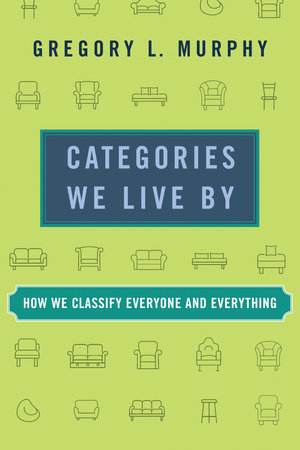
v Book review: 'Categories we live by'

Our lives and careers (hopefully) are full of bridges, some recognised, but not taken, others passed-by on our way (and unseen). Before I completed my training as a student mental health nurse beginning in 1977, I saw a critical bridge between the knowledge and skills on mental health nursing and general nursing. Crossing this bridge was essential (for me) to being a registered 'nurse'.

Chapter 6 on Psychodiagnostic Categories is a gift therefore. It's a gift because another bridge emerged in 1980-1981 with the Sinclair microcomputers and advent of 'home computing'. With a ZX81 there was going to be a need to navigate this space between the what is human and what is machine. Two categories that remain key concerns today.

The DSM (Diagnostic and Statistical Manual of Mental Disorders - published by the American Psychiatric Association [APA] ) is on the chapter's first page, plus the patient, researchers, psychiatrists and the conditions learned during their medical education, contrasted with individual psychiatrist's clinical encounters with patients. 

Very quickly (the next page p.86) Murphy identifies the 'circumstantial factors' that cause mental illness. This is very positive as acknowledging the determinants across health is key, however framed, e.g. social determinants, economic, educational we must take into account all of them. Otherwise our assessment must be considered as incomplete, or at least lacking?

The utility of Prof. Murphy's short book is in how prior to the case studies we see the problem of definitions. And how what is determined is often a matter of convenience. This is a non-trivial matter - especially in health, economics, sciences, politics, future and peace studies: you get the idea...

Of immediate relevance in the USA is the need for categories for insurance purposes. It is an industry. Yes, indeed: 'The truth is that psychiatric patients vary in every possible way', p.86. Computers of course are well-equipped to help us in the creation, revision and publication - access to categories; with classification, taxonomy, nomenclature ... also in the mix. I was reminded of WHO's history of classification (see below) which I point students and colleagues to.

The way DSM is applied is explained and the politics duly noted (especially in Chap. 7). Resort to 'miscellaneous' is described as a sign that 'the categories are not necessarily picking out 'natural kinds'. I remember in the 90s, our PICK database on a community mental health project had Murphy's 'X' not otherwise specified. I don't think I read the word 'caseness', but there is a lot 'inside'!? References are ongoing. I wondered if there could be more recent examples, but perhaps this is in turn symptomatic of categorisation tending to be the rear car? Fuzziness is discussed. Plus, the observation that 'a few psychiatric categories may be true natural kinds, like gold or rainbow trout.' p.89. 

'Change' is a mantra for all disciplines in the NHS and global healthcare. So pragmatic to see how revision and change in the DSM can be used by - dare I mention - anti-psychiatry advocates and clinicians as to what change represents to these respective interest groups? At a time when research is experiencing funding changes, Murphy contrasts how DSM was developed for the use of clinicians to identify people with similar profiles, but they were not developed to identify (research - Nat. Inst. for Mental Health) underlying causes. Raising the determinants once again, p.91.

It is obvious but as personnel and Brits may look at private medicine with coding purposed for insurance purposes; there is within the NHS (public-funded healthcare) and psychiatry (a single domain too) within and the need by patients for diagnosis, and the welfare system. Here in the UK the rise of mental health in young adults, autism and waiting lists for assessment for ADHD are a moot point.  

Through Hodges' model we some possibly fascinating bridges, that are much less-travelled these days? In many cultures, even if we do not need permission to be sick, it needs to be recognised socially - and so politically. Society needs to deal with individuals who are ill, infirm, disabled. It's interesting then to reflect on this issue and phenomena through the lens of anthropology and medical sociology. Murphy warns to of the dangers 'of thinking of something as being the category'. In medicine a new approach is needed, as Murphy also notes. A nice bridge to chapter 7 Categories and Power.
'The case studies discussed in the previous chapters remind us that categories can be political and social tools. An old department chair of mine had the saying, "She who sets the agenda controls the meeting." We might coin a new one, "Those who make the categories control the outcomes." If your psychodiagnostic categories are made by working therapists and physicians, they might facilitate treatment- -and also benefit those practitioners. If they are made by researchers, they might not be very useful for treatment at all. And if they are made by insurance companies, all bets are off.' p.95.
Trying to take my attempts to find theoretical underpinning (category 'trying to clever') I've a diagram scribbled here. Nearby, p.100, I picked up on 'the cost of losing information or distorting reality to some degree.' Murphy picks up on the ICD Int. Classification of Diseases here. Twitter is still twitter here - thumbs up for that! There is a useful example of the impact of categories in age, pregnancy and medical attention provided.

From Chapter 8, I picked out: Naming Nature: The Clash Between Instinct and Science, by Carol Kaesuk Yoon. W. W. Norton: 2009. 352 pp. £19.99/$27.95 9780393061970 | ISBN: 978-0-3930-6197-0; and checking, I remember the book's cover. Murphy's book overall highlights the convenience of our categories, the ongoing challenges and everyday conundrums they present though the remaining chapters on Species (8); Peanut Butter, Potato Chips, Almond Milk... (9); Racial Categories (10). These all contribute, still building a coherent picture, chapter 10 vital among them with a url provided (which may have changed):

https://anthropology-tutorials-nggs7.kinsta.page/adapt/adapt_4.htm


The one-drop rule (David, 1991) on p.126, is deeply troubling. Especially so given some examples of human reasoning even today. Medicine, by way of blood tests, features again. I smiled wryly reading how people from different countries have different rates of disease, e.g. 'heart disease in Scotland'. Instantly, and crackling - a deep-fried Mars bar popped into my mind. 

The things people do. You - really could read this book! 

Murphy, Gregory L. Categories we live by: how we classify everyone and everything. Cambridge, MA: The MIT Press, 2024.

Many thanks again to MIT Press for the review copy and Prof Murphy for a great read.

Previously: DSM : fuzzy : categories