Hodges' Model: Welcome to the QUAD: Search results for curricula

Hodges' model is a conceptual framework to support reflection and critical thinking. Situated, the model can help integrate all disciplines (academic and professional). Amid news items, are posts that illustrate the scope and application of the model. A bibliography and A4 template are provided in the sidebar. Welcome to the QUAD ...

Showing posts sorted by date for query curricula. Sort by relevance Show all posts

Sunday, May 03, 2026

Global Experts call for Paradigm Shift in Medicine, Health and Education to Save Lives and Fight escalating Health Crisis

ACCESS NEWS WIRE – for PRESS RELEASE on Tuesday, 28. April 2026

A global consortium of 64 experts (72 entities, 5 continents) unveiled two coordinated consensus plus policy brief reports, outlining a science‑driven roadmap to confront escalating health crises and to tackle the growing burden of noncommunicable diseases (NCDs—including cardiovascular diseases, cancer, diabetes, etc.: 75% of global deaths; 82% in low-/middle income countries; 90% of all death in European region).

The centerpiece is HEAL—Healthy Eating & Active Living, ideally whole‑food plant‑predominant/vegetarian-vegan diets & daily exercise outdoors/active mobility—as the minimum, first‑line standard in health and care. The authors urge immediate action on Prevention-over-Treatment and reforming education and human‑relevant science (drug failure rate from animal studies is 90-95%, and as high as 99.6% for Alzheimer disease), with a rapid shift from disease‑centered reaction to person‑centered, lifestyle‑first cure and care.


Figure 1. HEAL means choosing a whole-food, plant-predominant (ideally vegan) diets coupled with daily exercise outdoors/in nature to kick-start better health. Credit: iStock/LightFieldStudios.


Sustainable health is for free but cannot be downloaded or prescribed—it must be lived daily and earned across lifetime through informed lifestyle choices, with HEAL as starting point. As childhood-entrenched health literacy lasts a lifetime; embedding HEAL from primary to tertiary education is the policy priority of our generation.” —Lead author Katharina Wirnitzer | PHT, University of Innsbruck & CCCTIM


Foto 2. Katharina Wirnitzer/Keynote on Vegan Diet in Sports. Credit: ©Katharina Wirnitzer.

Why change is imperative.

  • The paradox: Despite rising health spending and scientific advances, public health gains lag while ever-growing NCDs. The expert panel offers 101 consensus statements and a 10‑step policy roadmap to act across the lifespan—from individual behavior to population‑level change.

  • Why HEAL, and why now: HEAL combines Healthy Eating (whole‑food, plant‑predominant; preferably vegetarian/vegan) with Active Living (regular, ideally daily, including outdoor activity and active mobility). Evidence shows synergistic benefits beyond either alone, reducing reliance on drugs and surgery while improving resilience and sustainability of health systems.

  • Prevention-First (3:1): The reports recommend prioritizing prevention, health maintenance, and health promotion over treatment by 3:1 (Figure 3), making healthy choices the easy, first‑line intervention and reserving medicalized treatment for specific indications.

  • Education and workforce: Embed HEAL from primary through tertiary education and continuously upskill healthcare and education professionals to deliver evidence‑based lifestyle counseling, routine assessment, and monitoring. Improve meal standards and support active mobility in schools and public spaces.

  • Human‑relevant science: Accelerate the transition to non‑animal, human‑relevant methods for basic and preclinical research and for efficacy, safety and toxicity testing through funding priorities, validation, and regulatory adoption.

  • Policy roadmap: Apply Health in All Policies (HiAP) to link individual choices with systemic supports (Figure 4); invest in supportive defaults (healthy public catering, active transport, public‑space design, community HEAL programs); embed HEAL in curricula; and track outcomes with robust evaluation to scale what works.


Every dollar/euro invested in evidence-based prevention saves multiples in treatment. HEAL is the smartest first investment a health system can make.” —Bernd Haditsch | ÖGK – Austrian Health Insurance Fund, Prevention Unit
Obesity is a disease with powerful drivers. HEAL gives every patient a proven, first-line foundation to reclaim their health.” Fatima Cody Stanford | Harvard Medical School & MGH
A doctor who cannot counsel patients on the Power of Lifestyle, especially on food and movement, is only half-equipped. Lifestyle education in medical school is the missing foundation of modern medicine. Helping our patients to eat a more plant-strong diet is the most powerful healing medicine we can prescribe.”
Michael Klaper | Moving Medicine Forward
Plant-forward diets provide a powerful opportunity to concurrently improve health and wellbeing for people, farmed animals and the environment.“ Andrew Knight | Griffith University


Figure 3. Four areas-of-action, balanced 3:1, to achieve lifelong health. Credit: ©Katharina Wirnitzer.


Given its cost-effectiveness, Traditional, Integrative, and Complementary Medicine will be the evidence-based mainstream of tomorrow’s global healthcare.” Tomáš Pfeiffer | ITCIM & SANATOR
Treatment alone will not sustain health systems. HEAL connects prevention, lifestyle medicine and integrative care to advance salutogenesis on a planetary scale. We must invest far more in creating health.” 
—Georg Seifert |
WHO CC & CCCTIM, Charité Universitätsmedizin Berlin

The science clearly shows that, when it comes to human health, animal protection is a win-win.
Given human health’s complexity, and
since animal testing virtually fails to cure human diseases, human-relevant methods already outperform animal experimentation and must therefore be implemented with priority in science, with funds going to human-focused research.
Citizens in the EU and US have spoken clearly in favor of this transition.
HEAL can prevent many diseases, avoiding the need for animal studies altogether
.“
Merel Ritskes-Hoitinga | Universities Aarhus & Utrecht; Doris Wilflingseder | Vetmed Uni Vienna, Aysha Akhtar | Center for Contemporary Sciences, Corina Gericke & Gaby Neumann | Doctors Against Animal Experiments


Figure 4. Systemic application of HEAL to reach target groups and improve personal and public health across micro (individuals/families), meso (communities), and macro (state/government/federal policy) levels, ensuring optimal vertical and horizontal permeability and integration. Credit: ©Katharina Wirnitzer.

Key Actions at a Glance.

  • Make HEAL the universal starting point and minimum, first‑line prevention standard.

  • Implement lifestyle‑first counseling before routine prescriptions.

  • Prioritize Prevention-over-Treatment with an 3:1 balance.

  • Mandate lifestyle education in schools; embed HEAL across tertiary programs.

  • Continuously upskill professionals for evidence‑based lifestyle counseling and monitoring.

  • Accelerate adoption of human‑relevant methods to end animal experiments in research, education and regulatory testing.


Figure 5. The Power of Lifestyle: Start with the dual HEAL approach across 6 interconnected areas to improve health and well-being. Credit: ©ACLM. Graphic modification: ©Katharina Wirnitzer (permission: 24.11.2021).


Contact for further information

Katharina C. WirnitzerProfessor for Sports Public Health with a special focus on Child Public Health

Email: katharina@wirnitzer.at | Cell: +43 (650) 5901794

University College of Teacher Education Tyrol (PHT), Innsbruck, Austria

Saturday, December 13, 2025

WCCS26: Abstract 'Presenting a Universal and Simple Conceptual Workbench to Situate and Encompass Complexity'

ABSTRACT

Background

In health and social care there is, as yet, no universally recognised model, or framework applied and taught across all academia, fields of practice, professional disciplines and apprenticeships. At a time when ‘truth’ is challenged by information disorder, AI, and curricula are overload, this is both a stark and hidden problem. Medicine was quick to embrace complexity as an additional scientific tool. Complexity extends our understanding of epidemiology, demographic trends, the birth of modern bio-genomics, pharmacokinetics, public health, workflows, patient safety and more. The medical and bio-medical models are subject to critique, especially in psychiatry in terms of their conceptual scope and holistic bandwidth. Consider for example, the representation of patient and public engagement, human rights, climate change, poverty, refugees and natural disasters? The field of psychiatry extended these models to the bio-psycho-social model.

Methods

Despite this ‘progress-ion’, profound legacy issues remain: 
  • The dualities of INDIVIDUAL-GROUP and HUMANISTIC-MECHANISTIC
  • Sustainable services and systems, change to emphasize prevention and education (not just cure)
  • A lack of parity of esteem between mental illness and physical illness
  • A complicated relationship between psychiatry and psychology
The 21st century demands we also factor in economics, technology, social media - especially AI, education and literacies, geopolitics, security and more. This paper argues that we need a bio-psycho-socio-political model stat! This paper introduces and demonstrate the generic conceptual framework known as Hodges’ model.

To date, Hodges’ model has been explained and studied by guided discovery through lectures, workshops, posters, show and tell, and discussion groups; plus descriptive means of case study, and in practice patient care assessments and case formulation. Journal papers include conceptual analysis and synthesis, concept mapping of issues, e.g. nutrition and the sustainable development goals, plus oral health and policy frameworks (in-process). This paper ‘workbench’ encourages and facilitates reflective practice and critical thinking on an individual and collective basis. The derivation of the structure and content of Hodges’ model through guided discovery will be shared.

Results & Discussion

The background to Hodges’ model and its creation is introduced. In health care delivery, evidence-based interventions are of course paramount to patient, and public safety. Work to ‘see’ Hodges’ model as a mathematical object has begun. Help and collaboration is welcome; especially with supervisors of early career researchers and scholars in LMICs. Examples of complexity will be mapped to the knowledge (care) domains of Hodges’ model, which can itself be embedded within the spiritual. This paper responds directly to WCCS26’s main theme; and the need to listen to the lessons of history and isolate, weigh, refine and seek to preserve the often hard-won values that sustain humanity, humanistic care and qualities at a time when these are under assault, e.g. assisted dying – a right to die, or a duty? A small but growing bibliography, a template, plus illustrations of Hodges’ model are provided. Background on Hodges’ model can be found in the blog ‘Welcome to the QUAD’ - https://hodges-model.blogspot.com

Keywords: Healthcare, Nursing, Hodges’ model, Humanities, Global health

Topic: Complexity in Health and Medicine

🔷

News of acceptance was received on 29th November: brilliant! The deadline for submission of full-papers is 25th December. Try as I might, I can't meet this date. 

Helpfully, a presentation based on abstract alone is acceptable. I am hoping to network and learn too. The draft notes on Hodges'model as a mathematical object (6k words) are helpful in framing thoughts about the presentation and a future paper as a writing project. All in, a marvellous end to 2025 and prospect for 2026.

Friday, October 24, 2025

Come on Healthcare: catch up will you!

Within philosophy it is recognised that Immanuel Kant provided a means by which the rationalists and empricists can be reconciled. Some background:

In philosophy, rationalism is the epistemological view that "regards reason as the chief source and test of knowledge"[1] or "the position that reason has precedence over other ways of acquiring knowledge",[2] often in contrast to other possible sources of knowledge such as faith, tradition, or sensory experience. More formally, rationalism is defined as a methodology or a theory "in which the criterion of truth is not sensory but intellectual and deductive".[3]  https://en.wikipedia.org/wiki/Rationalism
In philosophy, empiricism is an epistemological view which holds that true knowledge or justification comes only or primarily from sensory experience and empirical evidence.[1] It is one of several competing views within epistemology, along with rationalism and skepticism. Empiricists argue that empiricism is a more reliable method of finding the truth than purely using logical reasoning, because humans have cognitive biases and limitations which lead to errors of judgement.[2] Empiricism emphasizes the central role of empirical evidence in the formation of ideas, rather than innate ideas or traditions.[3] Empiricists may argue that traditions (or customs) arise due to relations of previous sensory experiences.[4]

Historically, empiricism was associated with the "blank slate" concept (tabula rasa), according to which the human mind is "blank" at birth and develops its thoughts only through later experience.[5] https://en.wikipedia.org/wiki/Empiricism

If health and social care, must be evidence-based, then as far as Hodges' model is concerned we are then duty-bound to use the most readily available 'evidence' to us, including (while taking liberties?):

  • The structure of national health and social care organisations (NHS, DHSS ...)
  • Physical infrastructure
  • Human Resources Organisation
  • Unions and Labour relations
  • Texbooks, journal papers, conferences
  • Organisational structures from the regional to the local
  • Professional bodies and governance of licensing/registration
  • Curricula that students follow^
  • Models, frameworks, teaching and learning tools and methods
  • Data, statistics, information and reporting (national, international)
  • Research projects ongoing (whatever scale, methods, methodology)
  • Accounts from lived experience of patients, carers and public (^and students)
  • Policy
  • Funding
  • Law relating to Health and Social Care
  • Public (Mental) Health? Discuss
  • Media (Social) Control, Advertising
  • . . .

Hodges' model: Structure and Content


Using this evidence, we still see the Cartesian divide, the mind-body distinction writ large in health and social care. The continuing impact is evident in theory, practice, (hence) lived experience, policy and managment. Since its creation in the 1980s, Hodges' model mirrors (literally) this philosophical, epistemological and ontological legacy, thereby acknowledging the ancient history of medicine, and 'modern' development of healthcare and nursing. Through this device, Hodges' model can facilitate debate, critique, reflection, and critical thinking; to encourage progress in our thought, motivations, action and subsequent evaluation.


This explains the structure of Hodges' model and predicts the range (contextual signature) of content when the model is applied.

Evidence permitting of course!

See also: BBC The Great Philosophers:

Series 1: 4. Descartes

Series 1: 5. Spinoza and Leibniz

Series 1: 8. Kant

n.b. I video taped this marvellous series when first screened. When studying for my BA(Hons), audio taped, they also provided a great learning resource in the car. The programmes are on BBC 4 (UK) once again, but are readily accessible.

Saturday, August 23, 2025

Seeking Alpha?

OK. I admit it. I submit!

Despite many posts tagged economics, references to capitalism, the recent reading of Prof. Borras's 'Health and Health Care Inequities', it looks like the search for 'alpha' has won out.

Health, healthcare, health systems and health services, universal health coverage, universal access, planetary health, social care and more SDG3 are playing catch-up. This is inevitable. That is clear, as and in the lives we live.

We shouldn't be ashamed. 

As curricula (by and large), medicine, and academia keep telling us:

health care is bio-medical, or at best bio-psycho-social.

Business, commerce, neoclassical economics, in short - Capitalism holds sway within the political domain. It influences policy, sustains the existing ill-health care system paradigm. Without which, we must acknowledge of course, COVID, and other threats, the ageing populations in many nations ... society as we know it would be in serious trouble, if not at risk of collapse.

Individual
|
      INTERPERSONAL    :     SCIENCES               
HUMANISTIC  --------------------------------------  MECHANISTIC      
 SOCIOLOGY  :    POLITICAL 
|
Group


psycho-

bio-medical

-social


"What Is Alpha?
Alpha (α) is a term used in investing to describe an investment strategy’s ability to beat the market, or its “edge.” Alpha is thus also often referred to as excess return or the abnormal rate of return in relation to a benchmark, when adjusted for risk."


The literature in the past has identified the risks of free-ranging reflection. Two sources are referenced in the paper published this month:
61. L. Platt, “The ‘Wicked Problem’ of Reflective Practice: A Critical Literature Review,” Innovations in Practice 9, no. 1 (2014): 44–53. 
62. A. de la Croix and M. Veen, “The Reflective Zombie: Problematizing the Conceptual Framework of Reflection in Medical Education,” Perspectives on Medical Education 7 (2018): 394–400.
There is a truth here, however. It looks to me like the economists, politicians, and policymakers are engaged in navel-gazing.

To fully apprehend health, healthcare, and prevention in the 21st century we must reflect upon and think critically biopsychosociopolitically.

Then collectively the disciplines, embedded in the spiritual 

ALPHA CARE 

is presented to us.

Individual
|
      INTERPERSONAL    :     SCIENCES               
HUMANISTIC  --------------------------------------  MECHANISTIC      
 SOCIOLOGY  :    POLITICAL 
|
Group


What is Alpha? - https://www.investopedia.com/terms/a/alpha.asp

Image: https://iconscout.com/icons/alpha

Sunday, June 01, 2025

RCN Congress 2025 iv - AI & quality improvement

Discussion: Artificial intelligence in nurse education &
Discussion: The role of nursing staff in quality improvement


We'll cover two agenda items in this post. First, resistance is futile in the apparent rise and ubiquity of artificial intelligence.

Discussion: Artificial intelligence in nurse education

Here is, another thing 'we need to get right'. Without checking, I'm sure I posted/tweeted about 'essay factories'. Now Generative AI has put the automated generation of academic essays on steroids. If a student is not motivated to learn, enthusiastic about their seemingly chosen course of study and the professional reward to be earned, then we are in trouble. Public and patient safety are at risk. AI, is however is here to stay - change and help us prosper(?). AI and GenAI are tools, just another step forward, an advance on finger tips, palms, stick, chalk, pencil, and pen. The brief for the discussion includes, with specific points emboldened:

'... Additionally, AI-driven simulations and virtual reality scenarios can provide hands-on experience in a controlled environment, enabling students to practice and refine their skills with greater confidence. 

Creating an engaging and supportive learning environment is key to helping nursing students embrace AI. HEIs can introduce AI concepts early in the curriculum and provide ongoing training and resources. Encouraging collaboration and open discussions about the benefits and challenges of AI can further enhance students' confidence in using these tools.

By taking these steps, nursing education can seamlessly integrate AI, ensuring future nurses are equipped to excel in an evolving health care landscape.

To effectively integrate AI into nursing education, RCN Wales, for example, advocates for higher education institutions (HEIs) to equip students with the skills to continually enhance their digital and biotechnological literacy, ensuring they meet their programme outcomes.

HEIs can incorporate regular assessments and feedback mechanisms to monitor a student’s progress and determine where AI tools add the most value.' . . .

Computer-aided learning has matured greatly since the 1980s and 1990s. AI and GenAI mark the seeming leap in progress over the past two years, with governments, professional bodies and society having to adjust and quickly. We need to watch how simulation, and virtual reality and other approaches to learning are applied, to assure the quality, safety and learning experience provided to students. There appears to be a risk in mental health nursing curricula being 'diminished'. Interpersonal skills are critical in psychiatric and psychological care. This might afford the advocates of technically-laden solutions to side-step the nuances of face-to-face human interaction. Amid the pursuit of what is mechanistic, let us value the humanistic also.

The biotechnical, is one a several literacies to keep sight of. AI, is of course bound up in bio-political concerns, that are still emerging. The 'health care landscape' is plural too: consider the patient's home, a ward, out-patient department, e-consultation, e-learning intervention, brief psychotherapy, occupational health, carceral care, and field hospital, veterans, migrant - refugee health and the homeless.

There's more, and references and a reading list are also provided on the above link.

'Quality improvement is about making a difference to patients by improving safety, effectiveness, and experience of care.

All nursing staff should have the abilities and support to become involved in addressing health care pressures, utilising their expertise in the profession as leaders, not only in care delivery, but also within the system. However, the work of nursing staff to deliver quality improvement is often limited to opportunities that are dependent on staffing, seniority and availability. 

Nurses’ willingness to attend training is often superseded by patient demand making attendance impossible. Other health care colleagues undertake work on research and service improvement alongside their role and as a requirement for their revalidation, this is not the case for nursing staff who don’t get these opportunities.

Consider the benefits of the nursing workforce undertaking quality improvement, conducting local research, reorganising working environments, translating or updating patient materials, trialling novel approaches to care or addressing health inequalities. These skills would not only improve the quality of care we provide but also prepare the nurse to influence and change systems throughout their career.

This is relevant UK-wide. Scotland's 2030 vision for nurses, states an intention to equip nurses with quality improvement tools and support, but only nurses in non-hands-on roles. NHS Wales offers quality improvement training through e-learning  via the ESR to health care professionals, in Wales. In Northern Ireland training is available, but only for Band 7 and above.'

What is the role of all nurses to get involved in quality improvement?'


There is a point with IT security that if it was 100% assured with all the prospective log-ins of an average user, would we ever get any 'real' work done? Does the same apply to research? I have heard this as an argument in practice; and a response to a drive for quality improvement too. Data takes time to collect, especially to answer new questions. Such arguments were also fielded when models of nursing were spoke of with eye-rolls and sighs of experience. Quality improvement is a fight, opportunities and resources can be found, especially if a culture of research is nurtured and sustained. What questions does a ward, unit, team have currently? What queries might new starters, newly qualified, students, and placement candidates provoke? If my reference to fighting seems strong; the fight is for time. The raw truth is in the NHS that quality improvement, research and supervision (in its various forms) are in competition, in the absence of coherent integration.

In bold above, the discussion includes:

'trialling novel approaches to care or addressing health inequalities'.

I wonder what that springs to mind? More seriously, we need be aware of what happens to 'quality'; in whatever educational form it is encountered and experienced. 

individual
|
INTERPERSONAL : SCIENCES
humanistic ------------------------------- mechanistic
SOCIOLOGY : POLITICAL
|
group

interpersonal skills

informal / formal education
QUALITY
lifelong learning

biotechnical

landscape

quality improvement - clinical supervision?
inequity

social preparedness for AI/GenAI


management supervision?


Sunday, April 20, 2025

Safety testing time - evaluations - for users of Hodges' model to be extended

The time to test Hodges' model* is to be extended (in my dreams...).

Or. Do not underestimate 'simple' models.

The time to evaluate Hodges' model:

  • for individual users
  • cross-curricula
  • professional groups (e.g. registered mental health; and general nurses)
  • within multidisciplinary / skilled teams / venues (Nursing home, Community Mental Health Team)
Given the universal, multicontextual scope of the model for public and patient safety it was decided to extend the time for testing by a further month to two quarters [ 😉] - six whole calendar months.

When applied it is important that checkpoints are agreed:

  • Data gathering - initial interview
  • initial formulation / care plan
  • care review / evaluation
  • discharge - staying well 
There is no agreed standard for testing a generic model in healthcare. Is there?
  • Not for the medical / bio-medical model
  • Nor, for the biopsychosocial model?
What chance then for a biopsychosociopolitical model?

*Per user and group of users of course.

My source: 
Christina Criddle, Concerns raised after OpenAI slashes time taken to test potential risks of latest models, FTWeekend, 12-13 April, 2025, p.14. (italicised terms discussed).

See also:
Radhika Rajkumar, Editor. OpenAI used to test its AI models for months - now it's days. Why that matters, ZDNET.

https://www.zdnet.com/article/openai-used-to-test-its-ai-models-for-months-now-its-days-why-that-matters/

Tuesday, April 15, 2025

The 'animal' in Hodges' model ii

The two pairs of eyes in Hodges' model are provided through the model's two axes

HORIZONTALLY: the humanistic and mechanistic.

VERTICALLY: the individual and the group.

Hodges' model: Axes & Domains
Structure AND Content :: Fight OR Flight

Before delving into this though, let's revisit the model as a template.

Structure aside, Hodges' model acts as a conceptual blank sheet. Overall, the model is also an aide-mémoire. It can prompt us to 'where' we've been, where we need to go in our data gathering, assessment, planning, interventions, evaluations: personal history, family, work and leisure. In an interview how does the patient, client, carer, student ... negotiate the domains of Hodges' model? The model can guide us in what is said, what is omitted - for whatever reason, what is significant within all this; AI-assisted or not.

These two 'horizontal' eyes prompt us to attend to safety, your own, the patient / client and other people in the vicinity. In terms of responding to 'fight', obviously this does not mean you are looking for a fight, but of course you have to be able to defend yourself. Metaphorically, Hodges' model can represent the sword and shield. We are in a fight for justice to secure health services for individuals, families, and the population.

On the side - vision for flight, what is humanistic and mechanistic.

Then, in the vertical axis, there is vision for fighting, for the individual, and the group - population.

In this interplay of person and collective, I'm reminded of Odysseus and the shout "Nobody did it!" (with other sources). It never ceases to amaze, the frequency of this conclusion throughout local, national and global politics?

The individual nightmare of Cyclops; and collective nightmare of the Panopticon.

In mental health nursing you quickly learn about the anatomy^, physiology and psychology of anxiety. Not necessarily simultaneously, but the jig-saw is there to be completed, at least as far as you can as a 1st year student - whatever your health discipline. The pieces that matter (literal keys to action) are provided by the patient, client, carer. ...

In a way it is too late when people are referred to mental health services. Too late for prevention, but given the incoherence between:

  • health systems (as usually found & founded)
  • government policy -
    • state of nutrition - food
    • advertising of foods, beverages
    • life style choices
    • education - health literacy
      • individual
      • family
      • community
      • national (curricula)
  • NHS? National Health Illness/Disease Service
- this isn't a surprise.

Whatever an individual's sensory capacities and abilities we need to do better. With tools to facilitate situational awareness, and realise an individual's and community's potential to learn and prosper.

^Anatomy? How many of us take for granted our limbs are 'there': ready to react?

Previously: The 'animal' in Hodges' model i

Original source - prompt:
Doniger, Wendy. The Rise and Fall of Warhorses. The New York Review of Books. April 10, 2025. Volume LXXII, Number 6. pp.17-19.

Sunday, February 02, 2025

Social Capital - related to Hodges' model: c/o Andy Haldane FT

'The world is more diverse and interwoven than ever before - economically, culturally, ethnically, generationally. This is largely the result of the postwar explosion in cross-border flows of:'
ME
|
      INTERPERSONAL    :     SCIENCES               
HUMANISTIC  --------------------------------------  MECHANISTIC      
 SOCIOLOGY  :    POLITICAL 
|
WE

INFORMATION*

GOODS

PEOPLE

MONEY

 *Here I am treating information as analog - attached to meaning and sense-making, human reasoning - thought; information is of course also digital and an economy in itself.

'There is no ecosystem on the planet that is not enriched by increased diversity. The complexity of rainforests and oceans explains their abundance. In social systems, the cross-pollination of ideas, cultures and practices in diverse communities has been a driver of innovation and dynamism for millennia.
Yet this is a double-edged sword. A rainforest or an ocean are vulnerable to antagonistic arrivals such as humans seeking timber or fish. If cultures clash rather than cohere, diverse communities exhibit similar fragility.
Every complex system faces this balancing act, but it can be improved by strengthening ties and trust - what Harvard political scientist Robert Putnam calls social capital. The depletion of social capital over the past half-century, documented by Putnam, has tilted the scales decisively towards fragility. Today's open, connected economies are nested in brittle, disconnected societies. Neither can flourish like this.
One policy response is to reverse economic course, tightening restrictions on cross-border flows of people, goods, technologies and information. While economists (like me) tell us that doing so would diminish economic dynamism, given these policies address the insecurities felt by many at source, it is no surprise they are gaining support - especially on immigration and trade.' 

ME
|
      INTERPERSONAL    :     SCIENCES               
HUMANISTIC  --------------------------------------  MECHANISTIC      
 SOCIOLOGY  :    POLITICAL 
|
Group

My - sense of security
My - trust

 (AFTER) -
FORETHOUGHT


... Rainforest : Ocean
Wetlands : Kelp forests ...^

Maps of Social Capital1

Spatial planning


Social capital
Social mobility
Sociable housing2
Social cohesion

Social -

Policy
Curricula
Governance, Citizen Trust
Nat. Strategy for social connection3

Capitalism

'An Office of the President or Prime Minister, charged with lacing social cohesion through policy, should be hard-wired into the machinery of governments.'

(Here, here!).

1. Raj Chetty - Social Capital Atlas: https://www.socialcapital.org/
2. Richard Sennett
3. Chris Murphy

^Sometimes perhaps the map is the territory? Discuss.

With thanks to:
Andy Haldane, How to get from the me to the we society. Opinion: FT Weekend, 14/15 December 2024, p.12.

Upswing image: 
https://www.allenandunwin.com/browse/book/Robert-D.-Putnam-and-Shaylyn-Romney-Garrett-Upswing-9781800750371

Friday, January 31, 2025

Saving 'a' School of Nursing ... Cardiff, et al. (2025 ...)?

Individual
|
      INTERPERSONAL    :     SCIENCES               
HUMANISTIC  --------------------------------------  MECHANISTIC      
 SOCIOLOGY  :    POLITICAL 
|
Group

Nursing has provided many models and theories and (even as some have scoffed), we could be on the cusp of new things; with the ideal model - for reflection, reflective practice, and critical thinking. Surely this is worthy of ongoing undergraduate and post-graduate study?

What message does closing a SoN send to:
  • the public;
  • other universities, colleges and schools;
  • to students (and alumni) selecting subjects for study;
  • to highlighting the mental health impacts on campus for students, faculty and researchers;
  • other disciplines;
  • the policy makers (APPGs ...);~
  • other nations?
You know: students and families know -  #MentalHealthMatters!

Ethics too - with the need for self-care, sustainable services, recognition of ALL the literacies.

Nursing isn't Philosophy (and others..) with dept.s globally also under threat, but you can find it there - in uniform and civilian dress with all the -isms to be negotiated.

Nursing has moved on from its past, but still calls on giving of self, a certain character, self-awareness. ... Closure!? And, just as it was getting all transdisciplinary!

You've exposed here the literal primacy of an individual's 'health career' : how this is impacted by life chances.^

If you hadn't noticed, the robots & AI are coming.  Ah! But of course, you do know that's were the £££ is. Indeed they are already here.

Nursing is an art and science, but in terms of data, the future workforce requirements are stark.

We need to act today - 4 tomorrow!

Each nation needs its own nurses.

Here is a way to contribute to global health; (there must be a way to achieve equity).

Parity of esteem too: health is mental AND physical.

This misses the continuum that touches so many curricula from the SELF to PLANETARY health.

How will we pursue (confirm?):
  • Models of Care & Nursing Theory still has a place?
  • Nursing & Nurses can deliver much a-Cross curricula, and as collaborators in research.
Nursing can contribute so much to the community of lifelong learning.

No! No! Nursing is much more than bio-psycho-social. It is BIOPSYCHOSOCIOPOLITICAL:
- pardon the irony, but thank you for the evidence.

Nursing has much to offer in education, EdTech, informatics, living in the 21st Century.
What about history?
 
What would Betsi and Florence say?

What about the future health of society: improved nutrition, air quality, climate change, emergency preparedness and the true Nat. Health & Care Services?

Especially, as so much is incomplete: 
consider - Social care, Community Care, Older Adults - demographic change, Prevention and Health Education, Public Health & Public Mental Health.

A measure of a culture - society isn't merely how it looks after the sick and disabled, it is also (must be) how it educates its populace. 'Teach your children well.'*

^Nursing knows (really) that it is not merely a case of the social determinants of health. It is all - political, economic, education ...

Does this mean Project 2K is a mistake? Was Project 2K a waste of time, effort and resources? 

What of the students to date: the fees, COVID ..? What was promised to this Profession - these Professionals? Or is this LIFO at work?

How do Nursing's leaders respond - in light of the frequency Nursing is poorly, or not represented at the 'table'?~

Nursing is dynamic, not only shoe leather and mental gymnastics, but the demands placed on curricula, call for a curriculum design, planning, development and evaluation resource.

Nursing can help inform the National Care Services, and provide part of an incredible career pathway.

- wither a Duty of Care - Social Responsibility?

Sorry, what are the reserves? Saving for a lunar campus, no doubt? Well, healthcare will be needed in space too.


Will you switch off the lights, or will the nurse have to return with the keys to 24/7/365 care?

*https://www.youtube.com/watch?v=dQOaUnSmJr8

https://en.wikipedia.org/wiki/Space_Nursing_Society (resurrected?)

Saturday, January 11, 2025

Are you planning a health* study in 2025?

New Year - new project perhaps?

*nursing, mental health, theory, practice, management, workforce, medicine, allied health professions, social work, psychology, labs, diagnosis, palliative, end of life, diseases, public health, public MENTAL health, -isms, prevention, protection, education, learning disability, parity in care, informatics, information, literacIES, AI, arts, policy, leadership, migration, history, future, women, children, men, LGBTQ+, ethics, rights, health economics, social care, systems, services, climate change, refugees, conflict, law, leadership, resources, commerce, fraud, self-care, UN, WHO, UNESCO, regional, national, global, or planetary ..., ...

Is there a 'space' for Hodges' model in your study?

IF NOT, IMHO YOUR STUDY MAY BE INCOMPLETE!

Is this statement ...?

INDIVIDUAL
|
   INTERPERSONAL : SCIENCES              
humanistic ------------------------------- mechanistic
 SOCIOLOGY : POLITICAL   
|
GROUP

utter nonsense and arrogance

a psychological threat^

it's either a great joke, or a grand delusion

look - get real, we can't cover all the bases

calling attention to the high-degree of subjectivism in academia and health research

no, actually it is blatant evidence of bias and a lack of objectivity! Who is Hodges?

shamefully egotistical

our project does not need to consider:
reflection - reflective practice
critical thinking
holistic - integrated care: parity of esteem
person-centredness
the curricula (however 'expressed')

methods - methodology - philosophy

a sign we've found the true 'meta-' tool
(Yes, this is interesting!)

to the Nth degree!

a physical threat^

a fact - when critiqued using Hodges' model

limited apprehension of 'HEALTH'..

sheer ignorance

proof of an incomplete (grey) literature search

proof that 'not invented here' prevails

identification of relations and relationships is catered for, as are ...

safety, situational awareness, scoping, mapping, evaluation, analysis, synthesis, diagrams - graphical approaches, project mangement

potentially supporting inter- multi- transdisciplinarity

a sign that ('fashion') science, evidence have moved on: get over it!


a soul in search of a community of practice?

demonstrating much effort is falling on deaf ears?

time to listen, with all that's going in the world

Hodges, did you say? Sorry not here!

not commissioned/funded by a 'us'. 

what? No Doctorate? Go away: please!

who does that person think they are!

   fao project/research management group/committee?


^No threat is implied, on the contrary frustration ... If Hodges' model may be of use, please do get in touch. Thanks to all for your visits and best wishes with your respective projects, studies and careers.

Sunday, October 06, 2024

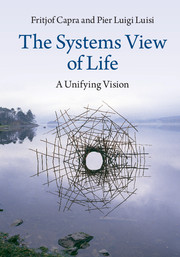
[v] Book: The Systems View of Life - A Unifying Vision

The Systems View of Life -
A Unifying Vision


Part IV begins with the ecological dimensions of life. There's a reminder that ecology, comes from the Greek 'oikos' for "household". We need this -

move you rubbish (don't leave it in the first place), wipe your feet; switch the lights off when not in use, assuming you have them!; close and open the windows as needed; think less 'location, location, location' and having a home.

Given the pictorial form of Hodges' model - mind-mapping - I've always been attracted to diagrams, no-less here the pioneering work of the Odum brothers and 'Odum flow diagrams' which even today are an ecological currency in the literature (p.344-45). An update on ecosystems as dissipative structures and as autopoietic would be helpful. Of course, now for scholars and students have search terms then resources and learning can follow. While ozone depletion is acknowledged, the role of the atmosphere could possibly be (briefly) expanded (guest essay, box?), in-particular the role of the Van Allen belts and the fact of Earth's magnetic field and (still) molten core. 16.2.3 definitely points the way pp.348-351.

16.3.1 Defining sustainability - made me sit up. Lester Brown's 1980's work is not referenced in:

Jones P, Wirnitzer K. Hodges’ model: the Sustainable Development Goals and public health – universal health coverage demands a universal framework. BMJ Nutrition, Prevention & Health 2022;5:doi: 10.1136/bmjnph-2021-000254 (From the bibliography listing in the sidebar of this blog.)
It was Brown who defined sustainability, and the question is ongoing regards how to build a sustainable society (p.352). Key as Capra 2002 notes is that a sustainable human community would not interfere with nature's inherent ability to sustain life. Ecological literacy 16.3.2 was also welcome; a constant theme on this blog, given the many claimed forms of literacy, as with (schools of) informatics. The informational perspective can reveal its power across literacies and informatics, consider media and information literacy? A way to paraphrase the authors: "The market and the marketplace is information disordered." (p.354).

Three chapters include descriptions of agencies (with links) that work with knowledge in an interdisciplinary way; where ecological and spiritual dimensions of education are emphasized; and in chapter 18 several other centers of learning. Chapter 16 looks at organisations with a focus on ecoliteracy in schools, colleges and universities. Checking some of the links many are ongoing - alive!
Struck in the past by the original approach of Goethe to 'science', his work on patterns is described in the introduction and here in relation to the arts and curricula. You will find 'art' sprinkled throughout the posts on W2tQ. Key concepts are described networks, flows, cycles, nested systems, dynamic balance, and development. Chapter 17 joins the dots of the world's problems. 'Growth' appears a disposable term, in how it is applied and so little understood, even by politicians and policy makers? Recent UK politics is a prime example. There is a another concurrent thread (to informatics and literacy) on this blog, as it is inbuilt, hard and soft-wired into the structure of Hodges' model. It is dichotomy, polarity and oppositions, specifically, objective - subjective, quality - quantity.
'In fact, the new systemic conception of life makes it possible to formulate a scientific concept of quality. It seems that there are two different meanings of the term - one objective and the other subjective. In the objective sense, the qualities of a complex system refer to properties of the system that none of its parts exhibit. Quantities like mass or energy tell us about the properties of the parts, and their sum total is equal to the corresponding property of the whole - e.g., the total mass or energy. Qualities like stress or health, by contrast, cannot be expressed as the sum of properties of the parts. Qualities arise from processes and patterns of relationships among the parts. Hence, we cannot understand the nature of complex systems such as organisms, ecosystems, societies, and economies if we try to describe them in purely quantitative terms. Quantities can be measured; qualities need to be mapped (see Section 4.3).
With the recent emphasis on complexity, networks, and patterns of organization, the attention of scientists in the life sciences has begun to shift from quantities to qualities, and there has been a corresponding conceptual shift in mathematics. In fact, this began in physics during the 1960s with the strong emphasis on symmetry (see Section 8.4,3), which is a quality, and it intensified during the subsequent decades with the development of complexity theory, or nonlinear dynamics, which is a mathematics of patterns and relationships. The strange attractors of chaos theory and the fractals of fractal geometry are visual patterns representing the qualities of complex systems (see Sections 6.3 and 6.4). 

In the human realm, the notion of quality always seems to include references to human experiences, which are subjective aspects. This should not be surprising. Since all qualities arise from processes and patterns of relationships, they will necessarily include subjective elements if these processes and relationships involve human beings.' pp.368-369. (My emphasis - and encouraging for research and researchers in Hodges' model)
The authors point out how the conjoining of 'sustainable development' is problematic when viewed in qualitative and quantitative terms (17.2.2 pp.369-371). I wonder what Capra and Luis would make of the SDGs and the metrics employed today? This has been an issue (reading for Jones & Wirnitzer, 2022), with measures needing to catch up and the disruption of COVID. There really is a case for economic literacy for people globally, as 'freedom' is so readily passed-off - associated with economics and trade as a 'right'. Another potential update revolves around globalisation, what would they make of Doughnut economics?

An additional risk now are the bitcoin factories and energy needed to drive AI data-processing. How transparent are global corporations in declaring their energy use? The LIBOR scandal is raised, but what the cost involved in Bankman-Fried and FTX-Alameda Research fraud? Capitalism is built on speculation and always will be? But if we defer 'paying' for economic transformation in a decade the costs will rapidly increase. Capra and Luis acknowledge the need to think about future generations. An ethical stance that is, thankfully, changing policy, and deserves attention.

I pencilled in the margin - what is the conclusion of the lesson of Argentina? Do the economists, the IMF, the World Bank, the Argentinian people know? What of the economic predilections of other nations? Who are the exemplars, the pioneers? Must Africa follow the West's bad-habits? Can they leap-frog technologies (land-lines, fossil fuel reliance ...)? I understand they are! In the West, do we need to re-invent public information services, to address the prevailing mindset? Even as the financial industry has passed-through a 'quant' phase, but mathematics still (and will always) hold sway (p.379).

Page 381 reminded me of the need for gainful employment, and how this is threatened and has always been threatened by technology (very broadly defined). The varied forms of parity of esteem become evident not just in health (mental - physical); education (technical - vocational), but employment too, especially with automation and artificial intelligence. The decade since the book was published leaves room for new content: what might replace or complement The Occupy Movement, The Seattle Coalition? The socio-political rate of change is remarkable. Greta Thunberg and Extinction Rebellion, for example, are clearly post-publication. The claimed rationale for business as usual in 'trickle down economics' remains relevant (sadly) p.384. More could be made now of the two numbers - 565 gigatons and 2,800 gigatons of carbon (350.org); and the current debate on carbon capture (Ah! p.408). 

I have over the years associated the intra- interpersonal domain with the individual's cognition, reasoning, logic, intellect, thought, and education. Collectively though we need to invert this:

individual
|
INTERPERSONAL : SCIENCES
humanistic ------------------------------- mechanistic
SOCIOLOGY : POLITICAL
|
group
education
EDUCATION

EDUCATION
EDUCATION


It is essential for every person to be informed were possible, to get to this situation (e.g. this book in a sense is an appeal for the public's understanding of science; and our political leaders):


individual
|
INTERPERSONAL : SCIENCES
humanistic ------------------------------- mechanistic
SOCIOLOGY : POLITICAL
|
group
EDUCATION
EDUCATION

EDUCATION
ANOTHER WORLD
IS POSSIBLE!


Chapter 18 pulls everything together (and provides HOPE) in systemic solutions. The previous post:

- drew on this chapter (p.398). I didn't realise 'commercial speech' is protected in the USA. 

As expected - a moral compass is still needed (p.430). I really the section on acroecology. It might be an idea to read this final chapter first. If there is a response to the question (there's no answer) as to why we are here - this is it. Biotech has its section, genetic engineering, the scope and risks, as does, the third industrial revolution, citing Rifkin's five pillars (2011). Agribusiness, world hunger, and the twelve myths:

'At a time of unprecedented wealth, when almost one-half of all Americans own stocks and are able to watch their wealth and economic power grow on the nightly news, it is good to remember that over 800 million people worldwide are passing the same nights unable to feed themselves and their children. A full quarter of other Americans, especially children, have much in common with the world’s hungry, experiencing their own hunger intermittently. Frances Moore Lappe and co-authors Joseph Collins and Peter Rosset in World Hunger: 12 Myths are there to remind us. Remind us of the plight of the world’s hungry, as Frances Moore Lappe has done for over 20 years, and remind us too that there is enough food; that hunger is not necessary; that hunger is a social creation; hungry people a social phenomenon, and consequently one that depends on us and that we can change.'

https://www.worldhunger.org/world-hunger-12-myths/ 

The chapter and book closes with a meditation regards hope. A comprehensive bibliography and index follows.

Despite the age of this book it has proved well-worth reading. I am glad I pursued my original request for a review copy. Well recommended and I wonder if there would be another edition? Clearly this would take a great effort, but then needs must? I will revisit the chapter on health. In the past week, the  the UK's last coal power plant closed (BBC News). Change is happening. And the weather globally of recent months cannot be denied. 

My thanks are extended to the team at Cambridge University Press for the paperback copy.

Fritjof Capra and Pier Luigi Luisi (2014) The Systems View of Life - A Unifying Vision. Cambridge: Cambridge University Press.

https://www.cambridge.org/gb/universitypress/subjects/life-sciences/genomics-bioinformatics-and-systems-biology/systems-view-life-unifying-vision?format=HB&isbn=9781107011366