Hodges' Model: Welcome to the QUAD: Search results for notation

Hodges' model is a conceptual framework to support reflection and critical thinking. Situated, the model can help integrate all disciplines (academic and professional). Amid news items, are posts that illustrate the scope and application of the model. A bibliography and A4 template are provided in the sidebar. Welcome to the QUAD ...

Showing posts sorted by date for query notation. Sort by relevance Show all posts

Tuesday, August 25, 2026

Medicine - Mathematics & History

'We now come to the input of mathematics into medical history, and to the related questions of arithmetic and quantification, ratio and proportion, geometrical argument and diagrams, and probability. Mathematics (consisting in arithmetic, geometry, astrology and music) had an established place in the quadrivium of the medieval arts course; its application to medicine is demonstrated in such textbooks as the Articella, which include treatises on weights and measures, and in studies of proportion and ratio such as those of the medieval Oxford calculators which Italian doctors among others caused to be revived at the beginning of our period. In the sixteenth century, it was a vigorously debated subject; there is a well-documented discussion of the certainty of mathematics, concerning its status in respect to the logical adequacy of its proofs, in which some natural philosophers and doctors (notably Cardano) take part. It will come therefore as no surprise that it was prescribed for doctors by most Renaissance pedagogical writers;  this prescription is often specifically linked to Galen's geometrical (axiomatic) method whose operations are the constitution of objects from elements, the comparison of existing objects and their reduction into their constitutive elements.

Associated with mathematics are diagrams, that is, abstract quantified spatial representations. There is a modern debate about the contribution of technical innovations in illustration in the Renaissance (most notably perspective) to the scientific revolution: this is only relevant here insofar as some participants in this debate argue for the importance of diagrammatic symbolisation of mental abstractions above those, like perspective, which are still representations of the real world, and see the former as a step on the path to full algebraic notation of geometry. Not all Renaissance thinkers were persuaded of their usefulness: Argenterio describes the diagrams of Manardo and Akakia reproduced below as 'vain and false tables and figures'; but I shall argue here that they were related to the uptake of doctors from the arts course insofar as well-known logical diagrams reproduced above (4.3:3) were adapted by them for their own purposes.' pp.171-172.

Maclean, Ian. 2002. Chapter 5, Beyond logic: geometry, proportion, quantity. In Logic, Signs, and Nature in the Renaissance: The Case of Learned Medicine. Cambridge/New York: Cambridge University Press.

Related to ongoing reading, Maclean provides two (among several) historical illustrations (with apologies for the quality) on pp.174-175, the first is from the Wellcome Collection:

Dubois, Jacques, 1478-1555 (Boe͏̈, Jacques, Bois, J. d., Boë, J., del, Boë, J., Del Boë, J., DelBoe͏̈, J., . . . Sylvius/de Bois). (1548). Methodus sex librorum galeni in differentiis et causis morborum et symptomatum in tabellas sex ordine suo conjecta paulo fusius ne brevitas obscura lectorem remoretur & fallat. de signis omnibus medicis, hoc est salubribus, insalubribus, & neutris, commentarius / ... per jacobum sylvium ..Paris: Retrieved from https://www.proquest.com/books/methodus-sex-librorum-galeni-differentiis-et/docview/2090356749/se-2

Jacobus Sylvius, 1539

Which Maclean then translates / interprets (p.174):

Maclean. Figure 5.1, p.174.

'Manardo goes further, and causes and symptoms adapts the square of contraries to represent not only all the possible combinations of temperaments (combinations of cold and hot and wet and dry are cleverly excluded) but also inserts a mediate point to represent the absolutely temperate body: see fig. 5.2.
This adaptation of the square of contraries (which has precedents in the medieval period) shows the appropriation for their own use by doctors of the logical instruments at their disposal.

As we have seen, it is a feature of medical thinking to take into account many circumstantiae or variables, and, over time, the numbers of variables taken into consideration increases.' p.174-175.

Figure 5.2 Giovanni Manardo, p.175.

individual
|
INTERPERSONAL
: SCIENCES             
humanistic ------------------------------- mechanistic
SOCIOLOGY : POLITICAL   
|
group

quality

logic

quantity
past - present - future
diagrams

symptoms - signs


subjective

objective

Previously: 'medicine' : 'history' : 'diagram'

Monday, May 18, 2026

CfP: Nonsense in Language and Thought

CFP: Nonsense in Language and Thought

Guest editor: 
Krystian Bogucki (Polish Academy of Sciences)

Deadline for submissions: 
the 31st of July 2026 

Description:

Studia Semiotyczne (Semiotic Studies) invites submissions for a special issue of the journal. Papers should be written in English and prepared for blind review. 

An interest in nonsense was a hallmark of the early analytic philosophy. Bertrand Russell (1908) thought that a theory of nonsense could help us avoid some daunting paradoxes in logic. Ludwig Wittgenstein (1922, 1953) and Rudolf Carnap (1931) recognised nonsense as a fundamental concept for philosophical criticism. They claimed that much of philosophical discourse is defective in the most fundamental way: it is neither true nor false, it does not consist of thoughts and propositions ? it is nonsense. According to the early Wittgenstein, philosophers want to describe the nature of the world, thought, language and ethics, but they unwittingly fall into nonsense. The Tractatus was supposed to free us from this troublesome position by presenting a perspicuous notation. On the other hand, the later Wittgenstein claimed that we should compare deceptive philosophical images with our ordinary ways of thinking and speaking in order to avoid nonsense. Philosophical problems arise when language goes on holiday, so we must always remember the everyday use of concepts. For Carnap, propositions should be reducible to sense data and constructed according to the rules of logical syntax in order to be meaningful. 

Later, the topic of nonsense was discussed by Alfred Ayer, Gilbert Ryle, Willard V. O. Quine, Arthur Prior, Richard Routley and Georg H. von Wright, among others. Since the late 1970s, however, the interest in nonsense has faded. Only recently, some important works have been published. The first important stimulus came from foundational works on theories of nonsense (Cappelen 2012, 2013; Camp 2004; Glock 2015; Magidor 2009, 2013). The second source of the revival of interest in nonsense was Wittgenstein scholarship on the austere and substantial conceptions of nonsense (Conant 2001; Diamond 1995, 2005; Glock 2004; Hacker 2003; Moore 2003; Sullivan 2003). Some works also examined the relation of nonsense to other phenomena (Gotham 2017, Keller and Keller 2021, Shaw 2015, Sorensen 2003). 

The important questions to be addressed in the forthcoming volume are (to name but a few):

  • What are the sources of nonsense? 
  • Are some parts of philosophical and non-philosophical discourse nonsense?
  • What is the relation between nonsense and figurative speech?
  • Is it at all possible to be wrong whether our own thoughts are meaningful? 

We hope that the special issue of Studia Semiotyczne will further strengthen and deepen the scholarly interest in nonsense. 

Possible topics include, but are not limited to:

Theories of nonsense
Nonsense and logical syntax
Nonsense and category mistakes
Nonsense and figurative speech (e.g. metaphor, metonymy)

Nonsense and fiction
History of the concept of nonsense (in particular Wittgenstein's and the Vienna Circle's views on nonsense)
Nonsense and understanding
Nonsense and illusions of sense
Nonsense and quantification
Nonsense and linguistics
Nonsense and ineffability
Nonsense, knowledge-how and knowledge-that
Logics of nonsense

Nonsense and semantic paradoxes
How to diagnose philosophical nonsense?
Metaphilosophical and methodological issues concerning nonsense
In order to submit the paper one is kindly asked to submit the manuscript by sending it to:
krystian.bogucki AT ifispan.edu.pl and studiasemiotyczne AT pts.edu.pl 

All submitted papers will be double-blind peer-reviewed.

My source (and emphasis):
Philos-L "The Liverpool List" is run by the Department of Philosophy, University of Liverpool 
https://www.liverpool.ac.uk/philosophy/philos-l/

Friday, April 17, 2026

Ann Hutchinson Guest (Obit.), 'Authority on dance notation ... '

'Although there are many forms of dance notation going back to Pierre Beauchamp's system for Baroque dance in the 1680s, Nijinsky had developed his own cryptic version. Ann Hutchinson Guest first tried to reconstruct his work in 1956 after the choreogapher's widow, Romola, gave her his notes. "I spent years trying to work it out," she said, adding with a laugh: And I'm supposed to be the leading authority on dance notation in the world. She told how Nijinsky had revised his notes many times, often contradicting himself. 'We couldn't get anywhere. Romolo was furious. She said it was taking much too long."
    Hutchinson Guest studied dozens of different dance notation systems, translating many of them into Labanotation, a system developed in the 1920s by Rudolf von Laban who was a central figure in European modern dance. According to a  press report in 1954: "The printed Labanotation page looks like a combination of hieroglyphs, pictographs, Morse dots-and-dashes, đoodles, and a musie score turned on edge" 
    It was not until 1980 that she and Claudia Jeschke, a dance historian, succeeded in cracking Nijinsky's code after finding a copy of his annotated score in the British Library.'
Register, The Times.

My source: Ann Hutchinson Guest (Obit.), 'Authority on dance notation known for reconstructing Vaslav Nijinsky's scandalous ballet, L'Après-midi d'un faune'. Register, The Times. 20 April, 2022, p.48.
https://www.thetimes.com/uk/obituaries/article/ann-hutchinson-guest-obituary-hkw8z88ns


INDIVIDUAL
|
     INTERPERSONAL    :     SCIENCES               
HUMANISTIC --------------------------------------  MECHANISTIC      
SOCIOLOGY  :   POLITICAL 
|
GROUP
abstraction
representation
interpretation
observation - translation
code - formalism

body (bodies)
symbols - forms
dance
choreography
movement - 4D - time

group
ensemble
'anthropological composition?'
'diagnostic grouping'?
social - cultural category . . .

'collective power & attention 
evinced as time'
'The stage: the space for health'^

Hutchinson Guest in 1956
 Source: The Times.


'Dance has been called moving architecture, a truth which the complexities of contemporary choreography may mask. Not only does the dancer's body form shapes and groups of dancers form moving or static designs, but also group arrangements carve up the stage space, establishing areas of open as well as enclosed space which are significant in their changes and contrasting effects.

While the rccording of movement on paper-dance notation-does not look like movement (disregarding primitive stick figure drawings), there is an "architecture" in the sequence of graphic symbols used to record dance patterns. Over the centuries many different devices have been used to capture dance steps on paper. What are the elements that have to be represented?

The process of dance notation requires reducing four-dimensional movement (time being the fourth dimension) to a two-dimensional surface. The parts of the body in action have to be defined, as does the form of movement involved (flexion, extension, rotation, directional placement) and the duration of each in relation to the overall time structure. In group dances the relationship of dancers to one another must be determined and recorded, as well as their location on stage and their paths of travel. In a dance score each performer is like a small orchestra-arms, legs, head, torso, etc. in motion-this is then multiplied by the number of dancers who are performing individual sequences.'


Guest, A. H. (1990). Dance Notation. Perspecta, 26, 203–214. https://doi.org/10.2307/1567163

^Health is always performed in the political domain, make no mistake (excuses, or exceptions). It is not:
  1. Acknowledged, masked - covered by the 'set design' (see #2 below);
  2. Implied in the medical, biomedical, bio-psycho-social model;
  3. The intermission is neither the time, or place, to reflect upon and critique the political in health :: health in politics.

Previously: 'dance' : 'architecture' : 'movement' 
 : 'notation'

Sunday, February 08, 2026

Intelligence - mechanistically speaking^

INDIVIDUAL
|
    INTERPERSONAL    :     SCIENCES               
HUMANISTIC --------------------------------------  MECHANISTIC      
SOCIOLOGY  :   POLITICAL 
|
GROUP
Mental
Intelligence


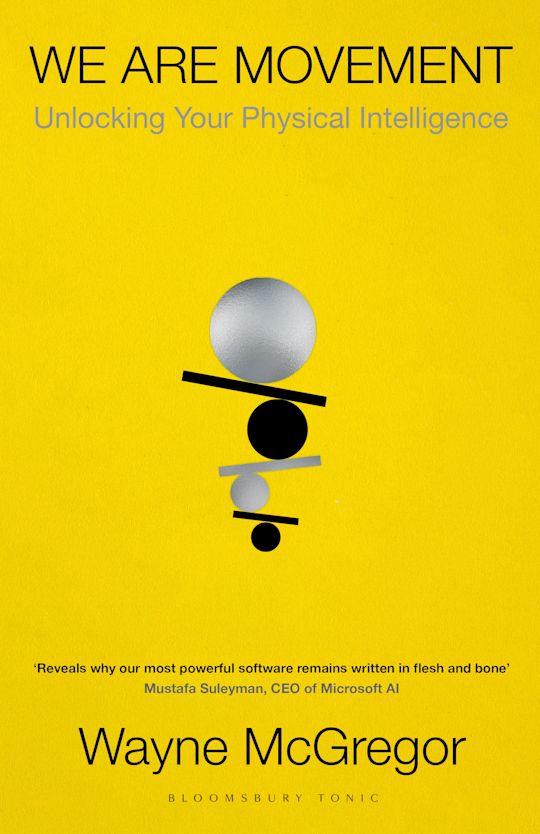
We Are Movement - Unlocking Your
Physical Intelligence

... ever increasing

'artificial' intelligence
 
here . . .?

"We?

 Yes... We! 

   We are  
a                       MOVEMENT!"


Wayne McGregor (2026) We are Movement: Unlocking Your Physical Intelligence. London: Bloomsbury. (Book cover) https://www.bloomsbury.com/uk/we-are-movement-9781526629531/

My source: Nadia Beard, Our bodies, ourselves. Life&Arts, FTWeekend, 17-18 January, 2026. p.9. 

Previously: 'movement' : 'dance' : 'intelligence' : 'art' : 'body' : 'AI'

^. . . help me find (a) the notation? 

Monday, November 25, 2024

The naïve approach

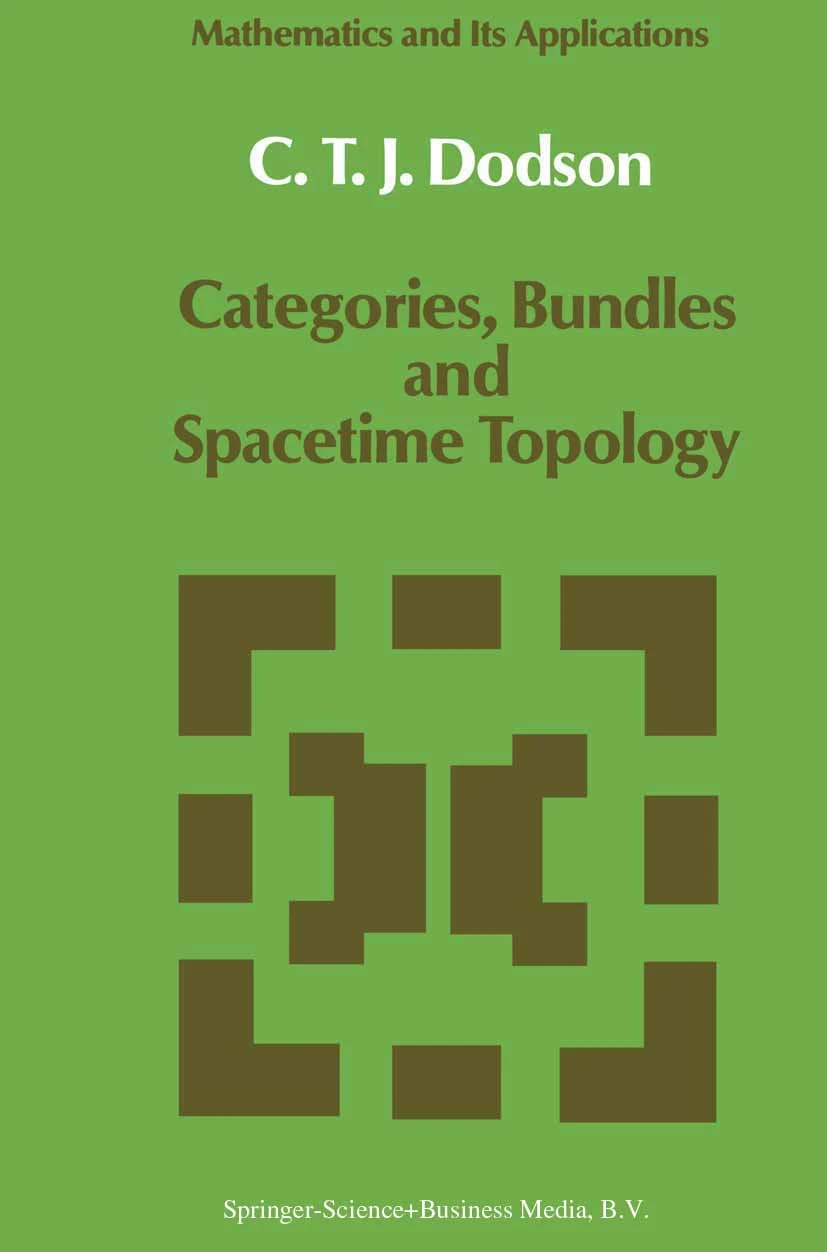
Categories, Bundles and
Spacetime Topology 
 

'First steps' are by their nature plagued by uncertainty of intent and direction, ungainliness, missteps, stumbles and ('finally') possibly falls.

Finding a starting point can be difficult.

Where to find a hand-hold, place one's foot, or other anchor?

At Lancaster University library I came across this book, first published in 1980. The cover displayed is from the 1988 edition.

In order of appeal I read:

applications, categories, spacetime and topology.

Section I starts with Preliminaries: Notation and Abbreviations; always useful (reminder).

The next, Section II Naïve Category Theory, had my immediate attention. We often speak of learners as being naïve. As lifelong learners we all meet this descriptor. I keep revisiting this word, concept - 'naïve'.

Naivety is a starting point for practitioners in health and social care too. Hence the need for supervision, mentors, the tokens of probationary (driver) and 'newly qualified'. 

Many posts on W2tQ stress the diagrammatic quality of Hodges' model. It is visibly a 2x2 matrix, (once again..) beloved of management consultants, psychologists and change agents. In Section II Dodson recognizes the London Underground map as a graph. A small example is developed, explained and illustrated on p.6. 

Graph example, drawing on the London Underground. p.6.

Section II may be a small part of the overall book but it is invaluable to me. As the photo above suggests, the book is old, especially as 1st edition. I will try to access the 2nd edition. If this work is a project with which you can (more ably!) assist, I would greatly appreciate your input. The aim is to signpost Hodges' model as a potential focus for all researchers. Especially researchers interested in trying to conjoin the sciences and humanities and develop visualization in the latter. 

C.T.J. Dodson. Categories, Bundles and Spacetime Topology. 1st Edition, Shiva, Kent. 1980.

Previously: 'math'

'Diagram' resources listed on former, now archived website.

Saturday, March 16, 2024

Hodges' model: An architectonic sense-making tool

"Translation by architectonic map is a sense-making tool inspired by Peirce's use of the term, architectonic, to describe the systematic form of a body of knowledge. Theorists create a structure around which their approach to understanding human conduct is built. Familiarity with the overall structure facilitates generalized discourse among those interested in the framework. An architectonic map identifies all the major components of a scientific text or canon, including its assumptions, concepts, propositions, and theories, and the paths connecting these components. Mapping architectonics is an intersemiotic (across two different types of sign systems) translation process when the translation product is a diagram, and an intralingual process when the product is a narrative." p.111. (My emphasis)

"Models employ symbols (terms and their meanings), but also have an iconic function (a design meant to represent a object or process in important ways) and an indexical function (notation indicating and pointing to persons, processes, relationships, organizations)." p.112. 


Individual
|
      INTERPERSONAL    :     SCIENCES               
HUMANISTIC  --------------------------------------  MECHANISTIC      
 SOCIOLOGY  :    POLITICAL 
|
Group
person

concepts

critical thinking

person

maps

framework


languages

dialogue - narrative

shared understanding

social worlds*

anthropology

organisations

communities of practice

professions, scope of practice

*translation here too:

policy, power, status ...


Forte, J. A. (2009). Interactionist Practice: A Signs, Symbols, and Social Worlds Approach. Humboldt Journal of Social Relations, 32(1), 86–122. http://www.jstor.org/stable/23263237


Sunday, October 30, 2022

An observational record and learning from 30,000 years ago

"A fascinating example is the shoulder blade of an ox unearthed in the 1980s (Figure 1) by archaeologists investigating a stone age encampment in the south of France. Carbon dating showed this to be approximately 30,000 years old. The bone was marked with inscriptions that the archaeologist couldn't decipher. It was clear they were neither a tally, nor a pattern, nor any recognisable form of writing. Late one night one of the archaeologists noticed the moon, and something in its shape caught his curiosity.

Aurignacian Lunar Calendar / diagram, drawing after Marshack, A. 1970; Notation dans les Gravures du Paléolithique Supérieur, Bordeaux, Delmas / Don’s Maps
Figure 1 my source: https://sservi.nasa.gov/articles/oldest-lunar-calendars/

Then it struck him. Here, on this fragment of bone, was a lunar calendar complete with 72 observations ... something like 1,600 generations ago. One of our common ancestors (statistically, all of us can claim a relationship to this thoughtful person) 30,000 years ago had the intellectual curiosity to watch the moon, night after night, and then transcribe these movements, at scale, onto the stone age equivalent of the back of an envelope, as he (or she) attempted to "think it through". What makes us human is our ability to think, learn and adapt to our changing environment. The story of the stone age learner gets even better when you imagine a small community of people (adults, adolescents, children on their laps) sitting around a campfire every night working out the meaning of the lunar phases together." pp.72-73.

Abbott, J. & Ryan, T. (2000). Chapter 4, How mass education eclipsed apprenticeship, The Unfinished Revolution: Learning, Human Behavior, Community, and Political Paradox, Stafford, UK: Network Educational Press. (The figure in the book does not include the bone.)

Previously: 'diagrams' , 'archaeology'

[I am also still trying to clear papers and books, as some posts will suggest.]

Thursday, December 06, 2018

Art & Science: The need 4 Care Notation

McQueen - 'Picnic'

If you can make the core notation 
balanced,
fit for purpose 
(assess, plan, intervention, evaluation)
then annotations can be added 
according to the context 
(illness, strengths, recovery, end of life)
for a unique performance
(person centredness, integrated, holistic care)


My source: Battle, L. (2013) Scores unsettled, FT Arts, Sept 28-29, p.13.

Image: https://www.classicfm.com/discover-music/latest/graphic-scores-art-music-pictures/mcqueen-picnic/
8. McQueen - Picnic

Graphic scores serve a dual purpose: as well as looking beautiful, they explain abstract ideas about how the music should be played. In this piece, written in 2006, each line represents a different instrument, with the colours and shapes informing how the music might sound.

Sunday, March 07, 2010

CfP International Journal of People-Oriented Programming (IJPOP)

********************* CALL FOR PAPERS *********************
(edited here for length)
*** INAUGURAL ISSUE ***

SUBMISSION DUE DATE: 1st May 2010

International Journal of People-Oriented Programming (IJPOP)

Official publication of the Information Resources Management Association
http://www.igi-global.com/IJPOP

Co-Editors-in-Chief: Steve Goschnick & Sandrine Balbo
Published: Semi-annual (both in Print and Electronic form)

Mission of IJPOP:

The International Journal of People-Oriented Programming (IJPOP) is cross-discipline in range yet singularly focused on empowering individuals to conceptualise, design, program, configure and orchestrate Internet-powered mashups, game mods (modifications), aggregate and structure personal media and build standalone cloud-based and client-side applications (on smartphones, netbooks, laptops, desktops, home network and novel appliances) – into self-fashioned tools and products that ultimately suit the user's own unique needs and aspirations. Other individuals may well take up such apps, mods and mashups for themselves, further customising, enhancing and embellishing them, or they may in part be used in a social or family context (to the benefit of the collective aspirations of those Social Worlds of which the individual is a part) – nonetheless, the focus of composition, development and customisation is on a product for oneself, upon theory, concepts, techniques, methodologies and ultimately tools that service a market of one. Our mission is to be the first journal that comes to mind to academics and practitioners alike and remain the best with regard to all aspects of People-Oriented Programming. Our papers and reviews will be insightful and compelling to both educators and researchers, and often to a wider audience too – the people for whom this paradigm of software development has come about.

SCOPE:

People-Oriented Programming requires high-level tools to empower both the technical and non-technical user, which in turn calls upon research into meta-models that inform design and construction, that aid comparisons of these tools, and facilitates the interchange of content between them. The meta-models of most interest to POP initially, are drawn from two disparate disciplines – the Task Analysis (TA) and Agent-Oriented (AO) paradigms– both of which often have models with representations of entities matching the needs of POP, e.g. goal, task, object, agent, individual, role, intention and communication. Several AO architectures and methodologies have called upon branches of Psychology to formulate AO meta-models that incorporate mentalistic notions such as perception, motivation and intention, but which are most often aimed at constructing artificial humans and the like. In POP we too call upon those same Psychologies and similarly enhance and formulate meta-models and methodologies influenced by them, but with the intention of augmenting and empowering the individual human, in areas where they themselves desire aid or have identified a gap in their own abilities or resources, which they want to enhance.

From Sociology, POP draws upon ethnography with a focus on self-ethnography using tools such as cultural probes, life blogs and life logs to capture aspects of the individual's own life, themselves (or through a life coach), from which they draw the desire and/or frame the need for new technological artefacts to be used in their own lives. Interactivity, with respect to facilitating and streamlining a regular user's intention to build their own artefacts, and situatedness in terms of the individual's current location and activities, are two other facets of HCI (human computer interaction) that POP encompasses.

Video gaming is the first application area where large numbers of everyday users have been able to envisage and then developed their own innovations within existing games. So-called game mods are working examples of POP where players have appropriated userfriendly tools, usually built into the game engines by the vendors (e.g. The Sims, World of Warcraft, etc.). Video games have joined other media (e.g. movie, novel, comic) in the new genre of transmedia storytelling (e.g. franchises such as Tomb Raider, The Matrix, Harry Potter), allowing the player to enter the story 'so far', extending it in the 'now', constructing their own individualised narratives and increasingly, with the capability to enhance and extend the realm of the game itself. These individual constructed game mods allow players to extend virtual realms and narratives in real-time, in directions often unforeseen by the game engine makers. Such activities are increasingly a part of an individual's entertainment and education. Game modding as described, and the engines and tools that enable it, are within the scope of POP.

Internet-based mashup tools (e.g. Google Wave) have opened up a second application front beyond game mods, where POP is likely to gain mass adoption and occasionally produce radical user innovation. The selection and orchestration of disparate distributed services (e.g. web services; information feeds; the Cloud) by an individual within a user-friendly toolkit or framework, is also in the scope of POP. While the formal protocols and the technical enactment of such specific services are of little interest here, the quality, access, usage, aggregation and orchestration of them by the individual themselves, into a personalised synergy of capability made available through some enacting technology, are of acute interest to POP. Modeling techniques and people-friendly notations that bridge and coordinate distributed services together with local resources within POP tools – ones that the layperson can understand and use in conceptualising their designs - encompasses another cross-discipline facet of POP.

RECOMMENDED TOPICS:

Topics to be discussed in this journal include (but are not limited to) the following:

* Activity theory and modeling
* Agent meta-models, mental models
* Alert filter and notification software, automated task assistance
* Augmented reality, augmented interaction
* Automating personal ontologies, personalised content generation
* Client-side conceptual modeling
* Computational models from psychology
* Context-aware systems, location-aware computing, ubiquitous computing
* Cultural probes, self-ethnography
* End-user composition, end-user multi-agent systems
* Game development support tools
* Game mods, game engines, open game engines
* Home network applications
* Human-centred software development
* Interface generators, XML-based UI notation generators
* Interface metaphors
* Life logs, life blogs, feed aggregators
* Mashups, mashup tools, cloud mashups
* Model-driven design, didactic models, model-based design and implementation
* New generation visual programming
* Personal interaction styles, touch and gestures
* People-Oriented Programming (POP)
* People-Oriented Programming case studies
* Personal ontologies and taxonomies
* Personalisation, individualisation, market of one
* Personas and actors
* Real-time narrative generation engines
* Role-based modeling
* Service science for individuals
* Situated computation, social proximity applications
* Smart-phone mashups, home network mashups, home media mashups
* Software analysis & design, software process modeling
* Software component selection
* Speech and natural language interfaces
* Storyboarding, scenarios, picture scenarios
* Task flow diagrams, Task-based design
* Task models, task analysis, cognitive task models, concurrent task modeling
* Use case models, user interface XML notations
* User-centered design, usage-centered design
* User interface tools, XML-based UI notations
* User modelling, end user programming, end user development
* Wearable computing, bodyware
* Web-service orchestration, web-service co-ordination


SUBMITTING TO IJPOP:
Prospective authors should note that only original and previously unpublished articles will be considered. INTERESTED AUTHORS MUST CONSULT THE JOURNAL’S GUIDELINES FOR MANUSCRIPT SUBMISSIONS at:
http://www.igi-global.com/Files/AuthorEditor/guidelinessubmission.pdf

PRIOR TO SUBMISSION. All article submissions will be forwarded to at least three members of the Editorial Review Board of the journal for double-blind, peer review. Final decision regarding acceptance/revision/rejection will be based on the reviews received from the reviewers. All submissions must be forwarded electronically to: stevenbg AT unimelb.edu.au

All inquiries and submissions should be should be directed to the attention of:

Steve Goschnick
Co-Editor-in-Chief
International Journal of People-Oriented Programming
E-mail: stevenbg AT unimelb.edu.au

Additional links:

Goschnick, S. (2009). People-Oriented Programming: from Agent-Oriented Analysis to the Design of Interactive Systems, In. J.A. Jacko (Ed.): Human-Computer Interaction, Part I, HCII 2009, LNCS 5610, pp. 836–845.