Hodges' Model: Welcome to the QUAD: Search results for conceptual engineering

Hodges' model is a conceptual framework to support reflection and critical thinking. Situated, the model can help integrate all disciplines (academic and professional). Amid news items, are posts that illustrate the scope and application of the model. A bibliography and A4 template are provided in the sidebar. Welcome to the QUAD ...

Showing posts sorted by date for query conceptual engineering. Sort by relevance Show all posts

Thursday, March 26, 2026

Is there such a thing as the holistic bandwidth of 'resilience'?

In preparing my presentation for World Conference on Complex Systems 2026 (WCCS26) next month^, I am reading:

Bridging the Macro and the Micro by Considering the Meso: Reflections on the Fractal Nature of Resilience

ABSTRACT. We pursued the following three interconnected points: (1) there are unexplored opportunities for resilience scholars from different disciplines to cross-inspire and inform, (2) a systems perspective may enhance understanding of human resilience in health and social settings, and (3) resilience is often considered to be fractal, i.e., a phenomenon with recognizable or recurring features at a variety of scales. Following a consideration of resilience from a systems perspective, we explain how resilience can, for analytic purposes, be constructed at four scales: micro, meso, macro, and cross-scale. Adding to the cross-scale perspective of the social-ecological field, we have suggested an analytical framework for resilience studies of the health field, which incorporates holism and complexity by embracing an ecological model of cognition, something supported by empirical studies of organizations in crisis situations at various spatial as well as temporal scales.  

Key Words: human resilience; organizational resilience; resilience; resilience engineering; societal resilience 

Since the turn of the millennium, it appears 'resilience' has exploded across the media, and literature. As a result, it has also been viewed negatively by mental health service advocates, and activists as they decry the run-down state of formal services. The 'recovery model', undoubtedly closely associated with personal resilience is not the only answer.

This paper is helpful, in several respects but specifically to illustrate the idea of how Hodges' model can frame holistic bandwidth, across its care / knowledge domains.

INDIVIDUAL
|
    INTERPERSONAL    :     SCIENCES               
HUMANISTIC --------------------------------------  MECHANISTIC      
SOCIOLOGY  :   POLITICAL 
|
GROUP

individual - emotional - mental
resilience


resilience engineering

human & societal resilience

organizational resilience


I think the answer is yes. 

But, what do you think (h2cmng AT yahoo.co.uk)?

Bergström, J., & Dekker, S. W. A. (2014). Bridging the Macro and the Micro by Considering the Meso: Reflections on the Fractal Nature of Resilience. Ecology and Society, 19(4), art22.
https://doi.org/10.5751/ES-06956-190422
 
See also:
Jones P. (2014) Using a conceptual framework to explore the dimensions of recovery and their relationship to service user choice and self-determination. International Journal of Person Centered Medicine. Vol 3, No 4, (2013) pp.305-311.  
 
Previously: 'complexity' : 'resilience' : 'holistic bandwidth' : 'fractal'

^Fingers x'd!

Wednesday, October 15, 2025

'New Thoughts on Conceptual Engineering' - Introduction to special issue

 Abstract

Conceptual engineering has emerged in recent times as a significant topic in current philosophical literature. The now vast list of references includes works on more general or conceptual issues, such as describing the nature of conceptual engineering, how we may respond to the different objections to it, how it is related to philosophical analysis or empirical philosophy, or toward which target conceptual engineering should be directed, among others. But research on the topic also includes applications of conceptual engineering to many different areas. This Introduction opens with a short overview of the state of the art on conceptual engineering, aiming to clarify the most important features associated with it. The Introduction moves on to introduce and discuss the eight articles collected here, whose topics range from the nature and the functionality of conceptual engineering to reconstructing the entire conceptual engineering practice. Taken as a whole, this special issue is meant to provide enlightening, informative, and thought-provoking views on the topic, its functions, targets, and challenges.

de Donato-Rodríguez, Xavier. 2025. “ Introduction to the Special Issue New Thoughts on Conceptual Engineering.” Metaphilosophy 56(3-4): 283–293. https://doi.org/10.1111/meta.70007

Sunday, February 23, 2025

Care concept engineering - anyone? [ concepts-maths ii/iii ]

"Concepts are the building blocks for thought, and from Socrates onward one of the goals of philosophers in the Western tradition has been to analyse important philosophical concepts like knowledge, justice, beauty and freedom. For some, the motive was just to get clearer about these fundamental units of thought. For others, the goal was more ambitious. Not content to analyse our concepts, these philosophers hoped to improve them - an old project that has recently acquired a new name: "conceptual engineering". p.98.

"Well, good conceptual engineers, like good engineers in other domains, should start with as much information as possible about which options have already been tried and how well they have worked. If we are going to build a better concept of knowledge, or justice, or moral permissibility, or freedom, we would do well to begin by seeing how these concepts (or their closest analogs) are constructed in cultures around the world, and how well existing varieties work. We would also do well not to restrict ourselves to the millennia old method of cases in studying concepts. Over the last century, linguists, anthropologists, psychologists and neuro-scientists have developed many new methods and technologies for studying concepts. Philosophers who are serious about conceptual engineering should embrace these methods." p.100.


Stich, S., Machery, E., A Possible Future For Philosophy, The Philosopher's Magazine, 1st Quarter 2018. 80: 98-100. 
https://www.stephenstich.com/_files/ugd/0ad9d7_2679b985ce0e43b693d197c775c08e46.pdf

You can call it [conceptual engineering] whatever you wish; in nursing, concept analysis is well established for example. However described, you may find that Hodges' model useful. If you can demonstrate that Hodges' model is not suited to the task, due to its undoubted Cartesian credentials (baggage'), then this would also be progress.

There are no doubt many previous posts this one can be connected to. Most immediately is:

- to follow iii.

This issue of TPM is long gone. In the clear out, I'd drafted these posts.

Sunday, October 06, 2024

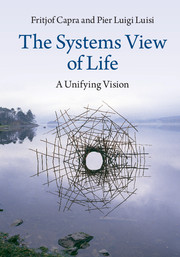
[v] Book: The Systems View of Life - A Unifying Vision

The Systems View of Life -
A Unifying Vision


Part IV begins with the ecological dimensions of life. There's a reminder that ecology, comes from the Greek 'oikos' for "household". We need this -

move you rubbish (don't leave it in the first place), wipe your feet; switch the lights off when not in use, assuming you have them!; close and open the windows as needed; think less 'location, location, location' and having a home.

Given the pictorial form of Hodges' model - mind-mapping - I've always been attracted to diagrams, no-less here the pioneering work of the Odum brothers and 'Odum flow diagrams' which even today are an ecological currency in the literature (p.344-45). An update on ecosystems as dissipative structures and as autopoietic would be helpful. Of course, now for scholars and students have search terms then resources and learning can follow. While ozone depletion is acknowledged, the role of the atmosphere could possibly be (briefly) expanded (guest essay, box?), in-particular the role of the Van Allen belts and the fact of Earth's magnetic field and (still) molten core. 16.2.3 definitely points the way pp.348-351.

16.3.1 Defining sustainability - made me sit up. Lester Brown's 1980's work is not referenced in:

Jones P, Wirnitzer K. Hodges’ model: the Sustainable Development Goals and public health – universal health coverage demands a universal framework. BMJ Nutrition, Prevention & Health 2022;5:doi: 10.1136/bmjnph-2021-000254 (From the bibliography listing in the sidebar of this blog.)
It was Brown who defined sustainability, and the question is ongoing regards how to build a sustainable society (p.352). Key as Capra 2002 notes is that a sustainable human community would not interfere with nature's inherent ability to sustain life. Ecological literacy 16.3.2 was also welcome; a constant theme on this blog, given the many claimed forms of literacy, as with (schools of) informatics. The informational perspective can reveal its power across literacies and informatics, consider media and information literacy? A way to paraphrase the authors: "The market and the marketplace is information disordered." (p.354).

Three chapters include descriptions of agencies (with links) that work with knowledge in an interdisciplinary way; where ecological and spiritual dimensions of education are emphasized; and in chapter 18 several other centers of learning. Chapter 16 looks at organisations with a focus on ecoliteracy in schools, colleges and universities. Checking some of the links many are ongoing - alive!
Struck in the past by the original approach of Goethe to 'science', his work on patterns is described in the introduction and here in relation to the arts and curricula. You will find 'art' sprinkled throughout the posts on W2tQ. Key concepts are described networks, flows, cycles, nested systems, dynamic balance, and development. Chapter 17 joins the dots of the world's problems. 'Growth' appears a disposable term, in how it is applied and so little understood, even by politicians and policy makers? Recent UK politics is a prime example. There is a another concurrent thread (to informatics and literacy) on this blog, as it is inbuilt, hard and soft-wired into the structure of Hodges' model. It is dichotomy, polarity and oppositions, specifically, objective - subjective, quality - quantity.
'In fact, the new systemic conception of life makes it possible to formulate a scientific concept of quality. It seems that there are two different meanings of the term - one objective and the other subjective. In the objective sense, the qualities of a complex system refer to properties of the system that none of its parts exhibit. Quantities like mass or energy tell us about the properties of the parts, and their sum total is equal to the corresponding property of the whole - e.g., the total mass or energy. Qualities like stress or health, by contrast, cannot be expressed as the sum of properties of the parts. Qualities arise from processes and patterns of relationships among the parts. Hence, we cannot understand the nature of complex systems such as organisms, ecosystems, societies, and economies if we try to describe them in purely quantitative terms. Quantities can be measured; qualities need to be mapped (see Section 4.3).
With the recent emphasis on complexity, networks, and patterns of organization, the attention of scientists in the life sciences has begun to shift from quantities to qualities, and there has been a corresponding conceptual shift in mathematics. In fact, this began in physics during the 1960s with the strong emphasis on symmetry (see Section 8.4,3), which is a quality, and it intensified during the subsequent decades with the development of complexity theory, or nonlinear dynamics, which is a mathematics of patterns and relationships. The strange attractors of chaos theory and the fractals of fractal geometry are visual patterns representing the qualities of complex systems (see Sections 6.3 and 6.4). 

In the human realm, the notion of quality always seems to include references to human experiences, which are subjective aspects. This should not be surprising. Since all qualities arise from processes and patterns of relationships, they will necessarily include subjective elements if these processes and relationships involve human beings.' pp.368-369. (My emphasis - and encouraging for research and researchers in Hodges' model)
The authors point out how the conjoining of 'sustainable development' is problematic when viewed in qualitative and quantitative terms (17.2.2 pp.369-371). I wonder what Capra and Luis would make of the SDGs and the metrics employed today? This has been an issue (reading for Jones & Wirnitzer, 2022), with measures needing to catch up and the disruption of COVID. There really is a case for economic literacy for people globally, as 'freedom' is so readily passed-off - associated with economics and trade as a 'right'. Another potential update revolves around globalisation, what would they make of Doughnut economics?

An additional risk now are the bitcoin factories and energy needed to drive AI data-processing. How transparent are global corporations in declaring their energy use? The LIBOR scandal is raised, but what the cost involved in Bankman-Fried and FTX-Alameda Research fraud? Capitalism is built on speculation and always will be? But if we defer 'paying' for economic transformation in a decade the costs will rapidly increase. Capra and Luis acknowledge the need to think about future generations. An ethical stance that is, thankfully, changing policy, and deserves attention.

I pencilled in the margin - what is the conclusion of the lesson of Argentina? Do the economists, the IMF, the World Bank, the Argentinian people know? What of the economic predilections of other nations? Who are the exemplars, the pioneers? Must Africa follow the West's bad-habits? Can they leap-frog technologies (land-lines, fossil fuel reliance ...)? I understand they are! In the West, do we need to re-invent public information services, to address the prevailing mindset? Even as the financial industry has passed-through a 'quant' phase, but mathematics still (and will always) hold sway (p.379).

Page 381 reminded me of the need for gainful employment, and how this is threatened and has always been threatened by technology (very broadly defined). The varied forms of parity of esteem become evident not just in health (mental - physical); education (technical - vocational), but employment too, especially with automation and artificial intelligence. The decade since the book was published leaves room for new content: what might replace or complement The Occupy Movement, The Seattle Coalition? The socio-political rate of change is remarkable. Greta Thunberg and Extinction Rebellion, for example, are clearly post-publication. The claimed rationale for business as usual in 'trickle down economics' remains relevant (sadly) p.384. More could be made now of the two numbers - 565 gigatons and 2,800 gigatons of carbon (350.org); and the current debate on carbon capture (Ah! p.408). 

I have over the years associated the intra- interpersonal domain with the individual's cognition, reasoning, logic, intellect, thought, and education. Collectively though we need to invert this:

individual
|
INTERPERSONAL : SCIENCES
humanistic ------------------------------- mechanistic
SOCIOLOGY : POLITICAL
|
group
education
EDUCATION

EDUCATION
EDUCATION


It is essential for every person to be informed were possible, to get to this situation (e.g. this book in a sense is an appeal for the public's understanding of science; and our political leaders):


individual
|
INTERPERSONAL : SCIENCES
humanistic ------------------------------- mechanistic
SOCIOLOGY : POLITICAL
|
group
EDUCATION
EDUCATION

EDUCATION
ANOTHER WORLD
IS POSSIBLE!


Chapter 18 pulls everything together (and provides HOPE) in systemic solutions. The previous post:

- drew on this chapter (p.398). I didn't realise 'commercial speech' is protected in the USA. 

As expected - a moral compass is still needed (p.430). I really the section on acroecology. It might be an idea to read this final chapter first. If there is a response to the question (there's no answer) as to why we are here - this is it. Biotech has its section, genetic engineering, the scope and risks, as does, the third industrial revolution, citing Rifkin's five pillars (2011). Agribusiness, world hunger, and the twelve myths:

'At a time of unprecedented wealth, when almost one-half of all Americans own stocks and are able to watch their wealth and economic power grow on the nightly news, it is good to remember that over 800 million people worldwide are passing the same nights unable to feed themselves and their children. A full quarter of other Americans, especially children, have much in common with the world’s hungry, experiencing their own hunger intermittently. Frances Moore Lappe and co-authors Joseph Collins and Peter Rosset in World Hunger: 12 Myths are there to remind us. Remind us of the plight of the world’s hungry, as Frances Moore Lappe has done for over 20 years, and remind us too that there is enough food; that hunger is not necessary; that hunger is a social creation; hungry people a social phenomenon, and consequently one that depends on us and that we can change.'

https://www.worldhunger.org/world-hunger-12-myths/ 

The chapter and book closes with a meditation regards hope. A comprehensive bibliography and index follows.

Despite the age of this book it has proved well-worth reading. I am glad I pursued my original request for a review copy. Well recommended and I wonder if there would be another edition? Clearly this would take a great effort, but then needs must? I will revisit the chapter on health. In the past week, the  the UK's last coal power plant closed (BBC News). Change is happening. And the weather globally of recent months cannot be denied. 

My thanks are extended to the team at Cambridge University Press for the paperback copy.

Fritjof Capra and Pier Luigi Luisi (2014) The Systems View of Life - A Unifying Vision. Cambridge: Cambridge University Press.

https://www.cambridge.org/gb/universitypress/subjects/life-sciences/genomics-bioinformatics-and-systems-biology/systems-view-life-unifying-vision?format=HB&isbn=9781107011366


Sunday, March 10, 2024

Publication list - Peter Jones

Previously, I used to maintain a publications list, one that runs from the year 'dot' (ego eh!). The bibliography in the blog's sidebar serves this purpose, also being (much) enriched by other papers that use/cite Hodges' model. 

I decided to revisit the exercise. Successful at interview late in 2019, for a part-time (variable hours) tutoring role, no teaching opportunities followed as COVID intervened.

Invited now to f/w an updated CV and covering letter, I realise that apart from several recent papers I did not include a 'comprehensive' list - as I'm sure is the custom in academe; no doubt listings with many more entries. Here's the list:

Publications by Peter Jones (#1-4 software; #37 website; #40 this blog)

  1. 1982 CAPA: COMPUTER AIDED PATIENT ASSESSMENT, Sinclair ZX81, advertised in Nursing Mirror (see below) provided on audio cassette tape.
  2. 1983 THE NURSING PROCESS – Computer Aided Learning program, BBC Micro, published by Open Software Limited (OSL)
  3. 1984 HAEM. Blood Groups Computer Aided Learning program, BBC Micro – (OSL). (see below)
  4. c.1989 SHADES OF GREY, Computer Aided Learning program, BBC Micro. Simulation of nuclear weapons, Based on Fanchi, J. Local effects of nuclear weapons, BYTE, Volume 11. Issue 13. Dec., pp. 143–155. Computer Aided Learning program, BBC Micro, published by Open Software Limited. (see below).
  5. Jones, P. (1986) Computing in Nursing NEWS. Computerised Patient Assessment. Nursing Times. 85: 5. Sep 3-9;82(36):63-5. PMID: 3532039 (Describes 'CAPA', a BBC microcomputer program for student nurses.)
  6. Jones P. 1988 Thunderbirds are Go? (Impact of technology in society, disasters, macro-engineering). Popular Computing Weekly.
  7. Jones, P. 1989 Modems are Cheap, it's the phone bills that hurt. Popular Computing Weekly.
  8. Jones, P. (1989) Computers in Nursing NEWS. Creating a Program. Nursing Times. Feb 1-7;85(5):66-8. PMID: 2648342 (Describes 'HAEM', a BBC microcomputer program for student nurses on blood and blood groups.)
  9. Jones, P. (1989) Information Technology is Good For You! (Effects of information technology) IT in Nursing, BCS-Nurs. Specialist Group. 1,1
  10. Jones, P. (1990) Creating a Community Mental Health IS (Creation of a community mental health resource centre - a multidisciplinary research project). IT in Nursing and Paper at BCS NSG Conference. 2,4
  11. Jones, P., Beckingham, D. (1991) The Ins and Outs of a small mental health Information System. Healthcare Computing 91 Conference Paper.
  12. Jones, P. (1992) Nursing: All in the mind and machine? (Models of nursing and computing). British Computer Society -Nursing Specialist Group Conference Paper
  13. Jones, P., Beckingham, D. (1992) Community Mental Health: IT in the Buffer Zone. Healthcare Computing 92 Conference (Poster).
  14. Jones, P. (1993) Computerised Models of Nursing. (Data types in nursing - opportunities and problems). Healthcare Computing 93 Conference Paper.
  15. Jones, P. (1993) Using a Semantic Network to Represent Nursing Terminology (project for B.A. (Joint Hons. Computing / Philosophy). Supervisor J Kirby - Medical Informatics Group. University of Manchester). BCS-NSG Conference Paper.
  16. Jones, P. (1993) Nursing: All in the mind (and machine?). IT in Nursing, 5,4.
  17. Jones, P. (1994) An Enthusiast's View of CAL. (Problems in production of CAL - Simulation effects of Nuclear Weapons - conversion of GWBASIC to BBC BASIC from BYTE - with original author's permission - J Fanchi). IT in Nursing. 6,2.
  18. Jones, P. (1994) IT with Records in Mind (Mental Health CPA and Record types - idealised, cognitive, CBR, Distributed), IT in Nursing. 6,4.
  19. Jones, P. (1996) Humans, Information, and Science, Journal of Advanced Nursing, 24(3),591-598.
  20. Jones, P. (1996) An overarching theory of health communication? Health Informatics Journal,2,1,28-34.
  21. Jones, P. (1996) Nursing Technology and Elephants - Part 1: Technology as a beast of burden. IT in Nursing. 8,1,4-6.
  22. Jones, P. (1996) Nursing Technology and Elephants - Part 2: Technology as a serpent. IT in Nursing. 8,2,5-7.
  23. Jones, P. (1996) Nursing Technology and Elephants - Part 3: Technology rope to save humanity and health care, IT in Nursing. 8,3,5-7.
  24. Jones, P. (1997) Providing Mental Health Care: Getting A Purchase On Information. IT in Nursing. 9,3.
  25. Jones, P. (1997) IT: The ubiquitous Research Tool (The use of IT in research - to access; transform; transcribe and disseminate information). IT in Nursing. 9,4.
  26. Jones, P. (1999) Visualization in Nursing: Workshop report, IT in Nursing, 11.1.
  27. Jones, P. (1999) It's time to master the latest tools and Hodges' Health Career Model, IT in Nursing, 11.2.
  28. Jones, P. (2004) Viewpoint: Can informatics and holistic multidisciplinary care be harmonised? British Journal of Healthcare Computing & Information Management, 21, 6, 17-18.
  29. Jones, P. (2004) The Four Care Domains: Situations Worthy of Research. Conference: Building & Bridging Community Networks: Knowledge, Innovation & Diversity through Communication, Brighton, UK.
  30. 2005. Bursary Award Poster: Introduction and Scope of H2CM. HC2005: Harrogate. With thanks to the BCS Health Informatics Forum and my manager(s).
  31. 2005. Mental health and geography: questions and issues for a mental health trust organised using Hodges' four care domains GEOMED 2005. Cambridge – Poster.
  32. Jones, P. (2008) Exploring Serres’ Atlas, Hodges’ Knowledge Domains and the Fusion of Informatics and Cultural Horizons, IN Kidd, T., Chen, I. (Eds.) Social Information Technology Connecting Society and Cultural Issues, Idea Group Publishing, Inc. Chap. 7, pp. 96-109.
  33. Jones, P. (2009) Socio-Technical Structures, the Scope of Informatics and Hodges’ model, IN, Staudinger, R., Ostermann, H., Bettina Staudinger, B. (Eds.), Handbook of Research in Nursing Informatics and Socio-Technical Structures, Idea Group Publishing, Inc. Chap. 11, pp. 160-174.
  34. Jones, P. (2012). Exploring several dimensions of local, global and glocal using the generic conceptual framework Hodges's model. The Journal Of Community Informatics. 8(3). Retrieved from https://openjournals.uwaterloo.ca/index.php/JoCI/article/view/3034
  35. Doyle, M., Jones, P. (2013). Hodges’ Health Career Model and its role and potential application in forensic mental health nursing. Journal of Psychiatric and Mental Health Nursing. 20, 7, 631-640. http://onlinelibrary.wiley.com/doi/10.1111/j.1365-2850.2012.01961.x/abstract
  36. Jones P. (2014) Using a conceptual framework to explore the dimensions of recovery and their relationship to service user choice and self-determination. International Journal of Person Centered Medicine. Vol 3, No 4, (2013) pp.305-311.
  37. 1998-2015 Website devoted to Hodges' model p-jones.demon.co.uk Now on web.archive.org:  https://web.archive.org/web/19990501185433/http://www.p-jones.demon.co.uk/index.htm
  38. Jones P. Exploring the relationship of threshold concepts and Hodges’ model of care from the individual to populations and global health. Rev Cuid. 2017; 8(3): 1697-720. http://dx.doi.org/10.15649/cuidarte.v8i3.464
  39. Jones P, Wirnitzer K. Hodges’ model: the Sustainable Development Goals and public health – universal health coverage demands a universal framework. BMJ Nutrition, Prevention & Health 2022;0:e000254. doi:10.1136/bmjnph-2021-000254
  40. 2006- Ongoing This blog - Welcome to the QUAD.

Sunday, July 16, 2023

UK Higher Education Research Excellence Framework - Disciplines

The Research Excellence Framework (REF) is a national assessment of the quality of UK higher education research in all disciplines.

34 subject-based Units of Assessment (UOAs)


INDIVIDUAL
|
     INTERPERSONAL    :     SCIENCES               
HUMANISTIC --------------------------------------  MECHANISTIC      
SOCIOLOGY  :   POLITICAL 
|
GROUP

Psychology, Psychiatry and Neuroscience

Archaeology

Theology and Religious Studies

Philosophy

[Mathematics & Logic]

^Communication 
as Intra- Interpersonal (Skills) Neurodiversity
hence an individual's
sense-making

Clinical Medicine (Neuroscience)
Public Health, Health Services and Primary Care
Allied Health Professions, Dentistry, Nursing and Pharmacy
Biological sciences 
Agriculture, Food and Veterinary Sciences

Earth Systems and Environmental Sciences
Chemistry
Physics
Mathematical Sciences
Computer Science and Informatics
Engineering
Architecture, Built Environment and Planning
Geography and Environmental Studies
Archaeology
Area Studies
Sport and Exercise Sciences, 
Archaeology
Social Work and Social Policy
Sociology
Anthropology and Development Studies
area studies
Education
Modern Languages and Linguistics
English Language and Literature
History
Classics
Communication^, Cultural and Media Studies, Library and Information Management
Art and Design: History, Practice and Theory
Music, Drama, Dance, Performing Arts, Film and Screen Studies
Leisure and Tourism


Archaeology

Economics and Econometrics

Business and Management Studies

Law

area studies

Politics and International Studies


As ever, you see the idealised nature of conceptual (and other) models. I have repeated archaeology, and area studies, added mathematics and logic to the intra- interpersonal (our reasoning, imaginative ability) which increasingly is being challenged and debated as computer-based proofs 'take-over'. I'm not sure where future studies might sit (or pace anxiously!)?

The REF was mentioned at the Improving University Teaching Conference [IUT] in the past week. I'd been meaning to look at the scope of the framework which is often raised across the media, hence this post. IUT, was well worth the effort of a presentation and attending. A global event spanning Australia-Asia, Europe, and North America - one to follow in the future.

Thursday, March 16, 2023

Abstract [working] Hodges’ model as a mathematical object, a lens for social care and inclusion: category theory or category mistake?

There's a clearer idea now - an abstract - something to aim for in July:

Call for Papers - Community Development and Preventative Care With Older People:
New Values and Approaches

Not yet fully fledged, but then Spring [N] still beckons ...

Hodges’ model as a mathematical object, a lens for social care and inclusion:
category theory or category mistake?

Abstract

The health and social care sectors include disciplines that inevitably fall under the combined aegis of the sciences and humanities. This paper examines social inclusion across Snow’s ‘Two Cultures’. The method is interdisciplinary and descriptive utilising a generic conceptual framework known as Hodges’ model. Rather than Hodges’ model acting as a model of, and for care, here the model is used to investigate how social care can be better conceptualised. While mathematics is a mandated competency in healthcare, the subject, as for the general population, is one preferably left at school. The question posed is: What happens when Hodges’ model is treated as a mathematical object? A challenge for reader and author alike, the purpose is to seek new insights into social inclusion, value, values and development through a relational and dialectic strategy with diagrammatic support, also signposting future avenues of study.

Given ongoing demographic pressures for many nations, is there an additional danger of two intergenerational cultures? Is prevention enough; and can we improve understanding of what can be termed ‘legacy issues’ in health and social care? Can we simultaneously reduce the focus to Simmel’s ‘dyad’, and yet open new avenues for discourse and description? Can we expose the epistemological and ontological dimensions of social inclusion and the life (and death) experience of older adults? Inclusion and exclusion are implicit parameters within the model, its original purposes being person-centredness and recognition of health as political. References and resources, in the form of a template and bibliography are provided.

<>

Still much more to do ... heaven knows what the result will be - and do? Even as I keep the call 'in mind', it may not 'fit' the intended journal at all. Non-predatory, and no article processing charges is essential. Brevity, conciseness ... the order of the day. I can't even hide behind "A little knowledge is a ...": I know nothing - but I'm sure there is some-thing here and in #h2cm.

If anyone is interested in writing something quite different and challenging, then please get in touch. There may (realistically imho) be two-three papers here?

From the call:

"As Rapoport highlighted in the 1960s, however, translating the unified view of prevention associated with public health into social welfare is inherently problematic. This remains the case. Preventative social care and support necessarily operate in complex and dynamic systems, generally where knowledge of causation and the consequences are unclear, and an imaginative application of care needs and contexts is required.

Though current policy direction across many countries suggests opportunities for re-imagining how prevention may be best conceptualised, numerous studies have highlighted that there remains considerable confusion and disparity in how this plays out in practice."

I have held on to the following article from Computing, March 19th 1987 and still learning from Durham and colleagues' journalism:

 "Sometimes a highly abstract, unifying mathematical theory underlies a whole set of scientific or engineering subjects. ...

Category theory is one such subject. Sometimes described as an algebra of algebras, it plays a unifying role in discrete mathematics. Discrete mathematics is a general heading for all the mathematical subjects which deal with jumpy, lumpy entities. Most of the mathematics used in the theory of digital computing is of this kind.

Another unifying subject, homology theory or differential topology, is less well known to computer scientists ... Homology theory is a unifying theory in continuous mathematics, which is the name given to everything that deals with smooth and stretchy entities.

Durham, T. (1987) Over the Horizon.
Working out the algebra of algebras, Computing, 19 March. pp.28-29.

[According to Bowden,] 'category theory and homology theory are fairly close things. The big difference is that homology theory includes information about the topology of the space that it describes.

Category theory is just about information. Homology theory is about information and structure, the structure of something.'

Space itself is not something we usually think of as possessing structure. But space does impose limitations on the kinds of behaviour that can be exhibited by things like electric fields and currents, or electromagnetic waves." p.28.


Durham, T. (1987) Over the Horizon. Working out the algebra of algebras, Computing, 19 March. pp.28-29. (Sorry no issue / volume nos.).


See also:

Call for Papers (i) Community Development and Preventative Care With Older People: New Values and Approaches

Call for Papers (ii) Community Development and Preventative Care With Older People: New Values and Approaches

Thursday, April 21, 2022

Adapting Gärdenfors' - 'event boards' figure

Further to the post:

c/o Gärdenfors: "Events and Causal Mappings Modeled in Conceptual Spaces" 

[ re. Gärdenfors (2020) ]

A related work (Gärdenfors et al., 2019) includes 'figure 1' copied here:


Fig. 1. The components of the holistic AI architecture
Gärdenfors et al., 2019


I've never been diagnosed with ADHD, but am left to wonder. I say this in all seriousness, having come across individuals who need formal assessment (autism too) and hence referral. Listening to others, it seems many people have 'unfinished' writing projects. One here (>40k words) still proves helpful, with notes on Gärdenfors' work and trying to relate this to the Health Career Model.

With some notes, I have copied the tables below from Gärdenfors (2000) and you can see the development in figure 1 above.

Cognitive Science

Goals

explanation and construction

constraint

problem of representation

Solution

SYMBOLIC

ASSOCIATIVISM

CONCEPTUAL

Table 6 Cognitive Science as explanation and construction 


These solutions to the problem of representation have been applied and their respective strengths identified in the construction of ANNs as per table 4.


Levels of Representation p.253

SYMBOLIC:

Searching, matching and rule following

CONCEPTUAL:

Vector calculations, coordinate transformations and other geometrical operations

SUBCONCEPTUAL:

Pattern recognition, pattern transformation and dynamic adaptation of values

Table 7 Levels of Representation

When presented with evidence in support of my project, I must utilise it. So, quoting Gärdenfors again:

"In this way, simulations can provide the robotic system the power
to imagine events that is needed to understand the physical, social
and, eventually, the emotional world we live in." Gärdenfors (2020)

Here, Gärdenfors' reference to: physical, social, and emotional I read as:

physical - SCIENCES domain

social - SOCIOLOGY domain

emotional - INTRA- INTERPERSONAL domain

Of course, Gärdenfors defines domain* and other terms (quality dimensions), and domain differs within Hodges' Health Career Model.

Students and artificial intelligence [AI] have something in common in that we want to enroll student nurses who have an aptitude and attitude that equips them with basic nursing skills and knowledge. This knowledge is nuanced, and would draw upon the plethora of proposed literacies, emotional, social and spiritual in this instance. Even before lectures begin, and the curriculum begins its march, the point is the need for common sense, general intelligence and ability to problem solve and reason.

Englemore, Robert; Morgan, Tony (1988).
Blackboard Systems. Addison-Wesley.
ISBN 978-0-201-17431-1.


In Englemore and Morgan's Blackboard Systems, Chapter 12, AGE: (Attempt to GEneralize) A Knowledge-Based Program for Building Knowledge-Based Programs (Nii and Aiello), there are two levels of irony.

H2cm is a long-term project and the journey here covers aspects of knowledge engineering, information processing to arrive at a care architecture and care assurance.


Below I've re-created figure 1, retaining 'symbolic' and 'conceptual' capabilities. The conceptual capability extends beyond conceptual spaces, to include threshold concepts, a concept-based curricula, semantic networks and more. The 'symbolic capability' is retained as I still maintain that h2cm can be represented within a computer program. The 'sub-conceptual level' has in a way been reversed - 'exploded' to take-in the primary focus and purposes for h2cm: the student, the patient, the public. 


H2CM: The components of a holistic care architecture -
See also: Gärdenfors et al., 2019

Our 'event board' is Nursing, Health and Social care situated using h2cm. Simulation is retained, its central location does not imply importance - quite the contrary. Theory combines lectures, research, the evidence-base, self-study, models and theories of nursing. Placements brings in clinical encounters with patients, carers and the public; plus mentors and the scope of learning opportunities. I have kept peers separate with the process of professional socialisation - which (should) span all.

*I will revisit this and my notes (definitions) at some point.


Gärdenfors P (2020) Events and Causal Mappings Modeled in Conceptual Spaces. Front. Psychol. 11:630. doi: 10.3389/fpsyg.2020.00630

Gärdenfors, P., Williams, M.-A., Johnston, B., Billingsley, R., Vitale, J., Peppas, P., et al. (2019). “Event boards as tools for holistic AI,” in Proceedings of the 6th International Workshop on Artificial Intelligence and Cognition, CEUR Workshop Proceedings, Vol. 2418, eds A. Chella, I. Infantino, and A. Lieto (Palermo: University of Technology Sydney), 1–10.

Gärdenfors, P. (2000). Conceptual Spaces, MIT Press, Cambridge.

Wednesday, March 31, 2021

'Clean tools' - fit for Conceptual Engineering?

Posting previously news of a conference on 'Conceptual Engineering' I was drawn and try to follow the following series:

Conceptual Engineering Seminar | Simon Blackburn (Cambridge): TBA 

March 30 @ 3:00 pm - 5:00 pm 

ABSTRACT. — When I hit upon the term ‘conceptual engineering’ in the Introduction to my book Think, I suppose I thought of it as simply a cute way of introducing what philosophers do. I had no idea that the term had already been used, although I have subsequently learned that it was. I have therefore been surprised that books and seminars have subsequently been devoted to the idea: it is as if books and seminars were simply entitled ‘Philosophy’ rather than directed at particular problems within philosophy. In my talk I hope to go further into that and try to understand why it happened. 

Yesterday, Simon Blackburn cited Austin (1956) and the need for 'clean tools', which led me to the following source*:

"First, words are our tools, and, as a minimum, we should use clean tools: we should know what we mean and what we do not, and we must forearm ourselves against the traps that language sets us. Secondly, words are not (except in their own little corner*) facts or things: we need therefore to prise them off the world, to hold them apart from and against it, so that we can realise their inadequacies and arbitrarinesses, and can re-look at the world without blinkers. Thirdly, and more hopefully, our common stock of words embodies all the distinctions men have found worth drawing, and the connexions they have found worth marking, in the lifetimes of many generations: these surely are likely to be more numerous, more sound, since they have stood up to the long test of the survival of the fittest, and more subtle, at least in all ordinary and reasonably practical matters, than any that you or I are likely to think up in our armchairs of an afternoon - the most favoured alternative method."

*my emphasis

Simon's talk of 'clean tools' prompted me to reflect:

The assumed neutrality of Hodges' model. As noted on W2tQ previously, Hodges' model is an invitation to start with a new slate. To leave behind bias and prejudice, to assure unconditional positive regard and a non-judgmental approach and attitude.

'Engineering' is usually conducted within a dedicated physical space. Apprentices will soon be familiar with the discipline of leaving the work environment clean and prepared for the next day. They will learn that tools have their place (even on the screen). Tools themselves also need care; so don't be care-less.

If Occam's razor is a preparatory rule for conceptual hygiene, perhaps we can take this further, or at least propose an addition? There is a 'rule of forceps' (which, it might be argued, is person-centred, or clearly patient-centred?) but not only are forceps a tool, we can utilise a divider too.

In use, Hodges' model suggests and facilitates dichotomous thinking. The forceps may help grasp the the key parts - the polarities of a situation. The divider may serve to help us to weigh and measure the 'distance' of two concepts, especially if they seem to be grounded across two of the model's care (knowledge) domains.

So Hodges' model may have a role in 'conceptual engineering', variously as a dialectic divider or dialectical forceps?

Austin, J. (1956). A Plea for Excuses: The Presidential Address. Proceedings of the Aristotelian Society, 57, new series, 1-30. Retrieved March 30, 2021, from http://www.jstor.org/stable/4544570Austin, J. (1956). A Plea for Excuses: The Presidential Address. Proceedings of the Aristotelian Society, 57, new series, 1-30. Retrieved March 30, 2021, from http://www.jstor.org/stable/4544570

There is a legal case of historic interest also described in the Austin's paper.

Thursday, March 04, 2021

The Practical Origins of Ideas by Matthieu Queloz

individual
|
INTERPERSONAL : SCIENCES
humanistic ----------------------------------------------- mechanistic
SOCIOLOGY : POLITICAL
|
group


A few years ago 2018, I noticed a conference on conceptual engineering, if you browse this blog you may see the attraction that included New York. I never got there in person and of course back then virtual conferences were less 'popular'. This afternoon I joined an online presentation with Q&A on this topic and my interest was renewed. A subsequent search also revealed this book which is open access.

"The second strategy is what might be called the dynamic model interpretation advanced by Martin Kusch (2009b, 2011, 2013). On this view, genealogies are not just elaborate ways of describing our actual practices. They involve genuine historicization and fictionalization, because they are best interpreted as models which at first involve strong idealization, but are then gradually de-idealized to approximate their target system. They provide models with a time axis — dynamic models — explaining why we came to think as we do." pp.12-13.

"The genealogical model helps us situate, contextualize, and account for each of the different functions a practice acquired in different contexts, thereby imposing a form of order on the irreducibly varied synthesis that Nietzsche describes. The measure of the quality of that model will be its ability to make sense of the internal diversity of the practice and of the multiplicity of functions laid up in it." p.63.

"Often, our needs shape the space of reasons the way our eyes shape the field of vision: they render us sensitive to certain aspects of the world without themselves showing up in it." pp.246-247.


My source:

Thursday, January 25, 2018

Conference: The Foundations of Conceptual Engineering

A conference on The Foundations of Conceptual Engineering at NYU, on Sept 14 and 15, 2018. To attend, please register by following this link no later than August 31, 2018.

One dimension of cognitive success is getting it right, i.e gaining knowledge of facts. Another dimension of cognitive success is using the right concept, i.e. framing a topic in the right way. This view, if correct, tasks inquirers with critically examining the concepts they are using and perhaps replacing those concepts with new and better ones. This task is often known as “conceptual engineering”.

The idea that conceptual engineering is an important task for inquirers in and outside philosophy has recently gained traction. Some philosophers think conceptual engineering is an important task for inquirers to pursue.  The conference is focused on foundational issues in connection with conceptual engineering. Topics to be addressed include the following:
  • What are the semantic mechanisms that underlie conceptual engineering?
  • What are concepts, and which role (if any) do they play in conceptual engineering?
  • How can a theory of conceptual engineering be integrated with large-scale semantic theories? 
  • Which precise changes does a language undergo when its speakers engineer concepts?
  • Is conceptual engineering something that speakers can ever purposefully bring about?
  • What is the relation between changing concepts and changing reality? 
The planned conference will focus especially on the semantic foundations of conceptual engineering and push towards a better understanding of the process.

The conference is organized collaboratively by members of NYU (Vera Flocke and David Chalmers) and members of the research project ConceptLab, located at the University of Oslo (Herman Cappelen and Andrew Peet).

 More...

<>

If this conference needs a workshop, a workbench, or conceptual engineering facility they might care to look at Hodges' model. Whether for conceptual brainstorming, requirements, prototyping, refactoring, combination ... Hodges' model can have a role. Some musings in this vein follow...

individual
|
INTERPERSONAL : SCIENCES
humanistic --------------------------------------- mechanistic
SOCIOLOGY : POLITICAL
|
group

One dimension of cognitive success is getting it right,
i.e gaining knowledge of facts.
Another dimension of cognitive success is using the right concept,
 i.e. framing a topic in the right way.
Acceptable to the patient (or advocate) and ethical?
Achieving concordance - agreed 
relevant to the context, issue, problem?
Logical consistency, coherence and permanence?
Holistic bandwidth is tested - semantic scope?
Conceptual Engineering instantiated in software, argumentation? AI? Conceptual Spaces?
Topic is person-centred 
(patient, student, carer...)
Testing: Concepts with positive :: negative are switched - re-framed? 
Other dichotomies? Conceptual slide-rule?
Known 'semantic drift' in vocabulary - concepts: disuse, archaic, new, re-purposed?
Assessment is comprehensive?
Knowledge of 'conceptual engineering' 
how to - rules, laws (mechanisms)?
Concepts were measurable (as were previously defined) quantifiable?
Flagged interdisciplinary use of concept? Transdisciplinary?
Visual tools - representation, diagrams?
Reversible quality: 'engineering' disassembly?
Conceptual dependency on threshold(s)?
Engineering concepts: 
tolerance, project, professionalism, failure, risk, benefits, techne?
'Conceptual engineering' defined units & standards: word, words ... corpora?
Research methodologies, methods?
Literature
Available social sources were utilised, or at least pursued?
Narrative derived from concepts references life history (story)?
Tested and accepted by peers - multidisciplinary team?
Inclusive?
Quality criteria were met
Cultural, ethnic due regard  met

legal?
concepts used were appropriate
 to outcome(s)?
'Space' for uncertainty, constraints, unwise decisions?
Policy influence on language, examples found in health and social care 2008-2018 austerity?
Accords with and assures the Sustainability Development Goals?
'Macro conceptual engineering' - 
Level of required change in health systems: 
new & existing


Wednesday, January 06, 2016

Dualistic- thinking checks and balances [II]

Continuing from Thinking checks and balances [I] how can Hodges' model help us understand and provide ready access to three forms of thought: these being -

  1. Dualist
  2. Multiplistic
  3. and Relativistic thinking?
To recap, resort to dualist thinking might be a pathway to evidence for Hodges' model building the case for the model in education, healthcare theory, practice and policy making ... Taking each form of thinking in turn, dualist thinking in Hodges' model can be identified in six ways. Before discussing these, there are some general observations to make.

The axes provide an initial compass for differentiation.
The model is first situated (as per B.E. Hodges).
Situation precedes person but should not subvert the latter when the model is applied.
Upon arrival in any context it is what we draw in the sand.

The most obvious influence on thinking is in what the model gives to us through its structure - the two axes. Firstly, the individual - group axis can stand for the many variations of self and other: from patient - health care team; patient - family; citizen - civil society; person - friends (work colleagues); child - parents (or guardian - a status vested legally by others); clinical case - demographic (world) population. This might be considered a compound view, potentially incorporating scope and roles (as per the context).

Secondly, the individual aspect of the vertical axis also serves the reductive requirement of movement between many-one. Reductivism is a fundamental approach in scientific enquiry and quantitative research. There is in the above the reduction to the individual in the intra- interpersonal domain. Reductive descriptions and phenomena from the sciences can then be ascribed to the individual as per the conceptual content of the sciences domain.

The third factor is derived from the first and is evolutionary and developmental. It has a certain irony in also being a child's developmental milestone - the so-called 'terrible twos'. Whatever age an infant starts to assert their independence, establishing, coming to terms with their difference from the adult figures in their lives - this is a pivotal moment. As they set out to become them-selves, we can say that developmentally they, this nascent individual is drawn out of this particular axis. The axis is first of all then not dualist. The self is always a product of the group (even if the latter is absent). The individual, the self emerges from the other. This is an extended dynamic action, through our first 2-3 years. Self flows from otherness.

Illness, disease disruptions what should be the expected relation, crises whether of temperature or emotion places self-other in contention on a temporary or more permanent basis. The ‘health career’ in the full title of Hodges’ model is also pertinent, as this refers to life chances and the life course.

Perhaps, to borrow a term from genetics / chemistry the vertical axis represents a bivalent quality? The vertical axis has that telescopic property. The vertical axis is reflective the individual sees the group; the group sees the individual. Even as we contemplate the patient in person-centred care, what, who are we - the observers?

The fourth cognitive prompt utilises the model's horizontal axis which spans dualist thinking defined by the categories of humanistic and mechanistic. This can also be viewed as human - machine. This axis also gives an indication for the final, fourth type of dualistic thought. Since the 1960s this axis can also be described as the social - technical, or socio-technical (Baxter and Sommerville, 2011). The notion of machine logic then suggests objectivity and the contrast with subjective types of knowledge. This is a fundamental dualism that is debated by philosophers.

The fifth type a dualistic thinking could be described as replacing the axes above and inviting a free-for-all. Is this where creativity and innovation lie? Does this dualistic form open up conceptual probes and avenues to insight (association and relation)? There are a great many dualities, dichotomies, polarities that can (literally) be shot through the model. Through the centre, between adjacent care domains, within domains: consider, for example; demand-supply, mind-body, public sector-private sector-third sector and voluntary admission-sectioned.

Finally and sixth there is a translation, a progression from the axial duality to the epistemological background of the care domains. This can be constructed from the founding (root) disciplines of Hodges' model:
  • Psycho-Social
  • Psycho-Somatic
  • Physico-Political
  • Socio-Political
Superimposed on Hodges' model there is then another set of axes. This could be a means to explain Hodges' model. These trace out the domains of Hodges' model. Is this self-referential quality a coincidence or evidential towards making the case for Hodges' model? These axes act as either, or both a bridge and a brace. Since structure is all about geometry we can close at this point by noting that the strength of the triangle. In Hodges' model there are several diametrical dualities (oppositions), for example:

medicine - society*
individual - political involvement
a society's engagement in - the sciences
individual (demand) Political - health services (supply)
the individual who is mentally ill and the State, Mental Health Act legislation

As we see in this post in addressing dualities Hodges' model is concerned with DISCIP-LINES.


*Medicine and society represent a duality and an established discipline in medical sociology? Socio-technical is not a discipline in this sense and might provide a theoretical contrast - marker?

(The above and posts to follow are a work in progress and will form a larger - referenced - whole in terms of studies.)

Baxter, G. Sommerville, I. (2011) Socio-technical systems: From design methods to systems engineering. Interacting with Computers, 23 (1): 4-17 doi:10.1016/j.intcom.2010.07.003
http://iwc.oxfordjournals.org/content/23/1/4.full

Saturday, March 13, 2010

Drupal musings 2: Drupalese and Nursese - help or hinder

Drupal logo
As I repeatedly wade into the blue Drupal waters and then run out again (the water's hot) I note ongoing conversations at Drupalversity, Drupal dojo, Drupal-kata and similar forums about the challenge of learning Drupal. (I know the cure. That - is so simple, just do it: CREATE A SITE!)

On Drupalversity a comment by Becky Kinney caught my attention as Becky also refers to Drupalese. There's been discussion about how learners can make progress getting to grips with Drupal, but then because they lack prerequisite knowledge and skills the learning materials / instructions lapse into Drupalese.

Coming to Drupal is like nursing in so far as experiential learning is helpful. Any programming experience may help (or hinder), at the very least newbies (do I hate that term?) will be familiar with how websites appear to work, in the same way that would-be nurses are aware of the effects of infection, trauma, basic healing processes and treatments, what it feels like to be 'sick' to some degree, symptoms and signs. There's a point though that with a burgeoning new vocabulary of nursing, medical and care terms this challenge also becomes Nursese.

That reference above to help or hinder is similar to nurses who work as care support workers initially, or part-time. There is a risk (which should not exist these days) that prior to starting formal nurse training they may pick up bad habits. Drupal is no different in the sense that it is complex and there are several ways to achieve the same outcome, but which is the most effective, efficient, future proof, safe and secure. ...?

Hodges' model can help nurse learners, but what about Drupal learners - this one included?

Not a chance.

A conceptual framework is not going to help here. While Hodges' model does have socio-technical credentials, it is no software engineering shoe-horn, life jacket...

It will take (several) new Drupal websites to exercise the beast, my mind, fingers and what I hope is a potential community out there. Time for another paddle and reddened feet ...

Saturday, August 01, 2009

Nursing - a model with 'glocal' aspirations

Reading through Dan Pink's book again I came across this ....

The rise of Empathy has even begun to color parental advice. In a recent survey of of Australian information technology managers, 90 percent said they would not recommend that their own children pursue careers in the L(ogic)-Directed field of software engineering. What would they recommend their children do instead? "I'd rather my kids opt for nursing as a profession," said Joseph Michaels, who works for a telecommunications company in Sydney. "It has both global and local demand." p.165.
And wherever nurses travel so too must the reflective tools they employ.

In the paper on Hodges' model and Michel Serres I wrote the following:
The scholastic 3Rs alone are no longer sufficient to equip youngsters for current and future challenges. Wither health literacy without digital, information and visual literacy (accessibility issues acknowledged)? Carroll and Rosson (2007) recognise the moral imperative of participative design. If technology has the capacity to change, people must be involved in that change. Are governments granted the electorate they deserve? The ability to appreciate what lies between analysis and synthesis is the 21st century touchstone. In being educated to care for others, self, and the planet there is a need for a generic model that can be taught globally, across curricula, cultures, and ethnic divides. Janus-like we must combine the local and global, achieving glocal perspectives (Erikson, 2001, chap.19).

Daniel H. Pink (2006) A whole new mind, How to thrive in the new conceptual age, Cyan, p. 165.

Eriksen, T.H. (2001). Small Places, Large Issues, Pluto Press.

Michel Serres on W2tQ

Michel Serres: A blog

Tuesday, October 21, 2008

Periodic Table of Visualization Methods [Net-Gold]

Plenty here to think about... (source ack. Terri Willingham & Net-Gold):

Date: Tue, 21 Oct 2008 14:50:54 -0000
Subject: [Net-Gold] E-LEARNING: Visual Literacy

Visual Literacy
http://www.visual-literacy.org/

See, especially, the Periodic Table of Visualization Methods:
http://www.visual- literacy. org/periodic_ table/periodic_ table.html

This e-learning site focuses on a critical, but often neglected skill for business, communication, and engineering students, namely visual literacy, or the ability to evaluate, apply, or create conceptual visual representations. After this tutorial, students should be able to evaluate advantages and disadvantages of visual representations, to improve their shortcomings, to use them to create and communicate knowledge, or to devise new ways of representing insights.

The didactic approach consists of rooting visualization in its application contexts, i.e. giving students the necessary critical attitude, principles, tools and feedback to develop their own high-quality visualization formats for specific problems (problem-based learning). The students thus learn about the commonalities of good visualization in diverse areas, but also explore the specificities of visualization in their field of specialization (through real-life case studies). They will not only learn by doing, but in doing so contribute new training material for their peers to evaluate (peer learning).

Terri Willingham

Tuesday, January 29, 2008

Halos, clouds and living ontologies

Simon TemplarIt would be nice to be blessed with a halo, but I guess I'd rather be elliptically challenged than possessed of a slipped disc.

Halo-less, succor is found imagining the concept cloud that follows me around. Of course we all have one:

A dynamic cognitive-virtual creation that would be a wonder of the universe if it could be seen. Maybe this is why the WWW is such a marvel?

Life is a comic book really, we just don't see the thought bubbles. ...

As of Jan 2008 - this blog's side bar has a sandpit listing tools in which I would love to fully immerse myself. One of these is Protégé. Like so many pieces of this (my) care informatics jig-saw, this - the keystone? - is yet to be picked up.

It is heavy, a specialist tool; built for knowledge engineering not for care engineers.

After decades of excellent work by researchers in expert systems and decision support systems... knowledge management tools like Protégé are making knowledge engineering much more accessible. Web 2 (and Web 3...) is using the semantic web as a foundation and the term semantic web seems to capture the concept cloud (that might be) instantiated in Hodges' model.

I know the links pages may seem a links-fest or even a links-farm, but in LINKS I intra-INTERpersonal the presence of knowledge management is neither incidental or accidental. Conceptual tools and Protégé in particular might provide a means to help thread together:

  • caring and learning: the 4Ps and care participants
  • informatics
  • records
  • Hodges' model

When I set about creating the website in 1997 this is what I had in - and out of - mind. Already familiar with Buzan's mind-mapping, Hodges' model was and remains a living ontology. A tool to capture and freeze concepts and reasoning at selected critical intervals. This living dynamic vision was just what I needed, to blow the dust off Brian's model, sat there languishing on the shelf. Better a living ontology than a model sleeping in the recessed cloisters of the more mature student's memory. As far as Protégé is concerned though, I've yet to fully raise my right foot, never mind complete the first step (and listen into the literature) perhaps I may never.

Maybe for living ontologies this is where communities come in - so please look after your halo!

Image source: http://www.simon-templar.de/
