Hodges' Model: Welcome to the QUAD: Search results for psychiatry

Hodges' model is a conceptual framework to support reflection and critical thinking. Situated, the model can help integrate all disciplines (academic and professional). Amid news items, are posts that illustrate the scope and application of the model. A bibliography and A4 template are provided in the sidebar. Welcome to the QUAD ...

Showing posts sorted by relevance for query psychiatry. Sort by date Show all posts

Thursday, June 12, 2014

Psychiatric Bulletin - Letter: Psychiatry for medical students: need for a more holistic approach to teaching?

From: Psychiatric Bulletin -

http://pb.rcpsych.org/content/38/3/138.2.full

Kristina Rodney and Laura Wilkinson

Kristina Rodney and Laura Wilkinson are both ST4 medical students, Newcastle University, Newcastle, UK, email:k.rodney AT newcastle.ac.uk.

We are two medical students who wish to offer a perspective on undergraduate education and psychiatry.

During our student placement, we attended the old age psychiatry module at the Northern Deanery MRCPsych programme focusing on dementia and ethics. This was aimed at trainees and not specifically medical students but we were surprised to find that this was not above our level of knowledge. This prompted discussion of undergraduate psychiatry training more broadly, which we felt focused too heavily on the diagnosis of mental illness and less so on the holistic approach to the patient and their presentation as covered by the MRCPsych course. From our experience of undergraduate psychiatry we feel that the assessment by means of a logbook of conditions encourages students to find patients with a certain diagnosis, and in doing so overlooks the true essence of psychiatry. To our mind this incorporates the ability to consider all aspects of a patient’s life and formulating these, while demonstrating compassion for another person at a time of most need.

Through choosing a 6-week placement in old age psychiatry we have been able to explore the specialty more thoroughly and broadly than facilitated within the standard undergraduate programme, and we have realised how little of psychiatry we have been exposed to as undergraduates. We have become more aware of the importance of considering the patient’s personal and social circumstances alongside their diagnosis, and how these can influence each other. Specifically, the importance of a sound ethical approach to practice has been highlighted through the higher-level teaching we experienced, where the Mental Capacity Act was discussed in detail.

We believe that it would benefit undergraduates to experience a more realistic and rounded placement in psychiatry and truly consider the social implications of mental illness. As it currently stands, undergraduate education in psychiatry is oversimplified to focus on diagnosis and does not acknowledge the capabilities of medical students to adopt a holistic approach. An opportunity to consider all aspects of a psychiatrist’s role may encourage more students to consider a career in this field.

<>

I have contacted the authors of this letter to inform them of Hodges' model and its scope in assuring holistic and integrated care. The model could also facilitate curriculum development. The authors of the letter are not endorsing Hodges' model, I am seeking to highlight the need for such a resource.

Thanks to:
Lucy Alexander
Rights and Permissions Manager
Royal College of Psychiatrists

Wednesday, September 30, 2026

Prof. George William Brown OBE, FBA (1930–2026)

"George Brown was a huge figure in sociology and social psychiatry. At a time when social science and psychiatry were so riven with conceptual differences they could not work constructively, George’s approach was collaborative, courageous and imaginative. His work addressed real-world problems and in so doing greatly enriched mental health research."

Professor Matthew Hotopf, Executive Dean, Institute of Psychiatry, Psychology & Neuroscience:
https://www.kcl.ac.uk/news/professor-george-william-brown-obe-fba-19302026

Starting in Warrington School of Nursing (Winwick Hospital) as a student mental health nurse in October 1977 you can how that curriculum and programme of study came about; and influences on Brian Hodges' early career.
 
Hodges' Health Career - Care Domains - Model
 
 An individual's 'health career' is impacted by their life chances and life events.
 
 
individual
|
INTERPERSONAL
: SCIENCES             
humanistic ------------------------------- mechanistic
SOCIOLOGY : POLITICAL   
|
group

Individual Psychology

Life events

PSYCHIATRY

psycho-

Life events

EVOLUTIONARY
PSYCHIATRY

social

Group Psychology

Life events

SOCIAL & CULTURAL 
PSYCHIATRY


LIFE EVENTS

 PSYCHO-POLITICAL
PSYCHIATRY


See also:

Wing, J.K., & Brown, G.W. (1970). Institutionalism and Schizophrenia: A Comparative Study of Three Mental Hospitals 1960–1968. Cambridge; Cambridge University Press. 

Brown, G. & Harris, T. (1978) Social Origins of Depression. A Study of Psychiatric Disorder in Women. London: Tavistock.Google Scholar 

Brown G.W. & Harris, T. (1979) Social origins of depression: a study of psychiatric disorder in women, London: Tavistock Publications.

Brown, G. W., & Harris, T. O. (Eds.). (1989). Life events and illness. The Guilford Press.

My source: Patrick Kidd. Forum, Obituary, The Observer. 20th September, 2026, p.42.
https://observer.co.uk/profile/obituary/article/george-brown-the-former-post-office-boy-who-unlocked-the-mystery-of-depression

Previously: 'social sciences' : 'psychiatry' : 'determinants'

Wednesday, August 11, 2021

Special issue - International Review of Psychiatry "Conceptual Psychiatry"

   patient / client  PERSON student / practitioner
|

INTERPERSONAL : SCIENCES
humanistic ------------------------------------- mechanistic  
SOCIOLOGY : POLITICAL
|
society - group - profession
psycho
philosophy, ethics..


bio
Einstein's physics, chemistry too!
social

political


The bio-psycho-social model is insufficient 

- in care, to care, for care -

in the 21st century.

Hodges' model is a series of conceptual spaces(?). 

In healthcare contexts for all students, what threshold concepts may pertain? ...

'Concepts' here in W2tQ.

International Review of Psychiatry, Volume 33, Issue 5 (2021)

Conceptual Psychiatry; Guest Editor: Awais Aftab

Includes:

Sanneke de Haan (2021) Bio-psycho-social interaction: an enactive perspective, International Review of Psychiatry, 33:5, 471-477, DOI: 10.1080/09540261.2020.1830753
 
My source:


There is a marked difference of course in the purpose of this special issue, examining conceptual issues in psychiatry and Hodges' model as a generic conceptual framework for reflection, integrated and person-centred care and critical thinking. I still find the diametrical relationship between the individual and their 'mind' and the political domain with the structures that are invariably found there. The law, mental health legislation, consent, mental capacity, institutions (and in psychiatry the old (asylums) and the new (and how have they changed?) the professions, policy, standards and governance. Then the relationships (social) that define expectations, healthcare and outcomes and how practitioners are socialised and how power is negotiated, expressed and shared (to whatever extent?). 


Tuesday, March 03, 2026

Thoughts ii re. 2026 Lancaster Philosophy of Psychiatry Work in Progress Workshop

For me, applying Hodges' model I tend to place philosophy and psychiatry (mind, thought, belief, truth, intention ...) within the humanistic part of the model. So, Ewa Grzeszczak and - Philosophy of psychiatry and the methodology of social ontology - stood out. This is helpful as Homeostatic Property Clusters (HPC) are a useful structure, spanning bio-mathematics. As suggested previously with 'equality', we can place the philosophical non-trivial question of kinds at the centre of Hodges' model and proceed (if possible?) from there.

The requirement for a holistic, integrative and pluralistic framework is there in literature. A statement supported by Alessandra Civani's talk: 'What kind of concept is ‘incongruence’? I located a paper:

Enactive psychiatry - A pragmatic and pluralistic approach to mental health and disease

- (and now have a copy c/o and thanks to Alessandra) and am grateful to being pointed to de Haan:

An Enactive Approach to Psychiatry

 I will (must) return to these papers. Earlier on Hodges' model, I'd opined (as on 'X') how the -

  • medical
  • biomedical
  • bio-psycho-social models - are insufficient in the 21st century.

There was a thematic feel to the presentations with Anna Golova - Self-illness ambiguity without a self-illness distinction - following nicely. The styling on the slides was an added bonus. I located an informative (co-authored) paper by Golova:

‘Is it me or my illness?’: self-illness ambiguity as a useful conceptual lens for psychiatry'

Part of the power of Hodges' model derives not so much from its duality; as its dual axes. The two axes can encompass and handle the relatedness between/within reductionism, holist perspectives, the self and otherness, illness and health (well-being).

An hours break brought us to an event which was very well attended, clearly open to the public:

6-7pm Prof Miriam Solomon – Royal Institute of Philosophy talk ‘Stigma as an actant in the history of psychiatry’

In setting out the talk's structure I liked Prof. Solomon's reference to the common, implicit "grime" theory of the dynamic of stigma, and "punching down" as a strategy for managing stigma. 'Grime' made me think of sense of smell, the grime in my father's work van, a diesel. Now so many memories are evoked with the merest whiff. More positively, the patina of physical and mental life also came to mind. You would - might think stigma has been dealt with by now, but of course we are socio-politically far from it.

There is a related podcast from 2025, which also covers Prof. Solomon's early studies. A previous paper was also noted in the slides:

Solomon, M. (2025). The Elusiveness of Hermeneutic Injustice in Psychiatric Categorizations. Social Epistemology, 39(2), 166–177. https://doi.org/10.1080/02691728.2024.2400068
 
Discussion of the DSM inevitably followed (and in the above podcast). In questions the 'reality' of severe mental illness, and suggestion of the acute challenge of managing the negative symptoms of psychoses.
 
Prof. Solomon's conclusion was well worth waiting for, including:
Stigma as an "actant" (cf. Bruno Latour's concept of an agent: causal role without intention)... DSM - ICD...
 
If stigma disappeared tomorrow, the DSM would not have the same categories. 
 
Stigma (more specifically, its management) is shaping the conceptual space, with both scientific and moral consequences.

[Added 4th March...] On Friday - Sam Fellowes, took on, or has taken on - the non-trivial issue of - Modelling psychiatric diagnoses when self-diagnosing - how does this work? Complexity was acknowledged on the first slide, with self-diagnosis, and modelling, set against the Duhem-Quine thesis. 

This technical aspect is welcome and no doubt essential given the socio-technical nature of diagnosis, touching as it does the public (society), primary care, psychiatry, service user groups, policymakers, informatics, and HM Treasury, amongst several 'stakeholders'. With the impact of the internet and social media, much (if not all?) of the vocabulary of mental health professionals has been co-opted and re-framed(?) by patient / service-user groups? It does not, for example, appear that the agency behind the DSM will be able to claim it back. Autism and ADHD were also discussed and debated. I located a previous chapter by Sam (pay-wall):

Fellowes S. Self-Diagnosis in Psychiatry and the Distribution of Social Resources. Royal Institute of Philosophy Supplement. 2023;94:55-76. doi:10.1017/S1358246123000218
 
This really is a thicket of thorns, it spreads as and wherever you go.
 
The welfare bill is such that there should have been government Ministers in attendance. I have responded on behalf of clients to PIP assessments. Agencies have invited me to interview for 'Disability Assessor' roles. Not only is this a complex web, but several logics obtain: a perverse temporal logic operates, binary logic and a fixed mindset can develop so that some (vulnerable!?) individuals can get stuck. Perhaps, a social imperative steps in and disrupts, life chances: their being a NEET ('a young person who is no longer in the education system and who is not working or being trained for work'. Ecosia) is better for someone else? 
 
To unpick, make sense of this, you need a foundational universal model.
 
There is a (co-authored) paper from Giulia Russo, who presented - Epistemic and political role of experience: https://philpapers.org/rec/RUSTPO-112 from which:
'As it is widely known, epistemic injustice was introduced by Fricker (2007) to unveil power relations that have negative consequences on people as epistemic agents. She distinguished in particular two different kinds of epistemic injustice: testimonial and hermeneutical. The first kind occurs when a person (usually in a disadvantaged and oppressed role within the epistemic relation) is damaged as a knower because, as the name suggests, their testimony is overlooked, dismissed or invalidated. The second kind of epistemic injustice occurs when a person is deprived of the epistemic resources to even explain or articulate their experience of distress, or of systemic oppression. In connection to this, the concepts of neurodivergence and neurodiversity come from the political and social arena, and are born explicitly to contrast dominant pathologizing narratives in psychiatry.'
In seeking some 'test' cases to try to model relationally, Hodges' model suggests at least four - without letting the care / knowledge domains wag-the-dog. Giulia's talk was very helpful, ranging across forms of epistemic injustice (addressed by others too), identity, neurodivergence, lived experience, self-, counter- and collective narratives with references. A great resource.
 
Frank Denning, reminded me of an important phenomena, in Using Stebbing’s Directional Analysis to Evaluate ‘Mentalizing’. Talking therapies, or more properly referral to talking therapies often presents several criteria that would-be subjects must 'pass'. An ability to mentalize, can represent one. This is understanable, for effectiveness, efficiency, efficacy ... it is to be found in the manual. But, in terms of power relations, gate keeping in various forms is a literal (virtual) key to service access. Hodges' model is no different (sigh!). At what age can people start to use Hodges' model? What mentalization is involved to cognitively engage in use of Hodges' model? 
 
I struggled to obtain a copy of Stebbing's original work from 1930, but see how closely tied the work is to physics. An Internet Archive copy is poor quality. The search will continue, as I suspect there are links to Bill Ross's text on Deleuzian cosmology. It is marvellous that work from 1930 resonates today. There is: 

Janssen-Lauret, F. (Accepted/In press). Directional Analysis in Susan Stebbing’s Philosophy of Physics. In S. Chapman (Ed.), Susan Stebbing on Logic and Analysis Springer Nature. 
https://pure.manchester.ac.uk/ws/portalfiles/portal/338653274/Directional_Analysis_in_Susan_Stebbing_s_Philosophy_of_Physics_Final_.pdf

Gloria Ayob - Flourishing as mental health - was encouraging. 'TASK 1:EQUATION' a slide was titled, including emotional disorder is meta-evaluative; there are negative and positive poles, plus isomorphism between unpleasantness-pleasantness and disorder-health. I think my stomach was protesting I should have paid more attention. There is a blog post by Gloria: https://blog.oup.com/2024/12/the-concept-of-emotional-disorder/

After lunch Richard Hassall - Hermeneutical Injustice and Damaged Intellectual Self-Trust in Psychiatric Service Users, a reminder of the time and effort that needs to be put into public and patient involvement and engagement in mental health service (when this is desired). References included J.L. Austin and J.S. Bruner. A paper:

Hassall R. Sense-making and hermeneutical injustice following a psychiatric diagnosis. J Eval Clin Pract. 2024 Aug;30(5):848-854. doi: 10.1111/jep.13971. Epub 2024 Feb 20. PMID: 38375925.
https://onlinelibrary.wiley.com/doi/10.1111/jep.13971 

Scoping reviews are more common it seems: Lara Calabrese - Exploring epistemic injustice in dementia care: a scoping review and a qualitative study, plus paper [with QR code on the slide]:

Calabrese L, Brigiano M, Quartarone M, Chirico I, Trolese S, Lambiase F, Forte L, Annini A, Bortolotti L, Chattat R. I'm still here and my opinion matters: a scoping review on the experience of epistemic injustice among people living with dementia. Curr Psychol. 2025 Dec 17;45(1):s12144-025-08519-y. doi: 10.1007/s12144-025-08519-y. PMID: 41445984; PMCID: PMC7618523.
 
The paper's title here brought to mind the radio programme "Does He Take Sugar?" Questions followed regards the studies methods. Since leaving I wondered if there has been an evaluation of Dementia Friendly Communities? Are there dots to usefully joined there?
 
The final talk was delivered (with gusto - pepped me up anyway) by Jacob Barlow - Epistemic borders: experts, communities, communication. Jacob's interest in pragmatism was apparent. I look forward to reading future work, and note Liverpool 2025: ‘Problems with Pragmatism in the Philosophy of Psychiatry’.

All in all, a stimulating and enjoyable event.

Thursday, September 04, 2025

Parity of Esteem: It's all smoke and mirrors ...

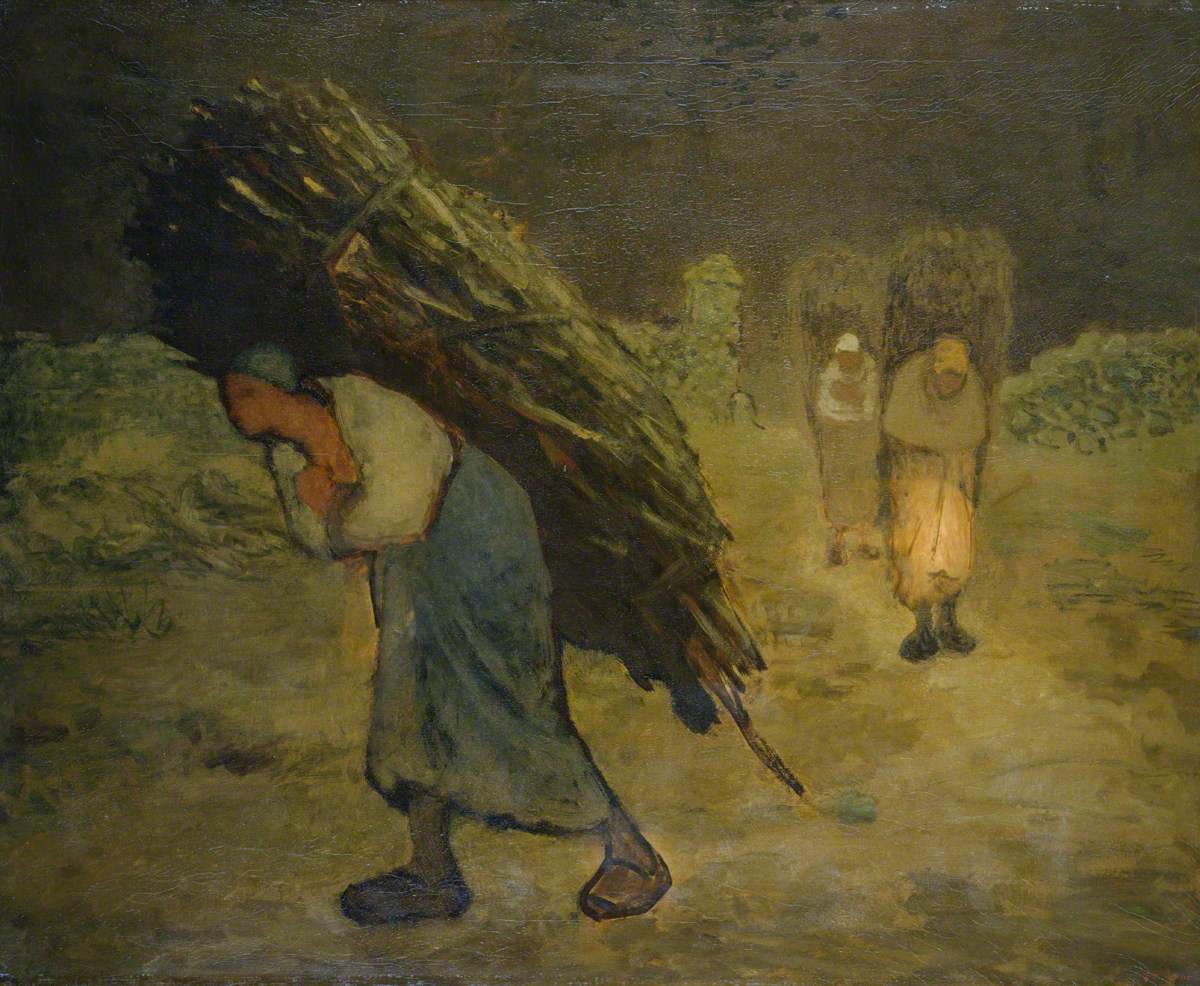
Having just visited the National Gallery and an exhibition on Millet:

https://www.nationalgallery.org.uk/exhibitions/millet-life-on-the-land

Dr Sanil Rege on twitter provided:


Seeing, and reading (again?) about 'The Faggot Gatherers' I couldn't help but see socio-economic history enacted:

'Two women are taking a short rest from gathering tree branches for sale as firewood. The older woman’s hunched back and clawed hands betray a lifetime of physical toil. The setting is the forest of Fontainebleau, south of Paris, close to the village of Barbizon. Millet was an exponent of Realism, a movement that rejected historical art and idealisation in favour of a truthful view of contemporary reality.'

Text: https://www.nationalgalleries.org/art-and-artists/232271
Winter, The Faggot Gatherers Jean-François Millet (1814–1875) National Museum Cardiff

The National Gallery's accompanying text reads:

'Three women are on their way home trom the forest of Fontainebleau. One of its entrances, the Porte aux Vaches, is visible at the back right. The staggering scale of their loads threatens to overwhelm them in their stumble homewards. The scene evokes Millet's 1851 letter to his biographer Alfred Sensier, in which he described how seeing 'a poor figure laden with a faggot reminded him of the constant fatigue of people's lives.
While the painting is unfinished, the elemental figures are typical of Millet's vork. The extreme simplification of their forms results in austere silhouettes.'

Mental illness has always been a facet of humanity, evidence of trephination from prehistoric times and across cultures and geographies bears testimony to the mind - body divide. Life was brutish physically too. What chance did the weakest stand? If, that is a broken bone: you could be left behind? But perhaps we underestimate the knowledge and experience of our ancient ancestors. Knowledge gained and passed orally, culturally, even before written history. Perhaps too, we struggle to understand how early humanity expressed itself beyond the big-stick of nature and the struggle for survival as the hominids that led to 'us' were winnowed down?

Even as recent as the 19th century life was hard. As the notes above attest, Millet's work seeks to record the sheer physicality of labour, even as the industrial age emerged. The advent of the industrial revolution brought its own pressures and privations, as pastoral life is replaced with change work at home (spinning cotton) to urban and factory growth. 

Severe mental illness would have been institutionalised in poor houses, religious and charitable organisations. Parity of esteem is grounded, to some extent in the questions: "What happened to you?", or "How are you feeling today?" In Millet's work the physical cost and strain stands out. While in the L'Angelus there is debate about prayer, or grief. What is visible usually speaks first, and stands for itself. This is why self-awareness, reflection, critical thinking, observational and interpersonal skills are important; and why mental health nursing calls for specific knowledge and skills. And, in psychiatry too, even when the same is contested.

Image source: Oil on carvas Lent by Amgueddfa Cymry - Museum Wales. Bequeathed by Gwendoline Davies in 1952.

Wednesday, May 13, 2026

WPA/IACAPAP Global Curriculum Survey

Dear Neil et al.,

Would it be possible to recirculate this invitation to complete this ~5minute survey.

We recevied a good response (~200 with 72% expressing interest to join future steps) from the last round but we could have had more representation from Oceana, the Carribean, the Mediteranean, Central Asia, Russia, and perhaps more from any areas as emphasized in line 3 below.

Thank you in advance for your consideration, David
---------------------------------------------------------------------

Dear Colleagues, Families, Relatives, Young Adults, Adults, and Friends!

Anyone affected or who knows someone who is affect by a mental health problem.

We need your help, especially from those living in remote urban or rural areas, or otherwise underserved regions anywhere in this wide world!

HELP US DESIGN A GLOBAL CHILD AND ADOLESCENT MENTAL HEALTH, PSYCHIATRY AND ALLIED PROFESSIONS TRAINING CURRICULUM FRAMEWORK IN SUPPORT OF LOCALLY INTEGRATED COMMUNITY AND FAMILY-CENTERED EDUCATION AND ACTION.

The International Association for Child and Adolescent Psychiatry and Allied Professions (IACAPAP)

and

The World Psychiatric Association (WPA) Child and Adolescent Section are developing the Global Child and Adolescent Psychiatry and Mental Health Training curriculum FRAMEWORK.

To complete a short DESIGN feedback and ENGAGEMENT survey (~5 Minutes)

Click or Copy and Paste the following URL: https://forms.cloud.microsoft/r/x4MyX0MkYt

Here is A SHORT INFORMATIONAL VIDEO: https://www.youtube.com/shorts/NdMRqb1LVVM


HIFA profile: David Cawthorpe is Adjunct Professor, Cumming School of Medicine, Department of Community Health Sciences; Adjunct Professor, Cumming School of Medicine, Department of Psychiatry | Child and Adolescent Psychiatry; and Child Health & Wellness Researcher, Alberta Children's Hospital Research Institute, Canada. 
https://profiles.ucalgary.ca/david-cawthorpe cawthordATucalgary.ca

My source: HIFA.

Tuesday, April 08, 2025

Book TSR ii - Mental illness/health: History, process and progress

As posted yesterday through a book review, I developed an awareness for the role of process much earlier than previously thought. It wasn't Enid Mumford's work on the benefits of a socio-technical approach to successful deployment of information systems. I only discovered this well after the advent of home computing with the ZX81 and BBC micro 1981-1995.

It was 1978-79 to be more exact; on an admission ward during my three year student Registered Mental Nursing course at Winwick Hospital. On first recollection, I thought it was a clinic, with patients coming in for Clomipramine (Anafranil) infusion on to the ward. As students on placement we were allocated to support the clinic, completing regular observations, including pulse and blood pressure. Clearly, it was a long time ago. There is a paper (paywall), quite a significant one for me:
O’Flanagan PM. A Clomipramine (Anafranil) Infusion Unit. Journal of International Medical Research. 1973;1(5):375-381. doi:10.1177/030006057300100519 
I remember this Consultant's name being mentioned, but this was before my time(?). From the paper's first - accessible - page I can see the patients involved were actually in-patients. Which given the procedures, safety, observation makes better sense. There is reference to a film, in a hospital newsletter 'The Standard':
'Anafranil Film
In response to the interest shown in the film on Anafranil Infusion, Dr. P. O'Flanagan was present in the In-Service Training Room on Monday, October 29th for a second showing of the film, and to answer any questions from the audience.'
I wonder if the film is archived somewhere?

It isn't a surprise to see my former Community MH manager and friend David McKendrick listed on the Publications Committee. I do miss David - a great mentor!

In the previous post about 'The Sleep Room' I contrasted the mind-body dichotomy. In terms of evidence on 'both sides' of this divide, many people have made the observation of how you can see a broken arm, or leg, and other physical ailments, but mental health issues are often not obvious:
Powell J, Clarke A. Information in mental health: qualitative study of mental health service users. Health Expect. 2006 Dec;9(4):359-65. doi: 10.1111/j.1369-7625.2006.00403.x. PMID: 17083562; PMCID: PMC5060370.

The evidence-base of general medicine - physical health and psychiatry must be dynamic. The volume of publications bears testimony to the relentless change across all the sciences, research, technologies, knowledge, theory, practice, management and policy. On Twitter there is constant 'debate' between psychiatry and anti-psychiatry. 

Studies of intravenous clomipramine continue, the intervention much changed from the 1960-70s:

Fallon BA, Liebowitz MR, Campeas R, et al. Intravenous Clomipramine for Obsessive-Compulsive Disorder Refractory to Oral Clomipramine: A Placebo-Controlled Study. Arch Gen Psychiatry. 1998;55(10):918–924. doi:10.1001/archpsyc.55.10.918

Persson M-L. Adler Mats y Hetta J. Pulse Intravenous Clomipramine as an alternative antidepressant treatment to ECT: A pilot study. Eur. J. Psychiat. [online]. 2007, vol.21, n.4 [citado 2025-04-07], pp.263-267. Disponible en: <http://scielo.isciii.es/scielo.php?script=sci_arttext&pid=S0213-61632007000400003&lng=es&nrm=iso>. ISSN 0213-6163.

Karameh WK, Khani M. Intravenous Clomipramine for Treatment-Resistant Obsessive-Compulsive Disorder. Int J Neuropsychopharmacol. 2015 Jul 28;19(2):pyv084. doi: 10.1093/ijnp/pyv084. Erratum in: Int J Neuropsychopharmacol. 2016 Apr 27;19(10):pyw031. doi: 10.1093/ijnp/pyw031. PMID: 26221004; PMCID: PMC4772819.
Perhaps, someone can please enlighten me? Given the time between William Sargant's practice, and today how much more do we know? We know the gap can't be fully closed (phenomenologically?), but has the evidence-gap been reduced? What are the evidential mile[Km]stones in psychiatry - mental health nursing? What are 'the standard' measures? If we look at a model that is bio-psycho-socio-political, what difference might this make, to the 'debate', theory, practice, research, management and politics (policy)? 

'Woke' is a tainted word these days, but in mental health care and nursing we all need to wake up and in a safe space.

Tuesday, May 08, 2018

CfP: Lancaster - Philosophy of Psychiatry Work in Progress Day 2018

Thursday 31st May 2018

PhD students and more established academics are invited to present work in progress in the philosophy of psychiatry (20 min talks, 10 mins discussion). Paper slots will be given out on a first come, first served basis. If you’d like to give a paper please email Rachel Cooper (r.v.cooper AT lancaster.ac.uk) with a title. There is no budget for this workshop, so speakers will need to cover their own expenses!

Speakers accepted so far are:

  • Hane Maung (Manchester) – Is suicide a psychiatric problem?
  • Richard Hassall (Sheffield) – What does a psychiatric diagnosis mean for those who are given a diagnosis?
  • Phoebe Friesen (Oxford) – Distancing medically assisted dying and suicide: Is it justified?
  • Rachel Cooper (Lancaster) – Puzzles in psychiatric classification
  • Sam Fellowes (Lancaster) – Continuity and discontinuity in the history of psychiatry
An up-to-date list of accepted papers can be found here:

https://www.lancaster.ac.uk/global-affairs/philosophy/research/philosophy-of-psychiatry/


My source: Philos-L


Monday, July 01, 2013

Hodges' model - DSM V: the Politics of (Well-being (Health [Mental Health])) salience, books and domains

INTERPERSONAL : SCIENCES
SOCIOLOGY : POLITICAL

individual
Diagnostic and Statistical Manual of Mental Disorders (DSM-5)
'salience' 
‘Salience syndrome’ replaces ‘schizophrenia’ in DSM-V and ICD-11: psychiatry’s evidence-based entry into the 21st century? J. Van Os

bereavement
medical, bio-psycho-social, recovery model
self-efficacy
self-stigma

DSM5 and Ethical Relativism

Ultimate terminology: 
self, person, patient, service user, client, 
Mr, Miss .....
Diagnostic process
'Evidence', objectivity, 
repeatability, validity, treatment, drugs
Credit Heidi Cartwright, Wellcome Images
The history of DSM: APA : Wikipedia
stigma
social services
social network (size, quality)
anti-psychiatry
social norms?

Media: Books review - essay;
Stevenson, T. (2013) Mind field, FT Weekend, May 25-26. p.8.
American Psychiatric Association APA

Opinion - commentary:

DSM-5: Caught between Mental Illness Stigma and Anti-Psychiatry Prejudice
(was on Scientific American)

Is Criticism of DSM-5 'Anti-psychiatry'?

Goldacre: Bad Pharma
.... and much more...

group - population

See also:
WHO History of the development of the International Classification of Diseases

Image: http://wellcomeimages.org/

Friday, February 23, 2024

Do we need to / can we 'cancel' Mental Health Nursing / Psychiatric Nursing?

Ever since August 15th 1977 (and prior to starting in the NHS), I've been acutely aware of the politics of my chosen career choice. Once again this explains my focus here since April 2006 and prior...

Make no mistake, starting as a Nursing Assistant at Winwick hospital, a Victorian asylum then two months later entering Warrington School of Nursing was a test. Quickly, you were preoccupied with trying to innovate and move beyond task oriented care, ritualised practice, trying to escape (the irony) from custodial care - despite the clink of keys (even on non-secure wards/clinical areas).

The quality of debate on Twi/X regards psychiatry is saddening.

The structure and domains of Hodges' model have been applied to the following editorial:

Wand, T. (2024), We have to cancel psychiatric nursing and forge a new way forward. Int J Mental Health Nurs. https://doi.org/10.1111/inm.13301


Individual
   |
      INTERPERSONAL    :     SCIENCES               
HUMANISTIC  --------------------------------------  MECHANISTIC      
 SOCIOLOGY  :   POLITICAL 
|
Group
MIND
Evidence-base?           neuro-

Person - identity

Yes, how do we conceptualise ...

"Mental health nurse" (Long-term)
"Psychiatric Nurse" (Crisis)

What's in a Title:
REGISTERED Nurse
Mental illness nurse

ENOUGH!
Let's Fully integrate MIND-BODY!

You/We must manage legacy

Recognition of emotional intelligence, rapport-empathy; people who want to 'help' others

Lived experience:
Care in Community

Contrast with 'pastoral care'? Counselling - pre-'therapist'?

RMN, RNMH ..
1. Subservient to Medicine?* Use of power, pharmacology, beds - 'controlled' environment, place of safety, restraint, loss of freedoms ..
2. Therapeutic agents - therapist? (Never truly realised: Psychology - scope of practice, Banding, Career pathways).
Conscientious objection. 

VALUE - VALUES
Diagnosis here?
 Respond to distress ? - OR 
BODY
-biogenic         Evidence-base?

Iatrogenesis

DEFINE^: 'sustainable' in terms of:
individual - population
NHS
Professions
Demographics (time-scales)
Environment
Economic
Ethics - Human Rights
Curricula
medical model
bio-psycho-social model
...
[ ^Research ]

Modalities of care - student experience/placement has changed

Nurse education - curricula

What would a properly funded NHS/Mental health services 'look' like?
 
Models  of care

DEBATE ongoing:
Anti-psychiatry

PSYCHIATRIC DIAGNOSIS
biomarkers, genetics, neurological explanations - pathologising,
safety of anti-psychotics,
long-term use ...

Demographics - workforce scope
Diagnosis here?
Where - psycho-SOCIALLY has policy been thus far?

Wither humanism?
Therapeutic relationship -
human connection

Social history:
Creation of asylums to standardise care for the insane

Anti-psychiatry:
Psychiatry as MECHANISTIC social control

Role of language, history, expections, social justice, law-public safety ...
 (can you 'cancel' here?)

Lived experience, family, carers, peer support workers

"Lifestyle Medicine"
(Map the 6 pillars to Hodges' model)

Social prescribing (research?)

Attitudes, Stigma, Social media

Sense-making, 'Faith' 1:Pop.

Social care, community resources

Integrated & Person-centred care

Other models of MH care/services

 - mechanistically assess risk? 

Formal distinction (break):
MH Nursing <-> Trad. Psychiatric family?

POLICY:
Community care set in aspic,
NHS also: funding £££££?
Innovation in POLICY?

No slack resource - HOW to shift to prevention/education

Sustainable health care

What crises are you (health professions) responding to?

Determinants of health: 
social, commercial, economic, social, political, education ...

Mental Health Law: inc. Consent, MH Capacity
(now also a 'football'?)

UNHCHR - Mental Health: ‘Mental health, human rights and legislation’ (World Health Organization and the United Nations, 2023)

Former: RCP Reports on CPNs*
National Reports:
Suicides, Homicides, Forensic, Prisons

Change [Progress!]: predicated upon research & evidence,
not 'rebellion' as befits
a profession - Duty of care?

Once you start to apply Hodges' model then additional content often presents itself. For example, (12th March) apart from people employed in tax and undertakers how many professions, would admit to a value system that aims for, seeks making the collective enterprise redundant? A utopic appeal no doubt, and this would for a population demand that the socio-political foundation (ills!) for our individual lives are finally addressed. What are referred to as the determinants of health. It is a sign of the times that trying to do a search on this, 'redundancy' / redundant is taken as related to the state of being employed, not an ideal.

If this sounds like pie-in-the-sky, consider the birth of social medicine - the NHS. Consider too the future of the NHS and we arrive at sustainable health care systems?

National Confidential Inquiry into Suicide and Safety in Mental Health
The University of Manchester - https://sites.manchester.ac.uk/ncish/

Homicide in England and Wales: year ending March 2023 -
https://www.ons.gov.uk/peoplepopulationandcommunity/crimeandjustice/articles/homicideinenglandandwales/yearendingmarch2023

Monday, January 10, 2022

Reference [ii] "Practice in forensic psychiatry: A proposed interdisciplinary model"

Practice in forensic psychiatry:
A proposed interdisciplinary model

Expanding on the post about a further reference for Hodges' model:

Holmes, D. Perron, A. Jacob, J.D. Paradis-Gagné, É. & Gratton, S (2018). Pratique en milieu de psychiatrie légale: proposition d’un modèle interdisciplinaire. Recherche en soins infirmiers, (Practice in forensic psychiatry: A proposed interdisciplinary model). 134, 33-43. DOI: 10.3917/rsi.134.0033

Here, and on twitter I have sought to stress the limitations of the biopsychosocial model in healthcare, and I value Holmes et al. recognition of Hodges' model as politico-biopsychosocial. 

The authors also identify the structural nature of the model.


In comparing 'models of care' there is the question of whether Hodges' model is a model of care. As a generic conceptual framework Hodges' model can of course be used in the health care (as per its original design and creation) but it can be used to compare models of care.

Below, translated by Google are the models used in the paper.

I have altered the listing bringing the Tidal and Recovery model s together. Some I've 'mapped' in pairs, using formatting to indicate the differences.

Tidal Model

"The Tidal Model is a humanistic nursing model of recovery developed by Barker (12) with the premise that the person with mental disorder has strengths, abilities, personal priorities and a future ahead (13). This model of care, popular in forensic psychiatry circles, recognizes certain deficits of the hospitalized patient but it is especially interested in the meaning that the latter attributes to them. The sick person is the expert in his life and is therefore the one who contributes the most to his own recovery. This nursing perspective is therefore centered on the phenomenological experience (lived experience) of the patient and on the role of the staff, which is to allow healing and restore hope (12,14)."  

Recovery Model

"A popular model in mental health care, the recovery model is increasingly gaining ground in psychiatric care settings (28). The postulates of this humanistic model state that anyone, including those suffering from mental disorders, can aspire to a fulfilling future, participate in rewarding and inspiring activities, self-determination and finally, be able to live in an environment free of stigma and discrimination (29). The peculiarity of this model lies in the fact that recovery is part of a process where the person with mental illness can continue to show symptoms while being able to adapt to their condition (often chronic) and pursue their goals. life (30)."
Individual
|

INTERPERSONAL : SCIENCES
humanistic ------------------------------------------ mechanistic
SOCIOLOGY : POLITICAL
|
Group

recovery
strengths, abilities, personal priorities
deficits
healing and hope
phenomenological -
(lived experience)

personal responsibility
fulfillment - life goals
patient as expert
personal adaptation
living with x,y,z...
coping strategies

place as context
my future
deficits
signs - symptoms
chronicity
Institutional settings
clinical - hospital


humanistic - human qualities
social expectations
social contribution
participation - social inclusion
free from stigma
deficits

Institutional settings
politics of recovery
free from discrimination
forensic
deficits

<>

Integrated Practice Model

"This model was developed by Virginia Lynch, a pioneer in forensic psychiatry, and it guides the role of practicing staff in this care setting (15). There are three main theoretical foundations: 1) the fields of expertise involved (nursing, criminal justice and forensic science), 2) the health system (victim and offender, health care and forensic nursing ) and 3) the social impact (social sanction, human behavior, crime and violence) (16). According to this model, patients should be cared for using an interdisciplinary and holistic approach (15)."
Individual
|

INTERPERSONAL : SCIENCES
humanistic ------------------------------------------ mechanistic
SOCIOLOGY : POLITICAL
|
Group
nursing
forensic psychiatry
2. health system
interdisciplinary
holistic

OFFENDER

nursing
theoretical foundations
forensic science
1. fields of expertise
2. health system
interdisciplinary
holistic


VICTIM

role of practitioners
2. health system
3. social impact
(
social sanction,
human behavior,
crime and violence)


criminal justice
2. health system

<>
Model of Nursing Interaction

"This model of care includes six categories of forensic nursing interaction with the goal of establishing a relationship with the patient: establishing and maintaining a relationship (relationship based on honesty, respect and trust), encouraging and support interactions (help the patient to recognize his qualities and use his resources), the learning of social skills (encourage the patient to do social activities and talk to others), reality orientation (help the patient patient to be aware of his way of being and of acting), reflective interactions (the perception of the patient and his problems) and the learning of practical skills (encouraging the patient to develop good lifestyle habits) ( 17,18)."


Individual
|

INTERPERSONAL : SCIENCES
humanistic ------------------------------------------ mechanistic
SOCIOLOGY : POLITICAL
|
Group

patient qualities, resources

reflective interaction
self-perception of problems
reality orientation
awareness of way of being and of acting

practical skills
develop lifestyle skills


reality orientation

learn social skills
develop lifestyle skills encourage social activities
talk to others

encourage and support interactions
reality orientation
perception of patient and problems
<>
Healthy Living Program

"This model was developed in response to metabolic syndrome and physical illnesses that may develop in people with severe mental illness (19). It includes programs related to health promotion activities such as weight reduction, smoking cessation, physical exercise, etc. It is a voluntary approach that not only improves physical health, but also independence and recovery. For the program to work in the institution and to fit into its organizational culture, the approach must be flexible and systematically maintained by the entire interdisciplinary team."

[ PARITY OF ESTEEM ] 
mental health - metabolic syndrome physical illnesses
Individual
|

INTERPERSONAL : SCIENCES
humanistic ------------------------------------------ mechanistic
SOCIOLOGY : POLITICAL
|
Group
independence
recovery
voluntary approach

(physical) health promotion activities such as weight reduction, smoking cessation, physical exercise,


independence
recovery


voluntary approach

for program to work in the institution and to fit into its organizational culture, the approach must be flexible and systematically maintained by the entire interdisciplinary team

<>
Holistic Model

"This model is used in forensic care in the assessment, health care and psychotherapy of patients with personality disorder (22). Holistic care includes the physical (diet and exercise), cultural, spiritual, and psychosocial needs of the patient. This model is based on problem solving, anger management and decision making. Caring is a central concept in the holistic model and is actualized in an emotional, psychosocial, constant and authentic caring response (23). It is for caregivers to be present for the patient, to respect his situation, to understand his experience and to demonstrate a desire to help."

Individual
|

INTERPERSONAL : SCIENCES
humanistic ------------------------------------------ mechanistic
SOCIOLOGY : POLITICAL
|
Group
holistic care
personality disorder
[mental] health care
psychotherapy
assessment
emotion
problem solving, anger management
decision making
actualized

psycho-


holistic care
'caring'
assessment
diet, exercise
health care
'being present'


-social

culture
holistic care
'being present'
constant and authentic caring
understand person's experience
respect person's situation
desire to help


forensic care
holistic care

desire to help
(also exemplified in the organisation?)

<>
Good Lives Model

"This model focuses on the offense committed by the mentally disordered offender, his recovery, the promotion of personal goals, the reduction of the risk of reoffending, and the treatment of mental illness (24,25, 26). The model favors an approach based on the strengths of the patient. In addition, mechanisms of change are present, that is to say that behaviors judged to be poorly adapted are replaced by adapted behaviors when the patient is equipped with the skills, resources and support provided by the nursing staff. This model contextualizes the offense, focuses on the symptoms of mental illness while conceptualizing both as inappropriate behaviors.This model helps to better understand the relationship between mental illness and crime in order to create an individualized plan of care."
Risk-Need-Responsivity Model

"This model (27) imported from the correctional environment was adapted to the psycho-legal context by the addition of the “mental illness” dimension. It was developed primarily to reduce the risk of recurrence. Care interventions are geared towards the identification and treatment of criminogenic factors. This model is based on three major principles: the risk principle (granting the highest level of resources to the group most at risk of crime), the needs principle (identifying dynamic criminogenic risk factors and targeting them in treatment) and the principle of receptivity (adjusting programs according to the characteristics of the person: learning style, motivation, strengths, etc.) (24,25)."
Individual
|

INTERPERSONAL : SCIENCES
humanistic ------------------------------------------ mechanistic
SOCIOLOGY : POLITICAL
|
Group

mentally disordered (diagnosis)
recovery

characteristics of the person learning style (evidence?)
motivation, strengths
3.
principle of receptivity treatment: skills, resilience
personal goals
“mental illness” <-> crime

recurrence
individualized plan of care


1. risk principle ->
resource allocation

recurrence

treatment
2. dynamic criminogenic risk factors 
support of nursing staff


treatment
[social determinants?]
mechanisms of change
adapted behaviours
inappropriate behaviours
recurrence

offense
reoffending


correctional environment
contextualise the offence
treatment
principles [policy]

recurrence

<>

Hodges' Health Career Model

"This model has a politico-biopsychosocial structure which is consistent with contemporary interdisciplinary practice (20); that is, it relies on a multidimensional critical approach, incorporating writings in sociology and politics, in order to understand the person in context. It is based on four objectives: measuring learning, providing holistic care, supporting reflective practice and closing the gap between theory and practice (21). This model is applicable in various clinical situations in a psycho-legal context. When this model is used as a frame of reference, it emphasizes the role of caregivers who must meet the patient's needs and focus on their problems. It also serves as a guide to assess and provide assistance to the patient vis-à-vis their physical, psychological and social needs as well as with the justice system in order to promote their recovery. The theoretical foundations call on four sources of knowledge: interpersonal, scientific, sociological and political (21)."

The PERSON in Context 

(situated)

Individual
|

INTERPERSONAL : SCIENCES
humanistic ------------------------------------------ mechanistic
SOCIOLOGY : POLITICAL
|
Group

INTRAPERSONAL
INTERPERSONAL
reflective practice
conceptual structure

psychological needs

measure of learning

psycho-
SCIENTIFIC

physical needs

theory-practice gap


SOCIOLOGICAL

reflective practice
(develop self-awareness)

social needs

practice-theory gap

POLITICAL
justice system (needs)


-legal

[ all embedded within the SPIRITUAL ]

Not just 'problems' Hodges' model can incorporate any desired stance, perspective or philosophical approach - strengths, disease, skills, weaknesses or deficits, psychosocial for example.

I am not sure about explicitly 'measuring learning, but the model can be used by learners and teaching staff / mentors to demonstrate their understanding and justify their output - formulation.

There is an instrumental potential in Hodges' model as a whole. Hodges' model can illustrate the degree of holistic intent - whether this is realised could also be indicated using the model.

Once again I am grateful to the authors for their inclusion of Hodges' model. The reference is listed in the blog's bibliography (please see the sidebar for others) which includes:

Doyle, M., Jones, P. (2013). Hodges’ Health Career Model and its role and potential application in forensic mental health nursing. Journal of Psychiatric and Mental Health Nursing. 20, 7, 631-640.
http://onlinelibrary.wiley.com/doi/10.1111/j.1365-2850.2012.01961.x/abstract

Jones P. (2014) Using a conceptual framework to explore the dimensions of recovery and their relationship to service user choice and self-determination. International Journal of Person Centered Medicine. Vol 3, No 4, (2013) pp.305-311.

See also on W2tQ (with overlap):

https://hodges-model.blogspot.com/search?q=forensic

https://hodges-model.blogspot.com/search?q=justice

https://hodges-model.blogspot.com/search?q=interdisciplinary