Hodges' Model: Welcome to the QUAD: Search results for work

Hodges' model is a conceptual framework to support reflection and critical thinking. Situated, the model can help integrate all disciplines (academic and professional). Amid news items, are posts that illustrate the scope and application of the model. A bibliography and A4 template are provided in the sidebar. Welcome to the QUAD ...

Showing posts sorted by relevance for query work. Sort by date Show all posts

Friday, July 05, 2019

Fallacies of Work as Imagined: c/o Steven Shorrock - HSJ Patient Safety

I came across the following image on twitter. The tweet is also copied below.

This post is prompted by one from 'The Varieties of Human Work' on the Humanistic Systems blog 05/12/16 by Steven Shorrock. The focus is understanding and improving work, and in his opening there is a sense of very large net having to be deployed to capture all the disciplines and dimensions that are invariably involved in work.

"One of these is the simple observation that how people think that work is done and how work is actually done are two different things. This observation is very old, decades old in human factors and ergonomics, where it dates back to the 1950s in French ergonomics (le travail prescrit et le travail réalisé; Ombredanne & Faverge, 1955) and arguably the 1940s in analysis of aircraft accidents in terms of cockpit design (imagination vs operation). Early ergonomists realised that the analysis of work could not be limited to work as prescribed in procedures etc (le travail prescrit), nor to the observation of work actually done (le travail réalisé). Both have to be considered. But these are not the only varieties of work. Four basic varieties can be considered: work-as-imagined; work-as-prescribed; work-as-disclosed; and work-as-done. These are illustrated in the figure below, which shows that the varieties of human work do usually overlap, but not completely, leaving areas of commonality, and areas of difference."

The varieties of human work.

It immediately struck me how well the diagram can be translated and transposed on to Hodges' model on several levels and as per Steven Shorrock's excellent post. I acknowledge I am playing with language, but initial thoughts included:
  1. As per Shorrock: the difference between how people think about work and how work is actually done.
  2. Shorrock explains how for example 'work-as-imagined' draws on the other forms of work.The level of overlap in between the forms of 'work-as-' is as diverse as the contexts that arise and constantly change.
  3. There are many 'gaps' identified in Steven's post [not in the sense of a fault with his post]. A subset of these may relate to the theory-practice gap which was one original purpose of Hodges' model, to help close this gap.
  4. Orders of scale: from a single action to a whole job and its specification.
  5. The way the 4Ps process, policy, purpose and practice can be used (I identified the 4Ps within Hodges' model, one per care domain, many years ago).
As has been pointed out to me (on twitter) the context here is 'work' and not healthcare, but as Steven notes there are many disciplines, with commonalities and differences. I am really grateful to Steven for his post, in which he also stresses the overlap. 'Work-as' is a flux. Hodges' model can be viewed through time as series of frames. Below are some rather unstructured notes [musings] relating and extending the context of Shorrock's image and post to Hodges' model:

individual - self
|
INTERPERSONAL : SCIENCES
humanistic ----------------------------------------------- mechanistic
SOCIOLOGY : POLITICAL
|
group- population

'Work-as-Imagined': Of the four P's I have placed 'PURPOSE' here, since the individual's purpose must (ideally) achieve synergy with colleagues and the organisational objectives and goals.

'Work-as-Imagined' involves thought (and so is infinite in variety) whether use of imagination is day-dreaming, or radically innovative. Until AI does take over, this is the 'meta' - cognitive domain. Amid many, Shorrock makes an important point in how we imagine the work other disciplines do. Often so many stereotypes follow that are often revealed in referrals and expectations. Shorrock highlights this at the macro level of policy makers [lower right in #h2cm] having to imagine the operational aspects of work; and the simplified accounts of surgery for a patient by anaesthetist and surgeon (while meeting the requirements of informed consent).

This domain may be 'work-preserving' in humanistic terms as it is the realm of tacit knowledge, creativity and innovation.

Although the artifacts of simulation are ultimately produced in the SCIENCES domain, they are 'imagined' in case studies and scenarios. Shorrock helps make it clear how much of work is theorised and practised virtually, but with recourse to imagination not technology.

Mental illness and the systemic - organisational response is mediated diametrically in Hodges' model. Ongoing critique of psychiatry and mental health services in some quarters appears to suggest that being unable to work-as-imagined here, means loss of self and identity that is then outsourced and effected by proxies and advocates. [Discuss?]


'Work-as-Prescribed': Reading 'prescribed' literally then drugs and other physical treatments arise here in the SCIENCES domain. The 4'P is PROCESS suggestive of procedures, specifications, instructions and formal rules. Process is important allied with PURPOSE in that if (your) can be described formally, by a set of rules then you may be vulnerable to your job being taken by a robot through 'robotic process automation'.

When I started in the NHS in the 1970s there was a shift taking place from being task-oriented (mechanistic) to individual/patient-centred (humanistic). Shorrock notes how there are relatively fewer examples of work-as-prescribed. Developed nations are waiting to see how many existing jobs are lost to AI and robots, but how many new ones emerge. (Can the developing nations 'skip' several prescriptions?)

Here, we also apply time to work. The past, current work and the future. Will we still work the same hours? Is there a lesson in '0' hour contracts? An obvious aspect of work is day vs. night shifts.

'Work-as-Prescribed' also reinforces the presence and context of the SOCIOLOGICAL domain. Now, conferences are devoted to 'social prescribing'. By its nature this is more often than not 'public' and therefore 'disclosed'.

Citizen science and patient involvement provide a further angle on work-as-prescribed. As does what is prescribed (especially in what is used) must to some degree influence what is proscribed in what is not used.

'Work-as-Disclosed' Sharrock writes concerns how work is explained and communicated. This will also involve teaching formally and health professional to patient, carer and public.  The challenge is that thinking about work and actually doing work is a SOCIO-POLITICAL act - transaction (as the literature demonstrates).
Socially, whether or not someone is working is also disclosed in their domestic  comings and going to work. The socio-political dimension is evident in the assumptions that follow homeless peopleand their apparent 'staying' (many do work?)? There are those who opt not to disclose at all and live off-the-net.

SOCIO-ECONOMICALLY there are constant references to 'pay-gaps' especially by those groups and their representatives most affected by low pay and austerity. While the social care workforce toil in the community, social care funding, provision and integration is pushed into the long grass that is green papers. Despite the social value and importance of this work, the status of this sector is signalled - disclosed as poor.

Nurses globally are campaigning to establish in law the requirement for safe-staffing levels. Sharrock alludes to the challenge of nursing as PRACTISED on the 'shop-floor' and ongoing studies on staffing - establishments and skill-mix.

In the 1980-90s expert systems specialists interviewed workers  in an attempt to understand the knowledge acquisition and elicitation associated were their profession - community of practice.

These humanistic care (knowledge) domains reflect the qualitative approach to research.

Work-as-disclosed also communicates to would-be future recruits. How are the aspirations of teenagers and mature entrants first experienced, discussed and carried forward socially?


'Work-as-Done' simultaneously speaks of power, employment, accountability and regulation. 

As four conceptual spaces #h2cm indicates the 'distance' between concepts that shifts according to context. The space that work takes place within and how people are managed, organised, controlled for efficiency with reminders, queues, appointments, and waiting areas are signs of the institution. The person was a long way from the creators of the Victorian asylum, even as they sought to establish (stamp?) a 'standard' level of care.

What difference does it make when work-as-done is bound to an individual and collective sense of duty?

The counterpoint is precisely [mechanistic] work-as-done. Work-as in shift completed and recorded - clocked as such. Work-as-done: the 12 hour shift or as already mentioned work-as-NOT-done due to the flexibility afforded by zero hour contracts. Work-as-done also denotes [scientifically] the concepts of power, energy and effort. So, work-as-done must result in personnel actually feeling 'done': burnt-out when safe-staffing is not assured.

The old saying: "If it is not documented it was not done.", springs to mind. Shorrock refers to surgery and loss of life. What was 'done' and what does an inquiry reveal? What is actually done and the way it is done if varies - contravenes 'norms' rules then there is a issue of whistle blowing. The question then becomes was the work done as it should - must - be? The 4P in this domain is POLICY. 

Perhaps a box-tick here also accounts for 'work-as-' elsewhere?


Thursday, July 18, 2019

ERCIM News No. 118 Special theme "Digital Health"

ERCIM News No. 118 has just been published at https://ercim-news.ercim.eu/

Dear ERCIM News Reader,

ERCIM News 118

This issue features a special theme that provides a vibrant illustration of a sample of the multi-disciplinary research activities which underpin the upcoming revolution of digital health.

Guest editors: Sara Colantonio (ISTI-CNR) and Nicholas Ayache (Inria).

This issue is also available for download in pdf and ePub.

Thank you for your interest in ERCIM News. Feel free to forward this message to anyone who might be interested.

This issue includes:

SmartWork: Supporting Active and Healthy Ageing at Work for office Workers

"“Work ability” has been developed as an important multi-factorial concept that can be used to identify workers at risk of an imbalance between health, personal resources and work demands[2]. An individual’s work ability is determined by his or her perception of the demands at work and their ability to cope with them. The current challenge in using the concept is to establish adequate tools to evaluate and measure work ability continuously, in order to capture the changing and evolving functional and cognitive capacities of the worker in various contexts.  ...

The holistic approach for work ability modelling captures the attitudes and abilities of the ageing worker and enables decision support for personalised interventions for maintenance/improvement of work abilities. ...
The modelling of work ability will consider:

• generic user models (groups ofusers),
• personalised patient models,
• personalised emotion and stress models of the office worker,
• personalised cognitive models,
• contextual work tasks modelling,
• work motivation and values." p.35-36.

WellCo: Wellbeing and Health virtual Coach

"The WellCo European H2020 project (2017-2021), delivers a radical new information and communication technologies (ICT) based solution in the pro-vision of personalised advice, guidance,and follow-up for its users. Its goal is to encourage people to adopt healthier habits that help them maintain or improve their physical, cognitive, mental, and social well-being for as long as possible. Advice is given through behaviour change interventions tailored explicitly to each user. These interventions range from setting social goals to recommending activities around the seven areas defined in WellCo: cognitive stimulation, leisure and entertainment, supporting groups, physical activity, health status, nutrition, and tips (Figure 1). The behaviour change concept leverages the Behaviour Change Wheel model [2]." p.37.

Research and Innovation: A Language for Graphs of Interlinked Arguments

Next issue:
No. 119,  October 2019
Special Theme: Smart Things Everywhere


Peter Kunz
ERCIM Office
2004, Route des Lucioles
BP93
F-06902 Sophia Antipolis Cedex
 
Thank you to ERCIM and Peter Kunz.

[WellCo reminds me of the efforts of the AffecTech initiative.]

Sunday, June 17, 2012

Reflections [VI] Conceptual Spaces At Work: Adams & Raubal - CSML

The final day of the CS@W conference started with a topic I was really anticipating as per a previous blog post. Ben Adams and Martin Raubal had indicated by email that CSML was a work in progress and a chat after their session emphasized the same. The existence of CSML and looking at some code examples holds great promise.

Direction in Lund, Sweden May 2012 by Peter Jones
The motivation for their work stems from geographical information systems [GIS] and how to formalise conceptual spaces. Palmer (1978) was cited as providing one form of representation. Palmer's mental model being matched with formal conceptual spaces. As per Gardenfors' book Minkowski's vector space is central to this work and informs a previous paper by Raubal (2004).

Way-finding provided an example: how there are different domains with semantic distances and weights that can change according to context. The facades of buildings and the contexts of day and night. What features stand out in terms of the shape, colour, visibility, area of buildings?

Adams and Raubal moved to differentiating topological relations that emphasise dynamic concepts. Piaget's contribution was noted in how we perceive conceptual change and the work of Torsten Hägerstrand whose time geography was illustrated (the geographical aspect of their work).

Behind CSML is a conceptual space algebra that is still being developed. On conceptual spaces and the semantic web, Adams and Raubal observed through their slides that:
Description logics are limited in ability to represent semantic content (RDF, OWL).
They fail to easily express
    Semantic similarity which plays an important role in cognitive categorization.
    Complex concept combinations.
Present Semantic Web technologies are restricted in their ability to answer queries and make inferences.
My BA(Philosophy and Computing Joint Hons.) project was on the application of semantic networks in nursing. The hard work was done for me in that it was directed by existing work in GRAIL. The dissertation I produced was essentially descriptive looking at nursing examples, identifying care issues and modelling them using is_a relationships. Among a great many slides and fascinating explanations Adams and Raubal note that:
Is-A, Instance-Of
Strong – based on topological relationships
Weak – based on similarity relationships
- so the advent of conceptual spaces, CSML and their efforts to engage with the existing semantic web community shows the ongoing dynamic of the semantic web's development. They are pursuing a reification of OWL 2 CS file to OWL 2:
Unique IRI for OWL classes, individuals, properties
Unique IRI for CS domains, concepts, and instances
There may be a future website to follow in addition to the CSML source. Questions followed about whole spaces, contrast classes and support vectors.

Reflecting back, my studies from 1996-97 and the examples produced - mobility... did not really even scratch the surface. Ben and Martin's work begs the question of trying to develop CSML examples that go beyond the surface(s) and enter the conceptual space (or spaces) that is Hodges' model.

Adams, B., Raubal, M. (2009). Conceptual Space Markup Language (CSML): Towards the Cognitive Semantic Web. ICSC '09 Proceedings of the 2009 IEEE International Conference on Semantic Computing IEEE Computer Society Washington, DC, USA.

Sunday, June 11, 2023

Reflections: "Reimagining the nursing workload: Finding time to close the workforce gap"

Redesigning care models through intentional delegation and
potential tech enablement can free up nurses’ time.

I learned of this study through twitter (see below) and ongoing awareness of the work, contribution and debate regards management consultants over the years. The research study was conducted in USA and I have no work experience there. As stated many times on W2tQ: my context is UK-based and public sector - NHS. I have been seconded in the past to a project which engaged management consultancy companies, the work involving IT and communications. The latter was focussed upon (much needed) IT engagement and being 'on message'. 

If employed long enough in the UK public health sector, you will come across consultancy employees eventually (whoever is in government too). Through news, media, consultants (friendly, with wide experience, eager to engage and deliver) will be introduced to the team, on placement for several weeks to collect data through a series of meetings, and conduct a presentation about impending change. The management consultancy sector  often have a bad press, with ongoing critique and debate regards their role, across the Atlantic and globally. More on that to follow.
McKinsey: LinkedIn


A brief introduction to the study follows:
"We conducted a survey of 310 registered nurses across the United States from February 8 to March 22, 2023. Our goal was to understand nurses’ perception of time spent throughout the course of a shift and to identify existing and desired resources to help nurses provide high-quality care. Our sample focused on nurses in roles that predominantly provide direct patient care in the intensive-care unit, step-down, general medical surgical, or emergency department settings. Insights were weighted by length of shift (the minimum shift time included was six hours)." p.2.
To begin, I like 'reimaging' in the title. Healthcare should always be about imagination, envisioning, and action - on an individual and collective basis. Organisational reimaging is also what management consultancy is predicated upon. 'Care model' here, appears to refer to the care environment (and experience?) as found. Gap, also in the title is another positive. Gaps must be seen, to see how we might close, bridge and span them.
 
Over several decades a preoccupation with 'process' has been apparent: the nursing process and processes as events and sequential series in project management. But what is this? No 'process' but one instance of processes. While this was encouraging, as presented, emphasis is placed on activities and tech - both of which can engender reductive and task-based perspectives. Allied with tech, improved delegation is the stated aim of the study. 'What do you expect?' - might be the rejoinder. As per the twitter replies the study conforms to type, brief and 'message':
"Achieving this may require health systems to invest heavily in technology, change management, and workflow redesign.

Realizing these changes will require bold departures from healthcare organizations’ current state of processes. It will be critical for hospitals to bring both discipline and creativity to redesigning care delivery in order to effectively scale change and see meaningful time savings. Close collaboration beyond nursing is also paramount to ensure alignment across the care team and hospital functions including administration, IT, informatics, facilities, and operations." p.8.
Technology is often described as the catalyst, but the impact (and risks - safety?) are often missed - a case of 'wag the dog'?
 
There is a global shortfall in the nursing workforce. National governments take a local perspective tempered (we hope) with international agreements on overseas recruitment. From the shortage in the USA listed (below), to the potential time saving equivalence is a significant outcome:
"When we translate the net amount of time freed up to the projected amount of nursing time needed, we estimate the potential to close the workforce gap by up to 300,000 nurses." p.2.
I am a technology enthusiast outside of work, but a technology realist at work (I do enthuse with students and enjoy hearing their views and experiences - personally, at university, on placement). I've used two electronic health record systems in mental health over the past four years. It is usable, but - as ever - could be improved. Thoughts re. tech are currently clouded by the UK use of telecoms and IT as the access point for primary care. Unfortunately this acts as a 'gate'. More tech is not necessarily better. Can it be argued that the pace of technical change (hardware and software - cloud, devices, decision support ...) is so fast that it is constantly contested? New systems need to be re-evaluated for patient benefits, improvements in care, safety, fit for purpose and other desiderata. Many consultants and advisors point to the existence of disciplinary and (hence) knowledge silos. What is key, is how IT can disrupt existing practice through these silos, especially in the form of AI. 

To return to the study(!), it is primarily in-patient hence hospital based. Perhaps hospitals are the biggest silos of all? These management studies flow, forming a series, a work-stream that includes:

How ‘Care at Home’ ecosystems can reshape patient care
Virtual hospitals could offer respite to overwhelmed health systems
Nursing in 2023: How hospitals are confronting shortages
 
These are cross-referenced online, but what price integrated care - and person-centred care at home?

Prof Alison Leary's tweet highlights research that has demonstrated the improved patient outcomes when care is delivered by Registered Nurses. The importance of training, registration and need to study the 'work' of nurses and their workload is not new:

Robb, I. H. (1903). The Quality of Thoroughness in Nurses’ Work. The American Journal of Nursing, 4(3), 168–177. https://doi.org/10.2307/3401722
Plus, 

"One of the new applications for decision analysis derives from the realization that if physicians are to become effective advocates for quality health care delivery under the incentives engendered by the newer cost-containment strategies, a common language is required to permit communication between physicians, regulators, policy makers and patients relative to what comprises effective care and why physicians do what they do." Preface, v. (my emphasis)
Knoebel, S.B. (1986). Perspectives on Clinical Decision-Making. New York: Futura Publishing Co., Inc., Mt. Kisco.

Whether 'physician', 'doctor' is cited as the user - an electronic health record should cohere across disciplines including nurses - the multi-disciplinary team; even as disciplinary system use may have its own signature (subsets). We are still seeking a language. For me this remains SOCIO-technical.

Innovations are mentioned in the study, but the specifics are not stated in explicit nursing terms, but related to the role of technology, electronic health records (yes, a care record is critical), building on existing tools and reducing implementation risk. Sadly, the informational environment (body politic?) appears to place constraints on the nursing 'care models' referred to here.

On delegation, the following makes a lot of sense: "While nurses report wanting to spend more time overall on direct patient care, there are specific tasks that could be delegated both vertically and horizontally to ensure that the work nurses perform is at the top of their license and promotes professional satisfaction." p.5. (my emphasis)

INDIVIDUAL
|

INTERPERSONAL    :     SCIENCES               
HUMANISTIC --------------------------------------  MECHANISTIC      
SOCIOLOGY  :   POLITICAL 
|
GROUP
Nurses thinking of leaving - reasons include: "not feeling valued by their organization and not having a manageable workload." with additional settings inc. home care and long-term care facilities.

This is a common expressed wish by nurses: "spend more time with their patients" but how often is it qualified psycho-socially?

310 subjects - nurses

".. estimates still suggest a potential shortage of 200,000 to 450,000 nurses in the United States, with acute-care settings likely to be most affected."

Settings include: intensive-care unit, step-down, general medical surgical, or emergency department.


Direct patient care - relationship building, empathy and rapport?


effectiveness,
efficiency and equity*

The politics of health systems and health service delivery globally.


In the 1990s organisational hierarchies were flattened, middle management roles were reduced. Technology played its part, but there are many other factors:

https://www.nber.org/system/files/working_papers/w9633/w9633.pdf

At a time when applied AI is increasing, nursing is open to innovation, but synergy and assurance of high quality, safe, person-centred care is essential. 

Socially we also need to preserve forms of work that have a role in well-being and community health - care of older people. Hierarchies and the services they 'deliver' will be flattened further and rationalised - if as nurses we are sufficiently passive. Consider the thoughts of Prof. Acemoglu, Economist, MIT:
"He [Acemoglu] imagines a day when teachers could use AI to create individual lesson plans for every student, or nurses might be able to take on much greater roles in, for example, diagnosing disease. 'Why is it that nurses cannot prescribe medications? Why must everything go through this very hierarchical approach where you have to call a doctor [to do that]?' As it is today, the people who spend the most time with patients - nurses, not doctors - are those who are paid and valued the least." p.3.
Foroohar, R. 'When mistakes involve powerful technologies, you're going to have trouble', Lunch with the FT: Daron Acemoglu, FT Weekend, Life&Arts, 20-21 May, 2023, p.3.

There is most likely a 'corporate' signature common to these reports as there will be to the posts here (2006 ... ). For nursing's sake - vested in the sustainable development goals, the determinants of health, and climate change - we need to preserve 'models of / for care' defined, applied and refined by nurses, the profession and professionalism, registration and holistic bandwidth.

See also:

Moisoglou, I., Galanis, P., Meimeti, E., Dreliozi, A., Kolovos, P. and Prezerakos, P. (2019), "Nursing staff and patients’ length of stay", International Journal of Health Care Quality Assurance, Vol. 32 No. 6, pp. 1004-1012. https://doi.org/10.1108/IJHCQA-09-2018-0215 (I have accessed the abstract only).

Kim, J., Lee, J.Y., Lee, E. Risk factors for newly acquired pressure ulcer and the impact of nurse staffing on pressure ulcer incidence. J. Nurs Manag. 2022 Jul;30(5):O1-O9. doi: 10.1111/jonm.12928. Epub 2020 Feb 25. PMID: 31811735; PMCID: PMC9545092.

[ Thanks to Phil Wilson: https://twitter.com/ph_wilson1/status/1667869284305977346?s=20 ].


*Apply the 3Es across the domains of Hodges' model.

Reimagining the nursing workload: Finding time to close the workforce gap
https://www.mckinsey.com/industries/healthcare/our-insights/reimagining-the-nursing-workload-finding-time-to-close-the-workforce-gap
 

Sunday, December 28, 2025

Feedback on Hodges' model in 'mathematical' terms

Through HIFA, I noticed an introduction by a new subscriber - Mr James Twahirwa; and noted a maths-oriented skillset:

'HIFA profile: James Twahirwa works on Research and data analysis in Rwanda. He is deeply interested in contributing to the global effort to improve health equity through reliable, accessible information. His background in statistics, data analysis, and research methods equips him to support evidence-based decision-making and strengthen health systems.

By email, I got in touch seeking an independent reading of the draft h2cm-maths paper (part 1).

Prior to this, Mr Twahirwa kindly made the following observations on Hodges' model which he is happy for me to post here:

==============

Dear Peter Jones 

I find your work interesting and really well-positioned.

Overall impression

Your work is intellectually ambitious and unusually well-positioned. You are attempting something that many disciplines struggle with: creating a unifying conceptual framework that can bridge practice, theory, and abstraction without collapsing into reductionism. The fact that Hodges’ model originates in nursing and has sustained relevance across decades already gives it credibility as a practice-informed epistemic structure, not just a diagram.

Your effort to reinterpret it through mathematics and category theory is especially interesting, because health economics often suffers from exactly the fragmentation your work seeks to address: disconnected models of behavior, outcomes, ethics, and systems.

1. The 2x2 structure aligns naturally with health systems thinking

Health economics constantly balances dualities such as:

  • Individual vs population
  • Clinical outcomes vs social value
  • Quantitative evidence vs lived experience
  • Efficiency vs equity

A 2x2 framework provides a powerful way to hold these tensions without collapsing them into a single metric. This is one reason cost-effectiveness frameworks often feel incomplete. Hodges’ model appears capable of holding multiple dimensions of value simultaneously.

2. Conceptual clarity over mathematical dominance

Health economics has increasingly recognized that mathematical rigor alone does not guarantee insight. Your attempt to treat Hodges’ model as a conceptual object rather than a predictive algorithm is aligned with modern critiques of over-formalization in economics and health policy.

Where your work could be strengthened

1. Clarify the “mathematical” claim carefully

From a health economist’s perspective, the risk is not that the model lacks mathematics, but that readers may misunderstand what kind of mathematics is being invoked.

You may want to explicitly distinguish between:

  • Mathematics as computation or formal proof
  • Mathematics as structural reasoning (relations, mappings, constraints)

Making this distinction early will help avoid criticism that the model is “not really mathematical,” while still defending its rigor.

2. Connect to applied decision-making

To attract health economists and policy researchers, it may help to show how Hodges’ model could:

  • Frame health technology assessment decisions
  • Structure evaluations of complex interventions
  • Support mixed-methods research designs

Even one concrete example (e.g., health service redesign, chronic disease management, or resource allocation) would strengthen its practical relevance.

3. Position the work in relation to existing frameworks

Your work resonates with, but is distinct from:

  • Systems thinking in health
  • Capability approach (Sen, Nussbaum)
  • Complex adaptive systems
  • Multi-criteria decision analysis

Explicitly stating how Hodges’ model complements or improves upon these will help readers locate it intellectually.

I hope this feedback may be of help

Happy festive season.

=================

Thank you Mr James Twahirwa. These comments are very helpful. You have identified the many strengths of Hodges' model and its uses. On the mathematics, you make many points for me to address and balance in terms of the overall intent and content of this 'project'.

Mr Twahirwa is now in possession of the draft paper. Any further thoughts are always welcome. While rather remote from clinical practice (a debate in itself) health economics is ultimately grounded in health services and health systems development. So this perspective provides a critical counterbalance to my clinical (business) as usual approach.

Point #1 is a primary motivating factor for this 'project'. I'm sure I can use structure as an anchor, while acknowledging that Hodges' model is a conceptual model, an idealisation. Additional feedback regards reasoning, decision making and Bayes also apply here:
ii Learn your lines and the hyperplanes will follow ].

In Point #2 I may be able to leverage research, drawing from #1:

'Mathematics as structural reasoning (relations, mappings, constraints)'.

Point #3 will be considered in-part through April's complexity conference; and revisiting former work on systems.

Both points #2 and #3 may find their home in a second paper (part 2), but this is fine, as it may support a step-wise workflow, and something akin to a logical progression(?).

As posted before any assistance greatly appreciated.

Sunday, October 28, 2012

Open access: everyone has the right to knowledge

SOURCE: The Conversation

By Alessandro Demaio, University of Copenhagen; Bertil Dorch, University of Copenhagen, and Fred Hersch, University of Sydney

This week, we celebrate open access week – an event aimed at bringing attention to this rapidly emerging form of scientific publication and its ethical imperatives.

Traditionally, knowledge breakthroughs and scientific discoveries are shared through publication in academic journals. Peer-reviewed and highly competitive, careers are made and broken on the number and impact of these publications.

With the complex, long-standing hierarchy of journal ranking, scientific publishing is big business. From a distance, one might assume that scientific publications aim to maximise the dissemination of ideas, break down barriers to science and make knowledge accessible to the masses – but this is not actually the case.

The publication process

When a scientist, whether in the field, the laboratory or the hospital, makes a discovery, she puts her ideas into an academic paper and submits it to a journal. The journal’s editors decide whether it’s relevant to the scope of the publication, and if it is, they (usually) send it on to a small group of the researcher’s peers.

These are other specialists in the field who will read and give feedback on the paper. If they think the work is worthwhile, and they have no changes to suggest (which is seldom), then the paper will be published in a future issue of that journal.

At this point, no one has paid for anything. The authors don’t pay to submit the article, the journal doesn’t pay for the scientists’ work and the peer reviewers are voluntary. Even the editors are often unpaid, unless they can integrate this service into their professional work.

Journals seek remuneration through subscriptions or once-off access fees by the user – often in the order of US$30 per paper. Those of us lucky enough to have an affiliation to a university, or live in Denmark where the government spends many millions on subscriptions for the entire population can access scientific knowledge free of charge.

Open access

Open access publication differs in one very important way from “traditional” academic publishing. Instead of the individual paying to access an article, or buying a subscription, researchers pay for the publication of their work, often out of their research funds.

In the order of US$1,000-$2,500 per publication, this article processing fee is payable when and if the paper is accepted – and it’s routinely waived for researchers from low and middle-income nations.
This means that while the editorial and peer review process are the same as above, access to the published work is free forever and available openly (hence, open access) online.

The traditional publishing paradigm can be regressive and exclusive. Think for a moment how it works: I am a researcher, I do research in developing countries. What if I was to go there; take the time, resources, ideas or even blood samples from thousands of local people; take the information back to my university; access all the scientific knowledge I need in order to develop the work; and then publish my findings in journals for which there’s an access fee of one week’s wages for the people involved in my study.

Sure I might be able to send them a copy, but for the vast majority of people in that community, science remains out of reach. Now, these study participants may also have no internet access for open access sourcing, but many now do and at least the barrier to knowledge is not put up by the scientific community itself.

Similarly, in high-income nations, it’s still the wealthy, the highly educated or those at higher-education institutions who have greatest access to the vast majority of published science. How is this just?

And what happens when we add an additional layer of ethical consideration: that these researchers and their work is often is paid for by society, by taxpayers, through public funding. How can we then justify publishing it in academic media inaccessible to the vast majority who paid for it?

We can’t just blame researchers or the research community for this – and we’re not saying that because we’re researchers. Academic performance and assessment, in the large part, is determined by the amount and impact of one’s publications. The older “traditional” journals have greater histories and so researchers are almost coerced into publishing with these journals.

Some good news

The good news is that things are changing. In the first decade of the 21st century, we have seen an explosion in open access publications. During this time, we’ve observed a ten-fold increase in publications (almost 200,000 at 2011) and more than a six-fold increase in the number of open access journals, to almost 5,000.

Things are clearly moving in the right direction, but this impressive number still accounts for only around 20% of all publishing.

Simultaneously, global leaders have acknowledged the ethical dilemmas of our current system and backed open access. The European Union, for example, is currently piloting a project to encourage all EU-funded research to place their results in an open-access repository or publish them in open access journals.

And some nations, including the United Kingdom, Denmark and Australia, are either planning or implementing policies making publication of publicly-funded research in open access journals mandatory.

The call for change is being echoed by the academic community, which is asking for greater open access and the removal of economic barriers to science.

Research should be about furthering knowledge for all. And there’s no reason why open access publication shouldn’t be routine.

There are also strong economic arguments for investing in a knowledge economy. We are confident that with enough support, we will see more nations, companies and organisations mandating open access publication – a move that’s likely to bring social and economic benefits.

And who knows, maybe we’ll also begin to see the “traditional” academic journals change their business model and one day make knowledge open to all.

Dr Alessandro Demaio is PhD Fellow in Global Health with the Copenhagen School of Global Health at the University of Copenhagen. In addition, he is a Director of the Global Steering Committee for the Young Professional Chronic Disease Network and NCD Action. For The Conversation, Alessandro expresses his own views only.
Bertil F. Dorch is currently senior executive adviser to the university librarian at Copenhagen University Library Services (part of The Royal Library, Denmark), and have previously been Head of Center for Research Support Services as well as a research scientist at University of Copenhagen (The Niels Bohr Institute), within the field of astrophysics.
Fred Hersch does not work for, consult to, own shares in or receive funding from any company or organisation that would benefit from this article, and has no relevant affiliations.


This article was originally published at The Conversation. Read the original article.

Wednesday, February 14, 2024

Distance: Shoulders and ships that pass ...

James Lovelock, 2005 (cropped).jpg
Lovelock in 2005: Wikipedia

Over the past 10-20 years I've become more aware of the distance from scholars and people whose work is relevant to Hodges' model. Distance in the sense of their concomitant 'celebrity', hence the issue of how to make contact; and the stage of their career and my discovery of their relevance. Three people come to mind ... 

I've long admired the work of James Lovelock, and when writing on ecological themes in -

Jones, P. (2008) Exploring Serres’ Atlas, Hodges’ Knowledge Domains and the Fusion of Informatics and Cultural Horizons, IN Kidd, T., Chen, I. (Eds.) Social Information Technology Connecting Society and Cultural Issues, Idea Group Publishing, Inc. Chap. 7, pp.96-109.
- I wondered about trying to contact Dr Lovelock. As the majority of people are aware his thought and books, especially the Gaia hypothesis with Lynn Margulis caught the public's imagination from first publication and through the 1970s. Was there a Horizon TV programme? James Lovelock's influence was not just in ecology, but also earth (planetary) sciences through work for NASA. In early 2021 I thought I would reach out, through his most recent book and publisher/agent. I passed a message, which was forwarded but I never heard anything more.

As a nurse - with experience in older adult community mental health, I was acutely aware that this senior gentleman - in every sense of the word - may not want to be mithered by a scouser*, now living near Wigan Pier. I stressed not wanting to disturb the Dr. I also thought, given Dr Lovelock being of independent mind - a maverick, he might on the contrary love to be disturbed. 

Sadly, I was too late, hearing the news of Dr Lovelock's death in 2022. Of course, I was seeking validation (and still am) for the project here. I can't help thinking though, that Dr Lovelock really would have 'got' Hodges' model.

James Lovelock: BBC Radio 4 The Life Scientific

<>

Philosophy has long been an interest B.A.(Joint Hons.) Comp./Phil.. In a way you have no choice as a nurse, especially trained in mental health and general nursing: the theory and practice invariably touch reality, consciousness, perception, subjectivity, objectivity, knowledge, being, perception, data, information, time and so on.

Once acquainted with Hodges' model, scale is the dimension that asserts itself. I wrote about this and referenced Mario Bunge in about 1998, on the old, now archived website:

https://web.archive.org/web/20100329050839/http://www.p-jones.demon.co.uk/infintro.htm

Scale is a constant and multicontextual focus, but interest was piqued once again as I try to look at Hodges' model mathematically (yes, who am I trying to kid!) - as an object and relationally. I was reminded of Prof. Bunge's work noting a paper that included 'isomorphic-ism':

Bunge, M. (1969). Corrections to “Foundations of Physics”: Correct and Incorrect. Synthese, 19(3/4), 443–452. http://www.jstor.org/stable/20114653

https://link.springer.com/article/10.1007/s10838-021-09553-7

Mahner, M. Mario Bunge (1919–2020): Conjoining Philosophy of Science and Scientific Philosophy. J Gen Philos Sci 52, 3–23 (2021). https://doi.org/10.1007/s10838-021-09553-7

There may be a brief email exchange with Prof. Bunge, a request for a paper or two. Any emails are now stored (CD-ROM and portable drive) in a Turnpike folder, an old email client. Last year I was disappointed again, to learn of Dr Bunge's passing in 2020. His focus on science, philosophy, and systems - hard / soft is also very informative.

<>

More recently, I came across the fascinating work of David Sallach, one paper (a conference from 2012) includes:


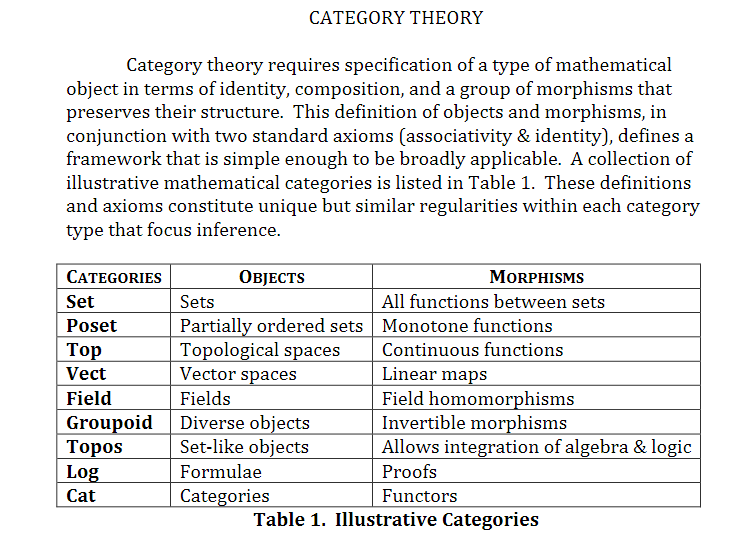
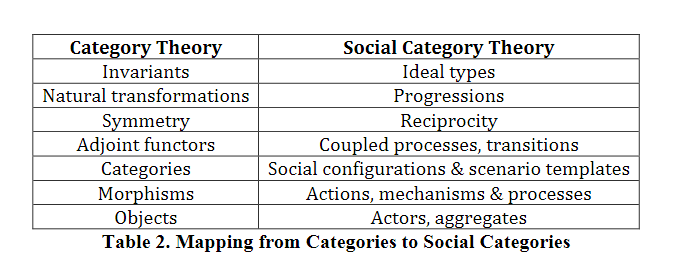
Sallach, D.L. Categorical Social Science: Theory, Methodology and Design. September 2012
Conference: Fourth World Congress on Social Simulation. Taipei, Taiwan.
https://www2.econ.iastate.edu/tesfatsi/Sallach2012CategoricalSoSci4.WCSS-SS.pdf

Plus, developed further in table 2:

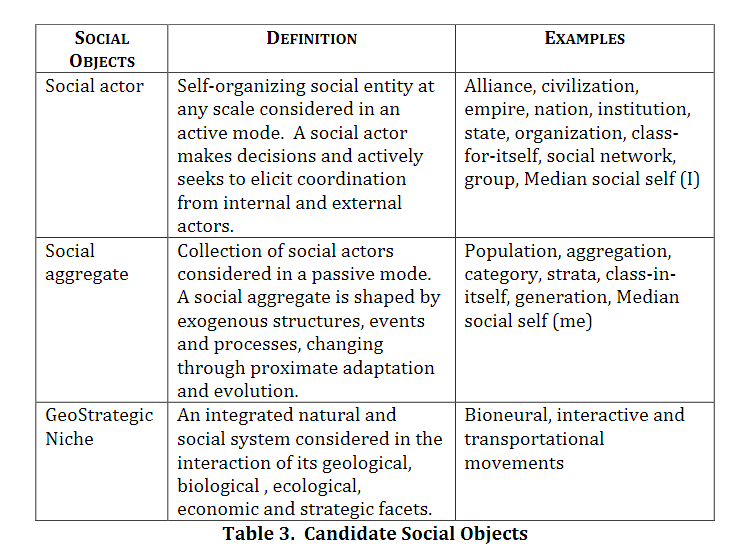
If time permits as an exercise, please consider Sallach's table 3 below. It may be interesting to map this to the domains of Hodges' model(?) [template]:
:

If you can see the potential utility of Hodges' model, you may also appreciate why Sallach's paper  resonates. Having emailed Dr Sallach, without reply, I did some checking. More sad news followed.

I, and no doubt many people will continue to discover and appreciate the legacy left behind by the above and many other pioneers. 

<>

I must acknowledge - Enid Mumford - whose work on socio-technical systems continues to inform my study and application of Hodges' model. This includes recognition of the many x-disciplinary bridges (or, barricades?) that can be found within Hodges' model. 

Clearly, much reading still to do.
<>

Returning to Hodges' model as a mathematical object, the 'distance' above is suddenly interstellar (and yes, sudden, as in faster than light!). I'm following videos, papers, and specific work-streams by  universities (I won't mention presently...) seeking to apply category theory to the social sciences. This suggests, at least, I'm not (completely!) wasting my time. If you have thoughts yourself on Hodges' model, the journey from Sallach's tables 1 - 2 not just 3, I'd be delighted to hear from you. 

There is another approach I will share this (N) spring. This author - researcher I have been able to contact.

*Scouser - https://en.wikipedia.org/wiki/Scouse
(Re. Liverpool - further post to follow).

James Lovelock image:  Bruno Comby, CC BY-SA 1.0, via Wikimedia Commons.

Saturday, May 21, 2011

The Difference that Makes a Difference: an interdisciplinary workshop on information and technology


Location: The Open University, Milton Keynes, UK

Dates: 7-9 September 2011

Few people would argue that the development of information technologies has had a profound impact on modern society. Information is communicated, stored and manipulated using digital computers, the Internet, and fixed and mobile telephony, resulting in a deep and extensive impact upon all aspects of our lives. While talk of information is routine and unproblematic for engineers and technologists, it has been recognised since the early days of digital technologies that there is an uneasy relationship between the engineer’s concept of ‘information’ and wider uses of the word (cf. Roszak, 1986).

It is nevertheless appreciated that information, whatever is meant by this concept, is important – indeed it is foundational – to a quite remarkably diverse range of disciplines. Information is emerging not only as the new language of science - from quantum information to the genetic code - but as a key commodity of business, a major concern of the state, the front line for crime and crime prevention, the primary arena of technological development, an increasing concern of philosophy, and even a focus for conceptual art. Indeed, it is difficult to identify any field of life in the developed world that can not now be seen to some degree to have a significant information aspect, and to a greater or lesser extent this has all emerged because of developments in information technology.

The idea of information as a distinct concept, applicable across a wide range of disciplines, is growing in prominence. It has been especially emphasised within the natural sciences (von Baeyer, 2003; Vedral, 2010; Davies and Gregersen, 2010) and philosophy (Floridi, 2010). Much of this work takes information theory as developed by technologists, beginning with Shannon (1948), as its starting point, but draws little on contemporary work of technologists. At the same time, a different strand of work has arisen, drawing its inspiration from the growing influence of the Internet, and largely conducted by technologists (e.g. Weinberger, 2007; Brown and Duguid, 2000). This research in turn has little connection with the work in natural sciences and philosophy.

As we move further into the ‘information age’, we need to make the bridge between information of the information technologist and understanding of information in other disciplines. As researchers and practitioners in diverse fields grapple with an understanding of information – what it is, how it can be modelled and tools for coping with it – now more than ever is the time to share insights and bring some clarity and coherence to these differing perspectives.

We have begun some of that work, largely with colleagues around the Open University, resulting in a recent edited book (Ramage and Chapman, 2011). However, these discussions need to go much wider and deeper. We therefore propose to hold an international workshop to bring engineers and technologists together with scientists, philosophers, social scientists and artists – leading thinkers from all and any discipline that uses the language of information – to talk and listen, and to share their insights with us all.

There have been and continue to be many conferences, symposia and workshops addressing the technology, the applications and the consequences of information technology, but it is rare to find opportunities to address the understanding of the nature of information itself.

The need for work addressed more specifically at understanding the nature of information is exemplified by a problem expressed by Terrence Deacon (2010):
For more than half a century we have known how to measure the information-conveying capacity of any given communication medium, yet we cannot give an account of how this relates to the content that this signal may or may not represent. These are serious shortcomings that impede progress in a broad range of endeavors, from the study of basic biological processes to the analysis of global economics.

This workshop seeks to bring together those working with information in a wide range of disciplines - engineers and technologists together with scientists, philosophers, social scientists and artists - to discuss and expand our collective understanding of what we mean by information in our different disciplines. We are not seeking to combine these different understandings, but to share them and to explore commonalities.

The title of the workshop is based on a celebrated definition of information by Gregory Bateson (1972, pp.457-9), who wrote:
A difference is a very peculiar and obscure concept. It is certainly not a thing or an event. This piece of paper is different from the wood of this lectern. There are many differences between them – of color, texture, shape, etc. But if we start to ask about the localization of those differences, we get into trouble. Obviously the difference between the paper and the wood is not in the paper; it is obviously not in the wood; it is obviously not in the space between them, and it is obviously not in the time between them. (Difference which occurs across time is what we call “change”.) ...

Kant, in the Critique of Judgment – if I understand him correctly – asserts that the most elementary aesthetic act is the selection of a fact. He argues that in a piece of chalk there are an infinite number of potential facts. ... I suggest that Kant’s statement can be modified to say that there is an infinite number of differences around and within the piece of chalk. There are differences between the chalk and the rest of the universe, between the chalk and the sun or the moon. And within the piece of chalk, there is for every molecule an infinite number of differences between its location and the locations in which it might have been. Of this infinitude, we select a very limited number, which become information. In fact, what we mean by information – the elementary unit of information – is a difference which makes a difference.
The workshop will consist of four main sessions, each with keynote speakers and a number of presentations from others. Our goal is for maximum participation. If you are interested in the role and nature of information, we invite you to join us in Milton Keynes in September.

Magnus Ramage and David Chapman
Thanks to David for my being able to post these details here. I have registered and if time permits will submit an abstract. I'm really looking forward to this workshop. pj

Jones, P. (1996) Humans, Information, and Science, Journal of Advanced Nursing, 24(3),591-598.

'information' on W2tQ

Friday, July 11, 2025

'Thinking outside the box ...' iii by Amber Javis

Third response to a blog post by Amber Jarvis on The Mental Elf:

Thinking outside the box: alternatives to standard inpatient mental health care

Amber's post considers a study by:

Griffiths, J. L., Baldwin, H., Vasikaran, J., Jarvis, R., Pillutla, R., Saunders, K. R., … & Johnson, S. (2025). Alternative approaches to standard inpatient mental health care: development of a typology of service models. International Journal of Mental Health Systems, 19(1), 1-13: https://pubmed.ncbi.nlm.nih.gov/40247283/

A Community Psychiatric Nurse since 1985, on first contact patients were often upset initially at the prospect of a visit. Not the fact it was a nurse, but a psychiatric, 'mental' nurse. If the patient was OK about it, their family may have had qualms. Discretion was always exercised, essential in terms of maintaining confidentialty. Not infrequently, as a team we had a conflict of interest. A colleague already had a client a few doors down; or they lived around the corner. Socio-politically, there was never an issue back then with shop fronts, but homelessness has a long history of course. I've worked in intermediate support, visiting someone 2-3 times in a day. That continuity helps, in contrast to the experience of older adults in social care. It could be that the potential stigma elicited by intensive home care is now attenuated by:
  • The public's increased awareness mental health & illness;
  • The fragmentation of neighbourliness means people really aren't interested?
In the conclusion on Griffith's et al's study Amber notes:

'The authors’ classification of alternative service models could help planners and commissioners understand ‘the whole range of options’ when deciding which improvements to prioritise and invest in.

However, future studies should investigate the implementation challenges surrounding these alternative models – that is, what might make certain models easier or more difficult to introduce? Research investigating their effectiveness in practice is also required – are there particular models that are better suited to certain individuals, at particular times? As the authors put it: “what works best for whom, when and how”!'

The government in England has launched a trial regards people who are sick, and their work status:

'GP surgeries in England can offer advice to patients on getting back to work, including career coaching or exercise classes, as part of a pilot project to reduce the number of people who are signed off work sick.

The aim is to help people return to the workplace more quickly to reduce the length of time they need fit notes - better known as sick notes.

These are issued by health professionals if a patient is unwell or cannot work for more than seven days.

A total of £1.5m is being made available to 15 regions in England, and will be shared between GP practices in these areas to hire coaches or occupational therapists to support patients in their return to work.'

Hugh Pym, Health editor: https://www.bbc.co.uk/news/articles/cwyx880d1w8o 

Individual
|
      INTERPERSONAL    :     SCIENCES               
HUMANISTIC  --------------------------------------  MECHANISTIC      
 SOCIOLOGY  :    POLITICAL 
|
Group
Career coaching
Exercise classes
Counselling
Reduce time spent 'ill - sick - off-work'
Motivation - Mindset

FIT - SICK:
physically only of course!
Seven days
What can't I do?
What can I do?


Social Prescribing
Occupational Therapists
Physiotherapist
Support workers
Horticultural groups
Local history


FIT NOTES - SICK NOTES
£1.5m across 15 regions
Policy
Welfare budget
Behavioural Economics
Integrated Care & Social Policy


Given the rise of mental health related provblems in the population, some might argue that increased awareness of, and education about mental illnesses is part of the problem. But this isn't literacy then?

With the standing of the mental health nursing curriculum called into question, policymakers have some serious decisions to make. Social prescribers and care navigators are not the only people preoccupied with signposting. Griffith et al. write:

'Inpatient care is also costly; even though only 3% of people in England accessing mental health care in 2018/19 received inpatient mental health care, National Health Service (NHS) trusts in England still invest more in inpatient than community services [].'
Hodges' model: Axes & Domains

You can appreciate just how far away prevention and a health literate population truly are. Budgets will have to be re-directed. Now that is 'care-ordination'.

Griffith et al. and Amber's response, calls care that is simultaneous person-centred and service-centred. 

In Hodges' model it is as if the vertical axis, is turned and the 'individual' aligned with the humanistic (person-centred) and group - the mechanistic (service-centred) axis. This gives us self-care, individualised healthcare, personalised medicine through to population health.


Griffith does not venture into literacy and education (not their study's purpose, of course); but using Hodges' model, we can see two critical related issues. In addition to reducing the time a person is physically, and mentally indisposed, unwell, ill, sick ...
  1. We need to improve the lot of children excluded from school;
  2. Seriously address the determinants of health socio-politically.


Friday, August 20, 2010

Retirement, memories of work & Bacon numbers

In the UK in July 2010 the much anticipated news about the government's plan to scrap the default retirement age in the UK from October 2011 throws up a complex future work place and nursing care space.

At the moment if a member of the staff in the NHS needs a psychiatric assessment and admission, then there is often a protocol that determines how their care is managed. Various factors are taken into account. For example, the work history of the person and the distance of available beds. This may entail admission for them to another area. Such arrangements help protect the staff member, their families and the local staff for whom being both carers and colleagues could be quite difficult.

Over two decades I have encountered health professionals who are diagnosed with dementia maintained in the community - in their homes - and in residential care. So far I have not known these individuals in their work capacity and professional lives. This is due in part of course to the incidence of dementia increasing with age and my previous status as a spring chicken. Today of course things have changed:

  • Early onset dementia is more common as the overall older adult population rises.
  • Suddenly (well at least after October 2011) we may find - despite the physical and emotional demands of the job - that the staff in residential and nursing homes are also older - working through that previous work | retirement barrier.
  • There's another change: now I am a mature chicken.
  • I wonder what the churn rate is in our nursing homes?
  • While we usually think of high turnover for staff and the associated poor quality of care. As care and nursing homes are also businesses there are two churn rates:
    • - senior and junior staff leave the sector, or move to other homes;
    • - residents are moved for reasons of re-location - increased care needs, and the choices of family.
So....? Amid all this I wonder how many workers in the care sector working their extended years may potentially come across former work colleagues? This could be a delicate and haphazard negotiation. ...

Additional link:
The Oracle of Bacon

Saturday, July 08, 2017

Money and Mental Health [ii] OVERSTRETCHED, OVERDRAWN, UNDERSERVED

Following on from - Money and Mental Health [i] Impact of Mass Unemployment Events (MUEs)

I have been familiar with the relationship between mental health and finance since student days in the late 1970s. Debt was and remains a profound and common problem. This can exacerbate existing mental health problems or it be the trigger - the straw that breaks the camel's back. From the report:

One in four people with a mental health problem is also in problem debt, and half of people in financial difficulties have a mental health problem (p. 13).
Finance still has this impact whether it is a lack of basic financial skills (literacy), life chances and opportunity or attributed to bad luck. Speaking of 'luck': I have frequently felt angry and frustrated with government policy. It is common sense and statistically inevitable that within the population there will be people who are vulnerable to addiction of many sorts. Why make it easier for those who are vulnerable to potentially loose everything? Not only that but money impacts all those in vulnerable groups, not just people in work. When we talk of health inequality what is the biggest factor? I've come across instances of elderly people receiving scam mail and not just the 'odd' post. While within Hodges' model below I have family as a resource, sadly this can also be part of a problem.

'Productivity' looms large in the report and draws a rueful smile here. In the NHS productivity and its increase is a constant requirement. In the general economy UK productivity is low and seemingly stuck. Successive governments have failed and now with Brexit productivity is still on life-support.

In the report 'financial fragility' is a very useful construct (as with circumstantial, rather than careless overspending). The public sector is also highlighted in this regard:
Forecasts suggest that 5.4 million public sector workers, one in six of the UK workforce, will be worse off in 2020 than they were in 2010 (p.16).
Before you view the report itself and the small conceptual sampling in Hodges' model, the report refers to the hidden epidemic that this report seeks to highlight and represent. This government and successive, nationally and globally need to get to grips - somehow - with the hidden economy - parts of which are blatantly obvious in the subterfuge around tax avoidance. This is another relationship that operates upon us all - employed, unemployed, young and aged - and which Hodges' model can also help illuminate.


Evans, K., Holkar, M., Murray, N. (2017) OVERSTRETCHED,OVERDRAWN, UNDERSERVED: financial difficulty and mental health at work, The Money and Mental Health Policy Institute, May 2017.

What follows is drawn from the report above - with a couple of additions:

individual
|
INTERPERSONAL : SCIENCES
humanistic ----------------------------------------- mechanistic
SOCIOLOGY : POLITICAL
|
group - population
[May THE KNOWLEDGE ECONOMY
(including nursing)

MENTAL HEALTH

hidden epidemic

... over two thirds (67%) of employees who are struggling financially report at least one sign of poor mental health that could affect their

ability to function at work
loss of sleep,
poor concentration,
reduced motivation,
preoccupation

Increased risk taking
(impact - occupation...?)

Guilt/shame Anxiety Low self-esteem Anger Frustration Fear Low mood Self-harm Suicidal ideation Insomnia Panic attacks Depression, Lethargy/apathy Substance misuse

[... starts here!]
PRODUCTIVITY

Physical effects of anxiety, stress, alcohol, smoking (increase, relapse), other
substance misuse

physical fragility
(lack of resilience)

Nearly half (45%) of all working days
lost to ill health were a result of stress
in 2015/16 – adding up to
11.7 million days
across the economy.

work access to:
  "on-site exercise facilities, healthy
 food and rest spaces"

hidden morbidity

Influence of individual mental health on colleagues,
team morale
and cohesiveness

fear of bailiffs
- seen by others at my door

pressure on relationships

conflict at work

family breakdown

shame, guilt, stigma

social support,
friends, family, colleagues

WORK
THE ECONOMY

"Money and Mental Health will set out the case for employers to provide practical support to employees experiencing financial difficulty, and how this could boost the mental health, wellbeing and resilience of their workforce."


"financial fragility"

Creditor action

poor performance, punctuality, reliability
disciplinary action

OCCUPATION HEALTH
services - counselling / advice

Individual's awareness of Rights

the hidden economy


Thanks and Acknowledgement to The Money and Mental Health Policy Institute