Hodges' Model: Welcome to the QUAD: Search results for GP

Hodges' model is a conceptual framework to support reflection and critical thinking. Situated, the model can help integrate all disciplines (academic and professional). Amid news items, are posts that illustrate the scope and application of the model. A bibliography and A4 template are provided in the sidebar. Welcome to the QUAD ...

Showing posts sorted by date for query GP. Sort by relevance Show all posts

Monday, April 13, 2026

AI-2026 46th SGAI International Conference on Artificial Intelligence CAMBRIDGE, ENGLAND, DECEMBER

THIRD CALL FOR PAPERS AND POSTERS

The proceedings of the AI-20xx conference series are now published by Springer in Lecture Notes in Artificial Intelligence (LNAI), a sub-series of the distinguished Lecture Notes in Computer Science (LNCS) series of conference proceedings.
AI-2026: Cambridge, UK, December 15th-17th 2026
Organised by BCS SGAI: The British Computer Society Specialist Group on Artificial Intelligence (a EurAi Member Society).
The leading series of UK-based international conferences on Artificial Intelligence and one of the longest running AI conference series in Europe.
CALL FOR CONTRIBUTIONS
AI-2026 is the forty-sixth SGAI International Conference on Innovative Techniques and Applications of Artificial Intelligence.
The scope of the conference comprises the whole range of AI technologies and application areas. AI-2026 reviews recent technical advances in AI technologies and shows how these advances have been applied to solve business problems. Key features are:
  • Papers will be published by Springer in the Lecture Notes in Artificial Intelligence (LNAI) subseries of the popular Lecture Notes in Computer Science (LNCS) series (www.springer.com/lncs).
  • Papers are invited in two streams. The Technical Stream presents the best of recent developments in AI, covering a wide range of technical areas. The Application Stream is the largest annual showcase in Europe of real applications using AI technology.
  • It is expected that the best papers will be reprinted in expanded form in a special issue of an international journal.
  • A mixture of full papers (maximum 14 A4 pages) presented orally and short papers (maximum 6 A4 pages) presented as posters. Papers of both kinds will be included in the proceedings.
  • Prizes for best paper and best student paper in each stream and best presented short/poster paper.
  • Invited keynote lectures.
  • The first day comprises tutorials and workshops to provide greater depth in selected topics. (Separate one-day registration for this day is also available.)
  • A panel session on a topical subject.
  • An 'AI Open Mic' session to allow delegates to have their say about any aspect of AI.
  • In addition to the formal sessions, the conference programme includes a welcome reception and a Gala Dinner.
AI-2026 offers a valuable opportunity to keep up to date with developments in AI and to share experiences in the practical issues of developing AI systems.
FAIRS '26, the eighteenth annual forum for AI research students will immediately precede the AI-2026 conference at Peterhouse College on Monday December 14th, 2026. The aim of FAIRS is to support student members of the AI community providing advice and feedback on their research plans and work. This event is free of charge for research students except for a contribution towards the cost of refreshments and lunch in the College and no conference registration is required.
IMPORTANT DATES
  • Paper/Poster Submission: Friday 26th June 2026
This deadline is considerably later than for previous conferences in this series and will not be extended.
  • Notification of Acceptance: Tuesday September 1st 2026
  • Camera Ready Paper: Monday 14th September 2026
CONTRIBUTIONS
Contributions presenting original work in AI are invited for both the technical and the application stream. Contributions may be submitted either as full papers of up to fourteen A4 pages for oral presentation or as short papers of up to six A4 pages for poster presentation.
  • Technical Stream
Areas of interest include (but are not restricted to): knowledge engineering; semantic web; constraint satisfaction; intelligent agents; machine learning; model based reasoning; verification and validation of AI systems; natural language understanding; speech-enabled systems; case based reasoning; neural networks; genetic algorithms; data mining and knowledge discovery in databases; knowledge representation, inference and reasoning; robotics and pervasive computing; qualitative and temporal reasoning; knowledge management; AI languages and environments; robotics and pervasive computing; large language models.
  • Application Stream
Case studies are welcomed describing the application of AI to real-world problems. Papers in recent years have covered all application domains, including commerce, manufacturing and government, and every major AI technique. In addition to case studies and specific applications of AI, we would welcome papers that discuss issues such as managing the transfer from research to production of AI-based products. Papers are selected to highlight critical areas of success (and failure) and to present the benefits and lessons of value to other developers. Submitted papers should make these points clear.
  • Short Papers for Poster Presentation
Short papers are intended for the presentation of work which meets the high standards of the conference, but which is more topical and preliminary than the work presented in full papers. They provide an excellent forum for disseminating new developments and latest work in progress, especially suited to PhD students. Work submitted in the form of full-length papers that fall short of the standard for oral presentation will automatically be considered as candidates for reworking as short papers for poster presentation.
  • Submission of Papers
Final versions of accepted papers must be prepared in either Microsoft Word or Latex together with a copy in PDF format. Initial versions of papers should be submitted in PDF format only and uploaded to the conference website by the deadline given above. Instructions for authors and templates for both Word and Latex are given at
In order for an accepted paper to be published at least one author must register for the conference and undertake to attend and present the paper in person. Presenting authors will be asked to register for the conference at the discounted speakers' rate when they return the final camera-ready versions of their papers.
  • Tutorials & workshops
The Conference Committee invites proposals for tutorials and workshops to be presented on the first day of the conference. These should be directed in the first instance to the Tutorial/Workshop Organiser.
  • Prizes
There are prizes for the best paper and best student paper submitted in each stream, chosen by the relevant program committee, and also a prize for the best presented short/poster paper, awarded on the basis of delegate voting.
All further information including details of the conference committee, program committees, paper format and uploading instructions is given on the conference website.
ALL CORRESPONDENCE SHOULD BE SENT BY EMAIL TO THE CONFERENCE SECRETARIAT:
sgai-conference AT bcs.org.uk

My source: BCS-SGAI
Tuesday, February 03, 2026

Joining the digital dots across primary care and integrated care

My partner and I both received a letter today from our respective GPs. An invitation for a 'FREE LUNG HEALTH CHECK'.

Overleaf is an information sheet in landscape about the health check, plus three more sides of A4, similarly formatted - inviting trifold presentation.

After the 'Re. ......' an opening sentence asks: 'Have you ever been a smoker?'

Suddenly, I was dragged backwards through his-tory (some things don't change); not one history, but several:

INDIVIDUAL
|
    INTERPERSONAL    :     SCIENCES               
HUMANISTIC --------------------------------------  MECHANISTIC      
SOCIOLOGY  :   POLITICAL 
|
GROUP
My personal and life experience 
and not just since my teens . . .

The letter states:
**If you have never smoked, you are not eligible for this service**


My mother and father 
smoked when I was a child and my siblings. 
 
They got the message early 1980s.
  
'Society' smoked back then!  
 
Once old enough, I refused to go to the corner shop.
 
Into the 1990s, patients, smoking (some chain-smoking) on admission, long-stay and other clinical areas. As a community mental health nurse, I learned diplomatic and health promoting skills when in the car, giving a patient a lift to hospital. And, when visiting their home where I was, of course, usually, a guest.


I wondered what has happened to the GP's records? To the primary care clinical record ? The custodians of my health record, that they should need to ask that question? 
 
Or, does confidentiality tie some bureaucratic knots?
 
Where is 'integrated care' and its driver 'clinical informatics'? 
The letter included the NHS Number.
 
 Don't get me wrong, I/we appreciate the obvious effort here, even if the chronology is confusing, or,  speaks of afterthought? The letters are dated 19/06/2025. I must admit I haven't accessed my GP record, checking it for accuracy.
 
If anything, this is a prompt to do so. And seek a general medical. 


Previously: 'smoking' : 'winwick'

Monday, January 26, 2026

'Drama classes help GPs handle difficult patients' c/o BBC

'Hull Truck Theatre has just won the Innovation prize at the Stage Awards for their new training scheme for GPs. Associate Director Tom Saunders and GP Dr Eman Shamsaee discuss why drama classes are helping doctors treat patients.' 

BBC Radio 4 'Front Row' https://www.bbc.co.uk/sounds/play/m002q2jz (15 mins ...)

◇

Holly Phillips, East Yorkshire and Lincolnshire and Ian Youngs, Culture Reporter

Published - 21 January 2026

'A theatre company is using drama training to help doctors deal with challenging patients.

Hull Truck Theatre's classes feature actors performing difficult GP consultations, with GPs giving feedback before taking over the consultation themselves.

The theatre recently won the Innovation Award at the Stage Awards for the programme.

Dr Eman Shamsaee, who has taken part in the training scheme, described it as a "really creative way of doing GP training".'

BBC News:  Drama classes help GPs handle difficult patients

INDIVIDUAL
|
 INTERPERSONAL    :     SCIENCES               
HUMANISTIC --------------------------------------  MECHANISTIC      
SOCIOLOGY  :   POLITICAL 
|
GROUP


The training programme has completed its pilot stage and is now in the delivery phase


A reminder of co-working to deliver STORM training with a Clinical Psychologist colleague. 

See also: 'communication' : 'primary care' : 'GP' : 'drama'

Sunday, January 04, 2026

Biology, axioms, teleology and knowledge c/o Cox & Forshaw (2012)

'Teleological ideas generally have a rather bad reputation in science, and it's easy to see why. In biology, a teleological explanation for the emergence of complex creatures would be tantamount to an argument for the existence of a designer, whereas Darwin's theory of evolution by natural selection provides a simpler explanation that fits the available data beautifully. There is no teleological component to Darwin's theory - random mutations produce variations in organisms, and external pressures from the environment and other living thing determine which of these variations are passed on to the next generation. This process alone can account for the complexity we see in life on Earth today. In other words, there is no need for a grand plan and no gradual ascent of life towards some sort of perfection. Instead, the evolution of life is a random walk, generated by the imperfect copying of genes in a constantly shifting external environment. The Nobel-Prize-winning French biologist Jacques Monod went so far as to define a cornerstone of modern biology as "the systematic or axiomatic denial that scientific knowledge can be obtained on the basis of theories that involve, explicitly or not, a teleological principle".
As far as physics is concerned, there is no debate as to whether or not the least action principle actually works, for it allows calculations to be performed that correctly describe Nature and it is a cornerstone of physics. It can be argued that the least action principle is not teleological at all, but the debate is in any case neutralized once we have a grasp of Feynman's approach to quantum mechanics. The ball flying through the air 'knows' which path to choose because it actually, secretly, explores every possible path.' pp.52-53.


Cox, Brian, and Jeff Forshaw. (2012) Quantum Universe, the: Everything That Can Happen Does Happen. London: Penguin Books Ltd.

See also: 

Jacques Monod - https://www.informationphilosopher.com/solutions/scientists/monod/

Harrison, Peter. 2022. 'The History of Science and Theology', St Andrews Encyclopaedia of Theology. Edited by Brendan N. Wolfe et al. https://www.saet.ac.uk/Christianity/TheHistoryofScienceandTheology

Greslehner GP. "Molecular Biology"- Pleonasm or Denotation for a Discipline of Its Own? Reflections on the Origins of Molecular Biology and Its Situation Today. Biomolecules. 2023 Oct 12;13(10):1511. doi: 10.3390/biom13101511. PMID: 37892193; PMCID: PMC10605324.

Previously: 'axiom' : 'biology' : 'corner'

Tuesday, July 15, 2025

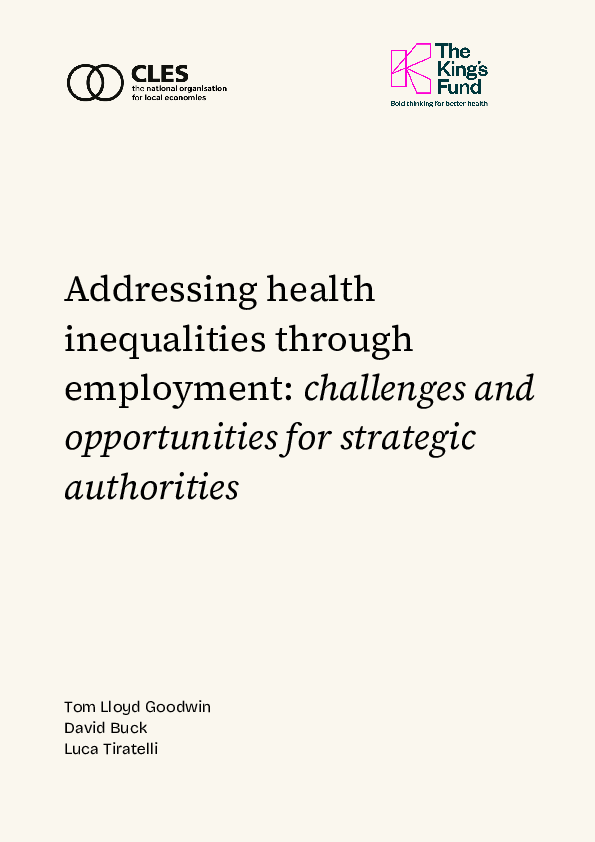
Essay: 'Addressing health inequalities through employment' July 2025


Four priorities:
  1. Establish closer working relationships across the SA [Strategic Authorities] ecosystem to prioritise action on health inequalities.  

  2. Align resources to support people on their journey to sustainable employment.

  3. Negotiate with government for greater permissions.

  4. Harness the power of anchors.
 

Many useful references are also provided, e.g. Building Blocks of Health. Plus the discussion of anchors.


Individual
|
      INTERPERSONAL    :     SCIENCES               
HUMANISTIC  --------------------------------------  MECHANISTIC      
 SOCIOLOGY  :    POLITICAL 
|
Group
employment as a determinant of health

mental & emotional health

Early intervention, employer-employee liaison, health coaching*


PLACE - PLANET

physical health - life-expectancy

LOCAL - accessible
SOCIO-

people & communities

flourishing communities

neighbourhood

People in communities on 
LONG-TERM SICKNESS

WORKWELL grants*

WIDER DETERMINANTS OF HEALTH

SOCIAL VALUE OF HEALTH

low-quality jobs - poorer health

Poverty - HOUSING SECURITY


-ECONOMIC

NHS 10 Year plan: 1. GP / dental access
2.  waiting lists hospital and community care
3. staff demoralised and demotivated
4. outcomes on major killers like cancer lag behind other countries.

STRAGEIC AUTHORITIES - DEVOLUTION
shift of wealth & power

HEALTH INEQUALITIES
inequity

WHOLE GOVERNMENT
APPROACH TO HEALTH

ECONOMIC VALUE OF HEALTH

low-quality jobs

Local strategic response


See also -

Opinion: Failing to collect, analyse, and report ethnicity data in clinical research leads to healthcare inequalities. BMJ 2025; 390 doi: https://doi.org/10.1136/bmj.r1457 (Published 14 July 2025)
Cite this as: BMJ 2025;390:r1457

 'hospital' : 'community' : 'analogue' : 'digital' : 'prevention' : 'sickness'

My source: https://x.com/TheKingsFund/status/1944678280461734226

Friday, July 11, 2025

'Thinking outside the box ...' iii by Amber Javis

Third response to a blog post by Amber Jarvis on The Mental Elf:

Thinking outside the box: alternatives to standard inpatient mental health care

Amber's post considers a study by:

Griffiths, J. L., Baldwin, H., Vasikaran, J., Jarvis, R., Pillutla, R., Saunders, K. R., … & Johnson, S. (2025). Alternative approaches to standard inpatient mental health care: development of a typology of service models. International Journal of Mental Health Systems, 19(1), 1-13: https://pubmed.ncbi.nlm.nih.gov/40247283/

A Community Psychiatric Nurse since 1985, on first contact patients were often upset initially at the prospect of a visit. Not the fact it was a nurse, but a psychiatric, 'mental' nurse. If the patient was OK about it, their family may have had qualms. Discretion was always exercised, essential in terms of maintaining confidentialty. Not infrequently, as a team we had a conflict of interest. A colleague already had a client a few doors down; or they lived around the corner. Socio-politically, there was never an issue back then with shop fronts, but homelessness has a long history of course. I've worked in intermediate support, visiting someone 2-3 times in a day. That continuity helps, in contrast to the experience of older adults in social care. It could be that the potential stigma elicited by intensive home care is now attenuated by:
  • The public's increased awareness mental health & illness;
  • The fragmentation of neighbourliness means people really aren't interested?
In the conclusion on Griffith's et al's study Amber notes:

'The authors’ classification of alternative service models could help planners and commissioners understand ‘the whole range of options’ when deciding which improvements to prioritise and invest in.

However, future studies should investigate the implementation challenges surrounding these alternative models – that is, what might make certain models easier or more difficult to introduce? Research investigating their effectiveness in practice is also required – are there particular models that are better suited to certain individuals, at particular times? As the authors put it: “what works best for whom, when and how”!'

The government in England has launched a trial regards people who are sick, and their work status:

'GP surgeries in England can offer advice to patients on getting back to work, including career coaching or exercise classes, as part of a pilot project to reduce the number of people who are signed off work sick.

The aim is to help people return to the workplace more quickly to reduce the length of time they need fit notes - better known as sick notes.

These are issued by health professionals if a patient is unwell or cannot work for more than seven days.

A total of £1.5m is being made available to 15 regions in England, and will be shared between GP practices in these areas to hire coaches or occupational therapists to support patients in their return to work.'

Hugh Pym, Health editor: https://www.bbc.co.uk/news/articles/cwyx880d1w8o 

Individual
|
      INTERPERSONAL    :     SCIENCES               
HUMANISTIC  --------------------------------------  MECHANISTIC      
 SOCIOLOGY  :    POLITICAL 
|
Group
Career coaching
Exercise classes
Counselling
Reduce time spent 'ill - sick - off-work'
Motivation - Mindset

FIT - SICK:
physically only of course!
Seven days
What can't I do?
What can I do?


Social Prescribing
Occupational Therapists
Physiotherapist
Support workers
Horticultural groups
Local history


FIT NOTES - SICK NOTES
£1.5m across 15 regions
Policy
Welfare budget
Behavioural Economics
Integrated Care & Social Policy


Given the rise of mental health related provblems in the population, some might argue that increased awareness of, and education about mental illnesses is part of the problem. But this isn't literacy then?

With the standing of the mental health nursing curriculum called into question, policymakers have some serious decisions to make. Social prescribers and care navigators are not the only people preoccupied with signposting. Griffith et al. write:

'Inpatient care is also costly; even though only 3% of people in England accessing mental health care in 2018/19 received inpatient mental health care, National Health Service (NHS) trusts in England still invest more in inpatient than community services [].'
Hodges' model: Axes & Domains

You can appreciate just how far away prevention and a health literate population truly are. Budgets will have to be re-directed. Now that is 'care-ordination'.

Griffith et al. and Amber's response, calls care that is simultaneous person-centred and service-centred. 

In Hodges' model it is as if the vertical axis, is turned and the 'individual' aligned with the humanistic (person-centred) and group - the mechanistic (service-centred) axis. This gives us self-care, individualised healthcare, personalised medicine through to population health.


Griffith does not venture into literacy and education (not their study's purpose, of course); but using Hodges' model, we can see two critical related issues. In addition to reducing the time a person is physically, and mentally indisposed, unwell, ill, sick ...
  1. We need to improve the lot of children excluded from school;
  2. Seriously address the determinants of health socio-politically.


Wednesday, November 06, 2024

Dear Doctor, I have a list . . .

It seems reasonable to suggest that my trips to see the GP as a child:

"What's the problem Mrs Jones?"
"It's Peter, he's not eating!"
"Well, does he seem ill? ... Is he lying down all the time?"
"No, he's running around all day"
"Well he sounds OK but let's check" ... ... ...
"Say arr!"
 (That's to me - not you reader!)
"Argh!"
"Mmm.. ok, ok. ... What does he eat?"
"Tomato soup, chips, chicken, beans on toast, raw carrot, boiled egg."
"Oh! And jam butties!"
"Well he's of slim build, no doubt underweight, but he's fine. Keep the jam butties rolling, and I suspect he'll keep running around."
- were in the days pre-one-problem-per-visit to the surgery. Even now I wonder is this an urban (rural) myth. But then it rears itself with a comment by family, or overheard. The 1960s and 1970s were a different time, a different age. We always saw the same doctor. Continuity mattered then. Thankfully, I was not a regular 'visitor', or the more derogatory term frequent flyer.

individual
|
INTERPERSONAL : SCIENCES
humanistic ------------------------------- mechanistic
SOCIOLOGY : POLITICAL
|
group

Ever since starting in the NHS as a nursing assistant, you became aware of the anxiety provoked by many patients when it is their turn to see the doctor. Being asked to bring the patient and any relative(s) through. It often entailed a walk.


I remember one instance their being 12 professionals. Learners can soon increase numbers and restrictions were imposed. Voices were raised. Patients did see the doctor separately.

Back in 1980s, I became a CMHN (CPN) in 1985, I used to encourage patient's to prepare, to make notes of points - questions they wanted to ask. I framed it as their time, their opportunity. A learning opportunity too.

Of course, humour always needs to be used carefully, but on occasion we would joke about walking into the meeting with a list.*


In case of long-term mental illness families are also greatly involved. Sometimes a case review would take place in the patient's home. If it's care in the community, delivered by the community team then surely the administration can be organised in support? 

At times, I would offer to assist and the team were always responsive. This role of advocacy has changed, transformed over the decades, but it is still there. As a nurse you listen for the voice: but have to be ready to 'pick this up' on another's behalf. Ready 

*Lists: Long a tool for safety and situational awareness.

Saturday, September 14, 2024

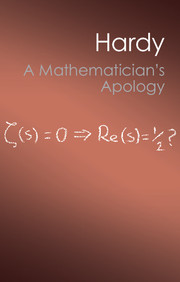
Hardy (1940) A Mathematician's Apology


In Liverpool I came across G.H. Hardy's short book A Mathematician's Apology. At £2.00 - a pristine bargain and a  marvellous read, especially the latter sections.

From being taught and applying Hodges' model in a case study in 1987 through to online work since 1998; I have to ask myself. Do I need to write:

'A Nurse's Apology'?

Aware of Hardy in the history of mathematics, and having read his apology, I'm no Hardy. My antics are a lesson in addition, but this is more 'Laurel and Hardy' - with apologies to comic genius of course. 


By their nature professions seek to maintain, and assure their continuity. A professional body can point to a definable body of theory, practice (curricula), that carries social and political status, if not patronage. There is national agreement that the NHS needs reform; radical reform no-less. The new Labour government is drawing lines to negotiate with the BMA, other professional bodies and unions. Specificity, specialisation is key. In healthcare people have suggested to me that Hodges' model invites genericism. Any suggestion of genericism is to be shunned. There seems an almost allergic reaction such is the threat to professional identity; unless, of course, you are a 'General Nurse', or General Practitioner - GP family doctor). Even Hardy warns:
"'GENERALITY' is an ambiguous and rather dangerous word, and we must be careful not to allow it to dominate our discussion too much." p.105.

This also applies to the quality and solidity of professional agencies and bodies whose role is to provide governance and set standards. The NMC has stumbled? Life and death is made up of details AND big pictures. How do you provide for - balance both? Curricula are another concern. Is the future of mental health nursing guaranteed as a profession? 

https://hodges-model.blogspot.com/2016/08/future-of-mental-health-nurse-training.html

The instrumental potential of Hodges' model is obvious. It invites a checkbox approach. One-to-one clinical encounters and interactions reduced to a tick-box exercise. This reduces any sense of specialist knowledge, training and education needed to assess, plan, deliver and evaluate high quality, effective, sustainable healthcare.

'THE second quality which I demanded in a significant idea was depth, and this is still more difficult to define. It has something to do with difficulty; the deeper? ideas are usually the harder to grasp: but it is not at all the same.' p.109.

Hardy's thoughts (and no doubt similarly expressed by other mathematicians and logicians) can be 'found' in Hodges' model; with an addition. Depth and difficulty rests on the uniqueness of  the 'one'. 

Here, Hardy is comparing between 'real mathematics' and chess:

'A chess problem also has unexpectedness, and a certain economy ; it is essential that the moves should be surprising, and that every piece on the board should play its part. But the aesthetic effect is cumulative. It is essential also (unless the problem is too simple to be really amusing) that the key-move should be followed by a good many variations, each requiring its own individual answer. 'If P-B5 then Kt-R6; if .... then if .... then ...., ....' - the effect would be spoilt if there were not a good many different replies. All this is quite genuine mathematics, and has its merits; but it is just that 'proof by enumeration of cases'  (and of cases which do not, at bottom, differ at all profoundly*) which a real mathematician tends to despise.' p.114.

*I believe it is now regarded as a merit in a problem that there should be many variations of the same type. (footnote)

While Kings, and Queens et al. undoubtedly have their own unique personalities, in healthcare effective clinicians make a concerted effort not to merely enumerate cases. The professional emphasis is (idealistically, professionally, purely and in application to) person-centredness; with the compassion, complexity, cussedness, and (sometimes literal) complications this brings. From 1-1 interaction, the clinical encounter, the therapeutic relationship, and alliance are the reason for practitioners achieving and sustaining intra- and interpersonal communication skills. Our attitudes towards knowledge, what is thoughts affects what we feel individually and collectively. Science should be neutral. It might be concluded that this question is for the philosophers and ethicists to wrestle with. In healthcare ethics are central: 'Do no harm'. Whether the practitioner, theorist, manager, policy maker is a nurse, scientist or mathematician such questions impact upon the person. As they are social, cultural and political. Revisiting Bronowski's Ascent of Man, this question arose in Archive on 4.

'It seems that mathematical ideas are arranged somehow in strata, the ideas in each stratum being linked by a complex of relations both among themselves and with those above and below. The lower the stratum, the deeper (and in general the more difficult) the idea.' p.110.

(my emphasis)

individual
|
INTERPERSONAL : SCIENCES
humanistic ------------------------------- mechanistic
SOCIOLOGY : POLITICAL
|
group

logical & mathematical reasoning
depth of reasoning (memory)
mathematical aptitude
intelligence(s)
pure maths
identity

vector
relations
mathematics
logic
depth of analysis, complexity
Cricket!
pure - applied maths
"1" problem per visit

patient - health practitioner 
relationship
Watching cricket - conversation

reports - outcomes
enumeration of cases


Back-tracking to page 104, Hardy:

'The relations revealed by the proof should be such as connect many different mathematical ideas.'

Our proof is person-centredness, placing the person at the center (in this case - of Hodges' model). The proof can be quantitative and qualitive. There are a great many ideas at work. Critically, the ideas that might be called upon (even improvised) are not all health-related, but can extend beyond to encompass the four care (knowledge) domains of Hodges' model. In healthcare as in Hardy's life the spiritual is encountered. So, the determinants of health are ALL available to us - as required. Well not available as a resource might be, they are available in the hope they will be seen as factors. Hardy would approve I think of the direction of travel, not just as a vector, but a model of multidimensional vectors - reaching for relations.

Hardy, G.H. (1940) A Mathematician's Apology, Cambridge: Canto.
https://www.cambridge.org/core/books/mathematicians-apology/B90D81A8E28674119781863988A3E11B

Saturday, July 06, 2024

Take II? Fit for Government . . ?

As a community nurse, driving is obviously pretty essential to your being able to work. I have come across non-driving community nurses (earlier this year) but they are still few(?). As a boy going to work with my father you could see how dependent he and workmates were upon a string of vans, cars and be able to drive both being on the 'right-side' of the law and his health. It was always an 'event' a new van, fitting out with racks, shelves, nooks, hooks and crannies for all sorts.*

Then as a community nurse older adults you come across individuals who still have their driving license, still have their car on the drive / front, and still have the car keys. Perhaps family have suggested to mum, dad, brother, sister, aunt: "Look, isn't it time to call it a day and give up driving?" Ouch! There's a crash - in itself.

Re-working the two-part draft paper on deprivation of liberty safeguarding, threshold concepts, Hodges' model within residential care, some thresholds are difficult, challenging to call. But some are safety critical, and perhaps need a more 'proactive' stance, without giving way to ageism. Is it the local community's job - the public's job to proffer a diagnosis: and what about persons on the world stage? Diagnosis by social media?

I quickly admired those people who, though reticent, gave up the literal fast-lane. Inevitably you wonder how you will react when the time comes. Will you have the humility, the goodness of grace to hand over the keys? To call it a day. With an ageing population, I've warned the children when driving to expect the unexpected. Cars going the wrong way. It was a struggle for my father: but safety as it so often does - did the trick - with the impetus of physical illness.

Sometimes, at work, after a family trying, and a fracas, when they've tried to hide / remove the car keys, suddenly a near-miss has upped-the-ratchet. Neighbours have seen the 'driver' reversing out into the road, with numerous car horns announcing the event. Then perhaps you are intercepted outside, a call comes to the day center (the transport is also going), the community team, or the GP's surgery (the neighbours have helped with medication).

I've had to speak to GPs for them to visit, meeting them on occasion. Do GPs - family physicians still have the same gravitas today?

This is a care transition: what can be a difficult one. A helpful point (diplomatic argument) that often gets through is the matter of car insurance and the status of the existing policy?

Does a political leader carry insurance?

It is difficult for all, a person's human rights, choices, freedom; their life story, former career perhaps, their health career - most definitely.

With events in the USA and the Democrat Party, and seeing the cover of The Economist I had to TAKE II.

Individual
|
      INTERPERSONAL    :     SCIENCES                   
HUMANISTIC  --------------------------------------  MECHANISTIC      
 SOCIOLOGY  :    POLITICAL 
|
Group

cognitive state

memory

insight

Fitness for Office:
Mentally & Physically
Legally
The Economist


safety of Others

community - duty of care -
safeguarding
 (however realised)

This is global problem that is set to increase and not just for reasons of health.

Ack. The Economist

Owen, D. (2009) In Sickness and in Power: Illnesses in Heads of Government during the Last 100 Years, London: Methuen Ltd. ISBN: 978-0-413-77689-1

Listen also ... BBC Radio 4 Moral Maze 

'The Morality of Stepping Down'

Previously:

*I suspect he's still driving around somewhere. x

Wednesday, February 28, 2024

HIFA Discussion: Alcohol Use Disorders - Do people understand the harms of alcohol?

Dear All (with further editing since posting)

The discussion, points, angles, questions ... are coming thick and fast it is difficult to keep up.

Many thanks for the summaries; and of course the discussion which archived also acts as a resource - repository:

https://www.hifa.org/news/hifa-announces-deep-dive-discussion-alcohol-use-disorders-starts-5-february-2024

I wonder whether the question: 
"Do people understand the harms of alcohol?" must always be placed in context?
It is radically different when asked of the tee-total, dry, safe drinker; and someone (still) actually in their alcohol drinking?

It occurs to me that alcohol, even more so than 'other' substance misuse (heroin...) represents what must be *the* contradiction, paradox in healthcare - except the tragic loss that is suicide.

Contrast substance misuse inc. alcohol, with 'help-seeking' and 'The Sick role'

https://www.england.nhs.uk/blog/ed-mitchell-2/

Plus, the (medical) sociology of the decision to consult/refer, and how in mental health (UK), the mental capacity act is apparently being misapplied ('policy-drift'?**):

https://www.lawsociety.org.uk/topics/blogs/are-mental-health-and-capacity-laws-at-risk-of-being-toxic

https://www.communitycare.co.uk/2017/08/23/flawed-use-mental-capacity-act-key-theme-safeguarding-adults-reviews-report-finds/

Individual

   |
      INTERPERSONAL    :     SCIENCES               
HUMANISTIC  --------------------------------------  MECHANISTIC      
 SOCIOLOGY  :   POLITICAL 
|
Group

continental drift

policy drift?


Previously, I highlighted how as a Community Psychiatric Nurse 1985-1995 (adult) .. if a patient/client was not working to control/reduce their alcohol consumption they may be 'counselled' re a pending discharge and referral back to their GP - family physician. In supervision with the team's manager they would want to know what is 'happening'. It being important not to create (social) dependency, or worse support someone in their alcohol misuse.

There was a sense, still is(?) that in substance misuse (across forms) - the individual has to reach 'rock-bottom', literally the 'gutter' that is the point they decide (really?)** to live, or carry on to suffer irreversible brain damage, or premature death. Regards the 'brain damage' it was a struggle for 45-60 minutes given the impact upon short-term memory, what time, .... is it indeed? When the patient was not living alone, how did the relative, family cope?

Is having to reach the gutter, the bottom, a trope/myth? In psychosis rather than assume the patient is beyond being reached prior to being medicated there are psycho-social interventions that can be commenced: being available / with. Here though this is usually 'first episode'. There is no analogue here, unless first admission to an in-patient unit is taken as a golden opportunity? But this also depends on its nature (funding, staffing - expertise), a general adult mental health ward, or specialist unit.

https://www.imdb.com/title/tt0048347/

What is the current strategy?

In terms of 'HIFA' - and the person that counts**, not only do they not have the 'information'; they do not have the EXISTENTIAL INFORMATION as it relates to them: 'Health Information for YOU'!

Again in Hodges' model we can contrast the dichotomy/polarisation of INDIVIDUAL :: GROUP.

The model's being situated; and able to encompass data, information, knowledge (facts, for example, and their delivery) - wisdom (Multi-contextual / transdisciplinary..).

I admire people who work in these services (learning disability and palliative care); as they must be severely tested as they retain an ability - the humanity - to 'see' the person whatever the patient's situation with their lack of awareness (capacity..?) and its critical salience.

Peter Jones
Community Mental Health Nurse and Researcher
Blogging at "Welcome to the QUAD"
http://hodges-model.blogspot.com/
http://twitter.com/h2cm
h2cmng at yahoo.co.uk

Location: It was just a cappuccino.

**Which points to the relevance of the POLITICAL care/knowledge domain in Hodges' model.

Thursday, March 25, 2021

Anticipatory Prescribing as part of Anticipatory Care

This post is derived from a selection of the main concepts found within three papers (references listed below) on 'anticipatory prescribing'. Some explanation may assist. I have duplicated 1. What is current practice? across the domains to suggest that the question needs to be answered for each of the care (knowledge) domains. The same principle applies to the repetition of the attitudinal questions at the individual and group (sociological) level. Person-centredness demands that the patient's views are paramount plus the aggregated responses of the group as a whole.

Perhaps there is a 'drug TIME' too, which operates across all the domains once more, and each variously weighted objectively and subjectively? The concept of control and assessment of control is also critical.

I've placed GP decision-making across both 'individual' domains described as it is as a 'process' and for the patient as 'bedside manner', as also reflected in the GP and healthcare professional's communication with the family.

Clinical effectiveness and observations are likewise span the interpersonal and sciences domains. This is to denote the need to achieve and sustain parity of esteem and integrate physical and mental health care - pastoral and spiritual also.

'Cost' is anchored in the political domain, but clearly there are much wider economic ramifications, both in quality of life, quality of death and the way 'cost' is determined, measured, analysed, evaluated and reported.

For me nursing, medicine, healthcare are most effective when they are anticipatory. Observation, reflection and critical thinking are key. In a way for an individual to be health literate is a preparation for self-care. Although clearly in a general sense of health and well-being; not necessarily being literate with respect to a long-term medical condition.

Hodges' model is an idealisation and the detail is obviously described in the papers listed. The intention below is for readers to gain an appreciation of anticipatory prescribing and the application and scope of Hodges' model.

 Taking a larger perspective anticipatory prescribing is part of anticipatory care.

@GeriSoc https://twitter.com/GeriSoc/status/1374716732120645632?s=20


individual
|
INTERPERSONAL : SCIENCES
humanistic ----------------------------------------------- mechanistic
SOCIOLOGY : POLITICAL
|
group

Anticipatory Prescribing

Reassurance for patient, family &  friends
clinical effectiveness
subjective TIME
observation
agitation, distress (mood, anxiety, orientation, communication, identity - self, fear, understanding, mental capacity...)

The patient's spiritual well-being needs are met*.

1. What is current practice?

2. What are the attitudes of patients?
3. What are the attitudes of family carers?
4. What are the attitudes of community healthcare professionals?
[as individuals]


GPs’ discussion with patients

(Advanced care planning - choices)

5. What is its impact on patient comfort and symptom control?

Anticipatory Prescribing

Physical access to medication and treatment is assured.
clinical effectiveness
objective TIME
observation
remote anticipatory prescribing increased 24 hours availability
(out-of-hours)


The intervention seeks to improve [my] symptom control

pain, nausea and vomiting, agitation, and respiratory secretions.

The Covid-19 pandemic has accelerated the practice of Anticipatory Prescribing; more terminally ill patients are having end-of-life care at home and in care homes.

1. What is current practice?

New routes of administration

injection, oral, sublingual, or rectal

5. What is its impact on patient comfort and symptom control?
GPs’ decision-making processes
Research:
Systematic review and narrative synthesis
Semi-structured interviews
Web-based survey
An important intervention in supporting patients and families who wish to have last days of life care at home.

1. What is current practice?

2. What are the attitudes of patients?
3. What are the attitudes of family carers?
4. What are the attitudes of community healthcare professionals?
[collectively]

5. What is its impact on patient comfort and symptom control?
Patient and families’ well-being throughout the end-of-life journey

*There is concord and respect regards patient's spiritual well-being needs.

GPs’ discussion with family

family caregiver administration

The Independent Review of the Liverpool Care Pathway found that the use of Anticipatory Prescribing without adequate explanation or justification led to families being concerned about over-sedation and the medication hastening death.

1. What is current practice?

5. What is its impact on patient comfort and symptom control?

6. Is it cost-effective?

Revise pharmaceutical regulations to permit repurposing of anticipatory prescribing medications in care homes, wider community drug access, and recycling unused medications returned to pharmacies.
Address stock shortages.


Bowers B, Ryan R, Kuhn I, Barclay S (2019) Anticipatory prescribing of injectable medications for adults at the end of life in the community: A systematic literature review and narrative synthesis. Palliative Medicine 33(2): 160-177 https://doi.org/10.1177/0269216318815796

Antunes B, Bowers B, Winterburn I, Kelly MP, Brodrick R, Pollock K, Majumder M, Spathis A, Lawrie I, George R, Ryan R, Barclay S. (2020) Anticipatory prescribing in community end-of-life care in the UK and Ireland during the COVID-19 pandemic: online survey. BMJ Supportive & Palliative Care; http://dx.doi.org/10.1136/bmjspcare-2020-002394

Bowers B, Barclay SS, Pollock K, Barclay S (2020) General Practitioners’ decisions about prescribing end-of-life anticipatory medications: a qualitative study. British Journal of General Practice; 70(699) e731-739 https://doi.org/10.3399/bjgp20X712625