Hodges' Model: Welcome to the QUAD: Search results for continuity

Hodges' model is a conceptual framework to support reflection and critical thinking. Situated, the model can help integrate all disciplines (academic and professional). Amid news items, are posts that illustrate the scope and application of the model. A bibliography and A4 template are provided in the sidebar. Welcome to the QUAD ...

Showing posts sorted by relevance for query continuity. Sort by date Show all posts

Sunday, January 27, 2019

RCGP’s 6th Health & Justice Summit: Safety through Continuity

Perhaps I will see you in Liverpool, UK later this week? 
I will be taking notes and look forward to reporting here.
A 2-day summit organised by the RCGP Secure Environments Group in partnership with, Broadmoor, Ashworth, and Rampton high secure hospitals, Spectrum, Care UK, NHS England, Martindale Pharma, Nottinghamshire Healthcare NHS Foundation Trust, Betsi Cadwaladr University Health Board, HMP Berwyn, West London NHS Trust, Mersey Care NHS Trust.

Following on from our successful event in Glasgow in 2017, we are now focusing on ‘Continuity of Care – safety through continuity’ as this year’s theme. We recognise the need to embolden the links between primary and secondary care for people resident in secure settings and are looking to showcase examples of good practice on how we can improve on care transition to the community.

The first day will broadly address physical health in secure mental health environments, and the second day will address the health needs of people in other custodial environments such as prisons, immigration removal centres and YOI’s.

If you are registered as a delegate for the event, please register which workshop you would like to attend via the link below:

www.convenzis.co.uk/6th-health-justice-summit-safety-through-continuity-registration/

<>

n.b. There are two papers listed in the bibliography (please see the sidebar) that show how h2cm is applicable to this specialist field.

Thursday, August 17, 2023

Identity, entity and continuity - c/o Evans (2009)

"Many things are defined by their identity, and not by any attribute. In our typical conception, a person ... has an identity that stretches from birth to death and even beyond. That person's physical attributes transform and ultimately disappear. The name may change. Financial relationships come and go. There is not a single attribute of a person that cannot change; yet the identity persists. Am I the same person I was at age five? This kind of metaphysical question is important in the search for effective domain models. Slightly rephrased: Does the user of the application care if I am the same person I was at age five? 

A conceptual identity has to be matched between multiple implementations of the objects, its stored forms, and real-world actors such as a phone caller. Attributes may not match." p.90.

"Object modeling tends to lead us to focus on the attributes of an object, but the fundamental concept of an ENTITY is an abstract continuity threading through a life cycle and even passing through multiple forms.

"Some objects are not defined primarily by their attributes. They represent a thread of identity that runs through time and often across distinct representations. Sometimes such an object must be matched with another object even though the attributes differ. An object must be distinguished from other objects even though they might have the same attributes. Mistaken identity can lead to data corruption.

An object defined primarily by its identity is called an ENTITY. ...

Domain-Driven Design
Of course, most "ENTITIES" in a software system are not people or entities in the usual sense of the word. An ENTITY is anything that has continuity through a life cycle and distinctions independent of attributes that are important to the application's user. It could be a person, a city, a car, a lottery ticket, or a bank transaction." p.91.


Eric Evans, (2009). 
Domain-Driven Design: Tackling Complexity in the Heart of Software, Model-Driven Design. Addison-Wesley.
[Emboldened text as per book.]

Saturday, July 11, 2026

"Train midwives as nurses" - Ockenden

Re. Ockenden Report

Catching up on the newspapers, I noticed in the Times reporting of Ockenden calling for midwives to train as nurses first. Provoking debate about nurse education.

Within maternity services there are problems with continuity of care and skills in dealing with complex cases:

'Maternal Deaths 

60. The Review examined 27 maternal deaths that occurred between 2006-2024. Five cases fell outside of the Terms of Reference of the Review. Of the 22 remaining cases, reviewers identified failures in care that may have or substantially impacted on the outcome in six deaths. 

61. The profile of maternal deaths at NUH over this period broadly aligned with the known demographics and causes as identified by MBRRACE. 11 of the deaths occurred to women living in the most deprived areas of the city and 14 occurred amongst women who were not white British.

62. The common failures reviewers identified that might prevent future maternal deaths included: listening to women and families and acting promptly on concerns; continuity of care particularly for those with additional social/medical complexities; robust clinical governance to ensure timely information sharing across organisations and prompt access to imaging for women presenting with concerning neurological symptoms.' xiv

AI Overview (Ecosia) suggests that although direct entry to midwifery has always been possible(?), the English National Board created the pathway some 39 years ago.

The Ockenden Report describes how in combination health systems, culture, leadership and training can contribute to compassion fatigue (p.313).

When you look at Hodges' model and our languages, a great many challenges for curricula, training and education programmes can be found. The most powerful of what can be progressive, or threats are invariably mechanistic:

  • shorten
  • bypass
  • shortcut
  • cutting corners
  • short-circuit

Nursing must always move forward, continuous professional development is built on this principle. In the late 70s and 1980s post-registered qualifications were held in high esteem. Especially midwifery, paediatrics, health visiting, emergency and intensive care. 

Clearly, decision and policymakers can underestimate the value of basic nurse training. Having an idea since childhood is brilliant, but at interview saying you're compassionate and want to make a difference will soon be tested. Sometimes as a student rather bluntly, as with a first placement in forensic nursing. I wonder how many students have been lost there? I'm sure the majority will cope, manage, enjoy and prosper, but I've seen the student peers who miss these cohort members on subsequent learning experiences. What preparation is employed?

Basic nurse training, is just that. Demonstrating competence in communication, awareness of basic needs and how these are expressed behaviourally. What interpersonal skills and knowledge are needed. As highlighted before, the director of nurse education worried about those of us who worked as nursing assistants risked being trained in poor care. Not recognising 'bad practice', a 'poor attitude', not using observation and most important of all listening: to what is said and unsaid. When I started I remember thinking about not responding - as individually programmed to do so, through a reflex action. That was a worry back then. 

While the news in the Ockenden Report is bleak. The depth of the report (for me) is manifest in identification of not only socioeconomic factors, but sociotechnical too (with five mentions) and the critical interplay of seeing (and hearing!) the individual amid the collective:

'2. Fetal monitoring

Rather than reflecting simple failures of individual interpretation, growing evidence suggests that intrapartum fetal monitoring is best understood as a complex sociotechnical practice, shaped by system design, workload, team dynamics, guideline variability and organisational culture.119 Continuous CTG itself has well-recognised limitations, including poor specificity for predicting long-term neonatal outcomes and substantial inter- and intra-observer variation in interpretation.5 Reviews of intrapartum care are therefore unavoidably influenced by retrospective bias, with greater apparent clarity afforded by knowledge of the outcome than was available to clinicians at the time. 

However, despite this, a sociotechnical understanding does not negate the importance of examining individual cases in which intrapartum monitoring was demonstrably substandard. National inquiries and confidential reviews repeatedly describe cases involving sustained failure to recognise pathological fetal heart-rate patterns, delayed escalation despite repeated triggers, and missed opportunities for timely intervention. 2,3,120,121 These cases cannot be explained solely by the inherent limitations of CTG or by hindsight bias.' p.143.

It is quite shocking to hear this conclusion: the need to train as a nurse first. Counterarguments: where is the evidence(?!) - have followed. But then if you undervalue and miss the fundamentals (see Hodges' model!) then individuals, families, communities, students, practitioners, services and systems suffer.

Previously: 'maternity' : 'report' : 'safety'

Saturday, July 09, 2011

Learning to pee and poo (again!)

I did not have to learn to pee and poo - you could say it came naturally.

My apologies: I know this is not the way to engage people, but believe me there is an issue in this waste-land.

Loving parents, guardians, and baby sitters the world over come to the rescue of hygiene, skin care and the quality of environmental aroma tending to the nappy / diaper changing when we are babies. Family pride counts too in place of the yet to be gained person-al sense of dignity.

We all (well the vast majority of us) have the potty training tee-shirt - even if at the time we were illiterate (an amazing woman this Mother Nature). I've also experienced potty training - the ups, downs and spills with my three children. It really is magic seeing them gain that control and independence.

When I was a student nurse hygiene, skin care, privacy and dignity were constantly stressed. These were a measure of the standard and quality of nursing care. It was the one thing around which continuity of care was built. We don't usually think of care continuity in these basic terms, but there it is. While there is so much that can divide ward / care shifts, day and night staff here was something that indicated performance, or the lack of it. Obviously enough, it was closely associated with continence and toileting.

Over the past decade and more we have all noticed the many changes in nursing, social care and with it the use of continence pads. Not just as a stand-by, but a routine continence management device that saves staff time and pressure on the call alarms. If you are catheterized then plainly there is no need for the commode, or bed-pan.

Now it seems with i-pads (no pun intended) the same applies,
now the nurses say "use your pad"!

Amid the clamour for dignity and respect, personalised care, high quality nursing care the location and bounds of the political care domain are found. Nursing has changed with social care. Nursing duties have been contracted out of the profession, freeing nurses to nurse.

This past week in England the BBC reported: Ex-ballerina Elaine McDonald care ruling 'shameful'
Elaine McDonald, 68, took Kensington and Chelsea Council to court over its decision not to provide her with a night carer to help her use a commode.

The court ruled the council had acted lawfully in reviewing her care plan.
It seems many people are having to learn to pee and (perish the thought) poo again.
  • What is that like when you are not* 'on the toilet' and are fully oriented, have mental capacity?
  • What is it like when there are people around?
  • What is that like when you are on your own at 0100 hours and the carer's due at 0830-0900?
We know social care is an acknowledged mess. Dilnot has arrived.

For Elaine McDonald and others in her situation this is a special type of problem. It is a logistical, temporal, care-logic nightmare. Committing someone for a whole night for the sole purpose of toileting is hard to justify, but are there no compromises, no alternatives? Is there no pattern to discern? Does the Big Society - social enterprise not see an opportunity here? Care in the community never is the cheaper option. Are we discounting the value of mental health and the sense of well-being that will be an inevitable ('soul') casualty?

I must locate some resources on nursing reviews of continence - there must be several - reports, theses, guidelines, standards? The contexts in which this matters are legion. If you know of any please let me know (see right for contact details). At some future date I'll explore the dimensions of continence across the health care domains.

Attitudes to toileting are already impacting on nursing's status. Too posh too wash...

We know this speaks volumes and reflects upon what we describe as nursing and how we define nursing. 

But it goes much deeper than that -
not only does it represent how nursing is practised 
it reflects the very values that nursing must then take as its own -
that is nursing the profession.

*in a space suit - STS 135 space walk 12 July 2011 > 6 hours.

Image and story source:
BBC http://www.bbc.co.uk/news/uk-england-london-14042078

Thursday, May 02, 2024

Natural asset companies - 'Small is Beautiful'

Individual
|
      INTERPERSONAL    :     SCIENCES               
HUMANISTIC  --------------------------------------  MECHANISTIC      
 SOCIOLOGY  :    POLITICAL 
|
Group

What I value and the values I hold.

Philosophy

Nature - Nature has Intrinsic Value


What we value and the values we hold.


Natural Asset Companies

The continuity of capitalism, or new approaches?


 My prompt - following and commenting in chat:
'Part II of the Small is Beautiful Celebration' The Schumacher Institute

Apparently nature has intrinsic value and 'natural asset companies' are a thing (for good or ill is another Q. -  continuity of capitalism? Is this one way where (literally) SMALL comes in? As nature locally has value, citizens are stakeholders (in the country by proxy)? But then how as societies do we compensate urban environments and those who clamour for - see the future in 'smart' cities? https://www.nytimes.com/2024/02/18/business/economy/natural-assets.html
See also:
https://www.nature.com/scitable/knowledge/library/intrinsic-value-ecology-and-conservation-25815400/
Sandler, R. (2012) Intrinsic Value, Ecology, and Conservation. Nature Education Knowledge 3(10):4.

Lydia DePillis, Nature Has Value. Could We Literally Invest in It? The New York Times. “Natural asset companies” would put a market price on improving ecosystems, rather than on destroying them. 18th February 2024. https://www.nytimes.com/2024/02/18/business/economy/natural-assets.html

Tuesday, June 16, 2026

vi Book: 'Complexity in Health Care - A Paradigm Shift for Clinical Practice'

The rest of the book is practice-based which is a strength. Chapter 18 has three clinical illustrations, were reflection and self-reflection is brought to fore. Especially so, as it pointed out that the 'clinical situation/encounter' introduces its own 'vagaries', or noise which can impact the 'quality of the bond between clinician and patient'. Rapport is the key. 

I was still missing 'complexity' and its dynamics, but I'm sure of the following:

If this was discussed - could be represented then the book would be theory-laden and I and other would-be readers would not be able to understand.

I still think Hodges' model can help, and in chapter 19 picked out 'manifold' (p.113), as if doing so, manifests something more esoteric. There is something here, the author noting the need to shift from individual to group perspectives. So, yes I think we can do more than embrace 'complexity' (p.114).

On page 116 there is discussion of the sometimes sudden path to recovery, 'probably common but often not comprehended'. Please pardon the naivety, but I scribbled 'hidden in complexity, what would (say) the three(?) equations be?'. For a book published in 2023 'artificial intelligence' is not indexed. This might be one area that AI could assist, given the progress in formal mathematics (but see below p.183!)? Algorithm is mentioned throughout the book. Further reading here, informed me that engaging with a reading group on 'Philosophical Counselling' is worthwhile. It is!

Part IX had me wondering if the debate about typical and complex cases, there is a slight of perspective going on? You can end up with paradoxes in terms of an individual's needs, criteria, risk, 'need for admission'. Which I must think about! Chapter 20 has three further reading texts on abductive reasoning. There's an appeal(?) on page 129 for an appropriate treatment model, well that is my take. Collaborative care and stepped care models are suggested. But with acknowledgement that:

'In truth, all models currently available may involve a defect in continuity within or between systems'. p.129.

I beg to differ. A role of Hodges' model is to help frame aspects of care through time, to facilitate and assure continuity.

Part X tackles the required precision in assessment, hence recourse to mathematics and statistics. The next two chapters may be useful for early career researchers and yet looking over our shoulders what is ai offering here? In Case 1 I was impressed by the suggestion of a health record that is over 70 years old. Not impossible of course, but I thought of the Lloyd George envelopes, their hospital equivalents, other paper sources and inevitable scanning this would entail here in the UK? Of interest to research is the creation and validation of complexity profiling inventories (tools) not just that, but their self-assessment form of delivery. And, yes in summary chapter 24:

'We are still left with the challenge of rating the patients' severely compromised health situations where "health" includes social, emotional, and financial well-being.' p.143.

'How do you factor this interpersonal situation into your complexity equation?' p.144.

Yes, how indeed? 

The realities of research of dealt with - funding for the development of tools a problem universally. The references here concern biopsychosocial complexity. Chapter 25 describes abstraction, and hiding detail, which is of great interest here. DSM-5 criteria for major depressive disorder are listed (DSM-6 may be released in 2029?). 

In chapter 25 the authors are once stymied by 'how to include (integrate? PJ) four dimensions, three time periods,and assorted assessment items in a single assessment.' 

As noted the four domains are here again (p.151): medical, psychological, social and care delivery and on page 153, introducing chapter 26, limitations of complexity assessment tools. Parity as in 'parity of esteem' is not indexed and I don't recall having read this, but this is well represented in later deliberations on variables #2. You will find psychosis, but not in depth or severity.

 In 'Creation of a New Model for Clinical Practice' (Chapter 31) identity is stressed, as a prompt to encompass those variables that contribute to preserving the person - what is humanistic. Allied with manifold, identity is a 'coi' for me, concept of interest - for this same reason. On page 172: the authors observe they 'are left with the question of whether there are acceptably accurate clinical models that are simpler and more straightforward than ours? We believe the answer is no!'. I believe there is a way, and a model to help 'keep the life in clinical work' - not take it out. There is a sense that Chapter 32 seeks what I was looking for above: as they explore random variable and 'sample spaces' descriptively - over a page.

Ah! 'Artificial intelligence' is found in text p.183. I'm surprised an editor, proofreader aloud the following sentence to go unchallenged?

'But, as will be discussed, these computer techniques have their limitations based on their lack of flexibility.' 

I was genuinely surprised to read this. Plus, again on ai on page 185: 'Making inferences is not reliably their domain.' I think I would look more at the human-ai interface. And the status of ai within psychiatry as opposed to medicine, but that is also another (parity - divide) debate. Things really are complex now on so many fronts: ethics especially.

Perhaps I am looking for the cookbook formula as introduced for chapter 35 clinical judgement. The further reading is combined with critical thinking. More detail on the empirical-collaborative method is welcome. When I read 'illustrated' I take this literally. Again I can disagree twice on page 220. I know Hodges' model is not validated, but it can - with practice(?) - do this light (simple) or heavy (complex) lifting. 

The warning about dogma needs to be repeated regularly. It is rather like the need for nurses to revisit their profession, role and work as relates to the law. Is Hodges' model an over-valued idea? Am I guilty of thinking I'm an expert? A problem with that view is that any assumed expertise is stretched across the whole model. So if anything there is a shallowness, but this means that I see my particular scope of practice, as other colleagues / professions see theirs. Here in the UK of late, this seems to have become rather blurred. 

In closing with this and achieving a "real-life" understanding of a case, with synthesis - path analysis diagram, the author's underline the value of their book which I have enjoyed and informed my preparation for WCCS26 (more to follow there). The authors can perhaps be reassured that all practitioners have a means to achieve their paradigm shift as described here - with added value and values.

There is a missed word: "of the situation ['with'?] him" on page 114. And revision needed re. text beginning with 'his boyish Paul McCartney "mop-top" ... on page 214. Spelling error on 216 'retu(r)ning'. 

Thanks again to Daniela and colleagues at SpringerNature for the review copy.

Steven A. Frankel, Steven D. Thurber, James A. Bourgeois (2023) Complexity in Health Care: A Paradigm Shift for Clinical Practice. Cham. Switzerland: Springer. ISBN: 978303114948.

Monday, September 22, 2025

A paper of special note: 'The Relational Care Framework ...'

Doing a search on 'person-centered care' the following paper was listed. It is useful too in contrasting personhood, and selfhood in relation to dementia, through 'The Relational Care Framework'

Abstract

We argue that contemporary conceptualizations of “persons” have failed to achieve the moral goals of “person-centred care” (PCC, a model of dementia care developed by Tom Kitwood) and that they are detrimental to those receiving care, their families, and practitioners of care. We draw a distinction between personhood and selfhood, pointing out that continuity or maintenance of the latter is what is really at stake in dementia care. We then demonstrate how our conceptualization, which is one that privileges the lived experiences of people with dementia, and understands selfhood as formed relationally in connection with carers and the care environment, best captures Kitwood’s original idea. This conceptualization is also flexible enough to be applicable to the practice of caring for people at different stages of their dementia. Application of this conceptualization into PCC will best promote the well-being of people with dementia, while also encouraging respect and dignity in the care environment.


Matthew Tieu, Steve Matthews, The Relational Care Framework: Promoting Continuity or Maintenance of Selfhood in Person-Centered Care, The Journal of Medicine and Philosophy: A Forum for Bioethics and Philosophy of Medicine, Volume 49, Issue 1, February 2024, 85–101, https://doi.org/10.1093/jmp/jhad044


The authors may find Hodges' model of relevance.

See also: 'subject' : 'object' : 'relational' : 'objective' : 'subjective' : 'personhood' : 'self' : 'identity'

Friday, February 09, 2024

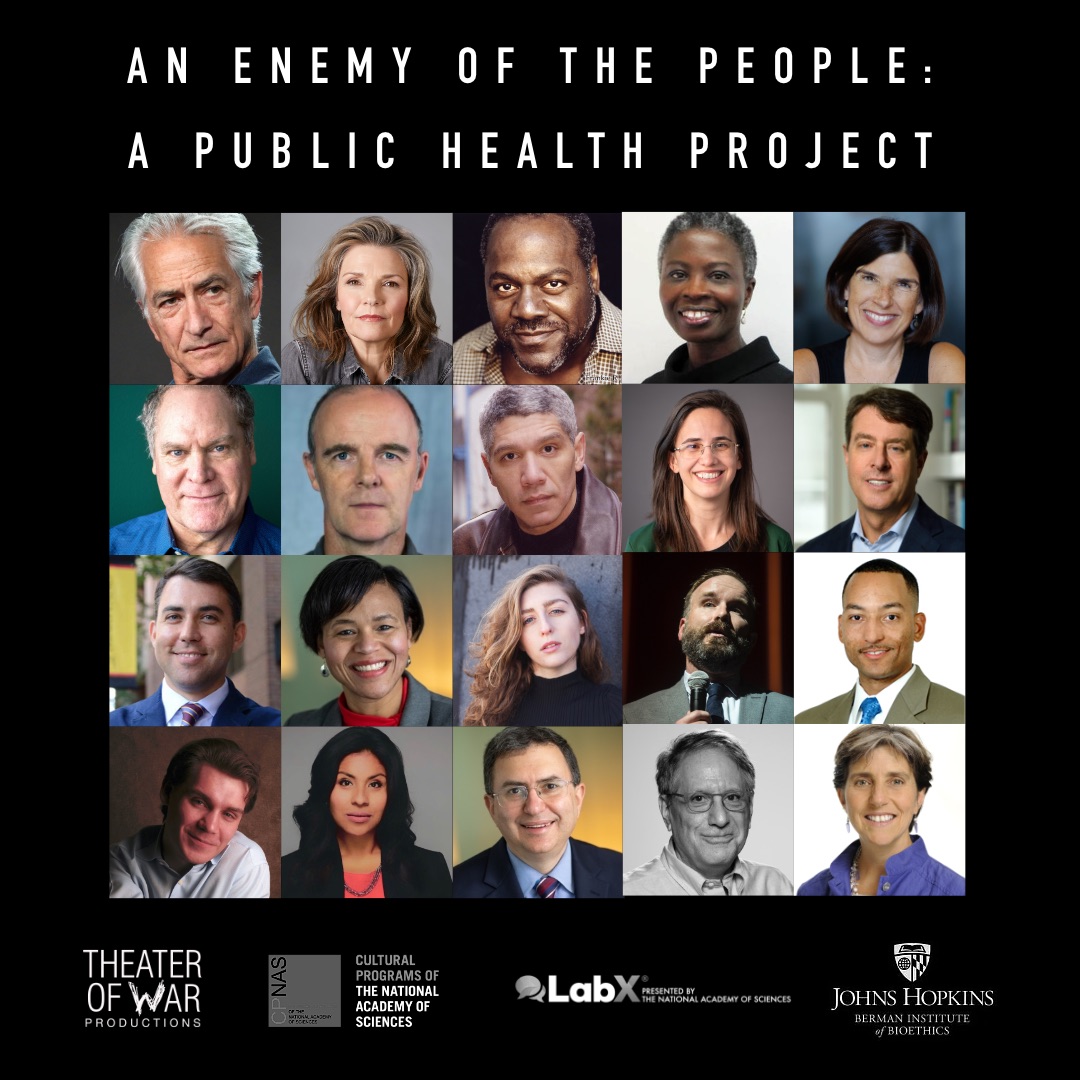
Theater of War Productions - An Enemy of The People Feb 22 + 24

Cast Update! 

We are thrilled to announce that Kathryn Erbe, Frankie Faison, and Peter Francis James have joined the cast of An Enemy of the People on February 22 and 24, alongside David Strathairn, Francis Collins, Vivian Pinn, Victor Dzau, Brían F. O’Byrne, Jay O. Sanders, Keshia Pollack Porter, Gloria Addo-Ayensu, and many more! The project will present live dramatic readings of scenes from Henrik Ibsen’s 1882 play An Enemy of the People to frame powerful audience discussions about the challenges to public in our culture today. Register below to attend in person or online! Check individual listings for confirmed cast members each night, as casts will vary and are subject to change.

An Enemy of the People: A Public Health Project
Thursday, February 22, 2024
7:00 pm - 9:30pm EST

Johns Hopkins University Bloomberg Center
555 Pennsylvania Avenue NW
Washington, DC 20001

Featuring performances by David Strathairn (Nomadland), Frankie Faison (The Wire), Kathryn Erbe (Law & Order: Criminal Intent), Peter Francis James (Oz), Jay O. Sanders (True Detective), Brían F. O'Byrne (The Wonder), Marjolaine Goldsmith (Company Manager of Theater of War Productions), Monica Feit (Executive Director, Health and Medicine Division, National Academies of Sciences, Engineering, and Medicine), Jeffrey Kahn (Director, Johns Hopkins Berman Institute of Bioethics), Keshia Pollack Porter (Chair, Department of Health Policy and Management, Johns Hopkins Bloomberg School of Public Health), Tshaka Cunningham (Chief Scientific Officer, Polaris Genomics), Gloria Addo-Ayensu (Director of Health, Fairfax County Health Department), Emily Packard Dawson (Program Officer, National Academies of Sciences, Engineering, and Medicine), Nancy Kass (Deputy Director for Public Health, Berman Institute of Bioethics), Graham Sack (Filmmaker, Dracopoulos-Bloomberg iDeas Lab Fellow), Grelia Steele (Global Continuity and Crisis Manager, Guidehouse), Peter Marks (Former Chief Theater Critic, The Washington Post), Matthew Frieman (Viral Pathogen Research Professor of Microbiology & Immunology, University of Maryland School of Medicine), and Joshua M. Sharfstein (Vice Dean for Public Health Practice and Community Engagement at the Johns Hopkins Bloomberg School of Public Health).

Register to attend in person or online

An Enemy of the People: A Public Health Project
Saturday, February 24, 2024
7:00 pm - 9:30pm EST

National Academy of Sciences 
2101 Constitution Ave, NW
Washington, DC 20418

Featuring performances by David Strathairn (Nomadland), Frankie Faison (The Wire), Kathryn Erbe (Law & Order: Criminal Intent), Peter Francis James (Oz), Jay O. Sanders (True Detective), Brían F. O'Byrne (The Wonder), Francis Collins (Former Director, National Institutes of Health), Monica Feit (Executive Director, Health and Medicine Division, National Academies of Sciences, Engineering, and Medicine), Jeffrey Kahn (Director, Johns Hopkins Berman Institute of Bioethics), Keshia Pollack Porter (Chair, Department of Health Policy and Management, Johns Hopkins Bloomberg School of Public Health), Victor Dzau (President, National Academy of Medicine), Vivian Pinn (Senior Scientist Emerita at the NIH Fogarty International Center), Ruth Faden (Berman Institute Founder; Philip Franklin Wagley Professor of Biomedical Ethics), Grelia Steele (Global Continuity and Crisis Manager, Guidehouse), Peter Marks (former chief theater critic, The Washington Post), Gloria Addo-Ayensu (Director of Health, Fairfax County Health Department), Graham Sack (Filmmaker, Dracopoulos-Bloomberg iDeas Lab Fellow), Nancy Kass (Deputy Director for Public Health, Berman Institute of Bioethics), Joshua M. Sharfstein (Vice Dean for Public Health Practice and Community Engagement at the Johns Hopkins Bloomberg School of Public Health), Marjolaine Goldsmith (Company Manager, Theater of War Productions), and Emily Packard Dawson (Program Officer, National Academies of Sciences, Engineering, and Medicine).


Register to attend online


I will register have registered (online). There is a production of An Enemy of the People in London, but it is expensive from NW England.

This afternoon I enjoyed a delayed appointment with DUNE 2021 Part 1 IMAX, a brilliant cinematic experience that includes a performance by Oscar Isaac as Duke Leto Atreides.

See also: Ibsen , theatre ...

Saturday, May 09, 2026

v WCCS26: World Conference on Complex Systems 20-22nd April

Day 2 Tuesday 21st April (Revisiting) Keynote Speaker: Abderrazak El Albani - 
Emergence of Intercellular Cooperation: At the Origins of Eukaryotic Complexity
Session Chair: Khawla Tadist

This keynote was fasacinating. As I begin this post on the 100th birthday of Sir David Attenborough, who would have us all see life in the broadest terms, value life and diverse habits, and Earth as our collective and shared home.

Abderrazak El Albani explained the search for LUCA the last universal common ancestor - 3.8 billion years ago. Many dates in the emergence story of humanity, have been progressively pushed back. The first fire, art, languages, our co-habitation and intimate relationships with Neanderthals.

In healthcare, as a practitioner you have to be aware of your scope of practice. At WCCS, scale (as in iv) was ever present across research in complexity, and complex systems. Not just physical size nano-to-mega but temporal too, as we journeyed billions of years. Several of the slides are presented here:

https://www.synchrotron-soleil.fr/en/news/discovery-oldest-macroscopic-planktonic-eukaryotes-contribution-nanoscopium-beamline (with a reference).

There is a video (French): https://www.youtube.com/watch?v=bh3t26cU7xc

I asked a question, which may have been psychological preparation for own presentation to follow. Listening, I could see how the work Abderrazak El Albani and his team are doing, could be readily translated to the search for life on Mars. There has been a 'routine' interchange of planetary material between Earth and Mars over the aeons. Fitting surely that the sedimentary rocks sought lie in  A key lesson, is that light helps us see, but not all lights are equal. Light sources brighter than the sun become incredible scientific instruments. The longevity of the dinosaurs was highlighted, at least 140 million years. There is no comparison with homo sapiens then, even as those dates have been pushed further back in time. Time defeated me as I tried to make the observation that even the dinosaurs did not make it to their first galactic birthday (c.250 million years - and what a carousel). I like the thought (slide) of 'Earth as Memory'. 

What really counted was the expressed concern about what is happening now: in the Anthropocene.

The second keynote:
Nigel Gilbert - Policy in a Complex World: Towards Complexity-Aware Policymaking
Session Chair: Ali Idri 

Was helpful to me, as the dated conundrum of benefits realisation from our technologies, and evidence-based policy still leaves a gap (for me) within the POLITICAL care/knowledge domain of Hodges' model. The illustration/graphic elements of Prof. Gilbert's slides were a brilliant complement to the content:

Prof. Nigel Gilbert - WCCS26 21st April

I wonder if within policy the constant in the equation is continuity and as a quantity it is an unknown? This seems to the case in health policy, across successive governments. You may (also) find this chart informative: https://www.cecan.ac.uk/news/the-visual-representation-of-complexity/

Perhaps, a key factor in complexity is the fact that nothing stays the same, so continuity is nuanced? Michael Quinn Patton's book Developmental Evaluation was noted re. learning while doing. Now I wish I'd held on to Qualitative Research & Evaluation Methods (4th ed.). The discussion of 'obesity system map' and 'whole systems analysis' was appreciated here.*

Since Marrakech and WCCS, I've noticed acknowledgement in the literature that 'research' is currently flooded with AI tools. I'm sure PRSM - Participatory System Mapper is a welcome addition, (as noted in iv) tools to facilitate participation are much needed:

Collaborative Creativity

The Participatory System Mapper (PRSM) is an app that makes it easy to draw networks (or 'maps') of systems, working together collaboratively.'

I will definitely check this resource out; and CECAN. After Prof. Gilbert, the next Track included my contribution, which I will return to. Rather distracted, I have a somewhat blurred slide, with: 'The global tensor of educational research is' then headed 'Learning poverty. Being unable to read and understand a simple text; with points 1-4.'. I'm not sure which presentation this was, but zeroed in on the literacy theme, and the word tensor. Another slide refers to '6. Topological substitution for Success'. I think it is (writing this is helping recall!):

Harvey Spencer Sánchez-Restrepo, Jorge Louçã, Martha Belén Carmona-Soto and Sofialeticia Morales-Garza
Topological Patterns of Academic Success: Insights from Complex Network Analysis

'Always Label Your Axes' - Zazzle.

Before that there was another model, as the next keynote speaker: Chris Bauch demonstrated during the conference wearing a t-shirt:

Critical Transitions in Coupled Human-and-Natural Systems and their Early Warning Signals
Session Chair: Mohamed Essaaidi  

Previously: 'nexus'


*Jones P, Wirnitzer K. Hodges’ model: the Sustainable Development Goals and public health – universal health coverage demands a universal framework. BMJ Nutrition, Prevention & Health 2022;5: doi:10.1136/bmjnph-2021-000254

Wirnitzer, KC. et al. (2025) Toward a roadmap for addressing today's health dilemma – The 101-statement consensus report. Frontiers in Nutrition. Volume 12.
https://frontiersin.org/journals/nutrition/articles/10.3389/fnut.2025.1676080 DOI:10.3389/fnut.2025.1676080

S. Bettiol, P. Jones, H. A. Onyedikachi, and W. G. Kernohan, (2026) Bridging Gaps in Oral Health Frameworks: Mapping With Hodges' Health Career - Care Domains - Model, Journal of Public Health Dentistry. 1–14, https://doi.org/10.1111/jphd.70034

Thursday, January 31, 2019

6th Health and Justice Summit: safety with continuity - Manchester i

Organised by Convenzis -

My exposure to forensic - prison nursing is trivial in contrast to the emotions, policy, issues, contention and hence importance that just the word 'prison' provokes. This statement can can be summarised in one point that was made this afternoon. That is, how any duty of care to prisoners must be balanced with the public's perception* of what should and should not be done. The word important is a moot one when the the aim is to stress the risk of being forgotten. Prison health is surely in danger of being lost within the Russian doll of mental health. Mental health that was (still is?) also the Cinderella service of health care? I refer to history in celebration since while there was mention of pressure of staff, long shifts, not feeling valued, heightened risk there was no shroud waving. Attending today was refreshing in the expressed passion, pride and enthusiasm that I heard; even while some of slides showing older and newer prison interiors and rooms - cells - were sobering (as they are supposed to be*).

My forensic experience is limited to time as a student nurse, making numbers up, on Ward 17 at Winwick. Visiting a medium secure unit to liaise and 'communicate' about the National Programme for IT and co-writing a paper on the Hodges' model in forensic settings. I have long wondered about the model being used educationally with groups in primary care, looking at stress and vulnerability, resilience, staying well ... and perhaps more selectively with this population. A strength here is the model's use: explicit - explained and shared or used implicitly guiding the 'teacher' or (more properly?) facilitator. We invest in 'life story' interventions for people with dementia. What about the 'life stories' of prisoners? It not the matter of their life story, but their lack of understanding of that story? What tools are there to help make sense of their 'health career' the life chances encountered and experienced in their lives?

https://equallywell.co.uk/
The keynotes this morning emphasised the facts and figures of the physical health of prisoners with severe mental illnesses [SMI] and the work of Equally Well. Amid many health problems the focus is upon obesity and smoking cessation.

Dr Alan Cohen from Equally Well, reported on surveys and analysis of national QOF data comparing the prevalence of people with SMI in ten long-term conditions. As per the summit website: “The physical health of those with a severe mental illness is held up as one of the last significant health inequalities. This presentation will explore some of the data that underpins that inequality. This will describe how it can be used to enhance services, through the development of a national learning network. Equally Well.”

There are plans for an evaluation phase of the work and other audits. Dr Cohen almost had me ask a question, with regards to some people having three health problems across least and most deprived populations. How can this be explained?

The second keynote c/o Stephen Watkins confirmed (for me) the history of mental health beds (below) and how ongoing studies and graphs can illustrate processes across prisons. How long do prisoners have to wait for mental health transfer and remission? Diagnoses, across gender, ethnicity and outcomes were also presented.
I will post soon on the workshops I attended. As is often found with satellite sessions the choice is difficult at times.

Tomorrow I must ask someone about 'social care' input. I have had cause to liaise with palliative care and local hospices recently, dementia and cancers. A question concerning a very literal form of 'in-reach' was asked for me. With four people to follow up with tomorrow, great organisation and day 2 to follow it will be a 'breeze' getting out of bed - even if that breeze is chilly...

individual
|
INTERPERSONAL : SCIENCES
humanistic ----------------------------------------------- mechanistic
SOCIOLOGY : POLITICAL
|
group


primary care
:::
Society: SOCIAL (care): Family interface ::::::
:::

Prison Health
--------------  INTERFACE -------------
Prison Service


individual
|
INTERPERSONAL : SCIENCES
humanistic ----------------------------------------------- mechanistic
SOCIOLOGY : POLITICAL
|
group

personal autonomy


OPEN door
CLOSED door
Mechanistic: 'Lock' 'Up'
Ability to step on the grass


Family involement
(What do they know?)


prison experience
in-validates the 'person'
narrows - restrains - autonomy


Reflective exercises: define 'continuity' as per Hodges' model?

What is the bandwidth of autonomy across the domains of Hodges' model?

Contrast the return to society of prisoners and service veterans?

Sunday, December 13, 2009

(many) Care Transitions and The Little '-' That Could

Some people looking at Hodges' model may believe that the model perpetuates the dichotomies of old:

Human --- Machine
Individual --- Group
Sick --- Healthy
Supply --- Demand
Home --- Hospital
Self care --- Nursing care

In the 1990s as a community mental health nurse I was involved with a group of general nurses looking at ways of improving:
  • discharge planning
  • continuity of care
These issues remain and with the dichotomies of care above we can see how Hodges' model can assist our thinking and planning about transition. Not just one transition, but several.

This past week I was fortunate to attend one of a series of workshops -
Delivering High Quality Health Care for All: Bringing the social and technical together for a joined-up approach to deliver supporting systems and technologies
10th/11th December 2009, Leeds, UK

Organised by the UK Faculty of Health Informatics and the BCS Socio-Technical Group

The event was very good, stimulating and challenging. In the closing debate the appeal of 'socio-technical' and how to market a much needed joined-up approach in health IT came down at one point to the difference between:

'socio-technical' and 'sociotechnical'

In trying to find an alternative title, the hyphen was lost, and whilst it is not a crucial issue - for me that hyphen represents the axes of Hodges' model. Hodges' model acts as a high level aide-mémoire and that little hyphen can perform the same trick. The hyphen reminds us of the differences. The dichotomies that need to be navigated and negotiated in our dialogues about care AND caring. These are most evident in transfers and transitions (after all - "getting out of bed is a risk").

There are mini and macro transitions. Care pathways are not yellow-bricked unbroken splines from cottage to cottage hospital. They should be tortured if they do reflect person-centered experiences and needs.

Some transitions are process laden and repetitive, such as drug administration and must be protected - free from interruption. Although grounded in a social exchange of (correct) identities: a registered nurse, the right patient, right drug, right dose, right duration and right time these can be framed within the SCIENCE domain. That is where (for me) the conventional 'drug round' can be found. Counselling is another transition (if effective it also moves people on). 'Counselling' can be found in the INTRAPERSONAL domain - close to the border with SOCIOLOGY.

Other transitions and transfers are more involved:
  • person's home to attend day care (for the first time!)
  • person's home to residential home
  • hospital ward to home
  • home encounter with the crisis team
  • telecare consultation
  • ...
Care is constantly passed hence the need to write and record. Passed from -

person-to-person
team-to-team
team-to-carer
time-to-time
discipline-to-discipline
self-care

This is the outcome that is sought. Ultimately passing responsibility back to the individual and when applicable their family. Having formal integrated care pathways is one thing, but they are never truly continuous, clear and true. And as they say crossing bridges you may have to break step and surely different disciplines march to different tunes? Today though the most audible tune must be socio-technical. ...

Additional link: The Little Engine That Could
Image source:
Drug round tabard
http://internet-workwear.co.uk/acatalog/Drug_Round_Tabard.html

Friday, January 21, 2011

Nursing: magnetic Force 5

Back in 2009 I came across a post - Nurse magnets crucial for recruitment and retention about the 14 Forces of Magnetism:
In 1983, the American Academy of Nursing conducted a survey of 163 hospitals to learn why some hospitals attracted and retained well-qualified nurses who were devoted to quality patient care.
The 14 Forces are listed and described by the ANCC. The forces themselves include:
  • Force 1 Quality of Nursing Leadership
    Hodges' model: Axes & Domains
  • Force 2 Organizational Structure
  • Force 3 Management Style
  • Force 4 Personnel Policies and Programs
  • Force 5 Professional Models of Care
  • Force 6 Quality of Care
  • Force 7 Quality Improvement
  • Force 8 Consultation and Resources
  • Force 9 Autonomy
  • Force 10 Community and the Hospital
  • Force 11 Nurses as Teachers
  • Force 12 Image of Nursing
  • Force 13 Interdisciplinary Relationships
  • Force 14 Professional Development
The professional, organisational, and political (policy) emphasis of the 14 forces is obvious and becomes clear when each is weighed in terms of where it sits within the domains of h2cm.

Try it as an exercise. ...

Recruitment is ALL about magnetism.

If you are unsure, ask a magnet about the meaning of retention.

Demographics are already applying pressure upon these forces of magnetism. Not just when referred to explicitly in the USA within organisational media; but globally. Demographics is another magnet - it approaches with increasing force.

From here in the UK (and readers elsewhere) we have to exercise care when models are mentioned. While the theorists and philosopher's of nursing nail their definitions to the mast (h2cm?) there remains a models muddle, not just in the variety of models of care, but in the levels at which they operate. This is not a criticism, it's an observation - consider Force 5:
Force 5: Professional Models of Care
There are models of care that give nurses the responsibility and authority for the provision of direct patient care. Nurses are accountable for their own practice as well as the coordination of care. The models of care (i.e., primary nursing, case management, family-centered, district, and holistic) provide for the continuity of care across the continuum. The models take into consideration patients’ unique needs and provide skilled nurses and adequate resources to accomplish desired outcomes.
In the US in particular 'models of care' (moc) often refer to finance and accountability of costs (the market process), in the UK moc might refer to commissioning. In Force 5 the addition of 'Professional' (as the original author's no doubt recogniced) is crucial. If you repeat the above exercise, plotting Force 5 on the Health Care Domains Model then you see how Force 5 works for nursing and remains to this day a great achievement as a yardstick for quality, assurance and retentive power.

In the almost 30 years since the research on the 14 Forces, I do wonder though if there is a need to imbue the following with magnetic properties:
  • person-centred care;
  • self-care;
  • carers and public engagement;
  • prevention;
  • public (mental) health
  • and informatics?
Yes, many of the above can be assumed to lie within the existing Forces 1-14. Health and social care are not static. Nursing has much to contend with from the level of the individual practitioner through to the group within an organisation. The 14 Forces of Magnetism are well established in the USA and deservedly so, they clearly deliver.

In the political and economical heat of an economic recession, however; magnets may reach their particular* Curie point. Then they cease to work.

The constant bangs and knocks of change, the incessant hammering of party politics and the 'market' on the door of "high quality nursing care" can also take its toll on magnetism.

Nursing needs to take care.

Related post on Healthcare IT News:

Top 10 trends for 2011 include IT, new care models

*OK it should be constant, but like our patients these magnets are not all the same - they have varying levels of vulnerability.

To follow some definitions from an olde book.

Tuesday, February 01, 2011

Dementia care: communication in nursing homes

In nursing home liaison the importance of communication quickly asserts itself (as it does throughout health and social care). As an organisation effective communication is evident (or should be) at all levels:

  • Corporate: across the 'group'
  • Management: within the home
  • Clinical: continuity of care between shifts, days - nights
  • Care staff and residents - especially those with challenging behaviour
  • The care home (staff), relatives and community
This week and as also recognised for colleagues in the future, my role will focus on education. In particular reviewing the background, theory and practice of communication with people who are more severely disabled by this condition. I've sixteen slides as a guide, a lesson plan but I will be using a flipchart (arriving early to scribble away) with the intent to engage the audience. Given my pre-occupation with information I want to mix and match as follows:
  1. Use information as a central concept, not technically but personally as per self-awareness, knowledge and orientation, person-centred care.
  2. Have people contemplate communication in a practical sense.
  3. Finally, obviously ensure that what is discussed and shared is directly related to their work, the care needs and challenges of the residents (and families?).
On the information front I'm sure I can employ the conventional and simplified communication model:

SENDER - channel - RECEIVER

This may appear mechanistic but it's an effective way to highlight the real difference that Health Care Support Workers - and indeed family and friends can make to resident's lives. Referring to this model I can demonstrate the very upsetting inequalities that are often found here. The audience can contrast themselves as SENDER and RECEIVER with each other and in care scenarios.

We will identify and acknowledge the deficits that people living with dementia must contend with and endure. This is to review previous learning and ensure staff fully appreciate the care situation. More positively the session will stress the role of staff as builders and agents of personalised care with a great contribution to make.
  1. They can consider (critically) the care environment - yes the 'home' - as the source of potential noise. 
  2. When there is an imbalance in the capabilities, comprehension and meaning between SENDER and RECEIVER skilled, insightful, and patient staff can compensate, addressing the person's unique needs.

If there are matters that cannot be resolved then these 'risks to person-centred care' should be carried forward to management: a prescription that must be repeated as necessary. With the purported high rate of staff turnover in homes (is that a myth - what are the figures really?) they should be able to leverage these FFIs - frequent first impressions - from new staff, before they are also part of the furniture.

Allied with this is a request for support in person-centred care. For me these two go together and it's good that this 2nd session follows tomorrow. This is an opportunity to introduce the Health Care Domains Model and build upon the points raised and factor in the questions and issues raised by the staff.

Critically across all these layers of comms is: Leadership. A key part of that of course is recognising training needs and pursuing change.

Saturday, November 07, 2009

Innovation and the 'middle' in NHS computing

Let's start with a quote:

Information systems are no longer associated mainly with data processing; they are increasingly seen as a management tool and an aid to action. This means that the costs of failure are much greater, and these costs are incurred when expensive systems are not used or are inadequately used. Surveys have shown that in as many as half of systems there are large gaps between users' expectations and the system's performance.
When do you think the above was written?
Here's the reference:

Mumford Enid (1991) Need for relevance in management information systems: what the NHS can learn from industry. BMJ. June 29; 302(6792): 1587–1590
1991: quite sobering.

Previous - part-time - work reviewing data standards proposals focuses the mind in terms of the role of standards in interoperability, service impact and other essential assessment qualities. As the NHS has sought to implement standards as with the National Programme for IT you are also aware of the clamour for creativity and innovation. Innovation is there in the title of agencies.

I have long pondered about the extent to which - like Nature and vacuums - standards abhor innovation and creativity. How much is the 'standard' about doing things by the 'book' ... page 57 : para.3 ...

My eye caught the viewpoint piece in this week's Computing -
If you approach the world positively, a downturn is a good time for innovation. The shortage of people and money can create the pressure that leads to creativity. There are three areas where action will help organisations succeed in exploiting IT to enable business innovation:
Kick out Prince2

What more is there to say about innovation and Prince2? The focus of the Prince2 project management methodology – on organisation and control, and defining what to deliver before you have begun – is death to innovation.
It is a bad solution trying to solve the wrong problem. It takes the IT profession in the wrong direction if we want to contribute to business
innovation. It has to go. The agile development movement provides much stronger foundations for succeeding with projects that result in business innovation.
Ashurst, Colin, Viewpoint: How to use IT to enable innovation, Computing, 5 November, 2009.
Of course there IS a world of difference between information standards and project management standards, but there is no escape from the need for (effective) management of transition and change WITH business continuity. Within that management - engagement approach (as per agile) -

+++++++ socio-technical +++++++

- perspectives, as highlighted by Mumford (and others) all those years ago must have a place.

See also:

BCS Sociotechnical Specialist Group

Friday, January 13, 2012

Musings on Integrated Care: A Visible and Invisible Matter

If measures for clinical outcomes, health literacy, patient satisfaction, benefits and many more present a challenge then a measure for integrated care falls into the category of a very steep peak.

It's a nebulous concept, we know what we mean, we recognize the principles and we even allow for variation in what integration and integrated care means for different people.

The January 2012 integrated care report by The King's Fund and Nuffield Trust (previous post) had me thinking about some of the ingredients that might contribute to measures of integrated care and our efforts to record it. What instruments and formats do we need - what mix of microscope (individual), telescope (population), strobe (snapshot), time lapse (series), objective - subjective? Some elements  then (in no particular order):

Breadth of the 'episode' (primary-secondary-tertiary-palliative)
Breadth across an individual's lifespan - as needs change and assuming person-centredness
The number of systems
  information - e-records
  commissioners
  datasets: total, number of gatherers, submissions of data, local, regional, national, global
Demographics: population profiles, housing provision, local need
The number of people - individuals involved
The number of 'responsible' organisations
 Primary organisational efficiency - Lean Standing?
The number of teams
The number of policies (policy touches)
 The number of interviews, assessments (paper, electronic, formal), care plans, reviews
Opportunities for communications
  potential
  actual
  media forms
  delivery forms (inc. technologies)
Number of handovers - communication
  weighted according to type?
Patient experience - measure
 (that is holistic across physical, mental health, social care?)
 staff attitude
 therapeutic relationship engagement (quality)
 therapeutic modalities (quantity)
 educational content, materials provided / information gains
 number of patient (carer) choice points (potential - exercised)
Incidents of positive risk taking
Increase in health literacy as this is a policy priority
 - a priority linked to integration of disease response and  prevention
Co-ordination effectiveness
Self-care - autonomy, decision making
Patient (carer) as budget holder
Patient as record holder and direct data source (telecare - data entrant)
Carer involvement
Health : Social care (main dependency, ratio, index)
The number of disparate care philosophies encountered
Diagnoses
Diagnostic investigations complex (location, time)
Declarative success: agreed plan - success?
The geographic encounter footprint: distance, travel, transport, environment
Duration of engagement
Follow-up - care continuity care
Care Disintegration - safety
 care interrupts# (falls, errors)
 relapse, readmission
 dependency (deferred discharge)
Influence of public engagement - involvement in local health services*

While many of the above might qualify as candidates for a measure of integrated care, you have to wonder whether in order to measure integration you must measure everything else. It appears here at least that integration and complexity are closely related. Several of the items above might individually represent - and no doubt do - indices of various kinds that also beg definition (e.g., co-ordination, success, philosophies, episode ...).

Although I've referred to 'numbers' you could no doubt refine the list by consulting the literature and considering the quantitative : qualitative mix.

Perhaps the key indicator of integrated care isolates the primary concepts for the person concerned and then fuses those within the INTERPERSONAL and POLITICAL care domains (policy touches would be one example)?

*How does a measure of integration incorporate those socially excluded?
#For want of a better word. 

Sunday, March 14, 2021

Paper: Models of care for patients with hypertension and diabetes in humanitarian crises: a systematic review

individual
|
INTERPERSONAL : SCIENCES
humanistic ----------------------------------------------- mechanistic
SOCIOLOGY : POLITICAL
|
group

"Implementing NCD care in humanitarian crises requires the development of a context-adapted approach or ‘model of care’. A model of care may be characterized as a conceptual and pragmatic framework that describes how services are delivered within a health system (Davidson et al., 2006; Agency for Clinical Innovation, 2013)."

Models of care

"We found that there was no single unifying model of care for HTN/DM care in humanitarian crises, and the variance in care models included in this review was highly dependent on context. In order to descriptively synthesize the diverse models presented in the included studies, we created a typology based on the type of crisis, region and integration with the health system, since these factors likely influenced model design"
 
patient’s expectations

hypertension and diabetes (HTN/DM)

Crisis type and Region
Natural: Hurricane, Flood, Earthquake

Palestine, Lebanon, Jordan,  China, Pakistan,  India, Philippines, Syria, Iraq, Turkey, Nepal

Camp, Non-Camp; Rural, Urban

Location of services - Location of people in need, transport, travel time, distance

Refugee population - Local population

forced displacement, disruption of treatment and support, interrupted health services, movement and attrition of health care workers (HCWs), insecurity, destruction of infrastructure,  breakdown in supply chains and data processes

"The domains of access — availability, affordability, accessibility, accommodation, and acceptability — were derived from previously described measures of coverage (Penchansky and Thomas, 1981; Hernández-Quevedo and Papnicolas, 2013; Levesque et al., 2013)."

Refugees and Host Communities

Humanitarian crises

"Responsiveness has been defined as the ability of health services meet a patient’s holistic needs; in this framework, it also encompassed a model of care’s ability to respond to changing patient needs in a volatile context (.Hernández-Quevedo and Papnicolas, 2013; Kruk et al., 2018). Integration described the linkage between different levels and sites of care, such as facility-based care and community-based support as well as coordination between providers and institutions, while continuity of care referred to uninterrupted care throughout the patient’s disease and life course."

Formal health system and community-based formal or informal systems

Non-governmental organisations


Crisis type and Region
Political: Conflict, Disaster

Affordability, income, worth of service

Accommodation

Person :: Service
centrednesss


"Availability was defined as the volume and type of existing services and whether this was adequate for the volume and needs of service users. Affordability constituted the patient’s capacity to use financial resources to obtain care balanced against their income and the perceived worth of the service. Accessibility addressed the match between the location of services vs the location of people in need, including transport, travel time, distance, and cost. The accommodation was defined as the organization of service delivery, such as opening times and ability of service users to accommodate to this. Acceptability was considered as the relationship between the services and the patient’s expectations of appropriate care."
(My emphasis)

NCD  - Non-communicable disease

My source: HIFA list

CITATION: Models of care for patients with hypertension and diabetes in humanitarian crises: a systematic review, Michael S Jaung, Ruth Willis, Piyu Sharma, Sigiriya Aebischer Perone, Signe Frederiksen, Claudia Truppa, Bayard Roberts, Pablo Perel, Karl Blanchet, Éimhín Ansbro
Health Policy and Planning, https://doi.org/10.1093/heapol/czab007