Hodges' Model: Welcome to the QUAD: Search results for 4ps

Hodges' model is a conceptual framework to support reflection and critical thinking. Situated, the model can help integrate all disciplines (academic and professional). Amid news items, are posts that illustrate the scope and application of the model. A bibliography and A4 template are provided in the sidebar. Welcome to the QUAD ...

Showing posts sorted by date for query 4ps. Sort by relevance Show all posts

Saturday, July 11, 2026

Leapspace iii - References ii

Regards the two other references listed by Leapspace in the previous post:

Jones, P. (2009) Socio-technical structures, 4Ps and hodges' model. Nursing and Clinical Informatics: Socio-Technical Approaches. https://doi.org/10.4018/978-1-60566-234-3.ch011 

Jones, P. (2011) Socio-technical structures, 4Ps and hodges' model. Clinical Technologies: Concepts, Methodologies, Tools and Applications. https://doi.org/10.4018/978-1-60960-561-2.ch215 

The doi links above lead to a page where to read the 'View Full Text HTML', or 'PDF' you need a login. This suggests a paywall(?), but the paper can be found here:

https://papers.ssrn.com/sol3/papers.cfm?abstract_id=1842543&rec=1&srcabs=886584&alg=7&pos=3

These are not the original reference or title:

Jones, P. (2009) Socio-Technical Structures, the Scope of Informatics and Hodges’ model, IN, Staudinger, R., Ostermann, H., Bettina Staudinger, B. (Eds.), Handbook of Research in Nursing Informatics and Socio-Technical Structures, Idea Group Publishing, Inc. Chap. 11, pp. 160-174.

I am unable to check fully, but it appears in 2011, the paper was republished in another collection. It is nice to have a 'bovine' experience, with a lesson about copyright, open access, and predatory publishing. Alteration of titles is bound to result in repetition, confounding the accuracy of publication metrics and indices?

I am not going to add the second reference to the blog's bibliography.

Thursday, July 09, 2026

Leapspace? Why not ...?

Referred to a paper in an email: https://doi.org/10.1016/j.jclinepi.2026.112401.

- I noticed an invitation to try Leapspace. 

So I leapt (with much editing - for formatting here). ...


Copilot steps

Creating a plan to respond to your query

Performing search for foundational documents
Performing keyword search
Using data from Scopus
("Hodges' model" OR "Hodges model" OR "Hodges' health career model" OR "health career model" OR "care domains model") AND (nursing OR healthcare OR "health care" OR education) AND (domain* OR component* OR framework OR concept* OR definition*)

Performing natural language search
Using data from Scopus
What are the conceptual definitions, domains, and components of Hodges' model in nursing and healthcare education?

Performing keyword search
Using data from Full text
("Hodges' model" OR "Hodges model" OR "care domains") AND (diagram* OR figure* OR visual* OR schema) AND (teach* OR education OR curriculum OR learning) AND (critique OR adaptation* OR application*) AND (method* OR framework OR discussion)

Performing natural language search
Using data from Full text
How is Hodges' model represented, taught, and adapted in nursing or healthcare education, including diagrams and critiques?

Performing keyword search
Using data from Scopus
("Hodges' model" OR "Hodges model" OR "care domains framework") AND (application* OR use OR implementation OR practice) AND (critique* OR limitation* OR adaptation* OR evaluation*) AND (nursing OR healthcare OR "health care")

Performing natural language search
Using data from Scopus
What applications and critiques of Hodges' care domains framework have been reported in nursing and healthcare practice?

Done

Generated by LeapSpace, Thu Jul 09 2026

Hodges' health career - care domains - model

Hodges’ Health Career – Care Domains – Model is a generic, practice-based conceptual framework for health and social care that organizes thinking into four knowledge/care domains: science, political, sociology, and interpersonal. It is presented as broadly applicable across healthcare contexts and is used to structure reflection, critical thinking, and care planning. [1] [2] [3]

Core domains

Domain

What it covers

How it is used

Science

Cause and effect, evidence, costs, benefits, and trade-offs

Helps frame the “hard” evidence side of care and service decisions. [1]

Political

Policy, systems, and structural influences on care

Helps connect care to wider health and social policy contexts. [1] [4]

Sociology

Social context, culture, stigma, and relationships

Helps explain how social factors shape health and illness experiences. [1] [5]

Interpersonal

Therapeutic relationships, patient/carer engagement, and human interaction

Supports person-centred and relational practice. [1] [2] [6]

What the model is for

  • It is described as universal in structure and adaptable to many healthcare settings, including informatics, dementia/palliative care, forensic mental health, and oral health. [2] [3] [4] [7] [8]

  • It helps practitioners map concepts into domains, build a mind-map-like structure, and support reflective practice and critical thinking. [3] [9]

  • In forensic mental health nursing, it is proposed as a way to guide assessment, decision-making, and recovery-oriented practice. [2]

Bottom line

Hodges’ model is best understood as a four-domain lens for integrating clinical evidence, policy, social context, and relationships into one framework for care and reflection. Its main value is not in prescribing a single care process, but in helping users think more holistically and systematically about health problems and care systems. [1] [2] [3]

Confidence level: High — multiple sources consistently describe the model’s four domains, generic structure, and broad healthcare applications.

References

  1. Fox, Siobhán, FitzGerald, Carol, Harrison Dening, Karen, (...), Timmons, Suzanne (2017) Better palliative care for people with a dementia: summary of interdisciplinary workshop highlighting current gaps and recommendations for future research. BMC Palliative Care. https://doi.org/10.1186/s12904-017-0221-0

  2. Doyle, M., Jones, P. (2013) Hodges' Health Career Model and its role and potential application in forensic mental health nursing. Journal of Psychiatric and Mental Health Nursing. https://doi.org/10.1111/j.1365-2850.2012.01961.x

  3. Jones, P., Wirnitzer, K. (2022) Hodges' model: The Sustainable Development Goals and public health - Universal health coverage demands a universal framework. BMJ Nutrition, Prevention and Health. https://doi.org/10.1136/bmjnph-2021-000254

  4. Bettiol, S., Jones, P., Onyedikachi, H.A., Kernohan, W.G. (2026) Bridging Gaps in Oral Health Frameworks: Mapping With Hodges' Health Career - Care Domains - Model. Journal of Public Health Dentistry. https://doi.org/10.1111/jphd.70034

  5. Jones, P. (2008) Exploring serres' atlas, Hodges' knowledge domains and the fusion of informatics and cultural horizons. Social Information Technology: Connecting Society and Cultural Issues. https://doi.org/10.4018/978-1-59904-774-4.ch007

  6. Merritt, M.K., Procter, N. (2010) Conceptualising the functional role of mental health consultation-liaison nurse in multi-morbidity, using Peplau's nursing theory. Contemporary Nurse. https://doi.org/10.5172/conu.2010.34.2.158

  7. Jones, P. (2009) Socio-technical structures, 4Ps and hodges' model. Nursing and Clinical Informatics: Socio-Technical Approaches. https://doi.org/10.4018/978-1-60566-234-3.ch011

  8. Jones, P. (2011) Socio-technical structures, 4Ps and hodges' model. Clinical Technologies: Concepts, Methodologies, Tools and Applications. https://doi.org/10.4018/978-1-60960-561-2.ch215

  9. Jones, P. (2025) A Generic Model and Conceptual Framework to Prime Curiosity Across Health and Social Care Disciplines to Facilitate Lifelong Learning. Journal of Evaluation in Clinical Practice. https://doi.org/10.1111/jep.70252

Follow-up Suggestions 

What are the key components of Hodges' health career care domains model?

How does Hodges' model apply to interdisciplinary health care practices?

What are the implications of Hodges' health career care domains model for patient-centered care?

Friday, May 08, 2026

iv WCCS26: World Conference on Complex Systems 20-22nd April

Day 1: Panel 2 - Rethinking Knowledge in the Age of Complexity

  • Helena Knyazeva - Dancing with Complexity: How the World Thinks Through Us
  • Carlos Gershenson - The Implications of Complexity
  • Leonardo Rodríguez Zoya - Can Statistics Think? Complexity, Future, and Freedom in the Age of Large Language Models
    Panel Chair: Nigel Gilbert 

Courage is one of the 6Cs in nursing, and was on display at WCCS26.

Carlos Gershon began by offering two references, the first:

De Domenico, et al., (2019). Complexity explained: A grassroots collaborative initiative to create a set of essential concepts of complex systems. https://complexityexplained.github.io

This is a brief 20 pages, larger text, and provides a helpful primer to complexity and related concepts covering:

Interactions
Emergence 
Dynamics 
Self-organization
Adaptation
Interdisciplinarity
Methods

For each concept, the authors explain:

Definition/Description
Examples
Relevant Concepts
References

Plus, secondly:

Gershenson, C. The Implications of Interactions for Science and Philosophy. Found Sci 18, 781–790 (2013). https://doi.org/10.1007/s10699-012-9305-8

I liked the practical feel here, the encouragement to think anew, and perhaps taste the "flavors of emergence": synchronic - space; diachronic - time, weak and strong feedback, transversal of scale - upwards and downwards.

There is further conference on complexity later this year (and also online!):

CCS 2026:
The 2026 Conference on Complex Systems
OCTOBER 9 - 16, 2026 BINGHAMTON, NY, USA & ONLINE

In my search I also found:

Carlos Gershenson; Complexity, Artificial Life, and Artificial Intelligence. Artif Life 2025; 31 (3): 289–303. doi:https://doi.org/10.1162/artl_a_00462

Gershenson, C. Self-organizing systems: what, how, and why?. npj Complex 2, 10 (2025). https://doi.org/10.1038/s44260-025-00031-5

Leonardo Rodríguez Zoya's presentation helpfully connected social practice, interdisciplinary bridges, statistical rationality, complex (human) rationality and the future(s): desirable, possible, latent and probable.

individual
|
INTERPERSONAL : SCIENCES
humanistic ------------------------------- mechanistic
SOCIOLOGY : POLITICAL
|
group
COMPLEX (HUMAN) RATIONALITY
 
cognition

STATISTICAL RATIONALITY
Techopraxis
LLMs - technology

socio-
HUMAN PROBLEMS
SOCIAL PRACTICE
PRACTICE (one of the 4Ps)

ELECTION - CAMPAIGN SPENDING
PEACE NEGOTIATIONS
ISLAND ECONOMY
CRYPTOCURRENCY

To answer the prompt - 

"Give me a less likely but more fruitful interpretation of this [concept]*."

*Replace with a significant concept in your practice

Would it might help to have a simple, and yet complexity (and simplicity!) primed conceptual framework to assist reflection, argumentation, and progress?
 
I missed the poster at the afternoon break, and followed track 1. I greatly enjoyed Julian Arevalo's - Adaptive Readiness: an Agent-Based Model of Peace Negotiations. Perhaps this accounts for my having no notes or photos for this track except for one. I realise now we did speak, sitting together for the conference dinner. I'm sure I remember Negotiation Lab 1.0 - 

https://www.comses.net/codebases/1256dc74-9ae4-4f49-a235-1ec129be1930/releases/1.0.0/
 
This past week I heard discussion (BBC Radio 4) of the 'income' Norway obtains from its expertise and engagement in peace negotiations.
 
Nicholas Roxburgh, and colleagues Rachel Creaney, Mindi Premarathne and Ruth Wilson through 
Exploring Interdependencies in an Island Economy, reminded me of public engagement in research. Especially when it involves their community; and that community is somewhat rural, or remote.
 
Remah Dahdoul, with Jan Korbel and Stefan Thurner presented -
Campaign-Spending Driven Polarization Transition in a Double-Random Field Model of Elections. The following paper brings home the mathematics in complex systems. The reference is:
 
Jan Korbel and Remah Dahdoul and Stefan Thurner. (2026) Empirical validation of the polarization transition in a double-random field model of elections. arXiv. https://arxiv.org/abs/2510.00612.  doi.org/10.1103/9gjj-1df6.
 
The paper by Saida Hachimi El Idrissi and Mohamed Nemiche is not open access, but the abstract follows. 
 
S. H. El Idrissi and M. Nemiche, "Formation of Complex Societies: An Agent-Based Model Inspired by Freudian Theory," 2024 World Conference on Complex Systems (WCCS), Mohammedia, Morocco, 2024, pp.1-6, doi: 10.1109/WCCS62745.2024.10765573.
Abstract: The rise and emergence of complex societies in the Old World mark a pivotal chapter in human history, characterized by the transition from small, kin-based communities to large, hierarchical states. This transformation raises fundamental questions: How did human societies progress from small, cohesive groups characterized by face-to-face cooperation to the expansive, anonymous societies of today, often organized as states? What factors account for the significant variation in different human populations' capacity to construct stable and functional state structures? To address these questions, we developed an agent-based model grounded in Freud's hypothesis, which posits that civilisation could neither emerge nor evolve without the repression of human desires. In the context of social evolution, this repression of desires can be interpreted as the repression of intra-societal competition, ultimately strengthening the society and facilitating the formation of complex social structures. We implemented this model within a realistic representation of the Afroeurasian landmass, incorporating various geographical factors. To validate our model, we compared our simulated results with historical data. The model-predicted pattern of expansion of complex societies demonstrated remarkable congruence with the observed historical patterns in the Old World. The emergence, growth, and distribution of large-scale societies predicted by our computational model showed remarkable consistency with the archaeological and historical record.

keywords: {Analytical models; Computational modeling; Predictive models; Data models; Agriculture; Rivers; History; Complex systems; component; Agent-based Modeling; Repression of satisfaction; cooperation; competition; Social Simulation},
URL: https://ieeexplore.ieee.org/stamp/stamp.jsp?tp=&arnumber=10765573&isnumber=10765499 
Unless you are a microsurgeon (increasingly with robotic co-workers), is the word practice, more likely to manifest what is larger, the big picture, a sense of space, even at a societal or continental scale? In reading, I came across four forms of attractors. For me, how they fit into the question of scale makes this paper worthy of seeking out. 

Sunday, May 25, 2025

RCN Congress iii 2025 - Accountability for patients in ambulances

The resolution (with a reading list) on Accountability for patients in ambulances

- drew attention to language once again (yes, well there's a truism: what do you expect!). This time highlighting how corridor care is now variegated. In addition, politically you can circumvent addressing an issue, by referring to 'never events', and 'zero tolerance' as we read:

'This agenda item addresses the urgent issue of accountability, for both registered nurses and the organisations they work for, when patients are cared for in ambulances waiting to access emergency departments.

The resolution comes at a time when, across all four countries, there are unprecedented ambulance handover delays with patients left in vehicles which are neither appropriately staffed nor resourced outside overwhelmed emergency departments. Despite the prolific nature of this practice, there is no clear guidance on accountability. Who is responsible for the care and safety of those patients - the ambulance service, the hospital, the emergency department, or the individual registered nurse providing care?

These delays accessing care and the lack of guidance on who is accountable for the waiting patients, compromises the ability of health care staff to provide good quality care and risks patient safety. It also exposes registered nurses and other health care professionals to professionally, ethically and legally ambiguous situations. It could also contribute to the crisis in nursing wellbeing, raising issues such as moral distress and professional, emotional and physical burnout. It may, therefore, also impact the already perilous recruitment and retention.'

Student nurses, paramedics ... please take note: There is a paper to be written on Hodges' model and the gaps we encounter in health and social care. For Brian Hodges this started with the theory-practice gap; one of four original stimuli for the creation of the model. 

As the idealised standards, quality and safety of care being delivered are surrendered; this gap stands out as the virtual keystone.

individual
|
INTERPERSONAL : SCIENCES
humanistic ------------------------------- mechanistic
SOCIOLOGY : POLITICAL
|
group
individual - PURPOSES
patient safety - distress
nurse wellbeing
emotional burnout
moral distress
personal ethics
individual responsibilities

procedure
delivered care - observation
mattress, trolley .. ambulance design
instrumentation, noise
time - duration
logistics - PROCESSES - handover
physical resources - beds

communities of PRACTICE
team working - coherence
team experience - students
THE DAMAGE - that is 'BOOK-PASSING'
The public's - carer's experience
(wither friends and family)

law - guidance - ambiguity
POLICY
professional accountability
risk management
organisational responsibility
workforce
recruitment & retention


Previously: 'RCN' : 'gap' : 'accountability' : 4Ps

Monday, March 24, 2025

4Ps - human-MACHINE :: HUMAN-machine

HODGES' MODEL: Axes & Domains
As visited many times here on W2tQ, in Hodges' model I've associated one of 4P's with each of the model's care/knowledge domains. I immediately associated PROCESS with the sciences domain (physical, chemical, biological, geological..), driven by the seemingly process-bound approach of project management, logistics, automation and sequencing. 

This preoccupation can work to the detriment of the user(s) of systems (the public!), devices, interfaces and administrations - record management for example. Allied with POLICY in the political domain you can end up with a massive and technocratic bureaucracy. 


In nursing there was concern when the nursing process emerged that progress of individualised, person-centred care would be overwhelmed with a return to task-oriented care. Patients would literally be processed, in what is a problem-solving algorithm: assess, plan, intervene, evaluate.

Of course,  as in all idealised models, there is overlap between the 4Ps and the model's domains. We speak routinely of social, psychological, and political processes.

The rise of AI however prompts (demands) this debate be re-visited:


SELF / INDIVIDUAL  -  OBJECT / THING
|
      INTERPERSONAL    :     SCIENCES               
HUMANISTIC  --------------------------------------  MECHANISTIC      
 SOCIOLOGY  :    POLITICAL 
|
GROUP

the human -

PURPOSE(S)

the machine -


- can become machine

PROCESS

- can become human


PRACTICE

socio-


POLICY

-political


Previously: 'ethics' : 'nursing process' : '4Ps'

Friday, March 07, 2025

'Critical Notes on the Nature of Sociology as a Science'

4Ps

As a model of care (education, management, safety, systems, ...)*, or a conceptual model, conceptual framework, or however described, Hodges' model, as with its many peers is idealised.

You quickly 'see' that the 4Ps I've associated with the knowledge - care domains of Hodges' model are far specific, or limited to that domain alone.

In our dialogues, media and literature it becomes obvious that in addition to physical, sequential, and  natural (scientific) processes, there are also political,  sociological, and psychological, or mental  (interpersonal) processes.


I've always been drawn to the diagonal distances between the interpersonal-political domains; and that between the sociological-scientific. The latter I think about often as it makes the news regularly, when education is raised, literacy, the state of our schools, colleges, universities and (globally) the public's understanding of the sciences. So finding a paper heading for its centennial birthday caught my attention. Not just that, but the journal - Social Forces is (very much!) still with us aged 103 this year. Unsurprisingly, I like the way Woodard contrasts the mechanistic and humanistic:


Hodges' model
'For there is a further distinction to be made among evaluations of functional appropriateness. I may analyze the functional appropriateness of the gears and pulleys of a machine. That is applied mechanics, not the pure science of mechanics. For the function of the machine is tacked on to it arbitrarily and does not emerge from the data of the science of mechanics. But the same may not be said of hearts and lungs, of mental and emotional processes, or of social structures, functions, and processes. Here the functions are not extraneously tacked onto an arbitrarily assembled collation. They are inescapable emergents from the process of scientific analysis and are warp and woof of our data as it confronts us, in situ, in the natural universe. They are not in any sense superimposed.' p.32.

Interesting point regarding 'hearts and lungs' - to possibly return to? Also, as a template Hodges' model provides a 'warp and woof' for data gathering - a foundation.

Woodard, J. W. (1932). Critical Notes on the Nature of Sociology as a Science. Social Forces, 11(1), 28–43. https://doi.org/10.2307/2569615 

*Please give it a try whatever your field, and let me know your thoughts. ... h2cmng AT yahoo.co.uk

Saturday, December 02, 2023

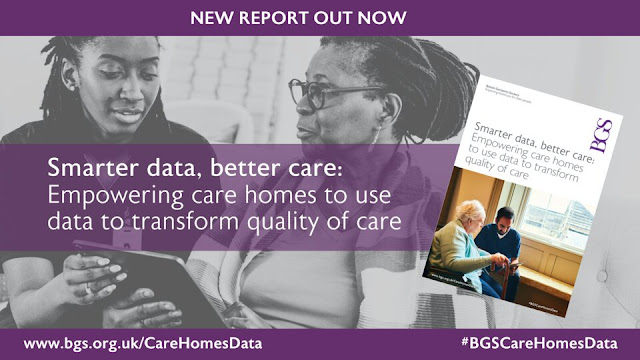
BGS Report "Smarter data, better care: Empowering care homes to use data to transform quality of care"

https://www.bgs.org.uk/policy-and-media/transforming-the-quality-of-care-in-care-homes-through-better-use-of-data


"The British Geriatrics Society (BGS) hosted an event in London in September 2023 on ideas and practice around a minimum dataset for care homes. This report, which is based on presentations at the event and the debate that followed, makes 12 recommendations for the effective implementation and delivery of a national minimum dataset that we believe policy-makers and regulators should consider."
Below, I have related the report's 12 recommendations to Hodges' model:

 Individual
  |
     INTERPERSONAL    :     SCIENCES               
HUMANISTIC --------------------------------------  MECHANISTIC      
SOCIOLOGY  :   POLITICAL 
|
GROUP
my quality of life
my quality of care

care home residents

research - how new Artificial Intelligence can be harnessed safely and ethically to extract optimum value^^ out of linked social care data

my quality of life
my quality of care

integration - a harmonised set of
quality of life and quality of care indicators

not just a process* (data gathering/entry) by care sector on behalf of others

high-level of interoperability

resident's families (advocate)

needs that cannot be met at home

^Government recognition of contribution of social care sector to society

linking of information sources, preserving privacy but improving public's understanding of how such data can be used (benefits)

combine learning from the DACHA study, evidence of the analytic power of data instruments like interRAI, and the lived experience of those working in our care sector


care home managers & frontline staff

shared decision-making - commissioners, regulators and providers

sector-wide conversation around the data that does and does not need to be known by different stakeholders

Investment in a data-informed system for health care and social care - greater equity between the two^

sustained - longer term approach - reduce the data burden

Government funding of dedicated in-home data coordinators - cost recognised from outset


4Ps in Hodges' model -

INTRA- INTERPERSONAL - purpose
SCIENCES - process
SOCIOLOGY - practice
POLITICAL - policy

^^Where does 'optimum value' lie in Hodges' model?
How are these reconciled?

Transforming the quality of care in care homes through better use of data.  https://www.bgs.org.uk/policy-and-media/transforming-the-quality-of-care-in-care-homes-through-better-use-of-data 

Tuesday, November 09, 2021

Law 'in' Hodges' model (Discuss?)

individual
|
INTERPERSONAL : SCIENCES
humanistic ----------------------------------------------- mechanistic
SOCIOLOGY : POLITICAL
|
group - population


SUPPLY


DEMAND

unfair
competition

environmental
 

consumer
protection


competition

In demand and supply also consider this within the sociological and interpersonal domains in the context of COVID? 

If people 'behave' themselves*, i.e. do not 'raid' the shelves there will (should) be sufficient supply for all. 

In political terms, what happens when a government raises the prospect (the dichotomy) of supply chain problems and potential shortages?

The 4Ps are relevant here:

intra- interpersonal - PURPOSES

sciences - PROCESS (mechanistic)

sociology - PRACTICE (gone awry)

political - POLICY (discipline in communications)

*UK context - acknowledging the global audience.


Thanks to:

Malinauskaite, Jurgita, and Fatih Buğra Erdem. 2021. “Planned Obsolescence in the Context of a Holistic Legal Sphere and the Circular Economy.” Oxford Journal of Legal Studies 41 (3): 719–49. https://doi.org/10.1093/ojls/gqaa061.

See also:

Myers-Briggs 'in' Hodges' model (Discuss?) 


Sunday, October 17, 2021

Book: ii "Making Research Matter" ... to varied audiences ...

Individual
|

INTERPERSONAL : SCIENCES
humanistic ------------------------------------- mechanistic
SOCIOLOGY : POLITICAL
|
Group
 
Patient
Carer
Lifelong learner

purpose


Researchers*
Scientists*
Lecturers
Student (Scholar)
Project managers

process

Public
Community Leaders - Groups
Ethnographers
Social policy makers

practice

Managers
Leaders
Policy Makers
Curriculum Developers
Activists
Change agents

policy

Noting Tara Lamont's book and the intended audiences, I was reminded of the diverse potential user base for Hodges' model, with a few additions.

This was represented using four images on the old homepage of the now archived website (1998-2015):

https://www.webarchive.org.uk/wayback/en/archive/20141008034649/http://www.p-jones.demon.co.uk/index.htm

'Lifelong learner' should apply across all the domains of the model, but it is primarily about intrinsic motivation, a personal and voluntary initiative.

There is no 'evidence-based' explanation for the above, other than praxis. It has arisen over time,  associated with the care domains of Hodges' model. The situation is similar for the 4Ps in the model (italicised).

See also:

Book: i "Making Research Matter - Steps to Impact for Health and Care Researchers" Open Access

*independent roles also.

Saturday, October 19, 2019

Review: v "Climate Change and the People's Health"

Climate Change and the People's Health
At just over 30 pages chapter 3 the last is also the shortest, we all hope this does not reflect the length of the future?

Chapter 3. Challenges and Future Prospects

Before beginning to review Chapter 3 I need to revisit the closing sentences of the preceding chapter's conclusion - if you 'get' Hodges' model you will understand why:
"I [Friel] pick up on these ideas of complexity in chapter 3, arguing that how we understand and characterize these phenomena depends on our standpoint and also evolves as knowledge develops and available evidence accumulates. Given those complexities, responding to climate change and health inequity requires the development of policies that transcend doctrinal boundaries and draw on insights from a range of disciplines, including those in the sciences, social sciences, and humanities". p.112.
I hope you can see and will please excuse my reference to Hodges' model, but I've another.

Friel refers to how research is primarily based upon reductive pathologizing and needs to shift [ ;-) ] "towards research that is attentive to, and actively engaged with, policymaking processes". (p.114).

In Hodges' model, the Sciences and Politics are mechanistic, the sciences invariably (with some exceptions) reductive and the 4Ps I have attributed to the model as follows:
  1. SCIENCES -PROCESS
  2. POLITICAL - POLICY
  3. SOCIOLOGY - Practice
  4. INTRA- INTERPERSONAL - Purpose
(As in a previous part of this review I have been wondering how policy can (best) permeate the other care (knowledge) domains?)

Being where this review is posted I would be remiss not to state this, picking up on Friel's thought.

OK, let us get back on track. Taking the lead from chapter 2, in Chapter 3 Friel argues the need to take research, advocacy, and policy forward to address environmental degradation, social justice and health equity by breaking down the disciplinary, sectoral and various silos that exist in the many systems that are encountered. Systems research can increase our understanding and the evidence base. Interesting to note also then solutions can be crafted. (p.113). The evidence base on more equal societies is discussed. With the stress on systems research, systems and systems thinking are explained briefly and referenced. As will already be obvious I am all for the plurality of disciplinary approaches that is needed, but as Friel will conclude this, with systems science, and improved understanding of policy processes (hybridised: is this the Green Marshall Plan that is referred to?) to counter the resistance to change that is already being experienced now (p.115).

Perhaps above, I have fallen into Friel's trap. I have been caught out as a model monger (p.115)?

Scale is a concurrent consideration in Hodges' model, as with Friel's account of systems thinking. To macro- meso- and micro-levels let us add nano, there is much still unclear from the presence of plastics and other pollutants in the environment. The arrival of eco-epidemiology is to be applauded (p.116).

Any mention of 'systems' takes me to the Health System Redesign book I reviewed over a year ago on W2tQ. This is a very useful companion to "Climate Change ..." but is not referenced here. Box 3.1 'Systems Approach to Childhood Obesity Prevention' brought home the connection and the visual representation referred to (p.120). I could readily go off again with Friel's section on Politics, Policies, and Processes (p.122). Thank goodness for this - I feel better now - as Friel "shamelessly plugs" personal involvement with a research program at the CRE (p.124). The Centre for Research Excellence in the Social Determinants of Health Equity needs to be, not just on the 'map' (Sciences - located geographically) but affecting policies, practices and purposes (individual and organisational). Friel provides several references - very useful and timely. I will reference this, as I'll explain next time. Again the much needed call for a move from reductionist pathologizing.

Box 3.3 Policy Principles for the World We Want is simplistic (like Hodges' model), but if delivered would be very impactful in terms of the positive change (p.128) that would ensue. Against p.134 my note is "It's a small world!" I'm not sure if this a reference to the Disney song as a perverse consumptagenic global eco-anthem, or to Schumacher? What could be noted (p.134) is the potential role of blockchain in assuring land tenure and ownership. This technology is much vaunted in health, education and the obvious application of economics. In terms of developing nations protection of land rights is critical (even as I write and you read). The chapter closes on policy from "The first 1000 days of Life" to "Health in All Policies" which I reflected upon as "Policies in All the (#h2cm) Domains"? How do we do this? There are avenues as Friel writes of macroeconomics and progressive policy development. There is much on the Social Development Goals and how cities (despite the critique on urbanization) are working together internationally to mitigate climate change effects, even as some governments fail to meet set objectives and global agreements.

The print and layout is excellent, a content listing of sections complements the index (invaluable). The next book I've to review has no index.

Small book, big ideas - correct on both counts and a very informative if rightly troubling read.
One last plea. Do buy this book, but don't leave it on your shelf; read it. There is no excuse, it's small, but your ideas on climate change and the people's health will grow!

I would like to thank OUP

CHAD ZIMMERMAN │ Senior Editor, Medicine and Public Health
Oxford University Press │ 198 Madison Avenue │ New York, NY

and Prof. Nancy Krieger for the review copy and Prof. Sharon Friel for engagement on twitter and RTs.

While I appreciate I make the request to review and this places absolutely no obligation on others, it helps a lot when a publisher / author / conference organiser ... acknowledges the effort - even just a thank you. As ever, the thanks is in the learning gained, not the thanks lost. Many do - lift a hand, nod their head ... of course, making this even more worthwhile here. TY


Chapter 1. Climate Change, Global Justice, and Health Inequities

Chapter 2. It's a Consumptagenic World: Producing Climate Change, Exacerbating Health Inequities


Friel, S. (2019) Climate Change and the People's Health, Oxford University Press, New York

Friday, July 05, 2019

Fallacies of Work as Imagined: c/o Steven Shorrock - HSJ Patient Safety

I came across the following image on twitter. The tweet is also copied below.

This post is prompted by one from 'The Varieties of Human Work' on the Humanistic Systems blog 05/12/16 by Steven Shorrock. The focus is understanding and improving work, and in his opening there is a sense of very large net having to be deployed to capture all the disciplines and dimensions that are invariably involved in work.

"One of these is the simple observation that how people think that work is done and how work is actually done are two different things. This observation is very old, decades old in human factors and ergonomics, where it dates back to the 1950s in French ergonomics (le travail prescrit et le travail réalisé; Ombredanne & Faverge, 1955) and arguably the 1940s in analysis of aircraft accidents in terms of cockpit design (imagination vs operation). Early ergonomists realised that the analysis of work could not be limited to work as prescribed in procedures etc (le travail prescrit), nor to the observation of work actually done (le travail réalisé). Both have to be considered. But these are not the only varieties of work. Four basic varieties can be considered: work-as-imagined; work-as-prescribed; work-as-disclosed; and work-as-done. These are illustrated in the figure below, which shows that the varieties of human work do usually overlap, but not completely, leaving areas of commonality, and areas of difference."

The varieties of human work.

It immediately struck me how well the diagram can be translated and transposed on to Hodges' model on several levels and as per Steven Shorrock's excellent post. I acknowledge I am playing with language, but initial thoughts included:
  1. As per Shorrock: the difference between how people think about work and how work is actually done.
  2. Shorrock explains how for example 'work-as-imagined' draws on the other forms of work.The level of overlap in between the forms of 'work-as-' is as diverse as the contexts that arise and constantly change.
  3. There are many 'gaps' identified in Steven's post [not in the sense of a fault with his post]. A subset of these may relate to the theory-practice gap which was one original purpose of Hodges' model, to help close this gap.
  4. Orders of scale: from a single action to a whole job and its specification.
  5. The way the 4Ps process, policy, purpose and practice can be used (I identified the 4Ps within Hodges' model, one per care domain, many years ago).
As has been pointed out to me (on twitter) the context here is 'work' and not healthcare, but as Steven notes there are many disciplines, with commonalities and differences. I am really grateful to Steven for his post, in which he also stresses the overlap. 'Work-as' is a flux. Hodges' model can be viewed through time as series of frames. Below are some rather unstructured notes [musings] relating and extending the context of Shorrock's image and post to Hodges' model:

individual - self
|
INTERPERSONAL : SCIENCES
humanistic ----------------------------------------------- mechanistic
SOCIOLOGY : POLITICAL
|
group- population

'Work-as-Imagined': Of the four P's I have placed 'PURPOSE' here, since the individual's purpose must (ideally) achieve synergy with colleagues and the organisational objectives and goals.

'Work-as-Imagined' involves thought (and so is infinite in variety) whether use of imagination is day-dreaming, or radically innovative. Until AI does take over, this is the 'meta' - cognitive domain. Amid many, Shorrock makes an important point in how we imagine the work other disciplines do. Often so many stereotypes follow that are often revealed in referrals and expectations. Shorrock highlights this at the macro level of policy makers [lower right in #h2cm] having to imagine the operational aspects of work; and the simplified accounts of surgery for a patient by anaesthetist and surgeon (while meeting the requirements of informed consent).

This domain may be 'work-preserving' in humanistic terms as it is the realm of tacit knowledge, creativity and innovation.

Although the artifacts of simulation are ultimately produced in the SCIENCES domain, they are 'imagined' in case studies and scenarios. Shorrock helps make it clear how much of work is theorised and practised virtually, but with recourse to imagination not technology.

Mental illness and the systemic - organisational response is mediated diametrically in Hodges' model. Ongoing critique of psychiatry and mental health services in some quarters appears to suggest that being unable to work-as-imagined here, means loss of self and identity that is then outsourced and effected by proxies and advocates. [Discuss?]


'Work-as-Prescribed': Reading 'prescribed' literally then drugs and other physical treatments arise here in the SCIENCES domain. The 4'P is PROCESS suggestive of procedures, specifications, instructions and formal rules. Process is important allied with PURPOSE in that if (your) can be described formally, by a set of rules then you may be vulnerable to your job being taken by a robot through 'robotic process automation'.

When I started in the NHS in the 1970s there was a shift taking place from being task-oriented (mechanistic) to individual/patient-centred (humanistic). Shorrock notes how there are relatively fewer examples of work-as-prescribed. Developed nations are waiting to see how many existing jobs are lost to AI and robots, but how many new ones emerge. (Can the developing nations 'skip' several prescriptions?)

Here, we also apply time to work. The past, current work and the future. Will we still work the same hours? Is there a lesson in '0' hour contracts? An obvious aspect of work is day vs. night shifts.

'Work-as-Prescribed' also reinforces the presence and context of the SOCIOLOGICAL domain. Now, conferences are devoted to 'social prescribing'. By its nature this is more often than not 'public' and therefore 'disclosed'.

Citizen science and patient involvement provide a further angle on work-as-prescribed. As does what is prescribed (especially in what is used) must to some degree influence what is proscribed in what is not used.

'Work-as-Disclosed' Sharrock writes concerns how work is explained and communicated. This will also involve teaching formally and health professional to patient, carer and public.  The challenge is that thinking about work and actually doing work is a SOCIO-POLITICAL act - transaction (as the literature demonstrates).
Socially, whether or not someone is working is also disclosed in their domestic  comings and going to work. The socio-political dimension is evident in the assumptions that follow homeless peopleand their apparent 'staying' (many do work?)? There are those who opt not to disclose at all and live off-the-net.

SOCIO-ECONOMICALLY there are constant references to 'pay-gaps' especially by those groups and their representatives most affected by low pay and austerity. While the social care workforce toil in the community, social care funding, provision and integration is pushed into the long grass that is green papers. Despite the social value and importance of this work, the status of this sector is signalled - disclosed as poor.

Nurses globally are campaigning to establish in law the requirement for safe-staffing levels. Sharrock alludes to the challenge of nursing as PRACTISED on the 'shop-floor' and ongoing studies on staffing - establishments and skill-mix.

In the 1980-90s expert systems specialists interviewed workers  in an attempt to understand the knowledge acquisition and elicitation associated were their profession - community of practice.

These humanistic care (knowledge) domains reflect the qualitative approach to research.

Work-as-disclosed also communicates to would-be future recruits. How are the aspirations of teenagers and mature entrants first experienced, discussed and carried forward socially?


'Work-as-Done' simultaneously speaks of power, employment, accountability and regulation. 

As four conceptual spaces #h2cm indicates the 'distance' between concepts that shifts according to context. The space that work takes place within and how people are managed, organised, controlled for efficiency with reminders, queues, appointments, and waiting areas are signs of the institution. The person was a long way from the creators of the Victorian asylum, even as they sought to establish (stamp?) a 'standard' level of care.

What difference does it make when work-as-done is bound to an individual and collective sense of duty?

The counterpoint is precisely [mechanistic] work-as-done. Work-as in shift completed and recorded - clocked as such. Work-as-done: the 12 hour shift or as already mentioned work-as-NOT-done due to the flexibility afforded by zero hour contracts. Work-as-done also denotes [scientifically] the concepts of power, energy and effort. So, work-as-done must result in personnel actually feeling 'done': burnt-out when safe-staffing is not assured.

The old saying: "If it is not documented it was not done.", springs to mind. Shorrock refers to surgery and loss of life. What was 'done' and what does an inquiry reveal? What is actually done and the way it is done if varies - contravenes 'norms' rules then there is a issue of whistle blowing. The question then becomes was the work done as it should - must - be? The 4P in this domain is POLICY. 

Perhaps a box-tick here also accounts for 'work-as-' elsewhere?


Tuesday, March 26, 2019

Word use & implications for research - 'Population health' by Canales, Drevdahl & Kneipp (2019)

individual
|
INTERPERSONAL : SCIENCES
humanistic ----------------------------------------------- mechanistic
SOCIOLOGY : POLITICAL
|
group - POPULATION
individual health

a. INTERVENTION in Individual behaviour

4Ps - PURPOSE
My word use -
(contribution to and affected by
a community of practice)
  
scale
Begin: Planetary Health End:

 interventions
  Length and quality of life
 academia - evidence-base
b. INTERVENTION in a healthcare sector
Public Health as a discipline - word use
SMALL-scale:
 health promotion and disease prevention
FROM: individual
CLINICAL - sub-groups
TO: group - population
 A data dictionary?
4Ps - PROCESS
language use - 'pop. health' meaning?

Social and Society

Does the community have a role in local health population management?

a. and b. insufficient to address -
social determinants and health inequities
root - societal and structural levels

History

Community activists for Social Determinants of Health
4Ps - PRACTICE

SOCIO-
TOTAL POP. [health systems Pop.]

population health management
4Ps - POLICY

political & economic systems
low-income
LARGE-scale: community initiatives that attempt to reduce inequities by challenging
poverty and racism


SDOH - inc:
food supply, housing, economic and social
relationships, transportation,
education, and health care

-ECONOMIC


Canales, M.K., Drevdahl, D.J., Kneipp, S.M., (2019) Moving Words, Moving Meanings: The Discourse of Population Health, Journal of Professional Nursing, 35, 2, 71-73, ISSN 8755-7223,
https://doi.org/10.1016/j.profnurs.2019.02.007
(http://www.sciencedirect.com/science/article/pii/S8755722319300201)

Friday, February 08, 2019

c/o The King's Fund: Making sense of integrated care systems, integrated care partnerships and accountable care organisations in the NHS in England

When I see a 'model' I ask myself; what does this mean in itself? What is its purpose? I also (invariably) ask how does it relate to, or how might it support the theory and application that might underpin h2cm?

In February 2018 The King's Fund posted this item on integrated care systems. It wasn't just the 2x2 figure that caught my eye, but the axes and the additional amber tab (figure 1). Pondering for a time I have transposed this to Hodges' model below figure 1. Beneath that, I've provided an explanation for the altered schematic; recognising that as with h2cm such models are idealised representations.

c/o The King's Fund


individual
|
INTERPERSONAL : SCIENCES
humanistic ----------------------------------------------- mechanistic
SOCIOLOGY : POLITICAL
|
group
Individual care management

Care for patients presenting with illness or for those at high risk of requiring care services

Population Health (systems)

Improving health outcomes across whole populations including the distribution of health outcomes

[Improving population health outcomes requires multiple interventions across systems]


'Making every contact count'

Active health promotion when individuals come into contact with health and care services


Integrated care models

Co-ordination of care services for defined groups of people (eg. older people and those with complex needs)


INTRA- INTERPERSONAL:
Individual care management has been changed from care services and individuals to this domain, which conceptually preserves the original placement. In h2cm as can be seen the interpersonal domain combines the individual and humanistic. In the 4Ps this domain also includes 'purpose'. Whenever possible it here (individual motivation) that self-care and self-efficacy and staying as well as possible relies on the patient's awareness and education about their condition and level of health literacy. There is recognition now that children need some awareness of mental health issues and the law needs to protect what images and content youngsters are exposed to on social media. So, ultimately 'how I manage myself' has a major bearing on the 'whole care management enterprise.' The focus on 'high risk' also denotes a need for an assessment and one that is part of the move to parity of esteem in respect of physical and mental health.

SCIENCES:
I have shifted Population Health (systems)from population to this (physical) individual domain, on the basis that our research, as in, quantitative and qualitative, needs to be synthesized and then ultimately generalised - across populations. While complex systems cannot be taken apart it is from the sciences (including social sciences) that evidence-based practice flows. There should be a feedback loop here, research that also takes into account the multiple interventions across systems (the amber tab in figure 1) and the outcomes achieved.

POLITICAL:
The King's Fund's figure 1 stands as it is of course, but I have 'moved' Integrated care models most radically. If there is no organisation, rules, order, policy, procedures ... then things will NOT happen (as they should). Agreement is also needed on definitions for reasons of standards, measures and accountability. Such matters are political (even if ignored - kicked in the long-grass). For services that are evidence-based (as just mentioned in SCIENCES) we need when possible for health and social care policies to also be evidence-based (for reasons of efficiency, equity, effectiveness and equality). While we cannot 'break' complex systems we can break models; 'health care systems' need to break ("be broken whilst still in flight") in order to be transformed for the 21st century.

SOCIOLOGY:
Making every contact count I have placed in the h2cm's Sociology domain. To me this initiative remains with care services, but I have switched this from individual to group-population within h2cm. Health care education places constant emphasis (research, CPD, mandatory training) upon interpersonal - communication skills and this is where clinical and social care interactions and interactions ultimately count. It is here that trust, the 6Cs, unconditional positive regard ... are 'counted' in qualitative terms. If the psychological represents the theory of psych-social intervention, it is in the social outcomes and benefits were the practice is (truly) delivered. It is also here that partnerships are forged and social capital found.

In social care as an example, the integrated care model should politically permit - allow for a sufficiently skilled and remunerated work-force (socially valued?) with sufficient time to ensure that every contact really does count.

<>

Forty years in the NHS suggests that when ever 'integrated care' is being written and even spoken about, then the context should be indicated at the same time; so at least - integrated care1-5 as above?

'integrated' as in -
  • philosophy (ethics, morality, values)
  • spiritual (values) (and part-whole of 1-5)
  • political - policy, government funding
  • economically - commissioning (models of care, sustainability)
  • management
  • care delivery
  • team organisation
  • community involvement
  • patient involvement
  • health literacy, health promoting
...?

Accessibility: apologies that there is no equivalent text to figure 1.

My source: https://twitter.com/TheKingsFund/status/1093556280248147969

Friday, April 20, 2018

Digital health interventions: How might we measure “meaningful engagement”?


I admit I am struggling to stop blogging, even as the pull of Drupal and a new site will (must) win-out. The above tweet prompts these thoughts ...

A key point from Kathleen Ryan's blog post reads:

"The design process* needs to be reflective..."

I wholeheartedly agree - it is the way that we reflect to achieve a socio-technical synergy that counts. Even with the socio-technical bases covered there are other factors too:

individual
|
INTERPERSONAL : SCIENCES
humanistic ----------------------------------- mechanistic
SOCIOLOGY : POLITICAL
|
group
Person-related issues
(e.g. their beliefs, cognitions and values).

What 'x' means to me.
"... attention, interest and how the person feels and thinks about the intervention (where more attention / affect / enjoyment = more engagement)."

Patient (Person?) Activation measures?

Yes - 'person-centredness' is 'up-here' according to the axes of the model, BUT we must take into account the social and political milieu of the individual concerned.

*design purposes
subjective
diseases
Technology-related issues

"No matter how well-crafted and evidence-based the intervention, active ingredients proven to effect health behaviour change simply cannot work if the technological components that house them are not accessed by participants. As such, lack of adequate engagement with DHIs poses a barrier to evaluating the effectiveness of these interventions."
*design process
‘Law of Attrition’
Usage metrics:
statistics, logs, frequency, totals

e-health and m-health
objective
prevention & treatment of -
'lifestyle diseases'

social incentives
socialisation
'health seeking behaviour'
Health literacy

 "human contacts can allow for “supportive accountability” via remotely delivered prompts, social support and encouragement."

*design practices

National use of 'Patient activation'?
(Forms of profiling)
Incentives - health policy
Nudge - behaviour change?
Health insurance/credits

HEALTH meaning within? SYSTEMS
 paternalistic--'degrees of freedom'?--autonomy
ADVERTISING
'The Market'

*design policy


Perhaps, future measures need to simultaneously combine analysis AND synthesis - the subjective AND objective... a job for AI ..?

Thanks to Kathleen Ryan
https://twitter.com/kathleen_ryan33

Ack. This week learned of 'Patient activation' attending a Best Practice Meeting.

 *The 4Ps within Hodges' model. 

What is meant by 'universal' design?

Yes, there is an ironic element to this post and recent others in respect of 'meaningful engagement' and 'the meaning of evidence'? Do people recognise 'evidence'?

Wednesday, March 14, 2018

PROCESS and tick the boxes DO

For four decades at least and much longer (70 years?) within many health services there has been a preoccupation with process. Patients and carers may then perceive such services and how services are delivered as machine-like. As a whole the experience then constitutes an actual output - an outcome of clinics, appointments, waiting lists, tests and treatments. This is very unfortunate amid ongoing claims for services that are person-centred, individualised, patient oriented and even patient-first.

The patient is left to feel like a diagnosis, or even worse a problem in search of a diagnosis; tossed from one clinical encounter to another. In-between all this activity there are hopefully some compassionate brush strokes that soften the picture and patient experience. If not people notice the impact on values and quality of care ...


Whenever I see the word 'holistic' I wonder if it really is holistic? Yes, you can be holistic by ticking all the boxes, but nursing involves much more.

individual
|
INTERPERSONAL : SCIENCES
humanistic --------------------------------------- mechanistic
SOCIOLOGY : POLITICAL
|
group

✓

✓

✓

✓


'Process' has been delivered at the door of nursing by management and the appeal to theory to inform practice. Nursing itself produced the 'nursing process'.

The nursing process through the stages of assess, plan, implement and evaluate prompted the argument that nurses were processing patients. To nurses of a certain age the nursing kardex, the record filled in every shift mirrored the nursing process. In a way recourse to process is not a problem, it is inevitable. It is to be expected. As we deal with space, time, risks and decisions ... we have to make judgements that are invariably process bound.

The four P's can help to 'balance the books' ...

individual
|
INTERPERSONAL : SCIENCES
humanistic --------------------------------------- mechanistic
SOCIOLOGY : POLITICAL
|
group

PURPOSE

PROCESS

PRACTICE

POLICY


We need to remind ourselves of the four P's as they affect us individually and as organisations and collaborative agencies.


PURPOSE

PROCESS
PRACTICE

PURPOSEPROCESS
PRACTICEPOLICY


Perhaps, patient engagement can be defined as when the tick-boxing is obvious but it is also taking account of the 4Ps (and in a way beyond tokenism). For example, patients, carers and the public involved in policy review? The patient is then more realistically involved in the activity. Anything else, really is a tick-box exercise.

Progress has been made (at least in the four decades of my purview). Government policy is in continuous development but there remains - as ever - much to do. Especially in spanning the various distances that apply from policy, experience, care to be delivered and how; from the individual to the health services and health system as a whole.

('P'rogress! Mm... Is there another way to measure progress?) ;-)