Hodges' Model: Welcome to the QUAD: Search results for Martha

Hodges' model is a conceptual framework to support reflection and critical thinking. Situated, the model can help integrate all disciplines (academic and professional). Amid news items, are posts that illustrate the scope and application of the model. A bibliography and A4 template are provided in the sidebar. Welcome to the QUAD ...

Showing posts sorted by relevance for query Martha. Sort by date Show all posts

Saturday, May 02, 2026

Martha's Rule revisited ...

Last year in May, I posted about Martha's Rule. A year on, there is an update:

Evidence suggests Martha’s Rule is saving lives

'To support learning and assess the impact the programme is having, we regularly collect data from sites where Martha’s Rule is in place.

Early evidence suggests Martha’s Rule is saving lives and helping thousands of patients benefit from changes to their care.

Data from September 2024 to February 2026 shows 12,301 Martha’s Rule calls were made, with the highest proportion of calls (72%) made via the family/carer escalation process. 4,047 Martha’s Rule escalation calls (33%) related to acute deterioration.

Of those, 2,310 calls required changes in treatment. This includes 524 calls which resulted in transfers of care to high dependency or intensive care units, enhanced levels of care, tertiary centres or referral/transfer to specialists or a specialist ward. Other changes in treatment (1,786) did not require transfer of a patient from a ward in-patient setting. This includes the introduction of a new medication such as an antibiotic to treat infection, investigations including scans and procedural interventions including going to theatre.'

Source:
https://www.england.nhs.uk/patient-safety/marthas-rule/#implementingmarthasrule


individual
|
INTERPERSONAL : SCIENCES
humanistic ------------------------------- mechanistic
SOCIOLOGY : POLITICAL
|
group

"Not herself ..."
 
Listening 

Martha

1,700 NHS staff

Taking action


escalation
Mills

parents, guardians, friends & family
 
Familly input -
Multidisciplinary Team
 
Teamwork


Martha's Rule


My prompt:
Koronka, P. '1,700 NHS staff use Martha's Rule to raise the alarm'. The Times, 1 May, 2026, p.6.

Previously: 'intuition' : 'observation' : 'listen' : 'communication' (Never as an afterthought.)

Friday, May 30, 2025

Martha's mum, dad, guardian ...

Hayward, E. Parents really do know when
their child is sick, The Times,
30 May 2025, p.1.

The previous post highlighted the fact that while practice (and theory) based upon research finding that are 'evidence-based' and scientifically rigorous are a 'gold standard; there are other means by which knowledge is obtained. Cultures, often have systems to transfer knowledge - that which matters to the society, even if is not written in the conventional meaning of the term.

Intution is another source, and within social groups can be a powerful spur to action, and help seeking. This is demonstrated regularly in the knowledge that a parent, or guardian has about what is the normal presentation for a child in their care. 

In the UK Martha's Rule is being tested in NHS hospitals. It is encouraging then to hear and read news of a study in Australia (so in combination a 'multicenter' effort?).


Mills, E., Lin, P., Asghari-Jafarabadi, M., West, A., & Craig, S. (n.d.). Association between caregiver concern for clinical deterioration and critical illness in children presenting to hospital: A prospective cohort study. The Lancet Child & Adolescent Health. https://doi.org/10.1016/S2352-4642(25)00098-7


individual
|
INTERPERSONAL : SCIENCES
humanistic ------------------------------- mechanistic
SOCIOLOGY : POLITICAL
|
group

"Not herself ..."

Martha

"Not well"

Martha
Mills

parents, guardians, friends & family


Martha's Rule*


Hayward, E. Parents really know when their child is sick, The Times, 30 May 2025, p.1.

*Under test in the UK.

Previously: 'intuition'

Monday, February 01, 2021

Caleb's Crossing ... "Harvard's native son"

Individual
|
INTERPERSONAL : SCIENCES
humanistic ----------------------------------------------- mechanistic
SOCIOLOGY : POLITICAL
|


Mr Stephen Coit, the artist who produced the portrait above, also emailed ...

"Here are some notes on the painting that you might find interesting:

-- For Caleb's face, I used images of the earliest photographs I could find -- well over 100 years old -- of young men Caleb's age who were members of the Wampanoag Aquinnah on the Vineyard.  These would have been taken before intermarriage happened with any frequency with other groups.  While I was visiting their headquarters in Martha's Vineyard, the tribe elders uncovered and gave me permission to use these images for this project.  There are no extant images of Caleb's actual appearance anywhere that I could find at Harvard or anywhere else.

-- I planned for this to appear as if Caleb's portrait had been commissioned the year of his graduation, 1665.  In that era, many early colonial era leaders likely went to Europe to have portraits done, and they were often painted in a Dutch style after Rembrandt.  See John Eliot's portrait painted in 1659, (https://en.wikipedia.org/wiki/John_Eliot_(missionary).)  Note that Rembrandt died four years after Caleb graduated.

-- Seeking a Dutch painter of that era to inspire Caleb's portrait, I noticed that Girl with Pearl Earring by Vermeer was done the same year as Caleb's graduation, 1665. (https://en.wikipedia.org/wiki/Girl_with_a_Pearl_Earring)  Because I love Vermeer and his work, I chose to portray Caleb's drawing on the style of Vermeer, specifically using the light, setting and composition of Vermeer's, The Milkmaid.  The table, the book, the Turkish tapestry over the table in the portrait all confirm to Dutch portraiture conventions.

-- The bag on the wall is a portrayal of "Caleb's bag" in Harvard's Peabody Museum (https://www.peabody.harvard.edu/node/495.)

-- The map on the wall, again drawing on the style of Vermeer, is a map of Martha's Vineyard from the late 1600's showing the region on that island where Caleb was from.  

-- Caleb's dress, his hair style and his collar were as accurate for that era as I could determine.  

-- The room is plausibly a room in the Indian College at Harvard with morning light coming in to Harvard Yard from the southeast.  I wondered whether the leaded window panes would be rectangular or diamond shaped; an architectural historian assured me they could have been either.

-- The one element that would not have been a Dutch convention was the quill in Caleb's hand.  For Caleb's quill, honoring his history and tradition, he and I chose a turkey quill."
 
My sincere thanks to Mr Coit for permission to use the above image.

=====

This post came together for me as there is a nurse theory group:


Their online meetings begin as follows:
For e.g.

"Guest on the traditional territories of the Coast Salish people, specifically the Nisqually and Squaxin Island peoples."

Living in England and a 'Jones' I mentioned a Celtic heritage (assumed - I should add) and awareness of Welsh valley flooding to create reservoirs (and in England - in the Lake District).

https://www.lake-vyrnwy.com/history.html
 
As for all at present, continuing to sort papers I came across the above newspaper cutting from 2011:
 
Dunn, P. Harvard's native son, The (Sunday?) Times, 16 April, 2011, p.11.
 
Book cover source: https://www.worldofbooks.com/en-us
 

Saturday, October 10, 2026

Laws, Rules, Promises & Campaigns

They are not all represented on W2tQ, but many have been posted over the years. Campaigns launched in the aftermath of avoidable deaths within NHS delivered care. The initiatives seek to translate grief into positive affirmative action by making a difference to patient safety, the quality of professional care, policy and funding in some instances. At least drawing attention to the latter.

It is staggering that staff need to be 'reminded' of what should be professional, practice-based, and philosophical (personal - team, ethics and ethos, and values integral to nursing, and healthcare interaction that should be integral and ingrained. 

I thought "What's my motivation?" was a theatrical cliché?

Poppy's Promise is a commitment to making every healthcare experience more compassionate, respectful and person-centred. It supports staff to work in partnership with patients, families and carers, ensuring every voice is heard and every person feels valued.

Oliver's Campaign: The Oliver McGowan Mandatory Training on Learning Disability and Autism is named after Oliver McGowan, whose death shone a light on the need for health and social care staff to have better training. The Health and Care Act 2022 introduced a statutory requirement that CQC-registered providers must ensure their staff receive learning disability and autism training appropriate to their role.  

Jess’s Rule makes sure GPs take a ‘fresh eyes’ approach with patients, making them think again to diagnose and catch serious illnesses earlier. Jess’s Rule – Three Strikes and we Rethink - was launched in England on the 23rd September 2025 by Department of Health and NHS England and in The Isle of Man on the 31st March 2026 by Manx Care. It is endorsed by the Royal College of General Practitioners.

Martha’s Rule helps us notice early signs that someone may be deteriorating and gives you the right to request a rapid review if you’re worried that your or your loved one’s condition is getting worse. This may include a review by the Critical Care Team. Sometimes small changes happen before they show in tests. These can be early warning signs. Martha’s Rule makes sure we listen to concerns and act on them.

Nobody should be separated from the people they love and who care for them. John's Campaign works for the right of people with dementia (and other disabilities or individual needs) to be supported by their family carers — in hospitals, in care homes, and wherever care happens.

Dáithí's Law: Dáithí Mac Gabhann was born in October 2016 with a condition called Hypoplastic Left Heart Syndrome, which basically means that Dáithí was born with half a working heart with the left side not forming correctly in the womb. More information on HLHS can be found here. Dáithí has now been waiting for the gift of a new heart for over 7 years.

Activism is not restricted to patients, parents or guardians but key campaigns have followed through staff efforts:

A message from Kate about the campaign…
“Hello, my name is Dr Kate Granger MBE and I’m the wife of Chris and the co-founder of the #hellomynameis campaign”

⃟ 

The initial website for Hodges' model 1998-2015 and now archived, featured four pages of links to resources associated with the domain they represented. The SOCIOLOGY links included:

Patients, Carers & Self-Care

individual
|
INTERPERSONAL
: SCIENCES             
humanistic ------------------------------- mechanistic
SOCIOLOGY : POLITICAL   
|
group
Patient - Nurse ...


Patient - Nurse ...


Guardian - Parent

Family

Carer


Government

Funding

Policy makers


In Hodges' model, if neglect, accidents, untoward - serious - never incidents, what is complex, complicated, preventable signify anything; it is the collapse of a situation to the individual-group axis.

For the people involved they will simultaneously hear and feel a catastrophe.

Armed with Hodges' model, plus early insights into informatics, the oscillation between the person on your caseload, and not just beyond the spouse, partner and family but out to the political-zone of aggregation that is your caseload, the local and national population and statistical reports has always been fascinating.

Viewed theoretically, or practically the vertical axis of Hodges' model appears simple, and yet holds great power. A gift of abstraction and dramatic effect - for actor and audience alike. As an 'actor' we can see  our practice and its character humanistic - mechanistic played-out literally through the horizontal axis. Before we act, we can reflect upon the quality and humanity of our care. The audience, peers, families, managers, community, commissioners can also follow the 'narrative', (or lack of it!). Is there a paradox here in these virtual-digital times that the what is really material in care and caring is missing? We must hope the coroner does not need to attend [the play], being able to concentrate on other matters.

Previously: 'compassion' : 'communication' : 'safety' : 'listen' : 'motivation'

Saturday, July 25, 2026

vi WCCS26: World Conference on Complex Systems 20-22nd April

April and WCCS26 seems an age ago, but the motivational impetus provided by this experience has been ongoing.

Luis Comolli - Best Paper Award 
for Emergence in Designed Agroecosystems:
Collective Dynamics in a Perennial Multi-Species 
Agroforestry Network

At the closing ceremony there was an award for the best paper which was awarded to Luis Comolli for:

Emergence in Designed Agroecosystems: 
Collective Dynamics in a Perennial Multi-Species Agroforestry Network

Sat by Luis, I offered to take his photo to which he agreed - so better late than never! And: Well done Luis!

My presentation on the 21st April was part of:

Parallel Session 2
Track 1 - Agent-Based and Social Complexity
Session chair: Helena Knyazeva

    ▪ Peter Jones
Presenting a Universal and Simple Conceptual Workbench to Situate and Encompass Complexity

    ▪ Nisrine Jarmoune and Bouchra Lebzar
The Ontology of Behavior: Formalizing the Institutional Project as a Complex System
    
    ▪ Lionel Scotto d’Apollonia, Florian Charvolin, Lise Verlaet, Deborah Nourrit, Dominique Deveaux, Elisabeth Sénégas and Nourdine Bara
Participatory Action Research with and for Society: The Case of “Oasis of Fraternity”

▪ Harvey Spencer Sánchez-Restrepo, Jorge Louçã, Martha Belén Carmona-Soto and Sofialeticia Morales-Garza
Topological Patterns of Academic Success: Insights from Complex Network Analysis

To be clear there was a great deal in all the sessions (see below!). I noticed in Nisrine Jarmoune's presentation, however, more specific conceptual overlap in terms of the individual, collective - groups, behaviour and institutions, with reference to ontology and philosophy. Several mathematical concepts also arose and since April online discussion has proved very interesting. In the near future I hope to report on how ideas develop and may be taken further, both for Nisrine's PhD studies and my work on Hodges' model.

We are considering, especially with the options to participate available -

https://www.measuringbehavior.org/
'The next Measuring Behavior conference will take place from 28 to 30 April, 2027, in Düsseldorf, Germany. Düsseldorf is in a region with a high concentration of behavioral research across a variety of fields both in universities and industry. It is easy to reach by international trains and flights. It is a city combining innovative modern architecture with a historic city centre. The conference will take place in the Clayton Hotel, which is in the Little Tokyo region of Düsseldorf, with its distinctive Japanese flavor. We will be hosted by the Heinrich Heine Medical University and the location is within easy walking distance of the central station.'
https://www.measuringbehavior.org/call-for-symposia-mb2027-2/

Going back to the Monday, the closing Keynote Speaker: Abdelmajid Ibenrissoul 

Public Decision-Making and Complexity: What Rationality for Evaluation?

- provided fascinating insights and economic history:

Abdelmajid Ibenrissoul - Public Decision-Making and Complexity: What Rationality for Evaluation?

There remains much to follow up, seek understanding and see how this relates to Hodges' model.

More details to follow.

I have noticed the main website for WCCS appears to be unavailable? I will check.

Thursday, March 27, 2025

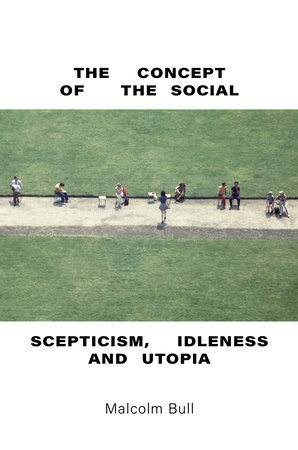
Vectors of the Biopolitical - (Chap. 2) c/o Bull

The Concept of the Social
'From one sentence in Aristotle derive two arresting theoret- ical discourses of the twenty-first century: Michel Foucault's biopolitics, provocatively reformulated by Giorgio Agamben in terms of the relationship between sovereignty and the body, and the capabilities approach developed by Amartya Sen and Martha Nussbaum as a means of evaluating and promoting development, justice and freedom. Both are characterized by deep reflection on the sources of Western political thought, and by urgent engagement with contemporary social and legal problems. Both are in some sense biopolitical in that they are shaped by the interplay of the same Aristotelian categories the human and the animal, politics and nature. But they are on opposite sides of the divide that has opened up in the human sciences since the 1960s, and there currently seems no optic through which they might simultaneously be viewed, no way of integrating or comparing their insights.
 
In part, this reflects a situation in which political debate appears to have fragmented into a multiplicity of single issues. The ancient 'Who will rule?' and the modern 'Who shall have what?' have been supplemented by an array of questions that deal with matters once exclusively cultural, personal or natural. For previous eras, the relative integrity and unmalleability of cultures, bodies and environments rendered such questions redundant. Now they frequently appear unanswerable from within established political traditions, and incommensurable in relation to each other. Within this expanded field, biopolitics and the capabilities approach have unusual salience and potential, for both bundle together issues otherwise assumed to be distinct. If they, in turn, could be coordinated, perhaps we could begin to map the new territory.' p.68.

individual
|
INTERPERSONAL : SCIENCES
humanistic ------------------------------- mechanistic
SOCIOLOGY : POLITICAL
|
group
'Who shall have what?'

nature

human - animal

bio-
culturepolitical

'Who will rule?'


Bull, M. (2021) The Concept of the Social, London: Verso.

Sunday, April 04, 2010

Have workspace, workbench - let chaos ensue

Whether trying to write computer programs, engage in woodwork, artwork or needlecraft the workspace that you need is critical to what follows.

Having a dedicated workspace is the sign of a professional.

If these activities are purely a hobby you may need to create the space on the fly. Getting the easel and paints out, protecting the carpet and then after all those creative juices are spent you have to organise the clean-up.

The Health Career Model can provide a workspace: a dedicated one. So if like many researchers your focus is (global) health, nursing, social care and social policy ... Hodges' model can provide an assurity space. Whatever your approach here is a great way to explore the scope and boundaries of your plans, objectives and final outcomes.

I noticed a letter by Fawcett et al. (2008):
We congratulate Chaffee and McNeill on the publication of their article, “A Model of Nursing as a Complex Adaptive System”.  The development of a new conceptual model of nursing always is a cause for celebration of the advancement of our knowledge. We are, however, concerned that Chaffee and McNeill did not place their conceptual model within the context of or show an evolution from relevant existing nursing conceptual models. We refer readers to Holden’s1 concept analysis of complex adaptive systems. She explained the relevance to nursing of the concept, complex adaptive systems, by tracing the “rich tradition” of systems thinking in nursing and pointed out that nurse theorists, including Dorothy Johnson, Imogene King, Martha Rogers, and Callista Roy, have developed conceptual models of nursing that reflect systems thinking. Holden concluded, “This rich tradition in nursing that has emphasized connections and interactions within a systems paradigm continues today. Complexity science merely represents the next stage in understanding how systems operate.”1
Jacqueline Fawcett, RN, PhD, FAAN
Professor, College of Nursing and Health Sciences, University of Massachusetts, Boston.
Jacqueline Fawcett, Elizabeth Ann Manhart Barrett, Barbara W. Wright, Letter to Editor, Nursing Outlook, Volume 56, Issue 2, March-April 2008, 49
.

REFERENCE
1. Holden LM. Complex adaptive systems: Concept analysis. J Adv Nurs 2005;52: 651-7. Nurs Outlook 2008;56:49. doi:10.1016/j.outlook.2008.01.003


Whilst explanations of systems have an essential place in understanding nursing, for me the concept of primary interest within (and without) systems is information. This is not just symptomatic of the paradigm of our times, but a fundamental facet of not only engaging leading edge (quantum) sciences, but relating nursing, complexity, systems, art and science to patients, carers, citizenry and global (eco-) health.

If this appears a recipe,
which when executed on the workbench will result in indigestion,
- have faith -
the problems of our times demands a framework with a massive conceptual maw.

So, in turn I would request that future nurse and complex systems researchers look further afield and factor in the need for and use of a high-level global (ethnoculturally agnostic), universal (multidisciplinary, objective, subjective) workspace:

One with sufficient bandwidth.

Having a dedicated workspace that can be shared across disciplines
- that is multidisciplinary -
denotes a mature profession
and a 21st century professional.

Image source: With thanks to Chunx.com 'Chaos Field'

See also:

'assurity space'

Information: See bibliography.

Jones, P. (1996) Humans, Information, and Science, Journal of Advanced Nursing, 24(3), 591-598.
Jones, P. (1996) An overarching theory of health communication? Health Informatics Journal, 2,1,28-34.

2019 Post:
c/o JAN: Formal Concept Analysis ... and an encouraging footnote

Tuesday, May 14, 2019

Southern Sudan Medical Journal: May 2019 issue on Primary Health Care

Dear SSMJ Reader,
 
http://www.southsudanmedicaljournal.com/archive/may-2019/
The special May 2019 issue on Primary Health Care is now online here and includes items on support for PHC in refugee camps, approaches and strategies for PHC, charging for health care, literacy and health, community screening for diabetic retinopathy, vaccination coverage and CHWs treating malnutrition.  See details below.

Send us your feedback, your manuscripts (which we can help you prepare), encourage colleagues to join the mailing list here, follow us on twitter: @SSMedJournal and our Facebook Group, and find previous SSMJ articles at African Journals Online (AJOL) and the Directory of Open Access Journals (DOAJ).
 
The SSMJ Editorial team
admin AT southernsudanmedicaljournal.com.

In the May 2019 issue:

EDITORIAL
  • Forty years of primary health care programming and its future in South Sudan Dr Ayat Jervase 
ORIGINAL RESEARCH
  • Using livelihoods to support primary health care for South Sudanese refugees in Kiryandongo, Uganda Dominic Odwa Atari and Kevin McKague 
MAIN ARTICLES
  • Integrated Primary Health Care (iPHC) for developing countries: a practical approach in South Sudan Victor Vuni Joseph and Eluzai Hakim 
  • Addressing high vaccination coverage in primary health care setting: challenges and best practices Bobby Paul and Indranil Saha 
  • Preventing blindness from diabetic retinopathy through community screening Wani G Mena 
  • UK-South Sudan Alliance: a strategy for increasing capacity and access to primary care and public health Rich Bregazzi 
  • What is the best way for healthcare systems to charge sick patients? Alfred Lumala, Lucien Wasingya-Kasereka, Martin Opio, Jenard Ntacyo, Samuel Mugisha, John Kellett 
  • How can we bridge the gap between literacy and health in South Sudan? China Mayol Kuot 
SHORT ITEMS
  • The Evidence for Contraceptive Options and HIV Outcomes (ECHO)
  • Performance of low-literate community health workers treating severe acute malnutrition in South Sudan Elburg Van Boetzelaer, Annie Zhou, Casie Tesfai, and Naoko Kozuki 
  • Martha Primary Health Care Centre: how resilience and international collaboration is transforming a community Poppy Spens 
  • Point Of Care Ultrasound (POCUS) is saving lives Achai Bulabek 
  • Juba College of Nursing and Midwifery milestones in 2018 Anna Modong Alex 
  • Obituary: Dr Joy Theophilus and Dr Emmanuel Kenyi
LETTER TO THE EDITOR
  • What South Sudan must do to reduce high maternal and infant deaths? Janet Mugo and Munawwar Said 
BACK COVER
  • The Ten Steps to Successful Breastfeeding WHO
We thank all the authors, reviewers and editors who helped to produce this special issue.

Thursday, October 28, 2010

Fran Biley's video: Students on nursing theory

I came across this great video created by Francis Biley Bournemouth University through the Martha Rogers list:


Quite some time ago I wondered about having dummy - animated heads to carry out a dialogue. It is great to see how e-media forms and tools have developed now.

I have my own thoughts and ideas on nursing, perhaps over time I am drafting them in the bibliography and here on W2tQ?

Additional links:

Nursing theory resources SCIENCES links
Virtual Reality in Nursing: A dialogue from 1991
Nursing Telemachus and Computers: A dialogue from 1995

[The above are no longer available but the dialogues may reappear in an archive.]

Tuesday, August 30, 2011

Patient? Client? Consumer? Some thoughts....

Below is an edited version of a response to an item posted on LinkedIn Working Nurses, the issue raised by Genevieve M. Clavreul, RN, Ph.D. is as follows:

One day I came across “The Martha Stewart Show” as it aired a segment dedicated to nurses and Nurses Week. It began with a brief discussion of the history of nursing over the past century or so, and I recognized many of the instruments from my youth and my early career in nursing. But what caught my fancy was how the nursing school representative, a nurse herself, continually referred to the patient as the “client,” and how she seemed to struggle while using the term, as if it was a foreign concept.

The replies thus far have already addressed this question and and its ramifications very well, reflecting the scope of experience and expertise of many working nurses. We have this issue in the UK - NHS also, indeed it is no doubt a global matter.

Mental health has 'client' and 'service user'. Health care IS a business, but a business that must be allied with professionalism. I know that goes without saying, but please bear with me. Use of 'patient' seems to denote dependency and not partnership and collaboration. Being a 'patient' you are compliant with your treatment, rather than concordant with insight into your care plan and the pros and cons of medication (intervention or non-intervention).

As nurses though we have a duty of care. Each nurse represents the profession and the terms we use reflect the values we hold in theory, practice and management (the business again).


On one level perhaps the multiplicity of terms reflects upon the complexity of health and social care and the many contexts 'nursing' takes place. The emphasis on 'recovery models', self-care, the expert patient, relapse prevention, well-being is a sign of the demographic trends and the rise of social media and e-health.

I understand that patiency is a key concept and question in formulating models of nursing: When does a patient become a patient and when does that period end? It is not wholly fashionable for nurses to act as advocates and yet I would argue that being in a 'business' nurses can / should / must advocate not just for the patient but for the health of the general population. Nurses should also look over their shoulder (that's business politics) and take cognizance of the first rule of first-aid. In this case you cannot be an advocate for personal, family, local, regional, national and global health if you become the casualty. By implication the profession - nursing - suffers too.

Will we reach a point were access to and the salience of 'patiency' as a -
human currency - has to be enshrined in human rights? What title do we grant to our seniors in whatever environment: their home of twenty years, their hospital bed, their Room 123 of The Nursing Home?

In any business the ethos and strategy for success should be to make the 'business' transparent. I'm in London at the moment at an IT event. One presentation focussed upon the 'user experience' - UX. Customer service in health is essential [ CX - CareX ! ], but this should not be a 'business' add-on. This is crucial to all caring professions. Rather than be thrown from side-to-side by the science OR art of health and its client OR patient equivalent we can embrace the dialogue and make a positive difference as we do so.


The astute student / learner will ask the person concerned how they wish to be addressed. As future nurses and nurse leaders in the 21st century they might also consider those populations around the world who would very much like to hear the utterance of 'patient': not in reference to themselves, but their infants and children ...

Thursday, November 02, 2023

Book review ii. General Psychotherapy: Principles and Common Theoretical Aspects - Rediscovering Humanity

General Psychotherapy

Chapter 1 confirmed many points for me regarding psychotherapy, especially given the general treatment here. Hartmann-Kottek asks questions of psychotherapy as a science. Hence, the demarcation of science is also raised. The history of psychotherapy spans the 19th century to current day, with references to prehistory. Wundt is a reminder of my introduction to psychology (aged 14-15). 

Physics also features, with quantum theory noted on p.5. and throughout the book. Significant for me, reference to energy, took me back to nursing theory and the work of Prof. Martha Rogers. I've struggled with this in the past. Not just personally, Unitary Beings, is this a 1960s - 1970s thing(?), but what it meant to other students and qualified nurses, in the UK at least? Another factor as I tried to find 'space' - validation for Hodges' model (despite an assumed BEST BEFORE date) there was the perception of those outside nurse academia who questioned the very notion of nursing theory (Raskin, 2001). Pardon the digression, but in the text the scales and potential significance at which the quantum is 'present' are surprising and helpfully amplify the need for an open-mind.

The author highlights recognition in recent decades of quantum phenomena - descriptions in neurophysiological at the molecular - cellular level, meditation, energy, resonance, states of consciousness and unconscious. You will find E=mc2 here too.

The question of the disparate disciplines, schools and their often warring, fractured state is not dodged. The reality of, and accounting for the the multiplicity of approaches to therapy is debated and celebrated. I like the thought of how as a student / learner the first psychotherapy we are exposed to as a clinician (usually?) is imprinted. This experience influences (understandably) how we respond to subsequent psychotherapeutic modalities. I've followed discussion on 'X' regards efforts in academia to work towards a way to integrate psychotherapy, at least improving co-habiting, but as cited by Wampold et al. (2018) p.336:
"In the thousands of (RCT) studies conducted, we are still yet to find a specific treatment for a particular disorder, which was, on average, clinically and systematically superior to any other psychotherapy." p.7.
The aim in this paper was to "find a suitable coordination system that incorporates variety." p.7.

From this and my focus on Hodges' model my motivation to read this book may be obvious:
  • A mapping exercise of core communication concepts to Hodges' model
       (the common framework?)
  • psychology 
  • psychotherapy
  • interprofessional?
Hartmann-Kottek writes:
"Even if the school of psychotherapy were to succeed in establishing a common framework, a certain amount of variation with regard to approach would nevertheless be required. I am referring to the entire field of play between body-therapeutic interventions, scenic realisations, artistic expressions and more restrained verbal interactions. This is the result of the diversity of our human state." p.33.
The politics of psychotherapy recur with exploration of interdisciplinary common factors. A book that takes a neutral stance is highlighted in one of several 'tips'. Interspersed within the text, readers will find other related asides 'important', 'note', and 'cave'. Each chapter (bar conclusion) has a bibliography. For me the references are comprehensive. There are figures too, not many (a listing would help) but they reflect the book's goals. As already suggested there is philosophical and ethical debate. How is science defined in this context and using current tools. Objectivity - Subjectivity are a constant too; while Buber et al. took me back to RN mental health (RMN) and lecture days (CPN Cert.). This is not just a reverie but vital at a time when several lecturers in mental health nursing, are concerned that the mental health nursing curriculum is being genericised.

I like reference to interspaces and constellations - again throughout. While not a psychotherapy, the brief section 1.8.3 Abandoned Aspects of Therapy, made me recall Token Economies, conceived as a therapy.

Chapter 2 discusses good and bad therapists (invariably, wherever people go the apple barrel follows), looking in depth at the therapeutic relationship, and as a common factor. Given the attention devoted to self-care at present^, it is fitting that given that people attracted to train as psychotherapists have experienced stress themselves (2.2.1); should be aware of their own self-care and mental hygiene (2.2.4). Behavioural and client-centered therapies provide focus, with gestalt therapy working towards sections on the 'special therapeutic relationship' and agape. To what extent do you need to be open to holistic orientation, in order to negotiate holistically embedded confrontation (2.4.5)?

More to follow.

Many thanks again to Prof. Hartmann-Kottek and Springer for the review copy.

Hartmann-Kottek, L. (2022). General Psychotherapy, Principles and Common Theoretical Aspects - Rediscovering Humanity. Springer. https://doi.org/10.1007/978-3-030-87466-7

Raskin, Jef. "Humbug: Nursing Theory". Archived from the original on July 10, 2001. Retrieved December 14, 2015. (Wikipedia).

^Not a complaint, welcome in terms of the vertical axis of Hodges' model.

Saturday, May 09, 2026

v WCCS26: World Conference on Complex Systems 20-22nd April

Day 2 Tuesday 21st April (Revisiting) Keynote Speaker: Abderrazak El Albani - 
Emergence of Intercellular Cooperation: At the Origins of Eukaryotic Complexity
Session Chair: Khawla Tadist

This keynote was fasacinating. As I begin this post on the 100th birthday of Sir David Attenborough, who would have us all see life in the broadest terms, value life and diverse habits, and Earth as our collective and shared home.

Abderrazak El Albani explained the search for LUCA the last universal common ancestor - 3.8 billion years ago. Many dates in the emergence story of humanity, have been progressively pushed back. The first fire, art, languages, our co-habitation and intimate relationships with Neanderthals.

In healthcare, as a practitioner you have to be aware of your scope of practice. At WCCS, scale (as in iv) was ever present across research in complexity, and complex systems. Not just physical size nano-to-mega but temporal too, as we journeyed billions of years. Several of the slides are presented here:

https://www.synchrotron-soleil.fr/en/news/discovery-oldest-macroscopic-planktonic-eukaryotes-contribution-nanoscopium-beamline (with a reference).

There is a video (French): https://www.youtube.com/watch?v=bh3t26cU7xc

I asked a question, which may have been psychological preparation for own presentation to follow. Listening, I could see how the work Abderrazak El Albani and his team are doing, could be readily translated to the search for life on Mars. There has been a 'routine' interchange of planetary material between Earth and Mars over the aeons. Fitting surely that the sedimentary rocks sought lie in  A key lesson, is that light helps us see, but not all lights are equal. Light sources brighter than the sun become incredible scientific instruments. The longevity of the dinosaurs was highlighted, at least 140 million years. There is no comparison with homo sapiens then, even as those dates have been pushed further back in time. Time defeated me as I tried to make the observation that even the dinosaurs did not make it to their first galactic birthday (c.250 million years - and what a carousel). I like the thought (slide) of 'Earth as Memory'. 

What really counted was the expressed concern about what is happening now: in the Anthropocene.

The second keynote:
Nigel Gilbert - Policy in a Complex World: Towards Complexity-Aware Policymaking
Session Chair: Ali Idri 

Was helpful to me, as the dated conundrum of benefits realisation from our technologies, and evidence-based policy still leaves a gap (for me) within the POLITICAL care/knowledge domain of Hodges' model. The illustration/graphic elements of Prof. Gilbert's slides were a brilliant complement to the content:

Prof. Nigel Gilbert - WCCS26 21st April

I wonder if within policy the constant in the equation is continuity and as a quantity it is an unknown? This seems to the case in health policy, across successive governments. You may (also) find this chart informative: https://www.cecan.ac.uk/news/the-visual-representation-of-complexity/

Perhaps, a key factor in complexity is the fact that nothing stays the same, so continuity is nuanced? Michael Quinn Patton's book Developmental Evaluation was noted re. learning while doing. Now I wish I'd held on to Qualitative Research & Evaluation Methods (4th ed.). The discussion of 'obesity system map' and 'whole systems analysis' was appreciated here.*

Since Marrakech and WCCS, I've noticed acknowledgement in the literature that 'research' is currently flooded with AI tools. I'm sure PRSM - Participatory System Mapper is a welcome addition, (as noted in iv) tools to facilitate participation are much needed:

Collaborative Creativity

The Participatory System Mapper (PRSM) is an app that makes it easy to draw networks (or 'maps') of systems, working together collaboratively.'

I will definitely check this resource out; and CECAN. After Prof. Gilbert, the next Track included my contribution, which I will return to. Rather distracted, I have a somewhat blurred slide, with: 'The global tensor of educational research is' then headed 'Learning poverty. Being unable to read and understsand a simple text; with points 1-4.'. I'm not sure which presentation this was, but zeroed in on the literacy theme, and the word tensor. Another slide refers to '6. Topological substitution for Success'. I think it is (writing this is helping recall!):

Harvey Spencer Sánchez-Restrepo, Jorge Louçã, Martha Belén Carmona-Soto and Sofialeticia Morales-Garza
Topological Patterns of Academic Success: Insights from Complex Network Analysis

'Always Label Your Axes' - Zazzle.

Before that there was another model, as the next keynote speaker: Chris Bauch demonstrated during the conference wearing a t-shirt:

Critical Transitions in Coupled Human-and-Natural Systems and their Early Warning Signals
Session Chair: Mohamed Essaaidi  

Previously: 'nexus'


*Jones P, Wirnitzer K. Hodges’ model: the Sustainable Development Goals and public health – universal health coverage demands a universal framework. BMJ Nutrition, Prevention & Health 2022;5: doi:10.1136/bmjnph-2021-000254

Wirnitzer, KC. et al. (2025) Toward a roadmap for addressing today's health dilemma – The 101-statement consensus report. Frontiers in Nutrition. Volume 12.
https://frontiersin.org/journals/nutrition/articles/10.3389/fnut.2025.1676080 DOI:10.3389/fnut.2025.1676080

S. Bettiol, P. Jones, H. A. Onyedikachi, and W. G. Kernohan, (2026) Bridging Gaps in Oral Health Frameworks: Mapping With Hodges' Health Career - Care Domains - Model, Journal of Public Health Dentistry. 1–14, https://doi.org/10.1111/jphd.70034

Thursday, November 23, 2023

Hodges' model - as 'a' philosophy c/o TPM

As much as I might like, or aspire to write, this is not a treatise on Hodges' model as a philosophy. Anyway: why limit ourselves to one 'philosophy', when several might apply, or at least be found?

Other TPM articles within the 50 new ideas issue point to Hodges' model (of course 😉).

Philosophy itself may benefit. Philosophy is "the love of wisdom". While there are dangers in siloed kowledge and the thought that put it there, what is classed as wise across the domains of Hodges' model in a given context? Contexts change, but how can philosophical reasoning help us 'keep our options open'? Or is the situation and context 'closed'? 

Again much as I might like, in response to Benatar's Forsaking wisdom (pp.23-24) I'm not trying to clever - even my sense of humour does not extend that far. We do want to apply Hodges' model  practically. Maybe disciplines exist in a perennial state of self-doubt? Peter Boghossian discusses Philosophy that matters (pp.29-30). Nursing is no exception being challenged still regards its professional and academic identity. In mental health nursing there are concerns about the field as a specialty being genericised. The nursing discipline for which identity and meaning is key finds its own identity challenged. Helen De Cruz writes of The Philosopher's rut (pp.41-42). A contributing factor is the tendency in philosophical debates to be dominated by two-well-outlined opposing positions. This framing can stifle exploration, and yet in Hodges' model with oppositions built-in the model as a whole provides conceptual escape; a series of conceptual spaces to explore. 

Hodges' model can help postpone what De Cruz refers to as cognitive closure, another reason for the philosopher's rut. We tend, psychologically to draw quick conclusions such that we are averse to ambiguity. This may be innate to a degree, as seen in 'black and white' thinking. Ironically, for me with Hodges' model is the counterposition of reflection as navel-gazing, resulting in too many options, and no decision at all.  

With the self, I, individual appearing to take a prime position in Hodges' model, Michael Cholbi reminds us of the philosophical significance and history of self-knowledge (pp.35-36). Student nurses need to acquire sufficient substantial self-knowledge to be safe, effective, competent, satisfied and lifelong learning practitioners. In another issue 98 4th Quarter 2022, Jonathan Matheson asks Why Think for Yourself (pp. 26-32), is there a rationale in intellectual autonomy and love of truth? You can exercise your intellectual autonomy and make it collaborative, by deciding on the port of entry to Hodges' model. This is a determinant in terms of the context, the situation that prompts you reach for the model in the first place. 

me - you INDIVIDUAL - the few
  |
     INTERPERSONAL    :     SCIENCES               
HUMANISTIC --------------------------------------  MECHANISTIC      
SOCIOLOGY  :   POLITICAL 
|
others - GROUP - many
inherent philosophy in Hodges' model

the mind - my mind
Personal identity
epistemology
ontology - being - identity
my - beliefs - (yours)

abstraction
logic - mathematics

concept of opposition^
opposition of concepts^

representation of -isms

ethics - moral reasoning

values - value

unconditional positive regard


physicality - materialism

the brain - my brain - body
Organic identity
implicit binary structure

superimposed relations
vectors

coding and classification

language corpora

reality as orientation:
(e.g., what three things do we need to know?)

personalised medicine ('up here')

professional scope - curricula
silos of knowledge

scientific method/methodologies

language - semantics - meaning
dialectics
'other minds'
practical reasoning

applied philosophy

individual-collective debate:
utilitarian principles

social philosophy

socialisation of learners (professions)

conformance - group think


health in politics
politics in health
human rights

the unborn - future humans

protected human characteristics

diametrical oppositions in Hodges' model
(e.g., 1. my mental state - mental health law; 2. public understanding - of science; 3. my freedom - the law. 4. culture - (techno-culture!) - science...)

power - freedom

political philosophy


In John Corvino's Applied philosophy out of the closet (pp.39-40), I'm not sure if it was Martha Nussbaum who stressed the need for philosophy to be practical. Is this the same as applied? I note her work on capabilities. Hodges' model seeks to reduce the gap between the learning involved in (between - hence bridging) theory and practice - to achieve competencies. For the future of (Brian) Hodges' model this matters, as I understand that efforts are ongoing to apply category theory to the social sciences. It is a pragmatic conceptual structure. To return to identity, A M Ferner tackles (literally?) Organic identity (pp.49-50); while Kerrie Grain takes on what is next-door in Hodges' model - Personal identity (pp. 51-52). As I continue to sort papers, journals and books there is more to follow. 


The Philosopher's Magazine, "50 New Ideas", 1st Quarter 2016. Issue 72. pp.20-120.

TPM #72 cover image: https://ericthomasweber.org/correcting-political-correctness/

^Ack.
Needham, R. (1987). Counterpoints. Berkeley: University of California Press.
(Looking f/w - I think - to chapters 7-8. With specific post(s) to follow.)