Hodges' Model: Welcome to the QUAD: Search results for matrix

Hodges' model is a conceptual framework to support reflection and critical thinking. Situated, the model can help integrate all disciplines (academic and professional). Amid news items, are posts that illustrate the scope and application of the model. A bibliography and A4 template are provided in the sidebar. Welcome to the QUAD ...

Showing posts sorted by relevance for query matrix. Sort by date Show all posts

Tuesday, November 10, 2020

Book review: "The Power of the 2 x 2 Matrix" iv

Yes, it is a literal reading but if I didn't 'see' Lowy and Hood's discussion of "The team goes to work" (p.74) with symptoms identification and "Listen, listen, listen" (p.75) I'd miss a trick.

In healthcare the team really matters; in mental health care (especially) it is a professional and therapeutic* ... duty to listen; symptoms are not enough, we must seek signs too; what goes unspoken? A 2x2 matrix once created and agreed can also help identify positive and negative symptoms, in healthcare we differentiate this in several ways. The individual whether psychosis or cancer; and the group (socially and politically) through the impact of constraints and opportunities. There's a 'Health Magazine Marketplace Matrix' (p.76).

Strategy is central with tactical and operational factors in business and commerce and chapter 6 deals with strategic frameworks. The chapter starts: 

"Strategy is the art and science of competing more effectively than one's competitors." (p.91).

Below are two of the matrices described which I've placed within Hodges' model. Nursing is all about seeking, testing, trying, accepting, parking and respecting unexploited opportunities, not only 'in' the intra- interpersonal domain, but the other domains too. I will let you reflect upon the commodification of health and 'end of life'. 

individual
|
INTERPERSONAL : SCIENCES
humanistic ----------------------------------------------- mechanistic
SOCIOLOGY : POLITICAL
|
group - population
Beyond Customer Led Matrix p.96.
Discontinuity and Life Cycle Matrix p.101


The social and political domains are obviously well represented throughout the book: value, customer, prosumer, civics and much more. An example is the Librarian Scenario Matrix which comprises of the dimensions - Locus of Concern  and Social Contract (p.119).

There's mention of architecture in the book which in a business context is understandable. I can not find where I read it but recently the addition of 'architecture' as in 'care architecture' represents a misuse? This is not architecture. This book and Hodges' model makes concepts the bricks, mortar, spans and splines of architecture. 
 
There is much more I could draw out. The Johari Window, individual frameworks - in which the quadrant's significance (size) varies, Myers-Briggs. In addition to a couple of references with the chapters, a notes section provides a full-list. The index is thorough and there are copyright notices for the many tables and figures.

A great book - just lacking one-other model, but I would say that!

Here are the previous posts:

Q. What is Hodges' model? A. It is NOT a 2x2 matrix


'Proof' of the Four Quadrants

Alex Lowy, Phil Hood (2004) The Power of the 2 x 2 Matrix: Using 2 x 2 Thinking to Solve Business Problems and Make Better Decisions, San Francisco, CA: Jossey-Bass. ISBN: 978-1-118-00879-9

With many thanks to the publisher for my review copy.

 *All effective carers (formal and informal) are 'good listeners' and not just 'good listeners' they respect what is said and if presented with it: a silence.


Thursday, October 29, 2020

Book review: "The Power of the 2 x 2 Matrix" iii

Business and healthcare share an ongoing fascination with integration. A several decades long preoccupation, I now see as a legacy issue. One, that is set to continue: a clear objective but  tantalizingly always out of reach.

Not that I'm drawn to figures, but there's a double helix (figure 2.4, p.33) to illustrate the distinctions and dependencies that operate between:

INTEGRAL and MODULAR

products

VERTICAL and HORIZONTAL

industry

Pressure to 

DISINTEGRATE - INTEGRATE

Hopefully, you can see what is going on here - the attraction, the fit? Chapter 2 on Form, Method and Mastery presents the foundations of what is to follow, with chapter 3 on the Eight Archetypal Dilemmas. While the context is business the insights here are applicable generally:

Head - Heart*

Inside - Outside

Product - Market

Change - Stability

Content - Process


As in Hodges' model, a situated perspective is called for and in designing 2x2 matrices the author's outline individual and group activities. Their step 3, 'Catalogue' - creating an inventory of interesting and important aspects of the situation is mirrored in Hodges' model - care concepts, patient or carer priorities - and general problem solving. A key difference in the business context is that the quadrants are not pre-defined but must be 'Named'. The critical question, Lowy and Hood write (p.68), is proof: "Are there four real quadrants?"

The Power of the 2 x 2 Matrix

A 'good' book makes / helps you think. In prompting the next blog post this is proof for me of a good book.

More to follow ('care architecture'?) ...

Here are the previous posts:

Q. What is Hodges' model? A. It is NOT a 2x2 matrix


Alex Lowy, Phil Hood (2004) The Power of the 2 x 2 Matrix: Using 2 x 2 Thinking to Solve Business Problems and Make Better Decisions, San Francisco, CA: Jossey-Bass. ISBN: 978-1-118-00879-9

With many thanks to the publisher for my review copy.

*See also:

https://twitter.com/h2cm/status/1321177843863375883?s=20

Tuesday, October 27, 2020

Book review: "The Power of the 2 x 2 Matrix" ii

The Power of the 2 x 2 Matrix


Once again I will start by referring to a previous post:

Q. What is Hodges' model? A. It is NOT a 2x2 matrix.

 
The structure of Hodges' model, the two axes immediately suggests opposition, dichotomy and thoughts of polarities. 

 
Page 30, table 2.2 Principles of 2 x 2 Mastery, includes:
"Opposition: 

Opposition between forces is either direct or complementary. Direct opposition is Hot versus Cold or On versus Off. Complementary opposition is Size versus Speed or Growth versus Profit. Recognize the nature of opposition, and work with it." p.30.
Of the others, the creative tension in health is manifold. Out of a professional foundation comes the therapeutic relationship nurse - patient and then the tension of trying to provide person-centred care that also has integrity in having the courage to advocate or engage independent advocacy and address the political issues that may (will) arise. Iteration here is a gift in that Hodges' model is situated and can address the multiplicity of contexts that are encountered in health, education and business too. Iteration for me implies travel, movement between the domains in search of a new perspective, (ad-)vantage point. Combined with integrity, this can mean going were you are not necessarily comfortable and perhaps seeking help. I like transcendence a great deal as it refers to "Learning requires unlearning". This points to the outcomes of interventions and application of knowledge, skills supported by Hodges' model with positive change. Transcendence can encompass liminality as described in therapy and education - threshold concepts in particular.

If you seek proof of complexity in healthcare, nursing and medicine look no further than a business book. The book is a marvellous reference text on 2x2 frameworks. In the introduction the authors stress the work is not intended to be read cover to cover. Business readers will be drawn to specific types of framework. Well referenced and researched the index is also comprehensive (with one framework missing (of course!). As the year of publication indicates the references and business examples that are outlined are dated, but they still deliver in readable and meaningful terms the utility of the framework described.

The layout and organisation of the chapters retains a 'current' appeal. I mention proof of complexity after reading:

 "Strategy is the art and science of competing more effectively than one's competitors." p.91.

In healthcare the 'competitors' may be the patients themselves (self-stigmatising, fearing the future, helplessness, hopelessness, fatigue). Competition may lie in other agencies depending on the politics of local health care delivery. Some may argue that the commodification of health is a creative tension not a political one. Also in the sense that 'we' are duty bound to heal, cure, treat you and have you care for yourself in future. Art and science are needed in print and book-loads at present as COVID-19 pushes out other diseases, illnesses that patients and families still face.

More to follow ...

 
Book review: "The Power of the 2 x 2 Matrix" i

Alex Lowy, Phil Hood (2004) The Power of the 2 x 2 Matrix: Using 2 x 2 Thinking to Solve Business Problems and Make Better Decisions, San Francisco, CA: Jossey-Bass ISBN: 978-1-118-00879-9

With many thanks to the publisher for my review copy.

Tuesday, October 13, 2020

Book review: "The Power of the 2 x 2 Matrix"

I'll start this post as I did a previous one on this book:

Q. What is Hodges' model? A. It is NOT a 2x2 matrix.


Regular visitors / readers of W2tQ will be familiar with this rendering of Hodges' model:
 
individual
|
INTERPERSONAL : SCIENCES
humanistic ----------------------------------------------- mechanistic
SOCIOLOGY : POLITICAL
|
group - population


The separation of axes and domains above is contrived to overcome some of the limitations of HTML.

An image can re-solve and integrate to show the model as intended: two axis that intersect that then gives rise to four quadrants, or that can be described as care, or knowledge domains:

Hodges' model: The axes and domains

There's another answer to the question posed above.

I was wrong AND right.

Hodges' model is not a 2x2 matrix as per the many established and very powerful examples described in Lowy and Hood's book, The Power of the 2x2 Matrix. 

It is a 2x2 matrix as I have often explained to people. I have also stressed the model's generic status, so while Hodges' model can be used in a business context, this merely highlights the model's generic potential and its situatedness.

In numerous workshops I've adopted a Socratic approach. The audience 'formulate' Hodges' model from the questions they are asked. 

The word instrument conjures ambivalence for me. Who wants to be an instrument of the State - and yet we all are? Have I been championing, advocating for what is an instrument for the past three decades and more? Do I trust the instruments? While instruments are probably associated with the sciences and mechanism (whether analogue or digital) Hodges' model is an instrument for dialectical method.

 "When Plato described Socrates' logic as dialectical, he was referring to the intensely honest and courageous investigations of important subjects, including or perhaps especially, the self and reality. The Socratic method as used by to adroitly elicit curiosity and promote learning is the practical application of this form of dialectic." pp.26-27.

"From the Greek dialektikḗ, the origin of the term dialectic is literally the art of (techne) of philosophical discussion. ... The dialectical perspective pushes us to search for meaning beyond the level of obvious, visible evidence, focusing on the dynamic relationship between things and how they evolve. The benefits for problem solving and design are significant. Dialectical thinkers are better and faster at framing, exploring, and resolving problems. Dialectical thinkers are able to wend their way through complex and difficult challenges because they are less likely to ignore messages that trouble them." pp.24-25.


INTRA- INTERPERSONAL
SCIENCES
SOCIOLOGY
POLITICAL


More to follow ...

Alex Lowy, Phil Hood (2004) The Power of the 2 x 2 Matrix: Using 2 x 2 Thinking to Solve Business Problems and Make Better Decisions, San Francisco, CA: Jossey-Bass ISBN: 978-1-118-00879-9

With many thanks to the publisher for my review copy.


Tuesday, February 09, 2010

Notes (II) for a 2010 introduction to the Health Career Model

... Where to start?

Hodges Health Career - Care Domains - ModelBy its very nature as already suggested Hodges' model is difficult to explain. There are so many elements that demand our attention and so many avenues to run. Despite revealing one heading to be followed, Murphy (2002) describes how a theory of concepts is still elusive. From this we might focus purely on nursing and take a professional stance. We should be able after all to assume solid grounds for the system that supports nursing: namely nurse education. There is no need to do this as existing theories of concepts can provide a vehicle for explanation and research of Hodges' model.

Frequently acknowledged as a science AND an art, the individual-group axis in Hodges' model and the accent on communication makes individual and group psychology as much a pivotal source of knowledge as human anatomy and physiology. There are differences in the methods of verification, but the dependency is there and evident in the core nursing curriculum. Even though psychology remains a young science, resort to psychology is advantageous in other respects as the development of cognitive science and computer science can also inform our thought and research on Hodges' model. Fundamental to this is the basic form of the model construct the 2 x 2 matrix.

There are a great multitude of models that take this 2 x 2 matrix form. Apart from mathematics examples one the most commonly cited and influential is the so-called Johari window model of Harry Ingham and Joseph Luft which dates from 1955. Luft and Ingham were psychologists who created their model at the University of California, Los Angeles, while researching group dynamics. The Johari model has found a home in soft systems problems and can now be found in many other variations and one-off examples. There are whole books devoted to the subject of '2 x 2', an acknowledgment indeed of their utility and ubiquity (Lowy and Hood, 2004). From the OHP transparencies of old to the latest data projection forms, the 2 x 2 matrix is the tool of choice in the management consultant's armamentarium. This special cognitive device can also serve the local and global health and social care community.

Ref:
http://www.amazon.com/Power-Matrix-Thinking-Decisions-Management/dp/0787972924


The Power of the 2 x 2 Matrix - at Wiley

Additional links:

http://hodges-model.blogspot.com/2008/02/big-book-of-concepts.html

[ Murphy, G. L. (2002). The big book of concepts. Cambridge, MA: MIT Press. ]

http://hodges-model.blogspot.com/2010/02/notes-for-2010-introduction-to-health.html


Friday, October 30, 2020

'Proof' of the Four Quadrants

As I have read (and 'reviewed')  Lowy and Hood's (2004) The Power of the 2 x 2 Matrix in applying a matrix, it first has to be created and the process includes identifying and naming the quadrants of concern. The final step is similar to what I see as a key function of Hodges' model: assurance. They refer to proof, being finalising the matrix asking the question are these quadrants real. Are they correct in this (business, industry and commercial) context?

For Hodges' model the quadrants are predetermined. They are 'fixed' but in a way to reassure both those on clinical ethics committees and involved in corporate governance. Although fixed -

individual
|
INTERPERSONAL : SCIENCES
humanistic ----------------------------------------------- mechanistic
SOCIOLOGY : POLITICAL
|
group - population
INTERPERSONAL
SCIENCES
SOCIOLOGY
POLITICAL

 - the terms used can vary as below:

individual
|
INTERPERSONAL : SCIENCES
humanistic ----------------------------------------------- mechanistic
SOCIOLOGY : POLITICAL
|
group - population
MENTAL HEALTH
PHYSICAL HEALTH
CULTURE & SOCIETY
POLITICAL


 'Culture and Society' was a suggestion and I've often wondered about the (meaning) scale and semantic synergy across the terms. Sociology is an academic discipline. As students 'produce' the model, I invariably have them wander about the library with Dewey. 'Politics' maybe a subject of study, but not 'Political'. The context for Hodges' model, however, is the situation in which the patient, nurse, carer, doctor, social worker, occupational therapist, physio ... find themselves. What is political about the situation. Even this is not the whole picture quadrant. What politics are evident? What political aspects should (must) be paid attention to? What is missing politically that is (further) injurious to this patient? (This patient (and carer) who is already helpless, hopeless and vulnerable?)

 In terms of proof, this is of course very important within healthcare. In mental health we often adopt a psycho-social approach and in psychological therapies from counselling to cognitive and gestalt forms in Hodges' model we can distinguish between one-to-one and individual psychology and group therapies and the psychology of a group. As soon as 'self' considers 'other' we also conjoin the model's vertical axis.


individual
|
INTERPERSONAL : SCIENCES
humanistic ----------------------------------------------- mechanistic
SOCIOLOGY : POLITICAL
|
group - population

individual
PSYCHOLOGY


SCIENCES
group
PSYCHOLOGY


POLITICAL


When I write 'sciences' I'm looking at my school time-table (yes - really!). The sciences for me back then were biology, chemistry and physics (which had to include astronomy). Today, we refer to STEM:


individual
|
INTERPERSONAL : SCIENCES
humanistic ----------------------------------------------- mechanistic
SOCIOLOGY : POLITICAL
|
group - population
INTERPERSONAL
Science, Technology, Engineering, Mathematics
SOCIOLOGY
POLITICAL
 
 
In the summer on twitter ComplexWales asked a question and made a suggestion (I must find and copy the tweet). This set me to task to write during lockdown: so I've a good outline of a short manual for Hodges' model.

In the last post, this is why I'm grateful to Lowy and Hood. I can now also factor this into the manual,  future presentations and workshops.
 
Real proof as an evidence-base goes far beyond this. I can see an exercise with the above components, the axes, the domains and the research subjects being invited to construct something. Amid the quest for data and theory there should be a space for pragmatics too.

Finally, I will leave it to you to reflect on -

Personal, social, health and economic (PSHE) education
 
- in relation to Hodges' model ...
 
More to follow ('care architecture' still) ...

Alex Lowy, Phil Hood (2004) The Power of the 2 x 2 Matrix: Using 2 x 2 Thinking to Solve Business Problems and Make Better Decisions, San Francisco, CA: Jossey-Bass ISBN: 978-1-118-00879-9


Wednesday, November 04, 2020

Lockdown ii :: Writing, Reading, Drupal...

As we start Lockdown 2 in the UK - England, plus the long nights to follow it's an opportunity to weigh up plans, projects and progress here.

I've nearly finished my review and posts on "The Power of the 2x2 Matrix":

Q. What is Hodges' model? A. It is NOT a 2x2 matrix

Next up - to read and review-  are two books:

Leave No One Behind: Time for Specifics on the Sustainable Development Goals, Homi Kharas, John W. McArthur and Izumi Ohno, Brookings Institution Press.
Leave No One Behind

Last weekend on behalf of my co-author I (re-)submitted a paper on public health, Hodges' model and the sustainable development goals SDGs.

It does pain me that the publisher kindly sent a review copy in the spring, but sadly it's not in the reference list. That subtitle is tantalizing. I will get to this after picking up "After Ethnos":
 

After Ethnos

To be clear, I'm a nurse not* an ethnographer or anthropologist, but this research approach featured large in studies at Lancaster University 2014-2016. 
 
 
A further rationale for reading this book is to maintain insight into research methods and methodologies.
 
Returning to the writing front, just before I found a co-author for the SDG draft, I'd worked on the two-part Threshold Concepts draft dealing with Deprivation of Liberty (now, Liberty Protection Safeguarding) c/o feedback from Mark Bird.
 
This is next up, especially hoping that the Threshold Concepts can proceed next July at UCL, London.
 
The other paper is a 'legacy' item which started in 2013 (yes, I know!). Mentioned here on W2tQ no doubt on diagrams, case formulations and h2cm. There is a paper here, he says? It is quite advanced in terms of words and references.
 
In addition to the legacy issues:
  • person-centred care;
  • integrated care;
  • holistic care;

the standout personal legacy - is this blog and the lack of a website. Soon I'll put twitter down and blog less to try (again) to focus on Drupal and related tools.
 
*I would like to think that successful nursing interventions (that really 'make a difference') calls for an  ethnographic and anthropological orientation.

Wednesday, September 02, 2020

Q. What is Hodges' model? A. It is NOT a 2x2 matrix.

Regular visitors / readers of W2tQ will be familiar with this rendering of Hodges' model:
 
individual
|
INTERPERSONAL : SCIENCES
humanistic ----------------------------------------------- mechanistic
SOCIOLOGY : POLITICAL
|
group - population


The separation of axes and domains above is contrived to overcome some of the limitations of HTML.

An image can re-solve and integrate to show the model as intended:

Hodges' model: The axes and domains


 Moving on to read and review Lowy and Hood's book on The Power of the 2x2 Matrix two chapters in there are already (yet again) rich rewards and two questions I ask myself...


1. On their own what exactly are the axes? 


individual
|
INTERPERSONAL : SCIENCES
humanistic ----------------------------------------------- mechanistic
SOCIOLOGY : POLITICAL
|
group - population


2. The same question can be asked of the care (knowledge) domains as labelled: what are they? 


INTRA- INTERPERSONAL
SCIENCES
SOCIOLOGY
POLITICAL


More to follow ...

Alex Lowy, Phil Hood (2004) The Power of the 2 x 2 Matrix: Using 2 x 2 Thinking to Solve Business Problems and Make Better Decisions, San Francisco, CA: Jossey-Bass ISBN: 978-1-118-00879-9


Sunday, September 22, 2019

c/o JAN: Formal Concept Analysis ... and an encouraging footnote

My source:


Andersson, N, Silver, H. Fuzzy cognitive mapping: An old tool with new uses in nursing research. J Adv Nurs. 2019; 00: 1– 8. https://doi.org/10.1111/jan.14192

This tweet prompted a reply and further reflection, as I've been aware of FCA for quite a while. A math disability (but remote fascination?) precludes me really 'getting to grips' with this. As noted before on W2tQ, visualization in the humanities (social sciences) has still not realised its potential. Those researchers, professional workers ... who could benefit from its application, being in the 'humanities', often do not understand the underlying mathematics. Even though they are not necessarily that advanced (sixth-form - undergraduate?).

Over the years I have built up a small library of related papers and books. The Macgill (1984) paper referenced below, I started to 'read' and work through and got a short way. The print quality is rather poor and obviously dated, but that is not the problem. I will try again. Since the 1980s software has changed beyond the proprietary packages of MathCad, MathLab, Maple and Mathematica and collectively they should (must?) make these methods more accessible. Of course, I thought this with regards to the use of content management system for a website (yes, that one!). Again though it's not the tools, but my choice, time and focus.

I write this and it might only be intuition, but I'm not just sure, I know there is something here.

Seeing FCA in JAN's tweet I thought of a certain footnote even though on my copy the reference seems incomplete:

Kwong, C. P. A Topological Framework for Formal Concept Analysis, The Chinese University of Hong Kong.

On the first page the footnote reads:

"The adjective "formal" is used to emphasize the mathematical substance of the objects being studied, which may be left out when such a formality is superfluous."

As you can imagine this is quite a gift for me. In a way it suggests the following from a 2x2 matrix with keywords (concepts), to an arbitrary array:

individual
|
INTERPERSONAL : SCIENCES
humanistic ----------------------------------------------- mechanistic
SOCIOLOGY : POLITICAL
|
group - population

1001
1110
0001
1111

1101
0100
1010
0011

1111
0011
0011
0110

0110
1111
0000
0110

There is a worry here. When your formative nurse education and training stressed the need to shift from a task-oriented approach to individualised, then filling the domains of Hodges' model with '1's and '0's is a bona fide task-checklist - even if a binary one.

There is a response to that concern for another post; but before that there is another source c/o:

Johana Ramírez Gaviria (2015) Aspectos topológicos en el Análisis deConceptos FormalesTopological aspects in Formal Concept Analysis, Universidad Nacional de Colombia Facultad de Ciencias Exactas y Naturales Departamento de Matemáticas y Estadística Manizales, Colombia. p.6.
c/o Google, Spanish – detected, English
En [26] se plantean nuevos modelos para el FCA usando nociones de la topología algebraica. El contexto formal convencional es reemplazado por una matriz con entradas ”1” ó ”0” denominada matriz contexto, para construir una familia simplicial (familia concepto), de ahi se desprenden propiedades que relacionan la teoría de la topología algebraica con el FCA.

Cabe resaltar que hasta el momento no se ha trabajado en dotar de estructura topológica los contextos formales en el FCA generalizado, donde los datos de las tablas toman valores difusos en lugar de valores binarios como se tiene para el FCA clásico.
In [26] new models for the FCA are proposed using notions of the topology algebraic The conventional formal context is replaced by a matrix with “1” or "0" called context matrix, to build a simplicial family (concept family), from there properties that relate the theory of algebraic topology with the FCA.

It should be noted that so far no work has been done to provide a topological structure the formal contexts in the generalized FCA, where the data in the tables take values diffuse instead of binary values ​​as you have for the classic FCA. 
[26, reference is Kwong]
  The whole thesis would need translating, but I have a sense that this too is useful.

Working through papers, files, journals, books getting rid of, sorting, re-filing ... I'll see if I can add to the reading below.

Atkin, R. (1974). Mathematical Structure in Human Affairs. London, Heinemann.

Macgill, S.M. (1984). Structural Analysis of Social Data, A Guide to Ho's Galois Lattice Approach and A Partial Re-Specification of QAnalysis, Working Paper 416, School of Geography, University of Leeds.

Previous post:
Bell jars and bell curves


Thanks to @jadvnursing for this tweet in-particular and for RTs.
(Paper e-copy received with thanks c/o Neil Andersson, 25 Oct 2019.).

Tuesday, April 19, 2016

Pigeonholes and a Matrix 4 Care


The structure of Hodges' model is 
not an invitation to pigeonhole. 
It is an equation: a matrix for care. 
What is done in one quadrant, 
needs to be counter-balanced 
in the other care domains. 
The operations here are not mathematical,
 but reflective, reflexive and ideally communicative.

Monday, March 23, 2026

Good - Bad AI? c/o FT Magazine et al.

My source: Tim Harford, How can we tell good AI from bad? FT Magazine. 21 March 2026. #1168: pp.9-10.

    'Two new working papers address the tricky issue of verifying quality. In "Some Simple Economics of AGI", Christian Catalini, xiang Hui and Jane Wu (assisted, sometimes gratingly, by generative AI) propose the inevitable 2x2 matrix in which economic activity can be easy to automate, easy to verify, both or neither. Automatable, verifiable output is the stuff that computers do for us. The non-automatable stuff remains reassuringly artisanal.
    The difficult quadrant is where tasks seem easy to complete but are hard to check. Catalini, Hui and Wu call this the "runaway risk zone". It is not a reassuring label and it is not meant to be.
...
    In the second paper, "A model of Artificial Jagged Intelligence", Joshua Gans offers an analogy in which asking AI to perform task is like trying to cross a river over a network of planks supported by occasional pylons. The jagged frontier is represented by the fact that some planks are long and wobbly, while others are short and sturdy. Problem one: even if the planks are typically sturdy, the wobbly planks will require most of your time and attention. Problem two: if you can't predict in advance which planks will let you down, you may quite sensibly prefer to eschew the AI entirely and row yourself across the old-fashioned way.'

Catalini, C., Hui, X., & Wu, J. (2026). Some Simple Economics of AGI. arXiv preprint arXiv:2602.20946.

Joshua S. Gans, 2026. "A Model of Artificial Jagged Intelligence," NBER Working Papers 34712, National Bureau of Economic Research, Inc.


Previously: 'safety' : 'ai' : 'domain' : 'matrix'

Friday, October 28, 2011

CARDI conference ageing globally - ageing locally: Poster

The last poster I completed in June for the Health Literacy conference in Manchester was made up of four A4 pages. It was OK, but suffered next to the University produced presentations - maybe it was an imposter. So, I determined that the next would be a more professional A1 - A0 effort.

Thanks to George Kernohan - Prof. of Health Research in the Institute of Nursing Research at University of Ulster - next week's CARDI conference in Dublin will see this realised.

Nine A3 pages were produced in total (too many for insurance). The final 'composition' was not straight forward. George suggested Powerpoint and that clinched it after much aggravation. This will be easier next time! With a week to spare I forwarded the draft to George. As before I've tried to strike a balance between graphics and text. There are three diagrams of the model in total that hopefully capture some of the main conference themes:

Title, author details & acknowledgement
Introduction to Hodges' model with basic model graphic axes and domains
h2cm matrix including the 4P's and Global & Local aspects of ageing
h2cm matrix Glocal and notes, the future and bibliography

The overlap here is quite something: I believe that the 4,400 words on local, global and glocal now has some coherence and merit. The context for that 4K is community informatics. The poster has drawn on that draft and in turn a further paper on this theme but specifically addressing older adults, health care, nursing ... will take things further.

The conference is much more than the posters of course. There are some excellent sessions and speakers too. Apparently the poster has arrived across the Irish Sea and looks OK. The boarding passes are printed - Dublin next stop. I'll also find out what Guinness really tastes like and catch up with James Joyce on Friday.

Tuesday, September 23, 2014

Agnostic qualities in Hodges' model

In the previous post I highlighted "Holistic approaches to learning are agnostic as to method." 

I added that there would be more to follow as Hodges' model can be viewed as agnostic on several levels. The following is taken from a paper on Hodges' model and its application in forensic nursing:

Hodges’ model claims to be person-centred and situated (Jones, 2008). What exactly does this mean for forensic nursing? The utility of Hodges’ model lies in it being agnostic. By ‘agnostic’ this means that the model is not dependent upon, dedicated to, sanctioned by, or owned by any particular discipline (even nursing). It was not designed with a particular media, clinical setting, situation or organization in mind. It is true, however, that the model was formulated within academia and health and social care, being taught and applied by community mental health nurses, learning disability and health visiting students. Apart from the history and universality of the model’s cruciform structure and its inherent 2 x 2 matrix form [often referred to as a Johari window (Luft and Ingham, 1955)], the model is also culturally neutral. This is an essential requirement to reflect and enact nursing values and codes of conduct (Nursing and Midwifery Council, 2008).
Doyle, M., Jones, P. (2013). Hodges’ Health Career Model and its role and potential application in forensic mental health nursing. Journal of Psychiatric and Mental Health Nursing. 20, 7, 631-640.
http://onlinelibrary.wiley.com/doi/10.1111/j.1365-2850.2012.01961.x/abstract

Monday, April 09, 2018

Paper: Understanding the micro and macro politics of health [Mapped to h2cm]

"Almost a decade after WHO Commission on Social Determinants of Health published its influential report (2008), health inequalities within and across countries remain high on the research agenda. Acknowledging the complexity of the issue, scholars increasingly stress the need for the development of a theoretical framework that will integrate the multiple factors involved in shaping health inequalities, from individual social positions and experiences to institutions (Beckfield et al., 2015; Krieger, 2012, 2011)." p.92.

From Google:
intersectionality
ɪntəsɛkʃəˈnalɪti
noun
noun: intersectionality; plural noun: intersectionalities
  1. the interconnected nature of social categorizations such as race, class, and gender as they apply to a given individual or group, regarded as creating overlapping and interdependent systems of discrimination or disadvantage.

    "through an awareness of intersectionality, we can better acknowledge and ground the differences among us"

individual
|
INTERPERSONAL : SCIENCES
humanistic ------------------ INTERSECTIONALITY ------------------ mechanistic
SOCIOLOGY : POLITICAL
|
group
category salience and individual experience

"Intersectionality as an analytical tool of social stratification (Yuval-Davis, 2015) challenges the idea of a single, fixed social hierarchy. It perceives social positioning as a spot within a matrix of intersecting power axes (Crenshaw, 1992). Hence, there are no sociological categories (e.g. race, gender) that have an a priori greater significance in shaping individual experience." p.93.


qualitative

methods & methodology
analysis - synthesis

"Yuval-Davis (2015) elaborates on that and describes intersectionality as a context informed analytical tool (situated intersectionality) that focuses on the categories that reflect the social divisions shaping most people's lives (e.g. race and gender) in certain contexts and simultaneously it is sensitive enough to render visible other divisions shaping the experience of individuals and groups at marginal positions (e.g. sexuality)." p.93.
quantitative
race, ethnicity, class, gender, sexuality


social history 
social class
social exclusion  
stratification


"... intersections between social categories -

socio
"Studies have focused mainly on welfare states classified across certain typologies (eg. Esping-Andersen, 1990) as mechanisms that rank people into social hierarchies and (re)distribute social determinants of health." p.94.

Institutions, immigrant status
political minority struggle
 colonisation, enslavement


are .. reflections of intersecting systems of power" p.94

economic

Anna Gkiouleka, Tim Huijts, Jason Beckfield, Clare Bambra, Understanding the micro and macro politics of health: Inequalities, intersectionality & institutions - A research agenda, Social Science & Medicine, Volume 200, 2018, 92-98, ISSN 0277-9536.
https://doi.org/10.1016/j.socscimed.2018.01.025.
(http://www.sciencedirect.com/science/article/pii/S027795361830025X)
Keywords: Health inequalities; Intersectionality; Institutions; Health politics; Social positioning


My source: Prof. Dennis Raphael
Politics of Health Group Mail List Messages
Visit PoHG on Facebook: https://www.facebook.com/282761111845400
Follow us on Twitter: @pohguk

Sunday, September 22, 2024

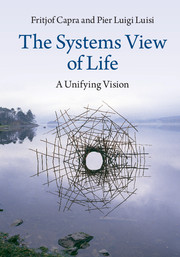
Book: [iii] 'The Systems View of Life - A Unifying Vision'

The Systems View of Life -
A Unifying Vision


Part 2 addresses the title - the rise of systems thinking.

The part - whole distinction is not only the root of the reductionism - holism and analysis - synthesis debates, but you feel clever knowing what mereology means ;-). This book is jargon free, even while being detailed and technical when necessary. Terms are defined when needed.

You see (possibly?) the power of advertising given the prominence of vitality in marketing. Meanwhile, vitalism a key to life seems to be an unknown, ever present but in the shadows, until our attention is drawn to it (health: life-death). Capra and Luisi explore mechanism and vitalism, and in turn organismic biology. Whether dealing with science, economics, biology..., I like the way the authors draw in the initial thinkers, the pioneers: whose lives, work and influence often spanned the 19th and 20th centuries. 

The proof of my opening statement in post (i) can be found on page 66:

'Systems thinking is "contextual," which is the opposite of analytical thinking. Analysis means taking something apart in order to understand it; systems thinking means putting it into the context of a larger whole.' p.66.

Ever user(s)-determined (context-based), Hodges' model can readily identify, relate, incorporate the - linear, non-linear, serial, parallel, simple, complex, poor, rich, narrow, broad, static, dynamic, person, service and so on. Also on page 66, Ehrenfrels (1859-1932) is an example, the first to use the term gestalt to denote an 'irreducible perceptual pattern'. There are many potentials within Hodges' model, one of which is that of gestalt. Yes, in healthcare we need to see the whole. We need to see the person, but also see the person in their social, political and spiritual contexts ('determinants)'. Now the global context is critical.

Chapter 4 charts the new physics atomic phenomena, mysticism, uncertainty, probability, causality, space, time, energy, and E=mc2. As per the book's subtitle, the search for a unifying theory in physics is noted, and ongoing. Box 4.1 briefly outlines the characteristics of systems thinking; including parts-whole, from objects to relationships and measuring to mapping. Within box 4.1, figure 4.1 reminds me of a Voronoi tessellation.^ From chapter 5 can I claim that Hodges' model is tektological - contributing to the science of structures? One day perhaps this Russian contribution to systems thinking can be looked at anew? Chapter 5 continues to reveal classical systems theories, general systems, cybernetics, feedback - in social systems too, and homeostasis - self-regulation. It's less than a page spanning 92-93,  but 'information theory' is duly noted, closing with cybernetics in the brain, and the emergence of self-organization. Shannon showed that even when there is noise in a communication channel, signals can be transmitted (coding). Is this why training and competence in interpersonal skills and self-awareness are so important, to help health professionals to attend, actively listen, and observe?*

An old T-shirt 'Art Matrix'


Chapter 6 on complexity theory, inevitably describes mathematical ideas providing equations. Unsurprisingly chapter 6 has figures galore. When I unpack the boxes and crates, I must sit down with The Beauty of Fractals ... (p.124!) and check the graphic capabilities of the latest software and hardware. The 'The Systems View of Life' definitely stimulates further enquiry. The baker transformation anyone (Box 6.2, p.107)? Exploration of non-linear dynamics, and abstract spaces also helpful in studies of relations and maths. This completes part II.


Many thanks again to CUP for the pb copy, much easier on the eyes. While this copy is new, I do make extensive use of secondhand books.

Fritjof Capra and Pier Luigi Luisi (2014) The Systems View of Life - A Unifying Vision. Cambridge: Cambridge University Press.

https://www.cambridge.org/gb/universitypress/subjects/life-sciences/genomics-bioinformatics-and-systems-biology/systems-view-life-unifying-vision?format=HB&isbn=9781107011366

^See: https://blogs.helsinki.fi/fcai-sig-lsc/files/2022/04/Peter-Gardenfors.pdf and 'conceptual spaces'

*Jones, P. (1996) Humans, Information, and Science, Journal of Advanced Nursing, 24(3),591-598.

Jones, P. (1996) An overarching theory of health communication? Health Informatics Journal,2,1,28-34.

Sunday, January 20, 2008

The symbol '+'

Apart from a multitude of symbolic meanings the figure below also provides the structural foundation for Hodges' model and as symbols.com notes:
Cross from symbols.com

The cross with arms of equal length is an extremely old ideogram used in most cultures. It is also one of the basic gestalts in Western ideography (as opposed to the basic elements, which are derived entities). The cross is found in every part of the world, in prehistoric caves and engraved on rocks.
In my interview with Brian Hodges' over 10 years ago in May 1997, Brian provided an account for how he arrived at this structure (summarised below). As mentioned elsewhere on this blog, the website, symbols.com and other sources - the cross, or 2x2 matrix is a common device to explain and structure. The four elements, the four humours (or humors) yellow bile, black bile, phlegm and blood, the seasons; there are so many things that can be characterised in this way.

With '+' as a starting point for me to reflect on Hodges' model I see each line as an individual. This agent or subject could include patient (person) and health care worker; lecturer and student and many other examples.

The act of cros-sing, the intersection of the axes represents two human beings being in a situation.

Space and time brings people together:

and also forces us apart - physically and temporally.

Adding an arrow to one end of these axes creates the dynamic of communication.

The angular distance in the alignment of those arrows offers hope -
  • in our common humanity we are never in 180 degree opposition;
and yet acknowledges:
  • the isolation of the individual -
  • and the challenge.
The work that must done. Hence the primacy of communication skills and values; in order to bridge individual being, ti:me and space.

Perspective is helpful here as an extension:

While we may get close to another person, through relationships that entwine the lines - be they spun by professional obligations, friendship, family ties, or intimate sexual relationships - the two lines are always distinct: part of an elaborated knot.

Is it just the special ties that must forever seek to be one+


The best way to explain h2cm is to review the questions Brian Hodges originally posed.

To begin, who are the recipients of care? Well, first and foremost individuals of all ages, races and creed, but also groups of people, families, communities and populations. Then Hodges asked: what types of activities - tasks, duties, and treatments - do nurses carry out? They must always act professionally, but frequently according to strict rules and policies, their actions often dictated by specific treatments including drugs, investigations, and minor surgery. Nurses do many things by routine according to precise procedures, rather like the stereotypical matron with machine-like efficiency? If these actions are classed as mechanistic, they contrast with times when healthcare workers give of themselves to reassure, comfort, develop rapport and engage therapeutically.

This is opposite to mechanistic tasks and is described as humanistic; what the public usually think of as the caring nurse. In use this framework prompts the user to consider four major subject headings or care domains of knowledge. Namely, what knowledge is needed to care for individuals - groups and undertake humanistic - mechanistic activities? Through these questions Hodges’ derived the model axial structure.

Monday, November 25, 2024

The naïve approach

Categories, Bundles and
Spacetime Topology 
 

'First steps' are by their nature plagued by uncertainty of intent and direction, ungainliness, missteps, stumbles and ('finally') possibly falls.

Finding a starting point can be difficult.

Where to find a hand-hold, place one's foot, or other anchor?

At Lancaster University library I came across this book, first published in 1980. The cover displayed is from the 1988 edition.

In order of appeal I read:

applications, categories, spacetime and topology.

Section I starts with Preliminaries: Notation and Abbreviations; always useful (reminder).

The next, Section II Naïve Category Theory, had my immediate attention. We often speak of learners as being naïve. As lifelong learners we all meet this descriptor. I keep revisiting this word, concept - 'naïve'.

Naivety is a starting point for practitioners in health and social care too. Hence the need for supervision, mentors, the tokens of probationary (driver) and 'newly qualified'. 

Many posts on W2tQ stress the diagrammatic quality of Hodges' model. It is visibly a 2x2 matrix, (once again..) beloved of management consultants, psychologists and change agents. In Section II Dodson recognizes the London Underground map as a graph. A small example is developed, explained and illustrated on p.6. 

Graph example, drawing on the London Underground. p.6.

Section II may be a small part of the overall book but it is invaluable to me. As the photo above suggests, the book is old, especially as 1st edition. I will try to access the 2nd edition. If this work is a project with which you can (more ably!) assist, I would greatly appreciate your input. The aim is to signpost Hodges' model as a potential focus for all researchers. Especially researchers interested in trying to conjoin the sciences and humanities and develop visualization in the latter. 

C.T.J. Dodson. Categories, Bundles and Spacetime Topology. 1st Edition, Shiva, Kent. 1980.

Previously: 'math'

'Diagram' resources listed on former, now archived website.

Tuesday, November 19, 2013

Immortality, the matrix and Hodges' model

The 5th care - knowledge - domain is the Spiritual

INTERPERSONAL : SCIENCES
SOCIOLOGY : POLITICAL
individual

floating off as souls
not dying


coming back to life
living on through legacy


group - population


My source: FT Weekend March 31 - April 1 2012, Memento mori, Book review by Julian Baggani of Stephen Cave's Immortality: The Quest to Live Forever and How It Drives Civilization.

Thursday, July 17, 2014

The Global Health Research Process Map

As a conceptual ready reckoner Hodges' model helps us locate, isolate and contextualise the commonly cited 4Ps. In the h2cm matrix below I have related the 4Ps, as before, to the four care domains:

individual
INTERPERSONAL : SCIENCES
humanistic ------------------------------------------- mechanistic
SOCIOLOGY : POLITICAL
group
PURPOSEPROCESS
PRACTICEPOLICY

I raise this learning of a new process oriented resource for global research produced by The Global Health Network.

Processes are critical.  

Think of the relationship of purpose, practice and policy in relation to triage and emergency care? When I reflect on a situation even if the priority, context is process driven I am mindful of the bigger picture.

+++++++++++++++

The Global Health Network has launched a brand new, interactive Global Health Research Process Map, the first digital toolkit designed to enable researchers anywhere in the world to initiate rigorous global health research studies.

As the HIFA community know all too well, health research is often lacking in the regions where evidence to improve health is needed most. Crucial evidence is not being generated because doctors and nurses lack access to training, information, and support. Effort is also regularly duplicated or conducted using different criteria in different territories and studies, and sometimes it falls by the wayside from lack of simple resources and guidance on best practice. The Global Health Research Process Map (http://processmap.org/) is set to change this. It’s an open-access internationally-available online resource that guides every process and method needed to initiate a health research study. For each step researchers and their staff are provided with the information, support and training that they need to successfully run a health study. Researchers will also gain the opportunity to engage with their peers along the way, aiding collaboration and the spread of ideas.

The Process Map was released just over one week ago, and has already generated nearly 2,500 views from around the world. It is the product of four years of best practice gathered and refined by the research community who use the pioneering Global Health Network to guide and support their effort to conduct research in challenging settings. The Global Health Network works like an online science park for exchanging knowledge, sharing research methods and facilitating collaboration among global health professionals to fuel faster and better evidence to improve health. The Global Health Network facilitates global partnerships between researchers ­ allowing researchers in low-resource settings and those with more support to learn from each other ­ and conduct research studies in places where this is difficult and unusual.

The Process Map is a pioneering research tool that centralises the information and resources that researchers anywhere in the world need to develop and initiate rigorous and effective global health studies. It has the potential to revolutionise the current process, speeding the development of new drugs and vaccines, and improving how diseases are managed. With this toolkit, researchers can access the guidance, training and support that they need in order to run their own studies. This is important because there is much evidence that shows that locally-led research rarely happens in low-income settings because health workers lack research skills and any access to training and support. Therefore the Global Health Network is meeting that gap and the Global Health Research Process Map will take them through the process of conducting accurate research, step-by-step. 

Visit the tool today, and click on each node to access formally written information, links to eLearning courses, guidance articles, discussions, blogs, up-to-date news, and all sorts of tools and templates which will help you complete each step. As with everything else on the Global Health Network, it’s completely free and open-access, and always will be. Your feedback is always greatly appreciated, so feel free to have a look and leave comments, either here* or on the map itself.

Thank you!
Tamzin

Tamzin Furtado
Project Manager
The Global Health Network

*My source: HIFA2015