Hodges' Model: Welcome to the QUAD: Search results for survey

Hodges' model is a conceptual framework to support reflection and critical thinking. Situated, the model can help integrate all disciplines (academic and professional). Amid news items, are posts that illustrate the scope and application of the model. A bibliography and A4 template are provided in the sidebar. Welcome to the QUAD ...

Showing posts sorted by date for query survey. Sort by relevance Show all posts

Wednesday, September 09, 2026

Bonjour Bayeux: Tapestries Historical & Modern

individual
|
INTERPERSONAL
: SCIENCES             
humanistic ------------------------------- mechanistic
SOCIOLOGY : POLITICAL   
|
group

'I think my favourite story to work on has been the 434 dinosaurs that are in the tapestry.  So much has changed about what we know about dinosaurs and all because the study of fossils and dinosaurs has grown up alongside geological survey for mining and petroleum drilling. Studies say dinosaurs were much more colourful than originally imagined and many were feathered, and in fact birds are their distant relatives.  Only 50 years ago we were taught that oil was made from decomposed dinosaurs and plants. Today research suggests oil formed from aquatic algae, called diatoms.

Much more than half of all life on earth died in a mass extinction at the end of the Cretaceous period. The most agreed upon theory, based on research, suggests the cause was when an asteroid collided with the earth and triggered volcanic eruptions, that disrupted weather patterns, growing seasons and ecosystems.  This one-two punch killed off the majority of Earth’s flora and fauna, including the dinosaurs, all of which were unable to adapt to the changes in climate.'

Sandra Sawatzky -
https://www.theblackgoldtapestry.com/notes

Detail - Panel 1 - Beginnings

The Black Gold Tapestry


THE BRITISH MUSEUM

A historic loan from France

The Bayeux Tapestry

Experience / 10 September 2026 – 11 July 2027


My source: Sandra Sawatzky, Oil in a Material World, Resurgence & Ecologist, Nov/Dec 2022, Issue 335, pp.52-55.

See also: https://www.theblackgoldtapestry.com/

Previously: 'Canada' : 'environment' : 'activism'

Thursday, September 03, 2026

Social Inclusion: Transnational Organization of Labour, Mobility, and Senior Care in Central and Eastern Europe

Dear colleagues,

Social Inclusion has just released a new issue, fully open access, and all articles are free for you and others to read, download and share.

Transnational Organization of Labour, Mobility, and Senior Care in Central and Eastern Europe (2026, Volume 14)

Edited by Ewa Palenga-Möllenbeck, Dóra Gábriel, Olena Fedyuk and Kristine Krause

Complete issue: https://doi.org/10.17645/si.i533

Table of Contents:

Transnational Organization of Labour, Mobility, and Senior Care in Central and Eastern Europe
https://doi.org/10.17645/si.13078
By Ewa Palenga-Möllenbeck, Dóra Gábriel, Olena Fedyuk and Kristine Krause

Migrant Live‐In Care Workers in the Global Care Chain: Results From an Online Survey
https://doi.org/10.17645/si.11728
By Silvia Wojczewski, Simona Ďurišová, Sabine Pleschberger, Anna Ernst, Rojin Bagheri, Kathryn Hoffmann and Viktoria Adler

Selling Care Skills? The Multiple Meanings of Training for Polish Live‐In Care Workers in Germany
https://doi.org/10.17645/si.11909
By Roxana Fiebig-Spindler

The Invisible Hand of Care: A Typology of Brokerage Actors in Migrant Care Labour
https://doi.org/10.17645/si.11953
By Ewa Palenga-Möllenbeck, Ivanna Kyliushyk and Roxana Fiebig-Spindler

Care Extractivism Beyond Households: Migration and Care for Older People in the Post‐Yugoslav Semi‐Periphery
https://doi.org/10.17645/si.11975
By Majda Hrženjak

Caring Communities in Urban Hungary: A Civil Society Perspective
https://doi.org/10.17645/si.12023
By Dóra Gábriel, Bettina Török and Noémi Katona

Care Under Constraint: Unmet Care Needs Among Older Adults in Romania
https://doi.org/10.17645/si.12028
By Mihaela Hărăguș and Ionuț Földes

Skill Construction and Challenges of Professionalization in the Hungarian Home Care Market
https://doi.org/10.17645/si.12029
By Noemi Katona and Dóra Gábriel

The Right to Care and Support: From Care Theory to Human Rights Law
https://doi.org/10.17645/si.12056
By Maroš Matiaško

Senior Care in Wartime Ukraine: A Fragmented Continuum of Arrangements Inside an “Unpromising Sector”
https://doi.org/10.17645/si.12060
By Oksana Dutchak, Olena Fedyuk and Anna Oksiutovych

Bounded Transport, Mobility Justice, and Claims for Recognition Among Live‐in Care Workers
https://doi.org/10.17645/si.12191
By Petra Ezzedine

In Times of the Market and Community Shift: On Live‐In Care and Caring Communities
https://doi.org/10.17645/si.12295
By Brigitte Aulenbacher, Klaus Wegleitner, Jonas Hagedorn and Bernhard Emunds

Care Outsourcing From Germany to Central and Eastern Europe
https://doi.org/10.17645/si.12319
By Kristine Krause, Veronika Prieler, Hanna Horváth, Matouš Jelínek, Mariusz Sapieha, Zuzana Sekeráková Búriková, Petra Ezzeddine and Luise Schurian‐Dąbrowska

Imagining Care: Transnational Inequality and Older Age Prospects for Ukrainian Caregivers in Italy
https://doi.org/10.17645/si.12324
By Oksana Dutchak, Olena Fedyuk and Anna Oksiutovych

The Winding Road to Professionalisation: Care Work in Romanian Nursing Homes
https://doi.org/10.17645/si.12326
By Neda Deneva, Ionuț Földes, Denisa Ursu and Mihaela Hărăguş

The Limits of State Control in Regulating Live‐In Care Work in The Netherlands
https://doi.org/10.17645/si.12375
By Siënna Hernandez, Kristína Bartošová and Franca van Hooren

Home Care for Sale: Marketisation and Social Change
https://doi.org/10.17645/si.12737
By Attila Melegh

Kind regards,

Mariana Pires
Cogitatio Press, Portugal
si AT cogitatiopress.com
Social Inclusion
https://www.cogitatiopress.com/socialinclusion

My source: COMPLEXITY-PRIMARY-CARE list

Tuesday, June 02, 2026

Call for Participants: Survey on Trauma-Informed Archival Practice

Dear all,

My name is Emily Hill, I am a current master's student at the University of Glasgow completing my dissertation titled: 
 
To what extent is Trauma-Informed Archival Practice understood and used within the Archival Sector? How effective are the methods of support available to Archivists? 

The aim of this dissertation is to explore the breadth of knowledge within the Archival sector surrounding Trauma-Informed Archival Practice, where professionals have learned about Trauma theory and if the mental health and secondary trauma support available is accessible and effective. There is no prior knowledge of Trauma-Informed Practice needed to participate, as these concepts are explained within the Participant information forms. 

Participation in this survey will take approximately 15 minutes, including the Participant Information and Agreement forms which should be viewed and signed before participation in the survey questions. 

All survey responses are received anonymised, with the data being analysed in correlation with other respondent data on a question-by-question basis. 

I would be very grateful for your participation in this survey, and if you have any questions or concerns you wish to address prior to participating, please email me at 2650467H AT student.gla.ac.uk. 

You can access the survey here

Thank you in advance for your participation!

Best wishes, 
Emily Hill.

My source:
To view the list archives go to: https://www.jiscmail.ac.uk/cgi-bin/webadmin?A0=RECORDS-MANAGEMENT-UK

Sunday, May 24, 2026

South Sudan Medical Journal Vol 19 No 2 May 2026


Dear Reader,

The May 2026 issue is online here; we thank all the copyeditors and reviewers who helped prepare these papers. SSMJ is indexed by African Journals Online (AJOL) – go here to see who reads us.


Editorial 

  • Ebola: The Bundibugyo virus is back Edward Eremugo Kenyi

RESEARCH ARTICLES

  • Risk factors in glaucoma: Insights from a prospective case–control study, Belagavi, India Asawari Kabure, Bhushan Kulkarni, Shilpa Kodkany, Murigendra Hiremath
  • OV16 antibody seropositivity reveals persistent onchocerciasis transmission and cross-border risk in Magwi County, South Sudan: a population-based survey Ezbon WApary, Yak Yak, Benson Ojara, Wilson Ladu, David Oguttu, Ian Hennessee, Pita Jane, Johan Willems, Thok Chol, Kamulete Horasio, Okot William, Amanya Jacob
  • Prevalence of urinary schistosomiasis in communities along the River Niger Basin areas, North-Central Nigeria Nyamngee Amase, Ikpe Raphael Terlumun, Kayode Yusuf Abel, Sulaiman Mariam Kehinde, Akanbi II Aliu Ajibola
  • Developing a communicable and infectious diseases research agenda in South Sudan: A multi-stakeholder prioritisation approach Amanya Jacob, Ezbon WApary, Dhieu Daniel, Atemthi Dau, Matur T. Tieng, John Rumunu, Cicilia Konga, Bol Atem, Betty Eyobo, Robert Napoleon, Joseph Panyuon, Kenneth L Sube, Kon Alier, Joseph Lako, John Suraj, Abuelguasim M. Hassan, Mapuor Areu, Lazarus Atem, Aja Kuol, Pizzi Wilson, Achcer Adup Mou
  • Determinants of disaster preparedness among public health facilities in Juba City, South Sudan Dumba Samuel Kenyi, Muthoni Mwangi Eunice, Musa Olouch
  • Evaluating the role of the health information system infrastructure in enhancing data quality in Central Equatoria State, South Sudan Matur T. Tieng, Karani Magutah, Joseph Muchiri
  • Impact of developmental stimulation education on maternal knowledge and caregiving practices in stunting: a longitudinal study Ning Iswati, Azizan Omar, Sukhbeer Kaur Darsin Singh, Putra Agina Widyaswara Suwaryo 
  • Holding the line: lived experiences of mental health, moral injury, and organizational support among public-health professionals in the Rohingya Camp, Bangladesh — phenomenological study Md. Ruhul Amin
CASE REPORTS 
  • Endoscopic endonasal repair of post-traumatic sphenoid sinus cerebrospinal fluid leak with encephalocele Justin Rubena, Khalid Coco, Francis Swaka, Othwonh Twong 
  • A rare pathological feature of portal vein thrombosis complicated by portal hypertension and haematemesis Hamidine Illa, Ganiou Tidjani Kabirou, Amadou Magagi Mahamane Ibrahim, Maman Brah Moustapha, Soumaila Abdou, Habou Garba Abdoul Malik, Adamou Harissou

REVIEW ARTICLE

  • Interpersonal and community-level factors influencing intimate partner violence in South Sudan: a literature review Nyinypiu Tong Chol Adong 

SHORT COMMUNICATIONS

  • Letter to the Editor J. Clarke McIntosh
  • Letter to the Editor Eluzai A. Hakim
  • News from the Gordon Memorial College Trust Fund Eluzai A. Hakim

BACKCOVER: CDC Poster: Flu or Ebola? 

Thanks to everyone who supports SSMJ. Tell your colleagues they can join our mailing list here.

The SSMJ team
Email: southsudanmedicaljournal AT gmail.com
Website: http://www.southsudanmedicaljournal.com
Follow us on X: @SSMedJournal and our Facebook Group,

Wednesday, May 13, 2026

WPA/IACAPAP Global Curriculum Survey

Dear Neil et al.,

Would it be possible to recirculate this invitation to complete this ~5minute survey.

We recevied a good response (~200 with 72% expressing interest to join future steps) from the last round but we could have had more representation from Oceana, the Carribean, the Mediteranean, Central Asia, Russia, and perhaps more from any areas as emphasized in line 3 below.

Thank you in advance for your consideration, David
---------------------------------------------------------------------

Dear Colleagues, Families, Relatives, Young Adults, Adults, and Friends!

Anyone affected or who knows someone who is affect by a mental health problem.

We need your help, especially from those living in remote urban or rural areas, or otherwise underserved regions anywhere in this wide world!

HELP US DESIGN A GLOBAL CHILD AND ADOLESCENT MENTAL HEALTH, PSYCHIATRY AND ALLIED PROFESSIONS TRAINING CURRICULUM FRAMEWORK IN SUPPORT OF LOCALLY INTEGRATED COMMUNITY AND FAMILY-CENTERED EDUCATION AND ACTION.

The International Association for Child and Adolescent Psychiatry and Allied Professions (IACAPAP)

and

The World Psychiatric Association (WPA) Child and Adolescent Section are developing the Global Child and Adolescent Psychiatry and Mental Health Training curriculum FRAMEWORK.

To complete a short DESIGN feedback and ENGAGEMENT survey (~5 Minutes)

Click or Copy and Paste the following URL: https://forms.cloud.microsoft/r/x4MyX0MkYt

Here is A SHORT INFORMATIONAL VIDEO: https://www.youtube.com/shorts/NdMRqb1LVVM


HIFA profile: David Cawthorpe is Adjunct Professor, Cumming School of Medicine, Department of Community Health Sciences; Adjunct Professor, Cumming School of Medicine, Department of Psychiatry | Child and Adolescent Psychiatry; and Child Health & Wellness Researcher, Alberta Children's Hospital Research Institute, Canada. 
https://profiles.ucalgary.ca/david-cawthorpe cawthordATucalgary.ca

My source: HIFA.

Sunday, April 19, 2026

c/o HIFA "Help Shape Global Guidance for Rural & Remote Health"

Guidance on Evidence-Based Healthcare Strategies 
to Serve Rural & Remote Communities

Rural and remote communities are not peripheral — they are central to the fabric of our societies.

Through the Communities of Practice for Remote and Rural Health, in collaboration with Rural Wonca, The National Center for Rural Health Professions, Rural Coordination Centre of British Columbia, and Rural Doctors Network, we have developed a draft Guidance on Evidence-Based Healthcare Strategies to Serve Rural and Remote Communities.

Now, we are inviting the wider TUFH Network to help strengthen it.

This draft Guidance: 

  • Brings a rural lens to global health systems 
  • Focuses on access as the defining challenge in rural health 
  • Addresses funding, workforce, infrastructure, culture, and equity 
  • Recognizes socioeconomic overlays and preventable disease burdens 
  • Highlights vulnerable groups, including Indigenous communities, women, the elderly, and people with Disabilities
  • Draws on global case studies from Canada, Australia, South Africa, Thailand, Ethiopia, and beyond
  • Proposes actionable, adaptable strategies grounded in evidence and expert consensus

Importantly, the paper intentionally shifts away from a deficit narrative toward one that recognizes rural strengths, resilience, and community-driven solutions.

We Need Your Input

We are seeking feedback that helps us ensure this Guidance is: 

  • Globally relevant across diverse rural contexts 
  • Practical and implementable 
  • Inclusive of LMIC realities 
  • Clear in its recommendations 
  • Strengthened by lived experience and frontline practice

Through the consultation survey, we are specifically inviting your reflections on: 

  • Clarity of definitions (e.g., rurality, generalist workforce, access)
  • Gaps in evidence or missing priority issues 
  • Feasibility of implementation strategies 
  • Cultural responsiveness and community engagement 
  • Additional case studies or models to include 
  • Areas needing further research or clarification

Your expertise — whether as a policymaker, academic, practitioner, community leader, or advocate — is essential.

We request your input in any of the following forms by April 30th.

Specific Feedback Forms (Deadline for Feedback is April 30th)

Access Draft Paper 📑<https://thenetworktufh.us9.list-manage.com/track/click?u=742357d7350b0bf9f9591c8ab&id=2d170bf5cf&e=95c553a647>

1. If you have any suggestions on specific content, additional references to cite existing or new information, or other updates, please fill out this form:

Guidance Document - Content Body – Fill out form 📝<https://thenetworktufh.us9.list-manage.com/track/click?u=742357d7350b0bf9f9591c8ab&id=ff3084197e&e=95c553a647>

2. If you have any specific information that can be used to include solutions and successes that could better reflect rural realities for each of the document sections, please fill out this form:

Guidance on evidence-based healthcare strategies to serve rural and remote communities. – Fill out form 📝<https://thenetworktufh.us9.list-manage.com/track/click?u=742357d7350b0bf9f9591c8ab&id=392220cca9&e=95c553a647>

3. If you have specific lessons from regions that can be included in the Guidance Document, please fill out this form:

Guidance Document - Lessons Learned from Different Regions – Fill out form 📝
<https://thenetworktufh.us9.list-manage.com/track/click?u=742357d7350b0bf9f9591c8ab&id=de2ab21951&e=95c553a647>

4. If you have specific evidence that can be used to describe the relative contribution of patient factors and access factors in rural disease, please fill out this form:

Evidence-based relative contribution of patient and access factors for rural disease – Fill out form 📝<https://thenetworktufh.us9.list-manage.com/track/click?u=742357d7350b0bf9f9591c8ab&id=3d8527953c&e=95c553a647> 

Communities of Practice

Why This Matters

Health disparities in rural and remote communities are rarely about incidence alone. They are about access, equity, and systems design.

This Guidance aims to support: 

  • Policymakers designing rural-responsive systems 
  • Health workforce planners 
  • Universities and training institutions 
  • Community health leaders 
  • Global partners advancing Universal Health Coverage

Join us at TUFH 2026 in Manila, Philippines
https://tufh2026.com/

We look forward to welcoming you for TUFH 2026! 

If you need assistance with registration or have any other questions, please contact -
secretariat AT thenetworktufh.org

Join The Network: Towards Unity For Health (TUFH): https://thenetworktufh.org/

You are receiving this e-mail from the Office of the Secretariat from The Network: Towards Unity For Health

Our mailing address is: The Network: Toward Unity for Health (TUFH) 970 Sproul Road Bryn Mawr, PA 19010

My source:  David Cawthorpe via HIFA -
HIFA profile: David Cawthorpe is Adjunct Assistant Professor at the University of Calgary, Canada. His professional interests include: Human Development, Developmental Psychopathology, and Delivery of low bandwidth medical education curriculum. cawthord AT ucalgary.ca

Monday, January 05, 2026

Primary & Secondary Health Care - How long...?

THE DAWSON REPORT

MINISTRY OF HEALTH.

CONSULTATIVE COUNCIL ON MEDICAL AND ALLIED SERVICES.

Presented to Parliament by Command of His Majesty. [... selected extracts]

3. The general availability of medical services can only be effected by new and extended organisation, distributed according to the needs of the community. This organisation is needed on grounds of efficiency and cost, and is necessary alike in the interest of the public and of the medical profession. Measures for dealing with health and disease become, with increasing knowledge, more complex, and, therefore, less within the power of the individual to provide, but rather require combined efforts. Such combined efforts to yield the best results must be located in the same institution. As complexity and cost of treatment increase, the number of people who can afford to pay for a full range of service diminishes. Moreover, enlightened public opinion is appreciating the fact that the home does not always offer the best hygienic conditions for dealing with serious illness, which requires special provision in order to give the patient a full chance of recovery.

4. In days gone by such conditions as appendicitis were treated with poultices and drugs in the patient’s home. Now they are treated by operation, which is more effective, but requires more equipment, a team of workers, and a larger expenditure. Such conditions as diseases of the lungs formerly received clinical examination and treatment by drugs. They now may require, in addition, the attention of the pathologist and the radiologist. This means greater efficiency, but more organisation and higher cost.

5. Preventive and curative medicine cannot be separated on any sound principle, and in any scheme of medical services must be brought together in close co-ordination. They must likewise be both brought within the sphere of the general practitioner, whose duties should embrace the work of communal as well as individual medicine. It appears that the present trend of the public health service towards the inclusion of certain special branches of curative work is tending to deprive both the medical student and the practitioner of the experience they need in these directions.

6. Any scheme of services must be available for all classes of the community, under conditions to be hereafter determined. In using the word “available,” we do not mean that the services are to be free; we exclude for the moment the question how they are to be paid for. Any scheme must further be such that it can grow and expand, and be adapted to varying local conditions. It must be capable of comprising all those medical services necessary to the health of the people.

7. The foregoing are some of the considerations which have guided us in drawing up the scheme outlined below.

The services maybe classified into-

Those which are Domiciliary as distinct from those which are Institutional.

Those which are Individual as distinct from those which are Communal.

1. We begin with the home, and the services, preventive and curative, which revolve round it, viz., those of the doctor, dentist, pharmacist, nurse, midwife, and health visitor. These we style domiciliary services, and they constitute the periphery of the scheme, the remainder of which is mainly institutional in character. A Health Centre is an institution wherein are brought together various medical services, preventive and curative, so as to form one organisation. Health Centres may be either Primary or Secondary, the former denoting a more simple, and the latter a more specialised service.

2. The domiciliary services of a given district would be based on a Primary Health Centre -an institution equipped for services of curative and preventive medicine to be conducted by the general practitioners of that district, in conjunction with an efficient nursing service and with the aid of visiting consultants and specialists. Primary Health Centres would vary in their size and complexity according to local needs, and as to their situation in town or country, but they would for the most part be staffed by the general practitioners of their district, the patients retaining the services of their own doctors.

3. A group of Primary Health Centres should in turn be based on a. Secondary Health Centre. Here cases of difficulty, or cases requiring special treatment, would be referred from Primary Centres, whether the latter were situated in the town itself or in the country round. The equipment of the Secondary Centres would be more extensive, and the medical personnel more specialised. Patients entering a Secondary Health Centre would pass from the hands of their own doctors under the care of the medical staff of that centre. Whereas a Primary Health Centre would be mainly staffed by general practitioners, a Secondary Health Centre would be mainly staffed by consultants and specialists. It would be a consultant service in function and would be carried out by specialists or by general practitioners acting in a consulting capacity.

4. Secondary Health Centres must of necessity be situated in towns, where alone an efficient consultant service and adequate equipment could be expected, and the necessary means of communication exist. The selection of these towns will need careful consideration, and full information will be required as to the extent of existing provision of hospital and allied facilities, and of its distribution in relation to population and means of public conveyance. In rural areas the natural currents of traffic and business and existing medical facilities will usually indicate the town or towns in which a Secondary Health Centre may best be placed. In this connection we would like to point out the importance of carrying out a “Hospital Survey” at an early date. The results of this survey would afford data for recognising the areas in which the existing provision is inadequate, and the degree of the inadequacy. The Secondary Health Centres would vary in size and elaboration according to circumstances.

5. Secondary Health Centres should in turn be brought into relation with a Teaching Hospital having a Medical School. This is desirable, first in the interest of the individual patient, that in difficult cases he may have the advantages of the highest skill available, and secondly in the interest of the medical men attached to the Primary and Secondary Centres, that they may have the opportunity to follow the later stages of an illness in which they have been concerned at the beginning, to make themselves acquainted with the treatment adopted, and to appreciate the needs of a patient after his return to his home. In those towns where Teaching Hospitals exist, Secondary Health Centres would sometimes be merged in them. 

Continued at: 

https://sochealth.co.uk/national-health-service/healthcare-generally/history-of-healthcare/interim-report-on-the-future-provision-of-medical-and-allied-services-1920-lord-dawson-of-penn/

LONDON PUBLISHED BY HIS MAJESTY'S STATIONERY OFFlCE

1920. Price 2s. Net. Cmd. 693

See also:
https://www.adph.org.uk/resources/175th-anniversary-timeline/ 

My emphasis.

Wednesday, December 03, 2025

Anti-Science countermeasures ...

'We are pleased to announce the winners for the 2025 Nature Awards for Standing Up For Science - The John Maddox Prize.

We are proud to announce that our Maddox Prize winner is Virginia Burkett, United States Geological Survey. Judges were impressed by her persistence, as a government adviser and an expert in coastal systems, in the face of opposition.' ...

https://www.nature.com/immersive/maddoxprize/winners/index.html


Virginia Burkett's five 'tips for resisting the anti-science lurch'

individual
|
INTERPERSONAL : SCIENCES
humanistic -------------------------------------------  mechanistic
SOCIOLOGY : POLITICAL
|
group-population

2. KEEP RECEIPTS (your memory)
know your institution's
scientific integrity policy

2. Never compromise
on scientific integrity
3. Find allies
5. Be prepared for setbacks,
e.g. relying on family and religious faith.

keep receipts (your defence)
4. KNOW YOUR INSTITUTION'S 
SCIENTIFIC INTEGRITY POLICY


My source:

Anjana Ahuja, Tips for resisting the anti-science lurch, Opinion, Research. Financial Times, Wednesday 5 November, 2025, p.20.

Saturday, September 13, 2025

On Care, Papers, Distance, Pressure, Academia and Falls

In my student nursing days late 1970s there was a big-stick of motivation. It wasn't management, and yet it was. There was a stigma attached to a patient developing a pressure sore - decubitus ulcers. The NHS then had many psychogeriatric wards, but that care is now with nursing homes. Despite the best efforts some patients did, especially on the mental health infirmary, which was staffed by 'general'  trained nurses too. Using aseptic technique wounds had to be packed (stage 3-4?). Some of the treatments, were not exactly 'evidence-based'. There is a historical account of previous treatments provided on 'Asylum Years'.

In the 1990s I was working on a 'book' about health, nursing and informatics (it was simpler then?). Submitting the project as a book proposal, a letter from one publisher reads: 'thanks but no thanks'. Although unsuccessful, that exercise accounts for the range of interests I still maintain today, and the scope of posts here on W2tQ. Continuing to clear and sort notes, one is for the 'book':

Abbott, P., & Payne, G. (Eds.). (1990). New Directions in the Sociology of Health (1st ed.). Routledge. https://doi.org/10.4324/9781351141727

From the above book, I've a page of notes headed "For chapter 2" drawing on a brilliant chapter 4:

Distance Decay and Information Deprivation: Health Implications for People in Rural Isolation

By George G. Giarchi

Abstract

Deprivation is frequently associated with the lives of inner city dwellers in old densely packed terraced housing, or with the residents in high-rise city slums and concrete council houses. In substantive socio-economic terms the deprivation of both the urban and the rural setting are the effects of the same structural dysfunctions, as aptly demonstrated by Townsend's 1968 classic study of poverty. On the basis of empirical studies rural deprivation affects the standards of health of many people in the countrysides of the UK particularly the most vulnerable dependent populations, such as younger children and older adults at the lower end of the social scale. The houses which are 'unfit' are damp, poorly lit, badly ventilated or lack healthy sanitation: clothes are rotten with mildew. Leschinsky's nationwide survey of rural health services indicates that centralization of health provision is a major reason for health disparities in rural areas.


I looked up the author, guessing that they were possibly still in academia, emeritus, or more likely (then, a decade or more in their career) retired by now. The search did not take long, but filled me with sadness and anger:

'A coroner has said there were "missed opportunities" to prevent the death of a hospital patient who died after developing a bedsore.

George Giacinto Giarchi, 86, died in November 2017 at Plymouth's Mount Gould Hospital after being treated for weeks at Derriford Hospital after a fall.

At Plymouth Crown Court coroner Ian Arrow said Mr Giarchi died of multi-organ failure from the pressure ulcer.

His family urged ministers to ensure hospitals had adequate staffing levels.

The former Plymouth University professor was admitted to Derriford Hospital after falling and fracturing his arm at home on 25 September 2017.

He was later transferred to Mount Gould where the lesion was first noticed.'

Pressure ulcers, known as bed sores, are injuries caused by pressure on the skin often seen in bedridden patients.'

https://www.bbc.co.uk/news/uk-england-devon-48798285

 Thank you and bless you Prof. George G. Giarchi RIP.

Jones, P. (2012). Exploring several dimensions of local, global and glocal using the generic conceptual framework Hodges's model. The Journal Of Community Informatics. 8(3). Retrieved from https://www.academia.edu/3794699/Reflecting_on_the_glocal_through_the_conceptual_framework_of_Hodges_s_model

Sunday, September 07, 2025

Editorial: Persistent Positive Change in Challenging Times - IJPCLHSC

'What then is the common theme for this issue? It is the persistence of these authors, practitioners and academics to be curious about what could be better and engage with scholarly enquiry to advance practice-based learning.' 

The editorial introduces the content of -

International Journal of Practice-based Learning in Health and Social Care Vol. 13 No 1 August 2025
https://publications.coventry.ac.uk/index.php/pblh/issue/view/96

Howden,  S.  (2025).  Editorial:  Persistent  Positive  Change  in  Challenging  Times.  International  Journal  of  Practice-based Learning in Health and Social Care, 13(1), ii-iii.

- which I have mapped to Hodges' model (with some additions):

Individual
|
      INTERPERSONAL    :     SCIENCES               
HUMANISTIC  --------------------------------------  MECHANISTIC      
 SOCIOLOGY  :    POLITICAL 
|
Group

restlessness (- in mind)
(curiosity)

patient's lived experiences*

intra- inter-personal

pastoral support

engagement - enjoyment

workshop, case study ...

psycho-

restless legs syndrome

remote, rural, urban
community-based :: clinical settings

(infra-) structures

processes - procedures

simulation, major incident

forensic, podcasts

-social factors

interdisciplinary (integrated?) working

social structures
(This is how we 'do it' here)

'Institutional? “positive restlessness"'

*clinical subjective exposure 
(determinants of health)

organisational (Inst.) structures


<>

The final paper is on workshops and continuing professional development:

Kenny, B., Bourne, E., & Li, J. (2025). Knowledge Translation from Clinical Education Workshop to Workplace. International Journal of Practice-based Learning in Health and Social Care, 13(1), 56-76. https://doi.org/10.18552/ijpblhsc.v13i1.1084 

The editorial notes:

'The authors integrate goal setting as part of a development session on supervision skills and follow up survey, to ask what happened next in relation to their goals and practice. When resources are scarce and CPD is so critical, these ideas about enhancing workshop effectiveness and feeding participants’ experiences back into sessions has never been more important.'

When presenting Hodges' model at events I will often tick for a workshop. This reflects former work experience with student nurses, OTs, social workers and other learners: when a workshop could cover the some 2 hours with a break in the middle. Hodges model is flexible, adaptable and in a workshop can be applied on an individual basis, or small group work - breakout sessions [this does not necessarily mean the participants are bored :-)]. A wide range of learning and teaching approaches can be considered. 

Kenny, Bourne & Li utilise role play, case studies for example, their approach and paper framed by the KTA Framework:

'Workshop design was underpinned by the Knowledge to Action (KTA) Framework. KTA acknowledges the importance of social interaction in the adaptation of research evidence, taking account of local context and culture (Graham & Tetroe, 2011).' p.58. ...

'The KTA framework comprises two major components: knowledge creation and an action cycle. During the workshop, knowledge creation was supported by CEs identifying factors that contribute to challenging clinical education situations and reflecting upon the impact of these factors in their workplace contexts. During Part 1 of the workshop, attendees focussed on understanding challenging situations. Each group was assigned a case study that included a complex mix of student, educator and workplace factors thatinteracted to create a challenging learning situation.' p.58. ...

'A focus on active learning within the workshop prepared CEs for translation of their knowledge of supervisory practices when they returned to their workplaces. In Part 2 of the workshop, CEs worked through a structured process for managing placement challenges by engaging in peer learning role play activities. The process was adapted to address challenges that included mental health issues in workplace learning, developing professionalism, providing inclusive learning environments, and facilitating clinicalreasoning and reflection.' p.58.

  clinical educators (CEs)

Reading KB&L: I wonder if Hodges' model provides a more 'accessible' map as an output / summary, evidence of learning and teaching activity? 'Filtering' would be essential of course, as to what exactly is mapped. While I've no evidence (in theory), Hodges' model in being (imho) accessible, might also be primed for transferability (after all what does transferable mean?^); by being recognised more consistently across larger groups, and (as per the conclusion) other individuals, and broader educational contexts.

Currently, working with three co-authors on a draft paper revision (dental health and policy frameworks) for a journal, I noticed our leading author refers to 'translational'. In the paper below, (cited by KB&I): 

Graham, Ian D. PhD1; Logan, Jo RN, PhD2; Harrison, Margaret B. RN, PhD3; Straus, Sharon E. MD, MSc4; Tetroe, Jacqueline MA5; Caswell, Wenda RN, MEd2; Robinson, Nicole6. Lost in knowledge translation: Time for a map?. Journal of Continuing Education in the Health Professions 26(1):p 13-24, Winter 2006. | DOI: 10.1002/chp.47

Graham et al's, Table 1 Definitions of Terms, is (still) really helpful.

See also on W2tQ: 'reflect' : 'holistic' : 'map' : 'situation'

^Translation; transfer - dual, two-way, inversion?

Thursday, July 17, 2025

Ryle's 'logical geography'

I like the way Ryle apparently analogised philosophy to cartography.*

'Similarly, Ryle advocated that philosophy should chart the 'logical geography' of our concepts. In The Concept of Mind he argued that the Cartesian dualism of mind and body results from 'category-mistakes': it treats mental concepts which signify behavioural dispositions as if they referred to processes that are just like physical ones, only more ethereal. Ryle rejected Wittgenstein's therapeutic image according to which 'the philosopher treats a question like a disease' (1953: §255). Yet he accepted that philosophy is a meta-discipline which does not 'talk sense with concepts' but tries to 'talk sense about concepts' (1949: 9-10). The paradox of analysis disappears since the task is not to provide novel information about a realm extrinsic to us. According to Wittgenstein, philosophy reminds us of rules that we have mastered in practice but which mislead us in the course of philosophical reflections. According to Ryle, it takes us from the knowledge how to use words to an explicit knowledge that they are used according to certain rules. Either way, analysis is not a trivial pursuit, because the explanation of philosophically interesting concepts is complex and rich, especially when it places these concepts in their diverse contexts (everyday, scientific, philosophical).' p.43.
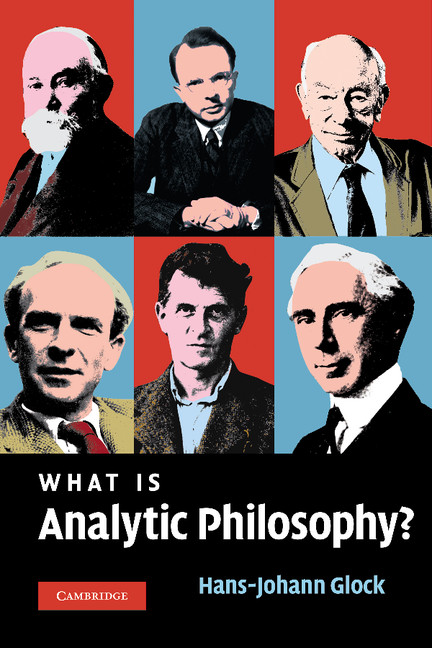
Hans-Johann Glock. 2008. What is analytic philosophy? Chapter 2. Historical survey. pp.21-60. CUP. Pb. 
https://www.cambridge.org/us/universitypress/subjects/philosophy/philosophy-general-interest/what-analytic-philosophy

* 'Ryle analogises philosophy to cartography. Competent speakers of a language, Ryle believes, are to a philosopher what ordinary villagers are to a mapmaker: the ordinary villager has a competent grasp of his village, and is familiar with its inhabitants and geography. But when asked to interpret a map of that knowledge, the villager will have difficulty until he is able to translate his practical knowledge into universal cartographic terms. The villager thinks of the village in personal and practical terms, while the mapmaker thinks of the village in neutral, public, cartographic terms.[20]: 440–2 '. https://en.wikipedia.org/wiki/Gilbert_Ryle

I've wondered about 'cogeography' - combining cognition and geography, even care cartography. There is also of course psycho-politics, geo-psychiatry and psycho-geography ...

Hopefully a more current text would be more diverse.^

Wednesday, June 18, 2025

FINAL CALL: Have your say about evidence-based implementation! c/o HIFA

PARTICIPATE TO WIN PRIZES

View this email in your browser <https://mailchi.mp/nest360/improve-health-worldwide-complete-this-short-survey-10147215?e=f1722a9293>

LAST CHANCE TO INPUT - CLOSING ON 27TH JUNE!

Do you work on improving health and equity in low-and middle-income countries (LMICs)?

Have YOUR chance to: -Democratise research and evidence for implementation! -Ensure your setting is represented! -Win a £50 voucher in the prize draw!

Palestine, Uganda, and Peru shared the most replies so far!

BETTER HEALTH WORLDWIDE!

Complete this 10 minute survey about evidence-based implementation

You could win a £50 voucher!

Click here <https://newborntoolkit.us5.list-manage.com/track/click?u=7a4ba8643fabeb1b06801b973&id=99accaa2ac&e=f1722a9293> and submit for a chance to win!

[content removed as not supported by HIFA]

English Do you work on improving health outcomes around the world?

Have your say! Why? To accelerate evidence-based implementation, with equity, for better health worldwide.

Who? People involved in any aspect of health service implementation and strengthening at any level of the system (e.g. health care provider, data analyst, policy maker).

How? Click here<https://newborntoolkit.us5.list-manage.com/track/click?u=7a4ba8643fabeb1b06801b973&id=a29ce2fd65&e=f1722a9293> to have your say!

What? Participant information<https://newborntoolkit.us5.list-manage.com/track/click?u=7a4ba8643fabeb1b06801b973&id=7579d3a077&e=f1722a9293> is attached to this message.

Evidence-based Implementation: Many life-saving interventions are not implemented effectively, with wide gaps between what is known and what is done, especially in low- and middle-income countries.

We are keen to hear perspectives and realities from implementers in all low- and middle-income contexts. 

We are seeking your insights to help close the gap from evidence to implementation!

We hope you will take a few minutes to complete this brief survey.<https://newborntoolkit.us5.list-manage.com/track/click?u=7a4ba8643fabeb1b06801b973&id=422f1a8283&e=f1722a9293>

Answers can be anonymous and there is no requirement to provide identifying information.


This survey is being conducted as part of the Lancet Commission on Evidence-Based Implementation in Global Health<https://newborntoolkit.us5.list-manage.com/track/click?u=7a4ba8643fabeb1b06801b973&id=ef480cd254&e=f1722a9293>. This study was funded by the Children’s Investment Fund Foundation.

A member of the study team can be contacted via ImplementersVoices AT gmail.com

Please share across your networks!! Let’s begin, click here!<https://newborntoolkit.us5.list-manage.com/track/click?u=7a4ba8643fabeb1b06801b973&id=63a8e4c758&e=f1722a9293>

[content removed as not supported by HIFA - and my source.]

From Harriet Ruysen - Harriet.Ruysen AT lshtm.ac.uk

Monday, May 12, 2025

'International Nurse's Day' 2025 #2 - c/o ICN & WHO

State of the World’s Nursing Report 2025


State of the World’s Nursing
Report 2025

'As the world’s nurses celebrate International Nurses Day (IND), ICN issues a rallying cry to governments around the globe for urgent nursing support, following the launch of the second World Health Organization (WHO) State of the World’s Nursing (SOWN) report.

The SOWN report is a vital assessment of the global nursing workforce in the aftermath of the COVID-19 pandemic and underscores the urgent need for bold investments in nursing to address shortages, strengthen health systems, and promote global resilience and economic stability.

The SOWN report reflects ICN’s IND 2025 report, Caring for nurses strengthens economies, and related Survey of National Nurses' Association (NNA) Presidents, reinforcing the central role of nurses in achieving global health, including Universal Health Coverage (UHC), and calling for immediate action to address long-standing challenges. The SOWN data presents a mixed picture. It highlights progress in areas such as advanced practice and nursing leadership, but indicates gravely concerning continued workforce shortages, inadequate compensation and working conditions, poor mental health support, inequities in the distribution and employment of nurses, and failures to fully enable nurses as practitioners and health care leaders.'

Continued ...

Caring for nurses strengthens economies


Caring for nurses
strengthens economies


'As we face growing health care challenges, from ageing populations and rising chronic diseases to climate-related emergencies and deepening global inequalities, the need for a strong, sustainable nursing workforce has never been greater. We cannot meet these challenges without sufficient nurses who are themselves well-cared for and supported. ICN’s International Nurses Day report reveals the severity of our current nursing shortage and well-being crisis – and the path forward. ICN’s “Caring for Nurses Agenda” provides a comprehensive roadmap for creating environments where nurses, patients, and entire health care systems can flourish.'

Thursday, April 03, 2025

Survey: Identifying and Fixing Undesirable Behaviors Across Software Versions

Hello,

As part of my PhD at the University of Lille, I am currently conducting a study on how developers handle certain bug scenarios. 
The goal is to better understand current practices, the tools used, and developers' needs regarding debugging in a specific scenario. 

You can find the survey at the following address:
Your participation in this short questionnaire (5 - 10 minutes) would greatly help us analyze existing methods and identify potential gaps in the available solutions. 
This survey will be open for 6 weeks (until May 15th, 2025). The responses will be analyzed and included in a scientific publication. The results will be available here.

If you can, please feel free to share this questionnaire with other developers who might be interested. 
Every response counts and will contribute to a better understanding of the community's practices! 


A big thank you for your help and time. 


Best regards, 
Rémi Dufloer
PhD Student, University of Lille 

---------------------------------------------------------------------------------------------------------------------------


Bonjour,

Dans le cadre de ma thèse à l’Université de Lille, je mène actuellement une étude sur la manière dont les développeurs gèrent certains scénarios de bugs.
L’objectif est de mieux comprendre les pratiques actuelles, les outils utilisés et les besoins des développeurs en matière de debugging sur un scénario précis.

Voici le lien du questionnaire:


https://sondages.inria.fr/index.php/462191?lang=en


Votre participation à ce court questionnaire (5 - 10 minutes) nous aiderait énormément à analyser les méthodes existantes et à identifier les éventuelles lacunes dans les solutions disponibles.
Ce survey est ouvert durant 6 semaines (fermeture le15 mai 2025).Les réponses obtenues seront analysées et feront l'objet d'une publication scientifique.Les résultats seront publiésici.

Si vous le pouvez, n’hésitez pas à partager ce questionnaire avec d’autres développeurs susceptibles d’être intéressés.
Chaque réponse compte et contribuera à une meilleure compréhension des pratiques de la communauté !

Un grand merci pour votre aide et votre temps.

Bien cordialement,

Dufloer Rémi
Doctorant, Université de Lille


________________
My source: Esug-list mailing list & checking with Rémi.