Hodges' Model: Welcome to the QUAD: Search results for hospital

Hodges' model is a conceptual framework to support reflection and critical thinking. Situated, the model can help integrate all disciplines (academic and professional). Amid news items, are posts that illustrate the scope and application of the model. A bibliography and A4 template are provided in the sidebar. Welcome to the QUAD ...

Showing posts sorted by date for query hospital. Sort by relevance Show all posts

Saturday, October 10, 2026

Poppy's Promise: "What happened next would change our lives forever"

April 2021:

'After my due date passed, I was admitted to hospital to be induced. Labour began and everything appeared normal. As first-time parents, we trusted that our baby was safe and that if something was wrong, someone would tell us. We had no reason to think otherwise.

During labour, opportunities to recognise that Poppy was in distress were missed.

Monitoring that should have taken place did not happen.

By the time concerns were recognised, panic had replaced reassurance.

I was rushed to theatre frightened, confused and not fully understanding what was happening to my baby. ...'


Poppy's Promise read more ...

My source: BBC Radio 4 Today 0736 mins:

https://www.bbc.co.uk/sounds/play/m0032fq8

Wednesday, September 30, 2026

Prof. George William Brown OBE, FBA (1930–2026)

"George Brown was a huge figure in sociology and social psychiatry. At a time when social science and psychiatry were so riven with conceptual differences they could not work constructively, George’s approach was collaborative, courageous and imaginative. His work addressed real-world problems and in so doing greatly enriched mental health research."

Professor Matthew Hotopf, Executive Dean, Institute of Psychiatry, Psychology & Neuroscience:
https://www.kcl.ac.uk/news/professor-george-william-brown-obe-fba-19302026

Starting in Warrington School of Nursing (Winwick Hospital) as a student mental health nurse in October 1977 you can how that curriculum and programme of study came about; and influences on Brian Hodges' early career.
 
Hodges' Health Career - Care Domains - Model
 
 An individual's 'health career' is impacted by their life chances and life events.
 
 
individual
|
INTERPERSONAL
: SCIENCES             
humanistic ------------------------------- mechanistic
SOCIOLOGY : POLITICAL   
|
group

Individual Psychology

Life events

PSYCHIATRY

psycho-

Life events

EVOLUTIONARY
PSYCHIATRY

social

Group Psychology

Life events

SOCIAL & CULTURAL 
PSYCHIATRY


LIFE EVENTS

 PSYCHO-POLITICAL
PSYCHIATRY


See also:

Wing, J.K., & Brown, G.W. (1970). Institutionalism and Schizophrenia: A Comparative Study of Three Mental Hospitals 1960–1968. Cambridge; Cambridge University Press. 

Brown, G. & Harris, T. (1978) Social Origins of Depression. A Study of Psychiatric Disorder in Women. London: Tavistock.Google Scholar 

Brown G.W. & Harris, T. (1979) Social origins of depression: a study of psychiatric disorder in women, London: Tavistock Publications.

Brown, G. W., & Harris, T. O. (Eds.). (1989). Life events and illness. The Guilford Press.

My source: Patrick Kidd. Forum, Obituary, The Observer. 20th September, 2026, p.42.
https://observer.co.uk/profile/obituary/article/george-brown-the-former-post-office-boy-who-unlocked-the-mystery-of-depression

Previously: 'social sciences' : 'psychiatry' : 'determinants'

Saturday, September 26, 2026

15th Panhellenic Conference on Alzheimer’s Disease (P.I.C.A.D.)

15th Panhellenic Conference on Alzheimer’s Disease (P.I.C.A.D.) 
& 7th Mediterranean Conference on Neurodegenerative Diseases (Me.Co.N.D.)

24–28 February 2027 | KEDEA – Aristotle University of Thessaloniki
Thessaloniki, Greece

The Countdown Begins!

From 24 to 28 February 2027, Thessaloniki will host the 15th Panhellenic Conference on Alzheimer’s Disease (P.I.C.A.D.) and the 7th Mediterranean Conference on Neurodegenerative Diseases (Me.Co.N.D.), at the KE.D.E.A. (Aristotle University Research Dissemination Center) – Aristotle University of Thessaloniki (AUTH).

This important scientific meeting will bring together healthcare professionals, researchers, academics, and experts in the field of Alzheimer’s disease and neurodegenerative disorders, providing an opportunity to:

  • present the latest scientific findings and emerging data;
  • exchange knowledge, experience, and best practices;
  • discuss current developments and challenges in the field; and
  • foster new scientific collaborations and professional networks.

The Conference is jointly organised by the Panhellenic Institute of Neurodegenerative Diseases, the 1st Propedeutic Department of Internal Medicine of AHEPA University Hospital, Aristotle University of Thessaloniki, and the Panhellenic Federation of Alzheimer’s Disease and Related Disorders.

The Conference will be held in a hybrid format, offering participants the opportunity to attend either in person or online.

Secure Your Participation

We invite you to register and join us in Thessaloniki for this important scientific event.
REGISTER NOW

Would You Like to Present Your Work?
Submit your abstract and contribute to the scientific programme of the Conference. This is an excellent opportunity to present your research, share your findings with the scientific community, and engage with colleagues from Greece and the wider Mediterranean region.

SUBMIT YOUR ABSTRACT

Save the Important Dates
Please plan ahead and make sure to complete your registration and, if you wish to present your work, your abstract submission within the relevant deadlines.

Timely compliance with the Conference schedule is essential for the effective organisation of the event and will contribute to the smooth preparation of both speakers and participants.

IMPORTANT DATES
For registration deadlines, abstract submission, programme updates, and all other Conference information:

For detailed information, please visit the OFFICIAL CONFERENCE WEBSITE

We look forward to welcoming you to Thessaloniki, 24–28 February 2027, and to an engaging and productive scientific meeting.

The Organising Committee


n.b. I enjoyed taking part in 2025 virtually. Blog post to follow re. 'Propedeutic' above. PJ

Sunday, September 20, 2026

'Shattered' by Hanif Kureishi

Cathleen Schine, Ungovernable, Capricious Life, The New York Review of Books, April 10, 2025, Volume LXXII, Number 6, pp.15-16.

Shattered by Hanif Kureishi. Ecco, 328 pp., $28.00

'Shattered' c/o Penguin  

'Hanif Kureishi, the English playwright, screenwriter, and novelist, posted these words on his Substack in January 2023: 

  On Boxing Day, in Rome, after taking a comfortable walk to the Piazza del Popolo, followed by a stroll through the Villa Borghese, and then back to the apartment, I had a fall.

I had been following Kureishi's Substack for a while out of admiration, curiosity, and loyalty-though Id met him only once, briefly. His dispatches were warm and entertaining, often about the writer's life. But this one was shocking: 

   I cannot move my arms and legs. I cannot scratch my nose, make a phone call or feed myself. As you can imagine, this is both humiliating, degrading and a burden for others. 

According to his hospital report, his fall resulted in neck hyperextension and immediate tetraplegia. An MRI scan showed a severe stenosis of the vertebral canal with signs of spinal cord injury from c3 to C5. It was unclear, he said, whether he would be able to walk again "or whether I'll ever be able to hold a pen." He was speaking these words through Isabella, who was slowly typing them into her iPad.' p.15.

individual
|
INTERPERSONAL
: SCIENCES             
humanistic ------------------------------- mechanistic
SOCIOLOGY : POLITICAL   
|
group
shattered

SHATTERED

SHATTERED

shattered


'A hospital is the place from which modesty and dignity disappear, desert you, seemingly forever, as soon as you cross the threshold. Kureishi, a reliably sexy, unrestricted writer, presents the physical deterioration and indignities he undergoes with his usual wit. The sense of vulnerability is crushing, but it is also one of the characteristics Kureishi reveals about himself that makes him so likable here, and the writing so intimate. The tone is remarkable: even the self-pity has no self-pity. One way he achieves this is by sprinkling punch lines throughout:

I woke up and started to cry. When you cry you must wipe away your tears, which is something I'm unable to do. So my eyes filled with bitter salty water and I got into a panic and thought I might lose my eyesight along with everything else. Finally, a kind nurse came into my room and downed me with a good dose of Lorazepam, then she touched me on my cheek and said, "It's not so bad, at least you're not in a coma."' pp.15-16.

Sunday, September 13, 2026

Book Announcement | The Examined Illness: A Philosopher's Confrontation with Deadly Disease

The Examined Illness
Intellect is pleased to share that The Examined Illness: A Philosopher's Confrontation with Deadly Disease, by Darrel Moellendorf, is out in paperback and hardback.

A visceral personal memoir of being seriously unwell – and the consolations of philosophy during sickness. Being a patient is part of being alive. Disease and serious illness often strike randomly, and when they do, we quickly become subject to the impersonal forces of biochemistry and pharmacology. We rarely think about sickness beforehand and are often totally unprepared for it when it happens. Suddenly, there we are, subject to a standard treatment protocol. Darrel Moellendorf learned this by experience during a month confined to a solitary and sterile hospital room where he received a life-saving stem cell transplant. His room was somebody’s workspace, his schedule was somebody’s work routine, his immune system was systematically crushed, and his prognosis was out of his hands. There was no assurance that it would all work out.

Having spent thirty years teaching philosophy to college students, He was facing the biggest test of all—perhaps the final exam. These are his reflections before, during, and after his cancer treatment, written in real time. He writes, “My brain was sometimes addled by the chemotherapy that sapped my energy and destroyed my immune system, but I wrote out of the conviction that living well includes living well with disease, and eventually living well facing death.” This memoir expresses the conviction that the virtues of patience, courage, trust, and hope serve us well. A measure of good humor also can’t hurt.

Part of the Global Health Humanities series.

Table of Contents

Acknowledgements
Introductory Note

Part I: Diagnosis

1. First Thoughts and Second Opinions
2. Healthcare for All Pt. 1
3. Patients and Patience
4. Father to Son and Back
5. Give It Up for Lent!

Part II: Inside
6. Day 7: The Countdown Begins
7. Day 6: Carpe Diem
8. Day 5: Vegetarianism Is Not an Option
9. Day 4: Sweatin’ and Shakin’
10. Day 3: Making Decisions When You Can’t Think
11. Day 2: Nausea and Fatigue
12. Day 1: Courage
13. Day 0: Communion
14. Day +1: Confinement
15. Day +2: Waiting and Anxiety
16. Day +3: Relaxed
17. Day +4: Toiling and Spinning
18. Day +5: Healthcare for All Pt. 2
19. Day +6: Patience and Hope?
20. Day +7: A Letter Arrives
21. Day +8: Anaemia
22. Day +9: Why I Write
23. Day +10: Why I Dyed My Hair Blue
24. Day +11: Shorn
25. Day +12: Tired, Itchy, and Hiccupping
26. Day +13: Waiting
27. Day +14: Signs of Progress
28. Day +15: Turn Me Lose, Set Me Free
29. Day +16: Fresh Air
30. Day +17: Postponement

Part III: Recovery
31. Home Sweet Home
32. Home Update
33. The Social Determinants of My Survival
34. Letting the Days Go By
35. A Thread of Good Fortune
36. Magical Thinking
37. Hope Kept Me Eating
38. Sunshine, Suffering, Rebirth, and Freedom
39. Food Aversions
40. Inching Towards Normalcy
41. Human Fatigue and Canine Anxiety
42. Healthcare for All Pt. 3
43. Still Wearing My Helmet
44. Same as It Ever Was
45. Who Is That Masked Man?
46. Inspiration in the Oncology/Haematology Waiting Room
47. With a Little Help from My Friends
48. Springtime on My Face
49. Feeling the Love … and the Likes
50. Disease, Bodily Alienation, and Transhumanism
51. Dem Fingernails
52. Traversing the Rim of the Valley of the Shadow of Death
53. The Examined Illness

Epilogue: Living with Mortality
References


Please visit our website for more information:
www.intellectbooks.com/the-examined-illness

--
My source: Georgia Glasspole
Marketing Executive (she/her)
Intellect  | 0117 9589910 | georgia AT intellectbooks.com

Monday, September 07, 2026

Host|Guest by Hospital Rooms

To mark its 10-year anniversary, arts and mental health charity Hospital Rooms presents a major exhibition at Victoria Miro this September.

Bringing together leading contemporary artists from across the Hospital Rooms programme, the exhibition features re-creations of monumental new artworks created for hospitals this year, alongside artists the organisation has collaborated with over the past decade. It reflects on the impact of transforming NHS mental health environments through art, while looking ahead to expanding access to creative programmes nationwide.

Host|Guest


My source: Ellee Su, Gallery, HOSPITAL ROOMS, FT Weekend Magazine, Number 1,192. 5 September 2026, pp.10-11.

Wednesday, August 26, 2026

South Sudan Medical Journal - August 2026


Dear Reader,

The August 2026 issue is online here; we thank all the copyeditors and reviewers who helped prepare these papers. If you are submitting a manuscript, remember to read our Author’s Guidelines first.

We are looking for volunteers to join the Editorial team. Email us if you have time and editing skills.

Editorial

Can the Ebola Zaire vaccine stop Bundigunyo virus? Edward Kenyi


RESEARCH ARTICLES
Assessment of airborne fungi in the emergency and traumatology departments of University Hospital Centre, Sidi Bel-Abbes, Algeria Derouicha Matmour, Samia Merad, Yassine Merad, Achwak Bendouida, Zoubir Belmokhtar, Zakaria Merad, Mohamed Amine Boumelik, Benali Beghdadli, Othmane Ghomari 

Maternal and nutritional factors associated with early childhood development in rural Indonesia Hadi Ashar, Mohammad Zen Rahfiludin, Sri Achadi Nugraheni, Dwi Hapsari Tjandrarini

Observed outcomes and costs of laparoscopic versus open cholecystectomy in Juba, South Sudan Mayen Achiek, Jingo Faride, Mohamed Ibrahim, Abraham Mafair Kezekia, Chep C. Chep, Garang D. Nyuol, Ajak M. Dhel, George Lefteri

Stakeholders’ perspectives on determinants of health financing in South Sudan: a qualitative assessment Jonathan Majok, Gabriel Loi, Solomon Dut, Aluel Ayom, Thiey Kuethpiny, David Ngor, Sarah Nyannyot

Predictors of unsuccessful treatment outcomes among adults with pulmonary tuberculosis in a resource-limited setting Tri Agus Yuarsa, Malehah Mohd Noh, Richard Avoi, Meryl Grace Lansing, Putra Agina Widyaswara Suwaryo 

Assessment of the understanding of evidence-based medicine among undergraduate medical students in Gadarif University, Sudan Khalid Mohammed Ali, Ozaz Yagoub, Inshirah Mustafa, Tarig Fadelelmoula
 
Environmental health risks associated with open dumping practices in Central Kalimantan, Indonesia: an observational study Nawan, Septi Handayani 

Assessing the quality of health facilities providing antenatal care services in Bor, South Sudan John Thon Pandak Kuot, Shalini Ninan Cherian

Prostate cancer awareness and factors influencing screening among men at St. Francis Referral Hospital, Tanzania Theresia A. Karuhanga, Zeinabu Awardh Sharif, Antony Magoda, Philbert Madoshi 

CASE REPORTS 
Long-standing aspirated foreign body in a child complicated by pneumothorax and empyema Gawar Gel, Juma Deng, Justin Rubena

Clinical rabies in an HIV-positive pregnant mother with surviving newborn Ayol Mac Ayol

BACKCOVER: WHO: Guidelines for the management of pregnant and breastfeeding women in the context of Ebola virus disease

FRONT COVER IMAGE: The grown fungal colonies on SDA media collected from different types of samples. (Article on page 149)

Thanks to everyone who supports SSMJ. Tell your colleagues they can join our mailing list here.

The SSMJ team

Email: southsudanmedicaljournal AT gmail.com
Website: http://www.southsudanmedicaljournal.com
Follow us on X: @SSMedJournal and our Facebook Group.

Our mailing address is:

South Sudan Medical Journal
Health and Social Sciences Research Institute, Juba
South Sudan
Copyright (C) 2026 South Sudan Medical Journal All rights reserved.

Wednesday, July 15, 2026

Project 2000: The Judge Report 1985

Somehow, or perhaps that is being kind, I have a feeling that sources on the history of 'recent' nurse education may come to the fore. It is interesting that the guest editorial below reflects itself on the preceding 25 years. Not just several cohorts of students, careers, but a whole life-time. 

We must hope today, that British nurse educators can find more security, if not the contentedness described by Rye in 1985 ...

'The main principles for policy change contained in the commission's report are as follows.

1 The uncoupling of education from service. Students should no longer be employees of the National Health Service. Nursing education should now be part of the main-stream of higher education, students being financed through a suggested bursary system.

2 A single level of basic nurse qualification leading to registration.

3 Curriculum development (as discussed in chapter 4 of the report) must take into account the need to retain certain speciality options, and prepare students for practice both in hospital and community settings. It creates the possibility of direct entry into district nursing, health visiting and midwifery. 

This 3-year course would have educational credibility as it will be at diploma level, the first year being a foundation programme, furnishing a basis for informed choice later. The second year would contain practical placements (in the community, adult nursing and mental health). It would consist of three modules, the first to be based in a community setting, the second (focused upon the nursing of adults) in a hospital setting, and the third in a variety of environments related to mental health. Roughly 30% of the time will be dedicated to carefully supervised practice in clinical settings. The final year will be characterized by increased specialization. The opportunity to make a selection from a number of available modules will equip each successful student to become registered and to take up work either in an institutional or non-institutional setting. The academic award will be that of Diploma in Nursing Studies. 
...
This new approach to nursing education will not create a 'generic' nurse, but will prepare students to work in their chosen speciality in hospital or in the community. If nurses are to respond to the changing patterns of health care, it is critical for future development that preparation for working in the community takes place in the basic diploma programmes. This may be seen as one of the more controversial implications of the report, but the profession must address itself now to these matters, as nursing education must become more flexible and capable of change to meet the needs of clients.'

See also: #RCN26 RCN Congress - Nurse Education 

Rye, D.H. (1985), THE EDUCATION OF NURSES: A NEW DISPENSATION. THE REPORT OF THE RCN COMMISSION ON NURSING EDUCATION. Journal of Advanced Nursing, 10: 505-506. 
https://doi.org/10.1111/j.1365-2648.1985.tb00540.x

Royal College of Nursing (Great Britain)., & Judge, H. G. (1985). The education of nurses : a new dispensation. Royal College of Nursing. (Classed as a Book.)

See also: https://wellcomecollection.org/works/p889dx97

https://eprints.hud.ac.uk/id/eprint/10084/1/ouseycontent_9838.pdf

Tuesday, June 16, 2026

vi Book: 'Complexity in Health Care - A Paradigm Shift for Clinical Practice'

The rest of the book is practice-based which is a strength. Chapter 18 has three clinical illustrations, were reflection and self-reflection is brought to fore. Especially so, as it pointed out that the 'clinical situation/encounter' introduces its own 'vagaries', or noise which can impact the 'quality of the bond between clinician and patient'. Rapport is the key. 

I was still missing 'complexity' and its dynamics, but I'm sure of the following:

If this was discussed - could be represented then the book would be theory-laden and I and other would-be readers would not be able to understand.

I still think Hodges' model can help, and in chapter 19 picked out 'manifold' (p.113), as if doing so, manifests something more esoteric. There is something here, the author noting the need to shift from individual to group perspectives. So, yes I think we can do more than embrace 'complexity' (p.114).

On page 116 there is discussion of the sometimes sudden path to recovery, 'probably common but often not comprehended'. Please pardon the naivety, but I scribbled 'hidden in complexity, what would (say) the three(?) equations be?'. For a book published in 2023 'artificial intelligence' is not indexed. This might be one area that AI could assist, given the progress in formal mathematics (but see below p.183!)? Algorithm is mentioned throughout the book. Further reading here, informed me that engaging with a reading group on 'Philosophical Counselling' is worthwhile. It is!

Part IX had me wondering if the debate about typical and complex cases, there is a slight of perspective going on? You can end up with paradoxes in terms of an individual's needs, criteria, risk, 'need for admission'. Which I must think about! Chapter 20 has three further reading texts on abductive reasoning. There's an appeal(?) on page 129 for an appropriate treatment model, well that is my take. Collaborative care and stepped care models are suggested. But with acknowledgement that:

'In truth, all models currently available may involve a defect in continuity within or between systems'. p.129.

I beg to differ. A role of Hodges' model is to help frame aspects of care through time, to facilitate and assure continuity.

Part X tackles the required precision in assessment, hence recourse to mathematics and statistics. The next two chapters may be useful for early career researchers and yet looking over our shoulders what is ai offering here? In Case 1 I was impressed by the suggestion of a health record that is over 70 years old. Not impossible of course, but I thought of the Lloyd George envelopes, their hospital equivalents, other paper sources and inevitable scanning this would entail here in the UK? Of interest to research is the creation and validation of complexity profiling inventories (tools) not just that, but their self-assessment form of delivery. And, yes in summary chapter 24:

'We are still left with the challenge of rating the patients' severely compromised health situations where "health" includes social, emotional, and financial well-being.' p.143.

'How do you factor this interpersonal situation into your complexity equation?' p.144.

Yes, how indeed? 

The realities of research of dealt with - funding for the development of tools a problem universally. The references here concern biopsychosocial complexity. Chapter 25 describes abstraction, and hiding detail, which is of great interest here. DSM-5 criteria for major depressive disorder are listed (DSM-6 may be released in 2029?). 

In chapter 25 the authors are once stymied by 'how to include (integrate? PJ) four dimensions, three time periods,and assorted assessment items in a single assessment.' 

As noted the four domains are here again (p.151): medical, psychological, social and care delivery and on page 153, introducing chapter 26, limitations of complexity assessment tools. Parity as in 'parity of esteem' is not indexed and I don't recall having read this, but this is well represented in later deliberations on variables #2. You will find psychosis, but not in depth or severity.

 In 'Creation of a New Model for Clinical Practice' (Chapter 31) identity is stressed, as a prompt to encompass those variables that contribute to preserving the person - what is humanistic. Allied with manifold, identity is a 'coi' for me, concept of interest - for this same reason. On page 172: the authors observe they 'are left with the question of whether there are acceptably accurate clinical models that are simpler and more straightforward than ours? We believe the answer is no!'. I believe there is a way, and a model to help 'keep the life in clinical work' - not take it out. There is a sense that Chapter 32 seeks what I was looking for above: as they explore random variable and 'sample spaces' descriptively - over a page.

Ah! 'Artificial intelligence' is found in text p.183. I'm surprised an editor, proofreader aloud the following sentence to go unchallenged?

'But, as will be discussed, these computer techniques have their limitations based on their lack of flexibility.' 

I was genuinely surprised to read this. Plus, again on ai on page 185: 'Making inferences is not reliably their domain.' I think I would look more at the human-ai interface. And the status of ai within psychiatry as opposed to medicine, but that is also another (parity - divide) debate. Things really are complex now on so many fronts: ethics especially.

Perhaps I am looking for the cookbook formula as introduced for chapter 35 clinical judgement. The further reading is combined with critical thinking. More detail on the empirical-collaborative method is welcome. When I read 'illustrated' I take this literally. Again I can disagree twice on page 220. I know Hodges' model is not validated, but it can - with practice(?) - do this light (simple) or heavy (complex) lifting. 

The warning about dogma needs to be repeated regularly. It is rather like the need for nurses to revisit their profession, role and work as relates to the law. Is Hodges' model an over-valued idea? Am I guilty of thinking I'm an expert? A problem with that view is that any assumed expertise is stretched across the whole model. So if anything there is a shallowness, but this means that I see my particular scope of practice, as other colleagues / professions see theirs. Here in the UK of late, this seems to have become rather blurred. 

In closing with this and achieving a "real-life" understanding of a case, with synthesis - path analysis diagram, the author's underline the value of their book which I have enjoyed and informed my preparation for WCCS26 (more to follow there). The authors can perhaps be reassured that all practitioners have a means to achieve their paradigm shift as described here - with added value and values.

There is a missed word: "of the situation ['with'?] him" on page 114. And revision needed re. text beginning with 'his boyish Paul McCartney "mop-top" ... on page 214. Spelling error on 216 'retu(r)ning'. 

Thanks again to Daniela and colleagues at SpringerNature for the review copy.

Steven A. Frankel, Steven D. Thurber, James A. Bourgeois (2023) Complexity in Health Care: A Paradigm Shift for Clinical Practice. Cham. Switzerland: Springer. ISBN: 978303114948.

Thursday, June 04, 2026

Individual and shared mental models c/o Proctor, & Vu, (2023).

The first day of the conference on 'Ecologies of Care' 4th-5th June is complete. It was helpful to contribute early and then focus on the programme. The questions and acknowledgement have made the (personal) effort worthwhile. Tomorrow also looks promising. There was an emphasis on attention which I tried to reflect and featured in a fascinating keynote by Professor Yves Citton. I will check the sources highlighted; and tomorrow, inquire about a point made re. use of socio in contrast to social.

Regards ongoing reading, perhaps, the evidence to support Hodges' model in practice is already out there? There might be a caveat, that the literature may suggest (if does not yet confirm) that if taught cross-curricula and professional groups then Hodges' model can function as a meta-model? 

What do you think of the following from a chapter on 'Social attention and team performance' (with my emphasis)? :

'... Other two-person team examples include doubles tennis partners and pairings of an airline pilot and copilot. Larger teams can be found in the numerous team sports surgical teams, busineses, and research teams of many scientific laboratories. For teams, coordinated performance is crucial, which becomes more difficult when teams extend to three or more people. As such, teams need to have shared mental models representing the team knowledge (Gardner et al., 2017), which support team situation awareness (Demir et al. 2017).
 
The concept of individual mental model refers to understanding a particular event on the basis of the activation of relevant schemas from long-term memory and, sometimes, simulation of possible scenarios (see also Chapter 10). Bower and Morrow (1990) pointed out that a crucial role in mental models is to shift and focus attention. ...
 
Shared mental models refer to collective understanding among team members of the task to be performed and how it can be accomplished. This understanding includes the responsibilities of the individual team members and dependencies between teammates on other members progress. The term team mental models is sometimes used when the context is teamwork that needs to be coordinated and executed (Jonker et al., 2010). The idea is that teams will perform better if they share mental models. ...
 
The surgery intern study illustrates that shared mental models are learned, leading to the question of how this learning can be facilitated.' p.368. ...
 
'Team leadership can be effective at getting members to be engaged in activities that will promote shared mental models. Boies and Fiset (2018) found evidence that leaders can facilitate the development of shared mental models by involving team members in the consideration of the to-be-accomplished task and their roles in its accomplishment. This involvement, again, likely directs members' attention to information relevant for achieving team goals and enables more domain-specific group discussion, which then furthers the emergence of a shared mental model. ...
 
Situation awareness is a broader concept than mental models, focusing on an explicit understanding of events and contexts. Shared situation awareness differs from individual situation awareness discussed in Chapter 9, in the information required for operators to have effective coordination (Chiappe et al., 2016). For example, paramedics delivering a patient to an emergency room need to coordinate with the hospital and its staff members to ensure that the hospital has the capacity and that the doctors receiving the patient have the vital information they need to treat the patient. Once the patient is in the emergency room, nurses, doctors and technicians need to coordinate with each other to make sure that the patient is being properly cared for.' p.369. 

Proctor, R. W., & Vu, K.-P. L. (2023). Social attention and team performance. In R. W. Proctor & K.-P. L. Vu, Attention: Selection and control in human information processing (pp. 343–374). American Psychological Association. https://doi.org/10.1037/0000317-012

Wednesday, May 13, 2026

WPA/IACAPAP Global Curriculum Survey

Dear Neil et al.,

Would it be possible to recirculate this invitation to complete this ~5minute survey.

We recevied a good response (~200 with 72% expressing interest to join future steps) from the last round but we could have had more representation from Oceana, the Carribean, the Mediteranean, Central Asia, Russia, and perhaps more from any areas as emphasized in line 3 below.

Thank you in advance for your consideration, David
---------------------------------------------------------------------

Dear Colleagues, Families, Relatives, Young Adults, Adults, and Friends!

Anyone affected or who knows someone who is affect by a mental health problem.

We need your help, especially from those living in remote urban or rural areas, or otherwise underserved regions anywhere in this wide world!

HELP US DESIGN A GLOBAL CHILD AND ADOLESCENT MENTAL HEALTH, PSYCHIATRY AND ALLIED PROFESSIONS TRAINING CURRICULUM FRAMEWORK IN SUPPORT OF LOCALLY INTEGRATED COMMUNITY AND FAMILY-CENTERED EDUCATION AND ACTION.

The International Association for Child and Adolescent Psychiatry and Allied Professions (IACAPAP)

and

The World Psychiatric Association (WPA) Child and Adolescent Section are developing the Global Child and Adolescent Psychiatry and Mental Health Training curriculum FRAMEWORK.

To complete a short DESIGN feedback and ENGAGEMENT survey (~5 Minutes)

Click or Copy and Paste the following URL: https://forms.cloud.microsoft/r/x4MyX0MkYt

Here is A SHORT INFORMATIONAL VIDEO: https://www.youtube.com/shorts/NdMRqb1LVVM


HIFA profile: David Cawthorpe is Adjunct Professor, Cumming School of Medicine, Department of Community Health Sciences; Adjunct Professor, Cumming School of Medicine, Department of Psychiatry | Child and Adolescent Psychiatry; and Child Health & Wellness Researcher, Alberta Children's Hospital Research Institute, Canada. 
https://profiles.ucalgary.ca/david-cawthorpe cawthordATucalgary.ca

My source: HIFA.

Wednesday, April 15, 2026

Book: 'Logic on the Track of Social Change'

When I walked into Lancaster Univ. library in February, I had no idea I was being followed.

From the maths shelves, the lights switching on as you progress, I decided to walk across to the more familiar realm of sociology. Looking for something, it was nice to see the parity in lighting, even as my struggle for mathematical enlightenment continues.

Logic on the Track of Social Change    

I do use the e-library, and other e-resources, but sometimes real shelves and varying levels of mustiness (remember the 'new acquisitions' - fewer these days?) invite a bit of serendipity. Suddenly, over my shoulders, the stranger,  pointed (with four arms of course). Was it my shadow? Or, was it my unconscious that 'read': LOGIC and TRACK and SOCIAL CHANGE, on the spine of -

David Braybrooke, Bryson Brown & Peter K. Schotch (eds.), Logic on the Track of Social Change, Oxford University Press. 1995?

In the early decades of health informatics, there was much talk - and still is(?) - of  'languages for health', even languages for nursing. Coding and classification systems were constantly developing, as posted here, but while physical diagnoses were the driver, the psychosocial dimensions of person - patienthood proved more nebulous. DSM is still subject much debate.

 Chapter 8 in Braybrook et al. is brilliant: A Rules-Analysis, Following Foucault, of the Birth of Clinical Medicine.

I've been in situations when surgery is suggested for an older person, and family, friends wonder is this really necessary? This chapter literally brings the history home, and not only that, but the emergence of the hospital system, versus care at home, in the community. The social determinants of health have been ever-present. This is essential reading for students, with the history of ICD, and the history of medicine. There are insights too into public attitudes and expectations to health services and provision here in the UK and in France.

For me, and Hodges' model, the significance of Braybrook, Brown, Schotch and Byrne is that it precedes:

Sallach, D.L. Categorical Social Science: Theory, Methodology and Design. September 2012
Conference: Fourth World Congress on Social Simulation. Taipei, Taiwan.
https://www2.econ.iastate.edu/tesfatsi/Sallach2012CategoricalSoSci4.WCSS-SS.pdf

And so, I do need my own secondhand copy of  Logic on the Track of Social Change. More to follow (indeed)! ... and help still welcome and needed.
 

Tuesday, February 03, 2026

Joining the digital dots across primary care and integrated care

My partner and I both received a letter today from our respective GPs. An invitation for a 'FREE LUNG HEALTH CHECK'.

Overleaf is an information sheet in landscape about the health check, plus three more sides of A4, similarly formatted - inviting trifold presentation.

After the 'Re. ......' an opening sentence asks: 'Have you ever been a smoker?'

Suddenly, I was dragged backwards through his-tory (some things don't change); not one history, but several:

INDIVIDUAL
|
    INTERPERSONAL    :     SCIENCES               
HUMANISTIC --------------------------------------  MECHANISTIC      
SOCIOLOGY  :   POLITICAL 
|
GROUP
My personal and life experience 
and not just since my teens . . .

The letter states:
**If you have never smoked, you are not eligible for this service**


My mother and father 
smoked when I was a child and my siblings. 
 
They got the message early 1980s.
  
'Society' smoked back then!  
 
Once old enough, I refused to go to the corner shop.
 
Into the 1990s, patients, smoking (some chain-smoking) on admission, long-stay and other clinical areas. As a community mental health nurse, I learned diplomatic and health promoting skills when in the car, giving a patient a lift to hospital. And, when visiting their home where I was, of course, usually, a guest.


I wondered what has happened to the GP's records? To the primary care clinical record ? The custodians of my health record, that they should need to ask that question? 
 
Or, does confidentiality tie some bureaucratic knots?
 
Where is 'integrated care' and its driver 'clinical informatics'? 
The letter included the NHS Number.
 
 Don't get me wrong, I/we appreciate the obvious effort here, even if the chronology is confusing, or,  speaks of afterthought? The letters are dated 19/06/2025. I must admit I haven't accessed my GP record, checking it for accuracy.
 
If anything, this is a prompt to do so. And seek a general medical. 


Previously: 'smoking' : 'winwick'

Thursday, January 29, 2026

Paper: 'Intra-Personal Compromises'

ARGUMENTA

Issue 21

November 2025

https://www.argumenta.org/issue/issue-21/

Intra-Personal Compromises  

Juha Räikkä

University of Turku 

Abstract

The most usual philosophical questions about compromises have been those related to inter-personal compromises, in which parties are compromising with each other, rather than intra-personal compromises, which are often psychologically demanding. This paper aims to fill the gap in the discussion and briefly analyze the nature of intra-personal compromises. The starting point here is the assumption that inter-personal compromises cannot be made without intra-personal compromises, although intra-personal compromises are common even when they are not linked to inter-personal compromises. The main question addressed in the paper is whether the intra-personal compromises that we accept in all kinds of contexts are similar to those intra-personal compromises that we make when we compromise with others. I argue that they are more or less similar, although there are also some distinctive features in intra-personal compromises that are involved in inter-personal compromises. When a person makes an intra-personal compromise in the context of an inter-personal compromise she is forced to act under uncertainty, as she cannot know beforehand what options are really available. The price of the compromise is known only after the negotiation process. This is a special feature, or so I will claim. 

Keywords: Inter-personal compromise, Intra-personal compromise, Bargaining, Uncertainty. 

Räikkä, R. 2025, “Intra-Personal Compromises”, Argumenta 11, 1, 149–162.
https://www.argumenta.org/wp-content/uploads/2026/01/Argumenta-11-1-Juha-Raikka-Intra-Personal-Compromises.pdf
 

For a long time I have viewed the INTERPERSONAL domain of Hodges' model as being concurrent, interchangable, working as the INTRAPERSONAL domain. This paper is a helpful discovery, c/o Philos-L "The Liverpool List" which is run by the Department of Philosophy, University of Liverpool https://www.liverpool.ac.uk/philosophy/philos-l/

There are several examples/cases discussed. While brief, a HOSPITAL CEO example is relevant to studies for Hodges' model, as with, a CRITICAL CITIZEN:

'The above examples are rather similar but have small differences. In the ‘Judge’ example, the overriding principle is based on the importance of institutional rules. In the ‘Hospital CEO’ example, the main concern and the strongest value is pragmatic. In the ‘Critical Citizen’ example, the question is about omission rather than action.' p.157. 

The observation about the CEO speaks volumes, across public and private health sectors (and social care?). There is no discussion of reflection, reflexivity, or critical thinking explicitly. But individual, and collective distinctions, and impacts are explored, especially responsibility and mutuality. Three arguments precede concluding remarks. Further progress might be made exploring and relating these to the concepts of bargaining, uncertainty and compromise through Hodges' model and identity: both person-al and organisational?

Monday, January 05, 2026

Primary & Secondary Health Care - How long...?

THE DAWSON REPORT

MINISTRY OF HEALTH.

CONSULTATIVE COUNCIL ON MEDICAL AND ALLIED SERVICES.

Presented to Parliament by Command of His Majesty. [... selected extracts]

3. The general availability of medical services can only be effected by new and extended organisation, distributed according to the needs of the community. This organisation is needed on grounds of efficiency and cost, and is necessary alike in the interest of the public and of the medical profession. Measures for dealing with health and disease become, with increasing knowledge, more complex, and, therefore, less within the power of the individual to provide, but rather require combined efforts. Such combined efforts to yield the best results must be located in the same institution. As complexity and cost of treatment increase, the number of people who can afford to pay for a full range of service diminishes. Moreover, enlightened public opinion is appreciating the fact that the home does not always offer the best hygienic conditions for dealing with serious illness, which requires special provision in order to give the patient a full chance of recovery.

4. In days gone by such conditions as appendicitis were treated with poultices and drugs in the patient’s home. Now they are treated by operation, which is more effective, but requires more equipment, a team of workers, and a larger expenditure. Such conditions as diseases of the lungs formerly received clinical examination and treatment by drugs. They now may require, in addition, the attention of the pathologist and the radiologist. This means greater efficiency, but more organisation and higher cost.

5. Preventive and curative medicine cannot be separated on any sound principle, and in any scheme of medical services must be brought together in close co-ordination. They must likewise be both brought within the sphere of the general practitioner, whose duties should embrace the work of communal as well as individual medicine. It appears that the present trend of the public health service towards the inclusion of certain special branches of curative work is tending to deprive both the medical student and the practitioner of the experience they need in these directions.

6. Any scheme of services must be available for all classes of the community, under conditions to be hereafter determined. In using the word “available,” we do not mean that the services are to be free; we exclude for the moment the question how they are to be paid for. Any scheme must further be such that it can grow and expand, and be adapted to varying local conditions. It must be capable of comprising all those medical services necessary to the health of the people.

7. The foregoing are some of the considerations which have guided us in drawing up the scheme outlined below.

The services maybe classified into-

Those which are Domiciliary as distinct from those which are Institutional.

Those which are Individual as distinct from those which are Communal.

1. We begin with the home, and the services, preventive and curative, which revolve round it, viz., those of the doctor, dentist, pharmacist, nurse, midwife, and health visitor. These we style domiciliary services, and they constitute the periphery of the scheme, the remainder of which is mainly institutional in character. A Health Centre is an institution wherein are brought together various medical services, preventive and curative, so as to form one organisation. Health Centres may be either Primary or Secondary, the former denoting a more simple, and the latter a more specialised service.

2. The domiciliary services of a given district would be based on a Primary Health Centre -an institution equipped for services of curative and preventive medicine to be conducted by the general practitioners of that district, in conjunction with an efficient nursing service and with the aid of visiting consultants and specialists. Primary Health Centres would vary in their size and complexity according to local needs, and as to their situation in town or country, but they would for the most part be staffed by the general practitioners of their district, the patients retaining the services of their own doctors.

3. A group of Primary Health Centres should in turn be based on a. Secondary Health Centre. Here cases of difficulty, or cases requiring special treatment, would be referred from Primary Centres, whether the latter were situated in the town itself or in the country round. The equipment of the Secondary Centres would be more extensive, and the medical personnel more specialised. Patients entering a Secondary Health Centre would pass from the hands of their own doctors under the care of the medical staff of that centre. Whereas a Primary Health Centre would be mainly staffed by general practitioners, a Secondary Health Centre would be mainly staffed by consultants and specialists. It would be a consultant service in function and would be carried out by specialists or by general practitioners acting in a consulting capacity.

4. Secondary Health Centres must of necessity be situated in towns, where alone an efficient consultant service and adequate equipment could be expected, and the necessary means of communication exist. The selection of these towns will need careful consideration, and full information will be required as to the extent of existing provision of hospital and allied facilities, and of its distribution in relation to population and means of public conveyance. In rural areas the natural currents of traffic and business and existing medical facilities will usually indicate the town or towns in which a Secondary Health Centre may best be placed. In this connection we would like to point out the importance of carrying out a “Hospital Survey” at an early date. The results of this survey would afford data for recognising the areas in which the existing provision is inadequate, and the degree of the inadequacy. The Secondary Health Centres would vary in size and elaboration according to circumstances.

5. Secondary Health Centres should in turn be brought into relation with a Teaching Hospital having a Medical School. This is desirable, first in the interest of the individual patient, that in difficult cases he may have the advantages of the highest skill available, and secondly in the interest of the medical men attached to the Primary and Secondary Centres, that they may have the opportunity to follow the later stages of an illness in which they have been concerned at the beginning, to make themselves acquainted with the treatment adopted, and to appreciate the needs of a patient after his return to his home. In those towns where Teaching Hospitals exist, Secondary Health Centres would sometimes be merged in them. 

Continued at: 

https://sochealth.co.uk/national-health-service/healthcare-generally/history-of-healthcare/interim-report-on-the-future-provision-of-medical-and-allied-services-1920-lord-dawson-of-penn/

LONDON PUBLISHED BY HIS MAJESTY'S STATIONERY OFFlCE

1920. Price 2s. Net. Cmd. 693

See also:
https://www.adph.org.uk/resources/175th-anniversary-timeline/ 

My emphasis.

Thursday, November 20, 2025

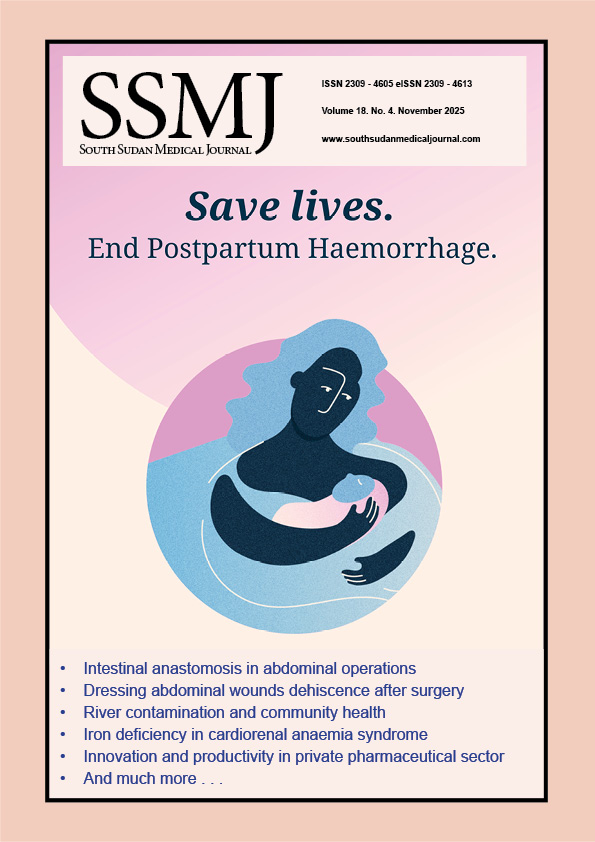
South Sudan Medical Journal - November 2025

SSMJ Vol 18 No 4 November 2025

 Dear reader,

The full issue of our November 2025 issue is now online; this is a bumper issue featuring 14 full articles and other news items, listed below. We thank the copyeditors and reviewers who helped prepare these papers. Let us know if you would like to join the Editorial team. We need you if you have time and editing skills.
 
Editorial

Research Articles

  • Comparative study between classical two-layer and one-layer extra-mucosal intestinal anastomosis in elective and emergency abdominal operations. John Chol Ajack, Galal Abouelnagah, Haytham Fayed
  • Comparison of improvised negative pressure wound therapy and conventional wound dressing in abdominal wounds dehiscence after surgery. Nasra Lichika, Edward Ketson Msokwa, Alphonce Chandika
  • River contamination and community health: mining impacts in rural central Kalimantan, Indonesia. Nawan, Septi Handayani, Agnes I. Toemon, Hepryandi L. D. Usup, Seth Miko, Joni Rusmanto
  • Iron deficiency in cardiorenal anaemia syndrome in Dodoma, Tanzania Gidion Edwin
  • Guerrilla investors: Firm-level innovation and productivity in South Sudan’s private pharmaceutical sector Garang M. Dut
  • Paediatric deaths at Al-Sabbah Children’s Hospital, Juba, South Sudan – an audit Zechariah J. Malel, Garang Dakjur Lueth, Mary Poni Jackson, Nicolas Kazimiro Sasa
  • Prevalence of anaemia among pregnant women attending the antenatal clinic at Bor State Referral Hospital. Mark Kuoi Jongkuch Kuoi and Shalini Ninan Cherian
  • The impact of dietary compliance on diabetic foot ulcer healing: A cross-sectional study. Dadi Santoso, Rajesh Kumar Muniandy, Putra Agina Widyaswara Suwaryo

Review Articles

  • Personal determinants of gender-based violence: a review of intimate partner violence in South Sudan. Nyinypiu Adong
  • Misdiagnosing Muslims: The hidden risk of using the CAGE questionnaire in some Islamic contexts. Anas Ibn Auf and Sayed Halaly
  • Impact of healthcare worker training on paediatric tuberculosis detection and reporting: A systematic review. Suryanti Chan, Hamzah Hamzah, Miftahul Falah

Case Reports

  • Lupus nephritis overlap syndrome in a male with albinism: A case report. Adam Gidion Edwin, Baraka Alphonce, Sabina Mmbali, Alfred Meremo
  • Rare isolation of Pseudomonas mendocina from a postoperative wound in a diabetic patient: A case report. Vimal Kumar Karnaker, Asem Ali Ashraf, Bhadra Jyothikumar

Short Communications

  • News: Physicians Association of South Sudan and Association of Gynecologists and Obstetricians of South Sudan. Sudan

Back Page: Supporting Wet Nursing During Emergencies
 
Articles in SSMJ are indexed by Scopus, African Journals Online (AJOL), and the Directory of Open Access Journals (DOAJ), and as well as being on our website. SSMJ is included in the EBSCO scientific research collection.
 
Thanks to everyone who supports SSMJ. Tell your colleagues they can join our mailing list here.
 
The SSMJ team
Email: southsudanmedicaljournal AT gmail.com
Website: http://www.southsudanmedicaljournal.com