Hodges' Model: Welcome to the QUAD: Search results for severe

Hodges' model is a conceptual framework to support reflection and critical thinking. Situated, the model can help integrate all disciplines (academic and professional). Amid news items, are posts that illustrate the scope and application of the model. A bibliography and A4 template are provided in the sidebar. Welcome to the QUAD ...

Showing posts sorted by date for query severe. Sort by relevance Show all posts

Friday, October 16, 2026

Mental Health and Physical Activity

You know you're on the right (running) track when there is a journal that seeks to address the fundamentals of parity of esteem that is mental and physical health:

Robertson, R., Robertson, A., Jepson, R., and Maxwell, M. (2012) Walking for depression or depressive symptoms: A systematic review and meta-analysis, Mental Health and Physical Activity, 5, 1, 66-75. ISSN 1755-2966 https://doi.org/10.1016/j.mhpa.2012.03.002.

Sometimes, geography matters too in terms of intervention choices and the population of a study:

Moran, R., Sperandei, S., Peel, N., Gray, T., and Reis, A. (2024) The long-term effect of surf therapy on posttraumatic stress, depression, and anxiety symptomology among current and former Australian defence force members - A nonrandomised controlled longitudinal study in a community setting. Mental Health and Physical Activity, 27, 100629, ISSN 1755-2966. https://doi.org/10.1016/j.mhpa.2024.100629.

While researchers seek an holistic view -

Ciaccioni, S. et al. (2026) Modifiable determinants of adolescents’ physical activity and sedentary behaviour in school, home and mixed settings: A DE-PASS systematic review and meta-analysis of self-reported data with a holistic analysis. Mental Health and Physical Activity, 31. 100803,
ISSN 1755-2966, https://doi.org/10.1016/j.mhpa.2026.100803.

- and the above journal 'Supports open access', I do not believe my individual circumstances would qualify for differential treatment of fees:
'Article Publishing Charge (APC): USD 3,190 (excluding taxes). Actual APCs may differ based on individual author circumstances.'

This is a pity, as surprisingly thus far, the journal does not appear to have explicitly referred to 'parity of esteem'? Clearly a soapbox for me, there is plenty of room for others to join in the debate. To acknowledge, however, severe mental illness is well represented.

Given the holistic scope of Hodges' model the lack of inclusion in such literature is a shame. 

Acutely so, as Hodges' model begs (demands!?) consideration of holistic bandwidth. The matter of exercise and activity as a therapeutic option in mental health care quickly gets intense and heated (even if the interlocutors are recumbent). Social prescribing seems well established. On social media ['X' still for me] voicing the benefits of exercise does not always go down well. 

Fabiano N, Puder D, Stubbs B. Could not prescribing exercise for depression be psychiatric malpractice?

Ironically given the limitations of the bio-psycho-social model, the 'barricades' don't go up they are a permanent feature. As soon as we need to consider the political dimensions of health care, legal and professional accountability, policy, funding, accessibility, the minutiae of human rights (individual instances). Plus, in the UK the welfare benefits bill, the struggles of young adults not in employment, education or training; then division and oppositions are all that is. And, what can be individual and collective opportunities are missed.

My source:  https://x.com/NTFabiano/status/2103876655366521278?s=20

Sunday, September 20, 2026

'Shattered' by Hanif Kureishi

Cathleen Schine, Ungovernable, Capricious Life, The New York Review of Books, April 10, 2025, Volume LXXII, Number 6, pp.15-16.

Shattered by Hanif Kureishi. Ecco, 328 pp., $28.00

'Shattered' c/o Penguin  

'Hanif Kureishi, the English playwright, screenwriter, and novelist, posted these words on his Substack in January 2023: 

  On Boxing Day, in Rome, after taking a comfortable walk to the Piazza del Popolo, followed by a stroll through the Villa Borghese, and then back to the apartment, I had a fall.

I had been following Kureishi's Substack for a while out of admiration, curiosity, and loyalty-though Id met him only once, briefly. His dispatches were warm and entertaining, often about the writer's life. But this one was shocking: 

   I cannot move my arms and legs. I cannot scratch my nose, make a phone call or feed myself. As you can imagine, this is both humiliating, degrading and a burden for others. 

According to his hospital report, his fall resulted in neck hyperextension and immediate tetraplegia. An MRI scan showed a severe stenosis of the vertebral canal with signs of spinal cord injury from c3 to C5. It was unclear, he said, whether he would be able to walk again "or whether I'll ever be able to hold a pen." He was speaking these words through Isabella, who was slowly typing them into her iPad.' p.15.

individual
|
INTERPERSONAL
: SCIENCES             
humanistic ------------------------------- mechanistic
SOCIOLOGY : POLITICAL   
|
group
shattered

SHATTERED

SHATTERED

shattered


'A hospital is the place from which modesty and dignity disappear, desert you, seemingly forever, as soon as you cross the threshold. Kureishi, a reliably sexy, unrestricted writer, presents the physical deterioration and indignities he undergoes with his usual wit. The sense of vulnerability is crushing, but it is also one of the characteristics Kureishi reveals about himself that makes him so likable here, and the writing so intimate. The tone is remarkable: even the self-pity has no self-pity. One way he achieves this is by sprinkling punch lines throughout:

I woke up and started to cry. When you cry you must wipe away your tears, which is something I'm unable to do. So my eyes filled with bitter salty water and I got into a panic and thought I might lose my eyesight along with everything else. Finally, a kind nurse came into my room and downed me with a good dose of Lorazepam, then she touched me on my cheek and said, "It's not so bad, at least you're not in a coma."' pp.15-16.

Thursday, September 10, 2026

Is the Individual-Group axis health's proscenium arch?

Speech: “All the world’s a stage”

By William Shakespeare
(from As You Like It, spoken by Jaques)
          
     All the world’s a stage, 
And all the men and women merely players; 
They have their exits and their entrances; 
And one man in his time plays many parts, 
His acts being seven ages. At first the infant,
Mewling and puking in the nurse’s arms; 
And then the whining school-boy, with his satchel
And shining morning face, creeping like snail
Unwillingly to school. And then the lover,
Sighing like furnace, with a woeful ballad 
Made to his mistress’ eyebrow. Then a soldier,
Full of strange oaths, and bearded like the pard,
Jealous in honour, sudden and quick in quarrel,
Seeking the bubble reputation
Even in the cannon’s mouth. And then the justice,
In fair round belly with good capon lin’d,
With eyes severe and beard of formal cut,
Full of wise saws and modern instances;
And so he plays his part. The sixth age shifts
Into the lean and slipper’d pantaloon,
With spectacles on nose and pouch on side;
His youthful hose, well sav’d, a world too wide
For his shrunk shank; and his big manly voice,
Turning again toward childish treble, pipes
And whistles in his sound. Last scene of all,
That ends this strange eventful history,
Is second childishness and mere oblivion;
Sans teeth, sans eyes, sans taste, sans everything.

Source: https://www.poetryfoundation.org/poems/56966/speech-all-the-worlds-a-stage


TIME FRAMES

'As Shakespeare and his contemporaries wrote for the epic scale, the imaginative commitment and the 360-degree embrace of the Globe so, three hundred years later, generations of playwrights wrote for the velvety darkness, the enclosed acoustic and the picture framing of the proscenium arch.

For a century, the story of the changing world was told inside proscenium theatres, by a series of remarkable playwrights. In over sixty irreverent, illuminating pen portraits – of both famous giants and lesser-known talents – Dominic Dromgoole takes us on a journey from 1865 to 1965, revealing how these writers used the framed stage to reflect the social upheavals of their times.' 

This post began with: 'All the world's a stage', but I realised I'm no Shakespeare. Hodges' model is a frame; and users of the model can put it to work, readily. Be that in the sciences, arts, and across curricula. The 'arch' in Hodges' model appears to be inverted, working from within, rather than out. Similarly to the proscenium arch, however, the model provides a structure, for whatever performance, situated, will surely follow.

Hodges' model: Axes and Domains

Of course, the question posed here might be re-framed as: 

Are the axes of Hodges' model, life and death's proscenium arch?


Dominic Dromgoole (2026) Time Frames: A century of proscenium playwrights. London: Faber. 
https://www.faber.co.uk/product/9780571374113-time-frames/ [Text source].

Previously: 'drama' : 'stage' : 'frame'

Sunday, March 15, 2026

ii 'GlobalMinds' - NHS study severe mental health problems

GlobalMinds has clearly stated goals and objectives. Three challenges that are highlighted:

  1. Diagnosis can take years
  2. Treatments target symptoms, not underlying causes
  3. Half of the prescribed drugs cause severe side effects

These are, to put it mildly, highly contested issues. Diagnosis in mental health/illness is problematic in several respects, for example:

INDIVIDUAL
|
    INTERPERSONAL    :     SCIENCES               
HUMANISTIC --------------------------------------  MECHANISTIC      
SOCIOLOGY  :   POLITICAL 
|
GROUP
a) Lack of Theoretical, Practical and Philosophical(?) agreement between: 
  • Psychology
  • Psychiatry
b) Individuals are self diagnosing
c) Access to mental health services can be highly structure - single-point entry
d) The evidence-base for treatment of mental illness is growing,but remains contested.
e) Perhaps there is a phenomena of people getting stuck, with not just a label, but a mindset?

a) Loss of trust in classification/coding schemes:
  • DSM
b) Proposed alternatives in -
c) Data defined scientifically:
  • existing diagnosis
  • biomarker

a) Increased awareness of mental illness, ADHD..
b) Behavioural explanations for mental illness
c) The determinants of mental illness (unlike, health?) are poorly researched (hence understood)
d) The vocabulary of mental illness (psychiatry) is more widely disseminated, hence used; not necessarily with full contextual understanding
e) Stigma associated with mental illness is nevertheless ongoing.


a) Reduced economic productivity
b) The socio-economic phenomena of NEETs
c) Increased demand on welfare benefits
d) The role of primary care - GPs
     - fit / sick notes
     - 'functional assessors' (Who is best placed?)
e) Loss of mental health beds, community compensations incomplete.


This will be a space to watch: and related (global) initiatives? 

Viewed from Hodges' health career - care domains - model, it appears an individual's life chances and expectations (family, and educational experience?) can result in their life chances being frozen?

Friday, March 13, 2026

'GlobalMinds' - NHS study severe mental health problems

Together we can change lives

Depression, bipolar, schizophrenia and related conditions affect millions of people around the world.

Yet mental health receives less than 1% of global research funding. 

This has left healthcare for these conditions stuck in the past:

Cross icon

Diagnosis can take years

Cross icon

Treatments target symptoms, not underlying causes

Cross icon

Half of the prescribed drugs cause severe side effects

GlobalMinds is a major research programme seeking to advance the understanding of mental health conditions and improve lives.


My source: 
News, NHS study to transform mental health treatment, The Times, 14 February, 2026, p.6

Tuesday, March 03, 2026

Thoughts ii re. 2026 Lancaster Philosophy of Psychiatry Work in Progress Workshop

For me, applying Hodges' model I tend to place philosophy and psychiatry (mind, thought, belief, truth, intention ...) within the humanistic part of the model. So, Ewa Grzeszczak and - Philosophy of psychiatry and the methodology of social ontology - stood out. This is helpful as Homeostatic Property Clusters (HPC) are a useful structure, spanning bio-mathematics. As suggested previously with 'equality', we can place the philosophical non-trivial question of kinds at the centre of Hodges' model and proceed (if possible?) from there.

The requirement for a holistic, integrative and pluralistic framework is there in literature. A statement supported by Alessandra Civani's talk: 'What kind of concept is ‘incongruence’? I located a paper:

Enactive psychiatry - A pragmatic and pluralistic approach to mental health and disease

- (and now have a copy c/o and thanks to Alessandra) and am grateful to being pointed to de Haan:

An Enactive Approach to Psychiatry

 I will (must) return to these papers. Earlier on Hodges' model, I'd opined (as on 'X') how the -

  • medical
  • biomedical
  • bio-psycho-social models - are insufficient in the 21st century.

There was a thematic feel to the presentations with Anna Golova - Self-illness ambiguity without a self-illness distinction - following nicely. The styling on the slides was an added bonus. I located an informative (co-authored) paper by Golova:

‘Is it me or my illness?’: self-illness ambiguity as a useful conceptual lens for psychiatry'

Part of the power of Hodges' model derives not so much from its duality; as its dual axes. The two axes can encompass and handle the relatedness between/within reductionism, holist perspectives, the self and otherness, illness and health (well-being).

An hours break brought us to an event which was very well attended, clearly open to the public:

6-7pm Prof Miriam Solomon – Royal Institute of Philosophy talk ‘Stigma as an actant in the history of psychiatry’

In setting out the talk's structure I liked Prof. Solomon's reference to the common, implicit "grime" theory of the dynamic of stigma, and "punching down" as a strategy for managing stigma. 'Grime' made me think of sense of smell, the grime in my father's work van, a diesel. Now so many memories are evoked with the merest whiff. More positively, the patina of physical and mental life also came to mind. You would - might think stigma has been dealt with by now, but of course we are socio-politically far from it.

There is a related podcast from 2025, which also covers Prof. Solomon's early studies. A previous paper was also noted in the slides:

Solomon, M. (2025). The Elusiveness of Hermeneutic Injustice in Psychiatric Categorizations. Social Epistemology, 39(2), 166–177. https://doi.org/10.1080/02691728.2024.2400068
 
Discussion of the DSM inevitably followed (and in the above podcast). In questions the 'reality' of severe mental illness, and suggestion of the acute challenge of managing the negative symptoms of psychoses.
 
Prof. Solomon's conclusion was well worth waiting for, including:
Stigma as an "actant" (cf. Bruno Latour's concept of an agent: causal role without intention)... DSM - ICD...
 
If stigma disappeared tomorrow, the DSM would not have the same categories. 
 
Stigma (more specifically, its management) is shaping the conceptual space, with both scientific and moral consequences.

[Added 4th March...] On Friday - Sam Fellowes, took on, or has taken on - the non-trivial issue of - Modelling psychiatric diagnoses when self-diagnosing - how does this work? Complexity was acknowledged on the first slide, with self-diagnosis, and modelling, set against the Duhem-Quine thesis. 

This technical aspect is welcome and no doubt essential given the socio-technical nature of diagnosis, touching as it does the public (society), primary care, psychiatry, service user groups, policymakers, informatics, and HM Treasury, amongst several 'stakeholders'. With the impact of the internet and social media, much (if not all?) of the vocabulary of mental health professionals has been co-opted and re-framed(?) by patient / service-user groups? It does not, for example, appear that the agency behind the DSM will be able to claim it back. Autism and ADHD were also discussed and debated. I located a previous chapter by Sam (pay-wall):

Fellowes S. Self-Diagnosis in Psychiatry and the Distribution of Social Resources. Royal Institute of Philosophy Supplement. 2023;94:55-76. doi:10.1017/S1358246123000218
 
This really is a thicket of thorns, it spreads as and wherever you go.
 
The welfare bill is such that there should have been government Ministers in attendance. I have responded on behalf of clients to PIP assessments. Agencies have invited me to interview for 'Disability Assessor' roles. Not only is this a complex web, but several logics obtain: a perverse temporal logic operates, binary logic and a fixed mindset can develop so that some (vulnerable!?) individuals can get stuck. Perhaps, a social imperative steps in and disrupts, life chances: their being a NEET ('a young person who is no longer in the education system and who is not working or being trained for work'. Ecosia) is better for someone else? 
 
To unpick, make sense of this, you need a foundational universal model.
 
There is a (co-authored) paper from Giulia Russo, who presented - Epistemic and political role of experience: https://philpapers.org/rec/RUSTPO-112 from which:
'As it is widely known, epistemic injustice was introduced by Fricker (2007) to unveil power relations that have negative consequences on people as epistemic agents. She distinguished in particular two different kinds of epistemic injustice: testimonial and hermeneutical. The first kind occurs when a person (usually in a disadvantaged and oppressed role within the epistemic relation) is damaged as a knower because, as the name suggests, their testimony is overlooked, dismissed or invalidated. The second kind of epistemic injustice occurs when a person is deprived of the epistemic resources to even explain or articulate their experience of distress, or of systemic oppression. In connection to this, the concepts of neurodivergence and neurodiversity come from the political and social arena, and are born explicitly to contrast dominant pathologizing narratives in psychiatry.'
In seeking some 'test' cases to try to model relationally, Hodges' model suggests at least four - without letting the care / knowledge domains wag-the-dog. Giulia's talk was very helpful, ranging across forms of epistemic injustice (addressed by others too), identity, neurodivergence, lived experience, self-, counter- and collective narratives with references. A great resource.
 
Frank Denning, reminded me of an important phenomena, in Using Stebbing’s Directional Analysis to Evaluate ‘Mentalizing’. Talking therapies, or more properly referral to talking therapies often presents several criteria that would-be subjects must 'pass'. An ability to mentalize, can represent one. This is understanable, for effectiveness, efficiency, efficacy ... it is to be found in the manual. But, in terms of power relations, gate keeping in various forms is a literal (virtual) key to service access. Hodges' model is no different (sigh!). At what age can people start to use Hodges' model? What mentalization is involved to cognitively engage in use of Hodges' model? 
 
I struggled to obtain a copy of Stebbing's original work from 1930, but see how closely tied the work is to physics. An Internet Archive copy is poor quality. The search will continue, as I suspect there are links to Bill Ross's text on Deleuzian cosmology. It is marvellous that work from 1930 resonates today. There is: 

Janssen-Lauret, F. (Accepted/In press). Directional Analysis in Susan Stebbing’s Philosophy of Physics. In S. Chapman (Ed.), Susan Stebbing on Logic and Analysis Springer Nature. 
https://pure.manchester.ac.uk/ws/portalfiles/portal/338653274/Directional_Analysis_in_Susan_Stebbing_s_Philosophy_of_Physics_Final_.pdf

Gloria Ayob - Flourishing as mental health - was encouraging. 'TASK 1:EQUATION' a slide was titled, including emotional disorder is meta-evaluative; there are negative and positive poles, plus isomorphism between unpleasantness-pleasantness and disorder-health. I think my stomach was protesting I should have paid more attention. There is a blog post by Gloria: https://blog.oup.com/2024/12/the-concept-of-emotional-disorder/

After lunch Richard Hassall - Hermeneutical Injustice and Damaged Intellectual Self-Trust in Psychiatric Service Users, a reminder of the time and effort that needs to be put into public and patient involvement and engagement in mental health service (when this is desired). References included J.L. Austin and J.S. Bruner. A paper:

Hassall R. Sense-making and hermeneutical injustice following a psychiatric diagnosis. J Eval Clin Pract. 2024 Aug;30(5):848-854. doi: 10.1111/jep.13971. Epub 2024 Feb 20. PMID: 38375925.
https://onlinelibrary.wiley.com/doi/10.1111/jep.13971 

Scoping reviews are more common it seems: Lara Calabrese - Exploring epistemic injustice in dementia care: a scoping review and a qualitative study, plus paper [with QR code on the slide]:

Calabrese L, Brigiano M, Quartarone M, Chirico I, Trolese S, Lambiase F, Forte L, Annini A, Bortolotti L, Chattat R. I'm still here and my opinion matters: a scoping review on the experience of epistemic injustice among people living with dementia. Curr Psychol. 2025 Dec 17;45(1):s12144-025-08519-y. doi: 10.1007/s12144-025-08519-y. PMID: 41445984; PMCID: PMC7618523.
 
The paper's title here brought to mind the radio programme "Does He Take Sugar?" Questions followed regards the studies methods. Since leaving I wondered if there has been an evaluation of Dementia Friendly Communities? Are there dots to usefully joined there?
 
The final talk was delivered (with gusto - pepped me up anyway) by Jacob Barlow - Epistemic borders: experts, communities, communication. Jacob's interest in pragmatism was apparent. I look forward to reading future work, and note Liverpool 2025: ‘Problems with Pragmatism in the Philosophy of Psychiatry’.

All in all, a stimulating and enjoyable event.

Tuesday, November 04, 2025

Descartes - alive and well ...

... within the Incident Reporting System

'Policy guidance on recording patient safety events and levels of harm 
This guidance is for users of the new Learn from Patient Safety Events (LFPSE) service, to provide context and guidance on selection of appropriate categories when recording incidents. It focuses on which Event Type is appropriate for different circumstances, and how to select the most appropriate options for the Levels of Harm categorisation required within Patient Safety Incidents.'

Previous harm grades

No harm
Low harm
Moderate harm
Severe harm
Death


individual
|
INTERPERSONAL : SCIENCES
humanistic -------------------------------------------  mechanistic
SOCIOLOGY : POLITICAL
|
group-population
New psychological harm grades

No psychological harm
Low psychological harm
 Moderate psychological harm
Severe psychological harm
n/a

New physical harm grades

No physical harm
Low physical harm
Moderate physical harm
Severe physical harm
Fatal


Q. 'n/a'. Discuss.

CPD reading.                      

Friday, October 03, 2025

'National Care Service' - Casey Commission

'Casey Commission tasked with producing plan for ‘national care service’ by 2026

Government remit also asks independent commission to consider services for older people and disabled adults separately and to ensure recommendations stick to government spending settlement

By Mithran Samuel on May 2, 2025 in Adults, Social work leaders

The Casey Commission has been tasked with producing a plan next year for delivering a “national care service” over the course of a decade.

The 2026 report will be followed by a further report, due by 2028, setting out longer-term recommendations for the sector, according to the Department of Health and Social Care’s (DHSC) terms of reference for the commission, published today.

The Independent Commission into Adult Social Care, headed by crossbench peer and renowned government troubleshooter Baroness (Louise) Casey, started its work this week.

The plan to set up the commission sparked criticism from social care organisations, after it was announced in January, due to its three-year timeframe being seen as far too long to develop a plan for a sector under under severe immediate pressures and facing significant future challenges.' 
continued...
https://www.communitycare.co.uk/2025/05/02/casey-commission-tasked-with-producing-plan-for-national-care-service-by-2026/

The Casey Commission


... so many people ...

Individual
|
      INTERPERSONAL    :     SCIENCES               
HUMANISTIC  --------------------------------------  MECHANISTIC      
 SOCIOLOGY  :    POLITICAL 
|
Group


 ... watching this space.


My prompt: Letters to the Editor, The Sunday Times. 12th January 20025. p.22.

https://www.thetimes.com/comment/letters-to-editor/article/sunday-times-letters-labours-national-care-service-proposal-ghx22kzt2

Thursday, September 04, 2025

Parity of Esteem: It's all smoke and mirrors ...

Having just visited the National Gallery and an exhibition on Millet:

https://www.nationalgallery.org.uk/exhibitions/millet-life-on-the-land

Dr Sanil Rege on twitter provided:


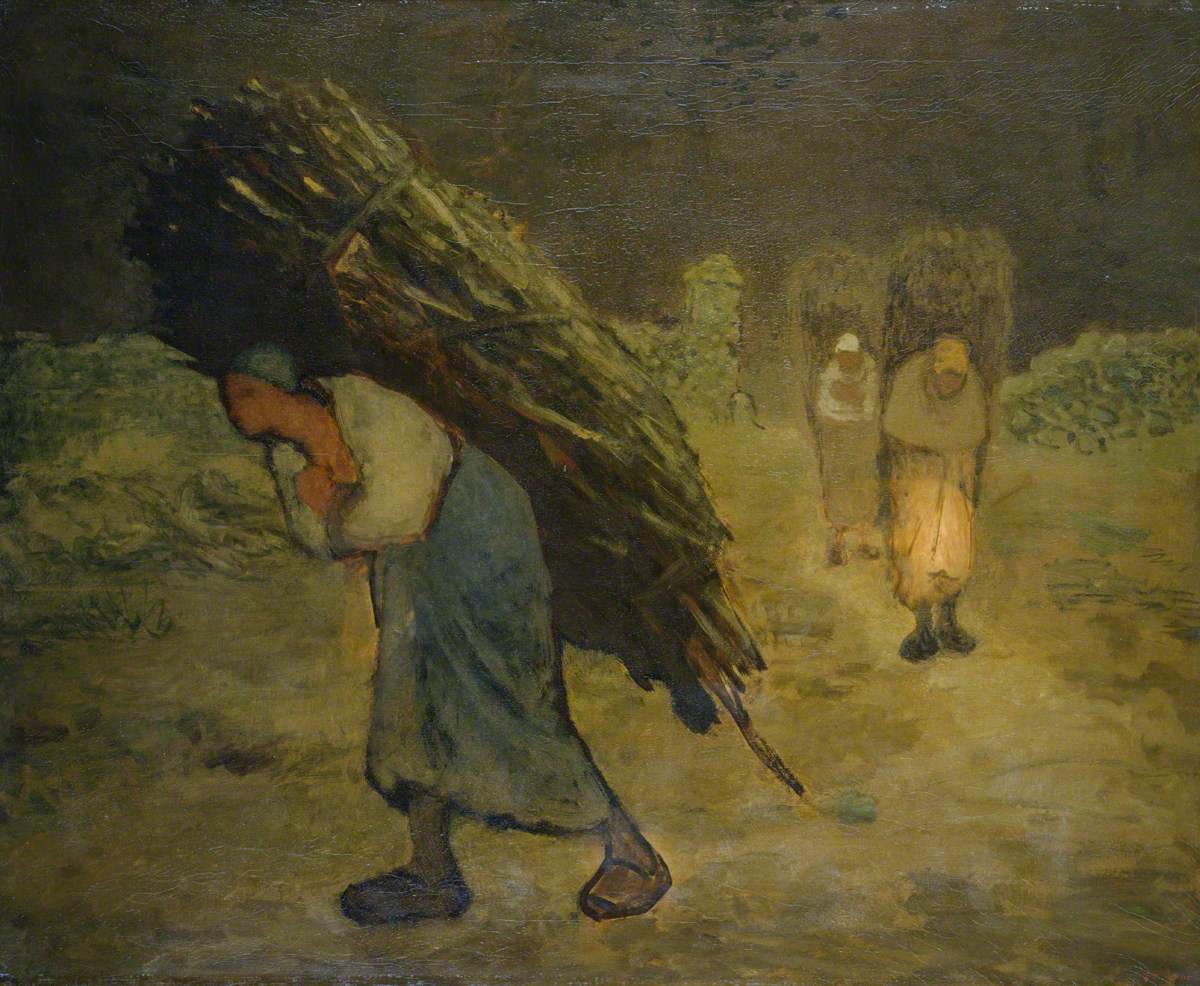
Seeing, and reading (again?) about 'The Faggot Gatherers' I couldn't help but see socio-economic history enacted:

'Two women are taking a short rest from gathering tree branches for sale as firewood. The older woman’s hunched back and clawed hands betray a lifetime of physical toil. The setting is the forest of Fontainebleau, south of Paris, close to the village of Barbizon. Millet was an exponent of Realism, a movement that rejected historical art and idealisation in favour of a truthful view of contemporary reality.'

Text: https://www.nationalgalleries.org/art-and-artists/232271
Winter, The Faggot Gatherers Jean-François Millet (1814–1875) National Museum Cardiff

The National Gallery's accompanying text reads:

'Three women are on their way home trom the forest of Fontainebleau. One of its entrances, the Porte aux Vaches, is visible at the back right. The staggering scale of their loads threatens to overwhelm them in their stumble homewards. The scene evokes Millet's 1851 letter to his biographer Alfred Sensier, in which he described how seeing 'a poor figure laden with a faggot reminded him of the constant fatigue of people's lives.
While the painting is unfinished, the elemental figures are typical of Millet's vork. The extreme simplification of their forms results in austere silhouettes.'

Mental illness has always been a facet of humanity, evidence of trephination from prehistoric times and across cultures and geographies bears testimony to the mind - body divide. Life was brutish physically too. What chance did the weakest stand? If, that is a broken bone: you could be left behind? But perhaps we underestimate the knowledge and experience of our ancient ancestors. Knowledge gained and passed orally, culturally, even before written history. Perhaps too, we struggle to understand how early humanity expressed itself beyond the big-stick of nature and the struggle for survival as the hominids that led to 'us' were winnowed down?

Even as recent as the 19th century life was hard. As the notes above attest, Millet's work seeks to record the sheer physicality of labour, even as the industrial age emerged. The advent of the industrial revolution brought its own pressures and privations, as pastoral life is replaced with change work at home (spinning cotton) to urban and factory growth. 

Severe mental illness would have been institutionalised in poor houses, religious and charitable organisations. Parity of esteem is grounded, to some extent in the questions: "What happened to you?", or "How are you feeling today?" In Millet's work the physical cost and strain stands out. While in the L'Angelus there is debate about prayer, or grief. What is visible usually speaks first, and stands for itself. This is why self-awareness, reflection, critical thinking, observational and interpersonal skills are important; and why mental health nursing calls for specific knowledge and skills. And, in psychiatry too, even when the same is contested.

Image source: Oil on carvas Lent by Amgueddfa Cymry - Museum Wales. Bequeathed by Gwendoline Davies in 1952.

Friday, August 15, 2025

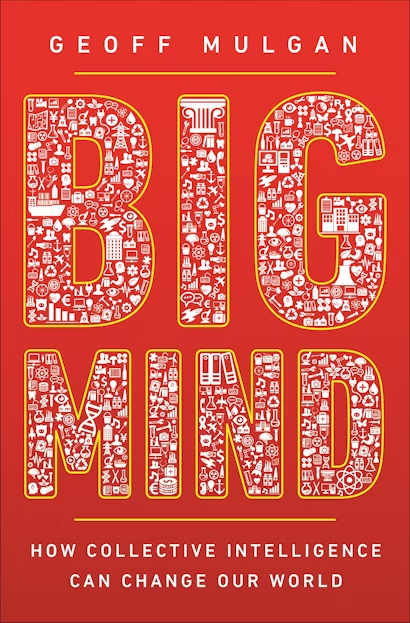
Big Mind: How Collective Intelligence Can Change Our World


It was COVID-19 that brought home to me the true significance of the 'collective' in the synonyms for group, population, polis, citizenry et al.. An integral part of Hodges' model, an individual, a person is clearly not an island.

Speech, gesture, behaviors, drawing, writing and other media all  provide a way of recording and representing information, and knowledge. Digital technologies are the latest tools to extend our memories, and ability to analyse, synthesise and abstract from and to our experiences.

How we see the individual and collective (society) is a subject of much debate across many disciplinary fields, spanning the sciences and humanities; economics, healthcare, sociology, ethics, and philosophy. Mulgan considers as infrastructure, the measures that have emerged to support collective intelligence:


'They have evolved from physical objects (such as steel production) through aggregate concepts (like GDP and GNP) to intangibles (such as innovation indexes or measures of the value of creative industries). They have evolved from single measures of things like population to indexes (like the UN Human Development Index), and from activities to outputs and then outcomes (such as QALYs - quality adjustied life years - and DALYs - disability adjusted life years in relation to health). In all these ways, both states and societies watch themselves and recognize well-calibrated observation as the precondition for thought.' (p.52)
Using Hodges' model the focus is primarily upon individuals and teams application. Mulgan's chapter 12 (pp.145-160) on 'Problem Solving' is subtitled 'How Cities and Governments Think'. An excellent question, that was asked of me in February. How can a national government be informed of Hodges' model and its potential utility? Cities have repeatedly had to solve problems created by changes in transport, work, housing, population density, the movement of people, goods, materials, and links to rural and agricultural centers. The logistics of access to routes, ports, airports, and where to place industries efficiently (and safely)? 'City planning' is a key example of our cities thinking?

Perhaps, we need to think of mobility in a cognitive sense, and not just AI-mediated. So as we walk, run, seek access - we should take care we don't get stuck!

Individual
|
      INTERPERSONAL    :     SCIENCES               
HUMANISTIC  --------------------------------------  MECHANISTIC      
 SOCIOLOGY  :    POLITICAL 
|
Group
subjectivity

models we use can be a trap (p.120)

emotional intelligence
quality
objectivity

SYSTEMS energy, food, transport..

physical media & 'memory'
quantity

'Society Thinking as a System?' Chap. 16.

Group - Collective

collective intelligence

Patient Reported Outcome Measures (PROMs)?

See also: 'literacy' : 'prevention' : 'service' : 'severe' : 'change'

Geoff Mulgan (2017) Big Mind: How Collective Intelligence Can Change Our World, Princeton University Press.

Image: Princeton University Press.

Saturday, August 02, 2025

Maguire et al. - 'A systematic scoping review of the noma evidence landscape: current knowledge and gaps'

Abstract

Background Noma (cancrum oris) is a severe gangrenous disease of the mouth and oro-facial structures. Noma often affects young children living in extreme poverty, malnutrition and poor sanitation. Gaps remain in understanding its aetiology, pathogenesis, prevention and treatment.

Methods and findings We systematically searched databases for all primary research studies (clinical trials, cohort studies, case–control, cross-sectional, other observational studies, case studies/series) reporting noma patients of any age up to 7 December 2022. The 366 publications (published between 1839 and 2022) included in our scoping review describe 15 082 patients. Although 53 cohort and 29 cross-sectional studies were identified, enrolling 13 489 patients, interventional research remains extremely limited, with only six studies identified (101 patients, range: 7–26) and only one in the past decade, highlighting a critical gap in treatment evaluation. A total of 380 different treatment modalities were described, which underscores lack of a standardised practice. Disease aetiology remains unclear, with 117 microorganisms reported across 113 studies, yet none more consistently linked to noma development. Since 2000, 91.2% of cases have been reported in Sub-Saharan Africa, though occurrences outside the ‘noma belt’ and into Asia and the Americas suggest a broader risk. The 212 potential risk factors identified in 269 (73.5%) publications reflect substantial heterogeneity, complicating efforts to determine definitive causative factors. Additionally, the inconsistent definition and reporting of noma staging significantly hinder comparability across studies, with wide adoption of the WHO staging classification needed.

Conclusion This comprehensive review of the literature underscores the urgent need for robust, policy-driven research to address the vast knowledge gaps in the physiopathology of noma and the limited evidence currently available to guide therapeutic and preventive policies. Collective action and increased research investment are crucial, especially now that noma is officially recognised as a neglected tropical disease by the WHO.

Brittany J Maguire, Rujan Shrestha, Prabin Dahal, Roland Ngu, Lionel Nizigama, Sumayyah Rashan, Poojan Shrestha, Elinor Harriss, Paul Newton, Yuka Makino, Benoit Varenne, Philippe J Guerin - Systematic scoping review of the noma evidence landscape: current knowledge and gaps: BMJ Global Health 2025;10:e018023 https://gh.bmj.com/content/10/7/e018023


Individual
|
      INTERPERSONAL    :     SCIENCES               
HUMANISTIC  --------------------------------------  MECHANISTIC      
 SOCIOLOGY  :    POLITICAL 
|
Group
PSYCHOLOGICAL IMPACT
mental & emotional complications
WITHDRAWAL
LOST EDUCATION & LIFE CHANCES
DEPRESSION
PSYCHO-
malnutrition and poor sanitation
PHYSICAL IMPACT
LIMITED EVIDENCE - DISEASE KNOWLEDGE GAPS - AETIOLOGY
 knowledge gaps in the physiopathology of noma
-SOCIAL MANAGEMENT
SOCIAL IMPACT - LIFE CHANCES
STIGMA
SOCIAL EXCLUSION
extreme poverty, infrastructure
NEED FOR POLICY-DRIVEN RESEARCH
THERAPEUTIC - PREVENTIVE POLICIES
RECOGNITION

Previously: 'neglected' : 'noma'

My source: https://x.com/benoit_varenne/status/1950955812915982487