Hodges' model is a conceptual framework to support reflection and critical thinking. Situated, the model can help integrate all disciplines (academic and professional). Amid news items, are posts that illustrate the scope and application of the model. A bibliography and A4 template are provided in the sidebar. Welcome to the QUAD ...
Wednesday, October 02, 2024
Tuesday, October 01, 2024
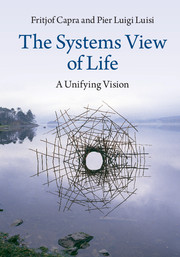
[iv] Book: The Systems View of Life - A Unifying Vision
![]() |
| The Systems View of Life - A Unifying Vision |
If you are about to start studying biology, Part 3 'A new conception of life' is an excellent introduction to some broad and yet pivotal concepts. I haven't checked the 'current' curricula for biology or human biology, but I suspect there is content provided that may be missing? How are biology curricula characterised? If the 'subject' is comprehensively covered at school - college, there may still be value in the way in which they are presented in TSVoL. And, yes the book is a decade old. There's a step-wise development, that is coherent and fascinating.
The opening sentences to chapter 7, which asks 'What is Life?' :
'7.1 How to characterize the living
It is a common understanding that it is impossible to provide a scientific definition of life which is universally accepted. This stems from the fact that the background of scientists dealing with the question - biologists, chemists. computer scientists, philosophers, astro-biologists, engineers, theologians, social scientists, ecologists differs considerably from one another, depending on one's conceptual framework. In this book, we will not dwell so much on the question of a unique definition of life a single sentence catching all the various aspects of life - but rather, we will consider the more general question: what are the essential characteristics of a living system?' p.129.
- for some reason puts me in Plato's Cave? Maturana and Varela would (and do) have very broad shoulders by now. Autopoiesis is described with structure, systems (of course), self-maintenance, nonlocalization, coupling, and emergent properties. 'Life is a factory that makes itself from within'. p.132. Well that will do me. Even though we talk of political, social and psychological processes, I've always associated the SCIENCES domain of Hodges' model with processes. This includes whether the processes are biological, manufactured by human hand/intellect, such as, industrial working, project management and planning.
For life, initial descriptions concern the cell, DNA, RNA, cell walls and the cellular logic of life. Key is life's interaction with the environment. This is emphasised 7.2.4 and 7.4. I gained a lot of encouragement from:
'According to Maturana and Varela (1980, 1998), the organism interacts with the environment in a "cognitive" way whereby the organism "creates" its own environment and the environment permits the actualization of the organism.' p.134.
It is not just mind - but 'embodied mind'. The joy (for Hodges' model) continues with the impact of social autopoiesis in the social sciences.
'While behaviour in the physical domain is governed by the "laws of nature,' behavior in the social domain is governed by rules generated in the social system itself.
Thus, two questions arise: is it meaningful to apply the concept of autopoiesis to these domains at all, and, if so, to which domain should it be applied?' pp.136-37.
It's almost like Descartes has taken on a quantum property. We don't know when life is physical (time, space, velocity) and when it is mental - cognitive? Contemplating life, death is never far behind (taxes p.419 if you're wondering). The ethics of death and dying are acknowledged in medical intervention (or not) and religious beliefs and edicts. Again the figures are helpful, illustrating the dynamic modes of an autopoietic unit: homeostasis, reproduction, and death of a cell (p.138). The trilogy of life then is also illustrated as environment, cognition, and autopoietic unit (p.142). When it comes to knowledge domains (social science & ecology) are clearly ubiquitous too.
![]() |
| Concepts of Modern Mathematics Ian Stewart, 1975 |
It is Chapter 8 that delivers the biological goods. Beginning with a fascinating account of molecular, or prebiotic evolution, giving rise to biological structures and the interplay of soaps and lipids - "amphiphilic" substances, with molecules that contain a hydrophilic (water loving) head group, and long hydrophobic (water-hating) chains. Well illustrated too, box 8.1 describes 'Surfactants, lipids, and liposomes'. Self-organization, emergence are skillfully threaded together and with creativity - the generation of new forms. Unsurprisingly, Gaia is highlighted 8.3.3 and in a guest essay 'Daisyworld' by Stephen Harding of Schumacher College; which also reminded me of the 1970's BBC drama 'Edge of Darkness'. Maths has another turn in the text; a chiral one. Biomathematics is posited as a new mathematics frontier: here - the numerology of plant growth, the golden section (there's one primary context?), nature's spirals, and symmetry breaking. This helps my current return to maths (the struggle!) trying to get to grips with basic concepts. Ian Stewart is cited, later work than 1975's 'Concepts' I must seek out the 'Mathematics of Life' 2011/12.
Darwin, the resulting biological revolution, history, polymers, peptides and proteins plus DNA and RNA continue a suitably in-depth treatment of 'life' in chapter 9. The conclusion on Darwinism today and the status of genes in science and relation to our identity, being and the effect of chance and contingency is worth being reminded of. In mental illness - psychiatry and psychology a sometimes vitriolic debate continues. Commercial realities are also apparent, the extent of their influence described: the race to map the human genome. In the text protein folding has advanced markedly since the book's original publication. Now new commercial pressures allied with artificial intelligence make you wonder how the author's would deal with this new 'content'? Exobiologists will enjoy chapter 10 as the focus is planetary: the origins of life on Earth. Useful, basic chemistry figures here - informational and functional (concentration). The notion of 'cognitive' is raised again - information carrying.
While we are concerned for all life, chapter 11 takes in the human adventure, including the determinants of being human. 'Determinants' have taken on more import today. Chapter 12 in addressing 'Mind and consciousness' is helpful in the approach, the easy and hard problems of consciousness, types of consciousness, schools study. There is another guest essay. Chapters 13-15 deal with spirituality (inc. eco-literacy); life mind and society (I wonder if topology does have a role in the mental realm? (p.311). Chapter 15 is a gift for healthcare professionals - 'The systems view of health' with the question, 'What is health?'. Not to diminish this statement, but I will return to this subsequently; whether in the closing post for this 'review,' or afterwards. This completes part III of what is a great read.
Many thanks again to CUP for the paperback copy, much easier on the eyes. While this copy is new, I do make extensive use of secondhand books.
https://www.cambridge.org/gb/universitypress/subjects/life-sciences/genomics-bioinformatics-and-systems-biology/systems-view-life-unifying-vision?format=HB&isbn=9781107011366
Posted by Peter Jones at 1:31 pm | PERMALINK
Labels: autopoesis , biology , book , climate , complexity , evolution , history , humanities , integrated , life , mechanistic , nature , part , philosophy , review , science , structure , systems , unity , whole
Saturday, September 28, 2024
'It takes a village ...
The British Museum, Room 90. 28th September 2024.
https://www.britishmuseum.org/exhibitions/new-life-rembrandt-and-children
Posted by Peter Jones at 7:21 pm | PERMALINK
Labels: aesthetics , art , British Museum , child , community , cooperation , cultures , development , drawing , economy , history , ink , media , pen , peoples , representation , sketch , skills , society , villages
Thursday, September 26, 2024
They keep saying - 'duty of care' . . .
duty of care | duty of care |
duty of care | 'fiduciary duty' |
Fritjof Capra, Pier Luigi Luisi (2014) The Systems View of Life - A Unifying Vision. Cambridge: Cambridge University Press. (I will add the page number soon.)
https://www.cambridge.org/gb/universitypress/subjects/life-sciences/genomics-bioinformatics-and-systems-biology/systems-view-life-unifying-vision?format=HB&isbn=9781107011366
Previously on W2tQ - 'duty'
Posted by Peter Jones at 10:57 pm | PERMALINK
Labels: care , caring , corporations , duty , ethics , finance , justice , life , pathetics , philanthropy , professional , public good , responsibility , sacrifice , social responsibility , society , spirit , trust , values , worth
Sunday, September 22, 2024
Book: [iii] 'The Systems View of Life - A Unifying Vision'
![]() |
| The Systems View of Life - A Unifying Vision |
Part 2 addresses the title - the rise of systems thinking.
The part - whole distinction is not only the root of the reductionism - holism and analysis - synthesis debates, but you feel clever knowing what mereology means ;-). This book is jargon free, even while being detailed and technical when necessary. Terms are defined when needed.
You see (possibly?) the power of advertising given the prominence of vitality in marketing. Meanwhile, vitalism a key to life seems to be an unknown, ever present but in the shadows, until our attention is drawn to it (health: life-death). Capra and Luisi explore mechanism and vitalism, and in turn organismic biology. Whether dealing with science, economics, biology..., I like the way the authors draw in the initial thinkers, the pioneers: whose lives, work and influence often spanned the 19th and 20th centuries.
The proof of my opening statement in post (i) can be found on page 66:
'Systems thinking is "contextual," which is the opposite of analytical thinking. Analysis means taking something apart in order to understand it; systems thinking means putting it into the context of a larger whole.' p.66.
Ever user(s)-determined (context-based), Hodges' model can readily identify, relate, incorporate the - linear, non-linear, serial, parallel, simple, complex, poor, rich, narrow, broad, static, dynamic, person, service and so on. Also on page 66, Ehrenfrels (1859-1932) is an example, the first to use the term gestalt to denote an 'irreducible perceptual pattern'. There are many potentials within Hodges' model, one of which is that of gestalt. Yes, in healthcare we need to see the whole. We need to see the person, but also see the person in their social, political and spiritual contexts ('determinants)'. Now the global context is critical.
Chapter 4 charts the new physics atomic phenomena, mysticism, uncertainty, probability, causality, space, time, energy, and E=mc2. As per the book's subtitle, the search for a unifying theory in physics is noted, and ongoing. Box 4.1 briefly outlines the characteristics of systems thinking; including parts-whole, from objects to relationships and measuring to mapping. Within box 4.1, figure 4.1 reminds me of a Voronoi tessellation.^ From chapter 5 can I claim that Hodges' model is tektological - contributing to the science of structures? One day perhaps this Russian contribution to systems thinking can be looked at anew? Chapter 5 continues to reveal classical systems theories, general systems, cybernetics, feedback - in social systems too, and homeostasis - self-regulation. It's less than a page spanning 92-93, but 'information theory' is duly noted, closing with cybernetics in the brain, and the emergence of self-organization. Shannon showed that even when there is noise in a communication channel, signals can be transmitted (coding). Is this why training and competence in interpersonal skills and self-awareness are so important, to help health professionals to attend, actively listen, and observe?*
![]() |
| An old T-shirt 'Art Matrix' |
Chapter 6 on complexity theory, inevitably describes mathematical ideas providing equations. Unsurprisingly chapter 6 has figures galore. When I unpack the boxes and crates, I must sit down with The Beauty of Fractals ... (p.124!) and check the graphic capabilities of the latest software and hardware. The 'The Systems View of Life' definitely stimulates further enquiry. The baker transformation anyone (Box 6.2, p.107)? Exploration of non-linear dynamics, and abstract spaces also helpful in studies of relations and maths. This completes part II.
Many thanks again to CUP for the pb copy, much easier on the eyes. While this copy is new, I do make extensive use of secondhand books.
https://www.cambridge.org/gb/universitypress/subjects/life-sciences/genomics-bioinformatics-and-systems-biology/systems-view-life-unifying-vision?format=HB&isbn=9781107011366
Jones, P. (1996) An overarching theory of health communication? Health Informatics Journal,2,1,28-34.
Posted by Peter Jones at 4:41 pm | PERMALINK
Labels: biology , book , climate , complexity , evolution , fractal , history , humanities , integrated , life , mechanistic , nature , part , philosophy , review , science , structure , systems , unity , whole
Saturday, September 21, 2024
Hybrid: Seminar & Tetralogic Model
my corner 'I' The person - self The person's - mental state, mental capacity orientation (time, place, person) continuity - mental illness identity (advanced?) choice ... my decisions? PSYCHO- | physical environment place, time embodiment - sense of self deprivation of liberty anticipated future developments probability silk my body?! |
| next of kin family friends carers Social Housing Community Care Residential care sector personal welfare decisions | -POLITICAL UK - EU PoliticsEuropean Convention on Human Rights Law - Case Law Solicitors Barristers Silk Judge Court of Protection Decisions of the Court Mental Capacity Mental Health Law 🌍 |
My source: https://x.com/hfp91/status/1837526633235833079
Posted by Peter Jones at 10:02 pm | PERMALINK
Labels: book , case law , deprivation , equality , ethics , Hodges' model , human rights , justice , law , liberty , mental capacity , mental health act , mental illness , person , personal welfare decisions , seminar , spiritual
Friday, September 20, 2024
Book: [ii] 'The Systems View of Life - A Unifying Vision'
The introduction highlights the oscillation through history between reductivism, holistic and integrative perspectives; the relationship between theology and the claims for and crystallisation of knowledge and the sciences. The development of cybernetics and systems theory in the 1950s and 1960s does not have it all its own way:
'The eclipse of systems thinking from pure science had become so complete that it was not considered a viable alternative. In fact, systems theory began to be seen as an intellectual failure in several critical essays. One reason for this harsh assessment was that Ludwig von Bertalanffy (1968) had announced in a rather grandiose manner that his goal was to develop general systems theory into "'a mathematical discipline, in itself purely formal but applicable to the various empirical sciences.'' He could never achieve this ambitious goal because in his time no mathematical techniques were available to deal with the enormous complexity of living systems.' p.11.
(With Zeeman's book on Catastrophe Theory on-loan at present the above is helpful.)
I've picked up a book of Arne Naess's, put it down again: or did I buy 'The Ecology of Wisdom'? I can't check at present (the books I've left are all boxed / created), but Naess sets the scene for the mechanistic worldview.
'Care flows naturally if the 'self" is widened and deepened so that protection of free Nature is felt and conceived as protection of ourselves. .. Just as we need no morals to make us breathe... [so] if your "self" in the wide sense embraces another being, you need no moral exhortation to show care.. . You care for yourself without feeling any moral pressure to do it. (quoted by Fox, 1990, p. 217)
'What this implies, according to the eco-philosopher Warwick Fox (1990), is that the connection between an ecological perception of the world and corresponding behavior is not a logical but a psychological connection. Logic does not lead us from the fact that we are an integral part of the web of life to certain norms of how we should live.' p.14.
shallow | DEEP | |
A table on page 13 contrasts several opposites across thinking and values:
Chapter 1 explains how the discoveries of Galileo, Descartes, Bacon, Newton and Darwin contributed to the world and life - in biology being viewed mechanistically. The focus of the book is 'Western' and the developed nations; as the main contributor to the current state of the planet. The Cartesian divide - mind & matter/body distinction (p.24) is implicit within Hodges' model:
res cogitans | res extensa |
Newton's work is described and the limitations of Newtonian physics - the social sciences presented a challenge(!). Thermodynamics is introduced helpful for subsequent chapters.
For general science students the book provides a historical primer, and even an introduction to the philosophy of science. Chapter 2 is short but conjoins cells, molecules, genes (Mendel, Watson & Crick; Franklin & Wilkins, and others), and mechanistic medicine.
'This will not change until medical science relates its study of the biological aspects of illness to the general physical and psychological condition of the human organism and its environment, The conceptual problem at the center of contemporary healthcare is the confusion between disease processes and disease origins. Instead of asking why an illness occurs and trying to remove the conditions that led to it, medical researchers try to understand the mechanisms through which the disease operates, so that they can then interfere with them. These mechanisms, rather than the true origins, are seen as the causes of disease in current medical thinking. In the process of reducing illness to disease, the attention of Physicians has moved away from the patient as a whole person.' p.43.
Thinking about this in basic instrumentalist terms the reliance on optics, the craft of telescopes and microscopes to discover the very large (our Milky Way as 'a' galaxy) and the invisible - germs, bacteria must have been a profound factor.
Fritjof Capra and Pier Luigi Luisi (2014) The Systems View of Life - A Unifying Vision. Cambridge: Cambridge University Press.
https://www.cambridge.org/gb/universitypress/subjects/life-sciences/genomics-bioinformatics-and-systems-biology/systems-view-life-unifying-vision?format=HB&isbn=9781107011366
Posted by Peter Jones at 7:27 pm | PERMALINK
Labels: biology , book , climate , Descartes , ecosystems , evolution , history , humanities , humanity , integrated , life , mechanistic , nature , part , philosophy , review , science , systems , unity , whole
Wednesday, September 18, 2024
Book: 'The Systems View of Life - A Unifying Vision' [i]
![]() |
| The Systems View of Life - A Unifying Vision |
Come on petro-states it's time to really deliver.
'The basic tension is one between the parts and the whole. The emphasis on the parts has been called mechanistic, reductionist, or atomistic; the emphasis on the whole, holistic, organismic, or ecological. In twentieth-century science, the holistic perspective has become known as "systemic" and the way of thinking it implies as "systems thinking,'' as we have mentioned.
In biology, the tension between mechanism and holism has been a recurring theme throughout its history. At the dawn of Western philosophy and science, the Pythagoreans distinguished "number," or pattern, from substance, or matter, viewing it as something which limits matter and gives it shape. The argument was: do you ask what it is made of - earth, fire, water, etc. - or do you ask what its pattern is?' p.4.
- Preface
- Acknowledgements
- Introduction: paradigms in science and society
- Part I. The Mechanistic World View:
- 1. The Newtonian world-machine
- 2. The mechanistic view of life
- 3. Mechanistic social thought
- Part II. The Rise of Systems Thinking:
- 4. From the parts to the whole
- 5. Classical systems theories
- 6. Complexity theory
- Part III. A New Conception of Life:
- 7. What is life?
- 8. Order and complexity in the living world
- 9. Darwin and biological evolution
- 10. The quest for the origin of life on Earth
- 11. The human adventure
- 12. Mind and consciousness
- 13. Science and spirituality
- 14. Life, mind, and society
- 15. The systems view of health
- Part IV. Sustaining the Web of Life:
- 16. The ecological dimension of life
- 17. Connecting the dots: systems thinking and the state of the world
- 18. Systemic solutions
- Bibliography
- Index
Fritjof Capra and Pier Luigi Luisi (2014) The Systems View of Life - A Unifying Vision. Cambridge: Cambridge University Press.
https://www.cambridge.org/gb/universitypress/subjects/life-sciences/genomics-bioinformatics-and-systems-biology/systems-view-life-unifying-vision?format=HB&isbn=9781107011366
Posted by Peter Jones at 12:08 pm | PERMALINK
Labels: biology , biosphere , book , civilisation , climate , ecosystems , evolution , history , humanities , humanity , integrated , life , nature , part , philosophy , review , science , systems , unity , whole
Monday, September 16, 2024
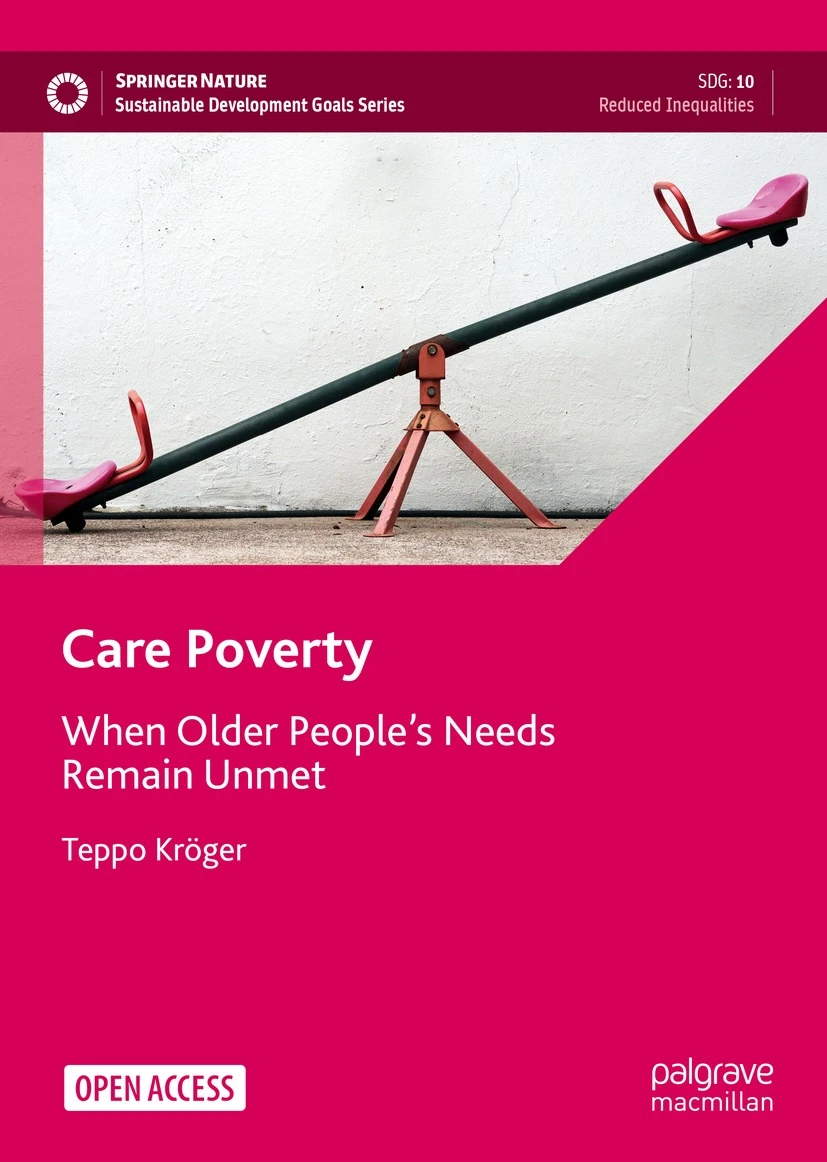
Book: Care Poverty - When Older People’s Needs Remain Unmet
| CARE POVERTY |
The book puts forward a novel theoretical framework to guide future research work and public discussion on the issue of unmet long-term care needs, by broadening the current discussion so that inadequate care is seen in its societal and policy contexts, taking structural issues and policy designs into account. Kröger outlines three different domains of care poverty (personal care poverty, practical care poverty and socio-emotional care poverty) and differentiates between main methods how unmet needs are measured.' [my emphasis]
In psychiatry and psychiatric nursing, a person may be assessed to display poverty of thought, ideas or speech. As an exercise it may be useful to invert the rendering below in Hodges' model, and consider Kröger's forms of poverty and possibly others that arise from your critique, reflections and life experience to date. Clearly, another book to add to the list!
CARE | CARE |
CARE | POVERTY |
Previously on W2tQ - (unmet) 'needs'
Kröger, T. (2022) Care Poverty - When Older People’s Needs Remain Unmet. Cham: Palgrave Macmillan. https://link.springer.com/book/10.1007/978-3-030-97243-1#about-this-book
Posted by Peter Jones at 6:42 pm | PERMALINK
Labels: assessment , book , care poverty , evaluation , experience , framework , Hodges' model , metrics , needs , older people , open access , policy , proxy , quality , quantity , SDGs , spiritual , unmet needs
Sunday, September 15, 2024
Interview study: Exploring psychological safety in inpatient mental health settings
Are you a healthcare professional, with experience of working on adult #inpatient #psychiatricwards in the UK? We’re interested in hearing about your experience of providing psychologically safe care. See details below! @LeedsMedHealth @UoL_MHN @yqsrdotorg @YHPSRC
— Beth Griffin 🌸 (@BethLGriffin) September 9, 2024
[And my source: plus c/o @LainidiO]
Posted by Peter Jones at 3:48 pm | PERMALINK
Labels: care , critical incidents , environment , ethics , experience , governance , in-patient , interviews , liberty , patients , Phd , practices , psychiatry , psychological safety , quality , research , restraint , staff , study , wards


orcid.org/0000-0002-0192-8965