Hodges' Model: Welcome to the QUAD: Search results for ground

Hodges' model is a conceptual framework to support reflection and critical thinking. Situated, the model can help integrate all disciplines (academic and professional). Amid news items, are posts that illustrate the scope and application of the model. A bibliography and A4 template are provided in the sidebar. Welcome to the QUAD ...

Showing posts sorted by date for query ground. Sort by relevance Show all posts

Sunday, October 18, 2026

BCS SPECIALIST GROUP ON AI (BCS-SGAI) AI for Health 2026 - Nov. 6th

Friday November 6th 2026 (all day event)

A special event showcasing the role of Artificial Intelligence for Health
Organised by BCS-SGAI

At the BCS London Office
Ground Floor, 25 Copthall Avenue, London, EC2R 7BP (near Moorgate underground)

 
There are is an online registration form available from the event website.

BCS-SGAI, the British Computer Society Specialist Group on Artificial Intelligence was founded in June 1980. Its mission is: `To foster achievement, capability and awareness in both business and research in Artificial Intelligence, and to promote the interests of the related community`. It is one of Europe`s longest established groups working to support the community of artificial intelligence developers and users and is the organiser of one of the longest running annual series of AI conferences in Europe: the AI-20xx series.

According to the World Health Organization (WHO) prioritising AI for health is crucial. The WHO also highlights that a healthy diet protects you against many chronic non-communicable diseases, such as heart disease, diabetes and cancer. Quantum computing is gathering an enormous interest as a new paradigm of computing (see Quantum for Good at https://quantumforgood.eu/), which is already making an impact across industries like health and life sciences (agriculture, food and health). Classical (or current) AI relies in classical computers based on binary bits (zeros and ones), while quantum AI relies in quantum computers based on quantum bits (qubits). Quantum AI could dramatically accelerate research that requires processing vast amounts of data, contributing to human health by accelerating drug discovery or enabling earlier diagnostics. Quantum AI could be also instrumental in identifying early signs of crop diseases or optimising water use.

Come along to AI for Health 2026 if you are interested in cutting-edge AI for Health, using latest technologies with a promise of high impact.
SPEAKERS
 
Prof Brendan Delaney (Imperial College London)
 Medical diagnosis after LLMs
 
Mr Anirban Lahiri (Arndit Ltd. and Kainos Ltd., United Kingdom)
 AI in Mental Healthcare
 
Dr Marinos Ioannides (Head of Software and AI Medical Devices, MHRA, UK)
 Demystifying AI Regulation
 
Dr. Mercedes Arguello Casteleiro (SGAI)
 Hands-on Tutorial on Low-Code AI Agents for Health, Farming, and Food
 
Dr Oliver Thomson Brown (Quantum Software Lab, EPCC, University of Edinburgh)
 Introduction to Quantum Computing and its Relevance for Biomedical Science
 
Dr Saihong Li (University of Stirling)
 Translating Quantum Food Futures
 
Dr Aleksey Kozikov (Newcastle University)
 Emerging Opportunities for Quantum Technologies in Food and Health


Monday, September 01, 2025

BCS - AI Health 2025 - Artificial Intelligence SG (reminder)

Date and time: Friday 7 November, 9:30am - 4:30pm

Location: BCS, The Chartered Institute for IT, Ground Floor, 25 Copthall Avenue, London, EC2R 7BP

Price: 42 - 108 GBP

Synopsis

BCS-SGAI, the BCS, The Chartered Institute for IT's Specialist Group on Artificial Intelligence, was founded in June 1980. Its mission is: "To foster achievement, capability and awareness in both business and research in Artificial Intelligence, and to promote the interests of the related community". It is one of Europe's longest-established groups working to support the community of artificial intelligence developers and users and is the organiser of one of the longest-running annual series of AI conferences in Europe: the AI-20xx series.

In England, 189 out of 208 (91%) hospital trusts are using electronic health records (EHRs) bringing opportunities and challenges and for Artificial Intelligence (AI). In the morning, there will be a session about EHRs with speakers from UK (animal health records), France (European Health Data Space infrastructure for the use and exchange of EHRs), and Spain (personal health records). Before lunch break, there will be a brief 101 hands-on tutorial about Neuro-Symbolic AI with short exercises. In the afternoon, there will be a session about clinical decision, exemplifying the use of AI-based healthcare technologies. Come along if you are interested in AI and its potential in healthcare.
  • A comparison between open-source biomedical LLMs and general-domain LLMs (e.g. DeepSeek, Gemini, Claude, and ChatGPT-4)
  • How to lower the technical skills overhead (understanding of AI and programming code) needed to use open-source LLMs for content generation and content analysis of text, images and audio
  • Exploring the plausible benefits of neuro-symbolic AI, combining neural AI (to process and extract patterns for health issues from unstructured data) with symbolic AI (explicit representations of background knowledge)
There will be Certificates of Attendance for those who register and attend the event.

We hope that you will come and join us, and that you enjoy this new offering from the BCS SGAI.

Speakers

Programme

More details and registration ...

(I look forward to attending.)

My source: BCS SGAI mail list.

Thursday, July 03, 2025

AI Health 2025 Friday November 7th 2025

AI Health 2025

Friday November 7th 2025

At the BCS London Office
Ground Floor, 25 Copthall Avenue, London, EC2R 7BP (near Moorgate underground)

Organised by BCS-SGAI

BCS-SGAI, the British Computer Society Specialist Group on Artificial Intelligence was founded in June 1980. Its mission is: "To foster achievement, capability and awareness in both business and research in Artificial Intelligence, and to promote the interests of the related community". It is one of Europe's longest established groups working to support the community of artificial intelligence developers and users and is the organiser of one of the longest running annual series of AI conferences in Europe: the AI-20xx series.

In England, 189 out of 208 (91%) hospital trusts are using electronic health records (EHRs) bringing opportunities and challenges and for Artificial Intelligence (AI). In the morning, there will be a session about EHRs with speakers from UK (animal health records), France (European Health Data Space infrastructure for the use and exchange of EHRs), and Spain (personal health records). Before lunch break, there will be a brief 101 hands-on tutorial about Neuro-Symbolic AI with short exercises. In the afternoon, there will be a session about clinical decision support, exemplifying the use of AI-based healthcare technologies. Come along if you are interested in AI and its potential in healthcare.

There will be Certificates of Attendance for those who register and attend the event.

We hope that you will come and join us, and that you enjoy this new offering from the BCS SGAI.

Dr. Mercedes Arguello Casteleiro (BCS SGAI)*

Please see link above for programme and speaker details.
*.. And my source - BCS SGAI.

Monday, June 23, 2025

Entry to the Theatre of Nursing & Space

I do understand that reading theatre related texts, joining a theatre group, my writing a play is still pi in the sky. It's the journey, that's all. In Hodges' model I've differentiated between structure and content. This is the center of the stage about which Hodges' model turns. In the guided discovery by which students and audiences can discover the model,  these are the bases to touch in turn.


Sir Alan's focus on construction in writing: is narrative, time, location, characters (p.12). The overall message for me is, the frequently uttered - less is more. I must take heed and listen. During Ayckbourn's career, he has encountered the full retinue of writers and directors young and 'experienced'. Reading this, it is nice to be both 'new old-er' -
'Then there is the new old playwright. Far more difficult to deal with. They have probably nursed this script for twenty-five years and they're damned if you're going to mess it up for them when they've waited so long. Especially someone your age who wasn't even born when their harrowing play about World War Two was still raging, dammit.' p.110. (My emphasis in bold.)
Thinking about 1959 and the start of Sir Alan's career, his reference to WWII, made me recall nursing assistant and student nurse studies and placements at Winwick Hospital in 1977. On the geriatric wards for entertainment it was WWI songs were often sung, or records played. Long players, indeed.

In health we are usually accustomed to stopping before the 'true' end, with the exception of palliative care, although even then the ending should be 'better' than what it would otherwise have been.

If I am nursing Hodges' model, I've been doing so ever since 1987-88. As Sir Alan also observes of writers, while passionate about the utility of the model - my project - not my model; I am filled with self-doubt. Is this an over-valued idea - in my hands (and mind!)?

In other reading - Stagecraft. The Complete Guide To Theatrical Practice, by Griffiths Trevor R. 1982, I came across the word 'proscenium'.

'Incidentally, when we came to stage [the play in question is 'Woman in Mind' PJ] the London proscenium version this was far more difficult to achieve. Proscenium theatres generally make scenic statements whether they want to or not; the round makes none unless called upon to do so.' p.32. 

There are many insights into sets, design, and the various pros and cons. In May and earlier this month, with three other cast members I performed a role 8-9mins in a Living Newspaper (40-50 mins in total). It was fascinating to watch the various aspects developing from the initial reading in January. With Hodges' model an idea, the question of set design is not straight forward. But as with over-valued ideas, I am probably over-thinking (as usual) making things more complicated than necessary.

One golden nugget of advice, is if you are the writer and write well, well you don't have to think the set design. That is a problem for someone else to solve. Hopefully you will be impressed by the interpretation and realisation (often in film credits) of your work.

That is, unless you're unlucky and find yourself on the receiving end of Obvious Rule No. 13:

Beware of competitive set designers, particularly those with a 'concept'.

The name Ayckbourn is synonomous with The Stephen Joseph Theatre, which is in the round:

'The Round provides a truly unique experience as the audience is seated all around the stage. Not only does the audience see the performance from every angle, it also brings the actor into the same space as the audience.'

"Let’s have the actors in the same room as the audience, let’s have four front rows, let’s get really excited about this acting business!"

Stephen Joseph, 1959 - https://sjt.uk.com/about-us

From the mid-1980s and 90s I used to visit Bolton's Octagon quite regularly. Performances were frequently in the round. Last month, Abigail's Party was too (the last night).

Whatever, the staging, set, I'd be interested to see the 'concept'. On directing:

'As regards interpretation. you may need to tread more warily. As I said earlier, many playwrights are not naturally theatre creatures - certainly they are rarely visual theatre creatures, I have seen them sit there and watch their play physically anfold with a look of total amazement. pordering sometimes on delight, sometimes on dismay. What was in their head has been made three-dimensional flesh.' p.111.

Space has been and remains fundamental to my thinking about Hodges' model. Even pushing the envelope to topology, this is well beyond my ken. But not other gifted researchers. Hodges' model provides inter- multi- transdisciplinary bridges: we need to Before the time of schools becoming fenced and patrolled sites, we used to play cricket, tennis and football. There was a large wall at front of a former school, great for tennis, but not return of serve. Now a projection shared in the round - so everyone sees the same thing (yes, another rule!) might hold potential. There's acknowledgement that technology moves on too (p.123). And room for comedy, Ayckbourn's starting point. 

'Designers, it has been said, even the best of them, sometimes get hold of the wrong end of the stick. ... Always get to look at drawings, ground plans and, most helpfully, scale models of what they intend.' p.120.

The Crafty Art of Playmaking by Alan Ayckbourn. Faber, 2004, softcover, ISBN 0571215106.

https://www.concordtheatricals.co.uk/s/45898/the-crafty-art-of-playmaking

Tuesday, February 25, 2025

So, I can proceed, fall flat on my face - [ concepts-maths iii/iii ]

- and utilise the inevitable!

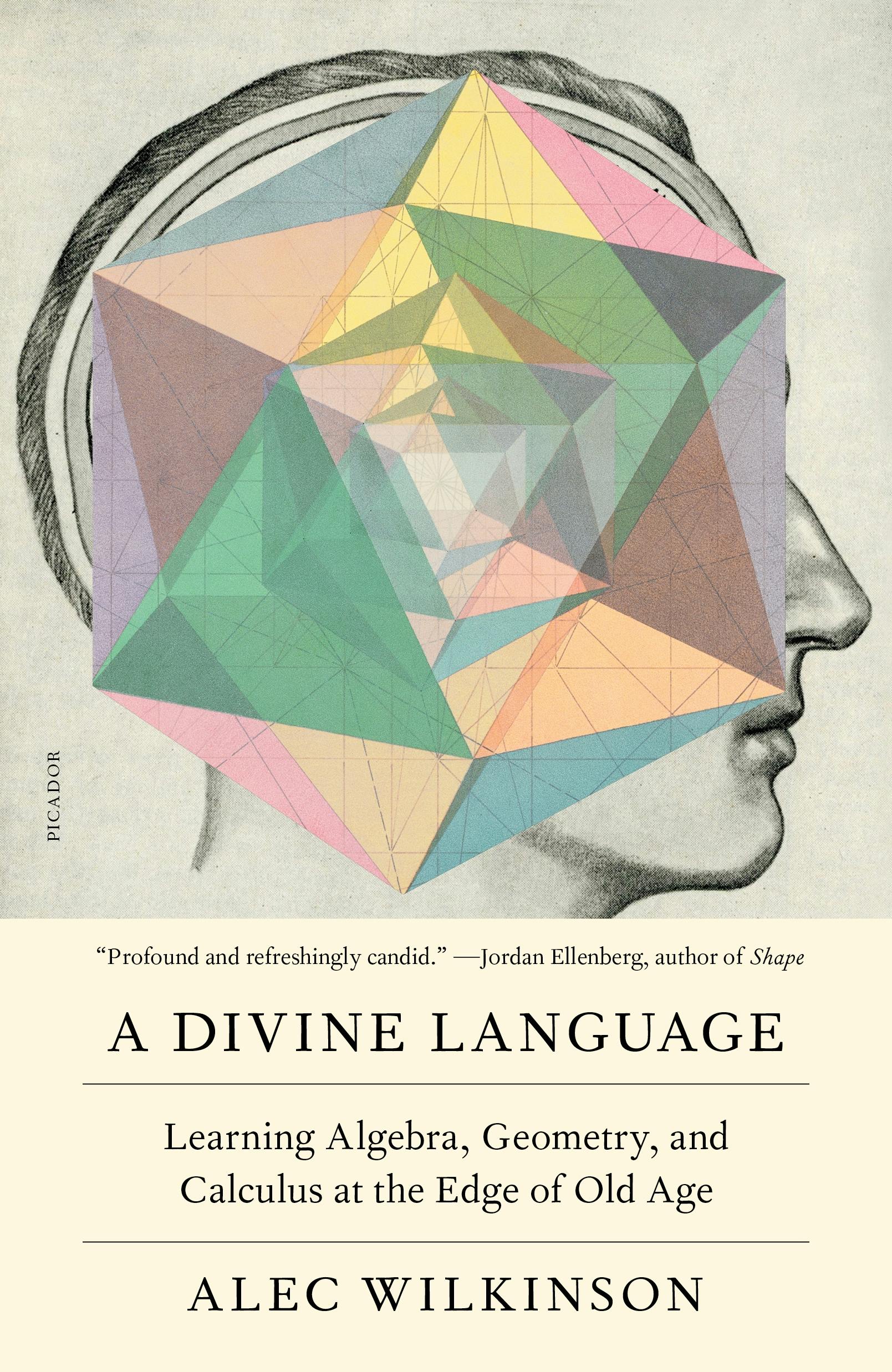
'Decades after struggling to understand math as a boy, Alec Wilkinson decides to embark on a journey to learn it as a middle-aged man. What begins as a personal challenge—and it's challenging—soon transforms into something greater than a belabored effort to learn math. Despite his incompetence, Wilkinson encounters a universe of unexpected mysteries in his pursuit of mathematical knowledge and quickly becomes fascinated; soon, his exercise in personal growth (and torture) morphs into an intellectually expansive exploration.' 
https://us.macmillan.com/books/9781250168580/adivinelanguage/


A Divine Language

As observed many times in the literature and here on W2tQ writing about Hodges' model, healthcare - medicine and nursing are both a science and art. Hodges' model is an invitation to the arts in liberal form, with an emphasis on practice: social sciences, humanities, physical sciences and even mathematics. 

There is now quite a bank of posts on W2tQ tagged art/arts and more specifically prints. I still plan to attend a workshop on printing. As ever, in my head, my mind's eye - I've an amazing, brilliant .. (!?) arts project, just waiting to be released. A true collage of the care concepts.

If Hodges' model is 'simple' in its basic form, then it is clearly possible for other people to create their own artistic impressions, interpretation of Hodges' model. My effort would of course be unique, as would theirs. There could be a competition and I end-up missing out. Not even short-listed for a prize; a victm of familiarity perhaps? 

Quite 'naturally' in a way, or at least by way of childhood experiences, a need for therapy and validation; I have also arrived at a belief that there is a mathematical project here (Oh, for goodness sake! Is there no end to this?). 

As posted before, like Alec Wilkinson I am no mathematician. Embarrased, shamed to a husk at school on many occasions, I encountered math teachers who must have empathised. Well, that's one way to explain the appreciation of maths I have always felt. Or more accurately, a love of knowledge; of which maths and logic are a part? Since I can hardly understand, I am more in love with the idea of maths, than mathematics itself. I have always been in awe of maths and people who 'get it', even if that is only  mastery of the high school mathematics curriculum.

Convinced that there is more to Hodges' model than meets the eye, I have thought of following Wilkinson - who tries to be systematic - to underpin a book - back into the nightmare lands of my youth. Should I retake GCSE maths? 'There be dragons', without a doubt. The heat can be recalled, like it was yesterday. This isn't just a dragon, it is a chimera. At times it wants to be a friend, providing familiar terms, domain, set, and group. Wilkinson's quest is structured and seeks a reasoned and disciplined approach. Why am I bothering? I have a choice surely? Nursing, health, global health can all collectively furnish many items of epistemological fruit. No need for calculative flagellation. Through Hodges' model you can productively span the disciplinary bridges once again: call in - sociology, economics, policy and more. How many Königsberg bridges do you need?

While the artist in me, might waste time. In pointing to Hodges' model as a potential mathematical object, this little seed might fall on fertile and (much) more capable ground(?), as Wilkinson describes:

'Mathematics might be the only creative pursuit in which inevitability figures. Other artists might be defeated by a task beyond their capabilities, but they do not live with knowing that sooner or later, if their work is consequential, someone will do what they haven't been able to do. Mathematicians work within a discipline in which, so long as their suppositions are correct, there is always a precise and irrefutable answer, even if they can't find it.' p.135.

I can hope for this at least.

Alec Wilkinson. (2022) A Divine Language. Learning Algebra, Geometry, and Calculus at the Edge of Old Age. New York: Farrar, Straus and Giroux. https://us.macmillan.com/books/9781250168580/adivinelanguage/

Previously: How 'divine' is the language of care?

n.b. At some point I will go though all the posts and unpublish/delete items that add little to the core.

Monday, December 09, 2024

Baseball: One of the games people play ... Fisher (2001) ii

Returning to Fisher's excellent book I mentioned an analogy from basket ball in discussion about Richard Paul's definition of critical thinking and 'thinking about your thinking'.
'Critical thinking is that mode of thinking - about any subject, content or problem - in which the thinker improves the quality of his or her thinking by skilfully taking charge of the structures inherent in thinking and imposing intellectual standards upon them. (Paul, Fisher and Nosich,1993, p. 4).' pp.4-5.
Fisher's daughter aged eleven wanted to learn how to play basket ball and attended coaching sessions. At the first the raw recruits were divided into two teams and with simplified rules set to play. Initially, getting the ball and in a position to score: shoot.

After the chaos, the coach had them practice shooting after he demonstrated how they had been playing. He explained and pointed out the basics of technique and 'drew attention to how he held the ball, where he looked, how he stood and so on.' p.5. Acknowledging their efforts, they subsequently moved on to passing, then guarding, or marking - practising each skill. 

This is a great analogy and can be applied to health, social care, medicine, nursing and other novices. Hodges' model is the basket ball, tennis, squash court, football, hockey pitch. You might move to a position to obtain an advantageous point of view. In reflective, critical thinking terms, additional data to support or negate a line of thought.

The axes of Hodges' model, serve as a scaffold to help structure our 'game player', and possibly better co-ordinate a group or team's efforts. The domains of Hodges' model cover the knowledge or subject bases that will relate to any context. Hodges' model is situated. If there is need to consider spiritual matters - experiences, then a conceptual journey ... at least, as befits an individual's or group's beliefs and purpose can be made. So forms if intelligence (emotional, cultural, spiritual ...) can also be factored in, as necessary.
 
Are there relational, logical, even mathematical standards that can be applied (formally, in theory) to our thinking? Does 'subject, content or problem' equate with 'situated'? Another book to pass on.

Fisher, A. (2001) Critical Thinking: An Introduction. Cambridge University Press, Cambridge, England. PB. 


Post: ... 'anyone for tennis'.

Wednesday, December 04, 2024

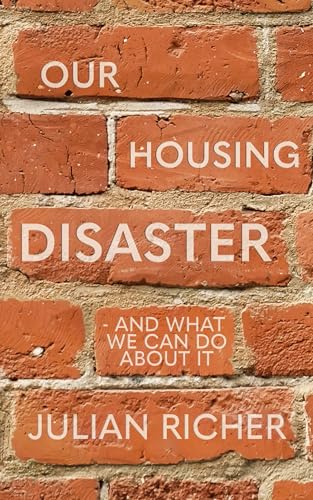
'Our Housing Disaster' ii

'Our Housing Disaster'
Image: Goodreads

Late to reading about economics, apart from the 'quality press' and an 'O' level in social history (which has actually been really useful in my nursing career), this book can ground and crystallize 'housing' as heard and viewed in the news.

I've a love for hi-fi that I share with Julian Richer, but my wealth lies elsewhere and is decidedly non-monetary. Reading his column in The Sunday Times, I'm impressed with Mr Richer's insight and the extent of his philanthropy. The book notes several initiatives and collaborations, e.g. TaxWatch -https://www.taxwatchuk.org/

On the news you hear of 'intervention' in the market - usually equity or bonds. You - the government - can intervene, or let the market, a market by implication, look after itself. Markets find their own equilibrium, shift to stability ultimately; and this despite economic crises, billion-busting scandals and political parties totally screwing-up.

So, it appears governments have allowed the housing market, to make its own moves.

It's back to the future, the 18th century of laissez-faire: the market has spoken, and its a utter mess.

The book's contents are well structured and delivered in full.
Introduction
1 Disaster? What Housing Disaster?
2 A Housing Crisis That Harms
3 Where Did Housing Go Wrong?
4 The Rise of Renting
5 The Shrinking of Social Housing
6 Underregulated and Oversubscribed
7 Land and Planning: The Price of Permission
8 Making Better Use of Buildings and Land
9 Building a Solution
10 Time for Action - My Housing Manifesto
Conclusion

OHD covers the population as a whole, but 'health' is very well represented in terms of personnel and the impacts of lack of housing and poor quality, unregulated housing: 

'Inability to afford housing is one of the grievances feeding into strikes by public sector workers - even better-paid ones. A survey by the British Medical Association (BMA) in December 2022 found that nearly half (45.3%) of junior doctors had struggled to afford their rent or mortgage in the past year. To earn more, some were taking on extra shifts and the BMA said this added to its concerns around junior doctor exhaustion and burnout. 

The consequences reach out to the public at large, as housing problems hit staff recruitment in health services, education and so on. The NHS visibly cant cope: basic structures are crumbling.' p.25.
We can imagine the anxiety and depression this might provoke. Even for people you might think (assume) would be ordinarily resilient. These are clearly extraordinary times. An email - RCN Magazine - today supports the same conclusion:


The relationship between health and housing is not limited to chapter 2. In chapter 2 though damp and mould (yes a specific case), unsanitary conditions the loss of environment health officers and skilled personnel, reminded me of decades ago an article in HSJ, or in that 'quality press' about the community health councils - CHCs having their teeth extracted. Public (MENTAL) health has taken a stunning fall and desperately needs to be put back together.

More to follow...

Monday, December 02, 2024

'Un Caso Clinico' BUZZATI (I906-I972)

Reading The Theatre of the Absurd earlier this year was a very enjoyable and disconcerting experience. In acknowledgement: I have quoted from the book at length below. I do so to better convey the context, and in the hope other people may similarly obtain and enjoy this classic theatrical text.

Reading, I was reminded of starting my career as a nursing assistant and student nurse, and the 'lock-up' wards: male and female. Listening now to the current Reith Lectures I will post regards: 

Gwen Adshead - Four Questions about Violence

https://www.bbc.co.uk/sounds/play/m0025cmg

As a community mental health nurse in community mental health teams and nursing home liaison, residents on the ground floor (of two or three floors - with 'general') 'knew' there were very poorly people on the top floor. In summer, windows open, they could often be heard shouting and in the night. Inside, for staff, family members, friends became advocates expressing concern for a lack of access to fresh air and sunshine. Something, of course, we can all benefit from. For some residents there was an in-house understanding of NOT wanting to be moved 'upstairs'. At times I gather, if a resident 'played up' such re-location (displacement) was used as a threat: a cue for education.^

DINO BUZZATI (I906-I972)
'In Les Bátisseurs d'Empire the flight from death takes the form of trying to escape upwards. The same image appears in the opposite direction in a remarkable play by Dino Buzzati, the eminent Italian novelist and journalist on the staff of the Corriere della Sera in Milan. This play, first performed by the Piccolo Teatro, Milan, in 1953, and in Paris in an adaptation by Camus in 1955, is Un Caso Clinico. In two parts (thirteen scenes), it shows the death of a middle-aged businessman, Giovanni Corte. Busy, overworked, tyrannized but pampered as the family's breadwinner, whose health must be preserved, he is disturbed by hallucinations of a female voice calling him from the distance and by the spectre of a woman that seems to haunt his house. He is persuaded to consult a famous specialist, and goes to see him at his ultra-modern hospital. Before he knows what has happened, he is an inmate of the hospital, about to be operated on. Everybody reassures him - this hospital is organized in the most efficient modern manner; the people who are not really ill, or merely under observation, are on the top floor, the seventh. Those who are slightly less well are on the sixth; those who are ill, but not really badly, are on the fifth; and so on downwards in a descending order to the first floor, which is the antechamber of death.

In a terrifying sequence of scenes, Buzzati shows his hero's descent. At first he is moved to the sixth floor, merely to make room for someone who needs his private ward more than does. Further down, he still hopes that he is merely going down to be near some specialized medical facilities he needs, and before he has fully realized what has happened, he is so far down that there is no hope of escape. He is buried among the outcasts who have already been given up, the lowest class of human beings - the dying. Corte's mother comes to take him home, but it is too late.

Un Caso Clinico is a remarkable and highly original work, a modern miracle play in the tradition of Everyman. It dramatizes the death of a rich man - his delusion that somehow he is in a special class, exempt from the ravages of illness; his gradual loss of contact with reality; and, above all, the imperceptible manner of his descent and its sudden revelation to him. And in the hospital, with its rigid stratification, Buzzati has found a terrifying image of society itself - an impersonal organization that hustles the individual on his way to death, caring for him, providing services, but at the same time distant, rule-ridden, incomprehensible, and cruel.' 
Esslin, Martin. Parallels and Proselytes, The Theatre of the Absurd. London: Pelican, 1982. (3rd Ed.).pp.277-279.

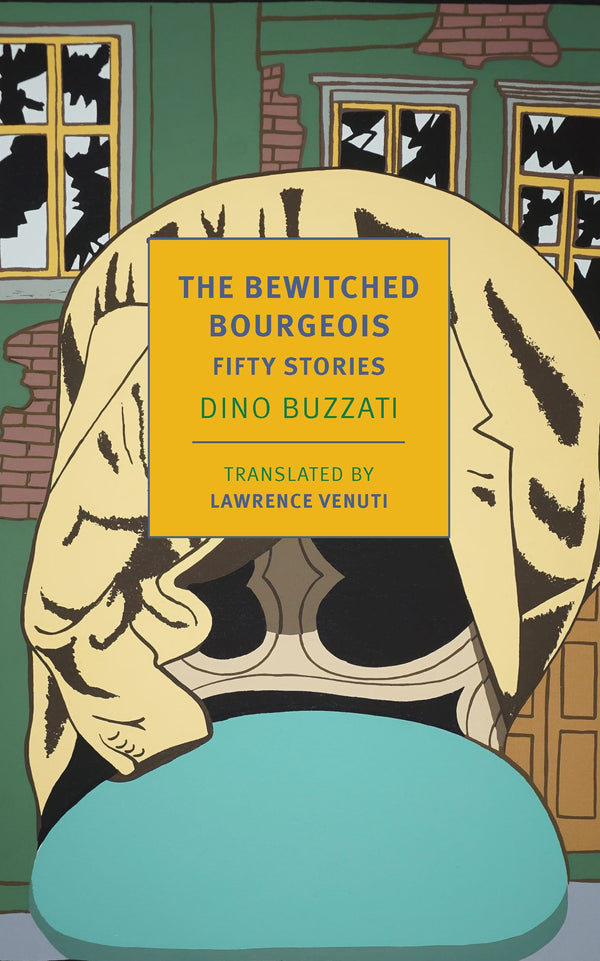
The Bewitched Bourgeois
^Rest assured, there were and are excellent centers of care too.


Update: 11th January 2025: c/o John Self. Meet the forgotten maestro of the ultra-short story. Saturday Review, The Times, p.15.
'One of his most widely published stories, Seven Floors, is set in a hospital where they put the "mildest cases" on the seventh floor, and so on in increasing order of sickness down to the first floor, which is occupied by those who are "beyond hope"'.

Lawrence Venuti. (2025) The Bewitched Bourgeois, New York: NYRB Classics ISBN: 9781681378671.

Cover image: NYRB.

Monday, November 04, 2024

Paths, lines, corners, edges and axes . . .

'If a farmer has made a path, he is able to saunter easily up and down it. That is what the path was made for. But the work of making the path was not a process of sauntering easily, but one of marking the ground, digging, fetching loads of gravel, rolling, and draining. He dug and rolled where there was yet no path, so that he might in the end have a path on which he could saunter without any more digging or rolling. Similarly a person who has a theory can, among other things, expound to himself, or the world, the whole theory, or any part of it; he can, so to speak, saunter in prose from any part to any other part of it. But the work of building the theory was a job of making paths where as yet there were none.' 
Gilbert Ryle, The Concept of Mind (1949; Penguin, 1999), p. 272.

path
https://hodges-model.blogspot.com/search?q=path

line (line of sight)
https://hodges-model.blogspot.com/search?q=line

corners
https://hodges-model.blogspot.com/search?q=corners

edges
https://hodges-model.blogspot.com/search?q=edges

axes: STRUCTURE
domains: CONTENT

Frayn, Michael (2006). The human touch: our part in the creation of a universe. Notes. London: Faber & Faber. p.425.

Previously: 'Frayn on maths'

I will keep this book a bit longer - chapter 'Home Address' (the self) a good read.

Wednesday, October 23, 2024

Register for Free! AI for One Health and Planetary Health: Where Are We?

Friday 8 November, 9:30am GMT – onwards

BCS, The Chartered Institute for IT, Ground Floor, 25 Copthall Avenue, London EC2R 7BP

Join BCS SGAI in London for an engaging full-day event featuring a line up of exciting talks. Attendees will have the opportunity to participate in a hands-on tutorial on low-code/no-code AI and Certificates of Attendance will be provided.

* Speakers & Agenda
https://www.bcs.org/events-calendar/2024/november/ai-for-one-health-and-planetary-health-where-are-we-artificial-intelligence-sg/

* Invitation for Free Registration
https://ArtificialIntelligence081124.eventbrite.co.uk


100% Discount Code: AIHealth24Committee

--------------------------------
Hope to see you there - in London 6th-9th November.

Thursday, August 29, 2024

Records Management Journal - Editor Opportunity

 All

After nine years in post, I am stepping away as a Co-Editor of the Records Management Journal. My colleague Sarah Demb has also recently completed her term. A double issue on recordkeeping and the law is about to land and we have a strong series of articles for next year. We are therefore advertising the opportunity for someone to take forward this important Journal which contributes in research and practice, and does publish content globally. The role of Editor provides a first hand opportunity to lead and network in this field, positioning special themed issues and ground breaking research. The work is supported by its strong Editorial Board.

The full advertisement is at:

I am very happy to answer any further enquiries.

Kind regards

Elizabeth
Dr Elizabeth Lomas, FRSA, FIRMS, FHEA, FRHisS
Associate Professor in Information Governance
G43, Foster Court
Department of Information Studies
University College London
Gower Street
London WC1E 6BT U.K.

Email: e.lomas AT ucl.ac.uk

My source: RECORDS-MANAGEMENT-UK list.

Monday, July 01, 2024

Real AI 2024 - Sept 27th BCS-SGAI

Real Artificial Intelligence 2024

A special event showcasing
Practical Applications of Artificial Intelligence

Friday 27th September 2024

At the BCS London Office
Ground Floor, 25 Copthall Avenue, London, EC2R 7BP
(near Moorgate underground)

Organised by BCS-SGAI


BCS-SGAI, the British Computer Society Specialist Group on Artificial Intelligence, is the organiser of one of the longest running annual series of AI conferences in Europe: the AI-20xx series. In 
recent years we have seen a rise in popularity of one aspect of the conference: the industry case studies. These have presented AI as it is actually implemented out there in the real world, with all the triumphs and challenges that brings. 

Building on this success, we are pleased to present Real Artificial Intelligence, a series of meetings showcasing practical applications of AI.

We have aimed the event less at deep AI specialists and more at those who may be interested in understanding what AI can offer, and what it is doing right now. The event will feature talks from leading exponents and case studies outlining practical applications of AI from a wide range of application domains. Plenty of time has been allowed in the programme for discussion.

We hope that you will come and join us, and that you enjoy this new offering from the BCS SGAI.

Full details are available at http://www.bcs-sgai.org/realai2024

---------------------------------------------------------------
Prof. Max Bramer
Chair, BCS Specialist Group on Artificial Intelligence
bcs-sgai.org

n.b. I plan to attend.

Friday, March 01, 2024

'Writing Samer'

Molly Fairhurst
 

... across the domains

"Diagnosed with a terminal cancer, Samer Iskandar couldn't find the words to describe what he was living through. Instead, he proposed an unusual collaboration." p.33.


Individual
   |
      INTERPERSONAL    :     SCIENCES               
HUMANISTIC  --------------------------------------  MECHANISTIC      
 SOCIOLOGY  :   POLITICAL 
|
Group

"Samer's cancer^ is like all cancers in that it pitches the self into a battle against the non-self, - *


"Memory, language, attention and cognition all erode to ultimately leave you somewhere east of your prior self and west of someone new." p.34.


- atavistic alien cells invading their host from within. But it is unlike most cancers in how directly this cellular plunder correlates to the personal one." 

It is like all cancers in that its lexical field is that of topography, malignancies spreading, diffusing and gaining ground. It is unlike them in that these movements are finally technical, gears cramped within the clock of a terminal diagnosis." p.34.


^glioblastoma
*discuss

Youmna Melham Chamieh, Writing Samer, FT Weekend Magazine, 24/25 February, 2024, Issue 1,062, pp.32-37.

Illustrations by Molly Fairhurst
https://mollyfairhurst.com/Financial-Times (above source).

Friday, December 15, 2023

Person to object: Surely you're joking* ...!

 INDIVIDUAL
  |
     INTERPERSONAL    :     SCIENCES               
HUMANISTIC --------------------------------------  MECHANISTIC      
SOCIOLOGY  :   POLITICAL 
|
GROUP

identity

person

choice


identity

person, age

integer


people

father - mother

election

voting age


By @Eyesomorphic - https://www.youtube.com/@Eyesomorphic 

"A gentle introduction to the study of Category Theory and Abstract Algebra, done from the ground-up by exploring the mathematical weapon of abstraction. This video aims to give an overview of the fundamental tool at the forefront of pure mathematical research: abstraction. By seeing this tool in various contexts, and how it allows us to encounter Category Theory in a natural and intuitive manner, we'll see how beautiful the abstract can really be."

  ― Timestamps ― 
 0:00 - Intro 
1:49 - Abstraction and Algebra 
7:30 - Examples of Abstraction 
8:49 - Set Theory 
13:25 - Category Theory 
21:16 - Outro 
― Credits ―
All animation and voiceover created by Eyesomorphic. Background music: 'Abstraction', composed by Caleb Peppiatt.

― Further Reading ―
Category Theory for Programmers: The Preface, by Bartosz Milewski: https://bartoszmilewski.com/2014/10/28/category-theory-for-programmers-the-preface/

Category Theory for Computing Science, by Michael Barr & Charles Wells (Book)

 *Person to object - and back again - assuring and preserving the humanistic.

Monday, November 13, 2023

Empathy - Relating, Knowing, Objects, Patterns ...

INDIVIDUAL
|
     INTERPERSONAL    :     SCIENCES               
HUMANISTIC --------------------------------------  MECHANISTIC      
SOCIOLOGY  :   POLITICAL 
|
GROUP

"Logos is our capacity to separate ourselves from the surrounding world, making it into objects in order to recognize it objectively, reflect about it. Any fully developed human relationship needs both principles, the relating and the knowing. Knowing in this sense means the possibility of discriminating between the common ground and the difference of I and Thou. Without knowing, there is fusion or identity but not relationship between a separate I and a separate Thou." p.64.


"Recently a woman training to be an analyst came for supervision and brought with her for the first time a tape of an analytic session she had had with a woman patient of hers. To our amazement, in listening to this tape, we both had at certain times quite some difficulty in distinguishing her own voice from the voice of the patient. This happened mostly when the patient was talking very softly and obviously fighting to overcome feelings of shame. The candidate felt rather shocked at first and asked me whether she might have identified with the patient in an unhealthy way. I heard her interventions on the tape as being genuinely in tune to the atmosphere and situation of the patient at those moments, so I told her that to my mind she was responding in an empathetic way to her patient. It was apparent that the patient needed this kind of response, for later in the tape one could hear that the patient became more confident in exploring her feelings. I think the candidate reacted to the needs of her patient with a concordant countertransference reaction." p.38.


Jacoby, M. (1984) The Analytic Encounter: Transference and Human Relationship. Toronto: INNER CITY BOOKS.

In this text and other reading I can see a possible means as to how the concept of identity can be used between the Individual - Group (other).

To follow soon:

Book review iii. General Psychotherapy: Principles and Common Theoretical Aspects - Rediscovering Humanity

Friday, October 13, 2023

Hodges' model: How the I-G axis is idealised

As a conceptual model, Hodges' model is idealised.

As an example, take the concept individual in the vertical axis. Whether a patient, client, carer, student or teacher, the individual is where the self also resides.


'I' - INDIVIDUAL 'Self'
|
     INTERPERSONAL    :     SCIENCES               
HUMANISTIC --------------------------------------  MECHANISTIC      
SOCIOLOGY  :   POLITICAL 
|
GROUP

spiritual - emotional self
(my mind)
Identity?


material / physical self
(my body)
identity?


social self
(realised, or not; loneliness, excluded, isolated, ostracized, or loner by choice/character. Socio-Politically we arrive at 'civil society', if indeed it is civil.)


political self
(whether or not politically
motivated / engaged. Self as a citizen arises here, with the law in whether in States voting is mandatory.)


 James, W. (1892). The conscious self. In W. James The principles of psychology (Volume 1), Chapter 10. Harvard university Press: MA.

"From the very beginning of the chapter, James established that he was going to take a fresh approach to his subject. "In its widest possible sense," he wrote,
'a man's Self is the sum total of all that he CAN call his, not only his body and his psychic powers, but his clothes and his house, his wife and children, his ancestors and friends, his reputation and works, his lands and horses, and yacht and bank-account.' (p. 279) 
The explication James offered for this claim is telling: All these various things and persons are part of an individual's self insofar as they give that individual the same emotions (pp. 279-280). In pointing thus toward the emotional foundations of the self, James indicated right at the start that he was going to follow Bain (1859, chap. 7) and others in reaching beyond the old rationalist approach to "the soul" in order to ground his treatment of the human self on the experience and makeup of the whole person, emotional as well as intellectual." (p.107)

 
Leary, David E. "William James on the Self and Personality: Clearing the Ground for Subsequent Theorists, Researchers, and Practitioners."Reflections on The Principles of Psychology: William James after a Century. Ed. William James, Michael G. Johnson, and Tracy B. Henley. Hillsdale, NJ: L. Erlbaum Associates, 1990. 101-37. Print.

Friday, September 01, 2023

Brian E. Hodges (1942-2022) RIP Creator of Hodges' Health Career Model

The end of 2022 and start of 2023 brought loss, reflection and change in terms of family, friends and educational ties. My children said goodbye to their grandmothers in the space of two months. 

Brian E. Hodges c/o Family.
Then I was contacted by Brian Hodges’s daughter Sarah, with the news her father had died. November through to January saw me attend three consecutive funerals. I’m grateful I was able to visit Sheffield and say goodbye to Brian and meet his extended family.

Yes, it has taken a while to post this. For six months I have been sorting, clearing, rationalising books, papers with a house-sale now imminent, liaising with Brian's family too. 

It is fitting to share this sad news now and celebrate lives well-lived, cast in the promise of a new academic year. I think Brian would have liked this - the potential, and prospects for students in the semesters to follow, lecturers wrestling with how best to communicate and engage their students.

I first met Brian in 1987 when he was a Senior Lecturer at Manchester Polytechnic - which is now Manchester Metropolitan University. Brian taught on the ENB 911 Care of the Mentally Ill in the Community Certificate course. On the course Brian explained his eponymous model. This was more than a decade before Project 2000 made nursing an undergraduate programme. Brian created the model as a response to this. Brian’s qualification in Learning Disability Nursing is key to the inclusion of individual, group (carers) and the POLITICAL domain.

The model contributed to our assessment on the course, which required we complete a case study applying the model to a client/patient on a placement which was conducted with another service. Seconded from Chorley my placement experience was at Bolton. I still have my case study and a set of Brian’s original lecture notes.

Straight away I knew there was something special about Brian’s model. I suspect I’d been primed after watching Tony Buzan’s TV programmes in the 1970s, ‘Use Your Head’ and related books on mind-mapping. By the time I joined the Internet-age it was 1997. I’d written some microcomputer programs on the ZX81 and BBC Micro ‘B’: Nursing Process, Computer Aided Patient Assessment; HAEM; and Shades of Grey. Several were published by Open Software Library (no longer operating).

An ongoing interest developed in nursing theory and models of care, from reading about the nursing process. An early thought about creating a computer program about Hodges’ model crystallised in March 1997 when I came across the Nursing Development Site. This was hosted by the University of Alberta, Canada. Seeing that Hodges’ model was not listed, I contacted the site’s administrator. The response was: “Why don’t you create something and let us know.” Brian was very patient and offered his thoughts via email exchanges (saved, but in Turnpike format). In 1998 I finally got in touch with Alberta and they added a link.

The notes below are from the resulting website (1998-2015 now archived). The product of an interview with Brian at Manchester Polytechnic and my interpretation of model:
“Brian thought up HCM on the then British Rail train service, commuting between Sheffield and Manchester in 1983. He was stimulated by the need to impose structure on a curriculum for a BSc Nursing Studies course. Having defined the model in 1983 a scheduled teacher was unable to take a class, providing an opportunity for Brian to share the model and his thoughts with students. Despite this impromptu start, within a short time academic colleagues recognized the value of HCM in curriculum design and development, in addition to clinical practice.
 
A problem for practitioners has always been ensuring a comprehensive assessment has been made. The HCM facilitates that process, as an aide-mémoire, especially critical when faced with child care / abuse assessment and care evaluations. HCM was adopted as a tool for use by students on courses. Not surprisingly a key area of application is Health Visiting. Other nursing fields includes the use of case studies in post-basic education - Community Psychiatry Nursing Certificate; community and mental handicap - now learning disabilities.
 
Key phases in development
 
The main development work following initial conception, was up to 1987. Due to illness in 1990 Brian has been unable to engage in in-depth development work with the HCM. Hence Brian's bemused surprise at my contacting him. Despite this there are many educators, clinicians and no doubt health care managers who having been exposed to HCM carry it, like myself, as part of their mental toolkit. So if you have taught or used HCM in the past, or (even better) use it currently Brian and I would be delighted to hear from you. Given the duration of courses at Manchester then of course many colleagues in other parts of the north west of England have heard of HCM, used the HCM, or possess a college set of notes on HCM. Do you?” . . .

<> 

Sarah and family have kindly forwarded the eulogy which includes:
“Dad was born on 30th January 1942 to Vera and Gilbert Hodges, he was the eldest of three with a sister, Rita and younger brother Philip. He grew up in Kingswood, a suburb of Bristol and attended the local Grammar school. He loved being a Scout and was a member of the YMCA.

When he left school, he went to work for Boots the Chemist, telling us often about his’ behind the counter’ days. However, a conversation with a colleague led him to rethink his career and he applied to train as a nurse at a hospital for patients with learning difficulties. Being a male nurse in the 1960’s was quite ground-breaking, and so typical of Dad who was always pushing boundaries and taking the ‘road less travelled’.

Dad realised that he enjoyed teaching the students and became determined to raise the profile of nursing those with learning difficulties. This led to him to taking a year’s teacher training at Bolton College and with his new qualification he was determined to make an impact on nursing. In 1972 this lead to the move to Sheffield to set up a nurse training course at Sheffield Polytechnic and Middlewood hospital. He loved this job and the impact he could have on training nurses, alongside this he embarked on an Open University Degree and also developed the Hodges Health career model for nursing, which facilitated integrated care, person centredness, reflective practice and helped to bridge the theory and practice gap. He was very proud of this work, and it remains in use.
 
Alongside his work interests Dad decided that he would learn to sail, and not only how to sail, but also how to build a boat. The boat started life in the hallway of the house in Meadow Grove Road, and whilst it amused me and Sarah, there must have been a moment where Mum asked him to move it somewhere more suitable. He successfully built the boat and taught us all how to sail.
Back to his work life he was offered a job as a lecturer at Manchester University and later became Head of Nursing Studies there. He loved his job and invested a lot of time in encouraging his students with his indomitable wit and zest for life. Always wanting to learn more, he also studied for an MSc in Health Education, which meant he travelled to London and loved to tell us about his walks around Chelsea.

Life changed dramatically in 1990 when aged only 48 Dad had a severe stroke which led to a left side paralysis; and a medical assessment that he would not walk again. His sheer determination meant that he did in fact walk, although never regained use of his left arm, which made a lot of day to day tasks very difficult. He had no hesitation about asking strangers to help on his trips to London in his electric wheelchair.

Although Dad returned to work a year after the stroke, he found he could no longer do the job the way he wanted to and took early retirement. Being Dad, he did not stop working and continued to do some teaching, and travelled to other education centres as an external examiner. He also took up a number of volunteering activities which could make use of his skills. He became really involved in health care improvement through service user input and ultimately Chair of Shop Mobility in Sheffield.

One volunteering opportunity led to many and he took up a number of positions in both Sheffield and London. He loved to travel to London on his own on the train, where after his meetings, he would meet Sarah for dinner. He always said ‘focus on what you can do’ so that is what he did. After the stroke he learned to swim again and joined his grandchildren in the pool at Centre-parcs, and played badminton on one of his much loved family holidays.

He did not let the stroke stop him travelling at all and visited France, Florida, Barbados and even St Petersburg in his wheelchair. He also loved trips to Chatsworth for ice cream.

He loved listening to jazz music and rock, had learned to paint and draw. He loved the theatre and bird watching and was an avid reader. In fact, he was interested in everything, knew so much on any topic you could choose, and always more up to date than those around him, often much younger, on all the latest thinking or technology.

His philosophy of life meant that even after the catastrophic event of the stroke, it did not mean an end to living and he found other opportunities which he grasped enthusiastically.

So many people were amazed and inspired by Dad for what he achieved. He was one of life’s cheerleaders always encouraging and supporting others to fulfil their ambitions and this is what we will take with us. When we are not sure in our lives going forward we know we will think ‘What would Brian / Dad / Grandad say’. He had many sayings which we will remember and whenever anyone was facing difficulties or challenges, he would say ‘You will be alright’, and we will be alright because he has have taught us to be so.

Above all he will be remembered for his sense of humour, his huge sense of purpose and service to others and for the determination to live life to the full and never be stopped by anything or anyone. He was so proud of his family and all they have achieved. He was an inspiration and encouragement to everyone he met.

This is the final page of Dad’s life, but it is not the end. Everyone who’s life Dad touched, and all the people present here today carries a little bit of him with them, his humour, his smile, his sayings, his tenacity. So, he will live on with all of us, it is a fond farewell and not a goodbye.”
<> 

Train ticket 28/05/97 (also from 1st website)
Since the Community Psychiatric Nursing (Cert.) course in the 1980s and our initial interview 28th May 1997, Brian and I met on about ten occasions. As noted above, Brian enjoyed rail travel and in the interview I had this image of a train with thought bubbles - Brian's reflections with the model taking shape.

Image from 1st archived site
Brian’s passing and his family's observations prompted recollection of a trip to London in 1996; to an IEE Colloquium on Thinking with Diagrams (Digest No: 1996/010).

https://ieeexplore.ieee.org/xpl/conhome/5214/proceeding

I’m sure Brian met me there, demonstrating his independence, motivation and enthusiasm. I need to check but I’m fairly sure, even imagining he said he was meeting Sarah afterwards? My father accompanied me, we stayed with an aunt who lived near London Bridge back then. Happy memories for me too.

Brian knew of several sites across the UK, that used or took an interest in Hodges’ model. When the website went live in 1998, I’d hoped people with notes, insights, examples of application, pros and cons would come forward. Sadly this did not happen except for a few instances.

I’m so pleased to have met Brian and being able to carry his model forward. Even semi-retired, I rejoice in the freedom I have as a practitioner. As I believe Brian came up against many academic barriers in trying to validate, publicise and disseminate the model. There was no expressed cynicism in this however, but political realism about how the world – academia works. A lesson I know very well in trying to publish work.

I keep fretting about not completing the ‘new’ website, but perhaps I’m following Brian’s advice after all: “focus on what you can do”. Despite its limitations the blog is helping to spread awareness of Hodges’ model; learning each year of new publications citing the model. Hodges’ model isn’t just another 2x2 matrix—business/management consultancy style thinking tool.

The key is the model’s full title:

Hodges' Health Career - Care Domains - Model

‘Health career’ refers to ‘life chances’ and this was central to Brian’s values of person-centredness, advocacy, and ‘seeing’ the political in health, social care and his own educational development and health career. 

The work remains to take Hodges’ model forward, to pass on this ‘+’ shaped baton. I will reflect further, especially as I was initially determined to ensure that Hodges' model was not just left on the shelf. For me, Brian’s legacy is the increasing relevance of his eponymous model since its creation. Consider since the late 1980s developments in human rights, consent, mental capacity, safeguarding, protection of liberty, mental health act, prison health. Brian's model readily encompasses the person and the State - nationally and globally, access and provision to health services, primary care, sustainable development goals, the determinants of health. How do we switch from illness-directed to preventive, health educational services?

In addition, Hodges' model can conceptually represent all these - across time as a series of frames. Brian's model remains a gift to his students and today's learners; including, patients, carers, mental health and general nurses, district nurses, learning disability and health visitors. As suggested here - Brian's effort and work has proved a great gift to me (as friends, family and many student nurses on placement, mentored, signed-off will attest). Brian's model is not a be all and end all, he knew this. It is one of many tools, models and theories, but it can and must also help future generations: from self care, health care, to global health and planetary care.

Thank you Brian. RIP.