Eye tracking - the silver bullet..?
the silver bullet of competency assessment
in medical image interpretation?
https://doi.org/10.1007/s40037-019-0506-5
individual
*Of course there is no such paper ...
Hodges' model is a conceptual framework to support reflection and critical thinking. Situated, the model can help integrate all disciplines (academic and professional). Amid news items, are posts that illustrate the scope and application of the model. A bibliography and A4 template are provided in the sidebar. Welcome to the QUAD ...
Posted by Peter Jones at 10:07 pm | PERMALINK
Labels: assessment , care domains , competence , Hodges' model , holistic bandwidth , holistic care , imaging , integrated care , measures , medicine , mixed methods , nursing , person-centred , quality , research , vision , visualization
As 2010 begins with the first day and month of January I always think of Janus and the origins of January as per the description on Wikipedia:In Roman mythology, Janus (or Ianus) was the god of gates, doors, doorways, beginnings and endings. His most prominent remnant in modern culture is his namesake, the month of January, which begins the new year. He is most often depicted as having two faces or heads, facing in opposite directions.Looking to the past and future my eyesight has proved a another source of personal upheaval. In September 2008 I went to get some new specs as I knew all was not well. I thought I was just tired, making excuses for a new pair of glasses and eyes that could still not focus. I went back in January '09 to learn I had a triplopia. After the first op (left eye) I realised how bad my right eye remained.
Posted by Peter Jones at 12:01 am | PERMALINK
Labels: cataracts , experience , local , NHS , personal , RAEI , reflection , sight , surgery , time , vision , Wigan
Aphantasia - unable to visualise mental images Ed | Animation Frame by Frame Aphantasia - 2.5% of people may have it Requires memory plus areas in the frontal, parietal, temporal, and occipital lobes to work together. |
| Catmull ... has "blind mind's eye" |
... a former Pixar President
|
Posted by Peter Jones at 4:36 pm | PERMALINK
Labels: animation , arts , care , drawing , Hodges' model , images , imagination , individual , integrated , mental , mind , neuroscience , perception , population , psychology , research , vision , visualization
England's North West is certainly in the news at present, on two counts:
As I attend Congress a key focus is the debates and how I can relate these to Hodges'model - (with some links to previous posts):
1. Nursing as a STEM profession
Matter for discussion submitted by the Eastern Board
That this meeting of RCN Congress discusses the recognition of nursing as a STEM (Science, Technology, Engineering, and Mathematics) profession, valuing the scientific, technical and analytical expertise of nurses.
2. Safe, ethical, person‑centred nursing
Resolution submitted by the Cheshire Branch
That this meeting of RCN Congress calls on RCN Council to urgently develop and implement a UK‑wide framework for realistic person‑centred care, ensuring that nursing practice is safe and ethical.
3. Regular redeployment
Matter for discussion submitted by the Wiltshire Branch
That this meeting of RCN Congress discusses the impact of the daily redeployment of nursing staff on morale, team work and patient safety.
4. Unpaid hours
Matter for discussion submitted by the North East London Inner Branch
That this meeting of RCN Congress discusses the culture of nursing staff missing breaks and working beyond their contracted hours.
5. National safety standards for lone working
Resolution submitted by the Health and Safety Reps Committee
That this meeting of RCN Congress calls on RCN Council to lobby for the implementation of national safety standards for lone working, ensuring access to appropriate safety equipment, technology and protocols to protect staff across all care settings.
6. Accountable, compassionate and psychologically safe leadership
Matter for discussion submitted by the Cheshire Branch
That this meeting of RCN Congress discusses how the RCN can help create a culture where accountability, compassion, and psychological safety coexist, enabling managers to lead effectively while ensuring all staff feel respected and protected.
7. Misinformation in health care
Matter for discussion submitted by the Women's Health Forum
That this meeting of RCN Congress discusses misinformation in health care and the impact this has on the nursing workforce.
8. Confidence to address racism
Matter for discussion submitted by the South West London Outer Branch
That this meeting of RCN Congress discusses how to build the confidence of nursing staff in addressing racism.
confidence : racism
Once again the North West Multicultural Group will have a stand:The RCN North West Multicultural Group (NWMG) creates a community for members across the region from multicultural ethnic backgrounds to connect with each other, share their lived experience, knowledge and diverse ideas that help drive change around racism to ensure that their various organisations is the best place to work.
Membership is open to RCN members of Royal College of Nursing from multicultural backgrounds and their allies.
Mission statement:
The aim of the North West Multicultural Group is to stand against racism and discrimination by using members lived experiences, encouraging organisations to be anti-racist and with the support of allies.
Aims and objectives:
- To raise the issues around race, discrimination and equality in the workplace and to find potential solutions.
- To challenge misconceptions about people from different ethnic backgrounds.
- To recognise the skills and contribution to care for people from all backgrounds make.
- To acknowledge that racism is a social construct that needs to be eradicated together. Together we are stronger.
- To be a platform for black, Asian and minority ethnic staff and allies to work collaboratively to address racism in practice.
- To help amplify the voice black, Asian and minority ethnic staff.
- To be role models, set examples as allies and develop confidence.
- To provide training and support about anti-racist practice.
- To work with the RCN to support campaigns to make sure communication is fit for purpose and acknowledges any cultural differences.
Your executive team:
Chair: Olanike Babalola
Vice Chair: Susan Owen-Naz
Communications Officer: Mark Anthony
9. Advanced nursing practice
Resolution submitted by RCN Council
That this meeting of RCN Congress agrees that the RCN will act upon attempts to undermine advanced nursing practice.
10. Protecting nurse education
Resolution submitted by the Education Forum
That this meeting of RCN Congress asks RCN Council to lobby UK governments to protect nurse education from university sector economic pressures.
11. Quality of clinical placements
Matter for discussion submitted by the Students Committee
That this meeting of RCN Congress discusses ways in which the quality of clinical placements can be ensured and consistent across all 4 countries.
12. Bank rates
Resolution submitted by the South Yorkshire Branch
That this meeting of RCN Congress demands that employers pay nursing staff bank shifts at their substantive rate.
13. Are external reviews meaningful?
Matter for discussion submitted by the Midwifery Forum
That this meeting of RCN Congress discusses whether external reviews and inquiries are genuinely driving meaningful improvements in safety across health and social care.
14. Improving acute mental health crisis services for children and young people
Resolution submitted by the London Board
That this meeting of RCN Congress calls on RCN Council to lobby UK governments to improve the provision of services to children and young people presenting in acute mental health crisis.
15. Access to specialist pain services
Matter for discussion submitted by the Pain and Palliative Care Forum
That this meeting of RCN Congress discusses access to specialist pain services and the role of the registered nurse in caring for those in pain.
16. Palliative and end-of-life care
Resolution submitted by the Pain and Palliative Care Forum
That this meeting of RCN Congress calls on RCN Council to lobby UK governments to ensure everyone living across all 4 nations has access to specialist palliative and end-of-life care.
17. Accessible and affordable travel
Matter for discussion submitted by the North Central London Inner Branch
That this meeting of RCN Congress discusses what accessible and affordable travel means for the nursing workforce.
18. Uptake of physical health checks
Resolution submitted by the Public Health Forum
That this meeting of RCN Congress requests RCN Council to lobby UK governments to improve the uptake of physical health checks for people with learning disabilities and serious mental illnesses (SMI).
19. Eye donation
Matter for discussion submitted by the Greater Glasgow Branch
That this meeting of RCN Congress discusses the role nursing has in eye donation in end-of-life care planning.
20. 35-hour week
Resolution submitted by the Lothian and Borders Branch
That this meeting of RCN Congress calls on RCN Council to instigate a campaign for a maximum 35 hour working week for the nursing workforce.
21. Inappropriate delegation
Matter for discussion submitted by the Berkshire Branch
That this meeting of RCN Congress discusses the delegation of health care tasks to school staff and non-health care professionals.
22. Access to medicinal cannabis
Matter for discussion submitted by the Cheshire Branch
That this meeting of RCN Congress discusses the impact of current NHS prescribing practice on access to medicinal cannabis.
23. SPA time
Resolution submitted by the Wiltshire Branch
That this meeting of RCN Congress calls on RCN Council to lobby for the inclusion of Supporting Professional Activities (SPA) time in all nursing job-plans.
See: https://www.rcn.org.uk/Congress/Agenda
Are there any lessons from this exercise? Well, I have no posts tagged 'donor', or 'medicinal cannabis' - to make an important distinction. Something to correct and try to follow this week.
See you there ...?
(I may need to reduce the link-count here.)
Posted by Peter Jones at 8:55 pm | PERMALINK
Labels: advanced , care , Congress , delegation , donor , employment , international , medicinal cannabis , multicultural , national , nurses , nursing , palliative , pay , racism , RCN , SMI , STEM , terms and conditions , transport
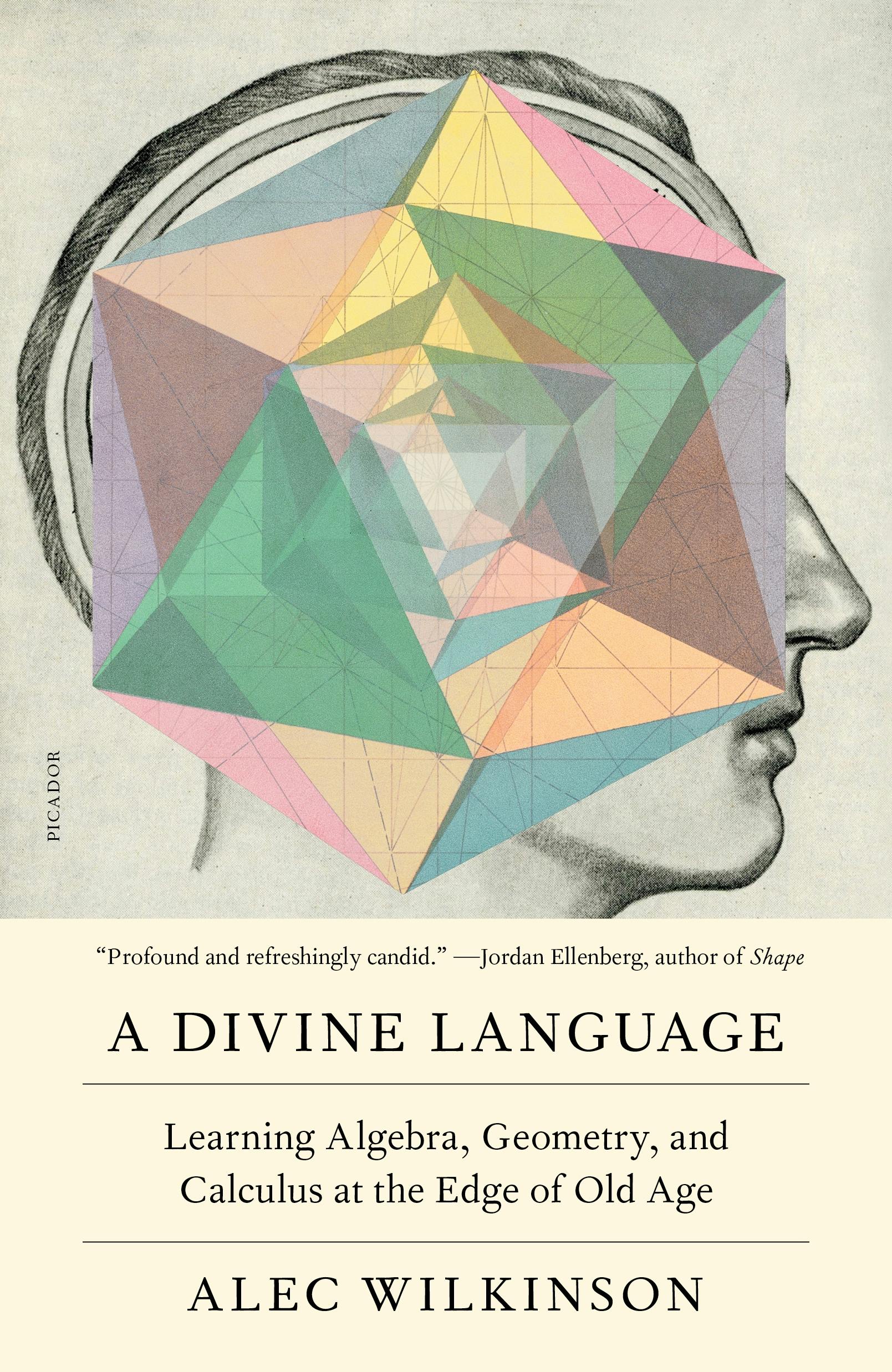
'Decades after struggling to understand math as a boy, Alec Wilkinson decides to embark on a journey to learn it as a middle-aged man. What begins as a personal challenge—and it's challenging—soon transforms into something greater than a belabored effort to learn math. Despite his incompetence, Wilkinson encounters a universe of unexpected mysteries in his pursuit of mathematical knowledge and quickly becomes fascinated; soon, his exercise in personal growth (and torture) morphs into an intellectually expansive exploration.'
https://us.macmillan.com/books/9781250168580/adivinelanguage/
![]() |
| A Divine Language |
As observed many times in the literature and here on W2tQ writing about Hodges' model, healthcare - medicine and nursing are both a science and art. Hodges' model is an invitation to the arts in liberal form, with an emphasis on practice: social sciences, humanities, physical sciences and even mathematics.
There is now quite a bank of posts on W2tQ tagged art/arts and more specifically prints. I still plan to attend a workshop on printing. As ever, in my head, my mind's eye - I've an amazing, brilliant .. (!?) arts project, just waiting to be released. A true collage of the care concepts.
If Hodges' model is 'simple' in its basic form, then it is clearly possible for other people to create their own artistic impressions, interpretation of Hodges' model. My effort would of course be unique, as would theirs. There could be a competition and I end-up missing out. Not even short-listed for a prize; a victm of familiarity perhaps?
Quite 'naturally' in a way, or at least by way of childhood experiences, a need for therapy and validation; I have also arrived at a belief that there is a mathematical project here (Oh, for goodness sake! Is there no end to this?).
As posted before, like Alec Wilkinson I am no mathematician. Embarrased, shamed to a husk at school on many occasions, I encountered math teachers who must have empathised. Well, that's one way to explain the appreciation of maths I have always felt. Or more accurately, a love of knowledge; of which maths and logic are a part? Since I can hardly understand, I am more in love with the idea of maths, than mathematics itself. I have always been in awe of maths and people who 'get it', even if that is only mastery of the high school mathematics curriculum.
Convinced that there is more to Hodges' model than meets the eye, I have thought of following Wilkinson - who tries to be systematic - to underpin a book - back into the nightmare lands of my youth. Should I retake GCSE maths? 'There be dragons', without a doubt. The heat can be recalled, like it was yesterday. This isn't just a dragon, it is a chimera. At times it wants to be a friend, providing familiar terms, domain, set, and group. Wilkinson's quest is structured and seeks a reasoned and disciplined approach. Why am I bothering? I have a choice surely? Nursing, health, global health can all collectively furnish many items of epistemological fruit. No need for calculative flagellation. Through Hodges' model you can productively span the disciplinary bridges once again: call in - sociology, economics, policy and more. How many Königsberg bridges do you need?
While the artist in me, might waste time. In pointing to Hodges' model as a potential mathematical object, this little seed might fall on fertile and (much) more capable ground(?), as Wilkinson describes:
'Mathematics might be the only creative pursuit in which inevitability figures. Other artists might be defeated by a task beyond their capabilities, but they do not live with knowing that sooner or later, if their work is consequential, someone will do what they haven't been able to do. Mathematicians work within a discipline in which, so long as their suppositions are correct, there is always a precise and irrefutable answer, even if they can't find it.' p.135.
Posted by Peter Jones at 9:14 am | PERMALINK
Labels: adult learning , ageing , algebra , arts , book , care , formulae , geometry , healthcare , Hodges' model , language , logic , mathematics , nursing , practice , quality , quantity , relations , sciences , theory
Two years ago in 2010 and post-cataract surgery I was literally full of the light and colour of a new year:
"2010" definitely not - future vision is 20:20!
Working in health you know not to take anything for granted, to live for today and what side effects and outcomes can follow clinical interventions. So, over the past six months I've noticed reduced vision in my left eye. Now I've no focus at all. Here's the situation across the four care domains:
It is frustrating to have difficulties again, but always sobering to be reminded of what being 'sighted' means. As I drive and also convey others I constantly consider the safety question.
The extent of the deterioration is scary. My vision is still brighter than before the intraocular catarct surgery. Being a 'bloke', or plain stupid (what does medical sociology have to say about that?) I've put off addressing this, but time now to act mechanistically and get this fixed. | For some 6-9 months I have experienced blurred vision in my left eye. Now I cannot see distance or read with glasses. Flaring is starting in the right with headlights at night when driving. Problem: posterior capsular opacification.
Solution: treatment using a Nd:YAG laser - neodymium-doped yttrium aluminium garnet; Nd:Y3Al5O12. Future side effect includes increased floaters, but my vision should be markedly improved and balanced once more.
|
It will be very good to have both eyes 'online' again. I've 3-4 days of leave left, and will head to the Lakes next month. Time to walk, run and pick up Drupal again. It is a reminder of the past going back to Wigan, the hospital where I did my general nursing.
|
Recognising I had a problem and the likely cause, I by-passed the opticians and went straight to my family doctor and asked to be referred to the hospital - Wigan RAEI where the initial surgery took place. The 'systems' including Choose and Book ran smoothly apart from instructions on telephone numbers to contact me.
|
Posted by Peter Jones at 10:26 pm | PERMALINK
Labels: 2020 , anatomy , care domains , eye , health , Hodges' model , laser , medicine , personal , physiology , publicness , reflection , sciences , surgery , vision
Well it is over and it was a great experience. So many thanks to the Drupal Oxford Group, Finn @finnlewis and the sponsors. The boxes are all ticked: the sessions, lunches, St Catherines' College surroundings and staff (excellent), and as ever the Drupal Community. Amongst many really good sessions ...
Yesterday, Johan Gant listed the pros and cons of Migrating data into Drupal using the migrate module, when you might care to use it and when not. When not to use it is a definite take home (a take care). There's a potential overlap here with semantizing content in Drupal 7 which Philipp Schaffner explored today. His presentation included not just the relevant modules, but Drupal's core RDF status out of the box and how to extend this. Philipp's English is very good; I wish I could present in another language as well as he did.
Many of the 'take homes' have not changed. They are glaringly obvious: build your site get on with it.
That aside in the previous efforts to enter content from the old
website into Drupal (4.7, 5.x, 6.x ...) the decisions about style, fonts, colours have been and remain an enjoyable task. In Bring that designer over to the Drupal side of the force Tom Bamford provided a description of styling and a listing of resources. Definitely something to follow and use.
Martin Bush introduced his work as a lecturer Use of Drupal at London South Bank University and the creation of QuizSlides. I have an eye on the existing Quiz module. The QuizSlides' approach utilises Powerpoint as the basis for the quiz. Prior to this Martin outlined his course on Internet Technologies across lectures, labs, MCT and individual assignments. Speaking to him afterwards I mentioned how I would love to take my stuff (re. h2cm) and formalise it in a structured way. How could you link Hodges' model into nursing, informatics, and educational curricula?
Another key session for me was How we built a Virtual Learning Environment with Drupal 7 with Lee Willis. This is way beyond my purposes in the sense of scale but not in terms of - intended - user experience. Lee made some vital points about Drupal's educational potential and the lessons he and his colleagues have gleaned from projects to date. There is still great variation in the user interface of Drupal and this is compounded with the number of contributed modules used. Drupal is powerful in providing related navigable content, but this should not mean forcing an order on the learner. In addition to the need to plan the interface, another point Lee made also draws me to Drupal and reflects a central ethos of some psychological therapies. We learn best through self-discovery. So in addition to structured and unstructured content, there is a case for leveraging Drupal to facilitate discovery. (I've just thought of another post...)
As well as education, the keynote yesterday by Prof. David Upton was informative and entertainingly delivered (a lesson in itself) stressing the complexity of corporate scale IT projects and the problems (disasters) that can and do ensue. I did wonder (and nearly asked) if Prof. Upton had any views on a particular project he didn't mention. Which reminds me: I must cast an eye on the new NHS information strategy.
Posted by Peter Jones at 10:52 pm | PERMALINK
Labels: #drupalEdu , academia , conference , Drupal , DrupalCamp , e-learning , education , informatics , interaction , interface , learning , LMS , open source , Oxford , RDF , semantic web , students , UK
Posted by Peter Jones at 7:33 pm | PERMALINK
Labels: arts , construction , coordination , drawing , eye , hand , hospitals , intervention , life , medicine , mobility , movement , NHS , operations , politics , representation , sculpture , surgery , values , women
|
| ||||
Posted by Peter Jones at 9:47 pm | PERMALINK
Labels: book , disciplines , field of view , fields of knowledge , Hodges' model , interpretation , introspection , maths , objective , perception , philosophy , physics , sciences , senses , space , spatial , subjective , vision
Having an eye for 'therapy-this' and 'that-therapy', a report on ecotherapy has appeared on the MIND website, blogs and other media. It's not new really, although the researched approach is very welcome. The mental health benefits of volunteering and the great outdoors have been recognised for countless years.
This summer - August in fact, there's an opportunity to do something different that also has an outdoor theme. It means putting that surf board down and getting the sun bed out: after midnight. Now is the time to do some networking and planning - at that time of night of course you must be safe and this is an experience to share with people you know and trust.
This is 'astrotherapy' which is connected to ecotherapy because venturing out you realise how light it is at night - where is the night sky!
Why go out and find dark skies? It's the PERSEID meteor shower and this summer with maximum the 12-13 August there is no full moon.
You can also check on whether the International Space Station (AND Space Shuttle on this occasion!) will pass within sight for your location.
When you can and do look at the stars it's quite a trip. If you are feeling depressed or lacking in self-esteem, if you let the view work its magic - it sure can make you feel insignificant and yet so very special. Gifted: to look the infinite in the eye...
Mind - Go green to beat the blues - Executive Summary
Some obvious tips: If travelling somewhere even with others check the site during the day. If needed: get permission - tell someone; take extra clothes and a hat - midges, mozzies. If you've a torch cover it with a transparent red film (red hanky even) so it doesn't mess your (and others!) night vision as much. Support your neck properly, you can't stand and crane your neck for hours - besides you'll look daft the next day walking into work - hey I know. If you are in the back garden and see a meteor don't shout out. The buckets of water will fly. Give yourself a good 10-15 minutes to light-dark adapt. Don't forget the flask! Be patient and I'm sure you'll be rewarded...
Posted by Peter Jones at 11:29 pm | PERMALINK
Labels: activity , astronautics , astronomy , dark skies , friends , Health Art and Science , health promotion , human ecology , mental health , mind , nature , observation , outdoors , space , well-being , wonder
To: DTMD2011 contacts
Dear colleague,
We are sending you this message because either you attended The Difference That Makes a
Difference 2011 workshop last September, or we have previously had some other contact with you in association with the workshop, and we think this information will be of interest to you.
DTMD 2013
Plans for "The Difference That Makes a Difference 2013" are taking shape. It will run from 8th to 10th April 2013 and will either be on the Open University campus or, if we can get the funding, at Bletchley Park. There will be an overall theme to the workshop of 'Information: People and Places', with the sessions provisionally planned as follows:
Session 1: The philosophy of information and the search for a UTI. This does not specifically address the people and places theme, but addresses the underlying theoretical basis running through all discussions of Information.An additional exciting plan for DTMD 2013 is the involvement of artists. We have been in discussion with the MK Gallery and are seeking funding to allow three artists to participate in the workshop, and at the end of the workshop for one them to be commissioned to produce a work which reflects, interprets and communicates ideas emerging from the workshop. The commissioned work would be unveiled/launched/performed six months after the workshop.
Session 2: Information and Identity: How does thinking in terms of information inform our understanding of human identity? How do our concepts of identity inform our understanding of information? What do we learn if we address race, gender, nationality, class, sexual orientation as information issues?
Session 3: Information and the built environment. In what sense is architecture an information discipline? What is the relationship between information and cities.
Session 4: Information and Geography. This opens the themes of sessions 2 and 3 to a broader consideration of information in the context of physical and human geography. As with DTMD 2011, these sessions will be followed by a synthesis session to maximise the opportunity for discussion.
Posted by Peter Jones at 12:40 pm | PERMALINK
Labels: 2013 , arts , CfP , cognition , comms , conference , geography , identity , information , interdisciplinary , journal , local , media , philosophy , quantum computing , research , science , situated , sustainability , synthesis
![]() |
| Brainscapes |
A marvellous cover (US too), a fascinating, clearly written and hence readable book. As expected today the layout, print size and design add enjoyment to the time invested.
As a nurse with an interest in science you are aware of much of the content in broad terms but 'Brainscapes' provides more detail and made me wonder about the prospects to follow from improvements in brain imaging, The Connectome, new technologies and techniques. Rebecca maintains the focus throughout.
I'm pleased to add this to my CPD reading list.
Nature and science are humbling. It is still quite recent that we realised the milky way is one of billions of galaxies. Now we can appreciate not only the complexity of the brain, but how it is embodied in mind, body and our experience of reality.
There is history here to begin. Russia and Japan were at war in 1904. Russia had a new high-velocity rifle with smaller bullets, 7.6mm reaching speeds of 620 meters per second. Whether co-incidence, and/or ironic, there are of course many brains trying to make sense of the current conflict in Eastern Europe. A change in injuries followed with these bullets capable of passing straight through the skull, sparing the life of the soldier and yet with life altering injuries.
As triage was founded on the battle-ground. So aftercare is grounded in the journey back 'home' for those who can make it and the extent to which 'veterans' and their families are recognised.* This lead to investigations (Inouye, see below) as soldiers experienced localised damage to the brain. Soldiers suffered scotomas affecting their vision, stimulating research and new approaches, devices 'cranio-coordinometer'. There are illustrations and some photographs throughout, the illustrator Paul Kim, adding to the text.
In 'Maps of You' maps are everywhere especially on screens, and yet as Schwarzlose notes the map's materials matter little. On p.17 "All I need is a pen and a scrap paper" I smiled - given the 'map' that Hodges' model provides, on paper, sand, black/whiteboard and mind's eye. Mental imagery is there too. Salience, figures early p.19 and with brain maps, visual maps and where we direct our gaze prompts more detailed consideration of context. The explanations of the sensory brain maps is fascinating, especially how the brain has evolved to deal with constraints of space, energy, distance and organisation. At the fovea in the eye, the map is magnified.
Perhaps in Hodges' model there are two fovea? One is the center of the model, the person-centred nexus an assurance function/correction as the fovea that is context shifts and jumps in response to the dynamics of the situation. Reading about the audio map, p.73 I thought about the 'timbre of care' (Yes, I've a bad case of h2cm-meme-mapitis). As a further sign of the times, chapter 5 (A Body Under Siege) on taste and smell and the protective function of what we do or don't ingest, I travelled from the individual to the national and the binary choices (yes or no) being exercised right now.
More to follow ...
Alexander P. Leff (2015) Tatsuji Inouye (1881–1976), Discovery UCL.
https://discovery.ucl.ac.uk/id/eprint/1491645/1/Leff_tatsuji_inouye_1881-1976.pdf
Many thanks to Rebecca Schwarzlose and Profile Books for my review copy.
*Apologies for digression...
Posted by Peter Jones at 11:28 am | PERMALINK
Labels: anatomy , book , brain , cells , history , human biology , maps , medicine , mind , movement , neuroscience , physiology , review , sciences , senses , sound , space , technology , vision , war
Dear reader,
Write to us at southsudanmedicaljournal@gmail.com
Thanks to everyone who supports SSMJ - authors, editors, and especially our peer reviewers.
In this issue
EDITORIAL
OBITUARY: Dr Frederick Khamis Tawad
BACK COVER: WHO: Recovering from Monkeypox at home
The SSMJ team
Email: southsudanmedicaljournal@gmail.com
Website: http://www.southsudanmedicaljournal.com
Follow us on Twitter@SSMedJournal and Facebook
Posted by Peter Jones at 6:20 pm | PERMALINK
Labels: Africa , antenatal , children , community , eye-care , HIV , journal , least developed countries , medicine , musculoskeletal , pandemics , pharmacology , research , South Sudan , teaching , video
What is that out there? Bioscape. Incredible whole Beautiful mote - in my eye? Are your - dreamscapes - yours? Your inscape alone: mindscape - your inner eye? | Landscapes, seascapes, skyscapes, spacescapes speak to us. Everyone. Stories of deep time. Stories of truth and truth emerging. See both sides of the cloudscape. Snowscapes in retreat. Cityscapes on the march. Yes! No! Yes! No! Yes! ... Soundscape* |
The sums have it. What tablescape awaits us? | For us - no escape. |
Posted by Peter Jones at 5:39 pm | PERMALINK
Labels: #EarthDay , action , activism , climate change , cognition , eco-anxiety , ecology , energy , environment , escape , ethics , future , Gaia , global , hope , ideas , inner space , landscape , reality , thought
![]() |
| Brainscapes |
Now I know how Umami (p.87) an "example food magazine website to demonstrate some of the features of Drupal core" - got its name. I'm sure this was explained at a Drupal Meetup. Savoury indeed!
There had to be two! The brain has two strategies: brain maps and distributed codes.
"Representing information with a distributed code is entirely different from representing it with brain maps. In a brain map, neighboring neurons represent neighboring regions in space, frequency, time, and so forth. And brain maps essentially represent information using location, or where in the brain area the neurons are most active. In contrast, there is no consistent relationship between neighboring neurons in brain areas that use distributed codes. These areas represent information through the distributed pattern of activity across that entire region of the brain, rather than through the location of activity within it. This pattern of activity is a kind of code." pp.93-94.
This distinction is significant for Hodges' model, as the distributed codes act to deal with novelty, what is new - ongoing (lifelong) learning (p.95). Hodges' model can help distinguish between subjective and objective concerns. Schwarzlose unifies the two - via a catfish (also a goal here - but not necessarily with such an assistant).
"The map in the olfactory bulb is organised into odor zones based on molecular structure, an objective property of these compounds in the physical world. But the second map is organized into zones based on the significance of the odors to the animal." p.100.
Chapter 6 'On the Move: Brain Maps for Action' would have been useful as a student nurse at Winwick Hospital, the history in the book brings back many reminders - late 1970s. Epilepsy, then was less well understood, and managed. In describing the M1 brain map and movement I wondered about consent, but can see that is a distraction. Chapters -
6. On the Move: Brain Maps for Action | 107- offer much to relate to clinical encounters: movement, reaching, infant versus the brain in adults, the senses and catastrophic events such as cerebrovascular accident - stroke. Morphologically there is much still to learn (brain maps are 'primed' before birth), which perhaps is why we recognise the remarkable nature of gestation and birth. 'Maps in the Making' provides wondrous insights, including the need in hospitals to rethink the sensory environment and experience for premature infants.
7. Maps in the Making: How Brain Maps Develop and Adapt | 131
8. Knowing Again: Brain Maps for Recognition | 151
While reading - I was struck at the experience of the newborn and mothers in Ukraine. The 'health career' model concerns life chances - from birth to later life...
As a community mental health nurse I have found subtle and less-subtle impacts on a person affected by semantic dementia (p.204) and their family. Given the ongoing invasion and war, I also thought about people living with dementia and having to flee their homes. The multiple contexts that pertain in such a crisis situation when considering 'maps' and sense-making. Especially, when the need for action is preemptive - preventive and so must be explained and justified, not once but perhaps repeatedly?
We are all innate mathematicians even if we feel we have no ability.
https://www.google.com/search?client=firefox-b-d&q=mathematics+in+catching+a+ball
I take some succor in this (p.127).
There's a hodgepodge in here too (p.161 hb). The myriad of objects we encounter and their recognition calls for the combination of brain maps and distributed codes. Chapter 8 is more psychological, touching :-) how we categorise objects, dimensions and scales, size and animacy. Galton's contribution is discussed, his ideas on eugenics also acknowledged. Visual perception, mental imagery and visual learning style remain subjects of note for researchers. I'm not sure why figure 32 stood out ( :-) - please pardon the quality of the photo. Paul Kim's illustrations are an excellent support for the prose.):
![]() |
| FIGURE 32 A comparison of visual perception and mental imagery in the V1 visual map. Paul Kim |
Somewhere I've saved an article on mental imagery from New Scientist I think, about this ability - the mind's eye and how it is missing for some 'brilliant' people (p.182) and posted previously:
In my mind's eye I can picture care: Frame by Frame
I might read Chapter 9 again, attention, action and perception in combination.
Chapter 10 had me thinking again about 'Conceptual Spaces' (quality dimensions) and threshold concepts (not in the book - but this is a positive!):
"Many of the concepts that rule our financial, social, and emotional well-being have no shape, no color, no odor or weight. How do we grasp these intangible concepts? As it turns out, we often do so by aligning abstract concepts with physical dimensions and then putting our brain maps to work." p.191.
There is a 'mental number line', vertical too, and culture is a factor in how we learn and the brain associates space and quantities, in which L-R, low-high are also brought into play. The question remains here: Is Hodges' model culturally neutral?
Still with h2cm - mind reading, writing and 'drawing' perhaps? p.236. In "Fortune-Telling with the Brain" we read about how fMRI is allowing us to learn how the brain maps employ teamwork. There is an architecture whose stability can inform predictions of future abilities - reading is described. Reading this you see ethical implications (as Schwarzlose warns p.238), but it may help to target personalised learning, as an adjunct to personalised medicine? I double checked (index) and the connectome is not mentioned, but the benefits of this research is still to be realised. In 'prison health' here in the UK (and globally?) it is long overdue but it is encouraging to hear about the focus on investigation for previous brain injury within the prison population. Remember - lead in fuel and the socio-economic impacts of pollution (ongoing - air and plastic pollution)?
Corporations have literally only 'scratched the surface' of the future potential to 'read' us individually. Through Hodges' model I can qualify and justify the model's increasing relevance. Technology and science not only call for SOCIO-technical approaches. The brain-computer interface and AI (p.239) demands we also consider the several forms of literacy and informatics that are needed in the 21st century: bio-informatics, bio-political, psycho-political and more.
This is very informative and timely read - the diagrams too. This is a book for all. For student nurses specifically, it will enable them to maximize learning in their practical placements and throughout their course of study.
Writing this review I can also see the important messages in chapter 12 - recognition of infancy and the opportunities this affords.
Many thanks to Rebecca Schwarzlose and Profile Books for my review copy.
Schwarzlose, R. (2021) Brainscapes: The Warped, Wondrous Maps Written in Your Brain―And How They Guide You". London: Profile Books.
Gradually over the past few months I've checked the care domain links. Deleting those where the domain is now "For Sale", broken, or the content is plain out of date. The final domain was the SCIENCES. It's the largest still and while the links are monsters, it is interesting working through them occasionally.
One change caught my eye last month in the 'Environment, Sustainability, Ecology & EcoSystem Health' listing (now former h2cm website). I clicked on Six Billion and Beyond and duly found that it has been retired from pbs.org. A few weeks ago I'd shared with students and have included on the CARDI conference poster the fact that today it is believed that the Earth's human population reaches 7 billion.
Looking back Six Billion and Beyond aired in 1999. So in 11-12 years there are an extra billion souls. You have to ask:
Posted by Peter Jones at 9:59 pm | PERMALINK
Labels: childcare , demographics , developing world , development , education , environment , health , HIV , human ecology , human rights , MDGs , nutrition , planetary health , population , poverty , quantity , resources , sustainability , UN
Posted by Peter Jones at 9:24 pm | PERMALINK
Labels: Africa , birth , crises , diabetes , disease , Ebola , health service , human resources , journal , knowledge , medicine , neonatal , Nigeria , obstetrics , research , studies , Sudan , training
Born in Liverpool, NW England, UK.
Community Mental Health Nurse NHS, Part-time Lecturer,
Researcher Nursing & Technology Enhanced Learning
Registered Nurse - Mental Health & General
Community Psychiatric Nursing (Cert.) MMU
PG Cert. Ed.
BA(Joint Hons.) Computing and Philosophy - BIHE - Bolton
PG(Dip.) Collaboration on Psychosocial Education [COPE] Univ. Man.
MRES. e-Research and Technology Enhanced Learning, Lancaster Univ.
Live and work in NW England - seeking a global perspective.
The views expressed on W2tQ are entirely my own, unless stated otherwise.
Comments are disabled.
If you would like to get in touch please e-mail me at
h2cmng AT yahoo.co.uk
orcid.org/0000-0002-0192-8965-=<>=-