Hodges' Model: Welcome to the QUAD: Search results for child

Hodges' model is a conceptual framework to support reflection and critical thinking. Situated, the model can help integrate all disciplines (academic and professional). Amid news items, are posts that illustrate the scope and application of the model. A bibliography and A4 template are provided in the sidebar. Welcome to the QUAD ...

Showing posts sorted by relevance for query child. Sort by date Show all posts

Sunday, March 16, 2025

Caring for babies and young children - what can older children do?

Dear All

I'm delighted to tell you that we have successfully raised funding for the completion of the Children for Health ten poster series.

On completion we will have many more posters than ten as we have other posters linked to projects on Diabetes and Eye Health, Oral Health and Life Skills.

All our posters feature 10 messages for young adolescents to learn and share (on the front) and lots of ideas on how to use the posters and additional activities to get children mobilised on the back. If you haven't seen our posters PLEASE take a look here. They are being used in so many ways!

www.childrenforhealth.org/resources

...and any feedback is always welcome.
Please also share with your networks.

I am looking for specialists in early years to help us revise our existing set of 10 messages on the topic of 'Caring for Babies and Young Children' for the new poster. It is a voluntary role. The process lasts about 3 months as we involve practitioners too and work with schools to get children reviewing the messages. It's usually about 3 rounds of review and then an art work review. I'd be very pleased to hear from those who feel they have the time and expertise to help.

Meanwhile take a look at our posters. We have three new ones!

WASH: https://www.childrenforhealth.org/WASHposter

Coughs and Pneumonia: https://www.childrenforhealth.org/CoughsPoster

Intestinal Worms: https://www.childrenforhealth.org/WormsPoster

HIFA profile: Clare Hanbury is director of Children for Health. She qualified as a teacher in the UK and then worked in schools in Kenya and Hong Kong. After an MA in Education in Developing Countries and for many years, Clare worked for The Child-to-Child Trust based at the University of London's Institute of Education where, alongside Hugh Hawes and Professor David Morley she worked to help embed the Child-to-Child ideas of children's participation in health – into government and non-government cchild health and education programmes in numerous countries. Clare has worked with these ideas alongside vulnerable groups of children such as refugees and street children. Since her MSc in International Maternal and Child Health, Clare focused on helping government and non-government programmes to design and deliver child-centered health and education programmes where children are active participants. Clare has worked in many countries in East and Southern Africa and in Pakistan, Cambodia and the Yemen. In July 2013, Clare founded the NGO, Children for Health and develops health education materials and and works on health education programmes alongside partners all over the world.

https://www.hifa.org/support/members/clare clare AT childrenforhealth.org

Wednesday, May 13, 2026

WPA/IACAPAP Global Curriculum Survey

Dear Neil et al.,

Would it be possible to recirculate this invitation to complete this ~5minute survey.

We recevied a good response (~200 with 72% expressing interest to join future steps) from the last round but we could have had more representation from Oceana, the Carribean, the Mediteranean, Central Asia, Russia, and perhaps more from any areas as emphasized in line 3 below.

Thank you in advance for your consideration, David
---------------------------------------------------------------------

Dear Colleagues, Families, Relatives, Young Adults, Adults, and Friends!

Anyone affected or who knows someone who is affect by a mental health problem.

We need your help, especially from those living in remote urban or rural areas, or otherwise underserved regions anywhere in this wide world!

HELP US DESIGN A GLOBAL CHILD AND ADOLESCENT MENTAL HEALTH, PSYCHIATRY AND ALLIED PROFESSIONS TRAINING CURRICULUM FRAMEWORK IN SUPPORT OF LOCALLY INTEGRATED COMMUNITY AND FAMILY-CENTERED EDUCATION AND ACTION.

The International Association for Child and Adolescent Psychiatry and Allied Professions (IACAPAP)

and

The World Psychiatric Association (WPA) Child and Adolescent Section are developing the Global Child and Adolescent Psychiatry and Mental Health Training curriculum FRAMEWORK.

To complete a short DESIGN feedback and ENGAGEMENT survey (~5 Minutes)

Click or Copy and Paste the following URL: https://forms.cloud.microsoft/r/x4MyX0MkYt

Here is A SHORT INFORMATIONAL VIDEO: https://www.youtube.com/shorts/NdMRqb1LVVM


HIFA profile: David Cawthorpe is Adjunct Professor, Cumming School of Medicine, Department of Community Health Sciences; Adjunct Professor, Cumming School of Medicine, Department of Psychiatry | Child and Adolescent Psychiatry; and Child Health & Wellness Researcher, Alberta Children's Hospital Research Institute, Canada. 
https://profiles.ucalgary.ca/david-cawthorpe cawthordATucalgary.ca

My source: HIFA.

Saturday, November 07, 2026

Government: policymakers & APPGs need Hodges' model

Press release Nov. 3

Child Trust Fund injustice to end under Government plans

Young people lacking the mental capacity to make financial decisions will finally have easier access to their Child Trust Funds. 

Young people lacking the mental capacity to make financial decisions will finally have easier access to their savings, ending a long-standing injustice that has created unnecessary barriers for families. 

Following years of campaigning and legal difficulties faced by families, new legislation will be introduced by the Government to allow simpler access to Child Trust Funds, replacing the complex and often costly Court of Protection process.  

The reforms are expected to allow parents and carers to go directly to Child Trust Fund providers to access savings, solving years of unnecessary anguish for an estimated 63,000 to 126,000 young adults. 

Child Trust Funds were introduced in 2005 to provide children a financial boost as they start adulthood, but the scheme made no provision for 18-year-olds who lacked the mental capacity to manage their finances without a straightforward way to access their savings.  

Campaigners, disability charities, and the financial services sector will help shape the new process, protecting young people while pulling down barriers that have frustrated families for years. 

Justice Minister, Jake Richards said: 

Young people who lack the mental capacity to make financial decisions should be able to access their savings as easily as possible – especially when this money was put aside by loved ones to help them take their first steps into adulthood. 

This is simply an injustice that we’re finally putting right and as campaigners have argued for years, change is long overdue. This legislation will ensure this group of young adults no longer face difficulty from accessing money that is rightfully theirs.

Continued ...
individual
|
INTERPERSONAL
: SCIENCES             
HUMANISTIC ------------------------------------------------ MECHANISTIC
SOCIOLOGY : POLITICAL   
|
group

Mental capacity

Consent

Disability - Learning Disability

Accessibility

Childhood - Adulthood

Processes - Systems

Families

Social (in-)justice

Activism

Child Trust Funds

Policy making

Policy


My source: BBC Radio 4 Today 0700-0900 7th Nov 2026

Previously: 'consent' : 'mental capacity' : 'APPG'

Friday, May 30, 2025

Martha's mum, dad, guardian ...

Hayward, E. Parents really do know when
their child is sick, The Times,
30 May 2025, p.1.

The previous post highlighted the fact that while practice (and theory) based upon research finding that are 'evidence-based' and scientifically rigorous are a 'gold standard; there are other means by which knowledge is obtained. Cultures, often have systems to transfer knowledge - that which matters to the society, even if is not written in the conventional meaning of the term.

Intution is another source, and within social groups can be a powerful spur to action, and help seeking. This is demonstrated regularly in the knowledge that a parent, or guardian has about what is the normal presentation for a child in their care. 

In the UK Martha's Rule is being tested in NHS hospitals. It is encouraging then to hear and read news of a study in Australia (so in combination a 'multicenter' effort?).


Mills, E., Lin, P., Asghari-Jafarabadi, M., West, A., & Craig, S. (n.d.). Association between caregiver concern for clinical deterioration and critical illness in children presenting to hospital: A prospective cohort study. The Lancet Child & Adolescent Health. https://doi.org/10.1016/S2352-4642(25)00098-7


individual
|
INTERPERSONAL : SCIENCES
humanistic ------------------------------- mechanistic
SOCIOLOGY : POLITICAL
|
group

"Not herself ..."

Martha

"Not well"

Martha
Mills

parents, guardians, friends & family


Martha's Rule*


Hayward, E. Parents really know when their child is sick, The Times, 30 May 2025, p.1.

*Under test in the UK.

Previously: 'intuition'

Monday, October 12, 2020

Conference: Improving Child & Adolescent Health for better Public Health

Dear Ladies and Gentlemen,

Dear Professors and Researchers,

Dear Colleagues!

It is our pleasure to invite you to this international 2-day meeting and research exchange

held online on Tuesday & Wednesday, November 10 & 11 2020 – save the date!

Improving Child & Adolescent Health for better Public Health

– Fiction or within the scope of possibility?

to bring together researchers and stakeholders to introduce completed research projects as well as new research ideas

that address the complex challenges and needs of child & adolescent health for future collaborative projects in order to apply for national and international grants.

Please find attached a brief outline with preliminary program (contents, schedule).

We greatly appreciate your attendance and would ask for a confirmation by Friday, October 23, by replying to this email.

We also welcome your contribution in form of a short talk/pitch.

In order to finalize the program, please include the following information in your response to this e-mail:

120 Researchers from 56 Universities/Organizations around the world and cross-cutting disciplines and research interests are invited.

Please feel free to forward this invitation to any colleagues you think would be interested as well.

Further detailed information along with the final program will be provided as soon as it is finalized, but right in time before the event in November 2020.

We look forward to welcoming you to this international 2-day meeting on „Improving Child & Adolescent Health“!
 
 
Kind regards,
 
Katharina Wirnitzer, University College of Teacher Education Tyrol & Leopold-Franzens University, Innsbruck, AT

Prof. Clemens Drenowatz, University College of Teacher Education Upper Austria, Linz, AT

Prof. Nandu Goswami, Medical University of Graz, Graz, AT

Studienleitung (PI)

Member of Schools for Health in Europe – SHE Research Group

__________________________________

Dr. rer. nat. Katharina Wirnitzer (PhD)

Institut für fachdidaktische und bildungswissenschaftliche Forschung und Entwicklung

Pädagogische Hochschule Tirol

Department of Subject Didactics and Educational Research and Development

University College of Teacher Education Tyrol

Pastorstraße 7/A.008, 2. OG
A – 6010 Innsbruck

E  katharina.wirnitzer AT ph-tirol.ac.at
I    www.ph-tirol.ac.at

Wednesday, July 20, 2022

Reflecting on The Times Education Commission 2022

"At the Apple headquarters in Cupertino, California, Susan Prescott, vice-president of enterprise and education marketing, argued that economic prosperity depended on human ingenuity. “Creativity doesn’t mean ‘Have a music and an arts class’. Creativity means across disciplines, how can you bring in ways for kids to engage in the material differently? How do you bring in opportunities for kids to reflect their learning in new ways? How do you use it to get a different, broader view rather than the fact-based stuff?" p.58. (with my emphasis and below)

Included in the 12-point plan for education:

1 A British Baccalaureate

It would offer broader academic and vocational qualifications at 18, with parity in funding per pupil in both routes, and a slimmed-down set of exams at 16 to bring out the best in every child.

2 ‘Electives premium’

This should be offered for all schools to be spent on activities including drama, music, dance and sport and a National Citizen Service experience for every pupil, with volunteering and outdoor pursuits expeditions to ensure that the co-curricular activities enjoyed by the most advantaged become available to all.

3 New cadre of Career Academies

These would be elite technical and vocational sixth forms with close links to industry, mirroring the academic sixth forms that are being established and a new focus on creativity and entrepreneurialism in education to unleash the economic potential of Britain.

4 Significant boost to early years funding

The extra funding should be targeted at the most vulnerable. A unique pupil number would be given to every child from birth, to level the playing field before they get to school. Every primary school should have a library.

5 Army of undergraduate tutors

The students would earn credit towards their degrees by helping pupils who fall behind to catch up.

6 Making the most of tech

A laptop or tablet for every child, greater use of artificial intelligence in schools, colleges and universities to personalise learning, reduce teacher workload and prepare young people better for future employment.

7 Wellbeing at the heart of education

A counsellor should be placed in every school and an annual wellbeing survey of pupils carried out to encourage schools to actively build resilience rather than just support students once problems have arisen.

8 Bring out the best in teaching

The profession’s status and appeal would be increased with better career development, revalidation every five years and a new category of consultant teachers, promoted within the classroom, as well as a new teaching apprenticeship.

9 A reformed Ofsted

Ofsted should work collaboratively with schools to secure sustained improvement, rather than operating through fear, and a new “school report card” with a wider range of metrics including wellbeing, school culture, inclusion and attendance to unleash the potential of schools.

10 Better training

Teachers should be trained to identify children who have special educational needs, a greater focus should be placed on inclusion and a duty put on schools to remain accountable for the pupils they exclude to draw out the talent in every child.

11 New university campuses

New campuses should be created in 50 higher education “cold spots”, including satellite wings in further education colleges. In addition, pay and conditions in the FE sector should be improved and a transferrable credit system between universities and colleges created to boost stalled British productivity.

12 A 15-year strategy for education

The strategy should be drawn up in consultation with business leaders, scientists, local mayors, civic leaders and cultural figures, putting education above short-term party politics and bringing out the best in our schools, colleges and universities.

Obviously idealised but mapped here to Hodges' model the long-term - policy, strategic, funding, resource and workforce emphasis is apparent.

INDIVIDUAL
|
 INTERPERSONAL    :     SCIENCES               
HUMANISTIC --------------------------------------  MECHANISTIC      
SOCIOLOGY  :   POLITICAL 
|
GROUP

7 Wellbeing at the heart of education

reflection
critical thinking,
communication
and creativity


2 ‘Electives premium’
(outdoors) ...

6 Making the most of tech

7 Wellbeing at the heart of education


2 ‘Electives premium’
(drama, music, dance) ...


1 A British Baccalaureate

2 ‘Electives premium’
(National Citizen Service experience)

3 New cadre of Career Academies

4 Significant boost to early years funding

5 Army of undergraduate tutors

8 Bring out the best in teaching

9 A reformed Ofsted

10 Better training

11 New university campuses

12 A 15-year strategy for education


What, if anything, is missing?

With its recommendations, the Commission is not intended to be prescriptive, specifying educational methods, methodologies and resources. But the aims and mapping above, point to the need to link education and health as per #7 Wellbeing at the heart of education. 

There is surely an avenue here - via the sustainable development goals, which the UK must also 'achieve'. Consider the following too:

"The system doesn’t measure creativity; it measures what you can remember of other people’s facts.” p.11.

"A British Baccalaureate at 18, an equally rigorous but broader qualification than A-levels with academic and vocational options under the same umbrella. Pupils studying for the academic Diploma Programme would take six subjects — three major, three minor — covering humanities and sciences as well as units on critical thinking, communication and creativity. Those on the Career-related Programme would combine learning (which could include BTecs or a T-level) with work experience. There would be the option for students to “mix and match” elements of both programmes to create the qualification that best suited them. All pupils would do an extended project, community service and some literacy and numeracy through to 18. Digital skills would be woven through the whole curriculum." p.95.

What is missing is understandably the aforementioned tools to facilitate creativity, but let state this as follows and join the dots with wellbeing.

  • We need to respect, support and encourage students to be and become curators of their lifelong learning and life chances. 
  • The reference p.11 to students being measured on what they can "remember of other people’s facts" is a key statement. As a curator, students should be the marshal of their own 'memory palace' pushing the boundaries, their envelope as the lifelong learning (constant test-pilot) of what we hope is a long career - and not just while in 'work'.
  • In the above mapping, we can see what is recognised in 'wellbeing'. Pupils need a foundation, they need the confidence and self-esteem to explore, express and explain any difficulties commensurate with their unique situation and identity. The importance of security (nationally, locally and personally) as the basis to address the social determinants of health are essential to integrate short and long-term policy aims and objectives, individual and collective success.

This is identified in the findings:

"Lee Elliot Major, a professor of social mobility at the University of Exeter, said there were 'bold and compelling reform' in the commission’s findings.

He welcomed the adoption of his recommendations for undergraduate tutors to help poorer pupils, adding: 'We need to consider radical reset to ensure that the education system fulfils the potential of all children.'”

https://www.thetimes.co.uk/article/times-education-commission-report-welcomed-by-tony-blair-john-major-qwc3b7ktx

The Times Education Commission 2022, 

https://www.thetimes.co.uk/society/education/education-commission

'Health career' - 'life chances'

Friday, July 29, 2022

The Cass Review Interim Report ... reflections ...

 ... that may stand for themselves?

[ with my emphasis ]


Independent review of gender identity services for children and young people: 

Interim report

February 2022

Introduction from the Chair

"... the aim of the Review is to ensure that children and young people who are experiencing gender incongruence or gender-related distress receive a high standard of NHS care that meets their needs and is safe, holistic and effective." p.11.


"As with autism, the framework for assessment needs to become formalised so there are clearer criteria for diagnosis and treatment pathways which are shared more widely. These should incorporate not just whether the child or young person meets DSM-5 criteria for gender dysphoria, but how a broader psychosocial assessment should be conducted and evaluated, and what other factors need to be considered to gain a holistic understanding of the child or young person’s experience. Professional judgement and experience will still be important, but if the frameworks and criteria for assessment and diagnosis were more consistent and reproducible, there would be a greater likelihood that two different people seeing the same child or young person would come to the same conclusion." p.60.

"Assessment and management: All children and young people who are referred to specialist services should have a competent local multi-disciplinary assessment and should remain under active holistic local management until they are seen at a specialist centre." p.92.

[ and from: https://www.england.nhs.uk/commissioning/spec-services/npc-crg/gender-dysphoria-clinical-programme/implementing-advice-from-the-cass-review/ ]

"Dr Cass has now sent further advice on the core components of this model. You can read the advice in full here.

In summary, she has said:

  ...

  • ‘The services should have an appropriate multi-professional workforce to enable them to provide an integrated model of care that manages the holistic needs of this population’.
  • ‘Staff should maintain a broad clinical perspective to embed the care of children and young people with gender uncertainty within a broader child and adolescent health context’."


Wednesday, July 01, 2009

Relative poverty (3) - sciences

[The introduction is repeated across these posts: intrapersonal, political, sociology]

There are many paradoxes in life and many of these are concentrated in the realm of health and medicine (a major sub-division of life and death).

For decades the link between poverty and standards and quality of health has been recognised and politicised in the media and policy. Just this past week was news of a Bill to make the eradication of child poverty a legal obligation not something that can be the political objective at the start of a Government and then cast aside.

Many things are relative and poverty is often described in this way applying to individuals, social classes, communities, regions and whole nations. Using the domains of Hodges' model what reflections does this prompt? Let us see:

SCIENCES: We tend to think of economics and the definition of poverty in materialistic and monetary terms. In this domain things become things. Processes and much more besides - people are objectified and commodified: prostitution, child labour, child soldiers, people trafficking - individuals as numbers at a certain time, certain place. The person reduced to a process - service.

On the sciences front in an explicit way our poverty of knowledge ('education, education, education') becomes apparent as we try to place value on the environment and not only our personal use, but national use of the green and blue. A new economics is indeed called for.

In the current 2009 Reith Lectures (closing lecture this week) Professor Michael Sandel presents A New Citizenship. Within these lectures Prof Sandel explains how fees change services, values and expectations with examples of child care and blood supply in health care. Organisations have to be aware of their assets with laptops, PCs and umpteen other pieces of equipment and resource possessed of their own unique ID.

Yes, according to my interpretation of Hodges' model the points raised here belong in the political domain, and yet we are so befuddled, intoxicated and to a certain extent deluded with the sciences, technology and material things (de-vices?) that in contemplating poverty we must extend the political realm. ...

From now on the public's attitude to science as individuals and families, communities and nations is going to be critical to change our understanding and more importantly our experience of poverty - material, relative or otherwise.

Image source: BBC

Additional links:

The Simonyi Professorship: hair for the Public Understanding of Science at Oxford University

'Poverty' on W2tQ

Sciences care (knowledge) domain links resource

Political care (knowledge) domain links resource

Monday, August 17, 2020

Expression of Interest to Join the Global Planning Committee


Expression of Interest to Join the Global Planning Committee

Unlocking Potential: Prioritizing Child & Adolescent Health and Well-Being in the New Decade

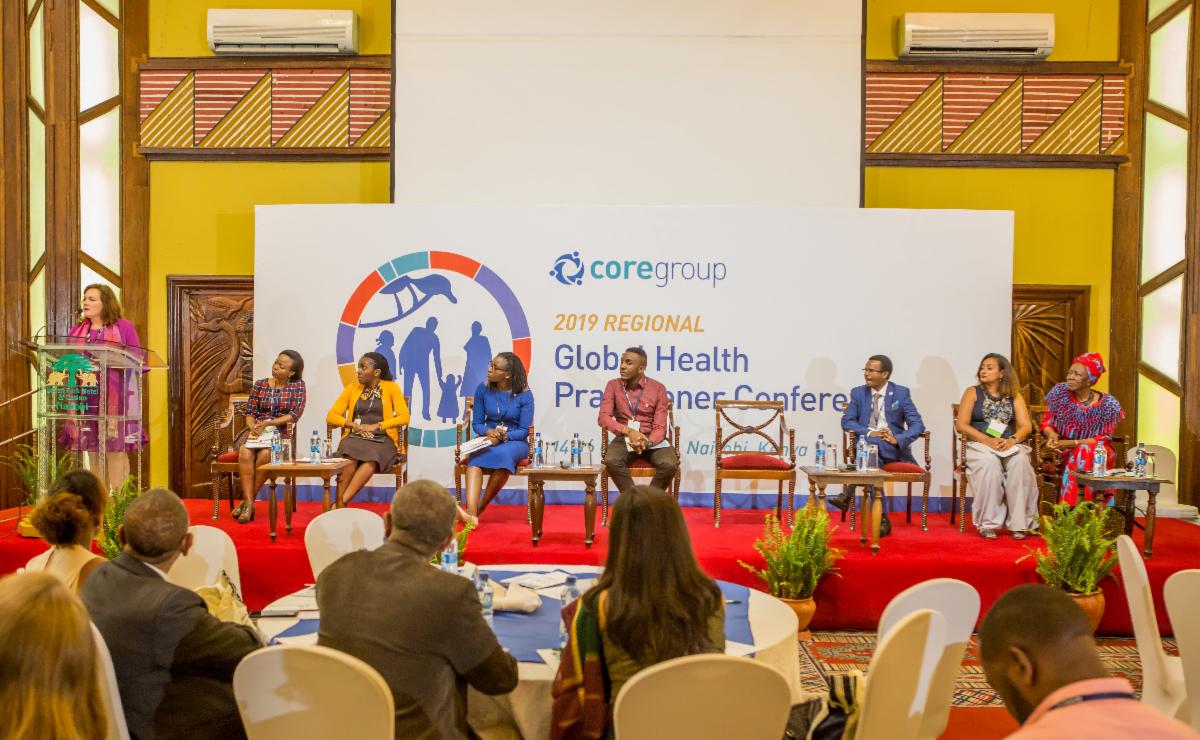
CORE Group Global Health Practitioner Conference (GHPC)

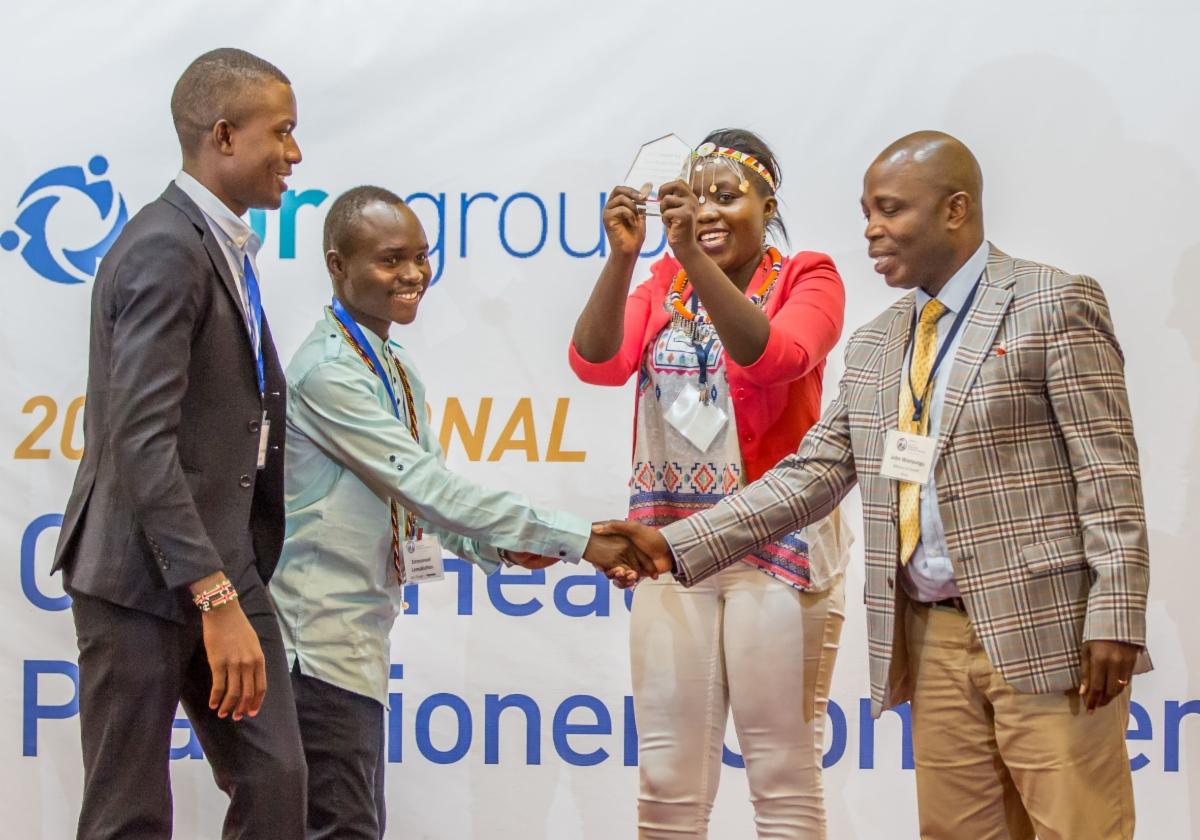
For over two decades, CORE Group has hosted a Global Health Practitioner Conference featuring skills-building sessions, recent evidence on cross-sectoral technical areas, and dialogue on community health. We have a unique opportunity this year to connect even more organizations and professionals around the world with our new digital format, and this year is particularly important as we set the stage for future investment and innovation in child and adolescent health and well-being.

CORE Group and its membership will engage government, ministries of health, policymakers, practitioners, academia, civil society, private sector, global and local organizations in this virtual conference on December 8-10, 2020.

This Conference positions itself as a sharing platform for promising practices and innovations, ongoing challenges, and lessons learned in child and adolescent health and well-being worldwide; and as a convening space for various stakeholders - from community health workers who perform work on the ground to government policymakers who draft national policies - to discuss current opportunities and challenges for policy making, implementation, and partnership and draw consensus on key steps to move the needle forward.

CORE Group is convening a Global Planning Committee with various interested stakeholders to provide input on conference themes and objectives and to support the creation of a multi-day, interactive agenda. Being a committee member is a volunteer position* and will require up to 6 hours per month in planning calls and agenda input, outreach to speakers, and more.

If interested in participating in the Global Planning Committee, please complete the form below by Friday, August 21, 2020, COB.

*A stipend will be provided to young people in the committee, CORE Group is committed to meaningful youth engagement and aims to include 50% of young leaders in this committee. 


My source: Ados May, hss AT lists.coregroup.org

Thursday, August 07, 2025

'Finding the Signal through the Noise' - WHO EARS

It is deprived communities who desperately want to do their best for family, but struggle to have access to and make sense of many sources of information. News and information not just through 'traditional' channels, but social media. Trying to be objective, non-judgemental it can still be surprising how TVs and smartphones are the key personal and furniture items.

Outside of London, Liverpool has a low uptake of immunisation against measles:

Liverpool, now has cases and a child's death from measles:

https://liverpool.gov.uk/council/public-health-liverpool/measles-on-the-increase/

https://www.liverpoolecho.co.uk/news/liverpool-news/alder-heys-plea-after-child-32050189

Located in-between, I often visit Manchester and Liverpool. I wonder now if I should visit Liverpool less. My daughter and her partner expecting their second child have a decision to make next year.

I noticed on X a reference to 'social listening'. This was missed while drafting a paper on COVID, technology, social media and information disorder. More positively, work on 'infodemic' was captured and posted. 

Blowing the dust of another draft, I will reassess this stream of work and seek specific literature, especially contributions to improved outcomes - public (mental) health.


McGowan B. S. (2022). World Health Organization's Early AI-supported Response with Social Listening Platform. Journal of the Medical Library Association : JMLA, 110(2), 273–275. https://doi.org/10.5195/jmla.2022.1398

See also:

Fryer, Jon. “Information Literacies – Learning, to Thrive in a Digital Age” IRMS Bulletin 230 (2022): 16-21.

Jones, P. (1996) Humans, Information, and Science, Journal of Advanced Nursing, 24(3),591-598.

Wednesday, March 24, 2021

Hodges' model: Not just rectilinear, but bubbles too ...

individual
|
INTERPERSONAL : SCIENCES
humanistic ----------------------------------------------- mechanistic
SOCIOLOGY : POLITICAL
|
group

"To the holistic absorption by the One – upon which the success of so many religions and philosophies was premised for centuries – Sloterdijk opposes the proposition of a dyadic theory of intimacy. This is a distinction between an acute appearance of unity, experienced from a cosmic position of being fully contained inside a whole, and an ontological insistence that this position is itself contingent on a constitutive relationality. It is not possible to attain an overview, an outside bird’s-eye view of spheres (Neither Sun Nor Death, p263). By contrast, ... 


"Sloterdijk’s anthropological theory of shared, auto-poetic space, carries ontogenetic force. This is, by example, expressed in the discussion of the relationship between birth and thought, or between the birth of a child and that of a world.35 Sloterdijk dedicates the bulk of Bubbles to birth, providing a detailed discussion of intrauterine dwelling, including the sensory presence of liquids, soft bodies, the early experience of spatial boundaries, fluidal communion in the medium of blood, the constitution of an intimate acoustic bipolar sphere and, above all, cohabitation with the placenta, conceived as primal, anonymous companion. Intrauterine space is approached as the most vivid illustration of the spherological principle according to which coexistence precedes essence. At once enclosed and porous, poetic and connected, intrauterine space is the production of a dense and connected ‘two’: ‘What we call ‘mother and child’ in the abbreviated terms of subject-object language are, in their mode of being, only ever poles of a dynamic in-between’ (Bubbles, p320)." p.47.


By contrast, ... the relational ontology of spheres aims to rehabilitate the relation at the expense of the essential, and the situation at the expense of components (p151). Against any form of substantialism, a relational ontology emphasises the centrality of being-with [Mitsein] in relationships of mother and child, mesmerist and subject, therapist and patient, foetus and placenta, and so forth." p.47.


https://muse.jhu.edu/issue/39847

My source:

Duclos, V. (2019) Falling into Things: 
Peter Sloterdijk, Ontological Anthropology in the Monstrous. 
New Formations, 95, Spaces and Stories, pp. 37-53.

Friday, June 19, 2026

'Curiosity': child safety and safeguarding c/o BBC News

'Teacher who killed his adopted son given whole life prison sentence

14:30 18 June

That concludes our live coverage of the sentencing hearing.

To recap what happened at Preston Crown Court earlier: A teacher who sexually abused and murdered the 13-month-old baby boy he adopted with his partner has been told he will spend the rest of his life in prison.

Preston Davey died in July 2023 at the hands of Jamie Varley, 37, who subjected the child to physical, sexual and emotional abuse during the final four months of his life.

Varley, from Blackpool, told police Preston had accidentally drowned in a bath, but a post-mortem examination discovered the child had suffered 40 injuries.'

Continued ...

◇

individual
|
INTERPERSONAL
: SCIENCES             
humanistic ------------------------------- mechanistic
SOCIOLOGY : POLITICAL   
|
group
 
curiosity


PROFESSIONAL
CURIOSITY


Source (Various): BBC Live News https://www.bbc.co.uk/news/live/c4gyrewq8xkt

 Previously: 'curiosity' : 'risk'

Saturday, November 26, 2022

Int. Congress on Evidence-based Parenting Support (6-8 June 2023)

CALL FOR ABSTRACTS

Abstract submissions date for the International Congress on Evidence-based Parenting Support (6-8 June 2023) has been extended to 23 December 2022. This global initiative will focus on effective evidence-based parenting support. It will bring together academics, policymakers, practitioners, consumers and service providers to advance research, policy and practice in the field of parenting and family intervention. This international collaboration aims to create global impact that will benefit parents and children now and for the next generation.

We welcome your insights from research, policy and practice that address a wide range of themes. See more on the themes: https://www.i-ceps.pafra.org/submission

Exciting news for submissions from low- and middle-income countries. The organising committee is pleased to offer free registration for the 20 top ranking abstracts from these countries.

Submissions close: 23 December 2022

More guidelines on abstracts:xxxxxxx

Regards, Maria Battaglia

BEd, GradDip Ed&Pub, MComms Communications Officer Institute of Child Protection Studies Australian Catholic University Pronouns: she/her

Level 1, 232 Victoria Parade East Melbourne VIC 3002 Monday to Friday P: 03 9230 8732 E: Maria.Battaglia AT acu.edu.au W: www.acu.edu.au/icps W: safeguardingchildren AT acu.edu.au T: @ACU_ICPS L: Institute of Child Protection Studies

I-CEPS Congress (hosted by PAFRA) W: https://www.i-ceps.pafra.org/ Twitter: @PAFRA_Official LinkedIn: ICEPS2023 Facebook: https://www.facebook.com/ICEPS2023

I acknowledge the Traditional Owners of the lands on which I live and work, and their continuing connection to land, sea and community. I pay my respects to Elders past, present and emerging.

HIFA profile: Maria Battaglia is Communications Officer at the Institute of Child Protection Studies, Australian Catholic University. https://www.i-ceps.pafra.org/ E: Maria.Battaglia AT acu.edu.au 

My source: https://hifa.org/

Saturday, September 28, 2024

'It takes a village ...

individual
|
INTERPERSONAL : SCIENCES
humanistic ------------------------------- mechanistic
SOCIOLOGY : POLITICAL
|
group

... to raise a child.'

"The artist returned to this subject almost  twenty years after he had drawn his red chalk  studies of children walking and standing,  shown nearby. As was typical in Rembrandt's  later works, facial expressions and gestures  are indicated with sparse and abbreviated  lines. It is remarkable that with such economy  the artist conveys an encouraging atmosphere  from the figures who surround the child, as it  takes its first steps. The British artist David  Hockney described this as 'a perfect drawing' in an interview in 2016."

1912,0416.2'


Rembrandt van Rijn (1606-1669)
A child being taught to walk, around 1656
 
Pen and brown ink on grey-brown paper.


The British Museum, Room 90. 28th September 2024.
https://www.britishmuseum.org/exhibitions/new-life-rembrandt-and-children


Thursday, July 08, 2010

Born HIV Free campaign announces 11 million views for "Baby in the Sky" creative film

Dear Writer and Blogger,

In our series of news related to the 6-month Born HIV Free campaign, we are delighted to send you a press release focussing on the specially created film "Baby in the Sky" created by Les Bonzoms for this campaign.

The film has attracted a great deal of attention through YouTube and other broadcasts, helping to make people aware about the campaign.

Thanks as ever for your support,

Brendan
Ogilvy Public Relations Worldwide France, Paris


“Baby in the sky”: a stunning new film made by Les Bonzoms specially for the Born HIV Free campaign attracts more than 11 million viewers on dedicated YouTube channel

Geneva, 6 July 2010 – The YouTube channel dedicated to The Global Fund’s Born HIV Free campaign which was launched seven weeks ago, has already been seen by more than 11 million viewers. The channel features an exceptional animation film called “Baby in the Sky”, created by the design team Les Bonzoms and with music of Amy Winehouse. Euronews, the international news channel, joins the campaign by also featuring the video until October.

“The purpose of the Born HIV Free campaign is to encourage millions of people to support The Global Fund so we can finally put an end to the tragedy of 430,000 babies being born HIV-positive every year, when we have the means and the expertise to prevent this.” says Carla Bruni-Sarkozy, Global Ambassador for the protection of mothers and children against AIDS. “Hopefully this beautiful film will reach a wide audience because of its creative ingenuity, and inspire millions of people to support The Global Fund so we can finally put an end to this terrible injustice.”

“Baby in the Sky” is a highly creative and imaginative animated film that conveys the beauty of life ahead for an unborn child. The film artistically portrays an imaginary journey in a world full of adventurous landscapes and fantastic creatures. It ends with a call from Carla Bruni-Sarkozy for an HIV-free generation in which she says “Life is a beautiful journey. Don’t let AIDS kill it.”
The film owes its powerful soundtrack to multi-award winning and singer/songwriter artist Amy Winehouse, who offered the pro-bono use of her “Back to Black” song for the film.
“It was a question of finding a true resonance with the images in the film created by Bonzoms”, says musician / producer Julien Civange, who conceived the Born HIV Free campaign, about the use of Winehouse’s music. “We wanted to find a piece that was modern but also well known, something that carried the same sensibility as the film. The magic came with the soundtrack by Amy Winehouse, an artist that Carla considers one of the greatest and most talented of her generation and who was generous enough to participate in the campaign.”
The animation can be viewed on the Born HIV Free YouTube channel and will also be distributed through various social and mass media platforms during the course of the campaign.

Since June 20, Euronews, the international news channel, has been broadcasting “Baby in the Sky” on its network in 155 countries. The film is shown in 90-second slots an average of three times a day for the first month and then once a day thereafter. Broadcasting of the film will continue until 5 October 2010.

"All of us at Euronews are very proud to be associated with this initiative, which is supported by an incredible positive animated film" said Philippe Cayla, Chairman of the Executive Board of Euronews. "We are glad to open Euronews' influential and far-reaching network to such professionals and experts fighting to eradicate HIV transmission during pregnancy. We are mobilized to make a success of this campaign and we strongly believe that Euronews' viewers will be deeply moved and will want to participate in the Born HIV Free campaign," Mr Cayla added.
CNBC has also been broadcasting the video on its network in Europe, Middle East and Africa since the launch of the campaign.

Speaking about the distinctive nature of the “Baby in the Sky” project, Jack-Antoine Charlot, a designer from Les Bonzoms said: “It was necessary to stop playing with the notion of guilt as an incentive for people to act and instead to reinforce a sense of wanting to share and take part in something. In the case of mother-to-child HIV transmission, the medications already exist to stop it. The problem is one of mobilization.”

After the film, viewers are invited to show their support by signing their name on the campaign’s “virtual wall of support”, on the www.bornhivfree.org website. The campaign asks people - by the simple act of clicking a button - to register their support for the work of The Global Fund and for the elimination of mother to child transmission of HIV by 2015.
Watch the videos on: www.youtube.com/bornhivfree