Hodges' Model: Welcome to the QUAD: Search results for Africa

Hodges' model is a conceptual framework to support reflection and critical thinking. Situated, the model can help integrate all disciplines (academic and professional). Amid news items, are posts that illustrate the scope and application of the model. A bibliography and A4 template are provided in the sidebar. Welcome to the QUAD ...

Showing posts sorted by date for query Africa. Sort by relevance Show all posts

Saturday, September 05, 2026

UN votes to adopt new world map to reflect Africa's true size | BBC News

UN tells the world: Stop making Africa look small

'By 164 votes to one, Member States on Friday endorsed a resolution promoting map projections that more accurately reflect the true size of continents – the culmination of an African-led campaign against the 16th-century Mercator projection, still the most widely used map in the world. 

The United States cast the sole vote against, dismissing the initiative as part of a “radical ideological project.” 

Six countries – Estonia, Georgia, Lithuania, Moldova, Serbia and Ukraine – abstained. 

The resolution does not ban the Mercator projection or impose a replacement. Instead, it encourages governments, schools, international organizations and technology companies to use the Equal Earth projection and other so-called equal-area maps when relative size matters, and to teach the limitations of any flat map in representing a spherical planet.'

Continued ... UN


Previously: 'cartography'

Friday, August 07, 2026

'From Tree to Sea [5] - The Bare Necessities' c/o BBC R4

My name is not Robinson Crusoe, but I feel privileged to live on an island. The sea has always been close. Liverpool (Scouser) has a history, to celebrate and seek forgiveness for. It was a surprise and yet wasn't from the map in the Bluecoat of the slave ships that plied the route to West Africa, to the West Indies and USA to see the same reflections in the dock area of Nantes in May 2025.

These reflections followed a BBC Radio 4 programme this afternoon (one of a series):

5. From Tree to Sea - The Bare Necessities

https://www.bbc.co.uk/sounds/play/m002ztzy

'We are living in turbulent times and it is easy to feel anxious about the state of the world. The pace of change is fast, and the future often seems uncertain and out of our control. Given our reliance on technology, any sort of outage could be catastrophic. Could you survive - and thrive - in a world without global supply chains, the internet and 24-hour energy?

In this series the writer Dan Richards seeks out the tradition bearers and carriers of ancient knowledge who actively choose to live in close connection with the natural world around them. A return to first principles of what it means to be human and the kind of people you would like to be around if things fell apart.

Dan heads to Whithorn in Dumfries and Galloway where he meets Traditional Boat Builder Gail McGarva who is putting the finishing touches to a skiff before its launch. Gail has gathered knowledge of the ancient craft of wooden boat building through her relationship with tradition bearers and mentors, without whom the knowledge would disappear completely. What Dan finds is that this small wooden boat represents not only an evolution of form and process, but soul. The souls of all who have gone before and how they might influence a sustainable future with community at the heart of it.'

In making the skiff there is a marvellous observation about:

 "when the boat hits the water it knows what to do ..".

For students entering a profession or trade (any) that strikes a chord.

Monday, July 06, 2026

Ebola and Mental Health, CDC Response to Ebola in West Africa in 2014-2015: Weds 15 July

Dear Peter, we are thrilled to invite you to our upcoming Webinar: 

Ebola and Mental Health, CDC Response to Ebola in West Africa in 2014-2015 on Wednesday, 15 July at 13:00-14:00 (CEST) 

Register here 

What can the Ebola response in West Africa teach us about mental health, trust, and outbreak preparedness today? We warmly invite you to our upcoming webinar “Ebola and Mental Health: Lessons from the CDC Response in West Africa, 2014–2015” on July 15, 13:00–14:00 CEST. 

Drawing on the 2014–2015 Ebola outbreak in West Africa and its rapid escalation, this webinar will explore why mental health and psychosocial support must be considered an essential part of outbreak response. The session will connect past lessons to current challenges, including the ongoing Ebola outbreak caused by Bundibugyo virus in the Democratic Republic of the Congo and Uganda. We are delighted to welcome Dr. Anna Grigoryan as our keynote speaker. Based on her personal experience and deployment to Sierra Leone in 2015 as part of the CDC Ebola Response Mission, Dr. Grigoryan will share reflections on key response activities, communication challenges, and the intersection of Ebola response and mental health. The webinar will highlight why coordinated, international, and rapidly scaled-up responses are essential to reduce illness, deaths, fear, and psychosocial distress during outbreaks. 

Agenda 
13:00–13:30 Keynote by Dr. Anna Grigoryan 
13:30–13:50 Q&A session 
13:50–14:00 Wrap-up 

About the speaker 

Dr. Anna Grigoryan is a physician–scientist with over 20 years of international experience leading complex public health projects, fostering innovation, and building strategic partnerships. She spearheaded the WHO–CDC Collaborating Center for Global Public Health Informatics, serving as its first Program Manager. During her tenure at the U.S. Centers for Disease Control and Prevention (CDC), she contributed directly to emergency responses to major crises, including the Haiti and China earthquakes, the avian influenza outbreak, and the Fukushima nuclear accident.

In 2015, Dr. Grigoryan supported the Sierra Leone Ministry of Health during the Ebola epidemic as part of the CDC Ebola Response Mission. In her more recent role at the UN/IAEA, she managed a portfolio of projects focused on laboratory strengthening, cancer control, and emergency preparedness, supporting Member States across Africa. She has also mentored emerging leaders and promoted cultures of accountability and inclusion during periods of organizational transition.This webinar is intended for public health and mental health professionals, as well as everyone interested in Ebola response, outbreak control, pandemic preparedness, and mental health and psychosocial support.

Please note: 
The webinar will be recorded. If you do not wish to appear in the recording, you are welcome to keep your camera turned off.

We look forward to your participation and to an engaging discussion on the role of mental health in outbreak response.

Please register even if you cannot attend and we will let you know when the video of the webinar is available. 

For any questions, feel free to contact the Hub Management Team at info AT globalhealthhub.de. 

Warm regards,
Katrin 
------
Katrin Würfel, Global Health Hub Germany

Previously: 'ebola' : 'Africa' : 'epidemic'

Sunday, June 07, 2026

Book: "The Elements of Power"

individual
|
INTERPERSONAL
: SCIENCES             
humanistic ------------------------------- mechanistic
SOCIOLOGY : POLITICAL   
|
group
logicical OR
 

the periodic table
|
mining
|
elements
COBALT


the 'table' ...

family

communities


CHILD LABOUR
 
power 


“A tale of rapacious colonialism, Cold War spy games, dazzling technical innovation, big business rivalry, big power geopolitics . . . Niarchos has produced an unflinching, landmark work on the nature of extractive capitalism.” —Patrick Radden Keefe, New York Times best-selling author of Empire of Pain and Say Nothing

Epic, shocking, and deeply reported, The Elements of Power tells the story of the war for the global supply of battery metals—essential for the decarbonization of our economies—and the terrible, bloody human cost of this badly misunderstood industry


'Congo is rich. Swaths of the war-torn African country lack basic infrastructure, and, after many decades of colonial occupation, its people are officially among the poorest in the world. But hidden beneath the soil are vast quantities of cobalt, lithium, copper, tin, tantalum, tungsten, and other treasures. Recently, this veritable periodic table of resources has become extremely valuable because these metals are essential for the global “energy transition”—the plan for wealthy nations to wean themselves off fossil fuels by shifting to sustainable forms of energy, such as solar and wind. The race to electrify the world’s economy has begun, and China has a considerable head start. From Indonesia to South America to Central Africa, Beijing has invested in mines and infrastructure for decades. But the U.S. has begun fighting back with massive investments of its own, as well as sanctions and disruptive tariffs. ...'

https://www.penguinrandomhouse.com/books/709025/the-elements-of-power-by-nicolas-niarchos/

My source: James McConnachie, The dirty truth behind our 'clean energy' cars, saturday review, The Times, 17 January 2026, p.13.

Previously: 'mining' : 'corruption' : 'Africa' 

Friday, May 29, 2026

'Elegy' by Gabriel Goliath - Venice Biennale

“Elegy is wound and medicine when mourning itself is under threat”

- Christina Sharpe & Rinaldo Walcott


Elegy is a life-work of mourning. It is a cry, a lament, a tender refrain of remembrance, repair and black feminist love.

For over a decade now, Gabrielle Goliath has staged performances of Elegy across South Africa and the world, invoking the absent presence of women and LGBTIQ+ people lost to fatal acts of racial-sexual violence. In each performance, a group of seven women singers enact a ritual of mourning, collectively sustaining a single, haunting tone for the course of an hour. As one singer falters, another steps up to pick up the note, and so it continues, a cyclic threading of shared breath and voice.

Each performance of Elegy is accompanied by a eulogistic text, scripted by a family member or friend of the individual commemorated: for Sinoxolo, Koketso, Noluvo, Lerato, Kerabo, and more… Other performances address historical cases of violence against women and otherwise-feminised bodies in colonial and slaveocratic contexts. For these, speculative texts by collaborating scholars reach across generations, geographies and archival erasures, recalling these ‘past’ losses and accounting for a present of anti-black, anti-femme violence.

Refusing spectacle and the objectification of bodies deemed rapeable and killable, Elegy asserts conditions of hope and avowal: affirming black, brown, indigenous, femme, queer and trans lives as loveable and grieveable. It is a work of regard, of specificity and care. For those immersed in its sonic vigil, it offers a space for shared grief and radical refusal - for the urgent, ongoing life-work of mourning.

. . .

Source: Gabriel Goliath - https://www.gabriellegoliath.com/

May 5 - July 31, elegyinvenice.com
individual
|
INTERPERSONAL : SCIENCES
humanistic ------------------------------- mechanistic
SOCIOLOGY : POLITICAL
|
group


reflection


temporal


Collective grief


violence

My source: Nadia Beard. A musical act of mourning, Venice Biennale, FTWeekend. 2/3 May 2026, p.5.

Sunday, April 19, 2026

c/o HIFA "Help Shape Global Guidance for Rural & Remote Health"

Guidance on Evidence-Based Healthcare Strategies 
to Serve Rural & Remote Communities

Rural and remote communities are not peripheral — they are central to the fabric of our societies.

Through the Communities of Practice for Remote and Rural Health, in collaboration with Rural Wonca, The National Center for Rural Health Professions, Rural Coordination Centre of British Columbia, and Rural Doctors Network, we have developed a draft Guidance on Evidence-Based Healthcare Strategies to Serve Rural and Remote Communities.

Now, we are inviting the wider TUFH Network to help strengthen it.

This draft Guidance: 

  • Brings a rural lens to global health systems 
  • Focuses on access as the defining challenge in rural health 
  • Addresses funding, workforce, infrastructure, culture, and equity 
  • Recognizes socioeconomic overlays and preventable disease burdens 
  • Highlights vulnerable groups, including Indigenous communities, women, the elderly, and people with Disabilities
  • Draws on global case studies from Canada, Australia, South Africa, Thailand, Ethiopia, and beyond
  • Proposes actionable, adaptable strategies grounded in evidence and expert consensus

Importantly, the paper intentionally shifts away from a deficit narrative toward one that recognizes rural strengths, resilience, and community-driven solutions.

We Need Your Input

We are seeking feedback that helps us ensure this Guidance is: 

  • Globally relevant across diverse rural contexts 
  • Practical and implementable 
  • Inclusive of LMIC realities 
  • Clear in its recommendations 
  • Strengthened by lived experience and frontline practice

Through the consultation survey, we are specifically inviting your reflections on: 

  • Clarity of definitions (e.g., rurality, generalist workforce, access)
  • Gaps in evidence or missing priority issues 
  • Feasibility of implementation strategies 
  • Cultural responsiveness and community engagement 
  • Additional case studies or models to include 
  • Areas needing further research or clarification

Your expertise — whether as a policymaker, academic, practitioner, community leader, or advocate — is essential.

We request your input in any of the following forms by April 30th.

Specific Feedback Forms (Deadline for Feedback is April 30th)

Access Draft Paper 📑<https://thenetworktufh.us9.list-manage.com/track/click?u=742357d7350b0bf9f9591c8ab&id=2d170bf5cf&e=95c553a647>

1. If you have any suggestions on specific content, additional references to cite existing or new information, or other updates, please fill out this form:

Guidance Document - Content Body – Fill out form 📝<https://thenetworktufh.us9.list-manage.com/track/click?u=742357d7350b0bf9f9591c8ab&id=ff3084197e&e=95c553a647>

2. If you have any specific information that can be used to include solutions and successes that could better reflect rural realities for each of the document sections, please fill out this form:

Guidance on evidence-based healthcare strategies to serve rural and remote communities. – Fill out form 📝<https://thenetworktufh.us9.list-manage.com/track/click?u=742357d7350b0bf9f9591c8ab&id=392220cca9&e=95c553a647>

3. If you have specific lessons from regions that can be included in the Guidance Document, please fill out this form:

Guidance Document - Lessons Learned from Different Regions – Fill out form 📝
<https://thenetworktufh.us9.list-manage.com/track/click?u=742357d7350b0bf9f9591c8ab&id=de2ab21951&e=95c553a647>

4. If you have specific evidence that can be used to describe the relative contribution of patient factors and access factors in rural disease, please fill out this form:

Evidence-based relative contribution of patient and access factors for rural disease – Fill out form 📝<https://thenetworktufh.us9.list-manage.com/track/click?u=742357d7350b0bf9f9591c8ab&id=3d8527953c&e=95c553a647> 

Communities of Practice

Why This Matters

Health disparities in rural and remote communities are rarely about incidence alone. They are about access, equity, and systems design.

This Guidance aims to support: 

  • Policymakers designing rural-responsive systems 
  • Health workforce planners 
  • Universities and training institutions 
  • Community health leaders 
  • Global partners advancing Universal Health Coverage

Join us at TUFH 2026 in Manila, Philippines
https://tufh2026.com/

We look forward to welcoming you for TUFH 2026! 

If you need assistance with registration or have any other questions, please contact -
secretariat AT thenetworktufh.org

Join The Network: Towards Unity For Health (TUFH): https://thenetworktufh.org/

You are receiving this e-mail from the Office of the Secretariat from The Network: Towards Unity For Health

Our mailing address is: The Network: Toward Unity for Health (TUFH) 970 Sproul Road Bryn Mawr, PA 19010

My source:  David Cawthorpe via HIFA -
HIFA profile: David Cawthorpe is Adjunct Assistant Professor at the University of Calgary, Canada. His professional interests include: Human Development, Developmental Psychopathology, and Delivery of low bandwidth medical education curriculum. cawthord AT ucalgary.ca

Tuesday, April 14, 2026

The 8th International Conference on Law Enforcement & Public Health

Vulnerability, policing and public health

6 - 9 September 2026
University of Leeds, UK

About the Conference

The Global Law Enforcement and Public Health Association (GLEPHA) and the ESRC Vulnerability & Policing Futures Research Centre will jointly host the 8th International Law Enforcement and Public Health Conference, LEPH2026 in Leeds, West Yorkshire, UK from 6-9 September 2026.

Following highly successful conferences in North America, Africa and Europe, the 2026 global event in Leeds presents a unique opportunity to spotlight global research and world-leading practice across law enforcement and public health. The 2026 overarching theme will be vulnerability, policing and public health.

The conference will be open to law enforcement and public health agencies, national and local governments, relevant research bodies, academic institutes, policy makers as well as the commercial sector and other partner organisations. Bringing these diverse communities and perspectives together, the conference presents an ideal space for sharing and learning about new approaches, instigating and developing real change in practice, based on the best available evidence internationally.

Full details - conference website ...

My source: Culling followers on Twitter '0 posts', last post years ago ...X may have been accepted legally as a signature, but it might denote injury, illness, or illiteracy. Twitter diehards really are in a 'graveyard'. And yet, amidst the tombstones, I found a POLITICAL care domain gem in @LEPH2026, which led me to @GLEPHAssoc. I will follow when allowed.

Previously: 'law' : 'vulnerability' : 'public health'

Wednesday, March 25, 2026

Call for Submissions: Reimagining the Frontline - The Evolving Roles of Community Health Workers (CHWs) in a Changing World

Dear HIFA Colleagues,

Are you a researcher operating in the community health space?

Sage Health Service Insight Journal, a JCR-ranked, peer-reviewed, fully Open Access journal with an Impact Factor of 2.5. launched a Special Collection focused titled:

Reimagining the Frontline:

The Evolving Roles of Community Health Workers (CHWs) in a Changing World
 https://journals.sagepub.com/topic/collections-his/002164/hisa

Your perspective would be invaluable to this collection, especially at a time when CHWs are at a pivotal crossroad. From navigating funding pressures and the health impacts of climate change to harnessing AI and digital tools, their roles are evolving faster than ever. This collection seeks to capture that transformation through rigorous, forward-looking research.

We welcome research articles and review articles on these topics: 
  • Sustainable financing and economic models in a constrained landscape 
  • Digital transformation: AI, mHealth, and data equity
  • Adapting to emerging health threats and new health conditions 
  • CHW resilience and wellbeing
Submission deadline: 13 July 2026

Additionally, authors may be eligible for APC discount through: Please note that only the highest applicable discount would apply to the standard publication fee, as authors would be unable to stack the discounts.

We deeply appreciate your consideration and would be delighted to feature your work in this Special Collection. Please feel free to reach out if you have any further questions.

Should you have any questions about the Special Collection, please do not hesitate to reach out to the Guest Editors directly: Abimbola.Olaniran AT outlook.com and Roosa.Sofia.Tikkanen AT fhi.no. For journal-related queries, please contact: Katalin.Orosz AT sagepub.co.uk

Thank you so much for considering this invitation. I truly look forward to the possibility of featuring your work.

Best regards,

Drs Abimbola Olaniran & Roosa Sofia Tikkanen Guest Editors, Health Services Insights Special Collection

HIFA profile: Abimbola A. Olaniran (MB;BS, PhD, EMBA) is a physician, researcher, and digital health entrepreneur with over twenty years of experience at the intersection of clinical care, health systems research, and policy in Africa. He continues to collaborate with local and international partners as well as national governments across Africa on health policy, workforce planning, and implementation research. His mission is to ensure that the AI revolution serves the most underserved, building from the continent, for the continent. Abimbola.Olaniran AT outlook.com
 
🔷 

Just to add: In addition, if I can support any CHW's and team colleagues and managers in a contribution using Hodges' model, I would be pleased to do so.

My source: HIFA list

Wednesday, December 31, 2025

‘Life & health’: overview of global health, climate crises, SDGs and Africa Agenda 2030

26 December, 2025 

Afrihealth Optonet Association (AHOA) proudly announces its Maiden ‘Life & Health’ Symposium, a landmark convening designed to inspire dialogue, innovation, and collective action around one of the most pressing issues of our time: “Overview of Global Health, Climate Crises, SDGs and Africa Agenda 2030.” This inaugural symposium represents AHOA’s commitment to shaping forward-looking conversations that connect health, environment, and sustainable development across Africa and beyond.

The world is experiencing an unprecedented convergence of health challenges and climate-related crises. Rising temperatures, extreme weather events, environmental degradation, and biodiversity loss are reshaping disease patterns, food systems, water security, and livelihoods. These realities disproportionately affect low- and middle-income countries, particularly in Africa, where fragile health systems and socioeconomic inequalities amplify vulnerability. The ‘Life & Health’ Symposium seeks to interrogate these realities and offer integrated, actionable pathways aligned with the Sustainable Development Goals (SDGs) and Africa Agenda 2030.

At the heart of the symposium is a bold premise: health is both a driver and an outcome of sustainable development. Achieving good health and well-being (SDG 3) is inseparable from progress on climate action (SDG 13), clean water and sanitation (SDG 6), zero hunger (SDG 2), sustainable cities (SDG 11), and reduced inequalities (SDG 10). By convening experts across disciplines, the symposium will explore how these interconnected goals can be pursued through coordinated policies, resilient systems, and inclusive partnerships.

The Maiden ‘Life & Health’ Symposium is designed as a multi-stakeholder platform, bringing together policymakers, health professionals, climate experts, development practitioners, civil society leaders, academics, youth advocates, and the private sector. Participants will engage in high-level discussions, evidence-based presentations, and solution-oriented exchanges that bridge science, policy, and practice. The symposium will also provide a space for emerging voices and community perspectives, ensuring that local realities inform global ambitions.

A key focus of the symposium is Africa’s Agenda 2030, which contextualizes global commitments within the continent’s development aspirations. Africa stands at a pivotal moment: with a rapidly growing youth population, expanding urban centres, and increasing climate exposure, the choices made today will define health and development outcomes for decades. The symposium will highlight opportunities to harness Africa’s demographic dividend, promote climate-resilient health systems, and foster innovation that aligns with the continent’s priorities.

Participants can expect rich thematic sessions addressing:

I. Global health trends and emerging risks in a changing climate;

II. Climate-sensitive diseases and the future of prevention and preparedness;

III. Universal Health Coverage (UHC) in the context of climate resilience;

IV. Policy coherence and governance for integrated SDG implementation;

V. Financing and partnerships for sustainable health and climate action; and

VI. Youth leadership and community engagement as catalysts for Agenda 2030.

Beyond knowledge exchange, the symposium is action-oriented. It aims to catalyze policy-relevant recommendations, foster cross-sector partnerships, and inspire practical initiatives that can be scaled across regions. Afrihealth Optonet Association envisions the symposium as a springboard for sustained collaboration, research, advocacy, and capacity-building that advance health equity and climate justice.

The ‘Life & Health’ Symposium also reflects AHOA’s broader mission to promote evidence-informed decision-making and civil society leadership in health and development. By creating a recurring platform for dialogue and learning through the 52 Sessions in the 2026 ‘Life & Health’ Dialogue Series, AHOA seeks to strengthen the role of civil society in shaping inclusive policies, amplifying marginalized voices, and holding stakeholders accountable to shared commitments.

As the world accelerates toward 2030, time is of the essence. The interlinked crises of health and climate demand urgency, innovation, and solidarity. AHOA’s Maiden ‘Life & Health’ Symposium offers a timely opportunity to rethink silos, align strategies, and recommit to a future where people and planet thrive together, a future that will always seek to ‘Leave No One Behind’.

Afrihealth Optonet Association warmly invites policymakers, practitioners, scholars, development partners, youth leaders, and all stakeholders committed to sustainable development to be part of this historic inaugural symposium, as well as partner with AHOA through the 2026 Dialogue Series. Together, we can deepen understanding, strengthen partnerships, and chart a resilient pathway toward better health outcomes, climate resilience, and the realization of the SDGs and Africa Agenda 2030.

Continued - with links (and my source):

https://www.hifa.org/dgroups-rss/%E2%80%98life-health%E2%80%99-overview-global-health-climate-crises-sdgs-and-africa-agenda-2030

And - Happy New Year to All!

Sunday, November 09, 2025

c/o HIFA - Publications re. primary health care & community health

Dear [HIFA] friends and colleagues with an interest in primary health care and community health:

Since my last communication with you more than 6 months ago, the entire field of global health has continued to be upended by our US government, with unconscionable effects on millions of people around the world, on advancements in global health research and its ethical foundations, and on the careers of thousands and thousands of people working around the world in the field of global health. As I said before, and I repeat now the obvious, it will take decades to build back what has been destroyed and to regain respect from the rest of the world for the United States and the values that most of us hold dear.

William Foege, eminent global health leader and former Director of the Centers for Disease Control and Prevention wrote this biting editorial <https://www.statnews.com/2025/08/18/rfk-jr-public-health-threats-william-foege-smallpox/> in which he said, among other things, 

"We will live through this drought of values, principles and facts and again apply our talents to improving global health and happiness. Do not back down.”
Atul Gwande, now one of the foremost champions of primary health care and community health of our time (even though he is, like me, an erstwhile surgeon!) and former Director of the USAID Bureau of Global Health during the Biden administration, gave an eloquent presentation of his perspective on the aftermath of the destruction of USAID on 28 April 2025 at the Harvard School of Public Health.

You can watch this here:
<https://www.bing.com/videos/riverview/relatedvideo?q=Atul+Gwande+presentation+at+Harvard+School+of+Public+Health+April+28%2c+2025&mid=26DA144398CF1F613D0A26DA144398CF1F613D0A&FORM=VIRE>.

Here are a few items of possible interest:

The Fourth International Symposium on CHWs will be held virtually next week.

I was most fortunate to be able to attend the second International Conference on Primary Health Care was held in Addis Ababa, Ethiopia, from October 6-10. It was a glorious event, with 750 attendees, mostly from Africa but with strong representation from UNICEF, WHO, Africa CDC, and other international organizations. 

The conference was sponsored by the International Institute for Primary Health Care – Ethiopia. <https://iphce.org/> Directors of PHC from 45 different African countries were present along with at least 50 community health workers from across Africa. There was palpable enthusiasm for the growing momentum for PHC across Africa.

Abhay and Rani Bang are world-renowned champions of community-based primary health care through their work with SEARCH <https://www.searchforhealth.ngo/> (Society for Education, Action, and Research) in Gadchiroli, India, with tribal people. Their seminal publications on the effectiveness of community-based primary health care and community health workers as well as their contributions to India’s national program for reducing neonatal mortality through home-based neonatal care, among others, have gained for them global recognition. Attached is an English translation of an article about their life’s work that was published in April Der Spiegel in the leading German magazine, Der Spiegel.

Nicholas Kristof has continued to share with the world some of the heart wrenching effects of the collapse of the United States Agency for International Development. The New York Times opinion columnist wrote <https://www.nytimes.com/2025/09/20/opinion/trump-usaid-cuts.html> on 20 September 2025 on the human dimension of the shutdown of USAID, citing estimates that 690,000 will die in 2025 and 829,00 will die in 2026 as a result of cutbacks in USAID funding, and 3.1 million children will die during Trump’s second term from these cuts (a PDF is attached if the link doesn’t work for you [mod: HIFA does not carry attachments]).

Two recent publications on novel approaches to reducing child mortality have gained widespread attention.

One study <https://www.nber.org/system/files/working_papers/w34152/w34152.pdf> in Kenya provided a one-time transfer of $1,000 to poor families and observed a decline of nearly half in under-5 mortality as well as in infant mortality. Another study reported that wrapping

A recently reported study <https://pmc.ncbi.nlm.nih.gov/articles/PMC12462887/> from Uganda found that giving mothers fabric treated with permethrin, a long-acting insecticide to protect against mosquito-born illnesses, as a baby wrap dramatically reduced malaria infections in the infants carried in them. There were 66 percent fewer cases among those children compared with babies in the untreated wraps. By the end of the six-month study, only 16 percent of children in the treated wrap group had been sick with malaria, compared with 34 percent in the untreated wrap group, many of whom had multiple malaria episodes.

Now available for purchase on Amazon.com are several important publications related to community-based primary health care and community workers.

Feel free to share this email and these resources with anyone else or with any relevant listserve you may have access to.

You are receiving this email because of your interest in primary health care and community health.

If you know of anyone that you think would like to be included in the listserv, just send me the person’s name and email address.

Warm regards, Henry

Henry B. Perry, MD, PhD, MPH Senior Associate, Health Systems Program Department of International Health Johns Hopkins Bloomberg School of Public Health Baltimore, MD, USA 21205 Hperry2 AT jhu.edu

HIFA profile: Henry Perry is a Senior Scientist at the Johns Hopkins Bloomberg School of Public Health, USA. Professional interests: Community health and primary health care. hperry2 AT jhu.edu

Monday, November 03, 2025

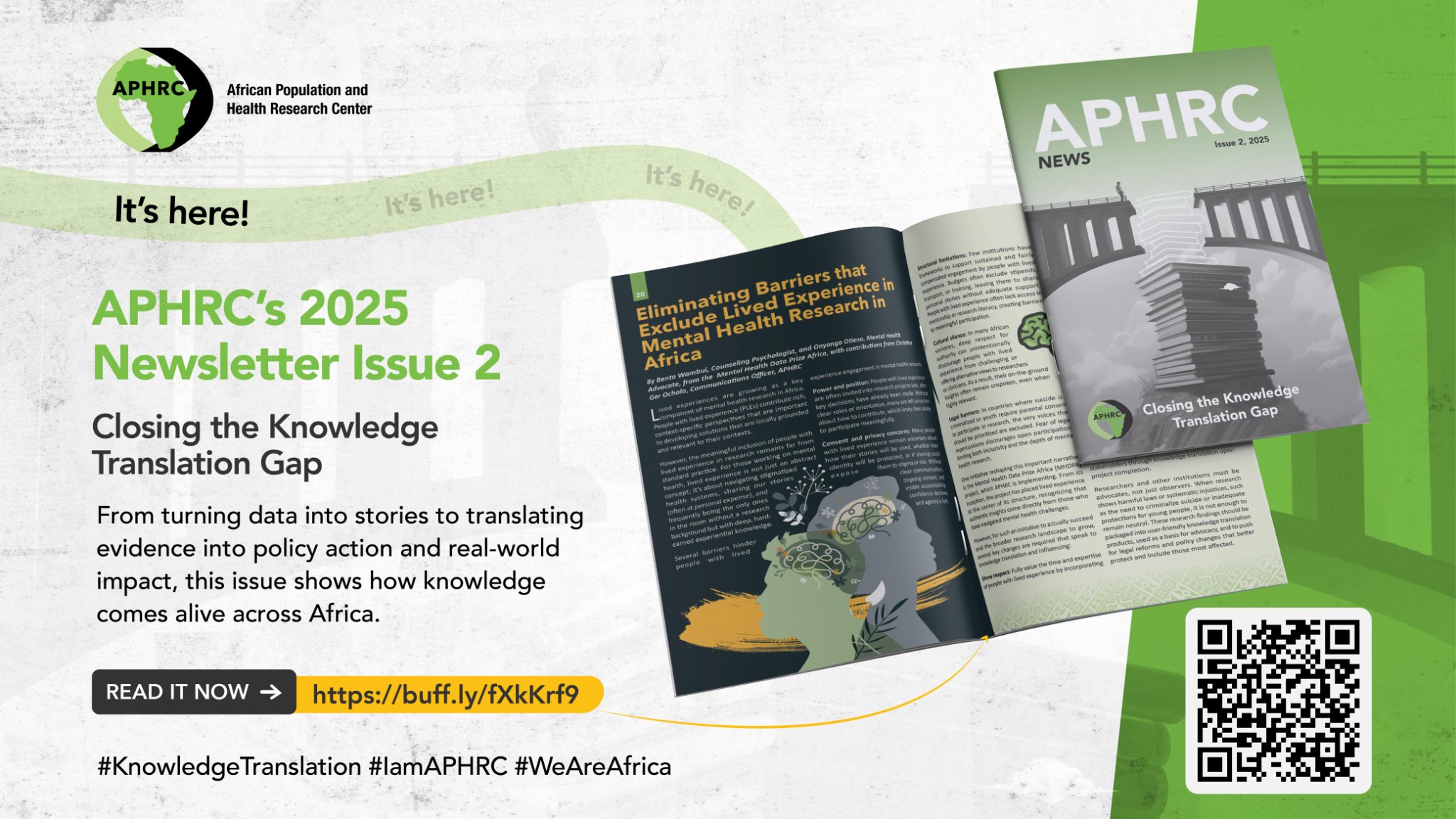
Newsletter: African Population and Health Research Center

APHRC News – Issue 2, 2025

  •  31/10/2025
Welcome to APHRC’s second 2025 newsletter issue! This edition explores how the Center is closing the Knowledge Translation Gap, making research accessible, relatable, and transformative. Dive in to discover stories of change, from climate and health innovations to inclusive education and mental health breakthroughs across Africa.


Tuesday, September 02, 2025

12TH ANNUAL TANZANIA HEALTH SUMMIT 2025 (reminder)

THEME: "Harnessing Data Utilization and Technologies to Accelerate Universal Health Coverage"

INTRODUCTION 

Healthcare systems are evolving worldwide through the integration of health data and technologies. This integration is crucial for advancing Universal Health Coverage (UHC), particularly in developing nations. Data forms the foundation, encompassing patient information, treatments, and outcomes. Technologies on the other hand serve as tools like cloud storage, IoT devices, and blockchain that enable efficient data collection and processing. AI, a subset of digital technologies, then transforms this data into actionable insights through machine learning and predictive analytics, improving healthcare delivery and decision-making. The healthcare AI market's projected growth of 36.8% CAGR from 2025 to 2030 (Matsukatov, 2024) reflects its potential to revolutionize healthcare delivery, from diagnosis to resource allocation. Tanzania exemplifies how this integration impacts developing healthcare systems - with its UHC service coverage index expected to exceed 48% by 2025, the country is working to bridge healthcare access and quality gaps (WHO, 2025). The upcoming 12th Tanzania Health Summit will address how these components work together in low-resource settings. The focus will be on practical applications: health technology platforms for data management, technology infrastructure for connectivity, and AI-driven analysis for disease prediction. This integrated approach shows how developing nations can leverage technologies to accelerate progress toward comprehensive healthcare coverage despite the current resource constraints. 

CONTEXT 

Tanzania's healthcare system exemplifies both the challenges and opportunities in leveraging digital technology to achieve Universal Health Coverage in sub-Saharan Africa. With a doctor-to-patient ratio of 1.3:10,000 (against WHO's recommended 1:1,000), the country has strategically embraced digital innovation to bridge critical healthcare gaps (WHO, 2025). The Tanzania Digital Health Strategy (2019-2024) serves as the blueprint for this digital transformation, focusing on three key areas: health information systems, electronic medical records (EMRs), and data-driven decision-making (Ministry of Health, Tanzania Digital Health Strategy; 2019-2024). This initiative has shown measurable progress, with EMR deployment reaching 66.57% of healthcare facilities nationwide (PORALG, 2025). The implementation of DHIS2 (District Health Information System 2) has enhanced national health data collection and analysis, notably improving disease outbreak response capabilities.

Conference details 
Text: Concept note

Saturday, August 02, 2025

Maguire et al. - 'A systematic scoping review of the noma evidence landscape: current knowledge and gaps'

Abstract

Background Noma (cancrum oris) is a severe gangrenous disease of the mouth and oro-facial structures. Noma often affects young children living in extreme poverty, malnutrition and poor sanitation. Gaps remain in understanding its aetiology, pathogenesis, prevention and treatment.

Methods and findings We systematically searched databases for all primary research studies (clinical trials, cohort studies, case–control, cross-sectional, other observational studies, case studies/series) reporting noma patients of any age up to 7 December 2022. The 366 publications (published between 1839 and 2022) included in our scoping review describe 15 082 patients. Although 53 cohort and 29 cross-sectional studies were identified, enrolling 13 489 patients, interventional research remains extremely limited, with only six studies identified (101 patients, range: 7–26) and only one in the past decade, highlighting a critical gap in treatment evaluation. A total of 380 different treatment modalities were described, which underscores lack of a standardised practice. Disease aetiology remains unclear, with 117 microorganisms reported across 113 studies, yet none more consistently linked to noma development. Since 2000, 91.2% of cases have been reported in Sub-Saharan Africa, though occurrences outside the ‘noma belt’ and into Asia and the Americas suggest a broader risk. The 212 potential risk factors identified in 269 (73.5%) publications reflect substantial heterogeneity, complicating efforts to determine definitive causative factors. Additionally, the inconsistent definition and reporting of noma staging significantly hinder comparability across studies, with wide adoption of the WHO staging classification needed.

Conclusion This comprehensive review of the literature underscores the urgent need for robust, policy-driven research to address the vast knowledge gaps in the physiopathology of noma and the limited evidence currently available to guide therapeutic and preventive policies. Collective action and increased research investment are crucial, especially now that noma is officially recognised as a neglected tropical disease by the WHO.

Brittany J Maguire, Rujan Shrestha, Prabin Dahal, Roland Ngu, Lionel Nizigama, Sumayyah Rashan, Poojan Shrestha, Elinor Harriss, Paul Newton, Yuka Makino, Benoit Varenne, Philippe J Guerin - Systematic scoping review of the noma evidence landscape: current knowledge and gaps: BMJ Global Health 2025;10:e018023 https://gh.bmj.com/content/10/7/e018023


Individual
|
      INTERPERSONAL    :     SCIENCES               
HUMANISTIC  --------------------------------------  MECHANISTIC      
 SOCIOLOGY  :    POLITICAL 
|
Group
PSYCHOLOGICAL IMPACT
mental & emotional complications
WITHDRAWAL
LOST EDUCATION & LIFE CHANCES
DEPRESSION
PSYCHO-
malnutrition and poor sanitation
PHYSICAL IMPACT
LIMITED EVIDENCE - DISEASE KNOWLEDGE GAPS - AETIOLOGY
 knowledge gaps in the physiopathology of noma
-SOCIAL MANAGEMENT
SOCIAL IMPACT - LIFE CHANCES
STIGMA
SOCIAL EXCLUSION
extreme poverty, infrastructure
NEED FOR POLICY-DRIVEN RESEARCH
THERAPEUTIC - PREVENTIVE POLICIES
RECOGNITION

Previously: 'neglected' : 'noma'

My source: https://x.com/benoit_varenne/status/1950955812915982487

Saturday, May 31, 2025

Globally - seeking the ink of scholars

The Ink of the Scholars:
Reflections on Philosophy in Africa


Since the late 1980s, in trying to understand Hodges' model, especially its political dimensions beyond nurses as advocates, the mental health act, choice and self-determination. To be followed by consent, then informed consent, mental capacity, human rights, equality, protected characteristics, safeguarding, equity, social in-justice; I've then questioned my assumed neutrality of the model. 

Allied to this is the fact that Hodges' model is one of many models and frameworks, largely created in the developed world. What alternative viewpointsof nursing, care and philosophies are there? Do these challenge Hodges' model? Or, can Hodges' model also encompass them, in a complementary manner?

Serendipity, or ADHD, seems to follow me around. In addition determined to extract value from my purchase and reading of the weekend FT, I learned of potential key read:


Prempeh, C. THE AESTHETE. Koyo Kouoh, The curator of 2026 Venice Biennale talks whisky sours, working from bed and being the "high priestess of the okra church". HTSI, FTWeekend, 3 May 2025,pp.21-22.

'THE BEST BOOK I'VE READ IN THE PAST YEAR is a book on African philosophers, The Ink of the Scholars: Reflections on Philosophy in Africa, by Souleymane Bachir Diagne, one of our most brilliant thinkers. He challenges the idea that there isn't a philosophical framework to African societies. There are ideas around Africans being the great architects of hospitality and Diagne reflects on what the African approach to humanity is. What does it mean to be careful, mindful and caring? It's not just about welcoming people to your home or feeding them. Hospitality is carrying people, making people feel comfortable in your environment - it's intellectual and emotional. Everyone should read Diagne, full stop.' p.21. 
 

Shocked: I have just read of Koyo Kouoh's passing - RIP. 

Souleymane Bachir Diagne, & Jonathan Adjemian. (2016, May 23). The Ink of the Scholars: Reflections on Philosophy in Africa. CODESRIA Books Publication System. CODESRIA
https://publication.codesria.org/index.php/pub/catalog/book/40

See also: 'hospitality'

Thursday, May 29, 2025

Health Policy Watch: WHO’s Big Push to Integrate Traditional Medicine into Global Healthcare Framework

This is quite a development for the lived experience of all individuals, global health and for Hodges' model. Not only for Hodges' model as a universal framework (template) and model for / of care, but the capacity of Hodges' model to conceptually and culturally encompass all data, information, knowledge and wisdom.

c/o HIFA list:

Full text: https://healthpolicy-watch.news/whos-big-push-to-integrate-traditional-medicine-into-global-healthcare-framework/

'The World Health Assembly delivered a landmark victory for traditional medicine and indigenous cultures Monday evening, approving a strategy that calls for increased investment in research and integrating ancient healing practices into modern healthcare systems worldwide.
'The approval marks a breakthrough moment for advocates of traditional medicine, with nations across Asia, Africa, the Middle East and Latin America celebrating the decision. Iran called it “a visionary yet realistic roadmap” to integrate thousands of years of medical like its own.

'But the strategy text shows WHO walking a careful tightrope, embracing practices that represent “accumulated wisdom and healing practices passed down through generations” while demanding they meet modern scientific evidence standards that could take decades to satisfy...'
Best wishes, Neil

HIFA profile: Neil Pakenham-Walsh is coordinator of HIFA (Healthcare Information For All), a global health community that brings all stakeholders together around the shared goal of universal access to reliable healthcare information.

See also: 'Oceania' : 'indigenous' : 'ancient' : 'map' : 'nature'

Tuesday, May 13, 2025

Tanzania Health Summit (THS) Conference & Partnership

Warm greetings from the Tanzania Health Summit (THS) Conference:

1 - 3 October 2025
Julius Nyerere International Convention Center (JNICC)
Dar es Salaam

THEME:
"Harnessing Data Utilization and Technologies
to Accelerate Universal Health Coverage"

'Tanzania Health Summit is a non-profit health organization which was founded in May 2014. The aim was to promote healthcare to the underprivileged and vulnerable (70% of the population) who cannot easily access health services in the country. We focus on facilitating health information dissemination to the public taking into account that only 32.9% of the population has adequate literacy level in the country, mostly living in resource poor setting. In addition, we want to support youth (which comprise 32% of the population) to help build a more sustainable future and prevent them from high-risk behaviors and practices.'

THS is also seeking partnership: 
'I am writing to explore the possibility of partnering with your esteemed platform to feature the upcoming Tanzania Health Summit 2025, scheduled for October in Dar es Salaam. As one of the largest independent health conferences in the region, THS brings together government leaders, healthcare professionals, researchers, NGOs, and development partners to discuss key priorities in health systems strengthening and innovation.

With an active and growing portfolio of over ,2,500 participants, including decision-makers and thought leaders across Africa and globally, the Summit offers a unique platform for knowledge exchange, collaboration, and visibility.

We are seeking media partners to help us amplify our call for abstracts, participation, and partnership opportunities. In return, we are happy to offer media partners: • Logo recognition on our website and Summit program materials • Complimentary access to the conference (virtual and/or in-person) • Acknowledgment in select promotional content • Opportunities to feature your platform during media briefings or side sessions

We believe that a partnership with HIFA.ORG would be mutually beneficial in advancing shared goals of health equity, research dissemination, and stakeholder engagement.

Please let us know if this proposal would be of interest, and we would be happy to provide further details or set up a brief call to discuss how we can collaborate effectively.

Thank you for your time and continued commitment to global health.

Regards, Dr. Omary Chillo President - Tanzania Health Summit Lecturer - Muhimbili University of Health and Allied Sciences Fellow Bernard Lown Scholars in Cardiovascular Health - Havard T. Chan School of Public Health, USA Fellow Scientist Walter Brendel Center for Experimental Medicine - Ludwig Maximilian University, Munich, German Member Steering Committee - InterAcademy Partnership, Young Physician Leaders Email: chillo AT ths.or.tz '

My source: HIFA (Edited with conference & background).

Friday, March 28, 2025

Africa's Nutrition Movement: Seizing the Window with Primary Health Care

Africa's mission to eliminate malnutrition is more critical than ever. Bubbling down the high level commitments to strategic programmable goals will be critical at primary health care and community levels.

The continent has made significant progress in recent years, but the COVID-19 pandemic has highlighted the need for sustained efforts to address the complex issues surrounding malnutrition, particularly for women and children as we build traction to meet the sustainable development goals by 2030.

"The year 2025 will also be significant as it marks the end of the UN Decade of Action on Nutrition. N4G Paris will serve as a multi-stakeholder summit, advocating for ambitious financial and political commitments and fostering dialogue among diverse actors from around the world, including governments, international organizations, research institutions, civil society organizations, philanthropies, private sector entities, and more." - #N4G

Connecting dots is a a key imperative as we build Africa's nutrition movement. One of them is viewing nutrition from a programmable health systems lens. Have we given this enough traction ?

"The N4G conference presents a crucial opportunity for Africa to gain traction on its mission to eliminate malnutrition. The conference aims to mobilize ambitious financial and political commitments, foster dialogue among diverse stakeholders, and put nutrition at the center of the sustainable development agenda." - United Nations SDGs Professional Support Group for Africa

One of the key lessons from COVID-19 is the importance of strengthening health systems, particularly at the primary healthcare level. The pandemic has exposed weaknesses in many health systems, highlighting the need for increased investment in health care infrastructure, workforce, and services which will ultimately impact on nutrition delivery at the base of the health system.

The upcoming Africa Primary Health Care Forum , scheduled for Abuja on July 14-15, 2025, will provide a platform for stakeholders to discuss the importance of primary health care(PHC) in achieving universal health coverage (UHC) and health security, as well addressing malnutrition in PHC systems. The forum will also explore the role of digital health, digitised workforce, partnerships and financing in strengthening primary healthcare systems and improving general health outcomes.

More details continued at: https://www.phc.africa/

Sunday, March 16, 2025

Caring for babies and young children - what can older children do?

Dear All

I'm delighted to tell you that we have successfully raised funding for the completion of the Children for Health ten poster series.

On completion we will have many more posters than ten as we have other posters linked to projects on Diabetes and Eye Health, Oral Health and Life Skills.

All our posters feature 10 messages for young adolescents to learn and share (on the front) and lots of ideas on how to use the posters and additional activities to get children mobilised on the back. If you haven't seen our posters PLEASE take a look here. They are being used in so many ways!

www.childrenforhealth.org/resources

...and any feedback is always welcome.
Please also share with your networks.

I am looking for specialists in early years to help us revise our existing set of 10 messages on the topic of 'Caring for Babies and Young Children' for the new poster. It is a voluntary role. The process lasts about 3 months as we involve practitioners too and work with schools to get children reviewing the messages. It's usually about 3 rounds of review and then an art work review. I'd be very pleased to hear from those who feel they have the time and expertise to help.

Meanwhile take a look at our posters. We have three new ones!

WASH: https://www.childrenforhealth.org/WASHposter

Coughs and Pneumonia: https://www.childrenforhealth.org/CoughsPoster

Intestinal Worms: https://www.childrenforhealth.org/WormsPoster

HIFA profile: Clare Hanbury is director of Children for Health. She qualified as a teacher in the UK and then worked in schools in Kenya and Hong Kong. After an MA in Education in Developing Countries and for many years, Clare worked for The Child-to-Child Trust based at the University of London's Institute of Education where, alongside Hugh Hawes and Professor David Morley she worked to help embed the Child-to-Child ideas of children's participation in health – into government and non-government cchild health and education programmes in numerous countries. Clare has worked with these ideas alongside vulnerable groups of children such as refugees and street children. Since her MSc in International Maternal and Child Health, Clare focused on helping government and non-government programmes to design and deliver child-centered health and education programmes where children are active participants. Clare has worked in many countries in East and Southern Africa and in Pakistan, Cambodia and the Yemen. In July 2013, Clare founded the NGO, Children for Health and develops health education materials and and works on health education programmes alongside partners all over the world.

https://www.hifa.org/support/members/clare clare AT childrenforhealth.org

Thursday, February 20, 2025

Book review: #5 - Handbook on the Ethics of AI

If there is an overall theme to the book it is - rather inevitably -   anthropomorphism. Some argue it is consequential in nature due to the risks we are running. Sandry's chapter 10 Anthropomorphism and its Discontents begins by highlighting duality, dichotomies, and  oppositions that instantly come into effect in this emerging  theoretical, practical and policy field. If a term anthropomorphic can be 'loaded' this one carries extra baggage: history, religion, natural, aesthetic, philosophy, physical, existential. The dual issue of making a machine that looks human; versus, machines that could deceive humans (used remotely today and in situ in the future?) is considered. In our interacting with AI Tech, I found intention (and attention) of specific interest. Sandry seeks definitions, starting with dictionaries, the discussion is helpful across arts too. The reader is left well briefed and technically too: intrinsic and extrinsic forms, the role of the intentional stance, 3-factors. ...

Health is not a primary focus of the book. The index does not list health, medicine, nursing, at least not where they may be expected. The index is comprehensive but I wonder if it could be improved. Care is suggested through social robotics (p.147). Design figures again, anthropomorphically of course (p.147). Specific attention to ethics and Taking Care With Language are given (sections 6-7). I scribbled! again about care for tech - in the material, energy, and production 'costs' in an ecological sense. SUVs annoy me (sorry!) are they all necessary? On language, I thought back to McDermott D (1985) Artificial Intelligence Meets Natural Stupidity, In MIND DESIGN, Haugeland J (Ed), MIT Press, London, p.144-145:


Balance in subjectivity and objectivity of stances and resulting content / conclusions can be difficult to achieve and represent. The latter section prompts respond to frustration with the term anthropomorphism. I found myself in a couple's lounge, as a community mental health nurse, acutely aware of the role of proxies in dementia care; as Sandry described Paula Sweeney's 'fictional dualism' (8, 150). Hodges' model fits well here too, regards anxiety. To socialbots, I added carebots. There seems potential in sociomorphing.

As noted previously, reflection and relation-al points litter the text. In Jecker's chapter 11 A Relational Approach to Moral Standing for Robots and AI this is more explicit. Jecker refers to care of others - as animals too. In computer science and seeking to retain a socio-technical perspective, I've seen potential in capability and maturity frameworks. Section 2 provides some discussion of the former. One of the first words I looked up in the index was isomorphic. It wasn't listed but I found reference to it on page 157: '... a community of robots psychologically isomorphic to to human beings that share our psychology ...'. Maths is a focus here, even though I must try to utilise AI to aid my learning and understanding. This is - must be an outcome of reading HEoAI.

The section on (self-)counsciousness is engaging and not limited (again) to machine intelligence. Subjectivity arises again. I wrote a note re. the precautionary principle, my 'prompt' the ethical principle. A gift was dicovered in 3. A CONCEPTUAL REFLECTION and within 3.2 Relational Ethics, preceded by the potential of Kant, utilitarian and vurtue ethics. While not wishing to virtue signal I've long speculated on how other cultures could inform nursing theory and models of care. Jecker incorporates the African philosophy of ubuntu in relational ethics. Student's would enjoy this, especially as Jecker (Source: Author) provides tables laying out the ethical approaches and robot & AI capabilities. This can also encompass older adults and care contexts with social robots. Nussbaum's capabilities applied to human development is also adopted here - another useful reminder:

(And, once again I recall Nussbaum's talk on Aristotle.) In post #4 I wrote of the rubbish scene in the film A.I. Artificial Intelligence, but it's here (p.166) that I wrote the note. There is so much I'm skimming over - believe it not.

The conclusion in mentioning a hybrid future consisting of both humanistic and mechanistic agents appears to find an additional theoretical and practical ally in Hodges' model?


Chapter 12 by Navas is AI Ethics, Aesthetics, Art and Artistry visits the history and philosophy of this subject too, esp. from 1700s. With Žižek and Deleuze there is much prepatory reading for would-be undergrads - and general readers keen to have an awareness of contemporary issues. There is quite a triad here - disassembled - across several sections. I have quoted from the volume many times, but p.179 concerns empathy: 
'Empathy challenges the ongoing optimization of technology, because it takes time to exercise it. A person needs time to think about whatever issue, situation, thing, or person they may empathize with. In other words, empathy is essential for humans to understand and figure their relation to others and their surroundings. Empathy, if practiced reflexively, can lead to critical thinking. which may not lead to clear results but the activity may and often does end in "wasted" time if framed under the drive for efficiency, which is clearly something Al is designed to achieve. And lastly, empathy, because it has been foundational to art, is also part of art's long-term resistance against capitalism's exponential dependence on speed of production. At the core of AI ethics, then, we find speed of production and consumption coming in conflict with human existence itself. Humans are proving to be inefficient actors in the very system they built for their own benefit, which obsessively demands faster cultural activity from people, which (to be blunt) translates to an unapologetic and incessant desire for profit.' pp.179-180.
Section 6 on creativity AND speed is fascinating, especially as human-machine (brain) interfaces develop apace. Concerned as I am with what is a metacognitive tool, 8 Metacreativity formed the conclusion of chapter 12. The notes refer to generative coding which has come up in various webinars.

Silent Running: Film
Briefly, chapter 13 covers AI and the Environment. It is amazing (or not) how in a few sentences your mind can be changed? From "Really!" upon reading 'species culling', to this being explained in the crown-of-thorns starfish (hence COTSbot) and the toll on coral in Queensland. There are robots-for-ecology. I smiled returning to Silent Running's Dewey, Huey, and Louie becoming reality. Facinating point in: what is collective must be recognised in terms of causation. Appropriatly, PEAS is an acronym: probalistic weather event attribution studies are a reality in conjunction with remote sensing and tracking.

Drones are also developing apace, and applied robotics - tree-climbing. Less reassuring (adding to nature's precarity?) are artificial insects to undertake pollination; more positively reducing the impact of chemical and toxic spills. Simulation for training is well established in medicine and nursing; section 2.3 addresses this were PEAS form super-ensembles of data (I like that). PEAS can also have a role in determining an evidence-base and demonstrating it is hoped provenance for that evidence in the movement of populations, for example, climate refugees. In conflicts, human rights and justice, forensic architecture is of course well established: Forensic Architecture (Care Forensics?)

The summative nature in closing chapter 13 is a helpful approach which I will possibly try to duplicate.

Socio-technical approaches are found in chapter 14 Uses and Abuses of AI Ethics by Frank & Klincewicz. Understandably, boundaries play a large role, as you would expect in deliberating value and values, moral patients and agents. The Collingridge dilemma is discussed, regards putting in place controls for a technology while it is still in development, otherwise control may be lost (p.213). Diversity, a story of the moment - closes out this chapter. There is a 'nice' continuity across chapters to
15 The (Un)bearable Whiteness of AI Ethics by Syed Mustafa Ali et al. (the first note highlights the format is a dialogue). The (colonial) politics of north-SOUTH are duly noted and Africa (section 4). Section 8 points to technological (and health) colonialism. I take as a positive that the 'hyphen' also has a place (S.10).

The Savage Mind

Again related, as per the book's structured parts, chapter 16 Ethics beyond Ethics: AI, Power, and Colonialism by Kim prompts the reader to revisit the concepts of 'other', alterity even if 'understood'. I pencilled 'Savage Mind' here. Machines are posited as the colonial other. There will be a repeated argument as in response to humankind's going back to the moon (to stay) and on to Mars. We should sort Earth out first. So too for inclusion and the machines. What about the people who are excluded, disenfranchised and increasingly so? I wondered (previously) if (even) more could be made a transparency? Noting the word subaltern, it appears this has suddenly been attributed to Ukraine? On disability and ableism reminded also of radio history and 'Does He Take Sugar?'

The statement: 'Machines are perceived as distant - temporally, spatially, or socially - and different from human culture.' p.234. Is, so true.

INDIVIDUAL
|
      INTERPERSONAL    :     SCIENCES               
HUMANISTIC  --------------------------------------  MECHANISTIC      
 SOCIOLOGY  :    POLITICAL 
|
GROUP
cognitive - conceptual
'spaces'
distance:
time, space
human cultures
societies
difference


'Binary-opposition' and the need to think outside of this is acknowledged. And as if (perhaps) to stress both distance and proximity, I wrote 'mobius' in the margin (p.238). Hutchings (2015) sounds a valuable reference: 'Ethical Encounters - Encountering Ethics'. The books I've read contribute to evidence to revalidate my nurse registration. I realise I've sold-myself short in listing the book's titles. Although not discussed here the remaining chapters are excellent critical reading at a time when diversity, equality and inclusion policies are being rolled-back and undone. I will highlight these:

  • 17 Disabling AI: Biases and Values Embedded in Artificial Intelligence (quoted in 'Do you fit the description?')
  • 18 The AI Imaginary: AI, Ethics and Communication
  • 19 Feminist Ethics and AI: A Subfield of Feminist Philosophy of Technology
  • 20 Buddhism and the Ethics of Artificial Intelligence
  • 21 Queering the Ethics of AI

In chapter 16 'Ethics beyond Ethics...' just before the conclusion I will carry forward a sentence -
'Forming an identity requires that "I identify something or someone beyond me" - with one or more categories persons, non-human others, acts, ideals, values, or social systems' (p.243).
- and the points following, and end there.

Many thanks to David J. Gunkel (Editor), the many contributors, and Edward Elgar Publishing Ltd for my copy. I have greatly enjoyed and learned much from reading this book.

Handbook on the Ethics of Artificial Intelligence. David J. Gunkel (ed.). Cheltenham, UK: Edward Elgar Publishing Ltd. ISBN: 978 1 80392 671 1245
https://www.e-elgar.com/shop/gbp/handbook-on-the-ethics-of-artificial-intelligence-9781803926711.html


Images:
Silent Running 
https://cdna.artstation.com/p/assets/images/images/016/839/904/large/david-eagan-screenshot001.jpg?1553673214
The Savage Mind
https://en.wikipedia.org/wiki/File:The_Savage_Mind_(first_edition).jpg

Related previous posts: 'general + AI'

*That early streak of competitiveness was clearly educated out of me.