Hodges' Model: Welcome to the QUAD: Search results for algebra

Hodges' model is a conceptual framework to support reflection and critical thinking. Situated, the model can help integrate all disciplines (academic and professional). Amid news items, are posts that illustrate the scope and application of the model. A bibliography and A4 template are provided in the sidebar. Welcome to the QUAD ...

Showing posts sorted by date for query algebra. Sort by relevance Show all posts

Tuesday, October 27, 2026

c/o Leacock 'HUMAN INTEREST PUT INTO MATHEMATICS'

So, for all those years of struggling to understand the question, let alone answer it, you are now telling me: it was all person-centred? Plus! Not only do 'A', 'B', and 'C' have names, there's 'D' too?

    'The student of arithmetic who has successfully striven with money sums and fractions, finds himself confronted by an unbroken expanse of questions known as problems. These are short stories of adventure and industry with the end omitted, and though betraying a strong family resemblance, are not without a certain element of romance. 
    The characters in the plot of a problem are three people called A, B, and C. The form of the question is generally of this sort : "A, B, and C do a certain piece of work. A can do as much work in an hour as in two, or C in four. Find how long they work at it." 
    Or this : "A, B, and C are employed to dig a ditch. A can dig as much in one hour as can dig in two, and can dig twice as fast as C. Find how long, etc., etc." 
    Or after this wise: "A lays a wager that he can walk faster than or C. A can walk half as fast again as B, and C is only an indifferent walker. Find how far, and so forth." . . .

    In the early chapters of the arithmetic, their identity is concealed under the names John, William, and Henry, and they wrangle over the division of marbles. In algebra they are often called X, Y, Z. But these are only their Christian names, and they are really the same people.
    Now, to one who has followed the history of these men through countless pages of problems, watched them in their leisure hours dallying with cord wood, and seen their panting sides heave in the full frenzy of filling a cistern with a leak in it, they become something more than mere symbols. They appear as creatures of flesh and blood, living men with their own passions, ambitions and aspirations like the rest of us.'


LEACOCK, S. (1929). HUMAN INTEREST PUT INTO MATHEMATICS. The Mathematics Teacher, 22(5), 302–304. http://www.jstor.org/stable/27951138

Wednesday, October 07, 2026

Hodges' model: Is it a virus: or a universal vaccine?

The arrival of 'imposter syndrome' well-over a decade ago(?), from the speaker's podium was an interesting surprise. A case of lived experience, as I'd felt this in trying (and failing) to grapple with the ever-growing, morphing development stack of a software program. Long gone are the days of Sinclair and BBC BASIC. The mountain and learning cliff, was CMS content management system: Drupal. 

What contributed to that feeling back then? Well there was the people I was sat by and sharing time at various European DrupalCons. It was I who was the 'con'. A hobbyist, from pre-PC days. Seeing and hearing what they were creating and the great community. Fascinating also, to see web design fashions come-and-go.

I've written before about Hodges' model being an over-valued idea to me. As a mind-mapping meme it infected me decades ago. Is it a virus? If it is I clearly had no resistance, no immunity. I've always tried to acknowledge, reminded myself that the model is not the be-all-and-end-all.

While the specific mathematical is complex, it is worth trying to grasp some of the intent and meaning (even at the risk of exacerbating imposter reactions). Hestenes provides a paper (and several others):

'ABSTRACT. The discovery of Mathematical Viruses is announced here for the first
time. Such viruses are a serious threat to the general mental health of the mathematical
community. Several viruses inimical to the unity of mathematics are identified, and their
deleterious characteristics are described. A strong dose of geometric algebra and calculus
is the best medicine for both prevention and cure.'

Hestenes, D. (1992). Mathematical Viruses. In: Micali, A., Boudet, R., Helmstetter, J. (eds) Clifford Algebras and their Applications in Mathematical Physics. Fundamental Theories of Physics, vol 47. Springer, Dordrecht. https://doi.org/10.1007/978-94-015-8090-8_1

'The computer virus (CV) owes its name and perhaps its genesis to the biological virus
(BV). Like a BV, a CV cannot function by itself, but when attached to a host it replicates
repeatedly until it impairs the functioning of the host, sometimes to the point of disabling
the host altogether. ...

My purpose here is to call your attention to another kind of virus - one which can
infect the mind - the mind of anyone doing mathematics, from young student to professional
mathematician. As I believe this is the first published paper to explicitly identify
such viruses, I take the liberty of naming and describing them as follows: A mathematical
virus (MV) is a preconception about the structure, function or method of mathematics
which impairs one's ability to do mathematics. Just as a CV is program which impairs the
operating system of a computer, an MV is an idea which impairs the conceptualization of
mathematics in the mind. Indeed, as one definition of "virus," Webster gives "something that
corrupts the mind or soul." Since the identification and classification of MVs has only
just begun, it would be premature to attempt a more precise definition. The better course
is to examine some specific viruses to form a form empirical base for further study.
My first example is an easily recognized MV which is extremely virulent and as common
as the common cold. I call it the coordinate virus, designating it by MV/C to denote genesis
and type, and characterizing it as follows:' pp.1-2. (online copy)

Hestenes' biohistory is an interesting conceptual and interdisciplinary bridge. Another construct to add to our  collection. Is there a virus in the models deployed within medicine and healthcare to date? You know, the bed-round of the medical, biomedical, bio-psycho-social? The round were you don't need to count the number of beds, except in the event of a pandemic. Is the omission of the political, even as the socio-economic reality is now a constant point of reference a symptom of a centuries-long infection? 

For a long time now* the legacies that successive cohorts of students, and newly qualified professionals encounter have stood out. Another question is, just how far back in time do we need to travel to find can the origin of this situation? Was there an initial crisis involving the overt expression of 'power'? Can this be found the as the Hippocratic oath butted up - literally - against triage on the battlefield?

Now: Time won't tell (or will it?). Now that - is some virus.

Friday, April 24, 2026

In Marrakech how can I forget "A is for ..."!

The Arabian world gave us algebra and algorithm and much more besides, as star gazers quickly find. There are many beautiful Arabic names for stars. At the UM6P Conference venue there were some wall displays, highlighting the major contribution of Al Khawarizmi:


Earlier this month I picked up The New York Review of Books, spotting a review of four books (2009-2025) on mathematics, including algebra by Paul Lockhart.

Dan Rockmore. In Defence of Algebra, The New York Review of Books. April 9th, 2026, Vol. LXXIII, No. 6. pp.28-30.
https://www.nybooks.com/articles/2026/04/09/in-defense-of-algebra-paul-lockhart/

Monday, March 30, 2026

Lavoisier: Math - Chemistry; Quantity, Quality, Principle ...

The philosophy of science, can not avoid being viewed historically, which leads us to learn how mathematics literally took hold, from physics, to chemistry and biology. The application of mathematics to chemistry provides many and ongoing insights:

'Curiously enough, Kant’s own student, Jeremias Benjamin Richter (1762-1807), would only a few years later disprove his professor with his PhD dissertation On the use of the mathematical method in chemistry (Richter 1789). It laid the groundwork for stoichiometry as an algebraic approach to chemistry, including what was later called the ‘law of constant proportion’ that John Dalton used for his atomism on chemical grounds (Richter 1792-3, Dalton 1808). Moreover, at the time of Kant’s writing, experimental philosophy was taking over most of the centers of European research to become the mainstream methodology of modern science, which would later denounce the ideal of a priori knowledge in science as ‘mere’ metaphysics. Although some philosophers of mathematical physics still adhere to that ideal today, Kant was a late partisan in the struggle for the methodological priority of mathematics in the study of nature as it was exemplified by the old field of ‘rational mechanics’. Yet, his view on science became marginalized as much as his verdict on chemistry, that it would be alien to mathematics, was refuted.'

The pitfalls presented and Schummer's 2.4 A methodological suggestion for defining mathematical chemistry are helpful.

Joachim Schummer. Why Mathematical Chemistry Cannot Copy Mathematical Physics and How to Avoid the Imminent Epistemological Pitfalls. HYLE--International Journal for Philosophy of Chemistry, Vol. 18, No.1 (2012). pp. 71-89. https://www.hyle.org/journal/issues/18-1/schummer.htm

Maths is filled with tragedy, but the personal manifestation in my lack of ability, pales to insignificance to the many scientific and human tragedies history reveals. Consider Galois, and Lavoisier:

‘Only a moment to cut off that head and a hundred years may not give us another like it,’ lamented the 18th-century French mathematician Joseph Louis Lagrange. The head in question had belonged to the French aristocrat and chemist Antoine Laurent Lavoisier, who was executed at the hands of French revolutionaries on 8 May 1794. Lavoisier’s ideas changed the face of chemistry. He is best remembered for overthrowing the phlogiston theory, but perhaps his greater and more lasting achievement was to impose order on the language and symbolism that have shaped the thoughts of chemists.'

Paul Board, The Aristocrat who revolutionised chemistry, New Scientist. May 7, 1994 (Volume 142, Issue 1924). https://www.newscientist.com/article/mg14219243-300/

In an essay in the Charles Coulston Gillispie's essay in the history of scientific ideas, Chapter VI. The Rationalization of Matter, describes how Lavoisier sought to develop an algebraic approach:

'But what is most interesting is Lavoisier's mode of representing these results, so correct in quantity, so wrong in principle. In order to sec what he was about, one has to follow him into some detail. It is obvious, he writes, that acidification of a metal involves many variables-heat, concentration, chemical affinities, etc. each of which is a force acting with characteristic energy. Therefrom results a problem complex and difficult of solution: [my emphasis]

"Better to exhibit the state of the question in this respect, and in order to show at a glance the result of what happens in metallic solutions, I have constructed formulas of a sort, which could at first be taken for algebraic formulas, but which have not the same object, and do not derive from the same principles . . ."'

Gillispie, Charles Coulston. The Edge of Objectivity: An Essay in the History of Scientific Ideas. Princeton, N.J.: Princeton University Press, 1960.

Gillispie quotes at length to demonstrate Lavoisier's approach*. There is a more accessible (for me, here) source in -

Stefano Zambelli (2012). Chemical Kinetics, an Historical Introduction, Chemical Kinetics, Dr Vivek Patel (Ed.), ISBN: 978-953-51-0132-1, InTech, Available from: 
http://www.intechopen.com/books/chemicalkinetics/chemical-kinetics-an-historical-introduction

Please see page 6: 3. Chemical equilibrium conception: The law of mass action.

To close, there is reading and advice to be carried forward in:

Guillermo Restrepo & José L. Villaveces, "Mathematical Thinking in Chemistry". Special Issue: Chemistry and Mathematics, Part 1. HYLE--International Journal for Philosophy of Chemistry, Vol. 18, No.1 (2012). pp. 3-22. https://www.hyle.org/journal/issues/18-1/restrepo-villaveces.htm

Gillispie concludes his illustrated exploration of Lavoisier:

'Is this not the most tantalizing memoir in the history of chemistry, and in Lavoisier's the most appealing? Here alone, one gets a sense of modesty. He never claims for these expressions the dignity of algebra. "We are still very far from being able to introduce mathematical precision into chemistry, and I beg, therefore, that no one consider these formulas . . . as more than simple annotations, of which the object is to ease the labors of the mind." (But compare this disclaimer with what he says of algebra itself in the Method of Chemical Nomenclature: "Algebra is the analytical method par excellence: it was invented to facilitate the labors of the mind, to compress into a few lines what would take pages to discuss, and to lead, finally, in a more convenient prompt and certain manner to the solution of very complicated questions.")' p.245.

*in - Lavoisier, A.L. (1782). Considerations sur la dissolution des metaux dans les acides, Mémoires de l’Académie des sciences 1782, pp. 492-527, Available from http://www.lavoisier.cnrs.fr/ice/ice_book_detail-fr-text-lavosier-Lavoisier-49- 5.htm

Wednesday, January 28, 2026

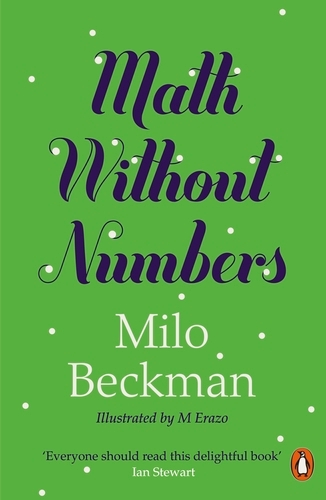
ii Math Without Numbers - final notes & obs

In Math Without Numbers the chapters and topics flow and slot in really well, even for novices. There is no index, the inclusion of which is a first-check usually. The book's appeal was its non-technical title and invitation reading the sleeve notes. The title throws up words and visuals, the latter, to repeat, are ably and simply furnished by M Erazo. Remaining notes to highlight (record here) include (and capture overthinking!):

Math Without Numbers

Reference to 'ideology space', 'conceptual space' and the role of visual analogies, idioms, and how 'the list of spaces to choose from is always the same.' ... pp.28 & 29. On page 30, 'When you say that gender is a spectrum rather than a binary, that's a topological claim: You're  saying gender space is one-dimensional (a line) rather than zero-dimensional (two separate points). 'Questions about which conceptual paradigm to use sometimes boil down to questions of dimensionality.' Discussion of an infinite continuum had me making an axis of Hodges' model warp, this way and that: concave-convex (p.59). Maps and correspondence is already well established, as per a new paper (abstract and thanks to follow 1st Feb):

S. Bettiol, P. Jones, H. A. Onyedikachi, and W. G. Kernohan, “Bridging Gaps in Oral Health Frameworks: Mapping With Hodges' Health Career - Care Domains - Model”, Journal of Public Health Dentistry (2026): 1–14, https://doi.org/10.1111/jphd.70034 

Interesting to read of general map facts, flowing substances inside a rigid container, and vector maps. A pencilled note to share:

'Because when you look at things in the abstract like this, dusting off the specifics of a situation to focus on underlying dynamics, you start to realize there are only so many different patterns and structures out there. These patterns and structures are called mathematical objects, and thinking about them is called math.' p.79

The chapter on (generalised) Algebra, forced me to reconsider the Socratic, guided discovery and arrival at the structure of Hodges' model. (lines & points : nodes & edges). For page 88, I noted 'generic' invites abstraction. Isomorphism is discussed. Again I tested this against Hodges' model. I've always found it helps to immerse oneself in a new vocabulary: so welcome (anew) - structures, fields, rings, groups, loops, graphs, lattices, orderings, semigroups, groupoids, monoids, magmas, modules . . . algebras, p.101. Some are named only, but on graphs raises questions ... p.103.

'How densely interconnected is it? How segregated into different cliques? Does it cut clean into two subgraphs, with no connections between them? Can it be drawn without any lines crossing? Are there any lone dots without any connections?' 

There's the matter of 'friend of a friend' who have broken out of the sociological domain. Other notes to self: Significance of concepts - patient-centred, service-centred? The distance between between (vertical, horizontal, diametric)? There are weighted graphs (p. 104) and acknowledgement of category theory (p.115). A chapter on modelling pp.161-175, and models p.164 & p.169 are just a selection of highlights on a marvellous tour.

A hidden puzzle in the book remains a mystery for me.

Milo Beckman (2021) Math Without Numbers. London, Penguin Books. Illustrated by M. Erazo.

Previously: 'math' : 'diagrams' 
Plus, now archived Science domain links: 
https://web.archive.org/web/20150414125339/http://www.p-jones.demon.co.uk/linksTwo.htm

Believe it or not, this 'diversion' does help my reading of Order and the Virtual. 

Thursday, January 08, 2026

Hodges' model: An algebra for care - seeking axioms?

Although Oliver had been brought up by philosophers, he was not theoretically acquainted with the beautiful axiom that self-preservation is the first law of nature.
                                                                                    
- Charles Dickens, Oliver Twist

Coady, C. A. J. (1990). Hobbes and “The Beautiful Axiom.” Philosophy, 65(251), 5–17. 
http://www.jstor.org/stable/3751240

"It is an axiom in therapeutics that the more remedies there are proposed for a disease the less likely is any of them to be effective."

[- William Osler]

Mountin, J. W. (1943). Nursing: A Critical Analysis. The American Journal of Nursing, 43(1), 29–34. https://doi.org/10.2307/3416264

Individual
|
     INTERPERSONAL    :     SCIENCES               
HUMANISTIC  --------------------------------------  MECHANISTIC      
 SOCIOLOGY  :    POLITICAL 
|
Group
 
'One of the core tenets of pragmatism, despite its various formulations by William James, Jane Addams, John Dewey, and neo-pragmatists like Rorty, Habermas, and Putnam, is an epistemological axiom first formulated in 1868 by Charles Sanders Peirce. This maxim, often dubbed the pragmatic maxim, states that the meaning of our ideas is best expounded when we can spell out the implications or the effects of these ideas in real-world experience and practice (Peirce 1878).' pp.105-106.
(Racine, 2024).

physical - SELF - My body[?]


'The lack of consideration of downside risks applies to all COVID-19 countermeasures, including mass-masking (e.g. the social and psychological consequences of mask-wearing for all kinds of social interaction, most notably in educational and childcare settings) and to the accelerated approval of vaccines. The latter is particularly noteworthy because the need for rigorous testing of new medications to guard against the risk of side effects is a standard axiom of contemporary ethical medical practice. Given that the vaccines in question employed novel mechanisms, not testing them sufficiently to assure their longer term safety was stratospherically risky: it meant that the possibility that this vaccination programme would do more harm than good could not be excluded. Yet, the medical establishment stood foursquare behind it, insisting on the safety and efficacy of the vaccines and pillorying any, including those within it, who demurred.' p.55. (Kelly, 2023).


'“Never have we been so free. Never have we felt so powerless”: this, according to Bauman, is the paradox of our time. Verhaeghe writes with a variant: “Never before have we in the West had it so good, and never have we felt so bad.”33 Because neoliberal axioms determine the standards of what is healthy and normal, society sees those who do not want to participate as sick or abnormal.' pp.97-98. (Vanheste, 2023).
 

My emphasis

Racine, E. (2024). What Participatory Research and Methods Bring To Ethics: Insights From Pragmatism, Social Science, and Psychology. Kennedy Institute of Ethics Journal 34(1), 99-134. 
 https://dx.doi.org/10.1353/ken.2024.a943431.

Kelly, M.G.E. (2023). Securing the Pandemic: Biopolitics, Capital, and COVID-19. Foucault Studies 35, 46-69. https://muse.jhu.edu/article/940834.

Vanheste, J. (2023). Half a Century of Exhaustion and Madness: The Fiftieth Anniversary of Pink Floyd's The Dark Side of the Moon. Soundings: An Interdisciplinary Journal 106(1), 87-109. 
https://muse.jhu.edu/article/950363.

See also: 'axiom' : 'algebra' : 'pragmatism'

Person-centred care = care axiomatics at a collective and individual level?

The first rule (axiom?) of first aid is...?

Thursday, October 30, 2025

In Browder, 'care' is mentioned over 150 times!

OK - so now you're teasing ...

'Surgery theory investigates the homotopy types of manifolds, using a combination of algebra and topology. It is the aim of these notes to provide an introduction to the more algebraic aspects of the theory, without losing sight of the geometric motivation.' Ranicki, 2001. 
'IV. Surgery and the Fundamental Theorem

In this chapter we develop the techniques of surgery for constructing normal cobordisms and use them to prove the Fundamental Theorem. The ideas of surgery have their origins in the theory of 2-manifolds, in the process of "cutting off handles", and in general, in the theory of Marston Morse of non-degenerate critical points of differentiable functions.' Browder, 1972.

In Browder, care is mentioned over 150 times!

'Poincaré' that is.

individual
|
INTERPERSONAL : SCIENCES
humanistic -------------------------------------------  mechanistic
SOCIOLOGY : POLITICAL
|
group-population


'The Classifying Spaces for Surgery
and Cobordism of Manifolds'

Try to - follow the language* ...

"Follow the money!"


Ranicki, A. (2001) An introduction to algebraic surgery. Surveys on Surgery Theory, Volume 2, edited by Sylvain Cappell, Andrew Ranicki and Jonathan Rosenberg, Princeton: Princeton University Press, 2001, pp. 81-164. https://doi.org/10.1515/9781400865215-005

Browder, W. (1972) Surgery and the Fundamental Theorem. In: Surgery on Simply-Connected Manifolds. Ergebnisse der Mathematik und ihrer Grenzgebiete, vol 65. Springer, Berlin, Heidelberg.
https://doi.org/10.1007/978-3-642-50020-6_4

Madsen, I. H., and Milgram, R.J., (1979) The Classifying Spaces for Surgery and Cobordism of Manifolds. Princeton University Press.

Image: https://m.media-amazon.com/images/I/41THEeVvpdL.jpg

*concepts!

Tuesday, February 25, 2025

So, I can proceed, fall flat on my face - [ concepts-maths iii/iii ]

- and utilise the inevitable!

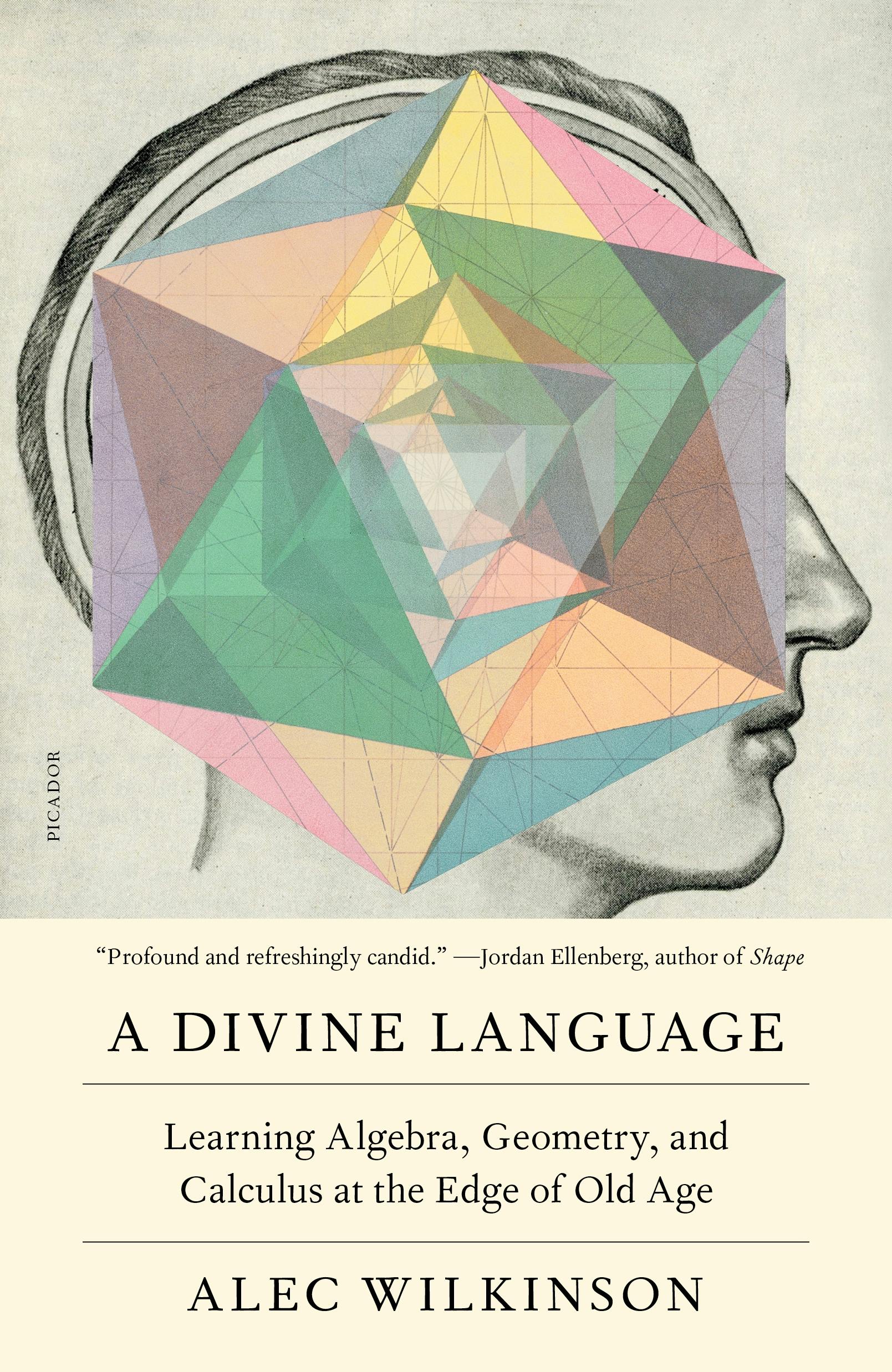
'Decades after struggling to understand math as a boy, Alec Wilkinson decides to embark on a journey to learn it as a middle-aged man. What begins as a personal challenge—and it's challenging—soon transforms into something greater than a belabored effort to learn math. Despite his incompetence, Wilkinson encounters a universe of unexpected mysteries in his pursuit of mathematical knowledge and quickly becomes fascinated; soon, his exercise in personal growth (and torture) morphs into an intellectually expansive exploration.' 
https://us.macmillan.com/books/9781250168580/adivinelanguage/


A Divine Language

As observed many times in the literature and here on W2tQ writing about Hodges' model, healthcare - medicine and nursing are both a science and art. Hodges' model is an invitation to the arts in liberal form, with an emphasis on practice: social sciences, humanities, physical sciences and even mathematics. 

There is now quite a bank of posts on W2tQ tagged art/arts and more specifically prints. I still plan to attend a workshop on printing. As ever, in my head, my mind's eye - I've an amazing, brilliant .. (!?) arts project, just waiting to be released. A true collage of the care concepts.

If Hodges' model is 'simple' in its basic form, then it is clearly possible for other people to create their own artistic impressions, interpretation of Hodges' model. My effort would of course be unique, as would theirs. There could be a competition and I end-up missing out. Not even short-listed for a prize; a victm of familiarity perhaps? 

Quite 'naturally' in a way, or at least by way of childhood experiences, a need for therapy and validation; I have also arrived at a belief that there is a mathematical project here (Oh, for goodness sake! Is there no end to this?). 

As posted before, like Alec Wilkinson I am no mathematician. Embarrased, shamed to a husk at school on many occasions, I encountered math teachers who must have empathised. Well, that's one way to explain the appreciation of maths I have always felt. Or more accurately, a love of knowledge; of which maths and logic are a part? Since I can hardly understand, I am more in love with the idea of maths, than mathematics itself. I have always been in awe of maths and people who 'get it', even if that is only  mastery of the high school mathematics curriculum.

Convinced that there is more to Hodges' model than meets the eye, I have thought of following Wilkinson - who tries to be systematic - to underpin a book - back into the nightmare lands of my youth. Should I retake GCSE maths? 'There be dragons', without a doubt. The heat can be recalled, like it was yesterday. This isn't just a dragon, it is a chimera. At times it wants to be a friend, providing familiar terms, domain, set, and group. Wilkinson's quest is structured and seeks a reasoned and disciplined approach. Why am I bothering? I have a choice surely? Nursing, health, global health can all collectively furnish many items of epistemological fruit. No need for calculative flagellation. Through Hodges' model you can productively span the disciplinary bridges once again: call in - sociology, economics, policy and more. How many Königsberg bridges do you need?

While the artist in me, might waste time. In pointing to Hodges' model as a potential mathematical object, this little seed might fall on fertile and (much) more capable ground(?), as Wilkinson describes:

'Mathematics might be the only creative pursuit in which inevitability figures. Other artists might be defeated by a task beyond their capabilities, but they do not live with knowing that sooner or later, if their work is consequential, someone will do what they haven't been able to do. Mathematicians work within a discipline in which, so long as their suppositions are correct, there is always a precise and irrefutable answer, even if they can't find it.' p.135.

I can hope for this at least.

Alec Wilkinson. (2022) A Divine Language. Learning Algebra, Geometry, and Calculus at the Edge of Old Age. New York: Farrar, Straus and Giroux. https://us.macmillan.com/books/9781250168580/adivinelanguage/

Previously: How 'divine' is the language of care?

n.b. At some point I will go though all the posts and unpublish/delete items that add little to the core.

Wednesday, February 12, 2025

Book review #3: Handbook on the Ethics of AI

I've started several 'gap' lists, including a draft post or two. Seeking to help bridge the theory-practice gap is an original purpose for Hodges' model.

Friedman's chapter 5 Responding to the (techno) Responsibility Gap(s). It is almost as if Friedman's title is parameterised. We could insert the domains of Hodges' model (plus, spiritual - safeguarding!) in there. Then there is the magic of languages, for responsibility substitute accountability and do a deep-dive applying Hodges' model in a specific domain. Friedman notes it is not entirely accurate to talk of a single "responsibility gap". Can this provide evidence for the situated potentiality of Hodges' model's and role in fostering situational awareness? Although there is an ongoing roll-back of CSR - corporate social responsibility, I scribbled in the margin:

INDIVIDUAL
|
      INTERPERSONAL    :     SCIENCES               
HUMANISTIC  --------------------------------------  MECHANISTIC      
 SOCIOLOGY  :    POLITICAL 
|
GROUP
user
user
user
corporate

Of course, 'user' still applies in the political domain, as we are all citizens; users of the State (note also the socio-technical utility of keeping the 'user' in sight). There is also personal ethics, and the legal duty of care - as a nurse (in my case) and for a member of the public. Discussion on notions of responsibility, in light of AI, especially self-driving vehicles, and autonomous machines (weapons) is much needed. Regulatory gaps are recognised; amid current news of debate on the degree of regulation of national and international financial systems. Nyholm's four-fold formulation on responsibility is invaluable as examples are provided. There is a reference to nine notions of responsibility, and the link to accountability and retribution.  I like Friedman's  discussion of responses to responsibility gaps as; optimists - technological approach; human-centred and hybrid approaches; plus pessimists (4.3). The latter includes debate and campaigns to 'stop the killer robots'. Did this chapter, have a positive effect in extending thoughts about events in the middle east? There are two points here I will return to in the final post.

For students, Schwarz's chapter 6 takes readers back to a literally pivotal development in ethical thought and debate: Trolleyology, with the addition of algorithms and killer robots. What Searle's Chinese Room (noted p.276 here) argument is to AI; so trolley-based dilemmas are to ethics. A point made by Schwarz, referring to the development of subsequent variations. (Following on from #2, Brian Magee's interviews with John Searle on philosophy of language and Wittgenstein are also well worth a listen.) Schwarz's chapter (and the whole book) could be read in preparation for an undergraduate course: computing, law, policy, philosophy, and ethics, for example. The challenge of determining responsibility and accountability "the problem of many hands" (p.71), is not limited to AI. This is a global issue in achieving justice for many previously healthy, competent, quite 'ordinary' people.

The question posed above, applies "equally"(!) here too: 3. mathematical morality for war. Ever since reading of argumentation through the Open University and other sources, I'm sure this is applicable to Hodges' model (with its 'own' algebra)? I'm no mathematician but the book provoked excitement rather than anxiety as I read: 'Principle of Permissible Harm (PPH) and probabilistic reasoning - with formulae (pp.88-89). There are some important (imho) 'take-away' messages here, but I don't want to spoil things. Nurses need mathematical skills, in drug calculations and are assessed on the same. Statistics are used in research, of course but maths is hardly the primary motivation for entry into the care professions: 
'Designing technologies in a way that takes into account broader human-centric values is an important and laudable approach to responding to new and emerging technologies in any arena. It cannot, however, serve as a substitute for moral deliberation and the act of taking moral responsibility for harmful acts, especially when lives are at stake. Reducing this to a mathematical problem ignores everything that cannot be captured in discrete numerical terms or as data points. And in situations where people and their lives become nothing more than data points, non-computational aspects, such as relational or embodied dimensions of human life, are marginalized if not entirely obscured. The real world is not reducible to binary logic, it is rife with contested, contradictory, and clashing values that might all be equally relevant It is complex in ways that cannot always be neatly captured or mathematically modeled. In other words, ethics cannot be "solved."' p.91.
More to follow ...

Handbook on the Ethics of Artificial Intelligence. David J. Gunkel (ed.). Cheltenham, UK: Edward Elgar Publishing Ltd. ISBN: 978 1 80392 671 1245

https://www.e-elgar.com/shop/gbp/handbook-on-the-ethics-of-artificial-intelligence-9781803926711.html


Related previous posts: 'general + AI'

Friday, January 03, 2025

How 'divine' is the language of care?

'My impression was that algebra was less a subject than a practice into which one was inducted by the algebra priests after a series of mortifications. The letters and equations that the teacher drew on the board did not seem related to the numbers I had handled in other classrooms. For one thing, a problem in arithmetic was vertical, one number beneath another, and a problem in algebra, an equation, was horizontal. I felt as if in a permanent present, unable to see how the past and the future were joined. In Ulysses James Joyce writes that the present is the drain that the future goes down on its way to becoming the past.' p.12.
'The mathematician Alonzo Church, who taught Alan Turing, told another of his students, David Berlinski, "Any idiot can learn anything in mathematics. It requires only patience." I would sit with a pencil and paper trying to solve an algebra problem and sometimes go only so far before my mind would halt, because I had could used up what little I knew that might apply. It hadn't occurred to me to think of algebra as the bright boys and girls I had been among had thought of it, as a series of related procedures. They were constructing a map. I was collecting postcards from places where anxiety or incuriousness had kept me from leaving my hotel.' p.31.
(my emphasis)


Alec Wilkinson. (2022) A Divine Language. Learning Algebra, Geometry, and Calculus at the Edge of Old Age. New York: Farrar, Straus and Giroux. https://us.macmillan.com/books/9781250168580/adivinelanguage/

Previously: math :: logic

Tuesday, September 03, 2024

HC@AIxIA: AI&Health Seminar Series (2024) - 16 September

Generative AI in sequencing: enhancing models by synthetic omics data

 
16 September 2024 - 04:30PM CET

Speaker
: Giuseppe Jurman, Head of DSH (Data Science for Health) Unit, Fondazione Bruno Kessler – FBK (Trento, Italy)

Title
: Generative AI in sequencing: enhancing models by synthetic omics data.

  • Abstract: Synthetic data have recently gained momentum in several scientific areas as an effective solution to dealt with several aspects of data poverty and missingness. In translational medicine, biomedical images and EHR data have been the first to benefit from synthetic augmentation techniques through generative AI algorithms such as GANs or, more recently, Diffusion-like models. Extension of these methods to omics data poses further challenges due to the nature of the signal, such as the need of taking into account sample variability and multilevel omics coherence. In this talk, we will present an overview of the state-of-the-art of the synthetic data in the omics universe, including the generative methodologies, the future perspectives, and the related caveats, concluding with some applicative use cases. (joint work with Marco Chierici and Silvia Menchetti)
  • Short Bio: Giuseppe Jurman is a mathematician, with a PhD in Algebra, currently Head of the Data Science for Health (DSH) Unit at FBK. His main interest is the development and the application of artificial intelligence, machine learning and complex network models for diagnosis, prognosis and prediction in medicine, life science and computational biology, starting from EHRs, omics data and biomedical images, including digital pathology, with a particular emphasis on reproducibility and explainability. He is also interested in scientific programming with Python and other computing languages, and he teaches Data Visualization at the M.Sc. in Data Science at the University of Trento. 
  • Flyer: link
  • Link for participating: webex link + details
  • VIDEO: available afterwards
c/o: Francesco Calimeri, Mauro Dragoni, Fabio Stella
(coordinators of the HC@AIxIA working group)

Monday, August 12, 2024

Laws of Form - Society, Conference, and Journal (to follow)

Finding out last minute at the end of last week, I attended the Laws of Form Conference at the Old Library, Liverpool University, 19 Abercromby Square L69 7ZN, UK. It was 17 minutes away by rail, so I made the short walk from Lime Street Station, as pre-existing commitments allowed.

The Society, devoted to the ideas and work of George Spencer-Brown is quite new 2023. I was greeted with a welcome that actively encourages the widest range of ideas as relates to LoF, the AGM also revealed future plans.

Laws of Form Books: Source lof50.com 

I've been on the LoF mail list for many years and every so often I've replied to themes that also touch thinking on Hodges' model. Now trying to look at Hodges' model more formally, learning of the conference I had to attend.

At the close today the vote of thanks expressed for the support of University of Liverpool and West DenHaag was shared here.


After the introduction, the first session by Andrew Crompton, of The Alternative Natural Philosophy Association, How to Make a Horse Vanish included insights into the scope of George Spencer-Brown's thought, combining philosophy, design, and architecture with great visuals. All the sessions were interesting, helpful and stimulating, including several that were technical detailing applications of Laws of Form:

".. Spencer-Brown has pointed out that he discovered an arithmetic that underlies Boolean algebra. This arithmetic is the Spencer-Brown Calculus of Indications generated by the mark <> (here written in typographical form) subject to the relations of calling, <><>=<>, and crossing, <<>> = , where, in crossing, the two marks are erased in the plane of writing. .." 
KEYNOTE Louis H Kauffman, Arithmetic in 'Laws of Form' - also Weds 7th Aug. 

Even though I could not understand the approach, listening to purposes, application and and the terminology is useful. 

I was online Thursday, and only followed the first two sessions. I have been exasperated with the various -isms, a response possibly shared with Jonathan Mize, Mind, Your Business: Reimagining business, art and science:

"The world is aching for a fresh approach to how we interact with one another. A popular prescription for our ailment is some type of new “ism,” some meticulously engineered set of dictums that propose to “fix society” once and for all. In this paper, I offer no “isms,” no grand new paradigms and no set of rules that humanity “must follow,” lest they slip into oblivion. What I offer is something very simple—a re-seeing of our approach to our everyday lives, a lifting of the vision from the “ills” and the “evils” of the world to the potential for our collective creation and experience. ..." Thurs 8th Aug.

Secondly, Diego Lucio Rapoport Campodonico, presented The Geometry and Topology of the Primal Distinction: Phenomenology and cosmo-sociomorphisms. If the public's understanding of science can be represented as a morphism, then it was extended here so I will explore.

There was a slide in the session of Florian Grote, Playing the Game of Counting to Two: On the question of requisite re-entries in communication including artificial intelligence (Friday 9th August), that I could immediately relate to Hodges' model:

"In the poem which provided the title for the book Only Two Can Play This Game, James Keys (1971) aka George Spencer-Brown provides the reader with a thorough reflection on the unlikely inevitability of a communicative – a social – world."

I can't cover all the examples of interest, but over the years systems, systems theory invariably crop up. Through the UKSS and Open University I have come across people with ties to the Schumacher Inst.. This thread continued 10th Aug, with Laws of Context with Philip Franses.

Hans Rudolf Straub's The Form and the Bit as Basic Building Blocks of Information: A comparison stood out as a source of reading conjoining LoF and informatics.

Marcus J. Carney's talk (also Sat 10th) Letting Go. The Form of Mourning reminded me of what does a single discipline mean when it uses the term 'applied'? Nursing a cold I didn't want to use the mic, but I think Marcus's work could support theory given the attention on trauma-informed care and therapy at present. There were obvious immediate connections in the abstract, borne out (well delivered!) in his presentation.
"Threnos in antiquity was understood as the activity of mourning. S. Freud dichotomised mourning with melancholia, entangling both in libido. A. and M. Mitscherlich took this up in the 1960s for the German people post Holocaust as their “inability to mourn”. J. Ruesen tried “Trauer” in this context again in the 1990s as “mourning humaneness”, bloating its abstraction. While M. Rothberg introduced the notion of “implicated subject” to the field/s of historical violence and injustices to modify R. Hilberg’s perpetrator-victim-bystander triad in 2019, the German “Historikerstreit 2.0” was raging, but not about Rothberg’s “implication”, yet about his 2009 concept of “multidirectional memory”, wherewith he demonstrated how the Holocaust had enabled the articulation of other histories of victimisation at the same time that it had been declared "unique" among human-perpetrated horrors, while uncovering the more surprising fact that public memory of the Holocaust emerged in part thanks to postwar events that seemingly had little to do with it."
As noted in a previous post, there's also the approach of Parallel Histories. You wonder from where dialogue can follow: Israel and Palestine ... but it must. On Wednesday the recent rioting impinged on proceedings with directions to close earlier and dining plans impacted. 

After too many years I must explore George Spencer-Brown's Laws of Form and try to apply it to Hodges' model as an additional and alternative theoretical resource.

The GSB Society have a forthcoming journal which I will post about here as details follow.

The next conference is in 2026 and will be based in Cambridge - a great prospective source of ideas.

Wednesday, August 07, 2024

"How did you get that answer? Show your working out!"

As students of - math, maths, mathematics (pick one!) or arithmetic, algebra - know only too well: Learning, no doubt, through a series of prompts, especially if numerically challenged:

The way you derived your answer is an important - the most important part of the exercise. It is the exercise in most cases.

As may be apparent here on W2tQ, in addition to visual methods, mind-mapping, diagrams and computers, the professional basis for the study and the draw of Hodges' model was models of care and nursing theory. I've blogged previously about if we stress the theoretical, this variously invites yawns, and critique (always welcome), if not ridicule from outside.

In practice we seem struggle to do the ideal. This is one aspect of the theory-practice gap; bridging this gap was one reason for the creation of Hodges' model. What the student health professional learns in the  class/lecture theatre/online, may not be reflected and realised 100% in practice. 

On clinical placements the real-world intervenes, upsetting the academic comforts. Suddenly the armchair hypotheses do not sit so comfortably. Reality bites. Are there enough staff, is the skill-mix 'ideal'. Patients present their own variables. Which are also often at least binary (and invariably more), to include carers, family, with prior experiences. There are specific life experiences and situations of the patient; and yes, in plural.

Competence with paperwork, the electronic health record (EHR) is key to a student's progress:

From communication skills, establishing a therapeutic relationship (yes, so 'old school'?), enabling and concurrent with care assessment, care planning, intervention and evaluation. Plus, the 'writing' of the same including all the processes, messages received, clinical team meetings, allocations, supervision. All the while being mindful of ethics, professionalism and accountability.

Regarding theory: I do wonder; are we missing something? Something that artificial intelligence may (will) pick-up eventually (quite quickly in-fact!). With the legacy of largely abandoned nursing theories, models of care, health frameworks … do we need to look at theory in a more literal (yes, idealised) form? To have any chance of success do we need to leave behind what we have thus far? In addition to science, nursing, medicine are often described as an art. Even if this theoretical treatment is impressionistic surely it is worth trying - to be creative, innovative, to hypothesise and speculate on the edge?

Can we use Hodges' model, or another 'tool' you might care to propose even more suited to the purpose? 

Throwing caution to the wind: this is a theoretical exercise. It may be based upon sand? Then so be it! If there is a practical, pragmatic and practice-based application that would be marvellous. Why does this matter? The rationale here is driven by the fact that health has its feet, or draws every-other-breath in the humanities. Yes, evidence is grounded in science, anatomy, physiology, life sciences and the rest. The humanistic care - knowledge domains need, demand their own unique theoretical space. A sandpit to play with a theoretical language. And make no mistake, the sand is already hurting these eyes.

There are malign agents who would deny any practical benefits of such an effort, and yet this should be in prospect. This should be an outcome to follow in the near future (although delayed by COVID). In fact it is a necessity, a requirement even, given attention and prioritisation of the SDGs, and the determinants of health,. Add to this the politics of health, and health in politics and the world🌍🌎🌏🌐today; full implementation, achievement and ongoing development will costs billions (trillions of dollars) and once-and-for-all a long-term perspective. 

There is a now, a holistic need to show your working out. How you have arrived at your answer. 

Saturday, July 20, 2024

Frayn - on maths

"Pure arithmetic is not about particular things but about particular relations between things. Algebra preserves an even loftier detachment from the world. It is not about relations between things - it about relations between relations. Numbers are variables that can be quantified in the physical world. Algebraic terms are variables that can be quantified in the world of numbers." pp.154-155.


Frayn, Michael (2006). The human touch: our part in the creation of a universe. 'Fingerhold', Chapter 5. London: Faber & Faber. pp.139-170.

individual
|
INTERPERSONAL : SCIENCES
humanistic ------------------------------- mechanistic
SOCIOLOGY : POLITICAL
|
group

human


TOUCH


... human human  human  human human ...


Don't you dare!
Yes, please do!


Thursday, January 25, 2024

James's 'terrible algebra'

“You are right in your consciousness that we are all echoes and reverberations of the same, and you are noble when your interest and pity as to everything that surrounds you appears to have a sustaining and harmonizing power. Only don’t, I beseech you, generalize too much in these sympathies and tendernesses — remember that every life is a special problem which is not yours but another’s, and content yourself with the terrible algebra of your own. Don’t melt too much into the universe, but be as solid and dense and fixed as you can." 
Henry James.

Source - and in full: 
https://www.goodreads.com/quotes/1242340-you-are-right-in-your-consciousness-that-we-are-all

My source: Berwick, I. Over the limit, Life&Arts, FTWeekend, 20-21 January, 2024, p.10. (Review of "How We Break").

Why not a 'care algebra' - across the five domains?


 Individual
   |
      INTERPERSONAL    :     SCIENCES               
HUMANISTIC  --------------------------------------  MECHANISTIC      
 SOCIOLOGY  :   POLITICAL 
|
Group
reasoning

thought

James's ...

'terrible algebra'

THEORY
<gap>
PRACTICE

mathematics & logic

abstraction

algebra


PRACTICE
<gap>
THEORY

Applied Mathematics
in the Social Sciences


Equity, Equality,
Efficiency, Effectiveness, Efficacy
Difference, Comparison
Inclusion, Exclusion


My emphasis.

Friday, December 15, 2023

Person to object: Surely you're joking* ...!

 INDIVIDUAL
  |
     INTERPERSONAL    :     SCIENCES               
HUMANISTIC --------------------------------------  MECHANISTIC      
SOCIOLOGY  :   POLITICAL 
|
GROUP

identity

person

choice


identity

person, age

integer


people

father - mother

election

voting age


By @Eyesomorphic - https://www.youtube.com/@Eyesomorphic 

"A gentle introduction to the study of Category Theory and Abstract Algebra, done from the ground-up by exploring the mathematical weapon of abstraction. This video aims to give an overview of the fundamental tool at the forefront of pure mathematical research: abstraction. By seeing this tool in various contexts, and how it allows us to encounter Category Theory in a natural and intuitive manner, we'll see how beautiful the abstract can really be."

  ― Timestamps ― 
 0:00 - Intro 
1:49 - Abstraction and Algebra 
7:30 - Examples of Abstraction 
8:49 - Set Theory 
13:25 - Category Theory 
21:16 - Outro 
― Credits ―
All animation and voiceover created by Eyesomorphic. Background music: 'Abstraction', composed by Caleb Peppiatt.

― Further Reading ―
Category Theory for Programmers: The Preface, by Bartosz Milewski: https://bartoszmilewski.com/2014/10/28/category-theory-for-programmers-the-preface/

Category Theory for Computing Science, by Michael Barr & Charles Wells (Book)

 *Person to object - and back again - assuring and preserving the humanistic.

Wednesday, June 14, 2023

[ Towards . . .] A Geometry of Care*

Context -
"Introduction: We present a new model of skilled performance in geometry proof problem solving called the Diagram Configuration model (DC)." p.577.

INDIVIDUAL
|
INTERPERSONAL    :     SCIENCES               
HUMANISTIC --------------------------------------  MECHANISTIC      
SOCIOLOGY  :   POLITICAL 
|
GROUP
"A safe abstraction only ignores irrelevant details, i.e., details which only discriminate between objects that are functionally equivalent with respect to the problem solving task." p.582.

So much to consider here, I may be overstretching analogies but then Hodges' model can act as both a conceptual rack and resolver.


"For instance, to use the side-angle-side rule for inferring triangle congruence a problem solver must locate three congruence relationships - two between corresponding sides of the triangles and one between corresponding angles. In searching for a list of statements for these three relationships, one might need to consider numerous possible combinations of three statements that exist in the list. However, if these relationships are marked on a diagram, one can quickly identify them since the side-angle-side configuration comes together in each triangle at a single vertex. In other words, related information is often easier to find in a diagram because it is typically in the same locality whereas the same information may be separated in a in a list of statements. This is the locality feature of diagrams." p.584.


not just 'local' -


- but intra- interdomain -
with constant stress on safety.


Koedinger, K.R. & Anderson, J.R. (1995) Abstract Planning and Perceptual Chunks. In  Diagrammatic Reasoning: Cognitive and Computational Perspectives. Janice Glasgow, N Hari Narayanan, B. Chandrasekaran (Eds.). Massachusetts: AAAI PRESS / MIT Press. pp.577-625.

Book cover: https://dl.acm.org/doi/book/10.5555/546459

*There may be several? But -
"One of the places where the Geometry tutor expert (GTE) gets bogged down while attempting difficult problems is in the fruitless application of algebra inferences. Algebra expressions can be combined and manipulated in infinite variety and as a result, algebra inferences often lead problem solvers into black holes in the search space from which they may never return." (17.4.3 Avoiding Algebra in the Diagram Configuration Space),  p.593. 


Thursday, March 16, 2023

Abstract [working] Hodges’ model as a mathematical object, a lens for social care and inclusion: category theory or category mistake?

There's a clearer idea now - an abstract - something to aim for in July:

Call for Papers - Community Development and Preventative Care With Older People:
New Values and Approaches

Not yet fully fledged, but then Spring [N] still beckons ...

Hodges’ model as a mathematical object, a lens for social care and inclusion:
category theory or category mistake?

Abstract

The health and social care sectors include disciplines that inevitably fall under the combined aegis of the sciences and humanities. This paper examines social inclusion across Snow’s ‘Two Cultures’. The method is interdisciplinary and descriptive utilising a generic conceptual framework known as Hodges’ model. Rather than Hodges’ model acting as a model of, and for care, here the model is used to investigate how social care can be better conceptualised. While mathematics is a mandated competency in healthcare, the subject, as for the general population, is one preferably left at school. The question posed is: What happens when Hodges’ model is treated as a mathematical object? A challenge for reader and author alike, the purpose is to seek new insights into social inclusion, value, values and development through a relational and dialectic strategy with diagrammatic support, also signposting future avenues of study.

Given ongoing demographic pressures for many nations, is there an additional danger of two intergenerational cultures? Is prevention enough; and can we improve understanding of what can be termed ‘legacy issues’ in health and social care? Can we simultaneously reduce the focus to Simmel’s ‘dyad’, and yet open new avenues for discourse and description? Can we expose the epistemological and ontological dimensions of social inclusion and the life (and death) experience of older adults? Inclusion and exclusion are implicit parameters within the model, its original purposes being person-centredness and recognition of health as political. References and resources, in the form of a template and bibliography are provided.

<>

Still much more to do ... heaven knows what the result will be - and do? Even as I keep the call 'in mind', it may not 'fit' the intended journal at all. Non-predatory, and no article processing charges is essential. Brevity, conciseness ... the order of the day. I can't even hide behind "A little knowledge is a ...": I know nothing - but I'm sure there is some-thing here and in #h2cm.

If anyone is interested in writing something quite different and challenging, then please get in touch. There may (realistically imho) be two-three papers here?

From the call:

"As Rapoport highlighted in the 1960s, however, translating the unified view of prevention associated with public health into social welfare is inherently problematic. This remains the case. Preventative social care and support necessarily operate in complex and dynamic systems, generally where knowledge of causation and the consequences are unclear, and an imaginative application of care needs and contexts is required.

Though current policy direction across many countries suggests opportunities for re-imagining how prevention may be best conceptualised, numerous studies have highlighted that there remains considerable confusion and disparity in how this plays out in practice."

I have held on to the following article from Computing, March 19th 1987 and still learning from Durham and colleagues' journalism:

 "Sometimes a highly abstract, unifying mathematical theory underlies a whole set of scientific or engineering subjects. ...

Category theory is one such subject. Sometimes described as an algebra of algebras, it plays a unifying role in discrete mathematics. Discrete mathematics is a general heading for all the mathematical subjects which deal with jumpy, lumpy entities. Most of the mathematics used in the theory of digital computing is of this kind.

Another unifying subject, homology theory or differential topology, is less well known to computer scientists ... Homology theory is a unifying theory in continuous mathematics, which is the name given to everything that deals with smooth and stretchy entities.

Durham, T. (1987) Over the Horizon.
Working out the algebra of algebras, Computing, 19 March. pp.28-29.

[According to Bowden,] 'category theory and homology theory are fairly close things. The big difference is that homology theory includes information about the topology of the space that it describes.

Category theory is just about information. Homology theory is about information and structure, the structure of something.'

Space itself is not something we usually think of as possessing structure. But space does impose limitations on the kinds of behaviour that can be exhibited by things like electric fields and currents, or electromagnetic waves." p.28.


Durham, T. (1987) Over the Horizon. Working out the algebra of algebras, Computing, 19 March. pp.28-29. (Sorry no issue / volume nos.).


See also:

Call for Papers (i) Community Development and Preventative Care With Older People: New Values and Approaches

Call for Papers (ii) Community Development and Preventative Care With Older People: New Values and Approaches

Friday, October 21, 2022

Mathesis Universalis - Caresis Universalis ..?

Frontispiece of Operum Mathematicorum Pars Prima (1657)
by John Wallis, the first volume of Opera Mathematica
including a chapter entitled Mathesis Universalis


"Mathesis universalis (from Greek: μάθησις, mathesis "science or learning", and Latin: universalis "universal") is a hypothetical universal science modelled on mathematics envisaged by Descartes and Leibniz, among a number of other 16th- and 17th-century philosophers and mathematicians. For Leibniz, it would be supported by a calculus ratiocinator. John Wallis invokes the name as title in his Opera Mathematica, a textbook on arithmetic, algebra, and Cartesian geometry"


 INDIVIDUAL
|
 INTERPERSONAL    :     SCIENCES               
HUMANISTIC --------------------------------------  MECHANISTIC      
SOCIOLOGY  :   POLITICAL 
|
GROUP

progress?

progress?

progress?

[PROGRESS?]

Also from: https://en.wikipedia.org/wiki/Mathesis_universalis

René Descartes

In Descartes' corpus the term mathesis universalis appears only in the Rules for the Direction of the Mind.[1] In the discussion of Rule Four, Descartes' provides his clearest description of mathesis universalis:

Rule Four
We need a method if we are to investigate the truth of things.

[...] I began my investigation by inquiring what exactly is generally meant by the term 'mathematics' and why it is that, in addition to arithmetic and geometry, sciences such as astronomy, music, optics, mechanics, among others, are called branches of mathematics. [...] This made me realize that there must be a general science which explains all the points that can be raised concerning order and measure irrespective of the subject-matter, and that this science should be termed mathesis universalis — a venerable term with a well-established meaning — for it covers everything that entitles these other sciences to be called branches of mathematics. [...]

— René Descartes, Rules for the Direction of the Mind; translated by John Cottingham[4]