Hodges' Model: Welcome to the QUAD: Search results for poetry

Hodges' model is a conceptual framework to support reflection and critical thinking. Situated, the model can help integrate all disciplines (academic and professional). Amid news items, are posts that illustrate the scope and application of the model. A bibliography and A4 template are provided in the sidebar. Welcome to the QUAD ...

Showing posts sorted by date for query poetry. Sort by relevance Show all posts

Wednesday, September 02, 2026

Celebrating Black History Month with the RCN NW Multicultural Group

From Allyship to Action: Building an Inclusive, Anti-Racist Future for Nursing


22 Oct 2026, 10:00 - 16:00
6 Mount Street, , Manchester, M2 5NS

Free

Book onto our celebration for Black History Month.

Join us for a full day at the Friend's Meeting House in Manchester to celebrate Black History Month!

North west members are invite to join us in celebration alongside the RCN President, who is making a special trip to Manchester to join us for part of the day.  This year we will be exploring the theme: From Allyship to Action: Building an Inclusive, Anti-Racist Future for Nursing.

The event, organised by the member-led North West Multicultural Group, will hear from speakers including:

Estephanie Dunn: Non-Executive Director of the Caribbean and African Health Network (CAHN)

Estephanie will discuss exceptionalism and how intentional and unintentional actions can negatively impact equity, inclusion and belonging in healthcare. Her session will encourage reflection on bias, challenge inequitable practices, and promote more inclusive workplaces for all.

Temitope Babajide: General Practice Nurse

Creator of both the General Practice Nurse Starter Manual and a separate nursing-themed colouring book, will share her inspiring journey in primary care. Her session will recognise and celebrate the historic and ongoing contributions of Black nurses, while showcasing the achievements, leadership and influence of Black nursing professionals in the North West and beyond.

Patricia Hughes: Associate Director RCN : Nursing Practice Nursing

Patricia will focus on equality, leadership and career progression, encouraging greater representation of Black nurses in senior and decision-making roles.

Bejoy Sebastian: RCN President

The President, will discuss the importance of allyship and the role nursing professionals play in creating anti-racist, inclusive workplaces. He will recognise and celebrate the significant contributions of Black nurses to the NHS and wider health and social care sector. The session will explore how inclusive leadership, workforce equality standards and fair career progression can help create a culture of belonging. Attendees will be encouraged to take practical action to challenge discrimination, support equality and inspire the next generation of nursing leaders.

Anandi Ramamurthy: Professor of Media and Culture, Sheffield Hallam University; Principal Investigator, Nursing Narratives: Racism and the Pandemic; Co-Editor, Anti-Racist Nursing and Midwifery: A Resource for Students, Practitioners and Activists.

The Anti-Racist Nursing and Midwifery book, the Nursing Narratives research project, and the film 'Exposed'.

There will also be a panel discussion and a poetry workshop and 'Allyship in Action' challenge workshop in the afternoon. 

Book now to avoid missing out. This event will take place in person and is open to all North West members. A sandwich lunch is provided. 

For further information regarding the aims and objectives of the NW Multicultural Group, please visit our webpage. 

Olanike Babalola

Olanike.Babalola AT reps.rcn.org.uk

Tuesday, December 30, 2025

Beyond Empathy to System Change: Four Poems on Health by Bertolt Brecht

The canalization of a river 
The grafting of a fruit tree 
The education of a person 
The reconstruction of a state. 
These are all instances of a fruitful critique 
And they are also
 Instances of art. 
—Bertolt Brecht, “On the Critical Attitude”


Individual
|
      INTERPERSONAL    :     SCIENCES               
HUMANISTIC  --------------------------------------  MECHANISTIC      
 SOCIOLOGY  :    POLITICAL 
|
Group
'The education of a person'


'The canalization of a river
The grafting of a fruit tree'
 

'These are all instances of a fruitful critique
And they are also
Instances of art.'
—Bertolt Brecht,
“On the Critical Attitude”


'The reconstruction of a state.'


MacGregor, W., Horn, M. & Raphael, D. Beyond Empathy to System Change: Four Poems on Health by Bertolt Brecht. J Med Humanit 45, 53–77 (2024). https://doi.org/10.1007/s10912-023-09801-5

My source: 

Politics of Health Group Mail List Messages
Visit PoHG on Facebook: https://www.facebook.com/282761111845400
Follow us on Twitter: @pohguk
You can subscribe to / unsubscribe from the PoHG mail list here: http://www.jiscmail.ac.uk/POHG
And SDOH list - https://listserv.yorku.ca/cgi-bin/wa?SUBED1=sdoh&A=1

See also: 'drama' : 'empathy' : 'poetry' : 'change' : 'art'

Sunday, November 02, 2025

The poetry of presence c/o Kenner's 'Mechanic Muse'

'... Eliot's poetry responds to yet another of the new century's pervasive experiences, that of being talked to by people we cannot see. This happens whenever we pick up a telephone, a thing we do so many times a day we quite overlook the strangeness of what lappens next. A character in The Cocktail Party remarks that you can't tell the truth on the telephone, meaning probably that you lose three quarters of your communicative power when you cannot be seen and your breathing body is absent, and you must fabricate mere semantic sequences. Your words are only a fraction of what you say, and the telephone throws you back on nothing but words. It is in Sweeney Agonistes, the play that gives the telephone bell a wholly metrical speaking part, that we hear the famous phrase, "I gotta use words vhen I talk to you."
    When the phone rings in that play - 
    Ting a ling ling 
    Ting a ling ling

Dusty snatches it up and says,

Hello Hello are you there?' 


Kenner, H. (1987) The Mechanic Muse, Oxford: OUP. pp.34-35.

Wednesday, September 24, 2025

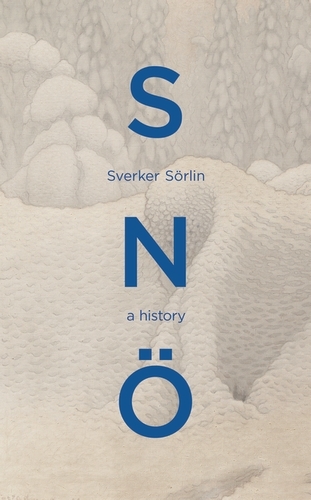
Book: SNÖ

'Snow. A single word, for an infinite variety of water formulations, frozen in air. The study of snow is physics, chemistry, meteorology, anthropology, geography, poetry and art. It is hope – annually renewed. And it is history, too.

Earth saw its first snowfall 2.4 billion years ago. The world's oldest skis, made by hand five thousand four hundred years old, pre-date the pyramids of ancient Egypt. To humanity, snow has variously been an ally and an adversary; an inspiration to countless artists and a place of breathtaking tragedy and survival. But it’s always been there. And now it is melting. 
In 1927, the snow was already more than nine metres deep on Japan's Mount Ibuki when a remarkable 230cm fell in 24 hours, bringing about the greatest depth of snow - 11.82m - ever recorded. Yet it is a fact today that, ironically not only has this mountain's resort been forced to close due to lack of snow, most people in the world have never been near snow: never felt the soft crunch of snow underfoot, never held snow to see it melt in their hands, let alone stood on a pair of skis.'  continued ...
Individual
|
      INTERPERSONAL    :     SCIENCES               
HUMANISTIC  --------------------------------------  MECHANISTIC      
 SOCIOLOGY  :    POLITICAL 
|
Group


compass defined

compass unified

mental expanse

beauty

memory

lived experience

signature of change

sadness

signifier
SNÖ by Sverker Sörlin

culture

poetry - arts

social history

shared loss

recreation - leisure

Two kids.
Uncles! In car, drenching
us driving through slush in the gutter 😎


Sverker Sörlin, Elizabeth DeNoma (Translator) (2025). SNÖ - A History. London: Doubleday.
https://www.penguin.co.uk/books/467833/sno-by-sorlin-sverker/9781529947878


My source: Clark, P. A gear shift to adapt to a warming world. Books. Genre Round-Up, Environment.  Life&Arts. FT Weekend. 23/24 August 2025. p.10.

John Denver - Season Suite (Full) The Suite is in this order:
  1. Summer
  2. Fall
  3. Winter
  4. Late Winter, Early Spring (When Everybody Goes to Mexico)
  5. Spring

Thursday, July 10, 2025

ii 'Thinking outside the box ...' by Amber Javis

Second reply to a blog post by Amber Jarvis on The Mental Elf:

Thinking outside the box: alternatives to standard inpatient mental health care

Amber's post considers a study by:

Griffiths, J. L., Baldwin, H., Vasikaran, J., Jarvis, R., Pillutla, R., Saunders, K. R., … & Johnson, S. (2025). Alternative approaches to standard inpatient mental health care: development of a typology of service models. International Journal of Mental Health Systems, 19(1), 1-13: https://pubmed.ncbi.nlm.nih.gov/40247283/

Jarvis highlights concern within inpatient services of:
'use of coercive practices ... (Nyttingnes et al., 2018; Belayneh et al., 2024). These include physical restraint (physically holding a person), seclusion (holding a person in a locked room) and chemical restraint (the use of sedating medication to manage distress or behaviour, sometimes administered “as needed” rather than as part of any planned treatment). Poor relationships between staff and service users have also been noted, ...'
Reflecting since the previous post, I realise that I encountered efforts to prevent admission and treat in the community prior to going part-time. A short stay unit at a general hospital. Being a member of Intermediate Support for older adults; shifts ran 0800-2000 - early or late. Then working part-time, there were short-stay placements in the community that the recovery team would visit providing support.

Mental distress is distressing (a truism of course), both as lived experience (with or without self-awareness in-situ/crisis) and for others in the vicinity. Family, friends - who see a person they thought they knew, perhaps even thought they were a friend, a person who loved them; but now!? They present as distant, aggressive, subdued, agitated, unpredictable, inconsolable and possibly expressing thoughts of self-harm, threats to harm others, or totally bizarre, 'psychotic' ideas. This is not the person they thought they knew. For the person affected, familiars are strangers. A relational breakdown. We forget the severely mentally ill at our peril. A pervasive sense of helplessness is readily transferred: the reflex conclusion that help is needed - and fast.

To say we are creatures of habit, is to also acknowledge that change our environment results in a change in our behaviour. When relatives did arrive on the psychogeriatric ward I mentioned previously, they cried. Apologising for the environment, yes; efforts to reassure ensued and eventually family, friends were won over. They shouldn't have been. Unless we're in a game, play, or movie, who wants to find themselves in a Victorian era institution?

I've posted previously (or is it in draft?) on the importance of design in the design of care environments. It was a relative's visit to a care home, that resulted in a nursing home design business (Sunday Times). 
A person who is severely mentally ill needs service-centred care, not purely person-centred care. Person-centredness is key, but safety of self, and the public soon makes itself known. We also forget this at our peril. The problem is that control, and law literally take over. Plus, it's our place not yours. Loss of power the person struggling, ill, in crisis then follows. Amber continues:
'The concerns described above chime uncomfortably with modern mental health agendas of prioritising autonomy, compassion, trauma-informed and person-centred care. In light of these tensions, and the growing number of crisis alternatives – ranging from crisis cafes to intensive home treatment services – researchers  at the NIHR Policy Research Unit in Mental Health set out to map current alternatives to traditional inpatient care, both nationally and internationally. Griffiths and Baldwin’s findings raise important questions about how mental health services could evolve to better suit people’s needs, providing a valuable starting point for service planners considering developments in care.'
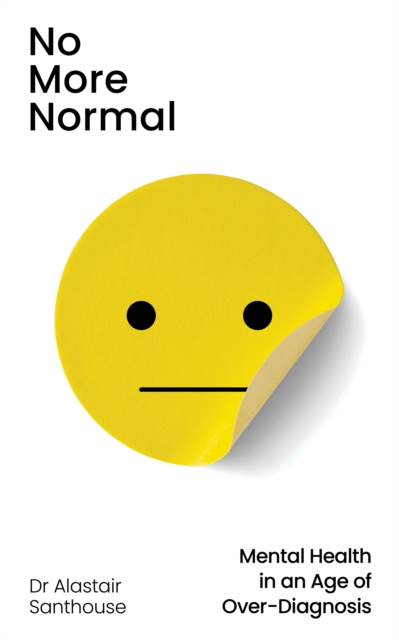
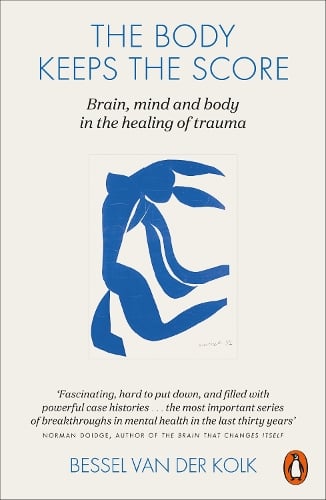
Hodges' model is ideal to help reflect and critique the relation-ship between 'a person' and 'the service'. I passed two gentlemen in London over the weekend. Clearly unkempt, standing but gesticulating, freely verbalising, incoherent on passing. Neither appeared intoxicated ( but I wasn't that close) or 'stoned'. That's the other question; passing-by what was I going to do? Does the 'community' care? On 'X' you encounter the extremes of debate. Anti-psychiatry, resort to and risks of dependence on medication - anti-depressants, anxiolytics; the damage from anti-psychotic drugs and atypical antipsychotics. The continuous debate about ECT. A dizzying stream of texts about mental health, over-diagnosis and wellbeing:


Medical prescribing has a partner. Social prescribing is well established, with organisations, events, publications and research emerging. People, have scoffed at the suggestion that gardening can help; or going for a run. Especially when you can't get out of bed. Chronic fatigue syndrome, long-COVID are seemingly monolithic in their resistance to change. A real challenge and so counter to the person's 'pre-morbid' personality and lifestyle.

For several years the state of mental health nursing as a specialty has been questioned. Is the mental health nursing curriculum being genericised? Enrollment of students nurses in learning disability has also dropped.

Medical prescribing has a partner. Social prescribing is well established, with organisations, events, publications and research emerging. People, have scoffed at the suggestion that gardening can help; or going for a run. Especially when they can't get out of bed. Chronic fatigue syndrome, long-COVID are seemingly monolithic in their resistance to change. A real challenge and so counter to the person's 'pre-morbid' personality and lifestyle. As a conceptual framework Hodges' model is ideal as a semantic net, to reflect and critique concepts that stretch and so disrupt (for a time) out norms. Concepts with a dual character. If social prescribing is one example, take crisis cafe mentioned by Jarvis above. If you think in physical - environmental terms where do you envisage a crisis occuring or playing out? What about a cafe? What is the ambience of these places?

I noticed a little visual game, an animation of characters running, jumping, climbing over an obstacle course. You focus on one figure and follow them for a time. This makes a difference, called distraction. In psychosocial intervention and managment of psychosis and anxiety audio - music, poetry, repetition has also bee used. The essence here must be when the intervention begins. Recognising relapse triggers, requires preparatory work. The Griffith reference is provided, but Jarvis begins to describe the results:
'Researchers identified 65 alternative service models to standard inpatient care. These were organised broadly organised according to the setting (e.g., community-based, hospital-based, or cross-setting) and the target population (e.g., adults versus children). Across these categories, ‘community-based alternatives’ were the most common category of alternative service models, followed by hospital-based and cross-setting approaches. We’ll explore each of these in more detail below.'
In post (i) and here I suppose I am advocating for mental health nursing as a distinct programme of study, practice and proven competence. For several years the state of mental health nursing as a specialty has been questioned. Is the mental health nursing curriculum being genericised? Enrollment of students nurses in learning disability has also dropped. 


There is a saying: 'You get what you pay for'. There is a sense that there are people who would like to ignore, deny, erase 'mental health'. After all, the truth really is that you can 'see' a broken leg. This isn't an issue if you can afford a private psychotherapist, or a psychoanalyst.
The elephant here (well, there always is one) is education and the literacies. For prevention: the ultimate change - this is where we must focus. But of course for the problem at hand - and mind it is too late.

(Post iii likely to follow.)

Individual
|
      INTERPERSONAL    :     SCIENCES               
HUMANISTIC  --------------------------------------  MECHANISTIC      
 SOCIOLOGY  :    POLITICAL 
|
Group
subjectivity         
mental state - crisis - mind
quality
objectivity
hand - physical state - crisis
quantity
Social prescribing
Cafe

Housing - crisis
Cost of living - crisis

See also: 'literacy' : 'prevention' : 'service' : 'severe' : 'change'


Thursday, June 12, 2025

Rain, Library, and a Poem on a Neon Line

'It is raining in the library,
and leaking between theory and practice.'

Rain by Faroese poet and novelist Carl Jóhan Jensen


My source: BBC Radio 4 The Verb. Poetry and performance with Ian McMillan.

8th June 2025. 1710-1750. https://www.bbc.co.uk/sounds/play/m002d88g

Previously: 'theory' : 'practice' : 'library' : 'poetry'

Thursday, February 06, 2025

Last Word by Ann Williams

LAST WORD

In Africa, one word for now,

Another word for tomorrow,

But forty words for the past.

The elephants do not forget.

They stand close in a circle,

Turn the heaped pile of bones

This way and that, stroke

Leg-bone, thigh and skull,

Rub dust into their faces.


Sighing, they understand

The weight of grief,

How memory is carried.

by Ann Williams

Poetry, edited by Peter Abbs (RIP 2020), Small Epiphanies, Resurgence & Ecologist, Sept/Oct 2013, Issue 280: p.52-53. I cannot locate a web presence for Ann Williams, if anyone can assist please get in touch. Resurgence & Ecologist is a marvellous read. I do not subscribe but enjoy a copy when visiting a city.

P.S. I feel bad not subscribing, but you have to 'cut your cloth'. That's not the only pain factor. An online subscription may be greener, and cheaper? As with book reviews (Ethics and AI - to follow), I need a physical copy, spending enough time on-screen already. The publication is much more than a magazine. The magazine represents a change of mindset and ironically reflects former and for many 'new' ways of life.

Wednesday, September 11, 2024

THE GRID by Eli Payne Mandel

individual
|
INTERPERSONAL : SCIENCES
humanistic ------------------------------- mechanistic
SOCIOLOGY : POLITICAL
|
group

[125]
'Therefore, a mathematician babbles when he refers to cutting a given line in two. The actual line that he shows to us on the abacus has length and width. But the line he has in mind is a stroke with length and no width. What is drawn on the abacus cannot be such a stroke, and he who goes about cutting it cuts not the line that is but the line that is not.'

(Sextus Empiricus, Against the Mathematicians 9.282)
(n.b. The above is printed upside-down on the page.)

Scatter the trace of the vessel from the ash. Pythagoras here is riddling about confusion and mental cloudiness, for if one wants to do philosophy one must pass over physical and sensible demonstration in favor of abstract argumentation. The ash is analogous to the dust on the abacus in which diagrams are delimited and proofs brought to an end. 

(Iamblichus, Exhortation to Philosophy 34)' p.55


'[1] In ancient Greek, an abacus is a sand table. 'The abacist draws lines and maybe moves pebbles around the lines. When done, she wipes the sand blank. 


[2] A board or slab for drawing, computation, games; a cutting board. Technical term, likely to be a loanword, but conjectured origin in Hebrew abãq "dust" remains unproven. --  Pierre Chantraine, Dictionnaire etymologique de la langue greque.' p.10.

'[122] The abacus computes and it erases. It tells a life. Then gambles it away. Achilles and Ajax sit down to play a game of dice. They have hung up their shields. They lean on their spears. They are tired. The Anatolian air is cold off the water. Attendants wrap them each in wool cloaks thick with eight-pointed stars. The stars wander along eddies and meanders. The only straight lines are servants of error. Their fingers are on the abacus, but Achilles and Ajax do not play, do not speak, lost in the maze of their cloaks.

[124] The first reference in Western literature to written language is in the Iliad. An unsuspecting  man in a story is carrying semata lygra / grapsas en pinaki ptukto thymophthora polla: baleful signs written on a folded tablet, utterly soul-  destroying. The words, which some scholars conjecture to be Linear B, spell out the man's death, and the reader murders  the unreading man. After the murder, Death Wipes the tablet  blank and folds it back again.' p.54.

'[3] Because dust blows away and only the slab remains, an abacus is also the part of a column in immediate contact with what it supports. If that structure no longer survives, the abacus upholds the edifice of the sky.' p.10.


THE GRID by Eli Payne Mandel, Carcanet Press. 2023.

https://www.elipmandel.com/

Previously on W2tQ (with overlap):

arts :: drama :: poetry :: literature :: narrative

Wednesday, September 04, 2024

Laughter and Medicine Conference

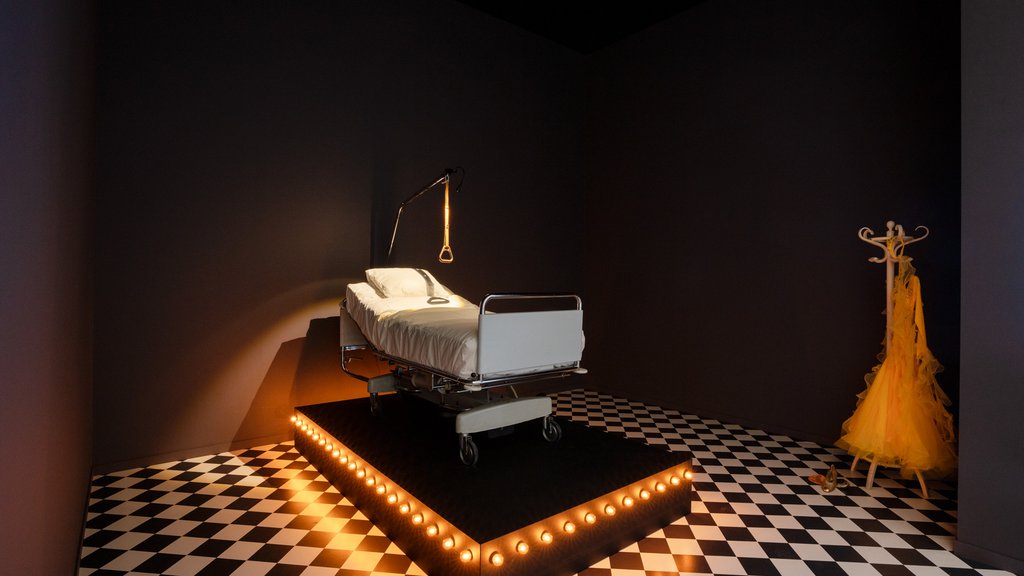
Manon, Laughing Gas, 2019, installation, Kunsthaus Zürich
photographer: Franca Candrian, 2022.

British Academy/Wellcome Trust Conferences bring together scholars and specialists from around the world to explore themes related to health and wellbeing.

'Connecting knowledge across the disciplines, this conference will put practicing doctors in direct dialogue with researchers in the humanities – especially scholars of literature, cinema and cultural history. Together, they will seek to understand the social, diagnostic, therapeutic and physiological implications of laughter, inside and outside the clinic. Laughter is not always the 'best medicine', nor is it linked only to comedy and enjoyment. 'Healing laughter' differs markedly from pathological laughter, hysterical laughter, forced or bitter laughter, laughter aimed at mitigating awkwardness in unsuccessful communication, laughter intended to deceive, or laughter signifying fear, discomfort or aggression. Irony and other double-coded signifiers that abound in comic and parodic representations of medical practitioners and their patients often reveal medicine’s paradoxical place in various cultural imaginaries and in individual and collective experience.

This conference will study the diverse forms of laughter occurring around medicine in particular eras and cultural environments alongside comparative analysis of patterns and problematics over the long history of Western medicine and its representations.'

         https://www.thebritishacademy.ac.uk/events/british-academy-conferences/laughter-and-medicine/

individual
|
INTERPERSONAL : SCIENCES
humanistic ------------------------------- mechanistic
SOCIOLOGY : POLITICAL
|
group

I don't find this funny!


 I laughed so much it hurt! 


"All the world's a stage"

Politics is a running joke - that's never funny.

The human epic of triumph and tragedy.

Previously (with overlap):

arts :: drama :: poetry :: literature :: narrative

Friday, August 16, 2024

Health & Care results in mountains of data: c/o Burke & Cao 2024

"When medical schools train medical students, they teach them to treat patients as collections of various data points. They are laboratory tests and results, each measured to a standard number of significant figures. Notes students write hack down the richness of patients' identities and experiences: unemployment increases suicide risk while having a religion diminishes it. Each positive result that an interview or physical exam reveals adds another data point to the growing mountain, while a negative result erases a branch of possibilities in a treatment algorithm. It is a familiar process for every doctor, almost second nature, and yet it creates a chasm between patients and providers. Learning about a patient and their life becomes a process of deleting what's seen as irrelevant, and a patient's humanity gets lost in the chaos of data. ..."

"How would Nan Shepherd treat a mountain without her vision being mangled by medical training? She would probe it, palpate its surface, and listen to it rather than trying to comprehend it by reading reams of surveyor data. She would build a portrait of it in her mind beyond solely that which was intended to slot into the criteria of the IC-10. Perhaps she'd write a sensuous physical exam: ..."  

individual
|
INTERPERSONAL : SCIENCES
humanistic ------------------------------- mechanistic
SOCIOLOGY : POLITICAL
|
group


"CONSTITUTIONAL:
a granite mountain range, millions of years old, overall stable and solid, teeming with living, breathing organisms
CARDIOVASCULAR:
its rivers are patent, low and high turbulence at turns, its veins crisscross the surface
RESPIRATORY:
the wind carves through it in mighty exhales
MUSCULOSKELETAL:
its stone carries a range of lives, and the wind, the snow, the sun slowly bend the range of its form
GI/GU:
it slowly digests, grows, evacuates, and seethes as its wastes give rise to new life
NEUROLOGICAL:
the mountain is awake but dreaming with you"

The Living Mountain


Burke, R., Cao, E. To Care for a Mountain - What medical practitioners can learn from Nan Shepherd. Oxford Review of Books, Summer 2024, Volume 8, Issue 2. p.14. In association with Stanford. Ack. length of quotations in relation to length of author's article.

Nan Shepherd 1893 - 1981:  Scottish Poetry Library 2024.
https://www.scottishpoetrylibrary.org.uk/poet/nan-shepherd/

Cover image: Allen and Unwin

Friday, March 22, 2024

Chairs and Beds: The Theatre of the Absurd [balance!]

Hodges' model: Stages of Care/Despair

Individual

|
      INTERPERSONAL    :     SCIENCES               
HUMANISTIC  --------------------------------------  MECHANISTIC      
 SOCIOLOGY  :    POLITICAL 
|
Group

Beds needed for 'treatment' mental illness and physical, preparedness for public health events.

Reduced beds for 'modern medicine', sustainable health care, reflecting health education, preventive approaches and improved health literacy (. . .?).

NHS hospital beds data analysis

We look at NHS bed data in England compared to other countries, bed stocks over time, the impact of COVID-19, safety breaches and intensive care capacity.


"The Theatre of the Absurd, on the other hand, tends toward a radical devaluation of language, toward a poetry that is to emerge from the concrete and objectified images of the stage itself. The element of language still plays an important part in this conception, but what happens on the stage transcends, and often contradicts, the words spoken by the characters. In Ionesco's The Chairs, for example, the poetic content of a powerfully poetic play doe not lie in the banal words that are uttered but in the fact that they are spoken to an ever-growing number of empty chairs." p.26.


"Bums on seats"
(Lecture theatres)


Esslin, Martin. The theatre of the absurd. London: Pelican, 1982. (3rd Ed.).

Wednesday, March 01, 2023

Metamorphosis [squared]

  INDIVIDUAL
|

INTERPERSONAL
   :     SCIENCES              

HUMANISTIC --------------------------------------  MECHANISTIC  

SOCIOLOGY
  :   POLITICAL

|

GROUP


Metamorphosis:
A Life in Pieces
...
Metamorphosis


Images: Penguin.

Kafka - https://www.wob.com/en-gb/books/franz-kafka/metamorphosis/9780140015720

... Novice to Expert, or Poetry anyone?

Wednesday, February 22, 2023

"In all flat maps (and I am one)" - Donne

'Discordia concors' - 'Concordia discors' ... plus ... 'Site map'*

"Drawing both on the medieval Mappae mundi and the Ptolemaic tradition revived in the Renaissance, the recurrent cartographic motif in John Donne’s poetry well reflects the preoccupations of a revolutionary period in the history of Western cartography. Yet, for all its cosmic magnitude, Donne’s poems, both holy and secular, are turned, not so much towards an exploration of the world as towards an exploration of the Self as the ultimate object of reflection." [Abstract].


Ladan Niayesh, ““All flat maps, and I am one”: Cartographic References in the Poems of John Donne”, Études Épistémè [Online], 10 | 2006, Online since 01 October 2006, connection on 22 February 2023. URL: http://journals.openedition.org/episteme/955; DOI: https://doi.org/10.4000/episteme.955

 INDIVIDUAL
|
 INTERPERSONAL    :     SCIENCES               
HUMANISTIC --------------------------------------  MECHANISTIC   
SOCIOLOGY  :   POLITICAL 
|
GROUP

"Let us take as a first example one of the last poems written by Donne, "Hymn to God my God, in my Sickness", composed either during one of the poet’s serious illnesses in 1623 or alternatively shortly before his death in 1631 ..."


"... Here the poet compares himself, as he lies on his sick-bed, or possibly his death bed, to a flat geographical map studied by his physicians who are compared to cartographers: "my physicians by their love are grown / Cosmographers, and I their map, who lie / Flat on this bed" (ll. 6-8), and later "In all flat maps (and I am one)" (ll. 14)."

The global
Psycho-Social-Geo-Political
legacies and future?


"Yet for all its symbolic Noachid and Christian background, Donne’s cartographic imagery has room for the latest scientific contributions. Newly discovered territories are directly named here: "is the Pacific Sea my home?" (l. 16), "Anyan, and Magellan, and Gibraltar" (l. 18). And if this metaphorical map is a flat one — "In all flat maps (and I am one)" — it is solely for the sake of commodity, as this flat shape actually stands for an acknowledged and accepted spherical reality: "west and east / In all flat maps (...) are one" (ll. 13-14)."


*I found some irony in 'site map' being the final map on the journal's webpage.

Sources:
 
London July 2022 Foyles, Waterstones and other bookshops:
Super-Infinite: The Transformations of John Donne (Hardback)
https://www.faber.co.uk/product/9780571345915-super-infinite/

BBC Radio 4 Super-Infinite by Katherine Rundell [Episode 3]

Previously on W2tQ: 'maps'

Monday, February 20, 2023

C/o Medha Cherabuddi & Intima: "Each quadrant houses its own diversity, ..."

... and these seem to converge in the middle beautifully." *

 INDIVIDUAL
|
 INTERPERSONAL    :     SCIENCES               
HUMANISTIC --------------------------------------  MECHANISTIC   
SOCIOLOGY  :   POLITICAL 
|
GROUP
© The Common Thread by Medha Cherabuddi. Acrylic


Poetry
and much more
invited ...


Image: © The Common Thread by Medha Cherabuddi. Acrylic.

"Each quadrant houses its own diversity, and these seem to converge in the middle beautifully. This piece honors women's myriad of roles in medicine and their common thread. The constant throughout my life is art, especially when I find meaning in it.

Medha Cherabuddi was born and brought up in San Jose, California, and moved to Hyderabad, India, with her family at 9. After growing up with the best of both worlds, she completed medical school in India and moved to Detroit, Michigan, during the peak of the pandemic to begin her Internal Medicine residency at Henry Ford Hospital."


*Yes they do! No endorsement implied.

Saturday, February 18, 2023

"163 Days"

 INDIVIDUAL
|
 INTERPERSONAL    :     SCIENCES               
HUMANISTIC --------------------------------------  MECHANISTIC   
SOCIOLOGY  :   POLITICAL 
|
GROUP

163 Days - Hannah Hodgson
Poetry in [not in] motion


“Hannah Hodgson takes us to the paradoxical heart of poetry itself: to be held inside a pain both intensified and soothed by the sheer brilliant presence of the poet’s mind.” – Caroline Bird

Hannah Hodgon is an award-winning poet and a palliative care patient. In her compelling debut collection 163 Days, she uses a panoply of medical, legal, and personal vocabularies to explore what illness, death and dying does to a person as both patient and witness.  

163 Days is the length of Hannah’s longest period of hospitalisation to date. In this long poem, she probes various truths, personal and medical; truths which clash like a tray of dropped instruments in a silent operating theatre.

The speaker is a teenager on the cusp of adulthood. Doctors struggle to diagnose her complex conditions. Through daily, diary-like poems we see the children’s ward through Hannah’s eyes. It is decked out in primary colours. Volunteer clowns visit. At seventeen she is ‘too old’ to be here, ‘too young’ to move to the adult ward.

The mundanity of hospital life is marbled by a changing landscape of mood, hope and loss. Her symptoms are painful. She has numerous tests and procedures to keep her alive long enough to figure out what’s wrong. A gap yawns between the person she is, and the person in her medical notes.

In ‘Aftercare’, Hannah navigates the worlds of both nightclubs and hospice care as she embarks on a new version of her life as a disabled adult. 163 Days is an important collection, in which Hodgson’s true voice takes poetry into difficult places.

Listen to the BBC radio play adaptation of 163 Days on the New Creatives website here.

163 Days by Hannah Hodgson, Seren Books ISBN-13: 9781781726471
Publication Date: Monday, March 28, 2022

My source:
Hannah's book in Kirkby Lonsdale, The Book Lounge 17th February 2023.

Sunday, January 02, 2022

PHI MAGAZINE (Φ) - Liminal Issue [i]

 Submissions are OFFICIALLY open for our Liminal Issue.

PHI Magazine cover by Taudalpoi
The word ‘Liminal’ encompasses the quality of ambiguity or disorientation that occurs in the transitional stage of a process, boundary, or threshold. It comes from the Latin word līmen, relating to participants of rites of passage who no longer hold their pre-ritual status but have not yet begun the transition to the status they will hold when the rite is complete. During a rite's liminal stage, participants stand at the threshold. In many ways, this is where the world stands today.

We take all kinds of submissions: prose, photography, poetry, painting, opinion pieces, film or music—you make it, we want to publish it!

Submit to us before 14/02/2022 to be considered for our Liminal Issue.

For enquiries: submissions.phimag AT gmail.com

+++

WHAT IS PHI MAGAZINE (Φ)?

Φ Magazine is a quarterly publication aimed at showcasing the creative talents of Philosophy students across the globe outside the academic realm. Be it photography, painting, poetry, prose, or anything in between then it can find a place in the pages of Φ.

My source: 

Philos-L "The Liverpool List" https://www.liverpool.ac.uk/philosophy/philos-l/

@PhilosL @LiverpoolPhilos 

Thanks to Chiara at PHI Magazine for the cover image by Taudalpoi.

n.b. I will add a further post to relate the above call to threshold concepts and Hodges' model.

Thursday, October 07, 2021

"... Two beds and a coffee machine ..."

poetry in lyrics ...

 
Individual
|

INTERPERSONAL : SCIENCES
humanistic ------------------------------------- mechanistic
SOCIOLOGY : POLITICAL
|
Group

"Wonder how I ever made it through
And there are children to think of
Baby's asleep in the back seat
Wonder how they'll ever make it
Through this living nightmare
But the mind is an amazing thing
Full of candy dreams and new toys
..."

"Another ditch in the road
You keep moving
Another stop sign
You keep moving on
And the years go by so fast ..."


"Another bruise to try and hide
Another alibi to write ...."


Source: Musixmatch
Songwriters: Hayes Darren Stanley / Jones Daniel
Two Beds and a Coffee Machine lyrics © Rough Cut Music Pty Ltd.