Hodges' Model: Welcome to the QUAD: Search results for war

Hodges' model is a conceptual framework to support reflection and critical thinking. Situated, the model can help integrate all disciplines (academic and professional). Amid news items, are posts that illustrate the scope and application of the model. A bibliography and A4 template are provided in the sidebar. Welcome to the QUAD ...

Showing posts sorted by date for query war. Sort by relevance Show all posts

Tuesday, September 22, 2026

Beware of the Concept

Yesterday Alan Ayckbourn's gold-nugget-laden book -

The Crafty Art of Playmaking by Alan Ayckbourn. Faber, 2004, softcover, ISBN 0571215106.
https://www.concordtheatricals.co.uk/s/45898/the-crafty-art-of-playmaking
 

- found a new owner. Beforehand, I turned up the following helpful advice (or, 'obvious rules'): 

ix Introduction

'The following is an attempt to describe, as far as I can, this double process [writing and directing, PJ]. Some of it is quite probably unique to me and contains procedures and practices that it would be highly unwise for others to try and copy. The rest is really just plain common sense. But if I've learnt anything it is that it never hurts to point out the obvious occasionally, certainly in the theatre - to actors, directors or writers and sometimes even to designers, stage managers and technicians. Often we quite wrongly suspect simplicity. We go digging around in the creative sand trying to make.our art more meaningful, somehow 'deeper'. Generally all we do is end up with our heads entirely buried, presenting the audience with our rear ends.'
Obvious Rule No. 3
If you don't have the initial inspiration, put down the pen,put the pencil back in the jar, switch off the computer and go and dig the garden instead.

.. 
'At its most successful, theatre views things from a human standpoint. It is after all the most human in scale of all the performance media. My feeling is that that's also a good place for a dramatist to start, at the human level. As a playwright it may be your intention to build a vehicle to take us to the stars. But do make sure you have people aboard.

Initial inspiration - that essential starting point - comes in all shapes and sizes.' p..9.
Obvious Rule No. 49
Beware of the Concept.

DIRECTING

'Don't be talked into anything you feel instinctively you'll regret later. If you must have a concept (God save us from that word) then let the concept be something that's worked out between you. Let it spring from the play and not from the fact that the production manager has 5oo square metres of black lino left over from their last production. I once heard the fateful words, 'I think it's about time we did something with mirrors.' If at all possible, try and persuade the producer, whoever it is, to let you make as many scenic decisions as late on as possible. There will always be an intense pressure to decide everything before you start. This can be fatal.' pp.118-19.

In pencil I noted: 'Hodges' model is different. So, don't panic.' Is it? Really?

I've saved this for the last: 

'Then there is the new old playwright. Far more difficult to deal with. They have probably nursed this script for twenty-five years and they're damned if you're going to mess it up for them when they've waited so long. Especially someone your age who wasn't even born when their harrowing play about World War Two was still raging, dammit.' p.110.

It's not that I believe I'm a (potential) playwright, it's the learning.

See also: 'Ayckbourn' : 'drama'

Thursday, July 16, 2026

How is your Odyssey (thus far ...)?

THE ODYSSEY

As a tool for lifelong learning Hodges' model must be capable of providing a structure through which a narrative can woven. A person's career, as in work, is another distinct example. And again the 'health career' through health, illness, physical and mental trials and tribulations is perhaps the prime example. As the example, it forms the basis of myth underpinning the world's cultures, pre- and ancient histories.

Tomorrow, is the day of "Two Odysseys". No: this is not 2001, 2010, 2061 or 3001.

One odyssey, heads off to the South West, to a place where the land ends, apparently. Memories to be made, a story to unfold.

The other, is based on a voyage: an incredible tale, an epic journey - the epic (in the west). This ODYSSEY will be found in the cinema (and not on a phone, TV, PC, laptop ...); and vitally also in an amazing book. Recounting, what was originally the oral tale of Odysseus on his fantastical 10-year journey home after the Trojan War.

Hodges' model provides a structure to weave this narrative, the twists and turns of patients, carers, students and personnel - all the narrative forms.

Image: https://www.rottentomatoes.com/m/the_odyssey_2026

See also: The Hero's Journey and Joseph Campbell

Sunday, June 07, 2026

Book: "The Elements of Power"

individual
|
INTERPERSONAL
: SCIENCES             
humanistic ------------------------------- mechanistic
SOCIOLOGY : POLITICAL   
|
group
logicical OR
 

the periodic table
|
mining
|
elements
COBALT


the 'table' ...

family

communities


CHILD LABOUR
 
power 


“A tale of rapacious colonialism, Cold War spy games, dazzling technical innovation, big business rivalry, big power geopolitics . . . Niarchos has produced an unflinching, landmark work on the nature of extractive capitalism.” —Patrick Radden Keefe, New York Times best-selling author of Empire of Pain and Say Nothing

Epic, shocking, and deeply reported, The Elements of Power tells the story of the war for the global supply of battery metals—essential for the decarbonization of our economies—and the terrible, bloody human cost of this badly misunderstood industry


'Congo is rich. Swaths of the war-torn African country lack basic infrastructure, and, after many decades of colonial occupation, its people are officially among the poorest in the world. But hidden beneath the soil are vast quantities of cobalt, lithium, copper, tin, tantalum, tungsten, and other treasures. Recently, this veritable periodic table of resources has become extremely valuable because these metals are essential for the global “energy transition”—the plan for wealthy nations to wean themselves off fossil fuels by shifting to sustainable forms of energy, such as solar and wind. The race to electrify the world’s economy has begun, and China has a considerable head start. From Indonesia to South America to Central Africa, Beijing has invested in mines and infrastructure for decades. But the U.S. has begun fighting back with massive investments of its own, as well as sanctions and disruptive tariffs. ...'

https://www.penguinrandomhouse.com/books/709025/the-elements-of-power-by-nicolas-niarchos/

My source: James McConnachie, The dirty truth behind our 'clean energy' cars, saturday review, The Times, 17 January 2026, p.13.

Previously: 'mining' : 'corruption' : 'Africa' 

Thursday, April 30, 2026

ii WCCS26: World Conference on Complex Systems 20-22nd April

Day 1

Plenary Talk: Reda Benkirane - Lost in Complexity: Welcome to the Real World

A first slide considered Abraham Maslow's book The Psychology of Science and his thought on the "law of the instrument". Maslow's hierarchy of needs is a key primer for new students to many disciplines, including nursing, and psychology. The purpose of Benikrane's focus on instruments concerns the emergence of civilisation and roles of agriculture, and war in the rise of community at several scales from village, to cities, states and nations. In terms of flow the slides highlighted the next speaker Peter Turchin's END TIMES, and two books by Johann Chapoutot, LES IRRESPONSABLES, and FREE TO OBEY.

In response to the slide with Einstein's -

"We cannot solve our problems with the same thinking we used when we created them":

- may I please class 'health - care' as a world? The thought that the medical, bio-medical, and bio-psycho-social encourages, sees enacted, and sustained a : is this fit for the problems of the 21st century. I like the slide's heading 'Beyond Complexity'. Such is the pace of change, which is labelled 'progress' that each one of us wakes up momentarily stupified and lost in complexity.

Keynote Speaker: Peter Turchin - The Great Holocene
Transformation: What Complexity Science Tells Us About The Evolution of Complex Societies

Turchin's keynote reminded me of Jared Diamond's book Guns, Germs and Steel. Reading GGS I realised there is more to 'axes' than I thought, especially from the individual to collective scales. It appears that whichever label - academia, research or education - you would like to apply, they all need a conceptual framework. Just as, individually, we all need a model of self, others and the world. This was a marvellous journey, through millennia of humanities' evolution, social, and political development, all realised through complexity. While attractors are to the fore, architecture and archaeology are regular distractors for me. Reading Holocene then had me hooked. 

A fellow delegate and speaker I dined with a few times encouraged me to read 'END TIMES'. I will seek it out later this year, (the next Hay-on-Wye visit?). Turchin is seeking to account for how human societies have reached their current state of organisation. The role of self-protection, seeking food, shelter, co-operation are all factors, with the emergence of religions, and agriculture. Several theories to date were covered [including, cultural multilevel selection, see Wilson et al. (2023)], plus a major project on cultural evolution: The Seshat: Global History Databank. For all the current loss and misery, conflict has paid a major role in cultural and political development. The prefix 'macro' features here. There was a social scale (people): FROM 10s - in foraging bands through TO 100,000,000s large nation-states. Mention of levels of scale, took me back to the work of Mario Bunge. The application of the Hertzsprung-Russell 'main sequence' (H-R) diagram is a great idea. I think Olaf Stapleton, author of Star Maker would have approved. 

This itself, for me, is reason enough to read Turchin. There is evolutionary biochemistry too, which is required in terms of a systems account. Is there a reflection of a main sequence construct between the SOCIOLOGICAL and SCIENCES domain of Hodges' model? 

 It is incredible the way new findings are regularly pushing even further the dates of human milestones stepping-stones. Perhaps we should always view progress in this way, and enjoy the 'moment'. There is still the puzzle of ultrasociality, and how to explain it? Turchin is seeking a mathematical history, with a journal Cliodynamics. There is another SF reference here, in Asimov's psychohistory in the Foundation books, but with less emphasis upon maths. This is encouraging for Hodges' model, and the inevitable transdisciplinary approach these questions demand.

More to follow ...

D.S. Wilson, G. Madhavan, M.J. Gelfand, S.C. Hayes, P.W.B. Atkins, & R.R. Colwell, Multilevel cultural evolution: From new theory to practical applications, Proc. Natl. Acad. Sci. U.S.A. 120 (16) e2218222120, https://doi.org/10.1073/pnas.2218222120 (2023).

Tuesday, April 07, 2026

Theatres of War and Healing

INDIVIDUAL
|
     INTERPERSONAL    :     SCIENCES               
HUMANISTIC --------------------------------------  MECHANISTIC      
SOCIOLOGY  :   POLITICAL 
|
GROUP


Theater of War Productions presents community-specific, theater-based projects that address pressing public health and social issues.


c/o Reuters

Previously: 'theatre' : 'war' : 'public (mental) health' 

Saturday, March 07, 2026

A definition of the 'Psycho-Political'

Clearing books, magazines and journals (to make space for a few new acquisitions) on a trip to Hay-on-Wye, I bought a secondhand copy of:

Weizsacker, Carl Friedrich von. (1980). The Unity of Nature.

I noticed chapters on the definition of health and illness, and information.

Models of Health and Illness, Good and Evil, Truth and Falseness

Chapter  Jun 2014 
https://doi.org/10.1007/978-3-319-03671-7
In book: Carl Friedrich von Weizsäcker: Major Texts in Philosophy (pp.74-89)

Abstract

This essay is the core of our reflections on cybernetics. It is the only essay in this Part that tries to describe concretely what cybernetics can achieve. Written in the fall of 1967 but unpublished until now, it was inspired by a lecture on “Peacelessness as Mental Illness” delivered in Bethel in 1967 (published in Der ungesicherte Friede; Göttingen: Vandenhoeck & Ruprecht, 1969). On that occasion the question arose whether it is medically justifiable, or merely metaphoric, to call the inability to maintain peace an illness. As far as I can see, contemporary medicine lacks a sufficiently clear concept of illness to decide this question. Since I had no desire to merely skirt the issue, I was faced with the task of outlining a scientifically justifiable definition of illness. The result is presented in Sect. 6.2 of this essay; its social application is very briefly sketched in Sect. 6.4.

(My emphasis)
Unfortunately, I cannot find a copy of the lecture. In my softback copy the title is "Lack of Peace as Psychic Illness".

We don't tend to think of mental illness in the collective, but history provides many examples within and extended across communities - 'mass psychogenic illness'. More recently there is a literature on the mental health, competency of global leaders, also known as 'hubris syndrome' previously. Even the history of Carl Friedrich von Weizsäcker is controversial, his World War II record and knowledge of nuclear physics.

We have a veritable storm across all the domains of Hodges' model (including the spiritual) that point to the model's ongoing  relevance, consider:

  • climate crisis;
  • pollution (air, water ...)
  • geopolitics;
  • disruption of the international rules-based order;
  • the status and reputation of global organisations (were they ever 'international'?);
  • the record of current global political leadership;
  • the need to protect Political titles (not just Professional titles, Dr, Nurse, ...)?;
  • the rise of artificial intelligence.


Link: 
https://www.researchgate.net/publication/300477492_Models_of_Health_and_Illness_Good_and_Evil_Truth_and_Falseness?

Tuesday, February 24, 2026

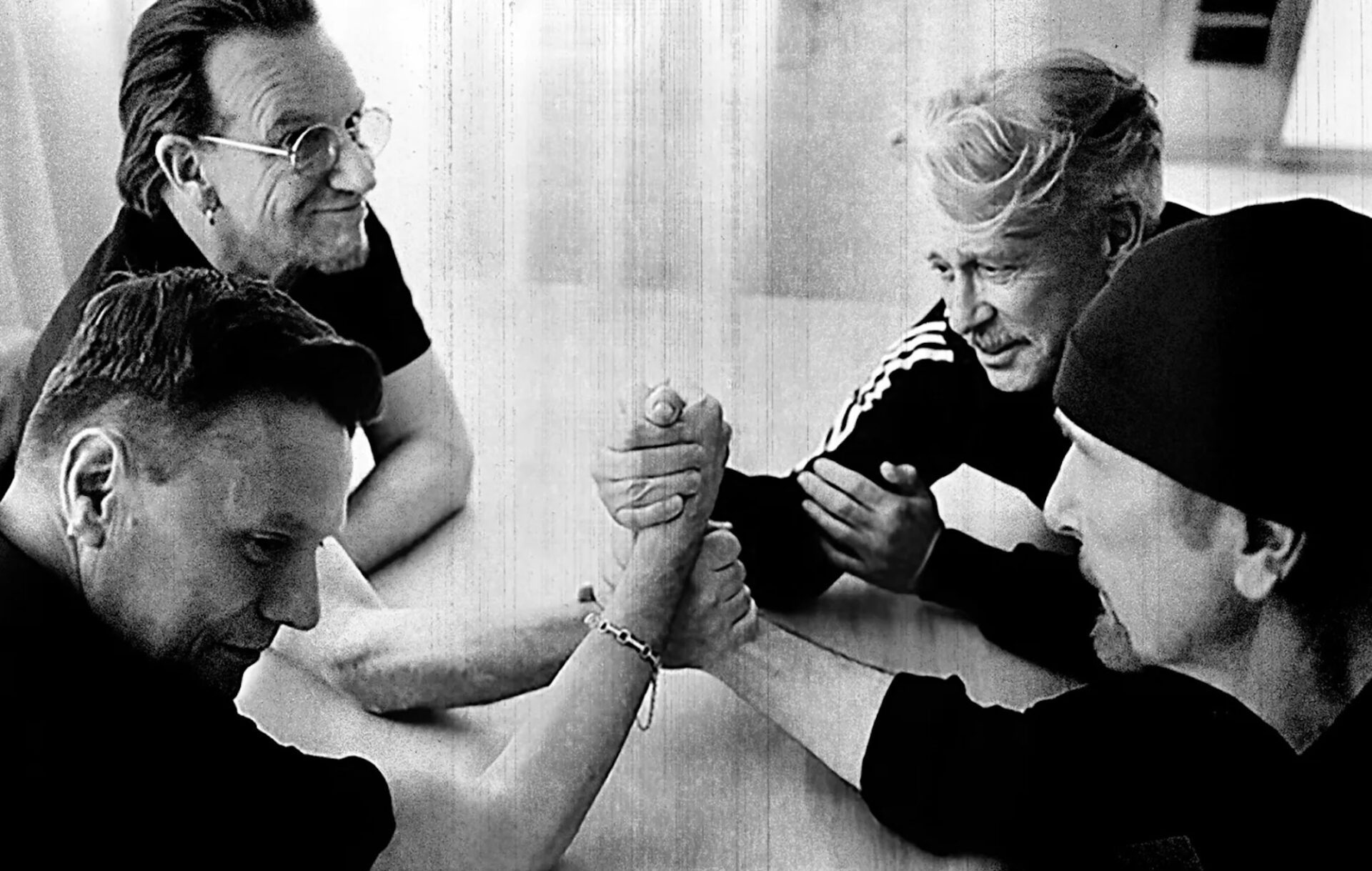
c/o RollingStone UK - "U2 surprise-drop politically charged ‘Days of Ash’ EP with six new songs"

The collection delves into ICE, Israel, the West Bank, Ukraine, Iran — and features a guest vocal by Ed Sheeran

U2 (RollingStone UK - Picture: Anton Corbijn) 

By Andy Greene

'U2 have emerged from a long hiatus with a surprise six-song EP, Days of Ash, available now, in which they address political flashpoints around the world, including ICE raids in the US, the Iranian uprisings, the war in Ukraine, and Israeli settlements in the West Bank.

The six songs — ‘American Obituary’, ‘The Tears of Things’, ‘Song of the Future’, ‘Wildpeace’, ‘One Life at a Time’ and ‘Yours Eternally’ (featuring Ed Sheeran and Taras Topolia) — are all on streaming platforms. They’ve also created lyric videos for each one.' 

Continued ...


Previously: conflict : war : hope : peace

Sunday, December 14, 2025

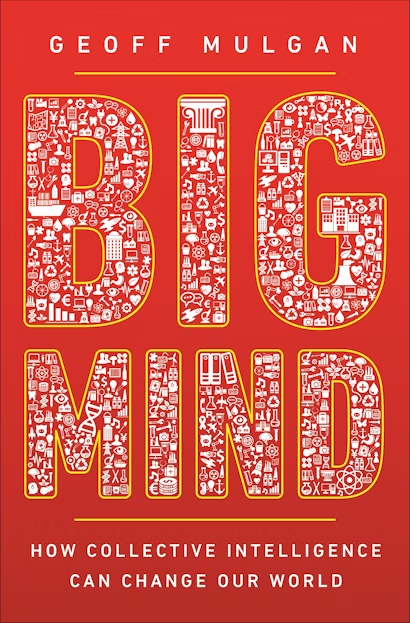
ii Big Mind: How Collective Intelligence Can Change Our World

'Everything we know is knowledge from the past, which may not apply in the future - the problem repeatedly stumbled on by models, algorithms, economic theories, and geopolitical dispositions, which made sense in one era, but then become dysfunctional in another. As social science has repeatedly discovered, the more you use a model, the less likely you are to question it. What starts as a pragmatic tool to answer a question becomes a truth in itself.

And so the models we use to think can also become traps. A model is held on to because it provides meaning and reassurance. Police forces notoriously cling to evidence they collect early in a case in the face of powerful contrary evidence that emerges later, and thus extraordinary miscarriages of justice result. The middle-aged cling to the theories they learned as undergraduates. Organizations become attached to models that become comfortable through use. I remember once meeting the planning team of a government that admitted that their forecasts had been no better than random guesses, but argued that the detailed forecasts were still needed to help with planning. The model became a comfort, even though it had no real use. 

Familiarity also breeds blindness. ...

Expertise can equally entrap. ...
 
The implication, as the Buddha pointed out, is that intelligence has to be at war with and suspicious of itself to be truly intelligent.' pp.120-121.

FIVE FUNDAMENTAL PRINCIPLES FOR EFFECTIVE COLLECTIVE INTELLIGENCE

'The first is the extent of what I call (1) autonomous commons of the intelligence in the system. By this I mean how much the elements of intelligence are allowed free rein, and not subordinated too easily to ego, hierachy, assumption, or ownership.' p.66. Chap. 5. Organizing Principles.
2. Balanced use of the capabilities of intelligence
3. Focus and the right granularity
4. Reflexivity and learning
5. Integration for action
 
'So a group is a we, but it is not just a scaling up of an I. How, then, should we think about the character of this we?' p.102. Chap. 9. The Collective.
 
Individual
|
      INTERPERSONAL    :     SCIENCES               
HUMANISTIC  --------------------------------------  MECHANISTIC      
 SOCIOLOGY  :    POLITICAL 
|
Group
 
EGO
 

 HIERARCHY


ASSUMPTION
 

OWNERSHIP


n.b. With my emphasis.

 
Geoff Mulgan (2017) Big Mind: How Collective Intelligence Can Change Our World, Princeton University Press.

Image: Princeton University Press.

See also: 'AI' : 'group' : 'axes' : 'individual'

 Previously:
Big Mind: How Collective Intelligence Can Change Our World


Saturday, November 08, 2025

COP30: Seeking change shopping in the far North & SOUTH

individual
|
INTERPERSONAL : SCIENCES
humanistic -------------------------------------------  mechanistic
SOCIOLOGY : POLITICAL
|
group-population


'John Kørner (born 1967, Danish): Understanding the Impact of Architecture, 12, 2020

Lithograph

Kørner pursues his artistic practice through various media, including painting, printmaking, ceramics, installations, sculpture, videos and theatre work. Throughout his career he has tackled contemporary global issues such as migration, war, and systems of production and consumption. He refers to these as 'Problems' that form an ongoing process of enquiry in his work. In his series of paintings and prints Understanding the Impact of Architecture (begun in 2014) he explores the way architecture influences, impacts and interacts with people and their environment. This print from the series addresses blind consumerism and its effect on the fragile Nordic landscape. It was made at Edition Copenhagen which along with Borch Editions is the other major print workshop in Denmark.

Acquisition supported by AKO Foundation, 2023,7056.2'

Text and my source: British Museum Room 90

Nordic noir
works on paper from Edvard Munch to Mamma Andersson


Exhibition
 / 09 October 2025 – 22 March 2026

See previously: 'care architecture' : 'architecture'

Tuesday, August 12, 2025

Revisiting the G7 ... G20

'Under the Trump administration, the US is retreating from the global leadership role it has played since the end of the second world war. The world is bedevilled with challenges and there is a desperate need for stability and co-ordinated solutions to global problems. Where will the leadership to solve them come from? 

Some have argued that we are now in a "G zero" world in which no one is in charge. There is great uncertainty and the powerful dictate solutions to smaller players. Others say we are moving to a regional carve up - a G3 where the US. Russia and China have spheres of influence in a modern day version of the Three Emperors League. 
Some version of a new multi-polar order may yet take shape. But it also seems clear that a G minus one world is starting to fill the vacuum in some domains — with countries coming together to find solutions to global problems without the US.' p.11.
 
Individual
|
      INTERPERSONAL    :     SCIENCES               
HUMANISTIC  --------------------------------------  MECHANISTIC      
 SOCIOLOGY  :    POLITICAL 
|
Group
imaginary -

*You cast your vote and get the 
global leadership we all deserve. ...

- numbers


... Discuss.

G20
G7
G-0?
Goto*


My source: 
Minouche Shafik, How to live in a G minus one world, Opinion, FTWeekend. 26-27 July 2025, p.11.
https://www.ft.com/content/7b884f20-e44e-4afe-9c0c-0c602f76b3f6

Previously: 'G7'

Tuesday, July 29, 2025

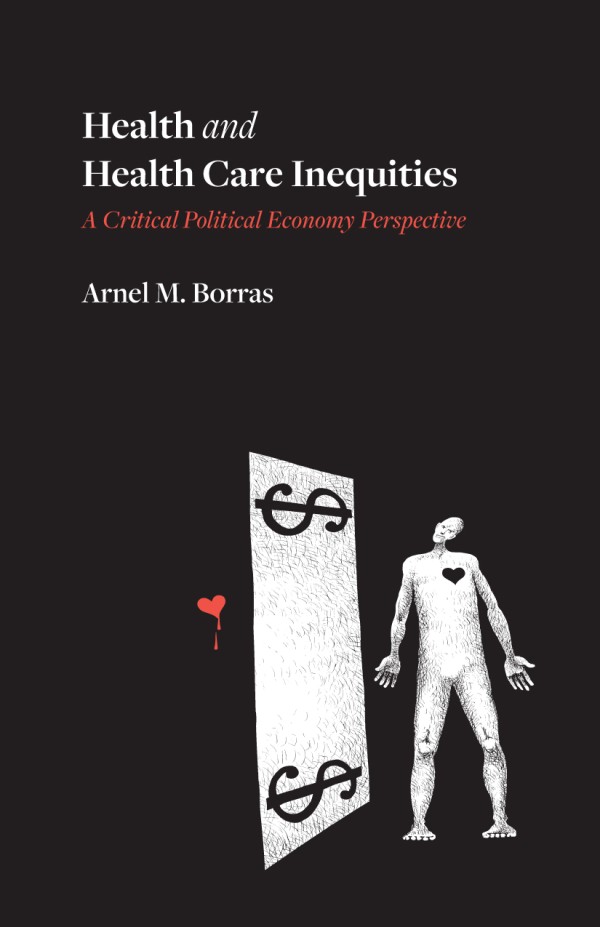
Book: iii 'Health and Health Care Inequities'


This book, or similar should be read by 3rd year student nurses and other healthcare learners. I wondered if, for students, a brief glossary might be useful. But key terms are explained and clearly, with typologies numbered and expanded when needed. There seems an aversion in nursing academia to avoid the acutely 'political'. Even though of course in psychiatry, the need for considersation of human rights, consent, capacity, law, personal and public safety, risk is inevitable. Should we only learn of the politics of our role on a post-registration/license course of learning? As mentioned in post i, Borras duly notes the asymmetric impact COVID. The disproportinate deaths of frontline healthcare workers from ethnic minority groups (UK). A sign of the impact, is reflected in COVID recurring through the text.

The device of using axes, e.g. Class-Gender-Health (p.11) rightly draws in commentary on nutrition, pay gaps - heterosexual white men, terms of employment, and design and occupational health for woman. Gender politics is also reflected in the text. The relational dimensions of this discussion also stands out. The Class-Race-Health axis (had me return to the question of parity, but beyond the mental - physical divide. 

These axes employed by Borras seemingly traverse a path and are extensible (across pages). Briefly, in Hodges' model the domains and axes act as stepping stones: 

We can ‘walk’ the model:

Humanistic INTERPERSONAL Individual SCIENCES Mechanistic: adding - Humanistic SOCIOLOGY Group POLITICAL Mechanistic 

A global perspective is matained, even though the focus is Canadian health, government, policy and policy. The press have often highlighted the global nature of the housing crisis. Canada is not immune; as discussed in chapter 2. For what is in many nations a 'housing disaster', Borras covers the history too. Reflecting on: 
'Around the world, neoliberal programs have resulted in over a billion people living in slums (Davis 2017, 23). In wealthier countries, there was rampant privatization of social housing units.' p.25. 
- you feel like a nodding dog toy. Where is the leadership, the strategy and integrity to provide housing for all? Arnel also stresses the link between mental health status and housing. The SDGs place emphasis on security (yes, at the level of what is happening in Ukraine, Gaza, South Sudan...), then housing follows. And with climate refugees to follow ...! I have seen gentrification, and listened to an account in 2007 as Manchester started to experience high-rise growth. I used to try to walk to community visits with students when possible. Observational skills come in many forms, safety still depends upon them. With no place to call home, safety and security is a stark issue for people. A foundation for health, wellbeing and ironically productivity. The rise of foodbanks is also damning. 

Gambling is not indexed, but there appears a denial in the UK government, with other nations 'folding' to the influence of lobbying and corporate influence reducing or removing restrictions in gambling and crucially: advertising. What's the denial you say? Yes, well governments seem to be in denial that there are vulnerable groups in their respective populations. It is laudable that they bestow upon the citizenry the freedom of choice, but that can spell trouble.

If Canada - Ontario has its housing scandal:
'Housing insecurity and homelessness occur because the state and its goencies support real estate and banking corporations that continuously increase housing prices. This setup is a huge problem because these enti- ties focus on generating profit and capital accumulation. The Greenbelt Scandal in Ontario revealed how the government made decisions that served the interests of big companies instead of the public (McGrath 2023; Office of the Auditor General of Ontario 2023). This scandal is an example of neoliberalism and a corrupt style of governance (Moscrop 2023). We need to stop using neoliberal strategies and focus on socialized housing.' p.27.

So does the UK: Grenfell Tower Inquiry No doubt, other nations have their tragic examples. It seems 'international Standards', quality, integrity can never be taken for quality. They too are precarious, vulnerable. Borras's work in chapter 2 on housing security, and differenciation of core housing need is laudable, informative and welcome. Re-reading Arnel's point: 'There is no doubt that housing insecurity affects health'. p.28. His book as a whole makes the point that of course more evidence will always be needed. In healthcare for decades the basics of public health have been identified, studied, established, placed in models and frameworks. Yet we find we are found wanting (UK - Awaab's Law) dragged back to the first steps; and despite the urgent issues we now face.

"Universal health care" is not exactly new:

The Canadian Association of Social Workers. (1961). The Social Worker, Volume 29, Numbers 1 to 2. 29(1to2), 1to78. The Canadian Association of Social Workers. The Social Worker - Le travailleur social. Canadian Association of Social Workers. https://jstor.org/stable/community.39672572.

Borras is correct to write of 'The Continuing Private War against Universal Health Care' (p.36). Looking at NGRAM it appears the private sector has been winning in recent decades. Working previously as a community mental health nurse for older adults, chapter 3 explores Canada's health care systems. Table 3.1 compares the ownership of long-term care homes in figures. The discussion deals with the quality of care and variation. Policy intentions, plans, research and what follows in practice is also debated. Is there any comfort  in learning that Canada is not alone in being skilled at kicking-can-down-the-road. To be fair many developed nations face the same demographic cliff (whichever way you it!), just one of the urgent issues noted above. The contribution of informal carers is also highlighted.

Here in the UK the commissioner - provider split and models of care at the finance level are a maze: amazing in their bureaucracy. Borras does a marvellous job, in providing enough detail without weighing the narrative flow, and losing the reader. The close of chapter 3 offers hope that Hodges' model will continue to be found:
'Therefore, shifting away from neoliberalism toward a new societal system where health care is seen as a fundamental human need and a universal right, not a profit-driven commodity, is crucial. This alternative system requires a new societal framework built on solidarity, fairness, and humanity, prioritizing health over financial and personal gain.' p.50.
See also: Post i : Post ii : Post iv : Post v (to follow)

Arnel M. Borras. (2025) Health and Health Care Inequities - A Critical Political Economy Perspective. Fernwood Publishing.

In addition:

Messing, K., & de Grosbois, S. (2001). Women Workers Confront One-Eyed Science: Building Alliances to Improve Women’s Occupational Health. Women & Health, 33(1–2), 125–141. https://doi.org/10.1300/J013v33n01_08  (Borras - pp.11-12).

https://nhsrho.org/news/tender-maternal-and-neonatal-image-library/

Monday, June 23, 2025

Entry to the Theatre of Nursing & Space

I do understand that reading theatre related texts, joining a theatre group, my writing a play is still pi in the sky. It's the journey, that's all. In Hodges' model I've differentiated between structure and content. This is the center of the stage about which Hodges' model turns. In the guided discovery by which students and audiences can discover the model,  these are the bases to touch in turn.


Sir Alan's focus on construction in writing: is narrative, time, location, characters (p.12). The overall message for me is, the frequently uttered - less is more. I must take heed and listen. During Ayckbourn's career, he has encountered the full retinue of writers and directors young and 'experienced'. Reading this, it is nice to be both 'new old-er' -
'Then there is the new old playwright. Far more difficult to deal with. They have probably nursed this script for twenty-five years and they're damned if you're going to mess it up for them when they've waited so long. Especially someone your age who wasn't even born when their harrowing play about World War Two was still raging, dammit.' p.110. (My emphasis in bold.)
Thinking about 1959 and the start of Sir Alan's career, his reference to WWII, made me recall nursing assistant and student nurse studies and placements at Winwick Hospital in 1977. On the geriatric wards for entertainment it was WWI songs were often sung, or records played. Long players, indeed.

In health we are usually accustomed to stopping before the 'true' end, with the exception of palliative care, although even then the ending should be 'better' than what it would otherwise have been.

If I am nursing Hodges' model, I've been doing so ever since 1987-88. As Sir Alan also observes of writers, while passionate about the utility of the model - my project - not my model; I am filled with self-doubt. Is this an over-valued idea - in my hands (and mind!)?

In other reading - Stagecraft. The Complete Guide To Theatrical Practice, by Griffiths Trevor R. 1982, I came across the word 'proscenium'.

'Incidentally, when we came to stage [the play in question is 'Woman in Mind' PJ] the London proscenium version this was far more difficult to achieve. Proscenium theatres generally make scenic statements whether they want to or not; the round makes none unless called upon to do so.' p.32. 

There are many insights into sets, design, and the various pros and cons. In May and earlier this month, with three other cast members I performed a role 8-9mins in a Living Newspaper (40-50 mins in total). It was fascinating to watch the various aspects developing from the initial reading in January. With Hodges' model an idea, the question of set design is not straight forward. But as with over-valued ideas, I am probably over-thinking (as usual) making things more complicated than necessary.

One golden nugget of advice, is if you are the writer and write well, well you don't have to think the set design. That is a problem for someone else to solve. Hopefully you will be impressed by the interpretation and realisation (often in film credits) of your work.

That is, unless you're unlucky and find yourself on the receiving end of Obvious Rule No. 13:

Beware of competitive set designers, particularly those with a 'concept'.

The name Ayckbourn is synonomous with The Stephen Joseph Theatre, which is in the round:

'The Round provides a truly unique experience as the audience is seated all around the stage. Not only does the audience see the performance from every angle, it also brings the actor into the same space as the audience.'

"Let’s have the actors in the same room as the audience, let’s have four front rows, let’s get really excited about this acting business!"

Stephen Joseph, 1959 - https://sjt.uk.com/about-us

From the mid-1980s and 90s I used to visit Bolton's Octagon quite regularly. Performances were frequently in the round. Last month, Abigail's Party was too (the last night).

Whatever, the staging, set, I'd be interested to see the 'concept'. On directing:

'As regards interpretation. you may need to tread more warily. As I said earlier, many playwrights are not naturally theatre creatures - certainly they are rarely visual theatre creatures, I have seen them sit there and watch their play physically anfold with a look of total amazement. pordering sometimes on delight, sometimes on dismay. What was in their head has been made three-dimensional flesh.' p.111.

Space has been and remains fundamental to my thinking about Hodges' model. Even pushing the envelope to topology, this is well beyond my ken. But not other gifted researchers. Hodges' model provides inter- multi- transdisciplinary bridges: we need to Before the time of schools becoming fenced and patrolled sites, we used to play cricket, tennis and football. There was a large wall at front of a former school, great for tennis, but not return of serve. Now a projection shared in the round - so everyone sees the same thing (yes, another rule!) might hold potential. There's acknowledgement that technology moves on too (p.123). And room for comedy, Ayckbourn's starting point. 

'Designers, it has been said, even the best of them, sometimes get hold of the wrong end of the stick. ... Always get to look at drawings, ground plans and, most helpfully, scale models of what they intend.' p.120.

The Crafty Art of Playmaking by Alan Ayckbourn. Faber, 2004, softcover, ISBN 0571215106.

https://www.concordtheatricals.co.uk/s/45898/the-crafty-art-of-playmaking

Tuesday, June 17, 2025

Theatre - which one?

Summer reading includes Ayckbourne's The Crafty Art of Playmaking published in 2004. Already half way through, writing has been covered, directing follows.

Looking at what I can learn in contrasting health and theatre, there is more than both laying claim to having a 'theatre'. Perhaps health got there first in a very primitive, existential, and fundamental sense. The 'theatre of war' covering battle, and the fight for food and survival. Even as civilisation emerged, on the battle field, triage was practised in a more deliberate way with skills that were built on emerging knowledge handed down orally - to become art.

So, no doubt there was a concurrency going on. Heroics in so many guises, shared around the fire. Plus, our individual dreams and nightmares that are framed collectively.

Ayckbourn offer pithy lessons learned over his career that began in 1959. There's an acting maxim:

'When playing a miser, stress his generosity.'

So can we restate the acting maxim as:

'When playing a patient, stress their strengths'?

Or. 'When playing a patient, stress their personhood'? . . .

If that is a challenge to the healthcare sector (even if unintended), then it is one that is actually long-standing. There are the three R's: rehabilitation, reablement and recovery.

Ayckbourn explains how the darker the subject the more a writer needs to find the light. And vice-versa. This suits me fine, and medicine is recognised as a great source of humour across several cultures.

The book lists a series of  'Obvious Rules' all numbered. 

Of No. 1: Born in Liverpool, I never would look down on comedy; and never as a poor cousin of drama.

After reading his obvious Rule No. 2, 'Never start a play without an idea'; I put my pants back on.

Do I have an idea? Oh my! Well Brian's at least.

In a way it's the other way around. The shout goes up - "Eratosthenes! Please pass me a sieve."

On having an idea, Ayckbourn writes: 'They assume, I think, that if they start the journey, maybe an idea will occur on the way. Perhaps a map of where they're going will blow in through the car window. In my experience this never happens.' p.6.

This is good advice, with the additional complication of having many maps, and yes, none: c/o Hodges' model. I need a theme, a situation and a thread. I'm writing a few ideas down. And helpfully Sir Alan advises not to throw ideas away. He describes, from experience how disparate things can come together.

Today (19th), I finished TCAoP here in Corfu. A great help for me, that is, the writing section pp.3-96; as I will try to explain in further posts. Sooner than expcted, I've started a book that will be a 'review'. 

A visit to Albania tomorrow - early start pick-up 0710.

The Crafty Art of Playmaking by Alan Ayckbourn. Faber, 2004, softcover, ISBN 0571215106.
https://www.concordtheatricals.co.uk/s/45898/the-crafty-art-of-playmaking

Monday, May 05, 2025

Knowledge - Ignorance: Political leaders always seek an informed citizenry. Discuss?

c/o 'The war on knowledge' Simon Schama 
Life&Arts :: FTWeekend


individual
|
INTERPERSONAL : SCIENCES
humanistic ------------------------------- mechanistic
SOCIOLOGY : POLITICAL
|
group


'As the Founders saw it, the great driver of freedom was knowledge. Two decades before independence, the lawyer and essayist William Livingston insisted in a journal called The Independent Reflector that "knowledge among a people makes them free, enterprising and dauntless; but Ignorance enslaves, emasculates and depresses them".

Are you an 'Independent Reflector'?


MIND

'In 1779, Thomas Jefferson (who would make sure that his role as "Father of the University of Virginia would be inscribed on his tombstone) championed a Bill for the More General Diffusion of Knowledge. Its purpose would be to "illuminate ... the minds of the people at large" - excluding of course, women and the enslaved - "and more especially to give them knowledge of those facts . .. [that] they may be enabled to know ambition under all its shapes." The 1780 Constitution of the Commonwealth of Massachusetts, primarily drafted by Adams, committed itself to "The Encouragement of Literature" so that "Harvard-College in Cambridge" would be the institution through which the diffusion of "wisdom and knowledge" would ensure health of the body politic.'

BODY
PUBLIC


'The informed citizenry'


Public understanding of the sciences.


POLITIC

'As Richard D Brown's important history The Strength of a People: The Idea of an Informed Citizenry in America, 1650-1870 points out, all of America's first four presidents (including James Madison) assumed that the security of the republic depended on the "equation of virtue and knowledge". A century later, Calvin Coolidge might assert that "the chief business of the American people is business", but a rich stream of ideas flowing from the learned optimism of the Founders, through the creation of land-grant colleges and the "brain trust" administrations of Franklin Roosevelt, assumed that professors were not the "enemy" but a resource that was indispensable for the good of the nation. The true enemy of American democracy was not professors, but ignorance.'


My source:
Simon Schama. 'The war on knowledge', Life&Arts, FTWeekend, 26-27 April, 2025, pp.1-2.

Previously: 'knowledge' : 'ignorance' : 'political'

Thursday, April 17, 2025

Community - Kids - Photographer - Police

My maternal grandfather was a man of few words (WWI). He did recount tales of when as a lad, he and his friends would knock the policeman's (and it was a 'man' back then) helmet off and leg it. It was, another time in several senses. Given his war experiences, I now wonder how easy it was to end up working at a gas works? Passive, re-traumatisation? Or, just grateful to have a job in the 1920-30s? 


After he retired he had a job as a 'cocky watchman' in a park. I remember visiting him in his hut with my mother. 

These photographs more 'recent' from the 1970s suggests 'community' policing, and calls for its return here in the UK in the 1990s(?). 

The policewoman on the right, also put me in mind of the 'nurse/doctor ...' running in the opening credits of MASH. 

individual
|
INTERPERSONAL : SCIENCES
humanistic ------------------------------- mechanistic
SOCIOLOGY : POLITICAL
|
group


Leonard Freed Police scooter patrol. New York City, USA. 1978. © Leonard Freed | Magnum Photos

Leonard Freed | Police Work A policewoman plays with local kids in Harlem. New York City, USA. 1978. © Leonard Freed | Magnum Photos

Police Work by Leonard Freed (Reel Art Press, £49.95) reelartpress.com.
https://www.reelartpress.com/catalog/edition/240/leonard-freed:-police-work

My sources:
The Daily Telegraph, Review, 7 December 2024, p.14. 
Neighbourhood Watch. Sunday Times Magazine, 17 November 2024. pp.42-47.

Images: Magnum Photos
https://www.magnumphotos.com/newsroom/police-work-leonard-freed-magnum-photos/

Saturday, March 29, 2025

Disability and the rise of 'mental health', or something else?


individual
|
INTERPERSONAL : SCIENCES
humanistic ------------------------------- mechanistic
SOCIOLOGY : POLITICAL
|
group
mental DISABILITY

physical DISABILITY

social DISABILITY
The Times 28 March 2025, p.1.

POLITICAL disability^


Chris Smyth, One in four Britons claim they have a disability, The Times, 28 March 2025, p.1.

https://www.thetimes.com/profile/chris-smyth

See also - (not reliable however):

Google Ngrams: mental illness, mental health, well being, mindfulness, 1800-2022

https://books.google.com/ngrams/graph?content=mental+illness,+mental+health,+well+being,+mindfulness&year_start=1800&year_end=2022&corpus=en&smoothing=3

^The Government are deploying AI to figure out:

  • how to raise an army, air force, navy, space and cyber force?
  • how to fight a war?
  • how to sustain a workforce, to support an ageing population.
An improbable response:

Robots, drones, tech-enhanced machines with AI.

Wednesday, February 12, 2025

Book review #3: Handbook on the Ethics of AI

I've started several 'gap' lists, including a draft post or two. Seeking to help bridge the theory-practice gap is an original purpose for Hodges' model.

Friedman's chapter 5 Responding to the (techno) Responsibility Gap(s). It is almost as if Friedman's title is parameterised. We could insert the domains of Hodges' model (plus, spiritual - safeguarding!) in there. Then there is the magic of languages, for responsibility substitute accountability and do a deep-dive applying Hodges' model in a specific domain. Friedman notes it is not entirely accurate to talk of a single "responsibility gap". Can this provide evidence for the situated potentiality of Hodges' model's and role in fostering situational awareness? Although there is an ongoing roll-back of CSR - corporate social responsibility, I scribbled in the margin:

INDIVIDUAL
|
      INTERPERSONAL    :     SCIENCES               
HUMANISTIC  --------------------------------------  MECHANISTIC      
 SOCIOLOGY  :    POLITICAL 
|
GROUP
user
user
user
corporate

Of course, 'user' still applies in the political domain, as we are all citizens; users of the State (note also the socio-technical utility of keeping the 'user' in sight). There is also personal ethics, and the legal duty of care - as a nurse (in my case) and for a member of the public. Discussion on notions of responsibility, in light of AI, especially self-driving vehicles, and autonomous machines (weapons) is much needed. Regulatory gaps are recognised; amid current news of debate on the degree of regulation of national and international financial systems. Nyholm's four-fold formulation on responsibility is invaluable as examples are provided. There is a reference to nine notions of responsibility, and the link to accountability and retribution.  I like Friedman's  discussion of responses to responsibility gaps as; optimists - technological approach; human-centred and hybrid approaches; plus pessimists (4.3). The latter includes debate and campaigns to 'stop the killer robots'. Did this chapter, have a positive effect in extending thoughts about events in the middle east? There are two points here I will return to in the final post.

For students, Schwarz's chapter 6 takes readers back to a literally pivotal development in ethical thought and debate: Trolleyology, with the addition of algorithms and killer robots. What Searle's Chinese Room (noted p.276 here) argument is to AI; so trolley-based dilemmas are to ethics. A point made by Schwarz, referring to the development of subsequent variations. (Following on from #2, Brian Magee's interviews with John Searle on philosophy of language and Wittgenstein are also well worth a listen.) Schwarz's chapter (and the whole book) could be read in preparation for an undergraduate course: computing, law, policy, philosophy, and ethics, for example. The challenge of determining responsibility and accountability "the problem of many hands" (p.71), is not limited to AI. This is a global issue in achieving justice for many previously healthy, competent, quite 'ordinary' people.

The question posed above, applies "equally"(!) here too: 3. mathematical morality for war. Ever since reading of argumentation through the Open University and other sources, I'm sure this is applicable to Hodges' model (with its 'own' algebra)? I'm no mathematician but the book provoked excitement rather than anxiety as I read: 'Principle of Permissible Harm (PPH) and probabilistic reasoning - with formulae (pp.88-89). There are some important (imho) 'take-away' messages here, but I don't want to spoil things. Nurses need mathematical skills, in drug calculations and are assessed on the same. Statistics are used in research, of course but maths is hardly the primary motivation for entry into the care professions: 
'Designing technologies in a way that takes into account broader human-centric values is an important and laudable approach to responding to new and emerging technologies in any arena. It cannot, however, serve as a substitute for moral deliberation and the act of taking moral responsibility for harmful acts, especially when lives are at stake. Reducing this to a mathematical problem ignores everything that cannot be captured in discrete numerical terms or as data points. And in situations where people and their lives become nothing more than data points, non-computational aspects, such as relational or embodied dimensions of human life, are marginalized if not entirely obscured. The real world is not reducible to binary logic, it is rife with contested, contradictory, and clashing values that might all be equally relevant It is complex in ways that cannot always be neatly captured or mathematically modeled. In other words, ethics cannot be "solved."' p.91.
More to follow ...

Handbook on the Ethics of Artificial Intelligence. David J. Gunkel (ed.). Cheltenham, UK: Edward Elgar Publishing Ltd. ISBN: 978 1 80392 671 1245

https://www.e-elgar.com/shop/gbp/handbook-on-the-ethics-of-artificial-intelligence-9781803926711.html


Related previous posts: 'general + AI'

Monday, January 13, 2025

NPR: What is your wish to improve life on earth in 2025?

Dola Sun for NPR


With thanks to NPR, 'an independent, nonprofit media organization that was founded on a mission to create a more informed public'. NPR asked 11 global health professionals to share their wishes for 2025.

Read in full here:
https://www.npr.org/sections/goats-and-soda/2025/01/06/g-s1-40820/2025-world-wishes-haiti-bird-flu

We asked global thinkers how to improve life on earth in 2025. Here are their wishes

My wish: Honor the legacy of Jimmy Carter Dr. Ifeanyi M. Nsofor, project director, VaxSocial HPV Vaccination Initiative, Nigeria

My wish: World, awaken to the medical emergency in Haiti Dr. Ousmane Abdoulaye, Port-au-Prince in Haiti, medical coordinator, Haiti Mission, ALIMA — The Alliance for International Medical Action

My wish: Nothing too grand. Just a small wish that things for us go back as they were three years ago — when women could go to parks or markets but most of all go to school. Maryam S., Afghanistan, former Master's student of Pashto literature. She asked to be identified by her first name only out of fear that her criticism of Taliban policies would put her and her family in danger.

My wish: Make monumental strides in using advanced technology to detect emerging pathogens Dr. Abraar Karan, physician and researcher, Division of Infectious Diseases & Geographic Medicine, Stanford University

My wish: Let us recognize that violence has never been the true solution to conflict KR Raja, Madurai, India, lawyer advocating for criminal justice reform and the founder of the Indian charity Global Network for Equality, which supports children orphaned by crime

My wish: I dream of a future where there are safe and healthy conditions for workers, where they are free of discrimination and can earn a fair wage. Ashila Dandeniya, Colombo, Sri Lanka, founder and director of the Stand Up Movement, a women-led organization that advocates for workers' rights.

My wish: Make progress in developing treatments to reduce deaths and complications from dengue André Siqueira, head of the Dengue Global Programme at Drugs for Neglected Diseases Initiative and public health researcher at the Oswaldo Cruz Foundation's National Infectious Diseases Institute in Brazil

My wish: For trekkers and travelers to help clean up the waste they leave behind — and to help protect our natural treasures Raj Kumar Shrestha, trekking guide, Kathmandu, Nepal, and founder of Let's Clean Up Nepal, an environmental conservation organization

My wish: Use digital innovation to enable health workers to deliver their care, especially in places where resources are constrained Dr. Junaid Nabi, public health researcher specializing in health-care reform and innovation, and a senior fellow at the Aspen Institute and a Millennium Fellow at the Atlantic Council

My wish: May the year bring peace to the world Dr. Atsbha Merhawit, Ayder Hospital, specialty in endocrinology and diabetes, Mekelle, Ethiopia

My wish: Follow the rules of war regarding the welfare of children Joe English, New York, N.Y., emergency communication specialist for UNICEF ==

What is your wish for 2025?

Best wishes, Neil

HIFA profile: Neil Pakenham-Walsh is coordinator of HIFA (Healthcare Information For All), a global health community that brings all stakeholders together around the shared goal of universal access to reliable healthcare information. HIFA has 20,000 members in 180 countries, interacting in four languages and representing all parts of the global evidence ecosystem. HIFA is administered by Global Healthcare Information Network, a UK-based nonprofit in official relations with the World Health Organization. Email: neil AT hifa.org

n.b. My wish: That "Hodges' Health Career - Care Domains - Model" continues to emerge as a generic conceptual framework shared and understood by all learners for lifelong learning.

Thanks Neil. I will post this with HIFA link.

Wednesday, April 17, 2024

Policy Dialogue - Water, Conflict and Peace in the Middle East: online

Dear colleagues,

I am delighted to invite you to the next Policy Dialogues from the JHU-UPF Public Policy Center:

Water, Conflict and Peace in the Middle East
Thursday 25th April, 6pm CEST
Online via Zoom (registration required)
Language: English

The Middle East is a region of both severe water problems, and acute political instability. But what is the relationship between these two things? This Policy Dialogue will provide an opportunity to reflect on this question and its implications. It will overview the region’s water problems, and consider how these problems are – or are not – contributing to conflict. It will also examine, conversely, how war and violence are affecting patterns of water resource degradation and water insecurities, and will reflect on opportunities for water-related peace-building, including on how water for peace initiatives might best be pursued.

We are delighted to invite Natasha Carmi (Water Peace Programme Manager at the Geneva Water Hub) and Jan Selby (Professor of International Politics and Climate Change at the University of Leeds, UK) to share their expertise during this session.

We invite you to join us and explore the complexities of this extremely important issue. You can register here. Please also share this invitation within your networks.

Best regards,
Aeve

Aeve Ribbons
she/her

Educational Projects Manager of JHU-UPF Public Policy Center (UPF-BSM)
Managing Editor of the International Journal of Social Determinants of Health and Health Services (IJSDOHS)

My working days are Monday-Thursday / Mis días laborables son de lunes a jueves.

Website: http://www.upf.edu/jhu-ppc/

Twitter: https://twitter.com/pubpolcenter


My source:

Politics of Health Group Mail List Messages

Visit the PoHG website for lots of interesting links and publications: http://www.pohg.org.uk/

Visit PoHG on Facebook: https://www.facebook.com/282761111845400

Follow us on Twitter: @pohguk