Hodges' Model: Welcome to the QUAD: Search results for print

Hodges' model is a conceptual framework to support reflection and critical thinking. Situated, the model can help integrate all disciplines (academic and professional). Amid news items, are posts that illustrate the scope and application of the model. A bibliography and A4 template are provided in the sidebar. Welcome to the QUAD ...

Showing posts sorted by date for query print. Sort by relevance Show all posts

Sunday, September 27, 2026

Book review: 'Categories: A Study of a Concept in Western Philosophy and Political Thought'

Categories


To - Edinburgh University Press. 

Many thanks for this book -

O’Sullivan L. Categories: A Study of a Concept in Western Philosophy and Political Thought. Edinburgh University Press; 2024.

Requested in May, your response was quick. So, my apologies for the delay in picking this up. In mitigation, what I have been learning since, will help my reading of O'Sullivan's text.

As readers of W2tQ will have realised, there is a built in bias to my reading of any text. In short: It's all about the model. 

Categories was spotted in Foyles on a visit to London. It recommended itself instantly: title, Venn diagrams, sets and all.

A larger format paperback of 335 pages, the print quality, font and design match the values and usual care of the publisher. 

Given the subject, there are appropriately distinct indices of subjects and proper names.

At pages 2-3, I have already succumbed (my emphasis):

'As a result, there is widespread contemporary recognition that categories are both important and problematic. A non-exhaustive list of academic fields and disciplines in which issues to do with categories arise includes anthropology, critical theory, cultural studies, feminist studies, history, linguistics, philosophy, political science, political theory, post-colonial studies, post-modernism, post-humanism, psychoanalysis, psychology, rhetoric and sociology. It is clear, moreover, that this recognition reflects the situation in society at large. Popular authors articulate a pervasive feeling that "Things are in the wrong place. Religion is in the box where science used to be. Politics is on the shelf where you thought you left science the previous afternoon." Categorical worries have penetrated public as well as academic discourse.' pp.2-3.

But how did Luke O'Sullivan know? On page 3 having given us the informal uses of the word 'category':

'These, moreover, are only the informal uses; there are also formal, logical and mathematical, senses which we shall largely have to pass over.'13

For me it is a disappointment that the formal aspects will be passed over. It is also a relief. 

For a model that is situated, as far as nursing theory, and models of nursing/care were concerned in 1997-8; Hodges' model had been left on the shelf - gathering dust.

I recognised a slide from a Youtube video this past week, care of Cheng I think? I'll share soon.

More to follow.

13 Eugenia Cheng, Cakes, Custard, and Category Theory Easy Recipes for Understanding Complex Mathematics (London: Profile Books, 2015) provides an introduction to mathematical category theory.

Sunday, April 26, 2026

Invite to an In-person Interactive Workshop to Advance Action on SDoH [Geneva]

Advancing the Social Determinants of Health during the World Health Assembly

Dear Colleague

Is it possible to share in HIFA Network the following announcement?

Thanks a lot for your precious help

Dr Eric Comte Director of the Geneva Health Forum https://genevahealthforum.com

HIFA profile: Eric Comte is Executive Director, Geneva Health Forum, External Affairs Directorate, Geneva University Hospitals. eric.comte AT unige.ch

Bonjour,

We are pleased to invite you to take part in an interactive workshop dedicated to advancing action on the social determinants of health.

Forty years after the Ottawa Charter, there is broad consensus on the importance of health promotion and the determinants of health. Yet, translating this knowledge into effective policies and concrete action remains a major challenge. In a context marked by climate change, growing inequalities, rapid urbanisation and geopolitical instability, the need for more integrated, preventive and equity-oriented approaches has never been greater.

Building on this observation, this session will bring together, NGO, practitioners, policymakers and experts to move beyond general principles and focus on what really enables implementation in practice. Through the exchange of real-world experiences and case studies, participants will collectively identify actionable lessons, key barriers, and practical ways forward.

The expected outcome is a set of clear, operational messages to strengthen collaboration across sectors and support the implementation of strategies addressing the social determinants of health in diverse contexts. The session will also provide an opportunity to identify concrete avenues for further work, including potential projects that the Geneva Health Forum could support.

The workshop will take place on Tuesday 19 May from 9.00 to 12.30 at Campus Biotech in Geneva.

We would be delighted to count on your participation and active contribution to this important discussion.

👉 More information and registration on the link : https://worldhealthassembly2026.genevahealthforum.com/rethinking-determinants-of-health-in-todays-global-context-from-knowledge-to-action/

Space is limited, so only register if you really want to attend.

Registration is free but required so we can print badges and organize the workshop.

Link with the World Health Assembly discussions

This workshop is directly aligned with the strategic discussions taking place at the World Health Assembly, particularly in relation to document EB158/27 on well-being and health promotion. This report highlights the growing recognition of health promotion and the social determinants of health as essential pillars of public health, while also emphasizing the persistent gaps in implementation and the need to strengthen multisectoral action, governance, and measurable impact.

In particular, it calls for better integration of health promotion across the full continuum of policies and systems, stronger cross-sector collaboration, and a renewed focus on addressing structural determinants of health, including through more effective implementation mechanisms and improved coordination across actors.

Our session contributes to this agenda by focusing on practical experiences and implementation challenges, with the aim of identifying concrete, actionable lessons that can help accelerate the translation of global commitments into real-world action. In doing so, it also seeks to feed into ongoing reflections at the global level and to support more effective implementation of the priorities discussed at the World Health Assembly.

You are receiving this message because you are a member of the community HIFA - Healthcare Information For All.

View this contribution on the web site

Sunday, December 21, 2025

Disciplinary bridges ... how's your sense of direction?

As an advocate for Hodges' model, I've acquired an affinity for inter- multi- transdisciplinary bridges, especially medical sociology, those leading towards the mathematical, and human geography. An old but significant influence is:

Chapman, K. (1979). People, pattern, and process: an introduction to human geography. London: Edward Arnold.

Chapman begins with the concept of distance, speed of movement and the consequence of the shrinking world. Our ability to move faster has radically altered the total travel time: from what was a 50 mile walking-day. In chapter 2, 'A Conceptual Framework' refers to:

  • Decision making - the basic mechanism
    • The Spatial Context
    • The Content of Space
  • Dimensions of Space
  • Spatial Process - Causality in Time and Space

Overall, the book also takes me back to a paper I cited in 2007: Bell jars and bell curves

I'm sure the 'School of Geography' at Leeds is unrecognisable today from that of the 1980s. But the referenced paper in the 'Bell jars..' post:

Macgill, S.M. (1984). Structural Analysis of Social Data, A Guide to Ho's Galois Lattice Approach and A Partial Re-Specification of QAnalysis, Working Paper 416, School of Geography, University of Leeds. Abstract 1985

- still gives me an itch I can't scratch. 

 I could not fully understand, or follow, the print quality doesn't help, but it captured my imagination (perhaps that is enough?).

Chapter 9 stands out with 'Spatial Pattern' pp.203-234, 9.1.1 Topologic Structures, pp.205-209. Here, Chapman explains and has examples of connectivity matrices, with three indices to calculate the connectivity in a graph. All grist for the mill.

Happy Solstice too!

Saturday, November 08, 2025

COP30: Seeking change shopping in the far North & SOUTH

individual
|
INTERPERSONAL : SCIENCES
humanistic -------------------------------------------  mechanistic
SOCIOLOGY : POLITICAL
|
group-population


'John Kørner (born 1967, Danish): Understanding the Impact of Architecture, 12, 2020

Lithograph

Kørner pursues his artistic practice through various media, including painting, printmaking, ceramics, installations, sculpture, videos and theatre work. Throughout his career he has tackled contemporary global issues such as migration, war, and systems of production and consumption. He refers to these as 'Problems' that form an ongoing process of enquiry in his work. In his series of paintings and prints Understanding the Impact of Architecture (begun in 2014) he explores the way architecture influences, impacts and interacts with people and their environment. This print from the series addresses blind consumerism and its effect on the fragile Nordic landscape. It was made at Edition Copenhagen which along with Borch Editions is the other major print workshop in Denmark.

Acquisition supported by AKO Foundation, 2023,7056.2'

Text and my source: British Museum Room 90

Nordic noir
works on paper from Edvard Munch to Mamma Andersson


Exhibition
 / 09 October 2025 – 22 March 2026

See previously: 'care architecture' : 'architecture'

Wednesday, February 26, 2025

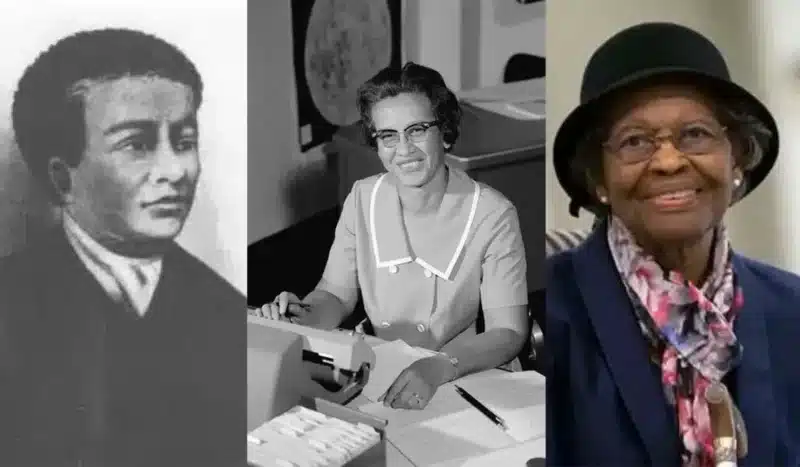
Feb 2025 Black History Month - Maths & Nursing

 Contributions of Famous Black Mathematicians

Image c/o https://mathandmovement.com/

and Major Nancy Leftenant-Colon

'Trailblazing black nurse who made national news by being the first to join the regular US army'.

Leftenant-Colon, above centre - joined the regular military in 1948 as
a member of the US Army Nurse Corps. Her work had to be outstanding

Nancy Leftenant-Colon


My source: print copy -
Register, Major Nancy Leftenant-Colon. Obituaries. The Times, 15 February 2025, pp.70-71.
and photograph plus caption.

Friday, June 14, 2024

Book for review: i "Philosophy of Care - New Approaches to Vulnerability, Otherness and Therapy"


Among the questions that research might answer regards Hodges' model I have in mind:
  • At what age can Hodges' model be introduced in the general curriculum?
  • Is there consistency in how people view/interpret and apply Hodges' model?
  • How simple is it (or complex)?
  • Is it a meta-model?
  • How can Hodges' model relate to the spiritual?
My B.A.(Joint Hons) is in Philosophy and Computer Science, so the 'Philosophy of Nursing' is a preoccupation. In January 2022 I discovered:

J. Braga & M. Santiago de Carvalho (Eds.), Philosophy of care: New approaches to vulnerability, otherness therapy. Springer.

I requested a copy but ever distracted did not register any further action beyond acknowledgement and being forwarded. Discovering I'd missed this, I picked it up again. I must admit two years ago I was expecting a book with 'care' in the nursing, medicine, health context. Revisiting the 'blurb' I saw that this is not the full picture. Last year and this however drawn to conferences that combine the environment and religion this book really did fit the bill. Requesting a 'review copy' so late in the publishing cycle presents a challenge. 

Hodges' model provides a long-tail, surely a defining property of a lifelong learning resource? This plus a history of cataract surgery brought a print copy and many thanks to Daniela Rohrmann and team. I've now reached Part V, chapter 19 and 'medical care'.

The book's physical quality (printed hardcopy) is up to Springer's usual high quality standard. The fact that much of the contents have, I believe, been translated appears to show at times, in one chapter especially, with missing, or additional words. Perhaps this also reflects proof reading, an important part of production I would have thought (and still best not left to AI)? The font and print size is very readable and the format and design - architecture - of headings and layout are inviting and engage the reader. There are Any problems with grammar, flow were readily overcome. 

In meeting this text I oscillated in expectation - philosopher of care, as in the clinical context; and then the spiritual, pastoral. Which is it? The emphasis is on the latter with the final part focussed more on medicine. The book has extended my appreciation of 'care' in the wider sense, it is rewarding and well-worth reading.
"Finally, the fifth part – Care and Therapy – examines issues relevant to medical
care. This volume would be remiss if it did not take therapeutic care into account.
Practical and theoretical knowledge mutually influence each other. This highly specialized
domain imparts a significant amount of the status that care is given in our
daily lives. Thus, in this last part, the previous themes of otherness and ipseity converge
systematically. Through the theoretical emphasis that is placed on the issue of
suffering – whether it concerns physical illnesses or those of the psychological and
psychiatric realm – the authors of these chapters show us the urgency of thinking
about therapeutic care practices in the light of a theory of intersubjectivity, where
the disease itself and its cure are understood within the communication processes
and not only as exclusively technical-scientific processes." p.vii. (Introduction).
Don't worry I'm not going through each chapter, but Chapter 1 is a fascinating read, the title 'Care: A New Arrival in the History of Philosophy?' https://link.springer.com/chapter/10.1007/978-3-030-75478-5_1 presented an immediate challenge. For me, love, compassion, philosophy - as the love of wisdom, knowledge, what it is be, think, exist, the human condition and more all imply 'care' including care of thought and argument. I'm probably begging the question and I realise the Peirron's purpose is more specific, nuanced. I'm reassured though as care is defined by three criteria:
"(a) care is contextual and anti-essentialist... The characterization of care requires a great deal of attention to the precise details of each situation (Tronto, 2012: 35)."

"(b) care is relational and accepts that human beings , other beings, and the environment are interdependent  (Tronto, 2012: 32)."

"(c) In human societies which would like to assume the equal value of all human life, care needs to be democratic and inclusive  (Tronto, 2012: 36)." p.6.
I must read Tronto - who work has elevated vulnerability as flagship concept of her politics of care (Tronto, 2009) (p.8); 'dialectical' too (p.10). The book is full of many leads, the writing scholarly and authoritative.

With some studies in education and philosophy the pragmatic school of thought quickly surfaces. I see Hodges' model as a pragmatic solution. In addition to the 'pragmatics of care', Peirron opens the door even further in respect of 'care':
"Giving through care involves much more than what is described in the interactional framework of exchanges characteristic of homo economicus (economical animal) paradigm. Giving is not exchanging because care involves so much more than just the provision of a service. Care, as understood as a politically relevant anthropological position, is thus very different from a Hobbes-inspired anthropology which supposes a social epistemology based on a an atomistic approach to individuals. It provides a fundamental interpretation of our social intelligence by thinking it, starting from a relational anthropology within which the concept of vulnerability plays, as we will see, a strategic role. A pathetics of care rethinks the balance between reason and feeling, argument and emotion in the spirit of the tradition of Scottish philosophy, in order to allow a "different voice" to be heard in the analysis, the description, and the support of the human world." p.7. 
The pathetic view of care requires a language, methods, aesthetics that can manage 'the singularity of an enduring life history' (p.10). This equates for me with the health career in Hodges' model.

As usual below I've mapped some concepts to the domains of Hodges' model. I will add to this post too.

Individual
|
      INTERPERSONAL    :     SCIENCES                   
HUMANISTIC  --------------------------------------  MECHANISTIC      
 SOCIOLOGY  :    POLITICAL 
|
Group

contextual

anti-essentialist

relational

situated


context

human being, other being 

and environment -

interdependent


context

interdependence

care in human societies 

equality within human societies

context

situated

human societies are democratic

and inclusive


See also:
body & soul - Book: Philosophy of care: New approaches to vulnerability, otherness therapy

Friday, October 13, 2023

Hodges' model: How the I-G axis is idealised

As a conceptual model, Hodges' model is idealised.

As an example, take the concept individual in the vertical axis. Whether a patient, client, carer, student or teacher, the individual is where the self also resides.


'I' - INDIVIDUAL 'Self'
|
     INTERPERSONAL    :     SCIENCES               
HUMANISTIC --------------------------------------  MECHANISTIC      
SOCIOLOGY  :   POLITICAL 
|
GROUP

spiritual - emotional self
(my mind)
Identity?


material / physical self
(my body)
identity?


social self
(realised, or not; loneliness, excluded, isolated, ostracized, or loner by choice/character. Socio-Politically we arrive at 'civil society', if indeed it is civil.)


political self
(whether or not politically
motivated / engaged. Self as a citizen arises here, with the law in whether in States voting is mandatory.)


 James, W. (1892). The conscious self. In W. James The principles of psychology (Volume 1), Chapter 10. Harvard university Press: MA.

"From the very beginning of the chapter, James established that he was going to take a fresh approach to his subject. "In its widest possible sense," he wrote,
'a man's Self is the sum total of all that he CAN call his, not only his body and his psychic powers, but his clothes and his house, his wife and children, his ancestors and friends, his reputation and works, his lands and horses, and yacht and bank-account.' (p. 279) 
The explication James offered for this claim is telling: All these various things and persons are part of an individual's self insofar as they give that individual the same emotions (pp. 279-280). In pointing thus toward the emotional foundations of the self, James indicated right at the start that he was going to follow Bain (1859, chap. 7) and others in reaching beyond the old rationalist approach to "the soul" in order to ground his treatment of the human self on the experience and makeup of the whole person, emotional as well as intellectual." (p.107)

 
Leary, David E. "William James on the Self and Personality: Clearing the Ground for Subsequent Theorists, Researchers, and Practitioners."Reflections on The Principles of Psychology: William James after a Century. Ed. William James, Michael G. Johnson, and Tracy B. Henley. Hillsdale, NJ: L. Erlbaum Associates, 1990. 101-37. Print.

Sunday, April 30, 2023

Simplicity in Complexity (and vice-versa): c/o Fiona Banner aka The Vanity Press and Frith Street Gallery

INDIVIDUAL
|

 INTERPERSONAL    :     SCIENCES               
HUMANISTIC --------------------------------------  MECHANISTIC      
SOCIOLOGY  :   POLITICAL 
|
GROUP

© Courtesy of Fiona Banner aka The Vanity Press and Frith Street Gallery | Simpleton, Simpleton, Simpleton (Ellipsis), 2021
by Fiona Banner aka The Vanity Press


In nursing you must be aware and sensitive to words, their use and meaning. Recognition of the power of words (in-and-out of context), is hopefully also reflected in society; but sadly emotional, social and spiritual intelligence are often found lacking. Long carrying a sense of being a mathematical simpleton, gullible in over-thinking things, and all too easily distracted; the currents of education, life chances (health career), and clinical experience have brought me to a place I shouldn't tread - whether terra firma, or water.

While socially, words become archaic, replaced by others, words can and do also reverse their meaning over time. Although manufacturing is now also 'additive' and not necessarily a subtractive process, the meaning of these symbols in mathematics remains constant: as per their function.

Simple in appearance, Hodges' model can hide complexity: the complexity of care, in all its scope and scales. And yet with the potential to be inclusive in its relational scope. Symbols and model's - conceptual frameworks can be extended in their purposes and functions, as long as we are consistent in how we do (propose) this.

I will learn how well, temperature permitting, I can 'tread' water, while sign-posting for others. . . .

Ellipsis - indeed.


My source: (print version):

FT.com. Something in the water – the rise of aquatic art

Many thanks to and courtesy of Fiona Banner aka The Vanity Press and Frith Street Gallery | Simpleton, Simpleton, Simpleton (Ellipsis), 2021, by Fiona Banner


Gavin, F. (2022). THE SHAPE OF WATER, How To Spend It, FT Weekend, pp.44-47.

Saturday, August 13, 2022

"Suffering in Silence" c/o David Robertson

 INDIVIDUAL
|

   INTERPERSONAL    :     SCIENCES               
HUMANISTIC --------------------------------------  MECHANISTIC      
SOCIOLOGY  :   POLITICAL 
|
GROUP
David Robertson www.davidrobertsonprintmaker.com QEST Scholar Instagram.com/multiple_of_one
Suffering in Silence, 2018. Woodcut, each 2000 x 910 mm.
Installation: 2400 x 5500 x 5500 mm


"David Robertson’s immersive print installation explores the stigma around mental health and the difficulties men have in reaching out for help. Consisting of 25 life-sized men, the figure is a self-portrait but is representative of any man. Formed of tally marks, each mark representing an individual." ...
[my emphasis].

The Holburne Museum:
https://www.holburne.org/events/holburne-open-david-robertson/

Image: With thanks to David Robertson

David Robertson
www.davidrobertsonprintmaker.com
QEST Scholar
Instagram.com/multiple_of_one 

My source: Printmaking Today Summer 2022, 31:122, p.7.
https://www.cellopress.co.uk/page/printmaking-today

Friday, August 05, 2022

"Your metacognitive fingerprint"

 INDIVIDUAL
|
 INTERPERSONAL    :     SCIENCES               
HUMANISTIC --------------------------------------  MECHANISTIC      
SOCIOLOGY  :   POLITICAL 
|
GROUP

"Why are some people more self-aware than others? Studies show that metacognition is a relatively stable trait, so if you tested your metacognition today, it is likely to be similar if you do the same test again tomorrow. Strikingly, it also seems that metacognition is independent of IQ and general cognitive ability: your metacognition can still be in good form as long as you recognise you are performing badly at a task.
We still don't understand the origins of these individual differences, but one promising idea is that "explicit" metacognition is something we learn, based on feedback from our parents, teachers and social group.
A genetic "starter kit" may establish forms of self-monitoring early in life and then our parents and teachers finish the job. But even in adulthood, these things aren't totally fixed (see main story), so this is one kind of fingerprint you can change." p.38.

finger

p r i n t


- with my emphasis.

Fleming, Stephen. The power of self-reflection, New Scientist, 250,3333, 36-40. 8 May. 2021.
https://www.sciencedirect.com/science/article/abs/pii/S0262407921007946

I heard Stephen Fleming on the radio when the associated book was released last year - must buy a copy.

Still reading and enjoying 'Human Landscapes' with posts to follow.

See also: meta- meta- meta- +!

Thursday, April 28, 2022

Review i - "Brainscapes: The Warped, Wondrous Maps Written in Your Brain―And How They Guide You"

Brainscapes


A marvellous cover (US too), a fascinating, clearly written and hence readable book. As expected today the layout, print size and design add enjoyment to the time invested.

As a nurse with an interest in science you are aware of much of the content in broad terms but 'Brainscapes' provides more detail and made me wonder about the prospects to follow from improvements in brain imaging, The Connectome, new technologies and techniques. Rebecca maintains the focus throughout.

I'm pleased to add this to my CPD reading list.

Nature and science are humbling. It is still quite recent that we realised the milky way is one of billions of galaxies. Now we can appreciate not only the complexity of the brain, but how it is embodied in mind, body and our experience of reality.

There is history here to begin. Russia and Japan were at war in 1904. Russia had a new high-velocity rifle with smaller bullets, 7.6mm reaching speeds of 620 meters per second. Whether co-incidence, and/or ironic, there are of course many brains trying to make sense of the current conflict in Eastern Europe. A change in injuries followed with these bullets capable of passing straight through the skull, sparing the life of the soldier and yet with life altering injuries. 

As triage was founded on the battle-ground. So aftercare is grounded in the journey back 'home' for those who can make it and the extent to which 'veterans' and their families are recognised.* This lead to investigations (Inouye, see below) as soldiers experienced localised damage to the brain. Soldiers suffered scotomas affecting their vision, stimulating research and new approaches, devices 'cranio-coordinometer'. There are illustrations and some photographs throughout, the illustrator Paul Kim, adding to the text.

In 'Maps of You' maps are everywhere especially on screens, and yet as Schwarzlose notes the map's materials matter little. On p.17 "All I need is a pen and a scrap paper" I smiled - given the 'map' that Hodges' model provides, on paper, sand, black/whiteboard and mind's eye. Mental imagery is there too. Salience, figures early p.19 and with brain maps, visual maps and where we direct our gaze prompts more detailed consideration of context. The explanations of the sensory brain maps is fascinating, especially how the brain has evolved to deal with constraints of space, energy, distance and organisation. At the fovea in the eye, the map is magnified. 

Perhaps in Hodges' model there are two fovea? One is the center of the model, the person-centred nexus an assurance function/correction as the fovea that is context shifts and jumps in response to the dynamics of the situation. Reading about the audio map, p.73 I thought about the 'timbre of care' (Yes, I've a bad case of h2cm-meme-mapitis). As a further sign of the times, chapter 5 (A Body Under Siege) on taste and smell and the protective function of what we do or don't ingest, I travelled from the individual to the national and the binary choices (yes or no) being exercised right now.

More to follow ...

Alexander P. Leff (2015) Tatsuji Inouye (1881–1976), Discovery UCL.
https://discovery.ucl.ac.uk/id/eprint/1491645/1/Leff_tatsuji_inouye_1881-1976.pdf

Many thanks to Rebecca Schwarzlose and Profile Books for my review copy.

*Apologies for digression...

Wednesday, July 28, 2021

New citation / reference for Hodges' model in J Adv Nurs.


Here is the new reference to Hodges' model which I have added to the bibliography:

Hamilton EAA, Dornan L, Sinclair M, McCoy J, Hanna-Trainor L, Kernohan WG. A scoping review protocol: Mapping the range of policy-related evidence influencing maternal health outcomes in a fragile, low-income country. J Adv Nurs. 2021 Jul 20. doi: 10.1111/jan.14956. Epub ahead of print. PMID: 34288043. 

Whatever your field if you are interested in learning more about Hodges' model I would be pleased to hear from you - whether or not you are in a 'field' and whatever colour it happens to be green, blue, red, black-white.

Ack. Research Gate's alert.

Wednesday, May 05, 2021

Thought Press

individual
|
INTERPERSONAL : SCIENCES
humanistic ----------------------------------------------- mechanistic
SOCIOLOGY : POLITICAL
|
group
THOUGHT PRESS


"We are 100 UK printmakers creating prints on the theme of childhood memories and imagination, to be sold in aid of two charities - Mind, supporting mental health issues and awareness, and Heart Felt Tips, providing art materials and enabling creative learning opportunities for disadvantaged children. (For more information about these charities and what they do, please visit www.mind.org.uk and www.heartfelttips.co.uk)

Follow the hashtag #thoughtpressproject on social media to see the project in action and development of designs for final prints! Visit the Shop to order a print.

If you'd simply like to add to the funds raised, please donate here:

https://www.justgiving.com/crowdfunding/thoughtpressprojectdonations

My source: Printmaking Today, Spring 2021, Volume 30, Issue 117, p.7.

Friday, April 30, 2021

Conference: Diagrams in Science, Science in Diagrams

Johannes Stabius, Astrolabium imperatorium: detail (Nuremberg: Johann Stuchs, 1515). Courtesy Bayerische Staatsbibliothek, Munich, Einbl. VIII, 12, broadside, 61 × 45 cm.

Diagrammatic forms of visualization are ubiquitous in scientific publications, as well as in popular mediations of scientific contents. Every computer interface relies on diagrammatic forms, combining textual and graphical elements. Diagrams abstract and encode information. They are indispensable in many scientific contexts, and, together with charts and graphs, also in the daily media, reaching a wide audience of experts and non-experts.


As natural and familiar as these abstract forms of representing information are to us, they are products of many historical developments. Their historical roots may go back to prehistoric epochs. However, the historical integration of diagrams in scientific contexts is relatively recent. Even if these developments with regard to Western cultures have their origin in antiquity and were significantly developed further in the sciences of the Middle Ages, the early modern period can be considered the first flourishing phase of the diagram in practically all areas of the sciences of that time.

This event proposes to trace this historical development in the early modern period. It takes a truly interdisciplinary approach when talking about a timespan of roughly 500 years (1300-1800) across all early modern sciences, from Architecture to Zodiac men in medicine. The talks bring together research on the culture of the diagram in various sciences of the epoch to form a large overall picture.

This event aims at tracing the emergences and the disruptions of traditions of diagrams in all fields of scientific theory and practice, e.g. (but not restricted to) geometry, astronomy, medicine, philosophy, alchemy, law, theology, and music.

It will address, among others, questions such as the following:


1. Do the diagrams under investigation come from a precise tradition or do they form the foundation of such a tradition?

2. What is the scientific/disciplinary context of the diagrams under investigation and how do they relate to it?

3. What is the aim of the diagrams under investigation (illustration, explanation, demonstration, etc.)?

4. How does the medium carrying diagrams under investigation impact their form and role (print, manuscript)?

5. What are the most intriguing visual/graphical features to be found in the diagrams under investigation?

6. How do the diagrams under investigation interact with the text and which vocabulary is used to refer to the diagrams?

7. What justifies the diagrams under investigation to be labelled as ‘diagrams’ (and not ‘tables’, ‘maps’, etc.) and what is a reasonable demarcation line here?

8. How do the diagrams under investigation relate to scientific practices (experiments, taking measures, etc.)?

More details:

https://www.biblhertz.it/3101937/conference-diagrams-in-science-science-in-diagrams.html

Tuesday, March 30, 2021

A window on social history ...

individual
|
INTERPERSONAL : SCIENCES
humanistic ----------------------------------------------- mechanistic
SOCIOLOGY : POLITICAL
|
group

Ask a child to draw a house ..?

Light
Air*
A row of coal miners' houses with no windows to the street,
Halifax, 1937 by Bill Brandt
 
 
HUMAN RIGHTS


Source:


https://www.billbrandt.com/bill-brandt-archive-print-shop/sp03-coal-miners-houses-with-no-windows-to-the-street-c1937

*and its quality

Wednesday, January 20, 2021

Extraordinary People (2020)


the connor brothers

Extraordinary People, 2020

£120.00 

SOLD OUT

giclee print with silkscreen varnish 

41.5 x 29 cm unframed 

Edition of 300, signed and numbered 

Extraordinary People is an edition of 300 signed and numbered giclee prints measuring 41.5 cm x 29 cm and is sold unframed. All profits from the sale of this edition will be donated to the NHS Covid- 19 Urgent Appeal which supports NHS staff and volunteers caring for COVID-19 patients . The print is priced at £120 plus shipping and is available now. Due to the current pandemic we do not expect to be able to deliver this print until September 2020.

Like everyone else we are extremely grateful for the tireless work being done by our extraordinary NHS staff in near impossible circumstances. We owe them a collective debt we will never fully be able to repay. We'd like to offer our deepest thanks to each and every one of you.

giclee print with silkscreen varnish 

41.5 x 29 cm unframed 

Edition of 300, signed and numbered

http://www.theconnorbrothers.com/shop/extraordinary-people 

See also:

Pay "Nurse Kathy" ?

"Blind to the Big Picture" and Parity of Esteem 

My source:

The art world is back in business, MoneyWeek, 15 May 2020. Issue 999, p.35.

Tuesday, October 27, 2020

Book review: "The Power of the 2 x 2 Matrix" ii

The Power of the 2 x 2 Matrix


Once again I will start by referring to a previous post:

Q. What is Hodges' model? A. It is NOT a 2x2 matrix.

 
The structure of Hodges' model, the two axes immediately suggests opposition, dichotomy and thoughts of polarities. 

 
Page 30, table 2.2 Principles of 2 x 2 Mastery, includes:
"Opposition: 

Opposition between forces is either direct or complementary. Direct opposition is Hot versus Cold or On versus Off. Complementary opposition is Size versus Speed or Growth versus Profit. Recognize the nature of opposition, and work with it." p.30.
Of the others, the creative tension in health is manifold. Out of a professional foundation comes the therapeutic relationship nurse - patient and then the tension of trying to provide person-centred care that also has integrity in having the courage to advocate or engage independent advocacy and address the political issues that may (will) arise. Iteration here is a gift in that Hodges' model is situated and can address the multiplicity of contexts that are encountered in health, education and business too. Iteration for me implies travel, movement between the domains in search of a new perspective, (ad-)vantage point. Combined with integrity, this can mean going were you are not necessarily comfortable and perhaps seeking help. I like transcendence a great deal as it refers to "Learning requires unlearning". This points to the outcomes of interventions and application of knowledge, skills supported by Hodges' model with positive change. Transcendence can encompass liminality as described in therapy and education - threshold concepts in particular.

If you seek proof of complexity in healthcare, nursing and medicine look no further than a business book. The book is a marvellous reference text on 2x2 frameworks. In the introduction the authors stress the work is not intended to be read cover to cover. Business readers will be drawn to specific types of framework. Well referenced and researched the index is also comprehensive (with one framework missing (of course!). As the year of publication indicates the references and business examples that are outlined are dated, but they still deliver in readable and meaningful terms the utility of the framework described.

The layout and organisation of the chapters retains a 'current' appeal. I mention proof of complexity after reading:

 "Strategy is the art and science of competing more effectively than one's competitors." p.91.

In healthcare the 'competitors' may be the patients themselves (self-stigmatising, fearing the future, helplessness, hopelessness, fatigue). Competition may lie in other agencies depending on the politics of local health care delivery. Some may argue that the commodification of health is a creative tension not a political one. Also in the sense that 'we' are duty bound to heal, cure, treat you and have you care for yourself in future. Art and science are needed in print and book-loads at present as COVID-19 pushes out other diseases, illnesses that patients and families still face.

More to follow ...

 
Book review: "The Power of the 2 x 2 Matrix" i

Alex Lowy, Phil Hood (2004) The Power of the 2 x 2 Matrix: Using 2 x 2 Thinking to Solve Business Problems and Make Better Decisions, San Francisco, CA: Jossey-Bass ISBN: 978-1-118-00879-9

With many thanks to the publisher for my review copy.

Wednesday, July 29, 2020

Call for Papers - Dismantling Systemic Racism in Archives and Record-Keeping Practices, Archives and Records Special Issue

Archives and Records

Call for Papers
Dismantling Systemic Racism in Archives and Record-keeping Practices
Archives and Records Special Issue, 42:3 (November 2021)

Editors: Norma Gregory, Victoria Hoyle, Sarah-Joy Maddeaux

The social, economic and personal impacts of systemic racism are traumatic and profound.  The protests seen around the world in the wake of the murder of George Floyd in Minneapolis on 25 May 2020 reflect the deep and persistent effects of racial inequity in global society. They have again highlighted the roots of injustice in political, social and cultural systems of oppression, which activist movements like Black Lives Matter have sought to dismantle.

It has long been recognised that archives, archival institutions and record-keepers are implicated in how racism operates and reproduces in society.  Verne Harris and Michelle Caswell have described archives’ relation to dominant systems of power, whilst Jarrett Drake, Tonia Sutherland and Jamila Ghaddar have called for recognition of the inherently racist, oppressive and discriminatory nature of many archival institutions and record-keeping practices. In the UK, Black Archives and archivists of colour have persistently drawn attention to the ongoing impacts of racism and colonialism. A 2020 UK petition asking practitioners to commit to dismantling systemic racism received 1708 signatures on Change.org, articulating collective and individual responsibilities to effect change in the profession.

Nevertheless, discussions of systemic racism, white privilege, white supremacy, justice and equity continue to be controversial in the record-keeping field. Wide-ranging implications arise from questions such as:
  • How have archives and archival institutions contributed to the systemic oppression of people of colour?
  • How is archival theory and practice challenged by Black Lives Matter and other protest and justice movements?
  • What role do record-keeping practitioners and educators play in perpetuating or dismantling systemic racism?
  • What kinds of action and labour are required to dismantle systemic racism and to reconstruct an equitable and just archives and records field?
  • To what extent do white privilege and white supremacy impact on archival spaces and understandings of what archives are and do?
  • Are models and frameworks for reparation, restitution and justice transferable and valuable for archives?
  • Are calls to ‘diversify the profession’ and ‘decolonise the archive’ sufficient impetus to change? How successful have such programmes been?
  • What is the relationship between archival institutions and archival activism led by Black and Indigenous people, and people of colour?
  • How is digital technology and social media impacting on documenting anti-racist action, protest and organisation? Is this documentation making its way into permanent archival collections available for public reference?
  • How has television and radio programming (for example, BBC2 ‘The Unwanted: The Secret Windrush Files’ by David Olusoga) illuminated the nature, practice and concerns around the presentation (or inaccessibility/disposal) of colonial archive records?
  • To what extent should legal or professional frameworks around record-keeping practice be reviewed?
This special issue of Archives and Records seeks to explore and respond to the challenge of racism and systemic oppression in record-keeping contexts. It aims to provide space to explore questions of race in discourse, practice and professional identity; at national, institutional, local and personal levels. It hopes to engender both reflection and action, and to amplify the voices and experiences of Black and Indigenous people and people of colour.  It will have a particular focus on the UK and Ireland, where discussions of racism in archives have thus far been limited, but invites international perspectives on Britain’s colonial legacy and on Anglophone ideas of archives and race.

The editors invite papers on any aspect of racism and anti-racism in the archive. Contributions might consider, but need not be confined to, the following themes:
  • Histories of racism and anti-racism in record-keeping
  • Decolonising the archive
  • The intersection of critical race studies and archival theory
  • Archival activism and community archives led by people of colour
  • Collecting and curating protest and activist movements for racial justice
  • Frameworks and models for dismantling systemic racism in the record-keeping field
  • Reparation, restitution and transitional justice
  • Intersections of race, gender, sexuality and class.
Expressions of interest should be made to victoria.hoyle AT york.ac.uk by 30 September 2020.

We particularly welcome submissions from people of colour, and those from marginalised communities.

Expressions of interest should be approximately 500-1000 words and contain a brief outline of the proposed article. The editors invite prospective authors to contact them to discuss their ideas informally before the deadline. The editors will also work with prospective authors who do not have experience of writing academic articles to prepare a paper for publication. We will contact all contributors to discuss their proposal by the end of October 2020.

The deadline for draft papers, for authors who would like editorial feedback prior to final submission, will be 28 February 2020. Completed papers will be due by 2 April 2021. All submissions will be double-blind peer reviewed prior to acceptance for publication, and both authors and reviewers will remain anonymous throughout the process.

We anticipate the special issue will be published in November 2021, in both online and print formats.

We are also looking for volunteers to review books or online resources on related topics. Please contact helen_kavanagh AT outlook.com, Deputy Reviews and Obituaries Editor, if you would like to contribute in this way.
--
Sarah-Joy Maddeaux
Co-Editor, Archives and Records
sjmaddeaux AT gmail.com

My source:
records-management-uk AT jiscmail.ac.uk
Mon, 27 Jul at 14:10

Saturday, October 19, 2019

Review: v "Climate Change and the People's Health"

Climate Change and the People's Health
At just over 30 pages chapter 3 the last is also the shortest, we all hope this does not reflect the length of the future?

Chapter 3. Challenges and Future Prospects

Before beginning to review Chapter 3 I need to revisit the closing sentences of the preceding chapter's conclusion - if you 'get' Hodges' model you will understand why:
"I [Friel] pick up on these ideas of complexity in chapter 3, arguing that how we understand and characterize these phenomena depends on our standpoint and also evolves as knowledge develops and available evidence accumulates. Given those complexities, responding to climate change and health inequity requires the development of policies that transcend doctrinal boundaries and draw on insights from a range of disciplines, including those in the sciences, social sciences, and humanities". p.112.
I hope you can see and will please excuse my reference to Hodges' model, but I've another.

Friel refers to how research is primarily based upon reductive pathologizing and needs to shift [ ;-) ] "towards research that is attentive to, and actively engaged with, policymaking processes". (p.114).

In Hodges' model, the Sciences and Politics are mechanistic, the sciences invariably (with some exceptions) reductive and the 4Ps I have attributed to the model as follows:
  1. SCIENCES -PROCESS
  2. POLITICAL - POLICY
  3. SOCIOLOGY - Practice
  4. INTRA- INTERPERSONAL - Purpose
(As in a previous part of this review I have been wondering how policy can (best) permeate the other care (knowledge) domains?)

Being where this review is posted I would be remiss not to state this, picking up on Friel's thought.

OK, let us get back on track. Taking the lead from chapter 2, in Chapter 3 Friel argues the need to take research, advocacy, and policy forward to address environmental degradation, social justice and health equity by breaking down the disciplinary, sectoral and various silos that exist in the many systems that are encountered. Systems research can increase our understanding and the evidence base. Interesting to note also then solutions can be crafted. (p.113). The evidence base on more equal societies is discussed. With the stress on systems research, systems and systems thinking are explained briefly and referenced. As will already be obvious I am all for the plurality of disciplinary approaches that is needed, but as Friel will conclude this, with systems science, and improved understanding of policy processes (hybridised: is this the Green Marshall Plan that is referred to?) to counter the resistance to change that is already being experienced now (p.115).

Perhaps above, I have fallen into Friel's trap. I have been caught out as a model monger (p.115)?

Scale is a concurrent consideration in Hodges' model, as with Friel's account of systems thinking. To macro- meso- and micro-levels let us add nano, there is much still unclear from the presence of plastics and other pollutants in the environment. The arrival of eco-epidemiology is to be applauded (p.116).

Any mention of 'systems' takes me to the Health System Redesign book I reviewed over a year ago on W2tQ. This is a very useful companion to "Climate Change ..." but is not referenced here. Box 3.1 'Systems Approach to Childhood Obesity Prevention' brought home the connection and the visual representation referred to (p.120). I could readily go off again with Friel's section on Politics, Policies, and Processes (p.122). Thank goodness for this - I feel better now - as Friel "shamelessly plugs" personal involvement with a research program at the CRE (p.124). The Centre for Research Excellence in the Social Determinants of Health Equity needs to be, not just on the 'map' (Sciences - located geographically) but affecting policies, practices and purposes (individual and organisational). Friel provides several references - very useful and timely. I will reference this, as I'll explain next time. Again the much needed call for a move from reductionist pathologizing.

Box 3.3 Policy Principles for the World We Want is simplistic (like Hodges' model), but if delivered would be very impactful in terms of the positive change (p.128) that would ensue. Against p.134 my note is "It's a small world!" I'm not sure if this a reference to the Disney song as a perverse consumptagenic global eco-anthem, or to Schumacher? What could be noted (p.134) is the potential role of blockchain in assuring land tenure and ownership. This technology is much vaunted in health, education and the obvious application of economics. In terms of developing nations protection of land rights is critical (even as I write and you read). The chapter closes on policy from "The first 1000 days of Life" to "Health in All Policies" which I reflected upon as "Policies in All the (#h2cm) Domains"? How do we do this? There are avenues as Friel writes of macroeconomics and progressive policy development. There is much on the Social Development Goals and how cities (despite the critique on urbanization) are working together internationally to mitigate climate change effects, even as some governments fail to meet set objectives and global agreements.

The print and layout is excellent, a content listing of sections complements the index (invaluable). The next book I've to review has no index.

Small book, big ideas - correct on both counts and a very informative if rightly troubling read.
One last plea. Do buy this book, but don't leave it on your shelf; read it. There is no excuse, it's small, but your ideas on climate change and the people's health will grow!

I would like to thank OUP

CHAD ZIMMERMAN │ Senior Editor, Medicine and Public Health
Oxford University Press │ 198 Madison Avenue │ New York, NY

and Prof. Nancy Krieger for the review copy and Prof. Sharon Friel for engagement on twitter and RTs.

While I appreciate I make the request to review and this places absolutely no obligation on others, it helps a lot when a publisher / author / conference organiser ... acknowledges the effort - even just a thank you. As ever, the thanks is in the learning gained, not the thanks lost. Many do - lift a hand, nod their head ... of course, making this even more worthwhile here. TY


Chapter 1. Climate Change, Global Justice, and Health Inequities

Chapter 2. It's a Consumptagenic World: Producing Climate Change, Exacerbating Health Inequities


Friel, S. (2019) Climate Change and the People's Health, Oxford University Press, New York

Sunday, September 22, 2019

c/o JAN: Formal Concept Analysis ... and an encouraging footnote

My source:


Andersson, N, Silver, H. Fuzzy cognitive mapping: An old tool with new uses in nursing research. J Adv Nurs. 2019; 00: 1– 8. https://doi.org/10.1111/jan.14192

This tweet prompted a reply and further reflection, as I've been aware of FCA for quite a while. A math disability (but remote fascination?) precludes me really 'getting to grips' with this. As noted before on W2tQ, visualization in the humanities (social sciences) has still not realised its potential. Those researchers, professional workers ... who could benefit from its application, being in the 'humanities', often do not understand the underlying mathematics. Even though they are not necessarily that advanced (sixth-form - undergraduate?).

Over the years I have built up a small library of related papers and books. The Macgill (1984) paper referenced below, I started to 'read' and work through and got a short way. The print quality is rather poor and obviously dated, but that is not the problem. I will try again. Since the 1980s software has changed beyond the proprietary packages of MathCad, MathLab, Maple and Mathematica and collectively they should (must?) make these methods more accessible. Of course, I thought this with regards to the use of content management system for a website (yes, that one!). Again though it's not the tools, but my choice, time and focus.

I write this and it might only be intuition, but I'm not just sure, I know there is something here.

Seeing FCA in JAN's tweet I thought of a certain footnote even though on my copy the reference seems incomplete:

Kwong, C. P. A Topological Framework for Formal Concept Analysis, The Chinese University of Hong Kong.

On the first page the footnote reads:

"The adjective "formal" is used to emphasize the mathematical substance of the objects being studied, which may be left out when such a formality is superfluous."

As you can imagine this is quite a gift for me. In a way it suggests the following from a 2x2 matrix with keywords (concepts), to an arbitrary array:

individual
|
INTERPERSONAL : SCIENCES
humanistic ----------------------------------------------- mechanistic
SOCIOLOGY : POLITICAL
|
group - population

1001
1110
0001
1111

1101
0100
1010
0011

1111
0011
0011
0110

0110
1111
0000
0110

There is a worry here. When your formative nurse education and training stressed the need to shift from a task-oriented approach to individualised, then filling the domains of Hodges' model with '1's and '0's is a bona fide task-checklist - even if a binary one.

There is a response to that concern for another post; but before that there is another source c/o:

Johana Ramírez Gaviria (2015) Aspectos topológicos en el Análisis deConceptos FormalesTopological aspects in Formal Concept Analysis, Universidad Nacional de Colombia Facultad de Ciencias Exactas y Naturales Departamento de Matemáticas y Estadística Manizales, Colombia. p.6.
c/o Google, Spanish – detected, English
En [26] se plantean nuevos modelos para el FCA usando nociones de la topología algebraica. El contexto formal convencional es reemplazado por una matriz con entradas ”1” ó ”0” denominada matriz contexto, para construir una familia simplicial (familia concepto), de ahi se desprenden propiedades que relacionan la teoría de la topología algebraica con el FCA.

Cabe resaltar que hasta el momento no se ha trabajado en dotar de estructura topológica los contextos formales en el FCA generalizado, donde los datos de las tablas toman valores difusos en lugar de valores binarios como se tiene para el FCA clásico.
In [26] new models for the FCA are proposed using notions of the topology algebraic The conventional formal context is replaced by a matrix with “1” or "0" called context matrix, to build a simplicial family (concept family), from there properties that relate the theory of algebraic topology with the FCA.

It should be noted that so far no work has been done to provide a topological structure the formal contexts in the generalized FCA, where the data in the tables take values diffuse instead of binary values ​​as you have for the classic FCA. 
[26, reference is Kwong]
  The whole thesis would need translating, but I have a sense that this too is useful.

Working through papers, files, journals, books getting rid of, sorting, re-filing ... I'll see if I can add to the reading below.

Atkin, R. (1974). Mathematical Structure in Human Affairs. London, Heinemann.

Macgill, S.M. (1984). Structural Analysis of Social Data, A Guide to Ho's Galois Lattice Approach and A Partial Re-Specification of QAnalysis, Working Paper 416, School of Geography, University of Leeds.

Previous post:
Bell jars and bell curves


Thanks to @jadvnursing for this tweet in-particular and for RTs.
(Paper e-copy received with thanks c/o Neil Andersson, 25 Oct 2019.).