Hodges' Model: Welcome to the QUAD: December 2025

Hodges' model is a conceptual framework to support reflection and critical thinking. Situated, the model can help integrate all disciplines (academic and professional). Amid news items, are posts that illustrate the scope and application of the model. A bibliography and A4 template are provided in the sidebar. Welcome to the QUAD ...

Wednesday, December 24, 2025

Person-centredness, Holistic approach, Prevention c/o Hippocrates

“It is more important to know what sort of person 
has a disease than to know 
what sort of disease a person has.” 
Hippocrates

 
Individual
|
      INTERPERSONAL    :     SCIENCES               
HUMANISTIC  --------------------------------------  MECHANISTIC      
 SOCIOLOGY  :    POLITICAL 
|
Group
To say that Hippocrates was ahead of his time is a gross understatement. Hippocrates recognised the importance of person-centredness and prevention, and contributed to the emergence of several medical specialties. (Kostakopoulos, et al., 2024). 


'Holistic Approach

One of the most significant innovations of the founding father of clinical medicine was the holistic approach for the diagnosis and treatment of disease. This approach is based on the assumption that the human body is a sum of many parts that function in harmony and that if one part is ill, the balance will be affected and the whole person will suffer. Hippocrates considered that patients consisted of body, mind, and spirit and this is also the modern physicians' approach when treating a disease [2].'
 

Health and social care are still playing catch-up. The vitriolic 'debate' on X over psychiatry - anti-psychiatry and DSM-X. The total inability now to shift to preventive healthcare due to the perverse, entrenched economic incentives, which facilitate increasing inequity, inequality.

Whichever Government does switch to preventive medicine, perhaps other governments had better take note? 

I think Hippocrates would have approved - wholeheartedly - of Hodges' model. 


'Prevention of Disease

Another important aspect of Hippocrates' works that is widely applied in 21st-century medicine is the prevention of disease. The phrase “Κάλλιον το προλαμβάνειν του θεραπεύειν,” which means that it is better to prevent than to treat a disease, was the cornerstone of his teachings and is based on the observation that healthy Mediterranean diet and daily moderate physical activity can prevent disease. The ancient Greeks believed that all maladies started from the gut and that walking was the best available medicine [2].'


Kostakopoulos NA, Bellos TC, Katsimperis S, Tzelves L. Hippocrates of Kos (460-377 BC): The Founder and Pioneer of Clinical Medicine. Cureus. 2024 Oct 1;16(10):e70602. doi: 10.7759/cureus.70602. PMID: 39483540; PMCID: PMC11526839.

Gabbard, G. The Person with the Diagnosis. Psychiatric News. 49;6. 19 March 2014. 
https://doi.org/10.1176/appi.pn.2014.3b19.

Brigić, A., Hasanović, M., Pajević, I., Aljukić, N., Hamidović, J., & Jakovljević, M. (2021). Principles of Hippocratic Medicine from the Perspective of Modern Medicine. Psychiatria Danubina, 33(Suppl 4), 1210–1217. 

See also: 'medicine' : 'person' : 'diagnosis' : 'prevention'

Monday, December 22, 2025

Contexto Int. [Newsletter] - Special Issue 47.2 Where is the Sea in Int. Relations?

Dear Colleagues,

We hope this correspondence finds you well.

We are delighted to formally announce the publication of the latest special issue of Contexto Internacional, entitled "Where is the Sea in IR?," which I had the distinct honour of co-editing with Dr Flavia Guerra (Federal University of Rio de Janeiro).

The overarching objective of this Special Issue is to address a central scholarly lacuna within International Relations (IR) scholarship: the historical and theoretical marginalisation of the oceanic domain. In pursuing this fundamental inquiry—why and how does the ocean recede from scholarly and political attention?—the assembled contributions collectively prompt a sustained, rigorous examination of two key analytical challenges:

  1. The specific mechanisms through which IR has historically relegated the oceanic domain to the periphery of its dominant analytical frameworks.
  2. The subsequent broader political and theoretical implications that stem from this systematic exclusion.

The volume is structurally organised around three distinct, yet interconnected, thematic axes, each seeking to contribute to a deeper engagement with the marine sphere:

  1. The Marginalisation of the Ocean in IR: Conceptual and empirical explorations of how the sea is actively rendered absent or subordinate within core theoretical debates.
  2. Complex Entanglements between the Ocean and Ontological Security: Analyses focusing on the relationship between maritime spaces, existential anxieties, and state identity formation.
  3. Ocean Governance as Regulatory Mechanism and Platform for Political Discourse: Critical assessments of regulatory frameworks and their role in structuring political contestation over the maritime commons.

We sincerely hope that you find the contributions within this volume to be a compelling and theoretically relevant read that stimulates further research and critical reflection within the discipline.

Special Issue: Where is the Sea in IR?

Where is the Sea in International Relations?
  Francisco Eduardo Lemos de Matos; Flávia Guerra Cavalcanti

Abstract | Full text

Table of Contents: https://www.scielo.br/j/cint/i/2025.v47n2/

Includes - Addressing 'Maritime Aphasia' in International Relations
  Bruno Sowden-Carvalho; Marcelo M. Valença

Between Nuclear Tests and Rising Sea Levels
  Beatriz Rodrigues Bessa Mattos

Carl Schmitt on the Move: Spatial Politics and the (political) Sacrifice of the Sea
  Francisco Eduardo Lemos de Matos

Thinking Ontological (In)Security with Water: The Place of the Ocean in Boat Migration
  Flávia Guerra Cavalcanti

What is the Place of Mar de Timor in Timorese Geopolitics, Culture and Education?
  Silvia Garcia Nogueira; Betina Lopes; Ângelo Ferreira; Samuel de Souza Freitas

Fluid Boundaries: Reassessing Maritime Spaces and Nomadic Waves in International Relations Theory
  Henrique Campos de Oliveira

The Third Bank of the Sea: Maritime Traces of Constitutive Outside(r)s and International Ontopolitical Lines
  Roberto Vilchez Yamato; Gustavo Alvim de Góes

Ocean Governance, Maritime Security, and International Relations
  Daniele Dionisio da Silva; Gilberto Carvalho Oliveira

Sailing on Waves beyond National Sovereign Land Borders: On the Crossroads between International Ocean Relations and the Blue Economy
  Thauan Santos

Regards,
chico

Francisco Eduardo Lemos de Matos
Doutor em Relações Internacionais pelo IRI/PUC-RIO.
Pesquisador de Pós-Doutorado em Relações Internacionais no IRI/PUC-RIO pela FAPERJ.

Rede IPS Brasil - https://www.ipsbrasil.com/
Lattes: https://lattes.cnpq.br/9338374067089166
Orcid: https://orcid.org/0000-0003-4214-5382

My source: DOINGIPS list - https://www.doingips.org/

Sunday, December 21, 2025

Disciplinary bridges ... how's your sense of direction?

As an advocate for Hodges' model, I've acquired an affinity for inter- multi- transdisciplinary bridges, especially medical sociology, those leading towards the mathematical, and human geography. An old but significant influence is:

Chapman, K. (1979). People, pattern, and process: an introduction to human geography. London: Edward Arnold.

Chapman begins with the concept of distance, speed of movement and the consequence of the shrinking world. Our ability to move faster has radically altered the total travel time: from what was a 50 mile walking-day. In chapter 2, 'A Conceptual Framework' refers to:

  • Decision making - the basic mechanism
    • The Spatial Context
    • The Content of Space
  • Dimensions of Space
  • Spatial Process - Causality in Time and Space

Overall, the book also takes me back to a paper I cited in 2007: Bell jars and bell curves

I'm sure the 'School of Geography' at Leeds is unrecognisable today from that of the 1980s. But the referenced paper in the 'Bell jars..' post:

Macgill, S.M. (1984). Structural Analysis of Social Data, A Guide to Ho's Galois Lattice Approach and A Partial Re-Specification of QAnalysis, Working Paper 416, School of Geography, University of Leeds. Abstract 1985

- still gives me an itch I can't scratch. 

 I could not fully understand, or follow, the print quality doesn't help, but it captured my imagination (perhaps that is enough?).

Chapter 9 stands out with 'Spatial Pattern' pp.203-234, 9.1.1 Topologic Structures, pp.205-209. Here, Chapman explains and has examples of connectivity matrices, with three indices to calculate the connectivity in a graph. All grist for the mill.

Happy Solstice too!

Saturday, December 20, 2025

A time for reflection S-N solstice :: equinox

Analemma image: Anthony Ayiomamitis
Ever since we first took note of the passing Seasons, and what is left of them today, we have marvelled and come to recognise the extremes of the calendar in the sky.

For humanity in the North and the South. 

The emergence of culture, societies, and civilization has been  dependent upon the calendar - whether recorded in customs and rites, giant blocks of stone, papyrus, or binary code.

As the solstice fast approaches - Sunday, 21 December 2025 15:03-4 - and the Sun touches its lowest, southernmost point, I think of (former) family and friends 'way down' south, and the distance between the hemispheres, represented in the analemma. Of course then there is the solstitial experience of humanity in the south as the sun crests the highest point in their sky.

It must be amazing to see the nightsky from the far south(?). 

How might we explain this culturally, with the benefit of foresight? This apparent celestial 'opposition' of Earth's path around the Sun, is reflected N-S in who bears the impact of climate change and the need attend to planetary health.

But, then look at the equinox, the north and south are seemingly united? 

Is there a baton passed in March and September?

Perhaps, this can be a celebration of global health, for both hemispheres. With a simultaneous 'nod' to planetary health and the search for social and climate justice.
 

What Complex Threads We Weave

Friday, December 19, 2025

ii Learn your lines and the hyperplanes will follow

With these lines, partitions, axes and domains in mind, when a clinical practitioner is presented with a new person, whether as a patient, client, or carer ... they can, using Hodges' model (and other tools!) approach their assessment in an open and receptive manner.

This means that the information provided by the 'patient' can be readily fielded, captured whatever the context and situation.

As noted previously, my study of Hodges' model began in the late 1980s. Application in my work as a community mental health nurse, with an interest in informatics followed quite naturally(?). Primed as I was, for various reasons to carry this forward, I also carried a mathematical learning disability. At the risk of getting bogged down in my thought, use and approach to Hodges' model I need a challenge.

Mathematics is the challenge for me. It's fascinating how we have in-built 'calculators' that can help us catch a ball, and judge fairly well where to throw a ball for interception. There seems then to be an informal or naïve  mathematics, at work unconsciously. Does the same apply to Hodges' model? If so, how can I isolate, and identify it?

  • Is it represented somewhere, implicit in Hodges' model itself?
  • Is it (once again) to be found in the user of the model?
  • Is it (more likely, and obviously) a combination of these two?
  • Or, is it a product of the system, or a series of systems? 

I was reminded of what is a Sober toy, several years ago:

Is Hodges' model a selection machine?

All four original purposes of Hodges' model:

  1. Person-centred, integrated and holistic care;
  2. To bridge the theory - practice gap;
  3. To facilitate reflection and reflective practice;
  4. To support curriculum development;

- are concerned with conjunction and choice, selection. So is life itself through distinction, difference, and differentiation.

Hodges' model is a selection machine, that is both fhuman and machine driven.

A clinician may obtain the referral information through an email, a history of previous contacts can be retrieved from a clinical information system; the context and purpose supporting access to the information.   

A whole series of blog posts describe the role of Hodges' model to help assure parity of esteem across mental and physical health. What does this mean in practice?

For the practitioner, they take selected data from the referral, a history - if available, an initial telephone contact, a conversation with a colleague who remembers the person re-referred and starts to populate Hodges' model. What are the psychological concepts that arise? What are the physical?

If a referral in whatever form, or a database record can be viewed as a bag-of-words, then Hodges' model is a collection of care concepts. Four bags then. Sets or classes. An experienced user of Hodges' model may position care concepts that throws attention on the INDIVIDUAL↔GROUP axis. Lying between the INTRA- INTERPERSONAL and SCIENCES domains, this axis (like all the others) earns its keep. There is work to be done that is also of interest in machine learning:

'A support vector machine (SVM) is a supervised machine learning algorithm that classifies data by finding an optimal line or hyperplane that maximizes the distance between each class in an N-dimensional space.

SVMs were developed in the 1990s by Vladimir N. Vapnik and his colleagues, and they published this work in a paper titled "Support Vector Method for Function Approximation, Regression Estimation, and Signal Processing"1 in 1995.' 

https://www.ibm.com/think/topics/support-vector-machine

Strange to think that perhaps the VERTICAL axis and others in Hodges' model are not precisely S-N-E-W in their bearing? There may also be several vectors at work in fact?

Image: c/o https://www.ibm.com/think/topics/support-vector-machine

The word 'naïve' has been bubbling away for a good-many years. A close colleague Silvana Bettiol, Univ. of Tasmania kindly read my draft on Hodges' model as a mathematical object, and mentioned the introduction points to Bayes theorem even if informally. Even in those initial 'clinical' encounters (and social meetings, that attend to empathy, rapport and engagement...) complex judgements are being made, beliefs tested, from what is often partial and disparate sources of information.

Checking other leads led to Frequentist and Bayesian Approaches

'Statistical inference is a series of methods used to make decisions and draw conclusions based on available data. There are two primary approaches for inference: Frequentist and Bayesian. Each framework relies on a different philosophical perspective on probability and modeling, leading to different techniques and interpretations. Each has its own strengths and drawbacks, so understanding the distinctions between them is vital for researchers, data scientists, and statisticians who aim to choose the most suitable approach for their specific analysis.'
https://www.statology.org/comparing-frequentist-and-bayesian-approaches/

More reading required and threads to run.

Earlier this week I posted re. Cromer's book -

Cromer, A. (1997) Connected Knowledge: Science, Philosophy, and Education, Oxford: Oxford University Press

Before passing the book on, p.198, Chapter 8 notes, #4:

'"Understanding" is a commonly used English word which has no precise meaning. It's sometimes taken to mean the ability to apply knowledge to new situations. In this sense, it is a very high-level skill. Benchmarks for Science Literacy says, "Learning to solve problems in a variety of subject-matter contexts, if supplemented on occasion by explicit reflection on that experience, may result in the development of a generalized problem-solving ability that can be applied in new contexts' (American Association for the Advancement of Science, 1993)." The key word here is "may." 'We really don't know how to help students develop a generalized problem-solving ability, or whether there is such an ability apart from mere knowledge of many different problem-solving strategies. Whatever the case, since we do know how to teach students to solve specific, problems. this should be the primary focus of science education' p.198.

Ack. IBM.

Thursday, December 18, 2025

Learn your lines and the hyperplane will follow i

Take an empty [rectangular] space (A4 paper in landscape)

Blank! Isn't it?

Take a line. Yes, call it that.

Divide the space vertically, and equally, in two. 

Do this again but horizontally.

You can call these lines, partitions if you wish?

Or, as per adopted convention here, axes.

Now, there are four empty spaces.

These spaces can be called quadrants, planes, or domains. The latter term usually adopted here.

Labels can be decided, and assigned to the axes and the resulting domains.

Given a purpose, in practice (initially) the 'empty' spaces have the ability to assign significance to what may be placed within them.

Such decisions are non-trivial, in the sense that context and situation determine what follows, influenced by objective and subjective considerations.

The domains can contain concepts, or keywords with decisions driven by categorical reasoning.

The content of the domains can also be viewed as classes and sub-classes.

ii to follow (with revision here?)

Wednesday, December 17, 2025

'Connected Knowledge' - 4MAT

'Very different is the 4MAT system, which classifies students along two axes according to their answers to a multiple-choice questionaire. One axis measures the student's preference for acquiring knowledge concretely versus abstractly, and the other measures his preference for applying knowledge concretely versus abstractly (McCarthy, 1980). His scores on these axes places the student into one of the four quadrants: 

1. Innovative Learners (acquire concretely, apply abstractly); 
2. Analvtic Learners (acquire abstractly, apply abstractly; 
3. Common Sense Learners (acquire abstractly, apply concretely);
4. Dynamic Learners (acquire concretely, apply concretely). 

Each of these quadrants is divided again, according to whether the student prefers processing information analytically (left-brain mode) or holistically (right-brain mode). The 4MAT System trains teachers to write lesson plans that cycle through all eight learning styles and brain modes.

Such more-or-less arbitrary classification schemes abound in the social sciences. They are easy to dream up, and virtually impossible to validate (Wilkerson and White, 1988). This doesn't mean that they're totally useless. ...' pp.63-64. 
(Edited 1-4 for readability.)

Individual
|
      INTERPERSONAL    :     SCIENCES               
HUMANISTIC  --------------------------------------  MECHANISTIC      
 SOCIOLOGY  :    POLITICAL 
|
Group
Abstract
 
Personhood

Concrete

Objecthood


The notion of 'learning styles' is sticky: especially when you look back several decades to the literature?

Cromer, A. (1997) Connected Knowledge: Science, Philosophy, and Education, Oxford: Oxford University Press.

McCarthy, B. (2000). About Teaching: 4MAT® in the Classroom. Wauconda, IL: About Learning, Inc.

McCarthy, B. (1980). The 4MAT® System: Teaching to Learning Styles with Right/Left Mode Techniques. Barrington, IL: EXCEL, Inc.

Wilkerson, R. and White, K. (1988). Effects of the 4MAT system of instruction on students' achievement, retention, and attitudes. Elementary School Journal 88, pp.257 - 368.

Tuesday, December 16, 2025

Tongues: The Edinburgh Companion to the Global Medical Humanities

Editors: Benjamin Dalton (Lancaster University), Steven Wilson (Queen’s University Belfast), Alex Wragge-Morley (Lancaster) and Stephanie Wright (Lancaster)

NEW Deadline for abstracts: 30 January 2026

The deadline for proposals to participate in a new Edinburgh Companion to the Global Medical Humanities has been extended. Following on from the landmark Edinburgh Companion to the Critical Medical Humanities, this handbook aims to catalyse the emerging field of global, multilingual work in the medical humanities. In its earliest form, the medical humanities sought to recognize the importance of literature and the arts to medical education and communication. In the following decades, scholars have recognized the entanglements that have existed between mind, body and environment – entanglements that call into question still prevalent distinctions between the sciences and the humanities, or between biology and culture (Whitehead et. al., 2016). Now, scholars and practitioners are increasingly bringing global cultures, epistemologies, and languages to bear on the medical humanities. At the same time, new approaches that both challenge and extend the concerns of the medical humanities are emerging in non-Anglophone and non-Western contexts.

This volume will give students and scholars a comprehensive guide to the dynamic and emerging field of global medical humanities – identified as such in recent editorials in Medical Humanities, The Polyphony and The Routledge Handbook of the Medical Humanities. This is a field that engages critically with the notion of global studies, recognizing that some of its iterations simply perpetuate the cultural, epistemic, and cultural hierarchies that have so long dominated the fields of health and the humanities. At once synthesizing and developing the insights of the field, this Edinburgh Companion will deploy the metaphor of the tongue to bring together, without homogenizing, a globally diverse range of contexts and interconnections. The tongue is at once an instrument of speech and a bodily organ that connects people to their cultures and environments. Indeed, through its communicative function and the pleasures and pains of taste, the tongue relates people to the language and foodways frequently taken to define cultures and societies. Moreover, the tongue is an interface for pleasure, intimacy and connection between bodies. And, of course, the tongue quite literally brings the world into the body through acts of taste and eating (Mol, 2021).

On the one hand, therefore, this Companion will deal with language, exploring the manifold ways in which translation between cultural and linguistic contexts can change our understandings and experiences of health. But at the same time, taking its cue from the corporeality of the tongue, it will explore how thought, perception and bodily reality may alter or be altered by movement in and between cultural and linguistic settings. This new handbook will thus serve as a crucial resource for anybody engaging with the trans-cultural and trans-linguistic aspects of health and wellbeing, from scholars and students to medical practitioners and carers.

The handbook will include a foreword by Angela Woods (Durham University), and the editors invite proposals for chapters on any topic relating to the global medical humanities, including but not restricted to:
  • Translating the medical humanities across cultures (broadly conceived)
  • Vernaculars of healthcare
  • Non-verbal languages
  • Global conceptions or expressions of pleasure, sexuality, taste, and/or pain
  • Bodies, senses and environments
  • Failures of language to communicate pain and/or bodily resistance to translation
Abstracts of between 200-300 words should be sent along with a short (50-word max) bio to a.wragge-morley AT lancaster.ac.uk, b.dalton AT lancaster.ac.uk, s.wright9 AT lancaster.ac.uk and steven.wilson AT qub.ac.uk by 30 January 2026. Informal enquiries can be directed the same addresses.

My source: NNMHR list www.jiscmail.ac.uk/NNMHR

Monday, December 15, 2025

Q. Is Hodges' model Person OR University-centered? [ 'Big Mind' iii? ]

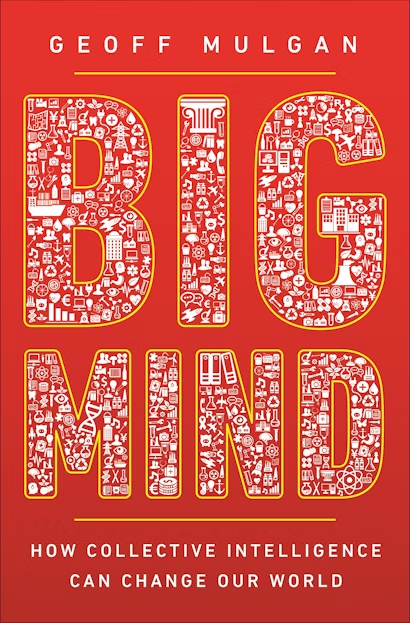
To date, I have not written a paper on Brian Hodges' original purpose for his model in curriculum development, design, planning and evaluation. Geoff Mulgan's book and referenced sources provide support, if not evidence, for the increasing relevance of Hodges' model.

The center of Hodges' model, the nexus, can be variously occupied by an individual student, researcher; a group, or team, or even an institution. Why not a university?

Since 1987-88, when I applied Hodges' model in a case study, I've acquired a broad understanding of the 'POLITICAL' domain in terms of institutions and organisations. Even if that learning is now 'archived':

https://web.archive.org/web/20150414073721/http://www.p-jones.demon.co.uk/linksIV.htm

In 'Big Mind', Chapter 14, The University as Collective Intelligence (pp.174-180) refers to 'third-loop learning' and a document from Nesta:

Geoff Mulgan, Oscar Townsley, and Adam Price, "The Challenge-Driven University: How Real-Life Problems Can Fuel Learning", Nesta, accessed April 28, 2017.
accessed 15/12/2025: https://media.nesta.org.uk/documents/the_challenge-driven_university.pdf 

'This paper focuses on one important strand of change: the rise of what we call ‘challenge-driven’ university models. These models develop students by putting them up against difficult problems and challenges for which there are no established answers.  Instead students to draw on many disciplines to solve them; they have to work in teams; and they have to collaborate with organisations outside higher education.

These models aren’t a replacement for the classic core of university education - mastering a discipline.   But they provide an important complement to this core, and they may be better suited to preparing young people for the needs of the world. They also re-emphasise one of the founding principles of some ancient universities: a focus on questions rather than answers as the key to deep learning.'

Within the Nesta document, Mulgan et al. list educational institutions who have succeeded, and are trying to effect change (with much editing):

US

The approach was pioneered by McMaster University Medical School in the late 1960s where in response to changing demands on the profession, the curriculum was changed so that students learned collaboratively, working on real-life cases in small groups. ...

... examples like High Tech High in the US, use project-based learning, centred on real-life problems, as the core curriculum for students.

Olin College of Engineering has quickly gained a reputation for being one of the most innovative institutions in the US since it opened in 1997.

Last year, the Ash Center for Democratic Governance and Innovation at the Harvard Kennedy school founded the ‘Urban Innovation Field Lab’, a project aiming to improve social conditions in cities in Massachusetts.

Canada

In Canada, the University of Waterloo uses a model of co-operative education, where students’ time is split between study and assessed work experience.

Europe 

Aalto University in Finland was created out of a merger between Technology, Economics and Art Universities in Helsinki and now runs four interdisciplinary ‘factories’ - Design, Health, Media and Service, where teams of academics and students work with companies and communities to develop new products that respond to demand from the real economy. 

The Norwegian University of Science and Technology in Trondheim has a similar approach. As part of their courses, students are required to join a ‘village’ (i.e. area of interest) of around 30 members which address questions such as ‘Biofuels - a solution or a problem?’, ‘Sustainable, affordable housing for all’, and ‘Portable technology and well-being’.

At Maastricht University (the second youngest university in the Netherlands), all teaching uses a problem-based learning model, and this has become one of the main attractions of the university. 

Twelve to fifteen students discuss problems in group sessions, with one student appointed to lead the discussion. The students are given complex problems from everyday professional practice which they brainstorm and research both together and separately. ...

UK 

Imperial College London and the Royal College of Art (RCA) are two particularly innovative higher education institutions. For the last ten years, Imperial has been running the Energy Futures Lab - a cross-discipline, issue-based department aimed at tackling global energy challenges. It was established to bring together disparate fields of study that are relevant to energy including engineering, environmental sciences, computer science, business, policy and mathematics. ...

Imperial and the Royal College of Art also run a Double Masters in Innovation Design Engineering (IDE) which is well known for producing some of the best talent in the field. Their flagship international module ‘GoGlobal’ takes students abroad for three week cross cultural, collaborative projects with academics and industry partners. ... The University of Lincoln has challenge-driven education at the core of its teaching.

Globally? South?

... 

Over the years I've reached out to a great many private and public bodies. 

MEMO TO: New College of Humanities and London Interdisciplinary School

I note the NESTA document is a 'draft'. I'd be pleased to help update and complete this work. Keen to frame Hodges' model not just in the context of problems, but strengths, weaknesses, risks, opportunities and more. When your model emerges from health, you quickly learn when it comes to problems that versatility and adaptability are essential. Always ready to cross disciplines - insofar as I understand them, borders and boundaries as required.

Previously:

https://hodges-model.blogspot.com/2025/07/big-mind.html

https://hodges-model.blogspot.com/2025/12/ii-big-mind-book.html

Geoff Mulgan (2017) Big Mind: How Collective Intelligence Can Change Our World, Princeton University Press.

Sunday, December 14, 2025

ii Big Mind: How Collective Intelligence Can Change Our World

'Everything we know is knowledge from the past, which may not apply in the future - the problem repeatedly stumbled on by models, algorithms, economic theories, and geopolitical dispositions, which made sense in one era, but then become dysfunctional in another. As social science has repeatedly discovered, the more you use a model, the less likely you are to question it. What starts as a pragmatic tool to answer a question becomes a truth in itself.

And so the models we use to think can also become traps. A model is held on to because it provides meaning and reassurance. Police forces notoriously cling to evidence they collect early in a case in the face of powerful contrary evidence that emerges later, and thus extraordinary miscarriages of justice result. The middle-aged cling to the theories they learned as undergraduates. Organizations become attached to models that become comfortable through use. I remember once meeting the planning team of a government that admitted that their forecasts had been no better than random guesses, but argued that the detailed forecasts were still needed to help with planning. The model became a comfort, even though it had no real use. 

Familiarity also breeds blindness. ...

Expertise can equally entrap. ...
 
The implication, as the Buddha pointed out, is that intelligence has to be at war with and suspicious of itself to be truly intelligent.' pp.120-121.

FIVE FUNDAMENTAL PRINCIPLES FOR EFFECTIVE COLLECTIVE INTELLIGENCE

'The first is the extent of what I call (1) autonomous commons of the intelligence in the system. By this I mean how much the elements of intelligence are allowed free rein, and not subordinated too easily to ego, hierachy, assumption, or ownership.' p.66. Chap. 5. Organizing Principles.
2. Balanced use of the capabilities of intelligence
3. Focus and the right granularity
4. Reflexivity and learning
5. Integration for action
 
'So a group is a we, but it is not just a scaling up of an I. How, then, should we think about the character of this we?' p.102. Chap. 9. The Collective.
 
Individual
|
      INTERPERSONAL    :     SCIENCES               
HUMANISTIC  --------------------------------------  MECHANISTIC      
 SOCIOLOGY  :    POLITICAL 
|
Group
 
EGO
 

 HIERARCHY


ASSUMPTION
 

OWNERSHIP


n.b. With my emphasis.

 
Geoff Mulgan (2017) Big Mind: How Collective Intelligence Can Change Our World, Princeton University Press.

Image: Princeton University Press.

See also: 'AI' : 'group' : 'axes' : 'individual'

 Previously:
Big Mind: How Collective Intelligence Can Change Our World


Saturday, December 13, 2025

WCCS26: Abstract 'Presenting a Universal and Simple Conceptual Workbench to Situate and Encompass Complexity'

ABSTRACT

Background

In health and social care there is, as yet, no universally recognised model, or framework applied and taught across all academia, fields of practice, professional disciplines and apprenticeships. At a time when ‘truth’ is challenged by information disorder, AI, and curricula are overload, this is both a stark and hidden problem. Medicine was quick to embrace complexity as an additional scientific tool. Complexity extends our understanding of epidemiology, demographic trends, the birth of modern bio-genomics, pharmacokinetics, public health, workflows, patient safety and more. The medical and bio-medical models are subject to critique, especially in psychiatry in terms of their conceptual scope and holistic bandwidth. Consider for example, the representation of patient and public engagement, human rights, climate change, poverty, refugees and natural disasters? The field of psychiatry extended these models to the bio-psycho-social model.

Methods

Despite this ‘progress-ion’, profound legacy issues remain: 
  • The dualities of INDIVIDUAL-GROUP and HUMANISTIC-MECHANISTIC
  • Sustainable services and systems, change to emphasize prevention and education (not just cure)
  • A lack of parity of esteem between mental illness and physical illness
  • A complicated relationship between psychiatry and psychology
The 21st century demands we also factor in economics, technology, social media - especially AI, education and literacies, geopolitics, security and more. This paper argues that we need a bio-psycho-socio-political model stat! This paper introduces and demonstrate the generic conceptual framework known as Hodges’ model.

To date, Hodges’ model has been explained and studied by guided discovery through lectures, workshops, posters, show and tell, and discussion groups; plus descriptive means of case study, and in practice patient care assessments and case formulation. Journal papers include conceptual analysis and synthesis, concept mapping of issues, e.g. nutrition and the sustainable development goals, plus oral health and policy frameworks (in-process). This paper ‘workbench’ encourages and facilitates reflective practice and critical thinking on an individual and collective basis. The derivation of the structure and content of Hodges’ model through guided discovery will be shared.

Results & Discussion

The background to Hodges’ model and its creation is introduced. In health care delivery, evidence-based interventions are of course paramount to patient, and public safety. Work to ‘see’ Hodges’ model as a mathematical object has begun. Help and collaboration is welcome; especially with supervisors of early career researchers and scholars in LMICs. Examples of complexity will be mapped to the knowledge (care) domains of Hodges’ model, which can itself be embedded within the spiritual. This paper responds directly to WCCS26’s main theme; and the need to listen to the lessons of history and isolate, weigh, refine and seek to preserve the often hard-won values that sustain humanity, humanistic care and qualities at a time when these are under assault, e.g. assisted dying – a right to die, or a duty? A small but growing bibliography, a template, plus illustrations of Hodges’ model are provided. Background on Hodges’ model can be found in the blog ‘Welcome to the QUAD’ - https://hodges-model.blogspot.com

Keywords: Healthcare, Nursing, Hodges’ model, Humanities, Global health

Topic: Complexity in Health and Medicine

🔷

News of acceptance was received on 29th November: brilliant! The deadline for submission of full-papers is 25th December. Try as I might, I can't meet this date. 

Helpfully, a presentation based on abstract alone is acceptable. I am hoping to network and learn too. The draft notes on Hodges'model as a mathematical object (6k words) are helpful in framing thoughts about the presentation and a future paper as a writing project. All in, a marvellous end to 2025 and prospect for 2026.

Friday, December 12, 2025

Sociology: Open access resources and course materials - BUP

As an introduction to our publishing in Sociology -

 https://bristoluniversitypressdigital.com/subject/SOC-Taster-Collection 
 
- we curated a collection of free and open access books and chapters that we think will contribute to your reading lists. Our growing list has a global outlook featuring high-quality research across emerging and established areas in the field, such as migration, gender, education, ageing, science and technology, death and culture, activism and organizing, race and ethnicity, decolonization, public sociology and children and families.

Highlights from the collection include:
Please feel free to share this collection with your network and your students. Chapters that are not perpetually open access will be free to download until end of March 2026

Our aim is to ensure that the vital work of our authors reaches the lecturers, researchers and policymakers who can use it to drive meaningful, real-world change.

You can request access to our full Sociology Collection
https://bristoluniversitypressdigital.com/subject/SOC-Collection?utm_source=listserv&utm_medium=email&utm_campaign=Sociology-2026 - via your institution’s library. 

We offer tiered pricing on our collections tailored to smaller organisations and their libraries. For more details, institutions can contact our team at bup-digital AT bristol.ac.uk.

Publish with us: If you are writing in this field, consider publishing your work with an ethical university press. To discuss your publishing projects, please contact our editor emily.ross AT bristol.ac.uk.

Looking forward to hearing your thoughts and please don’t hesitate to reach out if you have any questions.

Kind regards,
Bahar Celik Muller - Senior Marketing Executive
Bahar Muller - Senior Marketing Executive

New books

Liberation and Corruption: Why Freedom Movements Fail

Reckoning: Creating Positive Change Through Radical Empathy

Mind the Inclusion Gap: How Allies Can Bridge the Divide Between Talking Diversity and Taking Action

White Privilege: The myth of a post-racial society

 
My source: https://www.jiscmail.ac.uk/cgi-bin/webadmin?A0=EUROPEAN-SOCIOLOGIST

Thursday, December 11, 2025

Bourdieu: systems, axes, maps, practical logics

I have checked these quotes and am fairly sure they are accurate. The first, I feel, improves with re-reading, and presents a clearing at the end? 

The clearing could be a template, and as per the second it may be old; but retains its practical function.

'Intellectualism is inscribed in the fact of introducing into the object the intellectual relation to the object, of substituting the observer's relation to practice for the practical relation to practice. Anthropologists would be able to escape from all their metaphysical questioning about the ontological status or even the 'site' of culture only if they were to objectify their relation to the object, that of the outsider who has to procure a substitute for practical mastery in the form of an objectified model. Genealogies and other models are to the social orientation which makes possible the relation of immediate immanence to the familiar world, as a map, an abstract mode of all possible routes, is to the practical sense of space, a "system of axes linked unalterably to our bodies, which we carry about with us wherever we go", as Poincaré put it.' p.34.
The Logic of Practice
'The logical [kinship] relations he constructs are to 'practical' relations - practical because continuously practised, kept up and cultivated - as the geometrical space of a map, a representation of all possible routes for all possible subjects, is to the network of pathways that are really maintained and used, 'beaten tracks' that are really practicable for a particular agent. The family tree, a spatial diagram that can be taken in at a glance, uno intuitu and scanned indifferently in any direction from any point, causes the complete network of kinship relations over several generations to exist in the mode of temporal existence which is that of theoretical objects, that is, tota simul, as a totality in simultaneity. It puts on the same footing official relationships, which, for lack of regular maintenance, tend to become what they are for the genealogist, that is, theoretical relationships, like abandoned roads on an old map; and practical relationships which really function because they fulfil practical functions.' p.35.


My source:
Bourdieu, P. (1990). The Logic of Practice. Stanford University Press. https://doi.org/10.1515/9781503621749 [and image source].

Bourdieu, Pierre, "The Logic of Practice (1990)" (1990). eTextbooks for Students. 875.
https://stars.library.ucf.edu/etextbooks/875

See also: https://hodges-model.blogspot.com/search?q=bourdieu

Wednesday, December 10, 2025

Problem solving, case formulation and policy formulation

On W2tQ this year, and possibly in a previous paper, or conference presentation, I've stated that the nursing process is basically a problem solving algorithm. Nothing profound there of course. 

'Problem solving' is a developmental threshold and an evolutionary skill obvious in humans, with learning passed on across generations. Evidence of problem solving in animals and nature is becoming increasingly apparent; with examples over recent decades of problems solved not witnessed before.

In healthcare, and psychotherapy more specifically, we shift to case formulation. Again a step-wise process to arise at a sufficiently complete rationale for therapy. Ideally, this extends beyond the individual. As an parent, grandparent, guardian, teacher, supervisor ... teaches a child so therapy is an opportunity for learning and, it must be added, unlearning.

Returning to (and passing on):

Hague, R., & Harrop, M. (2007). Comparative Government and Politics (7th ed.). New York, NY: Palgrave Macmillan.

Chapter 18 (pp.377-395) concerns 'Public Policy'. Clearly, here there is a shift from the individual to the collective, population and citizenry. The chapter's second page on 'Initiation and Formulation' quickly provides a flowchart 'Figure 18.1 Stages of the policy process'. Box 18.1 informs readers about 'Rational and incremental models and policy-making' (p.380):
'The key contrast between the two models is this. The rational model views policy formulation as emerging from a systematic search for the most efficient means of achieving defined goals. By contrast, the incremental model sees policy as emerging from a compromise between actors who have goals which are ill-defined or even contradictory. Where the rational model seeks the best policy in theory, an incremental framework seeks out a practical policy acceptable to all the interests involved.' p.380.
The book highlights Simon (1983) as a source for the rational or synoptic model:
 
Simon H.A. (1983) Reason in human affairs. Oxford: Basil Blackwell.

Plus, for the incremental model:

Lindblom, C.E. 1979. Still muddling, not yet through. Public Administration Review 39: 517–526.

If needed, online, you will find accounts and diagrams on problem solving, the nursing process, case formulation and policy formulation. That's quite a family is it not? 

While not referred to as explicitly today, the nursing process (now routinized) should address parity and integrate care across mental and physical health. The individual (person, patient) should be assessed and care planned with their social and community context taken into account. Collaboration in care should help assure that this is indeed the case. The nursing process in the sociological domain acknowledges the role of parents, guardians, and families as informal carers. The social care sector can also be represented and further the objectives of a more open and integrated care community as per the local situation. While not added to the sciences domain; case formulation should also factor in the physical and political. 

Politically, are all instances of problem solving, and formulation recognised for their importance and influence on outcomes and effectiveness, economy, efficiency (another 'box' p.357), plus efficacy? Are services politically afforded the resources, as defined across the domains of Hodges' model required to deliver, improve and change (achieve sustainability, educational, preventive)? 

The elephant here of course are the determinantS. Ultimately, all these forms of problem solving should be at 'home' in the political domain, but they are rarely there. It is not just the practitioner who can make the difference - be the difference.

Enough of l-implementation

Policy needs to be fit for 21st century purposes, and not hollowed-out but allowed out - beyond the legislative walls where it can make a real difference.

individual
|
INTERPERSONAL : SCIENCES
humanistic -------------------------------------------  mechanistic
SOCIOLOGY : POLITICAL
|
group-population

Nursing process

Case 
formulation

Nursing process

Nursing process

Case 
formulation


Policy
formulation


Tuesday, December 09, 2025

In search of socio-political logics

'The logic of appropriateness refers to actions which members of an institution take to conform to its norms. For example, a head of state will perform ceremonial duties because it is an official obligation. By contrast, the logic of consequences denotes behaviour directed at achieving an individual goal such as promotion or re-election.' p.87.

individual
|
INTERPERSONAL : SCIENCES
humanistic -------------------------------------------  mechanistic
SOCIOLOGY : POLITICAL
|
group-population


'Institutions are far more than the theatre within which the political drama unfolds; they also shape the script (Peters, 1999). This emphasis within the institutional framework on the symbolic or ritual aspect of political behaviour contrasts with the view of politicians and bureaucrats as rational, instrumental actors who define their own goals independently of the organization they represent.' p.87.


'Further, institutions bring forth activity which takes place simply because it is expected, not because it has any deeper political motive. When a legislative committee holds hearings on a topic, it may be more concerned to be seen to be doing its job than to probe the topic itself. Much political action is best understood by reference to this 
logic of appropriateness rather than a logic of consequences. For instance, when a president visits an area devastated by floods, he is not necessarily seeking to direct relief operations or to achieve any purpose other than to be seen to be performing his duty of showing concern. In itself, the tour achieves the goal of meeting expectations arising from the actor's institutional position. "Don't just do something, stand there", said Ronald Reagan, a president with a fine grasp of the logic of appropriateness.' pp.86-87.


See also: 'drama' : 'bridges'

Hague, R., & Harrop, M. (2007). Comparative Government and Politics (7th ed.). New York, NY: Palgrave Macmillan.

Peters, B. Guy. (1999). Institutional theory in political science: the new institutionalism. London: Pinter.

Monday, December 08, 2025

Remember (if you can) in each care domain ...

... there is an elephant in the 'room'!


individual
|
INTERPERSONAL : SCIENCES
humanistic -------------------------------------------  mechanistic
SOCIOLOGY : POLITICAL
|
group-population
'If there is one product that symbolises the absurdities of the EU's single market in goods, it might be a cuddly elephant. The Djungelskog toy from Ikea may only be 12cm tall and cost less than €2, but it has a 20cm-long label protruding from its behind.

Environmental rules from France and EU textile legislation account for much of the length. But the elongated label reflects a strategic even a philosophical, problem for Europe as its companies battle to compete globally.

The single market in goods should be the EU's crowning achievement. Compared with free movement of people, services or capital, it is the area that has come furthest in more than 30 years since the common market was established.

Yet there remain small, often invisible barriers to trade that, taken together, amount to what the IMF estimates is a drag on Europe's economy equivalent to a tariff of 44 per cent.'


RICHARD MILNE - OSLO and SAM JOINER - LONDON, Elephant in the room hampers frictionless EU trade, FTWeekend, 6-7 December 2025, p.6.

Related?

Jones, P. (1996) Nursing Technology and Elephants - Part 1: Technology as a beast of burden. IT in Nursing. 8,1,4-6.

Jones, P. (1996) Nursing Technology and Elephants - Part 2: Technology as a serpent. IT in Nursing. 8,2,5-7.

Jones, P. (1996) Nursing Technology and Elephants - Part 3: Technology rope to save humanity and health care, IT in Nursing. 8,3,5-7.

Sunday, December 07, 2025

AI - World Models

'What Is a World Model?

World models are neural networks that understand the dynamics of the real world, including physics and spatial properties. They can use input data, including text, image, video, and movement, to generate videos that simulate realistic physical environments. Physical AI developers use world models to generate custom synthetic data or downstream AI models for training robots and autonomous vehicles.'

https://www.nvidia.com/en-us/glossary/world-models/

In healthcare a 'world model' is slightly more expansive, hence the importance of experienced humans. We call these - nurses, doctors, physiotherapists, occupational therapists, social workers and many other professions, support workers and disciplines. They learn and train for many years and must continue to learn and unlearn throughout their careers. Their work and engagement is shaped and directed by human values, which are in turn informed by social change, evidence-based research, professional guidance, policy and law.

individual
|
INTERPERSONAL : SCIENCES
humanistic -------------------------------------------  mechanistic
SOCIOLOGY : POLITICAL
|
group-population


WORLD MODEL


Saturday, December 06, 2025

The critical pathway leads to ...?

I missed the most salient information on this book's cover - at least for me. My copy is secondhand, but I picked the copy up recalling Dr Walsh's many publications on models of nursing.

The critical pathway for me is plural. It would include, the CPN(Cert.) course when I first encountered Hodges' model in 1987-8. Plus the fact that the pathway is not unidirectional, with some backward steps and reviews, but is multifold. Running the axes of Hodges' model to - pre-op, surgery, post-op, rehab ... we can add the whole corpus of nursing, social, self, and global health care.

The cover is of course illustrative, intended to support the title and suggest an explicit critical pathway. Apart from possibly pointing to collaboration "Mr Jones ... Let us discuss your critical pathway!" what has changed? Since the book's publication in 1997, we need health care services and systems to be sustainable. We are bit late here. Mr Jones is already a 'patient', bedecked in dressing gown and slippers.


This critical pathway needs to be replaced by one informed and oriented towards Mr Jones as self-caring citizen. This is of course easier said than done in policy terms. While governments globally and institutions stress the need for health literacy, informed life style choices, self-care, health promotion and prevention how much progress is being made? Nutrition remains a profound issue.*

The environmental challenges of climate change, pollution and waste disposal are seemingly contested even as the effects and cost of non-action are increasingly obvious.

The policy of 'care in the community' even while incomplete in the community, has provided me with a stimulating, challenging and rewarding career 1985 ... In the 21st century though, we have to ask of the assessment of mobility to follow and effort of the up-hill walk to 'home' begs the critical pathway that is now Planetary Health.

<>

Several points from Walsh (1997):
'Introducing a model to a clinical area is not an easy task to be undertaken lightly, as it involves fundamental changes in the way staff think and work. Luker (1988) has suggested that each nurse carries around their own informal model of nursing which guides their practice. It is probable that a formal model will be significantly different, although these differences can be minimized by full consultation and involvement with staff to ensure that the model chosen reflects their views of nursing as far as possible.' p.36.
Hodges' model can be 'carried around'. In truth it not strictly a model of nursing. Its scope extends beyond nursing and yet the model can incorporate thought about the patient, nurse, environment and what health, illness, recovery and self-care entail. Hodges' model is meta-cognitive and meta-conceptual, and (very) capable of mapping the terrain (p.26) of nursing from these and other perspectives. A nurse's 'views of nursing' will be dictated by the situation presented to them. Hodges' model can be retrospective, prospective and operate in the here-and-now: situated.
'There is a further point, however, that follows on from Luker's observation for expert nurses have an internalized model of care which is unique to them, it is possible that they may have internalized some practices which are outdated, taken for granted or inappropriate (Paley, 1996) but which are never made explicit as their care is not based upon a commonly understood model of nursing. This notion of every nurse having their own model therefore can lead to the situation where outdated rituals can be propagated under the guise of expert practice. Having a series of explicit models whose aims and ideas are common knowledge, shared by all, opens up care to critical scrutiny in a way that is not possible if each nurse has their own private internal model.' p.37.

Hodges' model can be used with other models, conceptual frameworks and systems across disiplines. Hodges' model is not intended to be prescriptive or prospective. It can be utilised for learning and unlearning. As a registered General Nurse who studied in the 1980s this does not mean I would be competent and safe to practice now. Continuing professional development, mandatory training and revalidation of nursing registration are all geared to support professional practice that has currency, validity, and is safe.

If nursing ever needed a commonly understood model ...?

'It will be apparent from the previous sections that use of a model will lead nursing into some new and unfamiliar territory that will involve seeing the patient in a more holistic fashion'. p.63.

'The nurse may find that models start to identify environmental problems whose solutions lie beyond the boundaries of nursing at present. This is particularly true of the community nurse.' p.63.
Walsh's concern here is the immediate community, but we can recognise the prescience of environmental problems here. Plus the need for the POLITICAL domain in Hodges' model:
'On a larger scale still, perhaps some patient's problems have their origins in political decisions made by national govemment or perhaps it is the factory down the road producing unacceptable levels of pollution. If nursing models make us recognize the political and environmental causes of some patient problems, there should ee no logical reason why nursing should not go forward into theee arenas as a legitimate part of nursing intervention.' p.63.
'There are senior NHS managers and health academics in so-called 'policy thínk tanks' who simply do not recognize the value of nursing and see only a collection of simpie tasks which anybody with an NVQ level 2 can perform. Nursing therefore has to demonstrate its worth; it has to evaluate what it is doing for patients.
Here it is important to remember that the care given may be very different from what is written down. Consequently, how a nurse evaluates care mentally may be very different from how this care is recorded in nursing process documentation. ...' p.64.
Hodges' model can (imho) have a role in argumentation for the quality and scope of healthcare, for nursing as a profession, evaluating and assuring nursing's values in the constant that are the demands of complexity and change. The (several) determinants of health are the other constant.

Mike Walsh (1997) Models and Critical Pathways in Clinical Nursing. London: Bailliere Tindall.

Luker K. (1988) Do Models Work? Nursing Times, 84 (5), 27-29.

Paley, J. (1996), Intuition and expertise: comments on the Benner debate. Journal of Advanced Nursing, 23: 665-671. https://doi.org/10.1111/j.1365-2648.1996.tb00035.x

*Jones P, Wirnitzer K. Hodges’ model: the Sustainable Development Goals and public health – universal health coverage demands a universal framework. BMJ Nutrition, Prevention & Health 2022;5: doi:10.1136/bmjnph-2021-000254

Wirnitzer KC, Motevalli M, Tanous DR, Drenowatz C, Moser M, Cramer H, Rosemann T, Wagner K-H, Michalsen A, Knechtle B, Fras Z, Ritskes-Hoitinga M, Marques A, Mis NF, Stanford FC, Schubert C, Goswami N, Leitzmann C, Fredriksen PM, Ruedl G, Wilflingseder D, Lima RA, Kessler C, Jeitler M, Khan NA, Joulaei H, Fatemi M, Knight A, Kratky KW, Palmer KK, Haditsch B, Jakse B, Kofler W, Pfeiffer T, Cordova-Pozo K, Tortella P, Straub S, Lynch H, Schätzer M, Krishnan A, Fathima A. S, Gatterer L, Kriwan F, Abhishek M, Nandgaonkar H, Nandgaonkar S, Adedara AO, Haro JM, Gericke C, Neumann G, Akhtar A, Rashidlamir A, Thangavelu M, Ngoumou GB, Perpék É, Klaper M, Bhattacharya B, Kirschner W, Bessems KMHH, Jones P, Peoples G, Bescos R, Duftner C, Seifert G (2025). Toward a roadmap for addressing today's health dilemma–The 101-statement consensus report., 
Frontiers in Nutrition, Volume 12:1676080. doi: 10.3389/fnut.2025.1676080. https://doi.org/10.3389/fnut.2025.1676080