Hodges' Model: Welcome to the QUAD: June 2025

Hodges' model is a conceptual framework to support reflection and critical thinking. Situated, the model can help integrate all disciplines (academic and professional). Amid news items, are posts that illustrate the scope and application of the model. A bibliography and A4 template are provided in the sidebar. Welcome to the QUAD ...

Monday, June 30, 2025

Assisted Dying Bill - UK

Individual
|
      INTERPERSONAL    :     SCIENCES               
HUMANISTIC  --------------------------------------  MECHANISTIC      
 SOCIOLOGY  :    POLITICAL 
|
Group


Choice by dying person of how they die

Anticipation of role of AI

Where does mental illness 'lie'?

Decision needs approval by two doctors

Change in relationship between:
INDIVIDUAL -
Prognosis of < 6 months

Terminal diagnosis

Anticipation of role of AI

Seek assistance to end their life

Decision needs approval by two doctors

What of patients who are comatose?^
Profound Societal Change

Quality of Life

Quality of Death

Impact of 'poor' death on others - friends and family

Vulnerabiity of certain groups

Lest we forget what happened to the nursing and care home sector during COVID*

and the STATE

UK - House of Lords

Oversight Panel: 
Legal figure e.g., King's Counsel; and a Psychiatrist

Doctors and care workers not compelled to take part in assisted dying

What about the psycho-POLITICS of anorexia, severe depression?


^Brian M. Rosenthal. They woke as doctors prepared to remove their organs. The New York Times International Edition, 11 June 2025, p.6. 
https://www.nytimes.com/2025/06/06/us/kentucky-organ-donations.html

Sunday, June 29, 2025

Truth & Democracy: '300 grammes' - The Daphne Foundation

I remember seeing a documentary, hearing on the radio and reading in the FT about the murder of Daphne Caruana Galizia, who was a journalist in Malta. I was shocked that this could happen in Malta. The British, naval - colonial connections, its being in Europe and the EU. The lesson being of course, that we must take nothing for granted and exercise constant vigilence to protect law and justice. 

'Courage' is often described as a personal and professional quality for nurses.

For journalists as the news  reveals each and every day - it is the first.

Individual
|
      INTERPERSONAL    :     SCIENCES               
HUMANISTIC  --------------------------------------  MECHANISTIC      
 SOCIOLOGY  :    POLITICAL 
|
Group

'The bomb was packed into a steel container, placed beneath my mother's car seat, and detonated remotely just down the road from our home in Bidnija. It contained around 300 grammes of military-grade explosive. I didn't know the weight until this trial. But I already knew what it destroyed.'

Caruana Galizia

daughter

sister
wife
mother
grandmother
friend
neighbour
colleague
citizen ...
'There was something else I didn't know before this trial. The two medics who conducted my mother's autopsy said they found her heart was, incredibly, "intact" - and that it weighed 300 grammes. The same weight used to kill her was the weight of what endured.'


Paul Caruana Galizia. Opinion: Corruption - What Malta owes my murdered mother, FTWeekend. 14-15 June 2025, p.10.

https://www.ft.com/content/3f5012a6-a358-48a9-a72f-9d2ae530878b


Acknowledgement and thanks to Paul Caruna Galizia.

Saturday, June 28, 2025

Jayasinghe (2025) 'People‑centred care: a systems view of a new paradigm'

C/o HIFA

Dear friends,

It is my pleasure to share the link to my article "People-centred care: a systems view of a new paradigm". It is published online in Discover Health Systems and Open Access. Please see full-text access to your paper by using the following link:

https://rdcu.be/ejNUq

Kind regards Saroj
ABSTRACT People-Centred Care (PCC) is an emergent property in an “open” system. Policies aiming at promoting PCC can be categorized under four nested levels: Micro-level; Meso-level; Macro-level; and Mega-level and used to draw systems diagrams. We develop a single composite diagram which demonstrates interactions and feedback, within and across subsystems, resembling panarchy.
Jayasinghe, S. People-centred care: a systems view of a new paradigm. Discov Health Systems 4, 43 (2025). https://doi.org/10.1007/s44250-025-00215-9.

Saroj Jayasinghe MBBS (Col), MD (Col), MRCP (UK), MD (Bristol), PhD (Col), FRCP (Lond), FCCP, FNASSL Fellow of the International Science Council, Emeritus Professor, University of Colombo, Former Head, Department of Medical Humanities, University of Colombo, Sri Lanka Consultant Physician sarojoffice AT yahoo.com, saroj AT clinmed.cmb.ac.lk

Professor Jayasinghe's paper provides several informative figures on centredness, scale and levels, micro-mega; and affords a way to use Hodges' model to help define person, patient, people and service-centred care. These definitions could be developed, refined and validated using a relational formulation.


Individual
|
      INTERPERSONAL    :     SCIENCES               
HUMANISTIC  --------------------------------------  MECHANISTIC      
 SOCIOLOGY  :    POLITICAL 
|
Group

PERSON- 
PATIENT-CENTRED


psycho-

PERSON-
PATIENT-CENTRED

location

bio-
social

PEOPLE-CENTRED

'Health systems and services designed ‘for and with people’ are captured by the concept of People-Centred Care (PCC) defined as an approach “to care that consciously adopts individuals’, carers’, families’, and communities’ perspectives as participants in, and beneficiaries of, trusted health systems that are organised around the comprehensive needs of people rather than individual disease, and respects social preferences.' Duong, et al. (2024).

political


policy - engagement - design

SERVICE-CENTRED

panarchy

'Let us together forge a new way of knowing and practicing health care in the post-Sustainable Development Goal era, using people-centred care as our guide to achieve Universal Health Coverage.' Duong, et al. (2024).


Duong DB, Holt B, Munoz C, Pollack TM. For and with people: announcing the Lancet Global Health Commission on people-centred carefor universal health coverage and a call for commissioner nominations. Lancet Glob Health. 2024:S2214-109X(24)00216-X.
https://doi.org/10.1016/S2214-109X(24)00216-X.

Previously: 'design' : 'patient' : 'person' : 'system' : 'people'

Friday, June 27, 2025

Politicians! Please leave it to the Public ...

Individual
|
      INTERPERSONAL    :     SCIENCES               
HUMANISTIC  --------------------------------------  MECHANISTIC      
 SOCIOLOGY  :    POLITICAL 
|
Group


'Kick' - a verb, more often it seems, a noun.


Health
and
Social Care?
Gent kicking a can
Wall poster/photo Corfu Town
... to kick
the can
down the road!

Thursday, June 26, 2025

You say Hodges' model is a map. What's the scale?

"That's another thing we've learned from your Nation," said Mein Herr, "map-making. But we've carried it much further than you. What do you consider the largest map that would be really useful?"

"About six inches to the mile."

""Only six inches!"exclaimed Mein Herr. "We very soon got to six yards to the mile. Then we tried a hundred yards to the mile. And then came the grandest idea of all! We actually made a map of the country, on the scale of a mile to the mile!"

"Have you used it much?" I enquired.

"It has never been spread out, yet," said Mein Herr: "the farmers objected: they said it would cover the whole country, and shut out the sunlight! So we now use the country itself, as its own map, and I assure you it does nearly as well."
        Lewis Carroll - The Complete Illustrated Works. Gramercy Books, New York (1982). Page 727.


My source
Text: https://people.duke.edu/~ng46/topics/lewis-carroll.htm

Plus a letter in FTWeekend: by Prof. R.T. Harrison. 'Country as its own map served as well' https://www.ft.com/content/2ad8ea16-d27d-11e1-abe7-00144feabdc0 1 Sept. 2012.

Wednesday, June 25, 2025

ICN - Definition of 'Nursing' & 'a Nurse'

Renewing the Definitions of
 'Nursing' and 'a Nurse'  


 Defining 'nursing' and 'a nurse' has always had a place in both theory and practice. This is one thing that can bridge the theory-practice gap, but still needs to be explained and made sense of. Especially when the values that underpin our definitions are challenged by social, political, physical and attitudinal change.


Of course see the report for the latest definitions. 


Previously:

'nursing' : 'nurse' : 'definition' :


Individual
|
      INTERPERSONAL    :     SCIENCES               
HUMANISTIC  --------------------------------------  MECHANISTIC      
 SOCIOLOGY  :    POLITICAL 
|
Group

PERSON-CENTRED CARE 
Ack. Identity of Others
Balance Subjective - Objective 

Care for and Compensate for
Emotional and Psychological Needs

Knowledge and (Interpersonal) Skills

Emotional labour, Compassion, Courage

Self-Awareness - Competence (recognise limits), When/If stressed :: Act for Safety of All, Please See your Strengths too! Commitment

Active Listening - Attention
Mentor Students - Newly Qualified Nurses

Philosophical stance Ethics & Values

Exercise Emotional Literacy

Collaborate when possible
Supoport Self Care improve Health Literacy
PERSON-CENTRED CARE
Care for and Compensate for Physical Needs 

Skills and Knowledge of Sciences, Technology, Devices, treatments, drugs, procedures, processes

Seek Evidence-based Care and Record

Observational Acuity
Situational Awareness
Anticipate Needs

Foster SELF CARE -
'See' Strengths, Recovery'
- and PLANETARY HEALTH

Be aware of Information Disorder

Assure Parity of Esteem

Document Care - Gather Data for Reporting/Research/Outcomes

Consider Patient's/Individual's
Journey - Health Career
PEOPLE-CENTRED - Inclusive

Seeing Others and Promote Wellbeing of Colleagues inc. All Students/Newly Qualified Professionals

Understand (your) Community 
as Resource & needing Care

Recognise Family - Friends but ensure Confidentiality
Exercise Empathy & Rapport

Seek Public Involvement

Public Safety & Protection

Maintain Professional Confidentiality

See Person as a 'Whole' - Integrate Care

Advocate for Social Justice
Exercise Duty of Candour

Seek Psychological Safety for all Team

Work Relationally within/across  Communities of Practice - Foster Therapeutic Relationships

Envision Patient at 'Home' in the Community - Seek re-housing placement as early as possible
SERVICE-CENTRED CARE
Advocate for Equity, Equality in Access to Care and Universal Health Coverage

Seek to Assure Safety of Self, Colleagues
 & Public (1st Rule of 1st Aid) esp. in Conflict Environments - Refugees/Migrants

Nursing - Profession - Registered
Protected Occupational Title

Seek Supervision & Feedback
Manage Services
Seek to Improve Quality - Monitor Policy

Security of Care Environment, Data, Record, Confidentiality (Vigilance across the domains*)

Practice as per Professional Standards, 
Code of Conduct

Ack./work to reduce impacts of ALL Determinants of Health to increase Sustainability

Accountability - Transparency

Continuing Professional Development

Revalidation of Registration/Licensing

Advocate for Future Generations - Humanity
Population & Biospheric Health


*This is why nursing, being a nurse is 'emotional labour'.

Hodges' model can be embedded within the SPIRITUAL, as per cultural and situational context.

P.S. By the way, if anyone asks - you can just be 'a nurse'.


White, J., Gunn, M., Chiarella, M., Catton, H., Stewart, D., (2025). Renewing the Definitions of 'nursing' and 'a nurse'. Final project report, June 2025. International Council of Nurses.
https://www.icn.ch/resources/nursing-definitions/current-nursing-definitions

Tuesday, June 24, 2025

Invited to ARC - Alliance for Responsible Citizenship

Earlier in the year I read in the Financial Times Weekend, and on @h2cm about

the Alliance for Responsible Citizenship - ARC.

There was a conference and slick website whose aims struck a cord.

Other events (are ongoing as I write) and scheduled, including Olympia, London, UK, from 23rd to 25th June 2026.

Having subscribed for news of future events, I was overjoyed to receive an invite today:


 Register for ARC 


Semi-retired, I knew there would be a cost to attend, but £1500 (plus, travel from NW England and accommodation) is unfortunately beyond my means. Having self-funded many conferences in the past, £500 per day for commercial/IT conference and additional features is not necessarily 'expensive'.

The invitation itself is encouraging, and I am always grateful for that

I will 'regretfully decline' so the place can be reallocated. It is a shame as Hodges' model can really contribute to this dialogue, and debate.

The vertical axis of Hodges' model incorporates the individual, however defined, persona, or role attributed; e.g., person, client, carer, patient, mother, father, infant.

There is an obvious overlap and this is where context and situation also come into effect. How roles are ascribed is defined socially, culturally, and politically, which is what is found at the other end of the I-G axis - group.

Citizen, citizenry, citizenship, migrant, refugee, jury member, voter ... all clearly have a socio-political grounding.

Below, I have copied an updated version of the conceptual mapping from my 2nd March blog post

Back in March I was clearly hopeful, looking at the post's link text:

https://hodges-model.blogspot.com/2025/03/arc-speaker-2026.html


Individual
|
      INTERPERSONAL    :     SCIENCES               
HUMANISTIC  --------------------------------------  MECHANISTIC      
 SOCIOLOGY  :    POLITICAL 
|
Group
WHO AM I?
identity personality
attitude aptitude
character - integrity - virtues
purpose - motivation
faith - individual beliefs
religious engagement
courage hope
my literacies - education3
threshold concepts
fatalism - my destiny
well-being - self actualisation
trust
personal qualities - empathy - rapport
life stages - life chances
TI:ME
Past NOW Future
physical thresholds 
trust in SCIENCE?
climate change
circular economy - transformation
AI
truth - information disorder
science - technology
PAST - work - FUTURE
Balance - Energy
(what does the clock say?)
ACT NOW for FUTURE GENERATIONS
problems: waste, health, poverty, info disorder
Evidence
grassroots social movement
family - LOVE - social growth
community - dignity & respect
culture - diversity
social - cultural identity
arts
society - support
social change
social capital
social contract
social values
our shared destiny
our children's children
welfare - living wage
employment - leisure
quality of life
power - security - safety
Short - Long-termism
political systems - democracy, theocracy...
transparency - accountability - TRUST
past policy UK: 'Troubled Families'
economics - tax - income $$$ £££
organisations, institutions, corporations
political (manifest! colonialism ) destiny
policy - political systems
political engagement
health of Leaders
CARE: from SELF to PLANET
international law - justice
control of fraud, corruption, crime
human rights
political thresholds


Visiting London 4th - 7th July and looking forward.

Monday, June 23, 2025

Entry to the Theatre of Nursing & Space

I do understand that reading theatre related texts, joining a theatre group, my writing a play is still pi in the sky. It's the journey, that's all. In Hodges' model I've differentiated between structure and content. This is the center of the stage about which Hodges' model turns. In the guided discovery by which students and audiences can discover the model,  these are the bases to touch in turn.


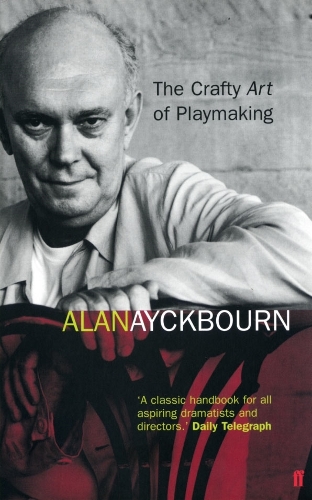
Sir Alan's focus on construction in writing: is narrative, time, location, characters (p.12). The overall message for me is, the frequently uttered - less is more. I must take heed and listen. During Ayckbourn's career, he has encountered the full retinue of writers and directors young and 'experienced'. Reading this, it is nice to be both 'new old-er' -
'Then there is the new old playwright. Far more difficult to deal with. They have probably nursed this script for twenty-five years and they're damned if you're going to mess it up for them when they've waited so long. Especially someone your age who wasn't even born when their harrowing play about World War Two was still raging, dammit.' p.110. (My emphasis in bold.)
Thinking about 1959 and the start of Sir Alan's career, his reference to WWII, made me recall nursing assistant and student nurse studies and placements at Winwick Hospital in 1977. On the geriatric wards for entertainment it was WWI songs were often sung, or records played. Long players, indeed.

In health we are usually accustomed to stopping before the 'true' end, with the exception of palliative care, although even then the ending should be 'better' than what it would otherwise have been.

If I am nursing Hodges' model, I've been doing so ever since 1987-88. As Sir Alan also observes of writers, while passionate about the utility of the model - my project - not my model; I am filled with self-doubt. Is this an over-valued idea - in my hands (and mind!)?

In other reading - Stagecraft. The Complete Guide To Theatrical Practice, by Griffiths Trevor R. 1982, I came across the word 'proscenium'.

'Incidentally, when we came to stage [the play in question is 'Woman in Mind' PJ] the London proscenium version this was far more difficult to achieve. Proscenium theatres generally make scenic statements whether they want to or not; the round makes none unless called upon to do so.' p.32. 

There are many insights into sets, design, and the various pros and cons. In May and earlier this month, with three other cast members I performed a role 8-9mins in a Living Newspaper (40-50 mins in total). It was fascinating to watch the various aspects developing from the initial reading in January. With Hodges' model an idea, the question of set design is not straight forward. But as with over-valued ideas, I am probably over-thinking (as usual) making things more complicated than necessary.

One golden nugget of advice, is if you are the writer and write well, well you don't have to think the set design. That is a problem for someone else to solve. Hopefully you will be impressed by the interpretation and realisation (often in film credits) of your work.

That is, unless you're unlucky and find yourself on the receiving end of Obvious Rule No. 13:

Beware of competitive set designers, particularly those with a 'concept'.

The name Ayckbourn is synonomous with The Stephen Joseph Theatre, which is in the round:

'The Round provides a truly unique experience as the audience is seated all around the stage. Not only does the audience see the performance from every angle, it also brings the actor into the same space as the audience.'

"Let’s have the actors in the same room as the audience, let’s have four front rows, let’s get really excited about this acting business!"

Stephen Joseph, 1959 - https://sjt.uk.com/about-us

From the mid-1980s and 90s I used to visit Bolton's Octagon quite regularly. Performances were frequently in the round. Last month, Abigail's Party was too (the last night).

Whatever, the staging, set, I'd be interested to see the 'concept'. On directing:

'As regards interpretation. you may need to tread more warily. As I said earlier, many playwrights are not naturally theatre creatures - certainly they are rarely visual theatre creatures, I have seen them sit there and watch their play physically anfold with a look of total amazement. pordering sometimes on delight, sometimes on dismay. What was in their head has been made three-dimensional flesh.' p.111.

Space has been and remains fundamental to my thinking about Hodges' model. Even pushing the envelope to topology, this is well beyond my ken. But not other gifted researchers. Hodges' model provides inter- multi- transdisciplinary bridges: we need to Before the time of schools becoming fenced and patrolled sites, we used to play cricket, tennis and football. There was a large wall at front of a former school, great for tennis, but not return of serve. Now a projection shared in the round - so everyone sees the same thing (yes, another rule!) might hold potential. There's acknowledgement that technology moves on too (p.123). And room for comedy, Ayckbourn's starting point. 

'Designers, it has been said, even the best of them, sometimes get hold of the wrong end of the stick. ... Always get to look at drawings, ground plans and, most helpfully, scale models of what they intend.' p.120.

The Crafty Art of Playmaking by Alan Ayckbourn. Faber, 2004, softcover, ISBN 0571215106.

https://www.concordtheatricals.co.uk/s/45898/the-crafty-art-of-playmaking

Sunday, June 22, 2025

In Theatre, Silence is a genre, and therapeutic ally

'As a playwright it may be your intention to build a vehicle to take us to the stars. But do make sure you have people aboard.' (p.9).^
Alan Ayckbourn in The Crafty Art of Playmaking.

Sound of silence in activism

Quite fitting in the two decades since publication, given the rise of AI and the impact upon the arts, specifically human imagination, creativity, and livelihoods. Meaning: silence as a tool for protest, and activism is also a genre and a can be a therapuetic ally. 

Going backwards - Sir Alan writes: 'Theatre for me has always been, in a way, a reflection of life writ somewhat smaller'. p.10.

While the point concerns the faith and trust placed in theatre directors by the company, there is an analogue in healthcare. The belief of the patient, in their doctor and the medical team. Or, at least the knowledge and skills they should, and appear to possess. For Ayckbourn '... the director looked as if he knew.' (p.10).

Obvious rule no. 4: 'Use the minimum number of characters that you need' (p.13).

What can I say? Society, has peeled back the patient - doctor (substitute health profession as needed) to the person whose monologue seeks confirmation of illness x,y, or z. Apparently here in the UK 1 in 4 adults have a mental health condition. The debate is ongoing as to what is going on. But the subject of Hodges' model as a possible crucible for a work of drama can certainly keep to character count down.

Not only that, but is this a book on counselling - interpersonal skills?

'An audience that doesn't care stops listening in the end. '. p.14. 

As part of -

'Obvious Rule no. 5: They need to care about your characters. (So you should too.)'

So, for both playwrights and carewrights, there is a duty of care (for all of course - despite the actions of so many governments).

In health the patient is the character study. There is, should be, must be - a plan of  care, a care plan. As a 'play', Hodges' model begins as a template of at least five acts [Spiritual (Four domains) ]. That is whether or not they are all 'written'. The attitude though should be unconditional positive regard.

There's no Waiting for Godot here, unless the character is social care?

TAU ZERO

Could it be that as organisational hierarchies have been flattended, the notion of character has been under siege? The onion that is our identity, personality, persona unpicked, skin-by-skin by social media, social change, and policy affecting education. Character building used to be a thing didn't it? No longer needed now is it?

Sir Alan, supports this hypothesis in his 'Obvious Rule No. 28:

People in general are reluctant to reveal themselves.' (p.65).

I still wonder about the potential of Hodges' model in secondary level education. More than ever, with all the talk about resilience, recovery, mental health issues, the rising UK welfare bill, may beg the question: What is character today? But, it is not defined by a stiff upper lip.

Not to sound 'ableist', but the 'crafty' in Ayckbourn's title, can be read in health terms; the disciplines drawing on science and the arts. Plus, they involve craft - use of the self, empathy and rapport. Not limited to, but in mental health care, it could be 'crafty' in the exercise of power, so frequently a theme central in drama and the human condition.

^A nice reminder too, of a Poul Anderson's SF classic Tau Zero (and a previous post).

The Crafty Art of Playmaking by Alan Ayckbourn. Faber, 2004, softcover, ISBN 0571215106.

https://www.concordtheatricals.co.uk/s/45898/the-crafty-art-of-playmaking

https://www.isthiswhatwewant.com/

Image: https://upload.wikimedia.org/wikipedia/commons/thumb/b/b0/Is_This_What_We_Want%3F.jpg/250px-Is_This_What_We_Want%3F.jpg

https://www.amazon.com/Zero-Coronet-Books-Poul-Anderson/dp/0340163364 (This was the same copy I read in my teens.)

Friday, June 20, 2025

Theatre in TI:ME

The Crafty Art of Playmaking
In health we're dealing with time in all its forms: cardinal; birth and death and all that happens in-between. Aka, 'life', illness, and palliative care. And, even if not recognised, chronological and pathological time, which policymakers should pay more attention to. The art of theatre, has its time (p.20): stage time, and real (theatre foyer) time. 

'At its most successful, theatre views things from a human standabout.' (p.9). 

I'd second that, especially allied with the notions (ideas!) of health career, and life chances

Since the publication of TCAoP in 2004 people seem to quite ready to dispense, disregard, downplay, demote the humanistic with the rise of AI and assisted dying for the terminally ill (of course).

Time recurs - as a frame. (p.25) with a touch of elective surgery. 'Think of your story as a piece of thread. Where you cut in is the point at which the lights come on in Act One. Where you cut out will be your final curtain. (There may be a knot or two in the middle to denote the intervals, too.)' p.25.

In the first post re. TCAoP I stressed the complexity, plethora of ideas that Hodges' model can create. Sir Alan provides a potential 'get of jail free card' (or as near as?) in his original rule no. 9. 

'If a play can be too simple, it can also be too complicated. If one element is particularly complicated, keep the rest of it simple.' (p.25).

Very useful advice! But achieving it when having and applying an idea is another matter.

What's this though? Step back to original rule no. 6:

'There is no hard and fast rule as to which constructional element comes first.' (p.20).

Butrint National Park Albania   

In the guided discovery exercise in students (audiences..) creating the model, there are two constructional elements, that also contribute to the one big idea.

It gets better! Original rule no. 14:

At least fifty per cent of your play is going to be visual. (p.33).

I must make sure I don't confuse concept/ual with visual/imagery.

More to follow.

The Crafty Art of Playmaking by Alan Ayckbourn. Faber, 2004, softcover, ISBN 0571215106.

https://www.concordtheatricals.co.uk/s/45898/the-crafty-art-of-playmaking

Wednesday, June 18, 2025

FINAL CALL: Have your say about evidence-based implementation! c/o HIFA

PARTICIPATE TO WIN PRIZES

View this email in your browser <https://mailchi.mp/nest360/improve-health-worldwide-complete-this-short-survey-10147215?e=f1722a9293>

LAST CHANCE TO INPUT - CLOSING ON 27TH JUNE!

Do you work on improving health and equity in low-and middle-income countries (LMICs)?

Have YOUR chance to: -Democratise research and evidence for implementation! -Ensure your setting is represented! -Win a £50 voucher in the prize draw!

Palestine, Uganda, and Peru shared the most replies so far!

BETTER HEALTH WORLDWIDE!

Complete this 10 minute survey about evidence-based implementation

You could win a £50 voucher!

Click here <https://newborntoolkit.us5.list-manage.com/track/click?u=7a4ba8643fabeb1b06801b973&id=99accaa2ac&e=f1722a9293> and submit for a chance to win!

[content removed as not supported by HIFA]

English Do you work on improving health outcomes around the world?

Have your say! Why? To accelerate evidence-based implementation, with equity, for better health worldwide.

Who? People involved in any aspect of health service implementation and strengthening at any level of the system (e.g. health care provider, data analyst, policy maker).

How? Click here<https://newborntoolkit.us5.list-manage.com/track/click?u=7a4ba8643fabeb1b06801b973&id=a29ce2fd65&e=f1722a9293> to have your say!

What? Participant information<https://newborntoolkit.us5.list-manage.com/track/click?u=7a4ba8643fabeb1b06801b973&id=7579d3a077&e=f1722a9293> is attached to this message.

Evidence-based Implementation: Many life-saving interventions are not implemented effectively, with wide gaps between what is known and what is done, especially in low- and middle-income countries.

We are keen to hear perspectives and realities from implementers in all low- and middle-income contexts. 

We are seeking your insights to help close the gap from evidence to implementation!

We hope you will take a few minutes to complete this brief survey.<https://newborntoolkit.us5.list-manage.com/track/click?u=7a4ba8643fabeb1b06801b973&id=422f1a8283&e=f1722a9293>

Answers can be anonymous and there is no requirement to provide identifying information.


This survey is being conducted as part of the Lancet Commission on Evidence-Based Implementation in Global Health<https://newborntoolkit.us5.list-manage.com/track/click?u=7a4ba8643fabeb1b06801b973&id=ef480cd254&e=f1722a9293>. This study was funded by the Children’s Investment Fund Foundation.

A member of the study team can be contacted via ImplementersVoices AT gmail.com

Please share across your networks!! Let’s begin, click here!<https://newborntoolkit.us5.list-manage.com/track/click?u=7a4ba8643fabeb1b06801b973&id=63a8e4c758&e=f1722a9293>

[content removed as not supported by HIFA - and my source.]

From Harriet Ruysen - Harriet.Ruysen AT lshtm.ac.uk

Tuesday, June 17, 2025

Theatre - which one?

The Crafty Art of Playmaking
Summer reading includes Ayckbourne's The Crafty Art of Playmaking published in 2004. Already half way through, writing has been covered, directing follows.

Looking at what I can learn in contrasting health and theatre, there is more than both laying claim to having a 'theatre'. Perhaps health got there first in a very primitive, existential, and fundamental sense. The 'theatre of war' covering battle, and the fight for food and survival. Even as civilisation emerged, on the battle field, triage was practised in a more deliberate way with skills that were built on emerging knowledge handed down orally - to become art.

So, no doubt there was a concurrency going on. Heroics in so many guises, shared around the fire. Plus, our individual dreams and nightmares that are framed collectively.

Ayckbourn offer pithy lessons learned over his career that began in 1959. There's an acting maxim:

'When playing a miser, stress his generosity.'

So can we restate the acting maxim as:

'When playing a patient, stress their strengths'?

Or. 'When playing a patient, stress their personhood'? . . .

If that is a challenge to the healthcare sector (even if unintended), then it is one that is actually long-standing. There are the three R's: rehabilitation, reablement and recovery.

Ayckbourn explains how the darker the subject the more a writer needs to find the light. And vice-versa. This suits me fine, and medicine is recognised as a great source of humour across several cultures.

The book lists a series of  'Obvious Rules' all numbered. 

Of No. 1: Born in Liverpool, I never would look down on comedy; and never as a poor cousin of drama.

After reading his obvious Rule No. 2, 'Never start a play without an idea'; I put my pants back on.

Do I have an idea? Oh my! Well Brian's at least.

In a way it's the other way around. The shout goes up - "Eratosthenes! Please pass me a sieve."

On having an idea, Ayckbourn writes: 'They assume, I think, that if they start the journey, maybe an idea will occur on the way. Perhaps a map of where they're going will blow in through the car window. In my experience this never happens.' p.6.

This is good advice, with the additional complication of having many maps, and yes, none: c/o Hodges' model. I need a theme, a situation and a thread. I'm writing a few ideas down. And helpfully Sir Alan advises not to throw ideas away. He describes, from experience how disparate things can come together.

Today (19th), I finished TCAoP here in Corfu. A great help for me, that is, the writing section pp.3-96; as I will try to explain in further posts. Sooner than expcted, I've started a book that will be a 'review'. 

A visit to Albania tomorrow - early start pick-up 0710.

The Crafty Art of Playmaking by Alan Ayckbourn. Faber, 2004, softcover, ISBN 0571215106.
https://www.concordtheatricals.co.uk/s/45898/the-crafty-art-of-playmaking

Saturday, June 14, 2025

Call for Papers: Compassionate Futures for Collective Well-Being

Despite an academic affiliation, without any (part-time) tutoring hours this past year, it may be difficult to avoid article processing fees (APCs). A shame as I believe that Hodges' model can address this call (below) in a somewhat novel manner. 
If anyone is interested in exploring a writing project framed around Hodges' model and employing a relational - diagrammatic approach please let me know.
The exercise would be greatly enhanced by:
  1. Engaging with one of more academics, adept in formal methods (maths, logic..?) and keen to apply their talents within the social sciences - humanities.
  2. And, exploring the possibility of working with early career researchers, including from developing nations, independent and 'late career'(!) scholars would also be very welcome.

Previously:

Jones, P. (2004) Viewpoint: Can informatics and holistic multidisciplinary care be harmonised? British Journal of Healthcare Computing & Information Management, 21, 6, 17-18.

Jones, P. (2004) The Four Care Domains: Situations Worthy of Research. Conference: Building & Bridging Community Networks: Knowledge, Innovation & Diversity through Communication, Brighton, UK.

Jones, P. (2008) Exploring Serres’ Atlas, Hodges’ Knowledge Domains and the Fusion of Informatics and Cultural Horizons, IN Kidd, T., Chen, I. (Eds.) Social Information Technology Connecting Society and Cultural Issues, Idea Group Publishing, Inc. Chap. 7, pp. 96-109.

Jones, P. (2009) Socio-Technical Structures, the Scope of Informatics and Hodges’ model, IN, Staudinger, R., Ostermann, H., Bettina Staudinger, B. (Eds.), Handbook of Research in Nursing Informatics and Socio-Technical Structures, Idea Group Publishing, Inc. Chap. 11, pp. 160-174.

Compassionate Futures for Collective Well-Being

Academic Editors: Karin Hannes (KU Leuven) and Natalia Martini (KU Leuven)

Deadline for Abstracts: 15 September 2025
Deadline for Articles: 30 January 2026

Social Inclusion, peer-reviewed journal indexed in the Social Sciences Citation Index (Web of Science; Impact Factor: 1.4) and Scopus (CiteScore: 3.5), welcomes new and exciting research papers for its upcoming issue "Compassionate Futures for Collective Well-Being," edited by Karin Hannes (KU Leuven) and Natalia Martini (KU Leuven).

In an increasingly unequal world, the concept of “compassionate futures” offers a new paradigm to address the pressing challenges of social inclusion. Compassionate futures recognize vulnerability, interdependency, and mutual responsibility as fundamental features of social relations, and emphasize care and empathy as fundamental principles in designing socio-cultural, economic, and political systems where the collective well-being of diverse actors, human and other-than-human, can flourish.

We encourage contributions that engage in an interdisciplinary dialogue among scholars, practitioners, and policymakers about what it means to create a caring society in the face of persistent inequalities. In addition, we welcome papers that demonstrate where and how humans take up the responsibility to conceptualize compassionate futures from a multi-species perspective, as well as those that focus on what hinders or supports the idea and the project of compassionate futures. We accept theoretical papers presenting frameworks on compassionate futures, prospective policy analyses, cases featuring the use of futures studies and co-creative approaches that promote compassion and care as central principles in re-imagining the future, and reflection papers focusing on global cooperation for fostering compassionate futures. Authors should connect to the general idea of how humans could or should relate to other agents with whom they share the planet or illustrate how the new narratives they developed support collective well-being.

Authors interested in submitting a paper to this issue are encouraged to read the full call for papers here:

https://www.cogitatiopress.com/socialinclusion/pages/view/nextissues#CompassionateFutures

Abstracts welcome until 15 September 2025.

Kindest regards,

Mariana
Mariana Pires
Social Inclusion
Cogitatio Press
1070-129 Lisbon 
Portugal
New issues (open access):
Public Participation Amidst Hostility: When the Uninvited Shape Matters of Collective Concern
https://www.cogitatiopress.com/socialinclusion/issue/view/419

Violence, Hate Speech, and Gender Bias: Challenges to an Inclusive Digital Environment
https://www.cogitatiopress.com/socialinclusion/issue/view/415

My source: https://www.jiscmail.ac.uk/cgi-bin/webadmin?A0=COMPLEXITY-PRIMARY-CARE

Friday, June 13, 2025

IP? No! Not 'intellectual property' the other one . . .

'Interested Persons'

- also vested in data, information, knowledge, 
who knew how, what, why, when, where ...

individual
|
INTERPERSONAL : SCIENCES
humanistic ------------------------------- mechanistic
SOCIOLOGY : POLITICAL
|
group
identity - witness - involvement
recall - memory

Knowledge - Answers

The (sudden) power of situation, circumstances,
 time and place.

Events

Society
Team - Teamwork

Social Justice

Interested Persons

Coroner's Court


My source:

Marriage, M. In Search Of Lost Time, FT Magazine. FT Weekend, 22 February 2025, pp.21-27.

Thursday, June 12, 2025

Rain, Library, and a Poem on a Neon Line

'It is raining in the library,
and leaking between theory and practice.'

Rain by Faroese poet and novelist Carl Jóhan Jensen


My source: BBC Radio 4 The Verb. Poetry and performance with Ian McMillan.

8th June 2025. 1710-1750. https://www.bbc.co.uk/sounds/play/m002d88g

Previously: 'theory' : 'practice' : 'library' : 'poetry'

Wednesday, June 11, 2025

Seeking UK Healthcare Workers: online pilot study on daily communications

C/o Olga Lainidi @LainidiO

Post Graduate Researcher and Teaching Fellow in Psychology @ University of Leeds

'I’m looking for UK Healthcare Workers to help me pilot an online study on daily communications in healthcare. Please fill in the expression of interest form if you want to find out more.'
Introduction to the study plans below from:

https://forms.office.com/e/5H84WqqTtT


UK Healthcare Staff - Daily Communications & Wellbeing at work

Thank you for your interest in this research study, which is part of a PhD project at the University of Leeds. The study explores how healthcare workers communicate about things that matter at work on a day-to-day basis, and how these decisions relate to their wellbeing. If you're a UK-based healthcare worker and would like to receive more information or take part in the study, please complete the short form below. This form helps us check eligibility and ensure we include a range of roles and experiences. It takes less than 2 minutes to complete. Completing this form does not commit you to participating - it simply lets us know you're interested and happy to be contacted. All information will be kept confidential and stored securely. Thank you for your time and interest!

The study has received ethical approval by the School of Psychology Ethics Committe, University of Leeds (2841 - 28/04/2025)

https://forms.office.com/e/5H84WqqTtT


My source:

https://x.com/LainidiO/status/1931414872840970470

I look f/w to learning of future findings and outputs.

Tuesday, June 10, 2025

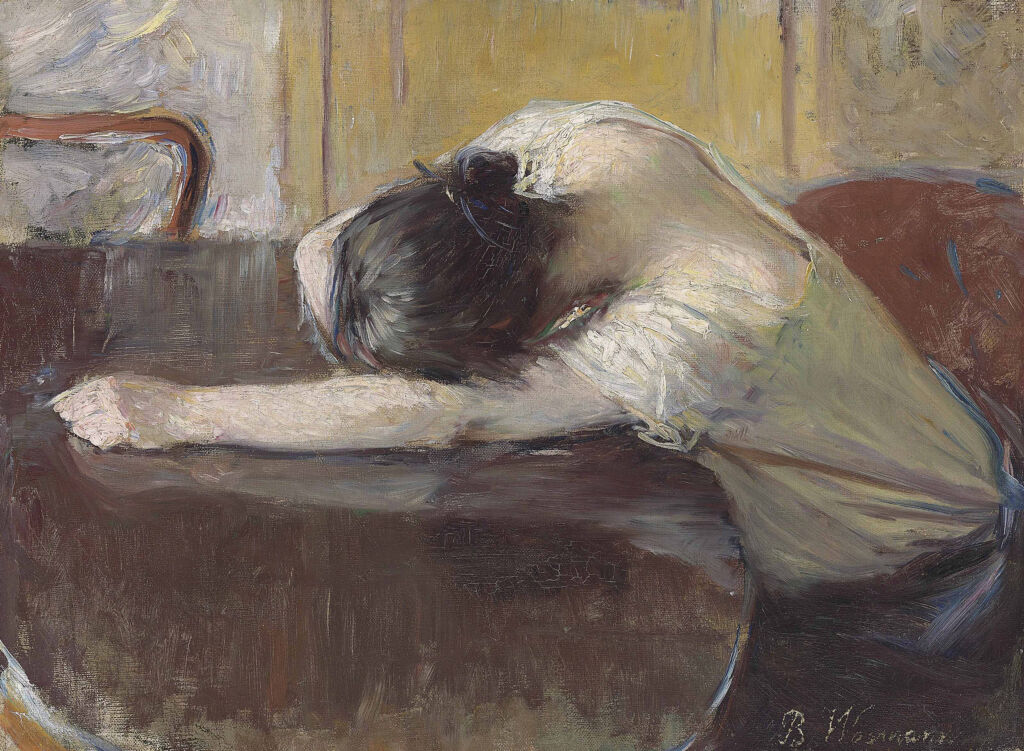
"Despair" by Bertha Wegmann

individual
|
INTERPERSONAL : SCIENCES
humanistic ------------------------------- mechanistic
SOCIOLOGY : POLITICAL
|
group
Despair by Bertha Wegmann (Danish, 1847 – 1926)


Okoro, E. A time to rest and recharge. The Art of Life: Life&Arts, FTWeekend. 17-18 May 2025. p.2.
https://www.ft.com/content/6c2d4362-a464-45e4-8288-a80d5e8a730f

See also: https://en.wikipedia.org/wiki/Bertha_Wegmann

How Bertha Wegmann communicated the 19th-century female experience. Christie's

Image: https://high.org/collection/despair/

Monday, June 09, 2025

🗣️Solving or Resolving Palestinian Human Rights Issues: Relationship "Normalization" | Mohamed ‘Arafa


🗣️ Solving or Resolving Palestinian Human Rights Issues: Relationship "Normalization" | Mohamed ‘Arafa

This session will be the first in the series of conferences “Jurisprudential Dialogues on Human Rights”, which is designed to promote exchanges on topical issues involving human rights and the role of the courts of justice.


The aim of this session is to reflect on the violations of the human rights of the Palestinian people — an enduring state of affairs that transcends political or religious lines of judgement. Over the decades, the Israeli-Palestinian conflict has been marking the international landscape, sparking divisions, human misery, and far-reaching geopolitical consequences.


This session will be led by Professor Mohamed Arafa, Professor of Law at the University of Alexandria and Adjunct Professor of Law & the Clarke Initiative Visiting Scholar at Cornell Law School. Joining in will be Professor Rita Ribeiro, from the Institute of Social Sciences at the University of Minho, and Zaina Awartani, PhD researcher at the School of Law of the University of Minho and the School of Researchers of the Research Centre for Justice and Governance (JusGov). The event will be chaired by Sergio Ruiz Díaz Arce, Doctoral Integrated Researcher at JusGov.


📍June 13th, 2025 | 4.00 p.m. Online


Scientific Commission

Sergio Ruiz Díaz Arce

Joaquim Freitas da Rocha

Robert Junqueira


Organisation

JusGov (JusLab – DH)

School of Law of the University of Minho


Support

FCT - Foundation for Science and Technology


Yours respectfully,

Robert Junqueira

Executive Coordinator | Research and Scientific Careers Bureau


Research Centre for Justice and Governance

School of Law of the University of Minho

Gualtar Campus
4710-057 Braga - Portugal


T: (+351) 253 60 18 75

E: martinsjunqueira AT direito.uminho.pt