Hodges' Model: Welcome to the QUAD: Search results for compass

Hodges' model is a conceptual framework to support reflection and critical thinking. Situated, the model can help integrate all disciplines (academic and professional). Amid news items, are posts that illustrate the scope and application of the model. A bibliography and A4 template are provided in the sidebar. Welcome to the QUAD ...

Showing posts sorted by date for query compass. Sort by relevance Show all posts

Wednesday, September 24, 2025

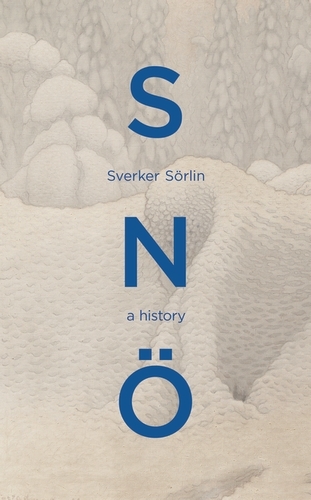
Book: SNÖ

'Snow. A single word, for an infinite variety of water formulations, frozen in air. The study of snow is physics, chemistry, meteorology, anthropology, geography, poetry and art. It is hope – annually renewed. And it is history, too.

Earth saw its first snowfall 2.4 billion years ago. The world's oldest skis, made by hand five thousand four hundred years old, pre-date the pyramids of ancient Egypt. To humanity, snow has variously been an ally and an adversary; an inspiration to countless artists and a place of breathtaking tragedy and survival. But it’s always been there. And now it is melting. 
In 1927, the snow was already more than nine metres deep on Japan's Mount Ibuki when a remarkable 230cm fell in 24 hours, bringing about the greatest depth of snow - 11.82m - ever recorded. Yet it is a fact today that, ironically not only has this mountain's resort been forced to close due to lack of snow, most people in the world have never been near snow: never felt the soft crunch of snow underfoot, never held snow to see it melt in their hands, let alone stood on a pair of skis.'  continued ...
Individual
|
      INTERPERSONAL    :     SCIENCES               
HUMANISTIC  --------------------------------------  MECHANISTIC      
 SOCIOLOGY  :    POLITICAL 
|
Group


compass defined

compass unified

mental expanse

beauty

memory

lived experience

signature of change

sadness

signifier
SNÖ by Sverker Sörlin

culture

poetry - arts

social history

shared loss

recreation - leisure

Two kids.
Uncles! In car, drenching
us driving through slush in the gutter 😎


Sverker Sörlin, Elizabeth DeNoma (Translator) (2025). SNÖ - A History. London: Doubleday.
https://www.penguin.co.uk/books/467833/sno-by-sorlin-sverker/9781529947878


My source: Clark, P. A gear shift to adapt to a warming world. Books. Genre Round-Up, Environment.  Life&Arts. FT Weekend. 23/24 August 2025. p.10.

John Denver - Season Suite (Full) The Suite is in this order:
  1. Summer
  2. Fall
  3. Winter
  4. Late Winter, Early Spring (When Everybody Goes to Mexico)
  5. Spring

Monday, August 11, 2025

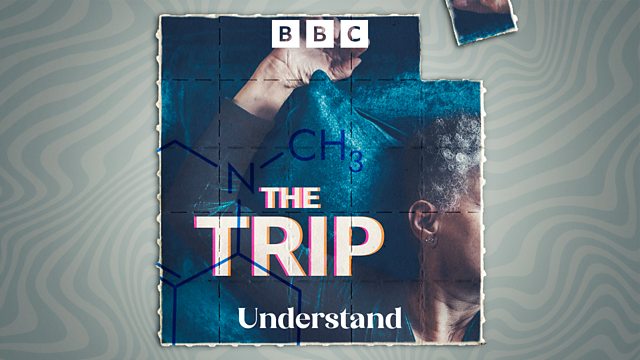
'The Trip' - learning about Kay Parley RIP

Five prompts drew me to BBC Radio's 'The Trip':

  1. the ongoing tenor of 'discussion' on twitter;
  2. the ongoing history and future development and evolution of psychoactive, psychedelic medicines as treatments, running concurrently, or not with psychotherapy and psychosocial interventions (PSI);
  3. being mindful of keeping up-to-date;
  4. what is the temperature within critical psychiatry / mental heath / mental illness / well-being?
  5. and how does all this 'sit' within Hodges' model?

As a student registered mental heath nurse, we learned about the historical introduction of chlorpromazine and other drugs, the difference they made to 'care' and the side-effects.

Pharmacology is dynamic. Atypical antipsychotics are now available. But this series, as the title confirms is about psychedelics and history from 08:30.

The episode highlights the importance of how sessions are delivered. Key points, given the additional pressures (UK) upon intakes for student nurse places for learning disability and mental health, plus questions about the status of these courses within university-based nurse education. If not already aware, the episode concludes with the role of a mental health nurse who died in May. Have a listen about Kay Parley.

THE TRIP - BBC Radio

It would have been marvellous to meet, speak to Nurse Parley. The episode has it's objectives of course, but there are values here. We are all test pilots, researchers.

"The American Journal of Nursing February 1964:

No role, is so welcomed on our psychiatric unit, as that of sitting with a patient during LSD therapy. This indicates that the treatment has value." ...

"Kate Parley passed away in May, so our last words will be hers. Words she would say to her patients at Weyburn, all those years ago.

'You are off on a trip with no baggage, no destination and no compass. That's why I'm here. I can't go with you, but I can be your anchor.

Wherever you go, you'll always be able to see me. I'll be the nurse who sits beside your bed. Taking notes and playing your records.

You'll never lose touch with me. Seeing me, you'll know, you are really in hospital and that you'll be back to Earth about 4 o'clock. I will send you signals too, to encourage your explorations.

I will remind you of places you longed to revisit and events you hope to scan.'"

PARLEY, KAY. Supporting the Patient. AJN, American Journal of Nursing 64(2):p 80-82, February 1964. 

https://www.openurses.org/_files/ugd/52de8b_870deaa149e842d286e76131b1321285.pdf

https://andrewpenn.substack.com/p/in-memoriam-kay-parley-rpn-registered

Todd, Betsy MPH, RN. Supporting the Patient on LSD Day. AJN, American Journal of Nursing 121(6):p 42-44, June 2021. | DOI: 10.1097/01.NAJ.0000753656.16844.a9 

Monday, July 21, 2025

"Passport please!"

Press release

'Innovator passports’ set to accelerate cutting-edge NHS care

The move is a key part of the government’s Plan for Change and its 10 Year Health Plan, which will transfer power to patients and transform how healthcare is delivered, creating an NHS fit for the future.

For too long, cutting-edge businesses avoided working with the NHS and went elsewhere, weighed down by slow timelines and reams of processes. Now, organisations will be able to join up with the NHS quicker than ever before through the removal of needless bureaucracy. Not only is this better for patients but also for our NHS and economic growth.

A ‘one-stop shop’ thorough check from the NHS will now allow businesses to get to work as quickly as possible and deliver on what matters most to patients across the country. It means NHS patients will get more effective treatments and support quicker, and the NHS will make the most of its finite assessment resource, all while businesses are given a boost through the government’s industrial strategy.

Treatments including special wound dressings - already reducing surgical site infections by 38% at Barking, Havering and Redbridge University Hospitals - could be adopted more widely, benefiting patients across the country.

At Barts Health NHS Trust in London, use of antimicrobial protective coverings for cardiac devices has cut infections and saved over £103,000 per year. At University Hospitals Dorset, adopting rapid influenza testing reduced bed days and antibiotic use, freeing up vital resources.

The new passport will eliminate multiple compliance assessments, reducing duplication across the health service. It will be delivered through MedTech Compass, a digital platform developed by DHSC to make effective technologies more visible and widely available.

MedTech Compass will make these innovations and the evidence underpinning them clear to buyers within the NHS.

The initiative builds on the government’s drive to slash waiting lists and ensure people have access to health and care when and where they need it under the Plan for Change.

Wes Streeting, Secretary of State for Health and Social Care, said: 

For too long, Britain’s leading scientific minds have been held back by needless admin that means suppliers are repeatedly asked for the same data in different formats by different trusts - this is bad for the NHS, patients and bad for business. 

These innovator passports will save time and reduce duplication, meaning our life sciences sector - a central part of our 10 Year Health Plan - can work hand in hand with the health service and make Britain a powerhouse for medical technology.

Frustrated patients will no longer have to face a postcode lottery for lifesaving products to be introduced in their area, and companies will be able to get their technology used across the NHS more easily, creating a health service fit for future under the Plan for Change.

Dr Vin Diwakar, Clinical Transformation Director at NHS England, said:

We’re seeing the impact improvements to technology are having on our everyday lives on everything from smartwatches to fitness trackers - and we want to make sure NHS patients can benefit from the latest medical technology and innovations as well.

The new innovator passports will speed up the roll-out of new health technology in the NHS which has been proven to be effective, so that patients can benefit from new treatments much sooner.

It also forms an important element of the industrial strategy through the upcoming Life Sciences Sector Plan, which will turbocharge Britain’s life sciences sector and cement the UK’s position as a global innovation leader.

MedTech Compass helps speed up decision-making in trusts, allowing technology to scale faster - making it easier for trusts across the country to find, assess and adopt proven technologies that improve and speed up patient care.

The passports mean that once a healthcare tool has been assessed by one NHS organisation, further NHS organisations will not be able to insist on repeated assessments, reducing the need for local NHS systems to spend their limited resources on bureaucratic processes that have already been completed elsewhere.

The digital system will act as a dynamic best buyer’s guide, making it easier for trusts to compare products side-by-side in one place.


Read the full press release:
https://www.gov.uk/government/news/innovator-passports-set-to-accelerate-cutting-edge-nhs-care

In my source (below) Laura Hughes also notes:
'However, the Financial Times has reported on calls by frontline workers for basic NHS infrastructure to be brought up to a minimum standard before politicians extol the virtues of cutting-edge tech.

Matthew Taylor, head of The NHS Confederation, which represents health managers, said not all NHS organisations were at the same stage of digital maturity, which would "affect their ability to either innovate or implement preapproved innovation in this passport model."'


Individual
|
      INTERPERSONAL    :     SCIENCES               
HUMANISTIC  --------------------------------------  MECHANISTIC      
 SOCIOLOGY  :    POLITICAL 
|
Group
innovation

personal passport

awareness of existing state / processes

innovation

'innovation passport'

duplication

innovation

public safety

waiting lists / times

accountability - standards - assurance

innovation

bureaucracy - multiple Trusts

procurement
of infrastructure and innovation -
cutting-edge technology


Laura Hughes NHS use of medical innovations streamlined. FTWeekend, 2 July, 2025, p.3.
https://www.ft.com/content/1d025579-990a-4d58-9e0b-6d0d29d27dab

Previously:

Thursday, July 17, 2025

Ryle's 'logical geography'

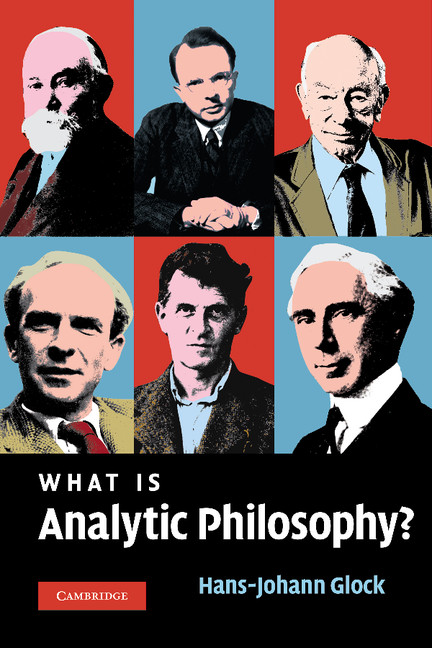
I like the way Ryle apparently analogised philosophy to cartography.*

'Similarly, Ryle advocated that philosophy should chart the 'logical geography' of our concepts. In The Concept of Mind he argued that the Cartesian dualism of mind and body results from 'category-mistakes': it treats mental concepts which signify behavioural dispositions as if they referred to processes that are just like physical ones, only more ethereal. Ryle rejected Wittgenstein's therapeutic image according to which 'the philosopher treats a question like a disease' (1953: §255). Yet he accepted that philosophy is a meta-discipline which does not 'talk sense with concepts' but tries to 'talk sense about concepts' (1949: 9-10). The paradox of analysis disappears since the task is not to provide novel information about a realm extrinsic to us. According to Wittgenstein, philosophy reminds us of rules that we have mastered in practice but which mislead us in the course of philosophical reflections. According to Ryle, it takes us from the knowledge how to use words to an explicit knowledge that they are used according to certain rules. Either way, analysis is not a trivial pursuit, because the explanation of philosophically interesting concepts is complex and rich, especially when it places these concepts in their diverse contexts (everyday, scientific, philosophical).' p.43.
Hans-Johann Glock. 2008. What is analytic philosophy? Chapter 2. Historical survey. pp.21-60. CUP. Pb. 
https://www.cambridge.org/us/universitypress/subjects/philosophy/philosophy-general-interest/what-analytic-philosophy

* 'Ryle analogises philosophy to cartography. Competent speakers of a language, Ryle believes, are to a philosopher what ordinary villagers are to a mapmaker: the ordinary villager has a competent grasp of his village, and is familiar with its inhabitants and geography. But when asked to interpret a map of that knowledge, the villager will have difficulty until he is able to translate his practical knowledge into universal cartographic terms. The villager thinks of the village in personal and practical terms, while the mapmaker thinks of the village in neutral, public, cartographic terms.[20]: 440–2 '. https://en.wikipedia.org/wiki/Gilbert_Ryle

I've wondered about 'cogeography' - combining cognition and geography, even care cartography. There is also of course psycho-politics, geo-psychiatry and psycho-geography ...

Hopefully a more current text would be more diverse.^

Monday, March 03, 2025

Finding a space for Lived Experience

Individual
|
      INTERPERSONAL    :     SCIENCES               
HUMANISTIC  --------------------------------------  MECHANISTIC      
 SOCIOLOGY  :    POLITICAL 
|
Group

Whatever your personal - emotional - journey, your experience, ongoing expectations ... hope: hope-fully this is you. You can, or have discovered the potential here. Whether or not the strengths you possess, are recognised due to what others see elsewhere. 


Lived experience brings so many pathways. So many rooms and spaces to explore. Whatever the physical challenges: whether well: 'all-good thanks'; or dealing with one or more diagnoses - acutely, in recovery, relapse, may all points of the compass be open to you.


Whatever your life experience: your health career began down here [and across there ->], shaped by your life chances. These days they call them the determinants. They are many, and can influence your social network, whether you have one ...


As you (literally) negotiate - even if you fail repeatedly - the systems, that the system throws your way, trying to make ends-meet; in work or out, never under-estimate what a person can do. Here lived experience can pay dividends, across the divides that really matter.


Welcome to your space ...
and may it include hope shared and delivered ...

Saturday, February 15, 2025

'Life's compass' ...

'... I have been thinking a lot about the responsibilities of leadership. How do people in positions of power reach decisions and do they fully consider the consequences of these decisions? In questioning how someone chooses to lead, I'm also asking how that individual navigates the possible courses of action, and what kind of compass is being used to guide them. It has made me think about how any of us choose to navigate our way through life and where we look for a sense of direction. I wonder what we might change about the choices we make if we were more reflective about what serves as a compass in our lives.'

'"The Invention of the Compass" is attributed to an anonymous painter of the late 16th century, although there exists a roughly contemporaneous plate of the same title, and of an almost identical image, engraved by the Dutch artist Jan Collaert the Elder. In the original painting an old man with a long white beard, and dressed in a voluminous red and brown cloak, sits behind a large table in the centre of a room. As well as a canopied bed and another desk spread with books and scientific instruments, there is a model, or vision perhaps, of a carrack sailing ship hanging from the ceiling. There is also a large round compass device that sits heavy on the floor on the left foreground of the canvas. ...'

'It is as if this painting (Caravaggio) intended to serve as a compass, helping to move our steps and actions in the direction of caring for others. This is a powerful idea, and it suggests that all images contain that potential to influence how we live. Where we choose to direct and keep our gaze to some extent can determine how we permit our lives to be guided, if not in a physical sense then toward a value system that can end up having an impact on the way we engage with the wider world.' (My emphasis)

Ack. Enuma Okoro, Life's compass, The art of life, Life&Arts, FTWeekend, 1-2 February 2025. p.2. (Still need to subscribe, marvellous reading!)


Caravaggio, The Seven Works of Mercy


The Invention of the Compass


INDIVIDUAL
|
      INTERPERSONAL    :     SCIENCES               
HUMANISTIC  --------------------------------------  MECHANISTIC      
 SOCIOLOGY  :    POLITICAL 
|
GROUP

moral compass
personal values
my choices

maps - compass
position - navigation
direction - distance
degrees of freedom

the public
the public good
group think


leadership
power
political freedom


Enuma Okoro, Life's compass, The art of life, Life&Arts, FTWeekend, 1-2 February 2025. p.2.

Images: 

New Inventions of Modern Times [Nova Reperta], The Invention of the Compass, plate 2
https://collectionapi.metmuseum.org/api/collection/v1/iiif/659663/1403273/main-image

By Caravaggio - Unknown source, Public Domain, https://commons.wikimedia.org/w/index.php?curid=10286196

Previously:

'compass' :: 'map'

Monday, December 16, 2024

Fragile: This way up - Frozen goods!

Apollo 17 'Blue Marble' Photograph
 
Apollo 17 1972 NASA Original Blue Marble Photograph

Or, some water 'heading your way' ...
'NASA’s archival designation for it is AS17-148-22727, and the original image was taken upside down with the South Pole at the top. In its myriad reproductions, it’s flipped up to match what we would normally expect to see.'

Text: https://www.thephoblographer.com/2013/12/09/behind-blue-marble/


Does the model still 'work' -

Group
|
 POLITICAL        :     SOCIOLOGY  
MECHANISTIC --------------------------------------  HUMANISTIC
            SCIENCES       :    INTERPERSONAL
|
Individual
POLITICAL

SOCIOLOGY

SCIENCES

INTERPERSONAL


- this way ...?

Image source: https://www.forum-conquete-spatiale.fr/t15428-apollo-17-1972

Prompt for 'Blue Marble' - Plate 1 in Brotton, J. (2024) The Four Points of the Compass: The Unexpected History of Direction, London: Allen Lane.

Previously: 'compass'

A planet is not just for Christmas.

Saturday, December 14, 2024

The Science of Conceptual Systems - and Hodges' model

Wallis, S.E. The Science of Conceptual Systems: A Progress Report. Found Sci 21, 579–602 (2016). https://doi.org/10.1007/s10699-015-9425-z

From the conclusion:
'The approaches presented here do not provide a ‘‘map’’ for advancing the sciences. Indeed, none is available because we are advancing across that new terrain. What it does provide is a compass suggesting a new and potentially exciting direction to travel. Historically/traditionally, scholars have travelled about the countryside of the social/behavioral land making useful observations and gathering interesting data. They have often staked claims regarding the importance of their terrain. They could not advance more purposefully because they were guided only by intuition. So, they did not know what direction was ‘‘forward’’ although it seemed to have something to do with empirical analysis. Today, with the creation of a new science, we have a new direction.

When we do have a choice between theoretical maps, generally, and metaphorically, this paper suggests that we should choose to create and use roadmaps with many dots connected by many lines; not maps with few disconnected dots.' p.594.

There is also a glossary [pp.594-599] that includes:
'Integral thinking

Understanding (or attempting to understand) the world from a transdisciplinary perspective where those many perspectives are interrelated'
'Integrative propositional analysis (IPA)

Combined processes of qualitative and quantitative analysis involving rigorous hermeneutic deconstruction of propositions found in formal texts including the rigorous reintegration of propositions from those texts following a structured methodology. Also a process of meta-analysis for investigating conceptual systems to determine the Complexity of conceptual systems (diversity of concepts) and the Systemicity of the conceptual system (connectedness between concepts)'

'Mental model 

A representation within one’s mind about how the world works. Useful for understanding and engaging the world and for making predictions'

'Parsimony 

Generally, the understanding that a theory is better when it is smaller. Or, as small as possible while including ideas that are necessary or useful. Ockham’s Razor is a common example'

INDIVIDUAL
|
INTERPERSONAL : SCIENCES              
humanistic ---------------------------- mechanistic
SOCIOLOGY : POLITICAL   
|
GROUP

more SUBJECTIVE

more OBJECTIVE
QUALITY

QUANTITY


'Reflexive dimensional analysis (RDA) 

A process for creating a unified conceptual system from multiple conceptual systems through a process of categorization, abstraction, dimensionalization, and the identification of causal connections'
'Theory 

An ordered set of assertions. Weick (1989, p. 517. Drawing on Southerland)'
Cited above: 
Weick, K. E. (1989). Theory construction as disciplined imagination. Academy of Management Review, 14(4), 516–531.

Previously:
terrain : landscape : line-of-sight (with overlap; of interest in itself)

Tuesday, December 10, 2024

Webinar: 11 December - Universal Health Coverage (UHC) Day 2024

"The UHC Compass and Social Participation:
empowering patient organisations to hold governments
 accountable for universal health coverage"

Register for the UHC Compass launch!

To mark Universal Health Coverage (UHC) Day 2024, IAPO will officially launch the UHC Compass at an exciting webinar titled "The UHC Compass and Social Participation: empowering patient organisations to hold governments accountable for universal health coverage" on 11 December 2024, from 11:30 to 13:00 GMT via Zoom.

The webinar will be conducted in English with simultaneous interpretation into Spanish.

Panellists include:
  • Dani Mothci – International Alliance of Patients’ Organizations (IAPO) 
  • Dr Pamela Cipriano – UHC2030 & International Council of Nurses
  • Lara Brearley – Special Programme on Primary Health Care Universal Health Coverage - Life Course, World Health Organization
  • Dumiso Gatsha – Success Capital NGO & Civil Society Engagement Mechanism for UHC2030 (CSEM)
  • Nicola Bedlington – Global Patient Think Tank & Millwater Partners
  • Smitha Sadasivan – Global Patient Think Tank, Inclusive Health Policy, Disability Rights India Foundation & CSEM 
  • Paul Mendoza – Psoriasis Philippines and Psoriasis Asia Pacific & IAPO
The UHC Compass is a dynamic tool created by patients for patients, empowering local leaders and communities to advance universal health coverage (UHC). In the context of the World Health Assembly resolution on social participation and UHC Day 2024, this session will explore how the Compass can serve as a tool to hold governments accountable for investing in UHC.

Co-created by the Global Patient Think Tank (GPTT), a diverse group amplifying the patient voice in the UHC movement, the Compass is proudly hosted by IAPO. Our mission is to ensure this resource reaches and benefits our global network of patient organisations.

Join us to discover how the UHC Compass can help make UHC a reality for everyone!

Learn more & register [https://www.iapo.org.uk/node/15686] Share https://iapo.cmail19.com/t/d-fb-sfiudt-iuqjytrli-o/ Tweet https://iapo.cmail19.com/t/d-tw-sfiudt-iuqjytrli-b/ Share [https://iapo.cmail19.com/t/d-li-sfiudt-iuqjytrli-h/]

[http://www.iapo.org.uk]

The International Alliance of Patients’ Organizations is registered in England and Wales as charity no.1155577 and company limited by guarantee no.08495711.

Registered office: Hounslow House, 7 Bath Road, Hounslow TW3 3EB, UK.

It is also the IAPO's 25th Anniversary.
More details at:

https://www.iapo.org.uk/node/15687

I will post again in the New Year.

My source: HIFA

Previously: compass : UHC : patients

Sunday, October 06, 2024

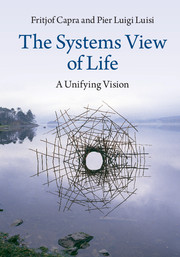
[v] Book: The Systems View of Life - A Unifying Vision

The Systems View of Life -
A Unifying Vision


Part IV begins with the ecological dimensions of life. There's a reminder that ecology, comes from the Greek 'oikos' for "household". We need this -

move you rubbish (don't leave it in the first place), wipe your feet; switch the lights off when not in use, assuming you have them!; close and open the windows as needed; think less 'location, location, location' and having a home.

Given the pictorial form of Hodges' model - mind-mapping - I've always been attracted to diagrams, no-less here the pioneering work of the Odum brothers and 'Odum flow diagrams' which even today are an ecological currency in the literature (p.344-45). An update on ecosystems as dissipative structures and as autopoietic would be helpful. Of course, now for scholars and students have search terms then resources and learning can follow. While ozone depletion is acknowledged, the role of the atmosphere could possibly be (briefly) expanded (guest essay, box?), in-particular the role of the Van Allen belts and the fact of Earth's magnetic field and (still) molten core. 16.2.3 definitely points the way pp.348-351.

16.3.1 Defining sustainability - made me sit up. Lester Brown's 1980's work is not referenced in:

Jones P, Wirnitzer K. Hodges’ model: the Sustainable Development Goals and public health – universal health coverage demands a universal framework. BMJ Nutrition, Prevention & Health 2022;5:doi: 10.1136/bmjnph-2021-000254 (From the bibliography listing in the sidebar of this blog.)
It was Brown who defined sustainability, and the question is ongoing regards how to build a sustainable society (p.352). Key as Capra 2002 notes is that a sustainable human community would not interfere with nature's inherent ability to sustain life. Ecological literacy 16.3.2 was also welcome; a constant theme on this blog, given the many claimed forms of literacy, as with (schools of) informatics. The informational perspective can reveal its power across literacies and informatics, consider media and information literacy? A way to paraphrase the authors: "The market and the marketplace is information disordered." (p.354).

Three chapters include descriptions of agencies (with links) that work with knowledge in an interdisciplinary way; where ecological and spiritual dimensions of education are emphasized; and in chapter 18 several other centers of learning. Chapter 16 looks at organisations with a focus on ecoliteracy in schools, colleges and universities. Checking some of the links many are ongoing - alive!
Struck in the past by the original approach of Goethe to 'science', his work on patterns is described in the introduction and here in relation to the arts and curricula. You will find 'art' sprinkled throughout the posts on W2tQ. Key concepts are described networks, flows, cycles, nested systems, dynamic balance, and development. Chapter 17 joins the dots of the world's problems. 'Growth' appears a disposable term, in how it is applied and so little understood, even by politicians and policy makers? Recent UK politics is a prime example. There is a another concurrent thread (to informatics and literacy) on this blog, as it is inbuilt, hard and soft-wired into the structure of Hodges' model. It is dichotomy, polarity and oppositions, specifically, objective - subjective, quality - quantity.
'In fact, the new systemic conception of life makes it possible to formulate a scientific concept of quality. It seems that there are two different meanings of the term - one objective and the other subjective. In the objective sense, the qualities of a complex system refer to properties of the system that none of its parts exhibit. Quantities like mass or energy tell us about the properties of the parts, and their sum total is equal to the corresponding property of the whole - e.g., the total mass or energy. Qualities like stress or health, by contrast, cannot be expressed as the sum of properties of the parts. Qualities arise from processes and patterns of relationships among the parts. Hence, we cannot understand the nature of complex systems such as organisms, ecosystems, societies, and economies if we try to describe them in purely quantitative terms. Quantities can be measured; qualities need to be mapped (see Section 4.3).
With the recent emphasis on complexity, networks, and patterns of organization, the attention of scientists in the life sciences has begun to shift from quantities to qualities, and there has been a corresponding conceptual shift in mathematics. In fact, this began in physics during the 1960s with the strong emphasis on symmetry (see Section 8.4,3), which is a quality, and it intensified during the subsequent decades with the development of complexity theory, or nonlinear dynamics, which is a mathematics of patterns and relationships. The strange attractors of chaos theory and the fractals of fractal geometry are visual patterns representing the qualities of complex systems (see Sections 6.3 and 6.4). 

In the human realm, the notion of quality always seems to include references to human experiences, which are subjective aspects. This should not be surprising. Since all qualities arise from processes and patterns of relationships, they will necessarily include subjective elements if these processes and relationships involve human beings.' pp.368-369. (My emphasis - and encouraging for research and researchers in Hodges' model)
The authors point out how the conjoining of 'sustainable development' is problematic when viewed in qualitative and quantitative terms (17.2.2 pp.369-371). I wonder what Capra and Luis would make of the SDGs and the metrics employed today? This has been an issue (reading for Jones & Wirnitzer, 2022), with measures needing to catch up and the disruption of COVID. There really is a case for economic literacy for people globally, as 'freedom' is so readily passed-off - associated with economics and trade as a 'right'. Another potential update revolves around globalisation, what would they make of Doughnut economics?

An additional risk now are the bitcoin factories and energy needed to drive AI data-processing. How transparent are global corporations in declaring their energy use? The LIBOR scandal is raised, but what the cost involved in Bankman-Fried and FTX-Alameda Research fraud? Capitalism is built on speculation and always will be? But if we defer 'paying' for economic transformation in a decade the costs will rapidly increase. Capra and Luis acknowledge the need to think about future generations. An ethical stance that is, thankfully, changing policy, and deserves attention.

I pencilled in the margin - what is the conclusion of the lesson of Argentina? Do the economists, the IMF, the World Bank, the Argentinian people know? What of the economic predilections of other nations? Who are the exemplars, the pioneers? Must Africa follow the West's bad-habits? Can they leap-frog technologies (land-lines, fossil fuel reliance ...)? I understand they are! In the West, do we need to re-invent public information services, to address the prevailing mindset? Even as the financial industry has passed-through a 'quant' phase, but mathematics still (and will always) hold sway (p.379).

Page 381 reminded me of the need for gainful employment, and how this is threatened and has always been threatened by technology (very broadly defined). The varied forms of parity of esteem become evident not just in health (mental - physical); education (technical - vocational), but employment too, especially with automation and artificial intelligence. The decade since the book was published leaves room for new content: what might replace or complement The Occupy Movement, The Seattle Coalition? The socio-political rate of change is remarkable. Greta Thunberg and Extinction Rebellion, for example, are clearly post-publication. The claimed rationale for business as usual in 'trickle down economics' remains relevant (sadly) p.384. More could be made now of the two numbers - 565 gigatons and 2,800 gigatons of carbon (350.org); and the current debate on carbon capture (Ah! p.408). 

I have over the years associated the intra- interpersonal domain with the individual's cognition, reasoning, logic, intellect, thought, and education. Collectively though we need to invert this:

individual
|
INTERPERSONAL : SCIENCES
humanistic ------------------------------- mechanistic
SOCIOLOGY : POLITICAL
|
group
education
EDUCATION

EDUCATION
EDUCATION


It is essential for every person to be informed were possible, to get to this situation (e.g. this book in a sense is an appeal for the public's understanding of science; and our political leaders):


individual
|
INTERPERSONAL : SCIENCES
humanistic ------------------------------- mechanistic
SOCIOLOGY : POLITICAL
|
group
EDUCATION
EDUCATION

EDUCATION
ANOTHER WORLD
IS POSSIBLE!


Chapter 18 pulls everything together (and provides HOPE) in systemic solutions. The previous post:

- drew on this chapter (p.398). I didn't realise 'commercial speech' is protected in the USA. 

As expected - a moral compass is still needed (p.430). I really the section on acroecology. It might be an idea to read this final chapter first. If there is a response to the question (there's no answer) as to why we are here - this is it. Biotech has its section, genetic engineering, the scope and risks, as does, the third industrial revolution, citing Rifkin's five pillars (2011). Agribusiness, world hunger, and the twelve myths:

'At a time of unprecedented wealth, when almost one-half of all Americans own stocks and are able to watch their wealth and economic power grow on the nightly news, it is good to remember that over 800 million people worldwide are passing the same nights unable to feed themselves and their children. A full quarter of other Americans, especially children, have much in common with the world’s hungry, experiencing their own hunger intermittently. Frances Moore Lappe and co-authors Joseph Collins and Peter Rosset in World Hunger: 12 Myths are there to remind us. Remind us of the plight of the world’s hungry, as Frances Moore Lappe has done for over 20 years, and remind us too that there is enough food; that hunger is not necessary; that hunger is a social creation; hungry people a social phenomenon, and consequently one that depends on us and that we can change.'

https://www.worldhunger.org/world-hunger-12-myths/ 

The chapter and book closes with a meditation regards hope. A comprehensive bibliography and index follows.

Despite the age of this book it has proved well-worth reading. I am glad I pursued my original request for a review copy. Well recommended and I wonder if there would be another edition? Clearly this would take a great effort, but then needs must? I will revisit the chapter on health. In the past week, the  the UK's last coal power plant closed (BBC News). Change is happening. And the weather globally of recent months cannot be denied. 

My thanks are extended to the team at Cambridge University Press for the paperback copy.

Fritjof Capra and Pier Luigi Luisi (2014) The Systems View of Life - A Unifying Vision. Cambridge: Cambridge University Press.

https://www.cambridge.org/gb/universitypress/subjects/life-sciences/genomics-bioinformatics-and-systems-biology/systems-view-life-unifying-vision?format=HB&isbn=9781107011366
Saturday, June 29, 2024

Book for review: iv "Philosophy of Care - New Approaches to Vulnerability, Otherness and Therapy"

Don't worry this is not a chapter-by-chapter review. Having cast the stone that is Hodges' model we will skip a few times.

The use of footnotes varies from chapter to chapter. They inform the text, in several instances being quite illuminating. Beside the footnote (1/3 of a page) I noted - 'baby, cacophony, perception - brain - not overwhelmed but can't ignore' (p.41). Stoicism is the focus in chapter 3; perception, fields, manifold, circles of care, self, time, situation! We have field, subfields, domains.
"Perception is always about a diagnosis of the situation in which the living being finds itself. ...

... perception is always about finding one's "whereabouts" or one's "location" in life's journey." p.42.

On the features of perception, 4/4: "might be termed the breadth or width of the perceptual field." p.42. 

"As pointed out above, all perception has the structure of a compact, continuous, and uninterrupted manifold. In other words, it forms what we have termed a field. But the perceptual field  could contain nothing but the "bare bones" of "inert" qualia, (a manifold of simple qualities impinging themselves upon the perceiver)." p.42. 

The author, Jorge de Carvalho continues another view of qualities that take place in "each given moment". This is the challenge of salience, what is significant? How to 'read' in care: the spoken, the unspoken? 

Developing notes on Hodges' model as a mathematical object, Hodges' model in its basic form as a template, I'm proposing as an empty set. The structure of Hodges' model, its two axes instantiate the "bare bones". In programming/instruction terms ... Hodges' model provides INITIALISATION. A reset. This can act as a prompt for learners to acknowledge the person - the other and consider 'unconditional positive regard'. There's polarity too (p.46) and each living being lives in its own global field, in its own global 'map' - in its own geography" (p.49). Physical geography and the change 'there' is giving rise to cogeographical (a neologism?) disruption - eco-anxiety and climate-angst. 

Psycho-geography: the polarity of our times?

Another note, amongst Hierocles' circles is 'reflex arc'. So many feedback loops, cascades to worry about. 

As Jorge de Carvalho writes: 'what we are talking about is a very complex field of fields. ... described both as a compass rose and as a framework of concentric circles" (p.51). [There's a relay race, a torch relay in ancient terms p.54. Care is the object that is passed on. I've a dual-shaped baton to pass on.]

Care is more than perception (p.52), care presupposes a degree of activity or action. I like the acknowledgement of 'vigilant waiting' too. For me this draws in the importance of communication; Watzlawick's Five Axioms of Communication. After all, what happens to all these perceptions? There's vulnerability, fragility and care for the sheer existence and the whole content of a given being (p.56). Jorge de Carvalho, deploys a series of numbered points which helps reading. Page 60's footnote had me drawing circles, unborn at the centre: as one. But the collective unborn in another rough circle. Eachtimeness: I like this Stoic formulation through circles. Fourthly, we arrive at pure care. I'm still pondering on ".. there is no absolute either/or dichotomy between care and its opposite" (p.61). Integration is also here, an issue for modern times, a legacy problem from ancient times?

Luis Mendes's chapter I must read again. The abstract includes:
"Three fundamental aspects will be identified: (a) the need to consider self-existence from a global point of view; (b) the need for an axis for that life-view; (c) the need for correspondence between self-existence and life-view. Apparently, this structure is formal and arbitrary. Secondly, I will analyse the structure of despair. Three fundamental aspects will be analysed: (α) the requirement for a life-view which can be applied to the totality of subjective existence; (β) the requirement for an unconditioned instance of meaning; (γ) the requirement for the exclusion of the possibility of failure." p.79.
I'm sure Kierkegaard has featured in Philosophy Now, and The Philosophers' Magazine. Mendes' focus is arbitrariness. The hypothesis is well explained (p.80) structure of care. There's much for me here: care, life-view (health career - life chances), "a global understanding maps the world" (p.81), existential map, fulfilment, meaning (of course!). Reading -
"So, a life-view needs to be stabilized, to have unity. It needs an instance that works as an axis and as a point of support. We need something to support our life" (p.83).
I could have jumped up, waved and shouted "OVER HERE!" Would Kierkegaard have been pleased? Perhaps I should have read Kierkegaard, not Michel Serres (please see bibliography in the sidebar)? Still time (fingers x'd); especially if there's any interest in the form of co-author(s)? Care is full of ideals. Mendes through Kierkegaard gives my  project encouragement: "Truth is to live for an idea." p.84. Not necessarily truth but the idealism in care, including identity. It is helpful in care to be reminded of the ideal as a calling, hence motivation (intrinsic and extrinsic) is still key. If you're intrinsically motivated, devoted to your chosen vocation, is your pay that important - to the government/organisation that employs you? A shame this is so often lost to political leaders; who, given their chosen vocation, exhibit a markedly short memory.

Braga, J. & Santiago de Carvalho, M. (Eds.), (2021) Philosophy of care: New approaches to vulnerability, otherness therapy. Springer. 

Many thanks again to Springer for my copy, especially given a follow-up request, well post-publication date.

Individual
|
      INTERPERSONAL    :     SCIENCES                   
HUMANISTIC  --------------------------------------  MECHANISTIC      
 SOCIOLOGY  :    POLITICAL 
|
Group

personal courage

relational - (emotional) care

despair - fulfilment

motivation

ideals

unity - stability

maps

compass - orientation

models - frameworks

geography

life as a whole

society - community of practice

external validation

extrnisic motivation


sustainable development goals

policy

accountability

failure (courage here - political convictions?)


See also:

body & soul - Book: Philosophy of care: New approaches to vulnerability, otherness therapy


Book for review: iii "Philosophy of Care - New Approaches to Vulnerability, Otherness and Therapy"

Friday, March 03, 2023

Prof. Steven Clayman - The Rime of the Ancient Geometer


The Rime of the Ancient Geometer

by Steven Clayman

‘Squaring the circle’ is an ancient problem in geometry, of constructing a square with the same area as a given circle using only a compass and straightedge. The task is mathematically impossible, but nonetheless attracted many ardent cranks and charlatans over the centuries.


While some doth boast and many said it,
Verily I claim the credit.
For having lastly squared the circle,
I quaff thy praise lest some young Turk’ll.

Perchance that thou art not impressed,
Behold what I shall now attest:
It came to pass (this may seem pompous)
With naught but straightedge and a compass.

Unleash thy fettered lauds and laurels!
I fancy most the sweets and florals.
But giveth not thy full devotion:
I’ve well-nigh wrought perpetual motion.


© STEVEN CLAYMAN 2023
[With thanks.]

Steven Clayman is a Professor in the Department of Sociology at UCLA.

Philosophy Now, February/March 202. p.17.


There is a way to 'square the circle' :: the many circles of life and death in care - can be 'squared' - using Hodges' model.

#AnExerciseInCare

#CareIsASetOfValues

Wednesday, November 02, 2022

Three Norths <----> Souths too...?

Map norths converge on Dorset village in historic first (BBC News)

Ordnance Survey said the historic triple alignment made landfall in Langton Matravers near Swanage on Wednesday

"A small village has made map reading history and become the first place where true, magnetic and grid north have met at a single point.

According to the Ordnance Survey (OS) the historic triple alignment made landfall in Langton Matravers, near Swanage in Dorset, on Wednesday.

It will stay converged for three and a half years as it travels through the UK.

OS spokesman Mark Greaves said it was not related to climate change.

Records held by the OS, Britain's national mapping service, date back to the 1930s but Mr Greaves said this was the 'first time ever in British mapping history' the three norths had aligned.

'Magnetic north has a habit of wandering around, but this is unusual, it's not been in this orientation for hundreds of years,' he added" 

Continued...

Map image: http://www.itraveluk.co.uk/maps/england/4876/dorset/langton-matravers.html 

Previously: 'compass' & 'SOUTH'

Sunday, February 27, 2022

Endurance: Trapped in the ice (and other thoughts ..?)

"'What the ice gets, the ice keeps,'*

... said Ernest Shackleton of his ship Endurance as he saw it lost to the Antarctic. History came eerily close to repeating itself on Monday when the Endurance 22 expedition, which is searching for Shackleton's lost ship, became stuck in the Weddell Sea. The mission ran into trouble overnight when the SA Agulhas II, a South African icebreaker, became trapped and the temperature plummeted to minus 10C. The historian Dan Snow, who is on the expedition, said it happened on the spot where Shackleton's ship was last seen in 1915.

Unlike Endurance, which sank after months stuck in the ice, modern technology allowed Agulhas II to escape in hours. Its crane held a container full of aviation fuel over the side and swung it back and forth to wriggle the ship free.

It is late summer in Antarctica and winter is coming, meaning the team's time is limited. 'In a few weeks, it all starts freezing up,' said Mensun Bound, the director of exploration. 'In a few days we have to get our tails out of here.'" p.23.
<>

When person-centred, integrated, and holistic care is the mission; care that takes into account physical and mental health, demands additional degrees of freedom to assure success. If we get stuck, by a blank page, or too much information then swinging the axes into thought plus the dichotomies inherent in the health career model, can come to our rescue and facilitate creativity and progress.


     Self - NORTH - Person

|
 INTERPERSONAL    :     SCIENCES               
EAST - HUMANISTIC -----------------------------------  MECHANISTIC - WEST^    
SOCIOLOGY  :   POLITICAL 
|
Community - SOUTH - Population   

'south'

https://hodges-model.blogspot.com/search?q=south


My sources:

Image: The Times.

22 February 2022, BBC Radio 4, PM, 1743 Dan Snow interviewed by Evan Davis, Antarctica expedition to discover Endurance.

Plus: Blackburn, J. Shackleton quest stuck in ice that sank Endurance, The Times, 23 February, 2022, p.23. https://www.thetimes.co.uk/article/endurance-22-nearly-meets-same-fate-as-shackleton-ship-after-becoming-trapped-in-ice-wxmjbtxbk

* Is climate change going to subvert many timeless quotations?
^
'Proper' east and west in relation to Hodges' model [discuss]?

Thursday, August 05, 2021

The view from Wigan Pier* ...

or, Greetings from WN4.

Camilla Cavendish's focus in the weekend FT is health, social care and related policy. In a recent opinion piece on junk food she writes:

"Which is more Orwellian, I wonder: adding 1p to a bag of crisps, or letting companies go on turning us all into junk food addicts, while the cost of treating diet-related diseases soars? Long before we were engulfed in a torrent of junk, George Orwell wrote in The Road to Wigan Pier: 'The peculiar evil is this, that the less money you have, the less inclined you feel to spend it on wholesome food.' Now, processing techniques have made unhealthy food cheaper than many healthy alternatives."
Several months ago, reading a book review: Doom looped, by Douglas Alexander on Niall Ferguson's Doom: The Politics of Catastrophe, (Life&Arts, 1-2 May, 2021, p.9) the conclusion closes:

"The inherent unpredictability of what lies in wait for us all around the next corner means that, notwithstanding Ferguson's brilliance and breadth of scholarship, this immensely readable book is a better lens than it is a compass."
From the local and national to the international and beyond - we must encompass  planetary health.  Even on a rainy day, the view from Wigan Pier is clear: Hodges' model can provide a compass and a lens.

Cavendish, C. (2021) It is time to stem the tide of junk that reaches British plates, A tax on sugar and salt in food would be a global first and is more necessary than ever. Opinion, FTWeekend, 17-18 July, p.12.

'lens' on W2tQ 

'compass' 

'corner(s)' [ How many corners are there in Hodges' model? How many when you add 'the spiritual'? ]

'line-of-sight'

*You can have your pie and eat it! ;-)