Hodges' Model: Welcome to the QUAD: Search results for creativity

Hodges' model is a conceptual framework to support reflection and critical thinking. Situated, the model can help integrate all disciplines (academic and professional). Amid news items, are posts that illustrate the scope and application of the model. A bibliography and A4 template are provided in the sidebar. Welcome to the QUAD ...

Showing posts sorted by date for query creativity. Sort by relevance Show all posts

Tuesday, September 01, 2026

Blueprints ...

individual
|
INTERPERSONAL
: SCIENCES             
humanistic ------------------------------- mechanistic
SOCIOLOGY : POLITICAL   
|
group


Du Sautoy, M. (2024). Blueprints: How mathematics shapes creativity. Glasgow: 4th Estate.
https://www.4thestate.co.uk/products/blueprints-how-mathematics-shapes-creativity-marcus-du-sautoy-9780008685034/

Burgis, B., Bhaskar Sunkara, B., and Beggs, M. (2026 - 26th Sept) The Blueprint: How Socialism Can Work in the Real World. London: Verso.
https://www.versobooks.com/en-gb/products/2843-the-blueprint/

Book covers c/o Waterstones (Du Sautoy) and Verso Books. 

My source https://www.liverpool.ac.uk/philosophy/philos-l/ (Beggs et al.) and various.

Previously: 'creativity' : 'socialism' : 'politics'

Friday, June 05, 2026

'Moved to Care' amid the Boxes - RCN

A Balikbayan Box for Nursing: artists and writers in residence

'Our new Arts Council National Lottery funded project takes the Filipino custom of the Balikbayan Box as its central theme, inspired by Romalyn Ante's poem Notes Inside a Balikbayan Box. The Balikbayan Box is a long-standing Filipino cultural practice through which we are exploring the spirit of nursing across borders and boundaries. 

Visit our exhibition to explore the installation ‘Inside Home’ by Haleema Aziz and meet our writers in residence – Romalyn Ante, Jennifer Wong and Christie Watson – to explore the art of nursing with a difference.

Our writers will each be running a writing workshop for a different audience to help them engage with the exhibition themes, and develop their own writing skills: refugees, schoolchildren and young adults.

Writing residencies run in the RCN Library and Museum (20 Cavendish Square) from April – June 2026. Find our what our writers have been working on at this public celebration of art and migration panel event in July.

Our writers will be based in the Moved to Care exhibition space in the England Library from 11am-4pm during their residency week. Anybody can drop in and chat to them between 3-4pm, or if you're a member you can book a free half-hour 121 slot. Discuss your own writing, ask questions about publication or the role of art and creativity in nursing with our writers in residence.'

Previously: 'box' : 'creativity

My source RCN Congress 2026

Saturday, May 09, 2026

v WCCS26: World Conference on Complex Systems 20-22nd April

Day 2 Tuesday 21st April (Revisiting) Keynote Speaker: Abderrazak El Albani - 
Emergence of Intercellular Cooperation: At the Origins of Eukaryotic Complexity
Session Chair: Khawla Tadist

This keynote was fasacinating. As I begin this post on the 100th birthday of Sir David Attenborough, who would have us all see life in the broadest terms, value life and diverse habits, and Earth as our collective and shared home.

Abderrazak El Albani explained the search for LUCA the last universal common ancestor - 3.8 billion years ago. Many dates in the emergence story of humanity, have been progressively pushed back. The first fire, art, languages, our co-habitation and intimate relationships with Neanderthals.

In healthcare, as a practitioner you have to be aware of your scope of practice. At WCCS, scale (as in iv) was ever present across research in complexity, and complex systems. Not just physical size nano-to-mega but temporal too, as we journeyed billions of years. Several of the slides are presented here:

https://www.synchrotron-soleil.fr/en/news/discovery-oldest-macroscopic-planktonic-eukaryotes-contribution-nanoscopium-beamline (with a reference).

There is a video (French): https://www.youtube.com/watch?v=bh3t26cU7xc

I asked a question, which may have been psychological preparation for own presentation to follow. Listening, I could see how the work Abderrazak El Albani and his team are doing, could be readily translated to the search for life on Mars. There has been a 'routine' interchange of planetary material between Earth and Mars over the aeons. Fitting surely that the sedimentary rocks sought lie in  A key lesson, is that light helps us see, but not all lights are equal. Light sources brighter than the sun become incredible scientific instruments. The longevity of the dinosaurs was highlighted, at least 140 million years. There is no comparison with homo sapiens then, even as those dates have been pushed further back in time. Time defeated me as I tried to make the observation that even the dinosaurs did not make it to their first galactic birthday (c.250 million years - and what a carousel). I like the thought (slide) of 'Earth as Memory'. 

What really counted was the expressed concern about what is happening now: in the Anthropocene.

The second keynote:
Nigel Gilbert - Policy in a Complex World: Towards Complexity-Aware Policymaking
Session Chair: Ali Idri 

Was helpful to me, as the dated conundrum of benefits realisation from our technologies, and evidence-based policy still leaves a gap (for me) within the POLITICAL care/knowledge domain of Hodges' model. The illustration/graphic elements of Prof. Gilbert's slides were a brilliant complement to the content:

Prof. Nigel Gilbert - WCCS26 21st April

I wonder if within policy the constant in the equation is continuity and as a quantity it is an unknown? This seems to the case in health policy, across successive governments. You may (also) find this chart informative: https://www.cecan.ac.uk/news/the-visual-representation-of-complexity/

Perhaps, a key factor in complexity is the fact that nothing stays the same, so continuity is nuanced? Michael Quinn Patton's book Developmental Evaluation was noted re. learning while doing. Now I wish I'd held on to Qualitative Research & Evaluation Methods (4th ed.). The discussion of 'obesity system map' and 'whole systems analysis' was appreciated here.*

Since Marrakech and WCCS, I've noticed acknowledgement in the literature that 'research' is currently flooded with AI tools. I'm sure PRSM Participatory System Mapper is a welcome addition, (as noted in iv) tools to facilitate participation are much needed:

Collaborative Creativity

The Participatory System Mapper (PRSM) is an app that makes it easy to draw networks (or 'maps') of systems, working together collaboratively.'

I will definitely check this resource out; and CECAN. After Prof. Gilbert, the next Track included my contribution, which I will return to. Rather distracted, I have a somewhat blurred slide, with: 'The global tensor of educational research is' then headed 'Learning poverty. Being unable to read and understsand a simple text; with points 1-4.'. I'm not sure which presentation this was, but zeroed in on the literacy theme, and the word tensor. Another slide refers to '6. Topological substitution for Success'. I think it is (writing this is helping recall!):

Harvey Spencer Sánchez-Restrepo, Jorge Louçã, Martha Belén Carmona-Soto and Sofialeticia Morales-Garza
Topological Patterns of Academic Success: Insights from Complex Network Analysis

'Always Label Your Axes' - Zazzle.

Before that there was another model, as the next keynote speaker: Chris Bauch demonstrated during the conference wearing a t-shirt:

Critical Transitions in Coupled Human-and-Natural Systems and their Early Warning Signals
Session Chair: Mohamed Essaaidi  

Previously: 'nexus'


*Jones P, Wirnitzer K. Hodges’ model: the Sustainable Development Goals and public health – universal health coverage demands a universal framework. BMJ Nutrition, Prevention & Health 2022;5: doi:10.1136/bmjnph-2021-000254

Wirnitzer, KC. et al. (2025) Toward a roadmap for addressing today's health dilemma – The 101-statement consensus report. Frontiers in Nutrition. Volume 12.
https://frontiersin.org/journals/nutrition/articles/10.3389/fnut.2025.1676080 DOI:10.3389/fnut.2025.1676080

S. Bettiol, P. Jones, H. A. Onyedikachi, and W. G. Kernohan, (2026) Bridging Gaps in Oral Health Frameworks: Mapping With Hodges' Health Career - Care Domains - Model, Journal of Public Health Dentistry. 1–14, https://doi.org/10.1111/jphd.70034

Saturday, April 11, 2026

'Sociological Theory in Transition' (always ..?)

Conclusion: Sociology as a Skin Trade

In other writings (O'Neill, 1972, 1985) I have set out a rival conception of the embodied subject who suffers the hopes and defeats of what I have called 'sociology as a skin trade'. At the same time I began to renovate the imagery of society as a body-politic, to differentiate the levels of the bio-body, the productive body and the libidinal body as sites where human beings pursue the relevant knowledge and values of health, work and happiness. Each level of discourse requires he formulation of relevant technical knowledge (medicine, political economy, sociology and psychoanalysis) and each level has its own emancipatory discourse about health creativity and self-expression. Because each of these discursive interests is likely to be articulated by professional social scientists and therapists, it is necessary to require the institutionalization of mechanisms of political and ethical accountability to laypersons' common-sense knowledge and values regarding their bodies, their families, their work and their souls. Medical and sociological nemesis is not the result of a therapeutic conspiracy against society. It belongs to the radical technological a priori of Western knowledge whose ambition is fundamentally bio-technological. The sin of Adam and Eve was the best humankind could manage at the time. In today's laboratory Adam and Eve can be bypassed and life can be set in motion according to the best genetic formulas. Huge legal, ethical and sociological problems are simultaneously generated. And thus we step into a new 'crisis of opportunity` for which very few social scientists are prepared - whether by training or morals.' p.35.
INDIVIDUAL
|
     INTERPERSONAL    :     SCIENCES               
HUMANISTIC --------------------------------------  MECHANISTIC      
SOCIOLOGY  :   POLITICAL 
|
GROUP
psychoanalysis

body as a machine
bio-technological

body-
bio-

sociology

-politic

bio-politics of the population


'In concrete terms, starting in the seventeenth century, this power over life evolved in two basic forms ... One of these poles - the first to be formed, it seems - centered on the body as a machine: its disciplining, the optimisation of its capabilities, the extortion of its forces, the parallel increase of its usefulness and docility, its integration into systems of efficient and economic controls, all this was ensured by the procedures of power that characterised the disciplines: an anatomo-politics of the human body.
The second, formed somewhat later, focussed on the species body, the body imbued with the mechanics of life and serving as the basis of the biological processes: propagation, births and mortality, the level of health, life expectancy and longevity, with all the conditions that can cause them to vary. Their supervision was effected through an entire series of interventions and regulatory controls: a bio-politics of the  population. (Foucault, 1980a, p. 139; altered for my emphasis)' p.24.
'Bio-power regulates bodies individually, as in the clinical model. and collectively, as on the model of social medicine. The two strategies are combined to produce the most complete system of discipline ever known in the history of power. Disciplinary power works in hospitals. schools, prisons, armies, factories and bureaucracies. It is compatible with shifting vocabularies of rights, reform and welfare. It is intimate and collective; it is obeyed not because of its power over death but because of its power over life. It is this shift in emphasis that is the source of the expansion of bio-power whose corresponding apparatus we may call the therapeutic state.' p.25.
 
O’Neill, J. Sociological Nemesis: Parsons and Foucault on the Therapeutic Disciplines, Chapter 1 (pp.21-35). In. Wardell, M.L. and Turner, S. (Eds.). (1986) Sociological Theory in Transition. London: Allen & Unwin, Inc. https://digitalcommons.usf.edu/phi_facpub/86

Previously: 'sociology' : 'power' : 'body'

Monday, January 12, 2026

Improving University Teaching - July 2026 Glasgow

Dear Colleagues

A reminder that you are cordially invited to participate in the 52nd International Conference on Improving University Teaching, to be held this year in Glasgow, Scotland. Our conference theme is “Connecting Across Cultures: Collaboration, Compassion, and Creativity,” with a focus on the links that sustain teaching and learning. IUT welcomes proposals in a variety of formats — papers, posters, workshops, and roundtables. More information about theme, subthemes, and presentation formats is available on our website, https://iutconference.com, where you will also find a link for proposal submissions.

This year’s proposal submission deadline is Monday, January 26th.

The dates for IUT 2026 are July 15-17, 2026. Our in-person host is the University of Glasgow in Scotland — the fourth oldest university in the English-speaking world, with a student enrollment of almost 40,000 and a strong tradition of both research and teaching excellence. Once again, this year’s conference will be a hybrid event. We hope many participants will attend the conference in person in Glasgow, but also warmly welcome those who choose to participate remotely.

Whether you prefer to join us online or in person, we hope you will consider a submission. Please contact us at iutconference AT gmail.com with any questions.

With best wishes,

Anne Tierney
President, IUT

Jim Wilkinson
Treasurer, IUT, and President emeritus

Saturday, January 10, 2026

Book: Bill Ross - 'Order and the Virtual' ii

'The Philosophy and Science of Deleuzian Cosmology'

Now I can say: "This year, Hodges' model will be presented at WCCS 6th World Conference on Complex Systems", so current reading needs to match this project. And, it does. In spades, in fact c/o and with thanks to Edinburgh University Press. Look at chapter 1! 'Chaos' with Mandelbrot fractals, smooth space drawing from Deleuze and Guattari's A Thousand Plateaus. For readers unfamiliar with the Deleuzian oeuvre, abbreviations of texts that feature in Bill Ross's book Order and the Virtual are listed (xii) and includes key sources by Michel Serres, Henri Bergson and Alfred North Whitehead. This works as you mentally take a note, of work to lookup. Almost twenty years ago, I related some ideas of Michel Serres to Hodges' model:

Jones, P. (2008) Exploring Serres’ Atlas, Hodges’ Knowledge Domains and the Fusion of Informatics and Cultural Horizons, IN Kidd, T., Chen, I. (Eds.) Social Information Technology Connecting Society and Cultural Issues, Idea Group Publishing, Inc. Chap. 7, pp. 96-109. 

Ross discusses the extent and proximity of Deleuze's thought to chaos, complexity theory and science more generally as identified by commentators. Now up to chapter 4, it would have helped to have a look at the bibliography at the book's end. Deleuze saw how his work resonated with chaos theory. Steve Strogatz's book (now in a 3rd edition):

Strogatz, S.H. (2015) Nonlinear Dynamics and Chaos: With Application to Physics, Biology, Chemistry and Engineering. 2nd edition. Perseus Books Publishing, Cambridge. 

- explains in the introduction how 'home computing' contributed to the aesthetic appeal of fractals, which could display incredible patterns derived from seemingly simple mathematics. Even though, the programs often required many hours of running to deliver their results.

In the late 1980s I was fascinated with a subscription to Fractal Report:

https://stephen.shawweb.co.uk/Fractalreportindex.html

The relevance for me of Order and the Virtual is apparent on page 1, Deleuze and Guattari's thought having an immediate transdisciplinary application, crossing boundaries, and the creation of regions of bifurcation. Ross connects Deleuze's thought and Ilya Prigogine & Isabelle Stengers' text:

Order Out of Chaos: Man's New Dialogue with Nature. London: Heinemann, 1984 

Ross is encouraging (to me and for Hodges' model), as he notes how the notions may be inexact, but they are nonetheless rigorous. Spanning as they do, philosophy, science - what is scientific(? - itself a boundary - demarcation) and artistic. I've often thought of Hodges' model as filled with folds, and multiple bifurcations. It looks like Bill Ross is going help me to isolate several, and possibly make my search more efficient (the latter really would assist). The memorial event held in Manchester last September was revalatory. Since the early 2000s I'd grown to  really appreciate the availability of books by Michel Serres. I was not aware of the force behind the Clinamen Press, which Bill Ross established in 1999. 'Clinamen' is a useful concept too, which I have encountered previously, through Serres and Lucretius. 

Readers new to philosophy, sociology and the development of ideas must often grapple with a new and specific vocabulary. This is a primary purpose of such texts. On page 2 the springboard is sprung, the Event is key in Deleuzian scholarship. The Event is a force for creative and disruptive force for thought,  idea generation and creativity. The Event is experienced in our current 'realities' of: time and space (Kronos) where things are actualised, and the virtual (Aion) - the pure Event. This lack of hesitation is welcome. Our 'virtual' world quickly provides access to reading:

parrhesia 27 · 2017 · 1-12
extract from the birth of physics
michel serres, translated by david webb, with an introduction by bill ross
https://parrhesiajournal.org/wp-content/uploads/2023/10/parrhesia27_serres.pdf

Where you have bifurcations, you have convergences and divergences, stasis, state - stasis or not, paths, a series and metrics. We are reminded that science is not just about theory - metaphysics, it is, sleeves rolled-up about doing too; as I've noted in subsequent reading. As 'chaos' predicts, there is no let up,  the Choasmos, quickly follows. I'm thinking of a 'situation' clinically as a rollercoaster - 'constant displacement' seeking a difference, and repetition, the ravages of alcohol, dementia, low mood, psychosis, obsession and compulsive 'states'. The chaosmos is central in Hodges' model, although as both continua and oppositions. Ross explains how Deleuze's chaosmos is not necessarily scientific, but belongs to the ancient cosmologies of the Greeks (p.3). I thought of flux here. 'Parity' is not just a physical metric, but a quality that acts, seeks resolution - equilibrium(?) - between the mental chaos and physical chaos.*

Thinkers like Deleuze 'trap' words, concepts, in boxes, drawing from other other sources (for chaosmos - with Guattari again); then they can be examined and tested for their scope, application, meaning and association. Hodges' model provides a trap, for any situation. Not as specific as a physicist's ion (or Penning) trap, but the model can act as a series of holistic traps. To provide a metric of holistic bandwidth.

*Of course, equilibrium is never found - until the 'End'; such is the nature of flux. 

More to follow...

Bill Ross (2024) Order and the Virtual: The Philosophy and Science of Deleuzian Cosmology. Edinburgh: Edinburgh University Press. https://edinburghuniversitypress.com/book-order-and-the-virtual.html

Friday, December 26, 2025

Share your voice: IRMS New Professionals Award

- entries close 31 January 2026

Dear students, apprentices and new professionals,

What are you up to between now and 31 January 2026? How about sharing your thoughts on anything to do with Information, Data or Records?

If you’ve not come across it, the Alison North New Professionals Award was set up by Alison back in 2010 to support emerging talent in our profession. 2025 marked its 15th year and the award continues to recognise and champion new voices.

Over the last fifteen years, entrants have offered everything from light‑hearted reflections to deeper insights into how we do what we do. Every applicant adds value, winner or not, helping the profession see familiar challenges in new ways.

What’s new for 2026:

We’re making submissions more flexible. Previously, you had to write an 1,000 word article.

This year you can still submit a written piece or you can record one instead (audio or video). As long as your entry covers 1,000 words’ worth of content it’ll be accepted and shared with the panel for consideration.

Why bother?

We know you’re busy studying or finding your feet in new roles. But for a little time and creativity, successful entrants will receive:

  • A funded place at the IRMS Conference 2026—a brilliant opportunity for content, networking and professional contacts. (IRMS 2026 is scheduled for 17–19 May at the Celtic Manor Resort, Wales.)
  • Publication of your winning entry to our 1,000+ members, and sharing across our partner networks and the wider profession.
  • Plus additional support to help you settle into—and thrive in—our fabulous profession.
So, ignore the inner imposter that says you’ve nothing to say. Set aside some time over Christmas and the New Year, and share your ideas.

For inspiration, our Patron, Scott Sammons, even interviewed recent winners on his podcast to explore why they applied—and why you should too.

(See https://theiglighthouse.podbean.com/e/special-episode-irms-new-professionals-award-carys-hardy/?token=dd9fdcd3d516c13f4874d8baca1c7b64 )

How to apply:

Deadline: 31 January 2026
Format: Written (1,000 words) or recorded (audio/video) equivalent
Details & submissions: https://irms.org.uk/professional-development/awards/new-professionals-award/

What’s stopping you?

Not a new professional yourself? Please share the application page with people who’d be a great fit and encourage them to apply—every little helps.

Best wishes,

Carys Hardy (She/Her)
Communications & Marketing Officer
Information and Records Management Society Ltd (IRMS)
Email: info AT irms.org.uk 

My source and list archives at: 
https://www.jiscmail.ac.uk/cgi-bin/webadmin?A0=RECORDS-MANAGEMENT-UK

Sunday, June 22, 2025

In Theatre, Silence is a genre, and therapeutic ally

'As a playwright it may be your intention to build a vehicle to take us to the stars. But do make sure you have people aboard.' (p.9).^
Alan Ayckbourn in The Crafty Art of Playmaking.

Sound of silence in activism

Quite fitting in the two decades since publication, given the rise of AI and the impact upon the arts, specifically human imagination, creativity, and livelihoods. Meaning: silence as a tool for protest, and activism is also a genre and a can be a therapuetic ally. 

Going backwards - Sir Alan writes: 'Theatre for me has always been, in a way, a reflection of life writ somewhat smaller'. p.10.

While the point concerns the faith and trust placed in theatre directors by the company, there is an analogue in healthcare. The belief of the patient, in their doctor and the medical team. Or, at least the knowledge and skills they should, and appear to possess. For Ayckbourn '... the director looked as if he knew.' (p.10).

Obvious rule no. 4: 'Use the minimum number of characters that you need' (p.13).

What can I say? Society, has peeled back the patient - doctor (substitute health profession as needed) to the person whose monologue seeks confirmation of illness x,y, or z. Apparently here in the UK 1 in 4 adults have a mental health condition. The debate is ongoing as to what is going on. But the subject of Hodges' model as a possible crucible for a work of drama can certainly keep to character count down.

Not only that, but is this a book on counselling - interpersonal skills?

'An audience that doesn't care stops listening in the end. '. p.14. 

As part of -

'Obvious Rule no. 5: They need to care about your characters. (So you should too.)'

So, for both playwrights and carewrights, there is a duty of care (for all of course - despite the actions of so many governments).

In health the patient is the character study. There is, should be, must be - a plan of  care, a care plan. As a 'play', Hodges' model begins as a template of at least five acts [Spiritual (Four domains) ]. That is whether or not they are all 'written'. The attitude though should be unconditional positive regard.

There's no Waiting for Godot here, unless the character is social care?

Could it be that as organisational hierarchies have been flattened, the notion of character has been under siege? The onion that is our identity, personality, persona unpicked, skin-by-skin by social media, social change, and policy affecting education. Character building used to be a thing didn't it? No longer needed now is it?

Sir Alan, supports this hypothesis in his 'Obvious Rule No. 28:

People in general are reluctant to reveal themselves.' (p.65).

I still wonder about the potential of Hodges' model in secondary level education. More than ever, with all the talk about resilience, recovery, mental health issues, the rising UK welfare bill, may beg the question: What is character today? But, it is not defined by a stiff upper lip.

Not to sound 'ableist', but the 'crafty' in Ayckbourn's title, can be read in health terms; the disciplines drawing on science and the arts. Plus, they involve craft - use of the self, empathy and rapport. Not limited to, but in mental health care, it could be 'crafty' in the exercise of power, so frequently a theme central in drama and the human condition.

^A nice reminder too, of a Poul Anderson's SF classic Tau Zero (and a previous post).

The Crafty Art of Playmaking by Alan Ayckbourn. Faber, 2004, softcover, ISBN 0571215106.

https://www.concordtheatricals.co.uk/s/45898/the-crafty-art-of-playmaking

https://www.isthiswhatwewant.com/

Image: https://upload.wikimedia.org/wikipedia/commons/thumb/b/b0/Is_This_What_We_Want%3F.jpg/250px-Is_This_What_We_Want%3F.jpg

https://www.amazon.com/Zero-Coronet-Books-Poul-Anderson/dp/0340163364

Thursday, February 20, 2025

Book review: #5 - Handbook on the Ethics of AI

Handbook on the Ethics of AI
If there is an overall theme to the book it is - rather inevitably -   anthropomorphism. Some argue it is consequential in nature due to the risks we are running. Sandry's chapter 10 Anthropomorphism and its Discontents begins by highlighting duality, dichotomies, and  oppositions that instantly come into effect in this emerging  theoretical, practical and policy field. If a term anthropomorphic can be 'loaded' this one carries extra baggage: history, religion, natural, aesthetic, philosophy, physical, existential. The dual issue of making a machine that looks human; versus, machines that could deceive humans (used remotely today and in situ in the future?) is considered. In our interacting with AI Tech, I found intention (and attention) of specific interest. Sandry seeks definitions, starting with dictionaries, the discussion is helpful across arts too. The reader is left well briefed and technically too: intrinsic and extrinsic forms, the role of the intentional stance, 3-factors. ...

Health is not a primary focus of the book. The index does not list healthmedicinenursing, at least not where they may be expected. The index is comprehensive but I wonder if it could be improved. Care is suggested through social robotics (p.147). Design figures again, anthropomorphically of course (p.147). Specific attention to ethics and Taking Care With Language are given (sections 6-7). I scribbled! again about care for tech - in the material, energy, and production 'costs' in an ecological sense. SUVs annoy me (sorry!) are they all necessary? On language, I thought back to McDermott D (1985) Artificial Intelligence Meets Natural Stupidity, In MIND DESIGN, Haugeland J (Ed), MIT Press, London, p.144-145:


Balance in subjectivity and objectivity of stances and resulting content / conclusions can be difficult to achieve and represent. The latter section prompts respond to frustration with the term anthropomorphism. I found myself in a couple's lounge, as a community mental health nurse, acutely aware of the role of proxies in dementia care; as Sandry described Paula Sweeney's 'fictional dualism' (8, 150). Hodges' model fits well here too, regards anxiety. To socialbots, I added carebots. There seems potential in sociomorphing.

As noted previously, reflection and relation-al points litter the text. In Jecker's chapter 11 A Relational Approach to Moral Standing for Robots and AI this is more explicit. Jecker refers to care of others - as animals too. In computer science and seeking to retain a socio-technical perspective, I've seen potential in capability and maturity frameworks. Section 2 provides some discussion of the former. One of the first words I looked up in the index was isomorphic. It wasn't listed but I found reference to it on page 157: '... a community of robots psychologically isomorphic to to human beings that share our psychology ...'. Maths is a focus here, even though I must try to utilise AI to aid my learning and understanding. This is - must be an outcome of reading HEoAI.

The section on (self-)counsciousness is engaging and not limited (again) to machine intelligence. Subjectivity arises again. I wrote a note re. the precautionary principle, my 'prompt' the ethical principle. A gift was dicovered in 3. A CONCEPTUAL REFLECTION and within 3.2 Relational Ethics, preceded by the potential of Kant, utilitarian and vurtue ethics. While not wishing to virtue signal I've long speculated on how other cultures could inform nursing theory and models of care. Jecker incorporates the African philosophy of ubuntu in relational ethics. Student's would enjoy this, especially as Jecker (Source: Author) provides tables laying out the ethical approaches and robot & AI capabilities. This can also encompass older adults and care contexts with social robots. Nussbaum's capabilities applied to human development is also adopted here - another useful reminder:

(And, once again I recall Nussbaum's talk on Aristotle.) In post #4 I wrote of the rubbish scene in the film A.I. Artificial Intelligence, but it's here (p.166) that I wrote the note. There is so much I'm skimming over - believe it not.

The conclusion in mentioning a hybrid future consisting of both humanistic and mechanistic agents appears to find an additional theoretical and practical ally in Hodges' model?


Chapter 12 by Navas is AI Ethics, Aesthetics, Art and Artistry visits the history and philosophy of this subject too, esp. from 1700s. With Žižek and Deleuze there is much prepatory reading for would-be undergrads - and general readers keen to have an awareness of contemporary issues. There is quite a triad here - disassembled - across several sections. I have quoted from the volume many times, but p.179 concerns empathy: 
'Empathy challenges the ongoing optimization of technology, because it takes time to exercise it. A person needs time to think about whatever issue, situation, thing, or person they may empathize with. In other words, empathy is essential for humans to understand and figure their relation to others and their surroundings. Empathy, if practiced reflexively, can lead to critical thinking. which may not lead to clear results but the activity may and often does end in "wasted" time if framed under the drive for efficiency, which is clearly something Al is designed to achieve. And lastly, empathy, because it has been foundational to art, is also part of art's long-term resistance against capitalism's exponential dependence on speed of production. At the core of AI ethics, then, we find speed of production and consumption coming in conflict with human existence itself. Humans are proving to be inefficient actors in the very system they built for their own benefit, which obsessively demands faster cultural activity from people, which (to be blunt) translates to an unapologetic and incessant desire for profit.' pp.179-180.
Section 6 on creativity AND speed is fascinating, especially as human-machine (brain) interfaces develop apace. Concerned as I am with what is a metacognitive tool, 8 Metacreativity formed the conclusion of chapter 12. The notes refer to generative coding which has come up in various webinars.

Silent Running: Film
Briefly, chapter 13 covers AI and the Environment. It is amazing (or not) how in a few sentences your mind can be changed? From "Really!" upon reading 'species culling', to this being explained in the crown-of-thorns starfish (hence COTSbot) and the toll on coral in Queensland. There are robots-for-ecology. I smiled returning to Silent Running's Dewey, Huey, and Louie becoming reality. Facinating point in: what is collective must be recognised in terms of causation. Appropriatly, PEAS is an acronym: probalistic weather event attribution studies are a reality in conjunction with remote sensing and tracking.

Drones are also developing apace, and applied robotics - tree-climbing. Less reassuring (adding to nature's precarity?) are artificial insects to undertake pollination; more positively reducing the impact of chemical and toxic spills. Simulation for training is well established in medicine and nursing; section 2.3 addresses this were PEAS form super-ensembles of data (I like that). PEAS can also have a role in determining an evidence-base and demonstrating it is hoped provenance for that evidence in the movement of populations, for example, climate refugees. In conflicts, human rights and justice, forensic architecture is of course well established: Forensic Architecture (Care Forensics?)

The summative nature in closing chapter 13 is a helpful approach which I will possibly try to duplicate.

Socio-technical approaches are found in chapter 14 Uses and Abuses of AI Ethics by Frank & Klincewicz. Understandably, boundaries play a large role, as you would expect in deliberating value and values, moral patients and agents. The Collingridge dilemma is discussed, regards putting in place controls for a technology while it is still in development, otherwise control may be lost (p.213). Diversity, a story of the moment - closes out this chapter. There is a 'nice' continuity across chapters to
15 The (Un)bearable Whiteness of AI Ethics by Syed Mustafa Ali et al. (the first note highlights the format is a dialogue). The (colonial) politics of north-SOUTH are duly noted and Africa (section 4). Section 8 points to technological (and health) colonialism. I take as a positive that the 'hyphen' also has a place (S.10).

The Savage Mind

Again related, as per the book's structured parts, chapter 16 Ethics beyond Ethics: AI, Power, and Colonialism by Kim prompts the reader to revisit the concepts of 'other', alterity even if 'understood'. I pencilled 'Savage Mind' here. Machines are posited as the colonial other. There will be a repeated argument as in response to humankind's going back to the moon (to stay) and on to Mars. We should sort Earth out first. So too for inclusion and the machines. What about the people who are excluded, disenfranchised and increasingly so? I wondered (previously) if (even) more could be made a transparency? Noting the word subaltern, it appears this has suddenly been attributed to Ukraine? On disability and ableism reminded also of radio history and 'Does He Take Sugar?'

The statement: 'Machines are perceived as distant - temporally, spatially, or socially - and different from human culture.' p.234. Is, so true.

INDIVIDUAL
|
      INTERPERSONAL    :     SCIENCES               
HUMANISTIC  --------------------------------------  MECHANISTIC      
 SOCIOLOGY  :    POLITICAL 
|
GROUP
cognitive - conceptual
'spaces'
distance:
time, space
human cultures
societies
difference


'Binary-opposition' and the need to think outside of this is acknowledged. And as if (perhaps) to stress both distance and proximity, I wrote 'mobius' in the margin (p.238). Hutchings (2015) sounds a valuable reference: 'Ethical Encounters - Encountering Ethics'. The books I've read contribute to evidence to revalidate my nurse registration. I realise I've sold-myself short in listing the book's titles. Although not discussed here the remaining chapters are excellent critical reading at a time when diversity, equality and inclusion policies are being rolled-back and undone. I will highlight these:

  • 17 Disabling AI: Biases and Values Embedded in Artificial Intelligence (quoted in 'Do you fit the description?')
  • 18 The AI Imaginary: AI, Ethics and Communication
  • 19 Feminist Ethics and AI: A Subfield of Feminist Philosophy of Technology
  • 20 Buddhism and the Ethics of Artificial Intelligence
  • 21 Queering the Ethics of AI

In chapter 16 'Ethics beyond Ethics...' just before the conclusion I will carry forward a sentence -
'Forming an identity requires that "I identify something or someone beyond me" - with one or more categories persons, non-human others, acts, ideals, values, or social systems' (p.243).
- and the points following, and end there.

Many thanks to David J. Gunkel (Editor), the many contributors, and Edward Elgar Publishing Ltd for my copy. I have greatly enjoyed and learned much from reading this book.

Handbook on the Ethics of Artificial Intelligence. David J. Gunkel (ed.). Cheltenham, UK: Edward Elgar Publishing Ltd. ISBN: 978 1 80392 671 1245
https://www.e-elgar.com/shop/gbp/handbook-on-the-ethics-of-artificial-intelligence-9781803926711.html


Images:
Silent Running 
https://cdna.artstation.com/p/assets/images/images/016/839/904/large/david-eagan-screenshot001.jpg?1553673214
The Savage Mind
https://en.wikipedia.org/wiki/File:The_Savage_Mind_(first_edition).jpg

Related previous posts: 'general + AI'

*That early streak of competitiveness was clearly educated out of me.

Friday, October 11, 2024

Spontaneity - have we lost something?

. . . asking for a friend … of course . . . 

Creative therapy
'Moreno states that in the evolution of man, spontaneıty  appeared 'before libido, memory and intelligence .. .. In effect it is generally discouraged and thwarted by our cultural  mechanisms. Many of the problems of the psyche and social difficulties suffered by humanity are attributable to an insufficient development of spontaneity. For this reason the art of teaching people to use their spontaneity is the most beneficial thing to be learned in any of our educational institutions.' He also pointed out that anxiety indicates a loss of spontaneity.
A 'cultural conserve' (Moreno) is the end product of a cultural endeavour, the fixed conserve or preserve of culture  the contents of all the libraries, the teaching in all the schools, the knowledge acquired by a child in the home or at school, what is given by radio, television, the theatre, the  cinema, books, lectures - all the 'conserves' of the past creativity of others offered to the intellect.' p.142.


Jennings, S. (1983) Creative therapy. Banbury: Kemble Press edition. (Image: c/o Amazon)

#ChildDevelopment #Attention #Cognition #Play #Adolescence #Curiosity #Innovation #Life #Serendipity #Literacy #Media #DigitalTechnology

Tuesday, October 01, 2024

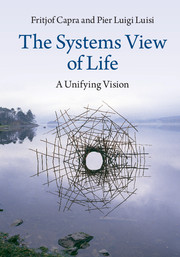
[iv] Book: The Systems View of Life - A Unifying Vision

The Systems View of Life -
A Unifying Vision


If you are about to start studying biology, Part 3 'A new conception of life'  is an excellent introduction to some broad and yet pivotal concepts. I haven't checked the 'current' curricula for biology or human biology, but I suspect there is content provided that may be missing? How are biology curricula characterised? If the 'subject' is comprehensively covered at school - college, there may still be value in the way in which they are presented in TSVoL. And, yes the book is a decade old. There's a step-wise development, that is coherent and fascinating.

The opening sentences to chapter 7, which asks 'What is Life?' :

'7.1 How to characterize the living

It is a common understanding that it is impossible to provide a scientific definition of life which is universally accepted. This stems from the fact that the background of scientists dealing with the question - biologists, chemists. computer scientists, philosophers, astro-biologists, engineers, theologians, social scientists, ecologists differs considerably from one another, depending on one's conceptual framework. In this book, we will not dwell so much on the question of a unique definition of life a single sentence catching all the various aspects of life - but rather, we will consider the more general question: what are the essential characteristics of a living system?' p.129.

- for some reason puts me in Plato's Cave? Maturana and Varela would (and do) have very broad shoulders by now. Autopoiesis is described with structure, systems (of course), self-maintenance, nonlocalization, coupling, and emergent properties. 'Life is a factory that makes itself from within'. p.132. Well that will do me. Even though we talk of political, social and psychological processes, I've always associated the SCIENCES domain of Hodges' model with processes. This includes whether the processes are biological, manufactured by human hand/intellect, such as, industrial working, project management and planning.

For life, initial descriptions concern the cell, DNA, RNA, cell walls and the cellular logic of life. Key is life's interaction with the environment. This is emphasised 7.2.4 and 7.4. I gained a lot of encouragement from:

'According to Maturana and Varela (1980, 1998), the organism interacts with the environment in a "cognitive" way whereby the organism "creates" its own environment and the environment permits the actualization of the organism.' p.134.

It is not just mind - but 'embodied mind'. The joy (for Hodges' model) continues with the impact of social autopoiesis in the social sciences.  

'While behaviour in the physical domain is governed by the "laws of nature,' behavior in the social domain is governed by rules generated in the social system itself.
Thus, two questions arise: is it meaningful to apply the concept of autopoiesis to these domains at all, and, if so, to which domain should it be applied?' pp.136-37.

It's almost like Descartes has taken on a quantum property. We don't know when life is physical (time, space, velocity) and when it is mental - cognitive? Contemplating life, death is never far behind (taxes p.419 if you're wondering). The ethics of death and dying are acknowledged in medical intervention (or not) and religious beliefs and edicts. Again the figures are helpful, illustrating the dynamic modes of an autopoietic unit: homeostasis, reproduction, and death of a cell (p.138). The trilogy of life then is also illustrated as environment, cognition, and autopoietic unit (p.142). When it comes to knowledge domains (social science & ecology) are clearly ubiquitous too.

Concepts of Modern Mathematics
Ian Stewart, 1975

It is Chapter 8 that delivers the biological goods. Beginning with a fascinating account of molecular, or prebiotic evolution, giving rise to biological structures and the interplay of soaps and lipids - "amphiphilic" substances, with molecules that contain a hydrophilic (water loving) head group, and long hydrophobic (water-hating) chains. Well illustrated too, box 8.1 describes 'Surfactants, lipids, and liposomes'. Self-organization, emergence are skillfully threaded together and with creativity - the generation of new forms. Unsurprisingly, Gaia is highlighted 8.3.3 and in a guest essay 'Daisyworld' by Stephen Harding of Schumacher College; which also reminded me of the 1970's BBC drama 'Edge of Darkness'. Maths has another turn in the text; a chiral one. Biomathematics is posited as a new mathematics frontier: here - the numerology of plant growth, the golden section (there's one primary context?), nature's spirals, and symmetry breaking. This helps my current return to maths (the struggle!) trying to get to grips with basic concepts. Ian Stewart is cited, later work than 1975's 'Concepts' I must seek out the 'Mathematics of Life' 2011/12.

Darwin, the resulting biological revolution, history, polymers, peptides and proteins plus DNA and RNA continue a suitably in-depth treatment of 'life' in chapter 9. The conclusion on Darwinism today and the status of genes in science and relation to our identity, being and the effect of chance and contingency is worth being reminded of. In mental illness - psychiatry and psychology a sometimes vitriolic debate continues.  Commercial realities are also apparent, the extent of their influence described: the race to map the human genome. In the text protein folding has advanced markedly since the book's original publication. Now new commercial pressures allied with artificial intelligence make you wonder how the author's would deal with this new 'content'? Exobiologists will enjoy chapter 10 as the focus is planetary: the origins of life on Earth. Useful, basic chemistry figures here - informational and functional (concentration). The notion of 'cognitive' is raised again - information carrying. 

While we are concerned for all life, chapter 11 takes in the human adventure, including the determinants of being human. 'Determinants' have taken on more import today. Chapter 12 in addressing 'Mind and consciousness' is helpful in the approach, the easy and hard problems of consciousness, types of consciousness, schools study. There is another guest essay. Chapters 13-15 deal with spirituality (inc. eco-literacy); life mind and society (I wonder if topology does have a role in the mental realm? (p.311). Chapter 15 is a gift for healthcare professionals - 'The systems view of health' with the question, 'What is health?'. Not to diminish this statement, but I will return to this subsequently; whether in the closing post for this 'review,' or afterwards. This completes part III of what is a great read.

Many thanks again to CUP for the paperback copy, much easier on the eyes. While this copy is new, I do make extensive use of secondhand books.

Fritjof Capra and Pier Luigi Luisi (2014) The Systems View of Life - A Unifying Vision. Cambridge: Cambridge University Press.

https://www.cambridge.org/gb/universitypress/subjects/life-sciences/genomics-bioinformatics-and-systems-biology/systems-view-life-unifying-vision?format=HB&isbn=9781107011366


Saturday, August 24, 2024

"In HIFA - let's save a space to make sense of mountains of data"

Dear All, (HIFA mail list)

While rather expansive in scope not just reaching to the arts but also referencing nature and mountains, the following blog post may be of interest:

"Health & Care results in mountains of data: c/o Burke & Cao 2024"

https://hodges-model.blogspot.com/2024/08/nan-shepherd-.html

While the focus and purposes for HIFA are clear, in practice 'information' (data, facts, knowledge, wisdom) must always be contextualised, situated, and (potentially) justified.

In addition to relying on the sciences, medicine, nursing and healing practices are also characterised as arts.

See also, the digital humanities and more specifically - 'Intima: A Journal of Narrative Medicine' https://www.theintima.org/

There have been many posts about records recently, but of course it what goes into the record that is critical.

Salience, what we pay attention to is key.*

The record is critical if something goes wrong and a professional finds themselves in a Coroner's court, and/or disciplinary hearing. The previous posts also discuss the patient's access to their medical record.

I'm not sure if the point has been made but even before 'health literacy' is taken into account, given access a patient may identify many mistakes/errors within the record on many details including demographics and procedures, treatments, diagnoses applied. (There are studies confirming the same - a benefit of IT systems.)

In mental health service - England the care programme approach (CPA) has ended - been retired. Some argue this has been done 'quietly'.

While the emphasis on documentation since 1990s has been onerous for some practitioners in the need for a 'comprehensive' record, the principles of CPA are well-based in practice: Patients (families) are entitled to - 1. A care assessment 2. A care plan 3. A named care-coordinator - keyworker 4. A review 6 monthly; annually as a minimum

For more than a year 1995.., I worked full and p/t as CPA co-ordinator for Chorley and South Ribble Health Authority; and produced a report highlighting the potential benefits of information technology in data gathering and processing and information reporting. (A conference was also organised with 60+ delegates, and 10 software vendors demonstrating their wares.)

The news drove the development and introduction of CPA during the late 1980s, with often stigmatising headlines for many people affected with mental illness - including psychosis it must be added. Recent events are troubling for society and services now, and in terms of history repeating itself:

"On average over a hundred people in Britain a year are killed by someone with serious mental illness. On the day the NHS is Nottingham is found to have missed opportunities to stop Valdo Calocane killing 3 people we ask why lessons aren’t being learned." 'X' https://x.com/BeckyJohnsonSky/status/1823459379846271002

"Between May 2020 and February 2022, eight risk assessments were completed for Calocane by the trust, which the CQC said appear to have been carried out for each of his admissions to hospital and updated at other times during his care. The regulator said that while some risks were highlighted, other assessments “minimised or omitted key details”. https://careappointments.com/care-news/england/211213/cqc-review-of-nottingham-killers-care-finds-key-risk-details-minimised-or-omitted/

The state of mental health services in the UK is much debated and here too 'information' is critical, especially 'seeing' the person and the nuances of interpersonal communication skills. These are often encountered through non-verbal communication and 'clinical intuition' which must be related to professional experience.

So information must simultaneously be recognised as a mechanistic and humanistic melange of processes, purposes, practices and policies (4P's in Hodges' model).

As highlighted before we can also contrast HIFA's and practitioners efforts to combat the severe implications and risks of 'information disorder'. And yet, also recognise how the arts, innovation and creativity also contribute to interpersonal engagement, therapeutic goals, case formulation, health and other literacies using *metaphor* and *analogies* - as per Nan Shepherd's musings explored in the blog post by -

Burke, R., Cao, E. To Care for a Mountain - What medical practitioners can learn from Nan Shepherd. Oxford Review of Books, Summer 2024, Volume 8, Issue 2. p.14. In association with Stanford. (open access)

Patient, public and practitioner safety is always the aim & objective.

Further reading & notes: https://www.cqc.org.uk/publications/nottinghamshire-healthcare-nhsft-special-review-part2/risk-assessment

Whiting, D., Gulati, G., Geddes, J.R., Dean, K. and Fazel, S. (2024), Violence in schizophrenia: triangulating the evidence on perpetration risk. World Psychiatry, 23: 158-160. https://doi.org/10.1002/wps.21171

*I hope to contribute to a 'philosophy of attention' research project, my contribution will draw on clinical experience above and apply Hodges' model to explore and debate ... 'attention', starting in 2025 to c.2030.

Regards to all, Peter Jones

Sunday, June 16, 2024

Occupational therapist Joël inspires elderly to get in motion ...

Or, "Excuse me. How many movements are there in that watch?"*

"Joël Kruisselbrink’s creativity in designing exercises and games inspires elderly people to keep moving and live life to the fullest.

Nursing home residents are often understimulated and have little motivation to exercise. As an exercise instructor, Joël Kruisselbrink knows better than anyone how important exercise is for the elderly. His passion for creating exercises and games enables older people to continue enjoying life while keeping them moving."
Individual
|
      INTERPERSONAL    :     SCIENCES                   
HUMANISTIC  --------------------------------------  MECHANISTIC      
 SOCIOLOGY  :    POLITICAL 
|
Group


What do
you think
the impact
is upon
the resident's mental
health
and
emotional
well-being?


Psycho-
-Social?


Standards & Quality of Care
Policy


*Hodges' model: A tool to watch the complications of Care

My source: https://x.com/Rainmaker1973/status/1802268229361967404

Wednesday, June 12, 2024

Scaling-up Health Arts Programmes: Effectiveness Research (Sold Out!)

This event is located in London, it is sold-out and not online. Coming across the symposium on twitter and learning that the research has run its course prompted me to think about the life-cycle of projects, research (big and small); ever important, of course, in the dissemination of research results, outcomes and benefits.

More details are provided on the 'Sold Out' event link and in the image below:

https://www.eventbrite.co.uk/e/collaborating-to-scale-implement-established-arts-and-health-programmes-tickets-874119594237


Why bother to post this? We can't be all-knowing in terms of research / project calls. This means I've noticed how we often learn of initiatives and opportunities at their close. News of citations for Hodges' model arrive is invariably after-the-fact, the fact being the 'study' as a whole. So is the dissemination more haphazard than it needs to be? A silly question, but have all the research councils, academia in general looked at research 'alerts'. What about the Government? Especially in response to citizen science, patient engagement, public involvement? Is this an application begging for a digital solution? Perhaps there is one (several) out there already? In human resources there is employee on-boarding, orientation and there's off-boarding, or there's supposed to be the leaver's questionnaire and exit interview. Beyond the final research report what is the situation: marks out of 10?

This looks a great initiative, especially the participation, collaboration and creativity generated. Below I've related some relevant concepts within Hodges' model: embedded within the spiritual.

Individual
|
      INTERPERSONAL    :     SCIENCES               
HUMANISTIC  --------------------------------------  MECHANISTIC      
 SOCIOLOGY  :    POLITICAL 
|
Group

ipseity, identity

Health: parity of esteem - mind::body

my lived experience, efficacy

ideas, perspective, interpretation

body - movement, physio..

objects, media, physical reality

time, place, space

information sharing

art forms: fine, dance, drama, music ...

collective - collaborative creativity

shared motivation, public awareness

participant identification (biases?)


policy (national - regional, local)

research funding

physical accessibility - transport

funding distribution


My source:
https://x.com/TheNCCH/status/1798020326007472407

I also realise the access limitations presented here on a blog commenced in 2006.

Wednesday, May 01, 2024

Hodges' model: A tool for Curation

CURATION
"Curation helps solve the problems of today and tomorrow. It's the mass sourcing of the expertise needed to navigate and comprehend the saturated, complex markets* of the twenty-first century." p.166.

Bhaskar also lists (and briefly introduces) the principles of curation:
  • Saving time
  • Freeing cognitive resources
  • Sparing us anxiety
  • Maximising utility
  • Cutting down complexity
  • Finding quality
  • Overcoming information overload
  • Creating contrast 
  • Redefining creativity
  • Channeling attention
  • Providing context
  • Beating overproduction (pp.167-168).

*To markets above, I would add disciplines and professions.

By definition an aide-mémoire should save us time. 

The structure of Hodges' model provides a conceptual scaffold, a substrate affording us cognitive economy.

Through selection (self guided discovery) we are assuring data, information gathering, properly supervised this should spare us anxiety.

We are trying to ensure the effective use of our time, and efficiently zero-in on the concepts that are salient.

By reducing complexity, we increase the relevance and value of what is noted, recorded, acted upon. Data, facts, observations that are not redundant can be dismissed.

Contrast is co-confirmed by using innate oppositions, polarities and dichotomies with attention on the other and the middle.

When needed, Hodges' model can explode subject headings, concepts assisting exploration and creativity, potentially assisting at a transdisciplinary level.

Context rationalisation by testing and filtering a situation, helps to focus attention.

Duplication and repetition do not foster sustainable services, but there should always be scope for verification and person-centredness.
"As the eighteenth-century English painter Joshua Reynolds put it, 'Simplicity is an exact medium between too little and too much.' Curation helps ensure that exact medium." p.159. 

Bhaskar. M. (2016) Curation: The power of selection in a world of excess. London: Piatkus.

Book image: Waterstones.

See also: Is Hodges' model a selection machine?

Thursday, February 22, 2024

AI in the Creative Industries: An Interdisciplinary Conference [One week left!]

[reposting as there's just over one week left to submit abstracts for our summer conference on AI]

AI in the Creative Industries: An Interdisciplinary Conference [EXTENDED DEADLINE]

7th June 2024 - Hosted by Futureworks, Manchester UK

Artificial Intelligence has advanced extremely rapidly over the past months. Responses have been polarized; with some predicting the end of the world and others celebrating a technology with the potential to create a new industrial revolution. The biggest difference between these new algorithmic technologies and those that preceded them are the potential for new AI models to generate creative content. Visual art, photography, literature and digital scripting have been produced by AI, to varying levels of success. To the existing debates around AI (questions of ethics, consciousness, or cyborg theory, for example) have arisen new problems regarding the role of art and the artist in the age, not of mechanical reproduction, but mechanical production. Can a robot be creative?

This conference aims to bring together researchers from across media studies, music and sound, the visual arts, video games, film and TV, animation, sociology, history, literature, politics, philosophy and aesthetic theory, to interrogate the growing role of AI in the creative industries, its potentials (both negative and positive), and how we are to react to the rise of AI as both tool and creator.

Abstracts for 20-minute papers are welcomed on subjects including, but not limited to:
  • AI creativity: is it truly creative?
  • AI and transhumanism
  • AI and the question of consciousness
  • Copyright law and artificial intelligence
  • Utilization of AI as a creative tool
  • The depiction of AI in creative media
  • The ethics of AI usage and its potential to help or harm
  • The aesthetics of artificial intelligence
Please submit 250 word abstracts with accompanying 50-word bio and 5 keywords to organizer joe.darlington AT futureworks.ac.uk by 29th February 2024. 

Submissions are encouraged from academics, postgraduate researchers and non-academic speakers alike. Creative practitioners are also welcome, as are those working in the production or utilization of AI.

<>

This message was issued to members of www.jiscmail.ac.uk/AI-SGES, a mailing list hosted by www.jiscmail.ac.uk, terms & conditions are available at https://www.jiscmail.ac.uk/policyandsecurity/

Wednesday, January 24, 2024

Psycho-Philosophical Creativity - Csikszentmihalyi (1934-2021)

"Hungarian-American psychologist Mihaly Csikszentmihalyi (1934-2021) identified a type of highly focused mental state conducive to productivity and creativity. He called it the 'flow'. He described flow as "being completely involved in an activity for its own sake. The ego falls away. Time flies. Every action, movement, and thought follows inevitably from the previous one, like playing jazz. Your whole being is involved, and you're using your skills to the utmost." Csikszentmihalyi advanced a model odf creativity that stresses the importance of a 'specific domain' to make meaningful contributions within a culture - a time and place in history where many variables come together to form a situation where creativity can bloom. . . .

Csikszentmihalyi work focuses on creativity as a cultural phenomenon. It is useful, he says, to think about culture as systems of interrelated domains. He puts forward a model of creativity consisting of a domain, a field, and a person. The domain is the wider area of cultural application, whether that be sculpture, mathematics, reason or science. Inside the domain is the specific field; and inside the field is the person. Csikszentmihalyi outlines the creative person as having "a sense that one's skills are adequate to cope with the challenges at hand, in a goal directed, rule-bound action system" (Flow: The Psychology of Optimal Experience, 1990)." p.10.

 Individual
   |
      INTERPERSONAL    :     SCIENCES               
HUMANISTIC  --------------------------------------  MECHANISTIC      
 SOCIOLOGY  :   POLITICAL 
|
Group
person

domain

field

creativity

person

domain

field

creativity


domain

field

culture

creativity

domain

field

culture

creativity


Culture also extends to the psychological (mental life) and physical (sciences); person(s) are supported, it is hoped, by their society, and political structures and services.

'Domain(s) can be organised, designated and structured in other ways. This would include, the center of Hodges' model not necessarily being fixed.

There is a paper to be written on Hodges' model related to inter- multi- transdisciplinarity.

Jones, L., Plaiting Gravy, Philosophy Now. Creativity. December 2022 / January 2023: Issue 153. pp.9-11.