Hodges' Model: Welcome to the QUAD: May 2025

Hodges' model is a conceptual framework to support reflection and critical thinking. Situated, the model can help integrate all disciplines (academic and professional). Amid news items, are posts that illustrate the scope and application of the model. A bibliography and A4 template are provided in the sidebar. Welcome to the QUAD ...

Saturday, May 31, 2025

Globally - seeking the ink of scholars

The Ink of the Scholars:
Reflections on Philosophy in Africa


Since the late 1980s, in trying to understand Hodges' model, especially its political dimensions beyond nurses as advocates, the mental health act, choice and self-determination. To be followed by consent, then informed consent, mental capacity, human rights, equality, protected characteristics, safeguarding, equity, social in-justice; I've then questioned my assumed neutrality of the model. 

Allied to this is the fact that Hodges' model is one of many models and frameworks, largely created in the developed world. What alternative viewpointsof nursing, care and philosophies are there? Do these challenge Hodges' model? Or, can Hodges' model also encompass them, in a complementary manner?

Serendipity, or ADHD, seems to follow me around. In addition determined to extract value from my purchase and reading of the weekend FT, I learned of potential key read:


Prempeh, C. THE AESTHETE. Koyo Kouoh, The curator of 2026 Venice Biennale talks whisky sours, working from bed and being the "high priestess of the okra church". HTSI, FTWeekend, 3 May 2025,pp.21-22.

'THE BEST BOOK I'VE READ IN THE PAST YEAR is a book on African philosophers, The Ink of the Scholars: Reflections on Philosophy in Africa, by Souleymane Bachir Diagne, one of our most brilliant thinkers. He challenges the idea that there isn't a philosophical framework to African societies. There are ideas around Africans being the great architects of hospitality and Diagne reflects on what the African approach to humanity is. What does it mean to be careful, mindful and caring? It's not just about welcoming people to your home or feeding them. Hospitality is carrying people, making people feel comfortable in your environment - it's intellectual and emotional. Everyone should read Diagne, full stop.' p.21. 
 

Shocked: I have just read of Koyo Kouoh's passing - RIP. 

Souleymane Bachir Diagne, & Jonathan Adjemian. (2016, May 23). The Ink of the Scholars: Reflections on Philosophy in Africa. CODESRIA Books Publication System. CODESRIA
https://publication.codesria.org/index.php/pub/catalog/book/40

See also: 'hospitality'

Friday, May 30, 2025

Martha's mum, dad, guardian ...

Hayward, E. Parents really do know when
their child is sick, The Times,
30 May 2025, p.1.

The previous post highlighted the fact that while practice (and theory) based upon research finding that are 'evidence-based' and scientifically rigorous are a 'gold standard; there are other means by which knowledge is obtained. Cultures, often have systems to transfer knowledge - that which matters to the society, even if is not written in the conventional meaning of the term.

Intution is another source, and within social groups can be a powerful spur to action, and help seeking. This is demonstrated regularly in the knowledge that a parent, or guardian has about what is the normal presentation for a child in their care. 

In the UK Martha's Rule is being tested in NHS hospitals. It is encouraging then to hear and read news of a study in Australia (so in combination a 'multicenter' effort?).


Mills, E., Lin, P., Asghari-Jafarabadi, M., West, A., & Craig, S. (n.d.). Association between caregiver concern for clinical deterioration and critical illness in children presenting to hospital: A prospective cohort study. The Lancet Child & Adolescent Health. https://doi.org/10.1016/S2352-4642(25)00098-7


individual
|
INTERPERSONAL : SCIENCES
humanistic ------------------------------- mechanistic
SOCIOLOGY : POLITICAL
|
group

"Not herself ..."

Martha

"Not well"

Martha
Mills

parents, guardians, friends & family


Martha's Rule*


Hayward, E. Parents really know when their child is sick, The Times, 30 May 2025, p.1.

*Under test in the UK.

Previously: 'intuition'

Thursday, May 29, 2025

Health Policy Watch: WHO’s Big Push to Integrate Traditional Medicine into Global Healthcare Framework

This is quite a development for the lived experience of all individuals, global health and for Hodges' model. Not only for Hodges' model as a universal framework (template) and model for / of care, but the capacity of Hodges' model to conceptually and culturally encompass all data, information, knowledge and wisdom.

c/o HIFA list:

Full text: https://healthpolicy-watch.news/whos-big-push-to-integrate-traditional-medicine-into-global-healthcare-framework/

'The World Health Assembly delivered a landmark victory for traditional medicine and indigenous cultures Monday evening, approving a strategy that calls for increased investment in research and integrating ancient healing practices into modern healthcare systems worldwide.
'The approval marks a breakthrough moment for advocates of traditional medicine, with nations across Asia, Africa, the Middle East and Latin America celebrating the decision. Iran called it “a visionary yet realistic roadmap” to integrate thousands of years of medical like its own.

'But the strategy text shows WHO walking a careful tightrope, embracing practices that represent “accumulated wisdom and healing practices passed down through generations” while demanding they meet modern scientific evidence standards that could take decades to satisfy...'
Best wishes, Neil

HIFA profile: Neil Pakenham-Walsh is coordinator of HIFA (Healthcare Information For All), a global health community that brings all stakeholders together around the shared goal of universal access to reliable healthcare information.

See also: 'Oceania' : 'indigenous' : 'ancient' : 'map' : 'nature'

Wednesday, May 28, 2025

The Role of Generative AI Use in 2024 Elections Worldwide

A high-level précis of the Technical Paper can be found in the Summary for Policymakers report, Generative AI in Electoral Campaigns: Mapping Global Patterns.

IPIE 

GenAI is being deployed in many ways during elections, ranging from the creation of deepfake video and audio messages, to sophisticated voter targeting. What are the implications of GenAI for election administration and voter participation around the world? This assessment delivers the first global, data-driven analysis of its kind, designed to inform policy recommendations that enhance election administration, foster trust in electoral processes, and boost voter turnout.


Based on an analysis of an original data set of 215 incidents, covering all 50 countries holding competitive national elections in 2024, we find that:

  • Fully four-fifths (80%) of the countries holding elections in 2024 had GenAI incidents.  
  • The vast majority (90%) of incidents involved content creation, such as audio messages, images, videos, and social media posts.
  • Almost half of the incidents have no known source (46%), a quarter were produced by political candidates and parties (25%), a fifth were produced by foreign actors (20%), and the remainder came from other sources (9%).
  • More than two-thirds (69%) of the incidents were described as having a harmful role in the election.

We encourage you to check out the full reportSummary for Policymakers, and press release announcement on our website.

My source: IPIE email.

Tuesday, May 27, 2025

‘Nursing Narratives: Racism and the Pandemic’

This film was made as part of ‘Nursing Narratives: Racism and the Pandemic’. A research project funded by the Arts and Humanities Research Council under the UKRI Covid-19 Urgent Response Call.


'Exposed is a groundbreaking documentary that combines the stories of 19 Black, brown and migrant nurses and midwives to speak about their powerful experiences of racism before, during and after the pandemic. If you want to organise a screening of the film please send us the details of date, time and location so we can let people know about opportunities for people to watch, share and discuss the issues that have come out of the film, as well as what action can be taken.'  
https://www.shu.ac.uk/centre-culture-media-society/projects/nursing-narratives

RCN North West Region - North West Multicultural Group


What does 'exposed' mean . . ?

individual
|
INTERPERSONAL : SCIENCES
humanistic ------------------------------- mechanistic
SOCIOLOGY : POLITICAL
|
group
exposed

exposed

Exposed

EXPOSED

Monday, May 26, 2025

Variety really is the spice of Hodges' model

In the previous post - RCN Congress iii 2025 Accountability for patients in ambulances I wrote of how corridor care has become variegated, as it is bound to, in a system(?).

Variegation means difference, and yet in organisational accountability, there should be reliance upon a procedure, if not a standard operating procedure. The experience of individual patients should be nuanced, standardised and yet catering for individual differences.^ The resolution at congress was questioning the need for guidance amid legal ambiguities.

This is also helpful in two senses. 

  1. In exploring ways that Hodges' model might help encompass and explain the dual character category*, [or other, or not] as may apply to person-centredness and service-centredness?
  2. Plus, (and potentially confusing for me) in seeking a basic understanding of dual categories in a mathematical sense.

Book review iii: 'Categories we live by'

from the above post:
Knobe J, Prasada S, Newman GE. Dual character concepts and the normative dimension of conceptual representation. Cognition. 2013 May;127(2):242-57. doi: 10.1016/j.cognition.2013.01.005. Epub 2013 Mar 1. PMID: 23454798.

^This highlights a quality of what it is to care/and caring. It relies upon relationship building, the nurse getting to know the patient, person and vice-versa (to a degree) as befits the emergence of empathy, rapport, generation of trust; and the nurse's ability to anticipate not only care needs (that arise from direct observation), but those that are unique to the patient as an individual. In the previous post which mentioned corridor care, the physical, emotional, social and political environment is not established. Noise, on several levels stymies care, disrupting communication and interpersonal skills - even presence and touch - amid the chaos of the corridor. 

Sunday, May 25, 2025

RCN Congress iii 2025 - Accountability for patients in ambulances

The resolution (with a reading list) on Accountability for patients in ambulances

- drew attention to language once again (yes, well there's a truism: what do you expect!). This time highlighting how corridor care is now variegated. In addition, politically you can circumvent addressing an issue, by referring to 'never events', and 'zero tolerance' as we read:

'This agenda item addresses the urgent issue of accountability, for both registered nurses and the organisations they work for, when patients are cared for in ambulances waiting to access emergency departments.

The resolution comes at a time when, across all four countries, there are unprecedented ambulance handover delays with patients left in vehicles which are neither appropriately staffed nor resourced outside overwhelmed emergency departments. Despite the prolific nature of this practice, there is no clear guidance on accountability. Who is responsible for the care and safety of those patients - the ambulance service, the hospital, the emergency department, or the individual registered nurse providing care?

These delays accessing care and the lack of guidance on who is accountable for the waiting patients, compromises the ability of health care staff to provide good quality care and risks patient safety. It also exposes registered nurses and other health care professionals to professionally, ethically and legally ambiguous situations. It could also contribute to the crisis in nursing wellbeing, raising issues such as moral distress and professional, emotional and physical burnout. It may, therefore, also impact the already perilous recruitment and retention.'

Student nurses, paramedics ... please take note: There is a paper to be written on Hodges' model and the gaps we encounter in health and social care. For Brian Hodges this started with the theory-practice gap; one of four original stimuli for the creation of the model. 

As the idealised standards, quality and safety of care being delivered are surrendered; this gap stands out as the virtual keystone.

individual
|
INTERPERSONAL : SCIENCES
humanistic ------------------------------- mechanistic
SOCIOLOGY : POLITICAL
|
group
individual - PURPOSES
patient safety - distress
nurse wellbeing
emotional burnout
moral distress
personal ethics
individual responsibilities

procedure
delivered care - observation
mattress, trolley .. ambulance design
instrumentation, noise
time - duration
logistics - PROCESSES - handover
physical resources - beds

communities of PRACTICE
team working - coherence
team experience - students
THE DAMAGE - that is 'BOOK-PASSING'
The public's - carer's experience
(wither friends and family)

law - guidance - ambiguity
POLICY
professional accountability
risk management
organisational responsibility
workforce
recruitment & retention


Previously: 'RCN' : 'gap' : 'accountability' : 4Ps

Saturday, May 24, 2025

'Health and Wellbeing Boards' - hiding the obvious

Does the language we use really matter? A public NHS document includes the following:

'PHARMACY

2.1

Background

Health and Wellbeing Boards (HWBs) in England hold statutory responsibility to publish and keep up to date a statement of the needs for pharmaceutical services of the population in its area, referred to as a pharmaceutical needs assessment (PNA). PNAs are used by the NHS to make decisions on which NHS funded services need to be provided by local community pharmacies.'
I'm not asking, or demanding, change to this but the words we employ do matter. One of them above matters greatly. The question of responsibility and its attribution. In the response to mental illness,  responsibility has always been played out on the public stage. Even when society's response was to leave 'care' to religious and charitable agencies. Then the state stepped in with the first legislation. The state assumed responsibility as per the previous post. Not only where the keys thrown away, but many people admitted there, did not need be. The 'reason for referral' was more accurately described as a social ill. In this way, individuals were incarcerated and forgotten.

It is in the gift of Hodges' model, care of its vertical axis [INDIVIDUAL - GROUP], to be able to negotiate the contextual switch from personal to group and population. There is a marked contrast from self-medication, a nurse doing a medicines round - to the design, testing and research effort of production of a specific drug or intervention. The focus then is obviously at the population scale. The pharmocological business, is not just a business. It is a pharmaco-industrial complex, e.g.

Grouse L. Cost-effective medicine vs. the medical-industrial complex. J Thorac Dis. 2014 Sep;6(9):E203-6. doi: 10.3978/j.issn.2072-1439.2014.09.01. PMID: 25276402; PMCID: PMC4178073.

When we think of dependence it is often framed at the individual level. But how can we expect to change health services, health systems to see them as they truly are: Illness and Infirmity Boards masquerading as Health and Wellbeing Boards?

individual
|
INTERPERSONAL : SCIENCES
humanistic ------------------------------- mechanistic
SOCIOLOGY : POLITICAL
|
group


drugs
manufactoring
testing


Sybil Shainwald
(April 27, 1928 – April 9, 2025)


Sybil Shainwald 

Friday, May 23, 2025

RCN Congress 2025 ii - Losing direct nursing skills

No longer an issue for me, but in the mix of careers: health, education, work - professional; employees often find that they are pulled away from what originally brought them to their chosen career. "I want to help people, care for them, make them better." Especially, if they are ambitious, seek better pay and prospects, for themselves and (a) their family. 

This was an issue and tension for discussion at the RCN Congress:

'Climbing the ladder often means leaving the “bedside”, this is something that can leave mixed emotions for the individual. As a result, we are losing years of clinical experience and expertise which could impact on the future training and on-the-job development for early career or inexperienced colleagues.

The secondary issue that arises with nurses leaving the bedside is skill decay, where a person loses the skills developed in the clinical area through lack of everyday practice. This is being increasingly acknowledged in health care literature (Maehle, 2017). However, the biggest barrier is the resulting lack of confidence in personal skills and ability, particularly where someone is now seen as a senior colleague by those at the bedside.' cont. ...

Discussion - Losing direct nursing skills

I didn't make notes but reflected on how your 'basic training' (for me ...) registered mental nurse (RMN) and state registered nurse (SRN) provides the foundation for professional (and lifelong?) learning? This is, after all, what continuing professional development and post-registration refer to. I did realise that in returning to mental health nursing after qualifying as a SRN, I would surrender much learning - instead of consolidating.

Lecture 101, sets in train the scope of your theory and practice. This is why, and where I see Hodges' model having a role at this point in our professional education, whatever the discipline, or profession. Congress included a resolution for debate: Physician associates

We really do need to get this right. Get it wrong, and the quality of care and safety of the public are threatened. If existing standards and professional relationships are perturbed, the effects can be long-lasting and (grossly) injurious. Especially at a time of increasing demographic pressures globally for health systems and services.

individual
|
INTERPERSONAL : SCIENCES
humanistic ------------------------------- mechanistic
SOCIOLOGY : POLITICAL
|
group

1. Is the divide represented by parity of esteem in healthcare MIND :: BODY associated with the fact that in mental illness patients do not ordinarily need to be nursed, cared for in bed?
png image from pngtree.com
2. But, wait! What does history, medical sociology have to say?

3. Is the 'bed' the signifier of instititionalised care? It appears to be.

The pejorative term 'big bins' seems to epitomise the mechanisation of care. In prisons do they throw away the key? 


Previously: 'RCN' : 'skills' : 'beds'.

Also at Congress was the RCN Northwest Multicultural Group, which may be of interest if you are UK based (and not just in the NW). The following is edited from an email ...

Dear All,

I would like to congratulate everyone for an amazing Congress 2025 and take this opportunity to welcome the new members. It was really lovely to meet all of you in person.

Please see below the link to the webpage of multicultural group:

https://www.rcn.org.uk/northwest/Get-Involved/NW-Multicultural-Group

I will be sharing the details of the next meeting and other information via the group and email.

Kind regards,

Olanike Babalola (She/Her/Hers)
Chair/Cofounder RCN Northwest Multicultural Group
Email: olanike.babalola AT reps.rcn.org.uk

Thursday, May 22, 2025

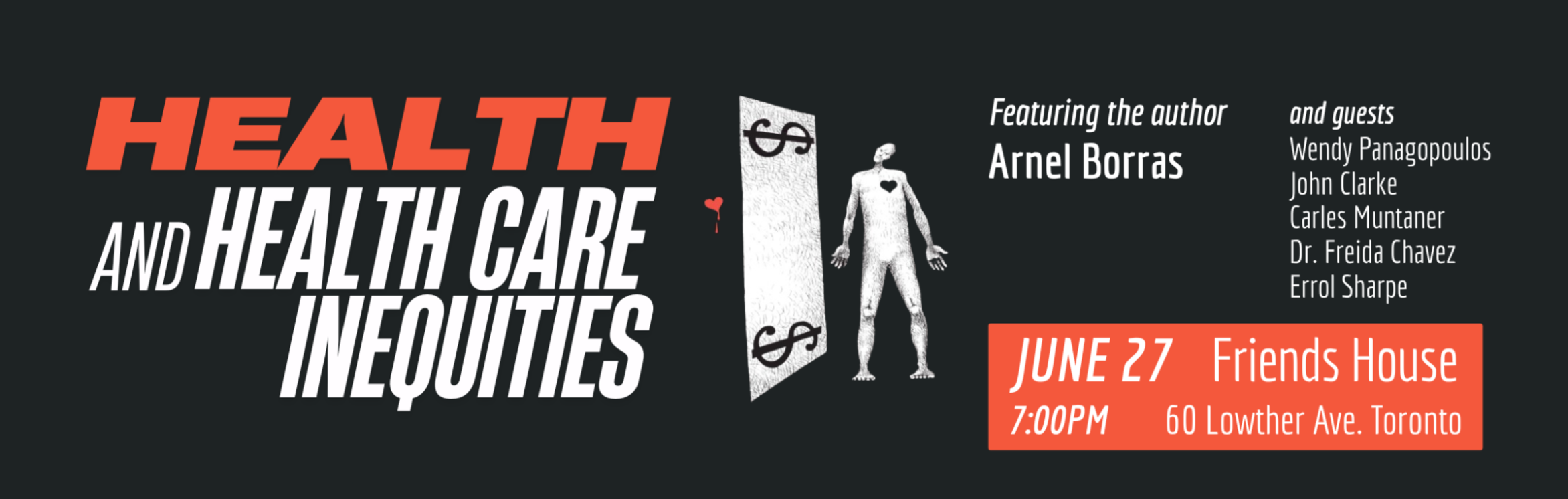
Invitation: Health and Health Care Inequities – Book Launch (June 27)

Hi everyone,

You are warmly invited to the Toronto launch of Health and Health Care Inequities, taking place on Friday, June 27, 2025, from 7:00 to 9:00 PM EDT.

This event is free and open to the public, with both in-person and online attendance options.

👉 Please register in advance:

Select tickets – Health and Health Care Inequities - Toronto Book Launch – Friends House

The launch is co-hosted by the Leo Panitch School with the support of Fernwood Publishing.

Featuring the author Arnel Borras and guests:

  • Wendy Panagopoulos
  • John Clarke
  • Carles Muntaner
  • Dr. Freida Chavez
  • Errol Sharpe

We hope to see you there!

Warm regards,
Arnel

Arnel Borras
*****************

My source: Politics of Health Group Mail List Messages

Visit the PoHG website for lots of interesting links and publications: http://www.pohg.org.uk/

Follow us on Twitter: @pohguk

You can subscribe to / unsubscribe from the PoHG mail list here: http://www.jiscmail.ac.uk/POHG

Friday, May 16, 2025

Theatre - the best way to learn ...

Pardon me, while I stay local - in Liverpool . . . 

I've always been interested in drama since school days (aged 13-14) and playing Francis Nurse in Arthur Miller's Crucible. Recent reading (inc. Theatre of the Absurd, The Shifting Point), see 'drama' - with more to follow) encouraged me to find out more. As a community mental health nurse on a visit, I've sometimes thought of this script being written as we engage with each other. Framed within  interpersonal skills and the society 'outside', there's a sense in which a screenplay is also writ large. 

The fact of whether the session is therapeutic, progressive, person-centred, structured, ethical, purposeful, has tea and custard creams ... is the drama of course.

In a way the creators of formal psychotherapies are playwrights - directors:

After all, they keep producing 'original' therapy manuals, don't they?


In the new year I noticed a community message about a theatre group Valley Theatre Group, planning a 'Living Newspaper' for a drama festival that took place last month. There is another performance next month in Liverpool, as per the edited message below:

People have been asking what’s going on and when for our Hope Street performances June 6-8th. So here’s the details.

W
e start each evening with the play about a 1930s Socialist Theatre group, “Unity”. (Cast: Peter Merrill, Ted Grant, Steve Donegan, Meggan Pye, Day Sheehan and Donna Lauder)

Then, on Friday 6 June, in the second half, we have our first Living Newspaper. This is the one that has most of the sketches submitted by outside writers and developed at the workshops. Then on Saturday 7th, second half, we have the Leverhulme group (The one that won the award at the festival) with their Living Newspaper. Finally, on Sunday 8th, in the second half, we have the last of the Living Newspapers, the one with slightly longer pieces like Scouse Man. This final one also has an original sketch from a 1930s Living Newspaper, the Munich Pact.

Tickets are on sale at the Hope Street Theatre website (link below) and from Ticket Quarter. Please come along and try to get other people along as well.  It'll be a good night's theatre! 

Thanks for all your support. The WTM team

Ticket link:  www.hopestreettheatre.com

Phone: 0344 561 0622

RCN Congress 2025 Liverpool i

... the twists and folds of debates

Repeating myself (again) but worthwhile I think(?), the past week brought my second RCN Congress. If you are new student nurse, international (Std) nurse, or nursing support worker and not engaged with a professional body, or union; do try to get involved. Don't leave it as long as I have (I joined a union as a nursing assistant). By way of a small excuse, listening this week it seems I am not the only one to leave it 'late'. Based in Liverpool (again after 2019) means there's a torrent of potential content. So where am I/We? By their nature all the debates are worthy. I have picked a few:

Discussion - Celebrating a nursing career

You can read above the main focus for the discussion. For me it prompted the following (no doubt - familiar)  reflections ...

The number of potential careers in health and social care is amazing:

Not only what the NHS (for training, education) can 'offer', but within that the number of nursing roles and specialities. The discussion inevitably drew the 'longevity' card. Students do pick on the temperature of their chosen community of practice. They recognise when they are surrounded (not literally!) by colleagues who have careers numbered in the several decades. But like a card the side that presents the occupational safe harbour from the threat posed by artificial intelligence, is countered by the seemingly relentless pressures imposed on nursing staff. The debates also revealed the pressure and negative impact of 'lived' work experiences for students and newly qualified nurses. I remember in the late 1970s early 1980s student nurses being counted as 'staff'. Have we really not progressed? I wrote 'offer' above because many students cannot get jobs once they have qualified. Not the best start to a shiny career. Having to fold, as they qualify.

Speaking of "career", can we please twist that? There is a great deal of talk - soul searching - about how on earth the (so-called) health service truly transforms itself to be health promoting and preventive. In the NHS's history perhaps there was a window of opportunity to begin in the late 1960s. Not so much a 'moonshot' as a healthshot. Now with the demographics that potential is being lost, unless this is positive way that AI can make up the shortfall? Alternately, nursing can utilise the health career, as in Hodges' model which are invariably impacted by an individual's life chances. As such there may be signs and signatures in the person's familial background? We can imagine a timeline composed of Hodges' model as 2x2 frames through a person's life, even prior to their conception and their legacy. 

More to follow . . .

Previously: 'RCN' : 'nursing' : 'power'

Please pardon the 'gambling' analogies, but we are literally asking students to gamble with their careers, financial status and well-being (life chances - no less). Should they be lost to the service, you can't blame young people. They know the logic of care, also known as demographics. They can do the maths? So who is it who can't do basic arithmetic?

Wednesday, May 14, 2025

c/o Ridgway - assimilation & accommodation

An approach to testing and teaching

'Consider the problems of acquiring new knowledge; two ideas are particularly important. The first is that existing knowledge and conceptual structures affect the way that new materials are perceived and learned; the second is that new experiences bring about changes in our knowledge and conceptual structures. These two processes are referred to as assimilation (analogous to the way in which the stomach digests food, whose later structure cannot be recognized as being similar to its earlier structure) and accommodation (analogous to the way that the pupil of the eye adjusts itself different light levels). Biological analogies make it easier to understand these concepts but leave unresolved the question of when one accommodates and when one assimilates. In general, one accommodates (i.e. changes one's conceptual structures) when fresh knowledge provides strong challenges to what is in mind; so dramatic counter-examples to currently held beliefs, or coherent patterns in the world, which cannot be explained by existing beliefs are both likely to bring about accommodation. Assimilation (interpreting new events in terms of old ideas) can be made to work when the number of counter-examples to predictions made from old beliefs are rather low. It follows, therefore, that if misconceptions are to be remedied (i.e. the mechanism of assimilation is overcome and the mechanism of accommodation stimulated) a representative sample of questions in the domain of interest is unlikely to have the desired effect because the number of cases which violate pupils' misconceptions and which therefore  might cause accommodation, will be relatively small. To foster accommodation it is necessary to provide dramatic examples which violate current conceptions and to provide these examples in quantity. Examples which are most likely to be dramatic are those in which it is obvious to pupils that the results they are obtaining using particular misconceptions are at variance with what they 'know to be true' from everyday experience.' pp.46-47.

Jim Ridgway (1988). Assessing Mathematical Attainment. Chapter 3, Using Test Results.Windsor Berkshire. NFER-NELSON. pp.40-52. [Ack. length of quote - See also: https://www.nfer.ac.uk/ ]

Thanks to Lancaster Univ. Library.

Previously 'assimilation' : 'accommodation' : 'math'

Tuesday, May 13, 2025

Tanzania Health Summit (THS) Conference & Partnership

Warm greetings from the Tanzania Health Summit (THS) Conference:

1 - 3 October 2025
Julius Nyerere International Convention Center (JNICC)
Dar es Salaam

THEME:
"Harnessing Data Utilization and Technologies
to Accelerate Universal Health Coverage"

'Tanzania Health Summit is a non-profit health organization which was founded in May 2014. The aim was to promote healthcare to the underprivileged and vulnerable (70% of the population) who cannot easily access health services in the country. We focus on facilitating health information dissemination to the public taking into account that only 32.9% of the population has adequate literacy level in the country, mostly living in resource poor setting. In addition, we want to support youth (which comprise 32% of the population) to help build a more sustainable future and prevent them from high-risk behaviors and practices.'

THS is also seeking partnership: 
'I am writing to explore the possibility of partnering with your esteemed platform to feature the upcoming Tanzania Health Summit 2025, scheduled for October in Dar es Salaam. As one of the largest independent health conferences in the region, THS brings together government leaders, healthcare professionals, researchers, NGOs, and development partners to discuss key priorities in health systems strengthening and innovation.

With an active and growing portfolio of over ,2,500 participants, including decision-makers and thought leaders across Africa and globally, the Summit offers a unique platform for knowledge exchange, collaboration, and visibility.

We are seeking media partners to help us amplify our call for abstracts, participation, and partnership opportunities. In return, we are happy to offer media partners: • Logo recognition on our website and Summit program materials • Complimentary access to the conference (virtual and/or in-person) • Acknowledgment in select promotional content • Opportunities to feature your platform during media briefings or side sessions

We believe that a partnership with HIFA.ORG would be mutually beneficial in advancing shared goals of health equity, research dissemination, and stakeholder engagement.

Please let us know if this proposal would be of interest, and we would be happy to provide further details or set up a brief call to discuss how we can collaborate effectively.

Thank you for your time and continued commitment to global health.

Regards, Dr. Omary Chillo President - Tanzania Health Summit Lecturer - Muhimbili University of Health and Allied Sciences Fellow Bernard Lown Scholars in Cardiovascular Health - Havard T. Chan School of Public Health, USA Fellow Scientist Walter Brendel Center for Experimental Medicine - Ludwig Maximilian University, Munich, German Member Steering Committee - InterAcademy Partnership, Young Physician Leaders Email: chillo AT ths.or.tz '

My source: HIFA (Edited with conference & background).

Monday, May 12, 2025

'International Nurse's Day' 2025 #2 - c/o ICN & WHO

State of the World’s Nursing Report 2025


State of the World’s Nursing
Report 2025

'As the world’s nurses celebrate International Nurses Day (IND), ICN issues a rallying cry to governments around the globe for urgent nursing support, following the launch of the second World Health Organization (WHO) State of the World’s Nursing (SOWN) report.

The SOWN report is a vital assessment of the global nursing workforce in the aftermath of the COVID-19 pandemic and underscores the urgent need for bold investments in nursing to address shortages, strengthen health systems, and promote global resilience and economic stability.

The SOWN report reflects ICN’s IND 2025 report, Caring for nurses strengthens economies, and related Survey of National Nurses' Association (NNA) Presidents, reinforcing the central role of nurses in achieving global health, including Universal Health Coverage (UHC), and calling for immediate action to address long-standing challenges. The SOWN data presents a mixed picture. It highlights progress in areas such as advanced practice and nursing leadership, but indicates gravely concerning continued workforce shortages, inadequate compensation and working conditions, poor mental health support, inequities in the distribution and employment of nurses, and failures to fully enable nurses as practitioners and health care leaders.'

Continued ...

Caring for nurses strengthens economies


Caring for nurses
strengthens economies


'As we face growing health care challenges, from ageing populations and rising chronic diseases to climate-related emergencies and deepening global inequalities, the need for a strong, sustainable nursing workforce has never been greater. We cannot meet these challenges without sufficient nurses who are themselves well-cared for and supported. ICN’s International Nurses Day report reveals the severity of our current nursing shortage and well-being crisis – and the path forward. ICN’s “Caring for Nurses Agenda” provides a comprehensive roadmap for creating environments where nurses, patients, and entire health care systems can flourish.'

'International Nurse's Day' 2025 - c/o The RCN


'Today is International Nurses’ Day – a day to highlight and celebrate the incredible skill, dedication and impact of nursing.


Nursing staff like you bring so much to those you care for each day. You are there for people during their best and worst moments. You change lives every day, despite our profession facing considerable challenges.


Nursing is highly skilled and rooted in excellence. That’s why patients place their trust in you when they’re at their most vulnerable.


We see the resilience and strength it takes to do this complex, safety-critical work. So today – and every day – we say thank you.'

Text c/o The RCN and video:


Also with RCN Congress starting today ...

Sunday, May 11, 2025

Geneva Health Forum 2025 (May 20-23) - Register Now!

Dear HIFA team

Can you share in your network this information. Thanks for your help

Sincerely

[HIFA profile: Eric Comte is Executive Director, Geneva Health Forum, External Affairs Directorate, Geneva University Hospitals. eric.comte AT unige.ch ]

--------------------------------------------------

Geneva Health Forum 2025 (#GHF2025) is approaching quickly!

Bringing together global health leaders, researchers, frontline practitioners, and policymakers, the annual Geneva Health Forum event serves as a unique platform to exchange knowledge, present innovations, and advance equitable and sustainable solutions to the world’s most pressing health challenges.

We are present every year during the week of the World Health Assembly, at the end of May, to enable academic and civil society players to make their voices heard during the World Health Assembly.

This 2025 edition will focus on four thematic priorities: • Malnutrition • Climate Change and Health • Migration, Health, and Equity • Digital Health

Each theme will be addressed through evidence-based dialogue, multi-sector collaboration, and a strong emphasis on real-world practices with the potential for broader application and impact.

Please note: registration is free but required individually for each session or event. To secure your participation, visit the dedicated page for the event(s) of interest and click on the “Register” button.

To see the program and to register click on this link : https://conference2025.genevahealthforum.com/

We invite you to secure your spot for this important event by registering today!

We look forward to welcoming you to Geneva very soon!

If you have a question, contact us : contact AT genevahealthforum.com

My source: HIFA

Saturday, May 10, 2025

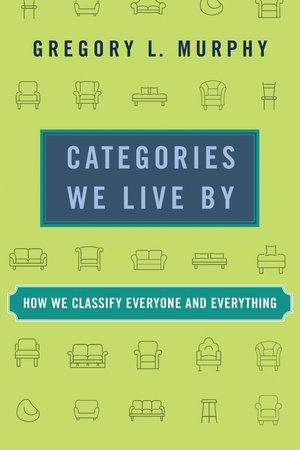
v Book review: 'Categories we live by'

Our lives and careers (hopefully) are full of bridges, some recognised, but not taken, others passed-by on our way (and unseen). Before I completed my training as a student mental health nurse beginning in 1977, I saw a critical bridge between the knowledge and skills on mental health nursing and general nursing. Crossing this bridge was essential (for me) to being a registered 'nurse'.

Chapter 6 on Psychodiagnostic Categories is a gift therefore. It's a gift because another bridge emerged in 1980-1981 with the Sinclair microcomputers and advent of 'home computing'. With a ZX81 there was going to be a need to navigate this space between the what is human and what is machine. Two categories that remain key concerns today.

The DSM (Diagnostic and Statistical Manual of Mental Disorders - published by the American Psychiatric Association [APA] ) is on the chapter's first page, plus the patient, researchers, psychiatrists and the conditions learned during their medical education, contrasted with individual psychiatrist's clinical encounters with patients. 

Very quickly (the next page p.86) Murphy identifies the 'circumstantial factors' that cause mental illness. This is very positive as acknowledging the determinants across health is key, however framed, e.g. social determinants, economic, educational we must take into account all of them. Otherwise our assessment must be considered as incomplete, or at least lacking?

The utility of Prof. Murphy's short book is in how prior to the case studies we see the problem of definitions. And how what is determined is often a matter of convenience. This is a non-trivial matter - especially in health, economics, sciences, politics, future and peace studies: you get the idea...

Of immediate relevance in the USA is the need for categories for insurance purposes. It is an industry. Yes, indeed: 'The truth is that psychiatric patients vary in every possible way', p.86. Computers of course are well-equipped to help us in the creation, revision and publication - access to categories; with classification, taxonomy, nomenclature ... also in the mix. I was reminded of WHO's history of classification (see below) which I point students and colleagues to.

The way DSM is applied is explained and the politics duly noted (especially in Chap. 7). Resort to 'miscellaneous' is described as a sign that 'the categories are not necessarily picking out 'natural kinds'. I remember in the 90s, our PICK database on a community mental health project had Murphy's 'X' not otherwise specified. I don't think I read the word 'caseness', but there is a lot 'inside'!? References are ongoing. I wondered if there could be more recent examples, but perhaps this is in turn symptomatic of categorisation tending to be the rear car? Fuzziness is discussed. Plus, the observation that 'a few psychiatric categories may be true natural kinds, like gold or rainbow trout.' p.89. 

'Change' is a mantra for all disciplines in the NHS and global healthcare. So pragmatic to see how revision and change in the DSM can be used by - dare I mention - anti-psychiatry advocates and clinicians as to what change represents to these respective interest groups? At a time when research is experiencing funding changes, Murphy contrasts how DSM was developed for the use of clinicians to identify people with similar profiles, but they were not developed to identify (research - Nat. Inst. for Mental Health) underlying causes. Raising the determinants once again, p.91.

It is obvious but as personnel and Brits may look at private medicine with coding purposed for insurance purposes; there is within the NHS (public-funded healthcare) and psychiatry (a single domain too) within and the need by patients for diagnosis, and the welfare system. Here in the UK the rise of mental health in young adults, autism and waiting lists for assessment for ADHD are a moot point.  

Through Hodges' model we some possibly fascinating bridges, that are much less-travelled these days? In many cultures, even if we do not need permission to be sick, it needs to be recognised socially - and so politically. Society needs to deal with individuals who are ill, infirm, disabled. It's interesting then to reflect on this issue and phenomena through the lens of anthropology and medical sociology. Murphy warns to of the dangers 'of thinking of something as being the category'. In medicine a new approach is needed, as Murphy also notes. A nice bridge to chapter 7 Categories and Power.
'The case studies discussed in the previous chapters remind us that categories can be political and social tools. An old department chair of mine had the saying, "She who sets the agenda controls the meeting." We might coin a new one, "Those who make the categories control the outcomes." If your psychodiagnostic categories are made by working therapists and physicians, they might facilitate treatment- -and also benefit those practitioners. If they are made by researchers, they might not be very useful for treatment at all. And if they are made by insurance companies, all bets are off.' p.95.
Trying to take my attempts to find theoretical underpinning (category 'trying to clever') I've a diagram scribbled here. Nearby, p.100, I picked up on 'the cost of losing information or distorting reality to some degree.' Murphy picks up on the ICD Int. Classification of Diseases here. Twitter is still twitter here - thumbs up for that! There is a useful example of the impact of categories in age, pregnancy and medical attention provided.

From Chapter 8, I picked out: Naming Nature: The Clash Between Instinct and Science, by Carol Kaesuk Yoon. W. W. Norton: 2009. 352 pp. £19.99/$27.95 9780393061970 | ISBN: 978-0-3930-6197-0; and checking, I remember the book's cover. Murphy's book overall highlights the convenience of our categories, the ongoing challenges and everyday conundrums they present though the remaining chapters on Species (8); Peanut Butter, Potato Chips, Almond Milk... (9); Racial Categories (10). These all contribute, still building a coherent picture, chapter 10 vital among them with a url provided (which may have changed):

https://anthropology-tutorials-nggs7.kinsta.page/adapt/adapt_4.htm


The one-drop rule (David, 1991) on p.126, is deeply troubling. Especially so given some examples of human reasoning even today. Medicine, by way of blood tests, features again. I smiled wryly reading how people from different countries have different rates of disease, e.g. 'heart disease in Scotland'. Instantly, and crackling - a deep-fried Mars bar popped into my mind. 

The things people do. You - really could read this book! 

Murphy, Gregory L. Categories we live by: how we classify everyone and everything. Cambridge, MA: The MIT Press, 2024.

Many thanks again to MIT Press for the review copy and Prof Murphy for a great read.

Previously: DSM : fuzzy : categories

Friday, May 09, 2025

UK Evening Symposium: Knowledge Discovery and Data Mining - May 14th 2025

 UK Symposium on Knowledge Discovery and Data Mining 2025

Wednesday May 14th 2025 from 6 p.m. to 7.30 p.m.

Location

This will be a virtual event using the Zoom video-conferencing platform. 

Outline Programme

6.00 p.m. (UK time): 'Arrival' and Introduction

Chair: Prof. Max Bramer (SGAI)

6.10 p.m. to 6.40 p.m.

Prof. Dr. Anna Fensel (Professor of Artificial Intelligence and Data Science, Wageningen University, The Netherlands) BIO

Knowledge graphs, FAIR principles and generative AI for scientific discoveries in agri-food

6.40 p.m. to 6.50 p.m. Discussion and Questions

6.50 p.m. to 7.20 p.m.

Dr. Anelia Kurteva (Assistant Professor of Computer Science, University of Birmingham, UK) BIO

Responsible AI through responsible data management and governance enabled by knowledge graphs

7.20 p.m. to 7.30 p.m. Discussion and Questions

7.30 p.m. Close


Please see links, e.g. 'programme' at: http://ukkdd.org.uk/2025/

My source: BCS-SGAI list

Thursday, May 08, 2025

Sets in Hodges' model

INDIVIDUAL
  |
     INTERPERSONAL    :     SCIENCES               
HUMANISTIC --------------------------------------  MECHANISTIC      
SOCIOLOGY  :   POLITICAL 
|
GROUP

'The emotions that we want to infer are the seven basic emotion categories.
Concretely this set is E = {Anger,  Contempt, Disgust, Fear, Happy, Sadness, Surprise}.' p.111.*

Sets - Venn diagrams

Physical obs = { Temperature, Pulse, Respiration, Blood Pressure, Gait ... }
Social = { Friends, Family, Work colleagues, Neighbours ... }

Politics { [Freedom], - Elections, Law, Policy, Government, MPs, Ministers, PM-President ... }


David Sanchez-Mendoza, David Masip, Xavier Baro, and Agata Lapedriza. Emotion Detection Using Hybrid Structural and Appearance Descriptors. In. MDAI 2013: Proceedings of the 10th International Conference on Modeling Decisions for Artificial Intelligence - Volume 8234 November 2013. Pages 105–116 https://doi.org/10.1007/978-3-642-41550-0_10

*I am unable to double-check this reference and hope it is correct(?).

See also:
UNIVERSAL EMOTIONS: Paul Ekman Group

Wednesday, May 07, 2025

Conference: Safety and Quality in Mental Health: Improvement - Led Care c/o RSM

'This event will explore successful strategies for enhancing patient safety and driving quality improvement in mental health services.

This timely event addresses the critical issues highlighted by recent high-profile incidents in mental health care. Keynote speakers, including Adrian James, the National Clinical Director of Mental Health, and Shubulade Smith, President of the Royal College of Psychiatrists, will share their experiences of leading organisations through challenging situations. Jonathan Warren, co-author of the Edenfield report, will also provide unique insights.

Key Themes:

  • Supporting staff through traumatic incidents
  • Amplifying patient and family voices
  • Service redesign for safer care
  • Innovative use of data for improved outcomes
  • Learning from significant events to prevent recurrence
  • Balancing human rights with public protection ...'
at: Royal Society of Medicine, 
1 Wimpole St, 
Marylebone, 
London, 
W1G 0AE, United Kingdom

Tuesday, May 06, 2025

Book review iv: 'Categories we live by'

The introduction to part ii 'Case Studies' is quite prescient: 'Categories have consequences'. p.75.

Certainly timely in the UK as Prof. Murphy returns to gender and birth sex his first example at the book's start. 

Coincidental or not, categories do change. As we try to understand them it is vital we don't mess them up. Consequences follow for people who are subjected to the categorisation. People use them for stability, predictability, so change can be fraught for all. Personal and group identities can all be affected, and (recently) provisions in how 'spaces' are allocated and regulated - controlled.

At infant - junior school I remember the lack of awareness, understanding and empathy for peers affected by epilepsy, stigma was a thing then that wandered the classroom and playground. Through my career I've heard many clients recount experiences pointing to stigma and exclusion.

Of the case studies Murphy writes:
'Each chapter is a more-or-less self-contained case study (including other similar examples), except that chapter 7 is a more general meditation on how determining categories is used in the exercise of power. Some of the case studies get into the weeds, and if you find yourself not that interested in how species are defined, for example, you can skip ahead to the next chapter without losing much. Following part II will be a conclusion, which attempts to summarize some of the lessons learned from all these examples.' p.77.
Murphy's style is accessible, and the case studies are informative. The author is also accessible and responsive I must add. I prefer and need a physical copy of books to reduce screen time, but e-books have their uses. I'm sure I read a short sentence in the case studies that essentially contrasted the individual and collective in sociology. Can I find that word? No luck thus far. I may be mistaken but appreciate Prof. Murphy's reply and thoughts.

There's another 'news' coincidence on p.80 (Chapter 5 'Legal Categories'): are Santa Claus costumes 'clothing' and so subject to tariffs (also referenced)? Every person worldwide, has no doubt pondered on their marked grade in a test or exam - and 'where' this places them?
'In her review of a book about rules, Rivka Galchen (2022) admits to feeling a bit of despair in the end: "Rules that leave a ruler, Or a judge, in charge of interpreting them feel at once humanized and corruptible. Rules that allow no exception seem free of human frailty but alien, and unable to admit properly of complexity." It is very easy to point at what went wrong with an overly strict rule or with a judge who seems biased, but less easy to devise a system of categories that avoids every problem.' p.83.
I often frame the conjunction of the mechanistic axis and the group in Hodges' model in terms of what do need, or get when you have large groups of people? The political domain, including law and disorder is critical of course. Is 'utopia' the perfect system by definition? I like the way even prior to reference to Galchen, Murphy states how 'the precise borders between categories can be essentially arbitrary, and there is no way to avoid that arbitrariness if you insist on dividing things into categories.'. p.83. 

If this book was a BASIC computer program, the first command for Chapter 6 Psychodiagnostic Categories. might well be a 'GOTO' statement: Chapter 7 Categories and Power.

More to follow and nearly there - sadly.

Previously: identity : space : categories

Murphy, Gregory L. Categories we live by: how we classify everyone and everything. Cambridge, MA: The MIT Press, 2024.

Many thanks to MIT Press for the review copy - and the dose of serendipity: