Hodges' Model: Welcome to the QUAD: August 2025

Hodges' model is a conceptual framework to support reflection and critical thinking. Situated, the model can help integrate all disciplines (academic and professional). Amid news items, are posts that illustrate the scope and application of the model. A bibliography and A4 template are provided in the sidebar. Welcome to the QUAD ...

Sunday, August 31, 2025

Play - “The Ballad of Crooked Lane” 6th & 7th Oct.

Media Release - 

Blind Poet’s Life to be Celebrated in New Play. 

The life of Edward Rushton, Blind Poet and key figure in the Campaign against Slavery, will be spotlighted in a new production by Valley Theatre Drama Group in Liverpool. The play – entitled “The Ballad of Crooked Lane” – is set on the day Rushton, now well into middle age, awaits eye surgery to regain his sight. While waiting, he goes over his eventful life with his friend and biographer, William Shepherd, the Minister of Gateacre Chapel.


“Rushton was a larger-than-life character,” says writer and director Tom Mclennan. “The story is that he lost his sight going below deck to help sick African captives on their way to the plantations. I first read about him in Bill Hunter’s biography “Unsung Hero” and have always felt his life deserves more recognition.”

Apart from campaigning against the slave trade – not always a popular thing to do in those days, since a large amount of Liverpool’s wealth was based on the evil triangular trade – Rushton was also instrumental in establishing the Liverpool School for the Blind, one of the first in the country, as well as being at the forefront of efforts to end the notorious pressgangs that terrorised coastal neighbourhoods, intent on kidnapping sailors for the British Navy.

“The Ballad of Crooked Lane” will be performed as part of a double bill along with Day Sheehan’s “Wake” for the Liverpool Fringe on Monday October 6th, 7.30pm, at Valley Theatre n Netherley, and on Tuesday 7th October, 7.30pm, at The Studio Beyond, 63 Wood Street, Liverpool L1 4AL

Entrance for the Valley Theatre event is free (pay a donation if you like it). Tickets for the Studio Beyond are £8/£6 and can be bought from:

https://store.makeitwrite.org/product/balladandwake/

I read a part for this at Valley Theatre, very interesting and will look to see a performance.

See also: Edward Rushton: Who was this blind revolutionary?
https://www.bbc.co.uk/news/blogs-ouch-29957645

My source: https://www.philosophyinpubs.co.uk/

Currently reading, Arnold Wesker's 'The Friends'.
https://www.arnoldwesker.com/plays/the-friends/index.html

Saturday, August 30, 2025

Revisiting "patient career"

Almost a decade ago I posted:

Medical Sociology: The Importance of 1894....2015 patient career - health career

- which was prompted by:

McKinlay, J.B. (1971) The concept “patient career” as a heuristic device for making medical sociology relevant to medical students. Social Science and Medicine, 5(5), 441-460.
https://pubmed.ncbi.nlm.nih.gov/5160599/

McKinlay's abstract reads:
Abstract

Increasingly it is being suggested that the behavioural sciences can contribute to medical education and should be incorporated into the medical curriculum. Evidence for the development of this view in Great Britain can be found in the recommendations of the recent Royal Commission on Medical Education and the submissions of various bodies to it. Given that the behavioural sciences in general and medical sociology in particular, can contribute in a positive way to the medical curriculum this paper attempts to: (a) draw together and crystallize some of the major problems inherent in past attempts to organize and include the behavioural sciences in the medical curriculum; (b) devise some criteria for determining the behavioural science content of the medical curriculum; (c) outline and discuss one possible course in medical sociology utilizing, as an organizing framework, the concept “patient career”.
Brian Hodges created his eponymous model with curriculum planning, design and development as a key purpose. In the early-mid 1980s nursing was looking forward to becoming a degree, undergraduate course of study.

McKinlay's use of 'patient career' (and others) can obviously be associated with the impact of life chances upon a person's health career

Individual
|
      INTERPERSONAL    :     SCIENCES               
HUMANISTIC  --------------------------------------  MECHANISTIC      
 SOCIOLOGY  :    POLITICAL 
|
Group


'While discussing the relationship between the medical and social sciences, and the role of the social scientist in teaching and research in medicine, Butler groups the range of medical topics which have been studied sociologically into four main categories [l4]. These are,

the sociology of illness,
the sociology of health,
the sociology of medical care
and the sociology of healing.' p.443.^


McKinlay sees these categories as too comprehensive. Although within the SOCIOLOGICAL domain of Hodges' model this is a 'start'? McKinlay proceeds to identify specific difficulties presented to educators, which include (in summary and with my emphasis):
'(a) The failure to identify needs, specify objectives and devise criteria
(b) The failure to distinguish between perspectives

'Very generally, the behavioural sciences can be said to be conccrned with the description and explanation of the health and illness behaviour of groups and social categories, whilst medicine (especially clinical medicine) aims at the understanding and successful treatment of individual patient cases. By working exclusively on the basis of (or failing to take account of) these separate perspectives, meaningful dialogue between behavioural scientists and medical students has been made extremely difficult.'

(c) The failure to distinguish the audience
(d) The failure to take account of temporal location
(e) The failure to provide a conceptual framework

Most courses in the behavioural sciences either offered or proposed, to a greater or lesser extent, tend to ressemble a sort of shopping list. For example, the courses offered by Badgley, Martin et al., and those proposed by the Society for Social Medicine and the Royal Commission all reflect this "'shopping list" charactcristic. After working down the list it is assumed that students will have the technical goods required. It is, of course, difficult for students undertaking these "shopping list" courses to reflect on where they have been, appraise their current position, or consider where they may be going.
Two further general problems seem to be inherent in many of the attempts to systematize the field of medical sociology, and to some extent are associated with some of the problems already outlined. 
(f) The problem of trying to cover too much [Which lists 18 topics for 2nd year students.]
 (g) The problem of omitting important areas' pp.443-445.
McKinlay then, is similarly preoccupied with the curriculum (for medical students):
'This section is concerned primarily with devising criteria which, given the finite amount of teaching time available, will offer some guidance in determining what aspects or areas of medical sociology should be given priority for teaching in the medical curriculum.' p.445.
This work from the 1970s surely invites reflection upon the meaning of 'progress'? 

^My formatting.

More to follow...?

Friday, August 29, 2025

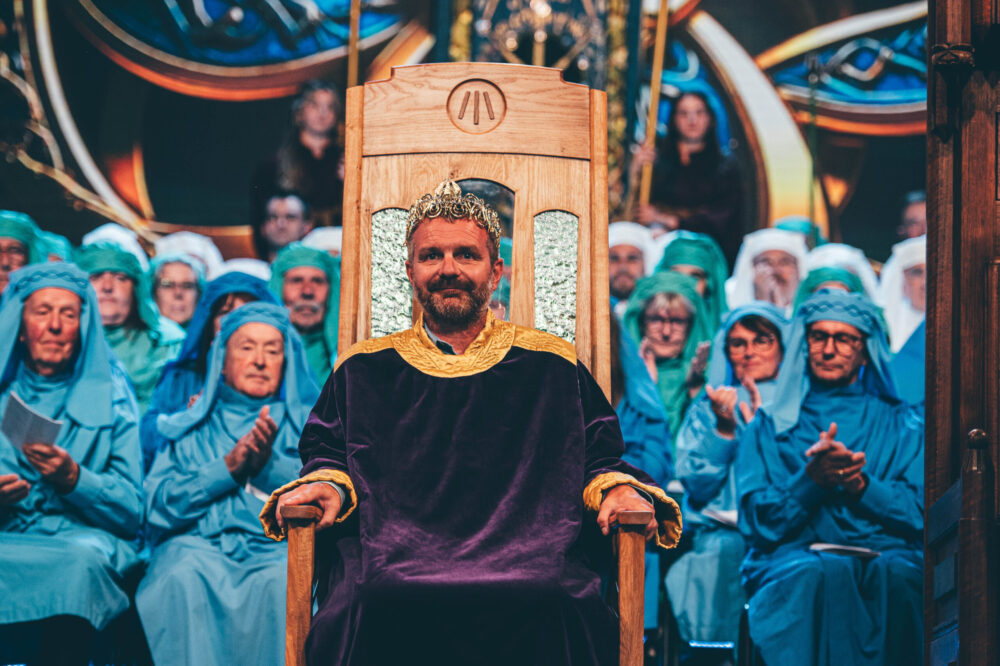
Winner of Wrecsam National Eisteddfod crown - 4th Aug.

Crown winner Owain Rhys
Image: 
https://nation.cymru/culture/winner-of-wrecsam-national-eisteddfod-crown-announced/

Owain Rhys is the winner of the Wrecsam National Eisteddfod crown for his poems about living with a loved one who is suffering with dementia.

The crown – sponsored by Elin Haf Davies – and a cash prize of £750 was presented to Owain in north Wales on Monday (August 4) by Prydwen Elfed Owens.

The prize was awarded for a “pryddest” or collection of poems not in the traditional Welsh style cynghanedd, of no more than 250 lines, on the theme of “Adfeilion” or ruins.

The adjudicators were Ifor ap Glyn, Gwyneth Lewis and Siôn Aled.

The crown was designed and produced by Neil Rayment and Elan Rowlands.

The pair previously created the impressive crown for the Rhondda Cynon Taf Eisteddfod in 2024 – won by Gwynfor Dafydd for his series of poems on “Atgof” – or remembrance.

Head judge Ifor ap Glyn said: “Llif 2 opens with the simple couplet ‘When you forget / every day as you wake’ – and it discusses living with someone suffering from dementia, namely the poet’s mother.

“It’s a quiet and sensitive treatment of what must be done to help the mother continue to live with dignity as her memory deteriorates.

“The collection presents a tender picture of a difficult situation faced by so many families today, and we sense the depth of the poet’s feelings toward his mother and her former strength.”

Text: https://nation.cymru/culture/winner-of-wrecsam-national-eisteddfod-crown-announced/

See also: https://eisteddfod.wales

My Source: BBC Four Episode 1 - 15mins
https://www.bbc.co.uk/iplayer/episode/m002gwyq/eisteddfod-eisteddfod-2025-with-huw-stephens-episode-1

Thursday, August 28, 2025

Lessons NOT learned: Bhopal, Brumadinho, Fundão, Kafue River ...?

Individual
|
      INTERPERSONAL    :     SCIENCES               
HUMANISTIC  --------------------------------------  MECHANISTIC      
 SOCIOLOGY  :    POLITICAL 
|
Group


Kafue River -
( clearly - not a 'person', nor the Rio Doce )

Signs of Life
Signs of Government, Law & Accountability


Wednesday, August 27, 2025

Nursing models of care: "There is another"!

It seems Star Wars forums continue to debate the meaning of Yoda's response to Obi-Wan that "There is another". 

The lack of practice-based debate in nursing and health education about 'nursing theory' and 'models of care, confirms that these academia sagas did indeed take place in a galaxy far, far away.

There is, as ever, positive and negative news too. The bibliography in the sidebar keeps growing. I'm hoping for news of additions dropping into the inbox before the end of the year. Not just prospective papers I know about (yes, there is another prospect!), but other work. In a way the latter is even more special. As these sporadics reveal that there are research heroes out there, on their own path and journey of discovery. Finding Hodges' model, they have applied it to their respective field.

Yesterday, searching for 'Activities of Daily Living' (first published in 1980) while writing the DASH post, on BMJ Careers I came across:

'What models do nurses use to guide their care?'

Is that 'models' plural?

Perhaps the response to the question says something about:
  • nurse academia;
  • how our medical colleagues view nursing;
  • and more importantly - their understanding of nursing, the nursing profession, ongoing aspirations and relevance to self , health and social care in the 21st century?
In January, frustrated at the effort that is getting published (a shared experience then) and lack of attention to theory I posted:
The literature trail for Hodges' model is not voluminous, but it is there:
  • as a model of care, conceptual framework;
  • person-centredness;
  • integrated and holistic care;
  • holistic bandwidth
  • SDGs
  • life chances, health career, prevention, life-style and literacies
  • socio-technical approach
  • global health;
  • reflection and reflective practice;
  • critical thinking
  • mind-mapping;
  • concepts, conceptual spaces, threshold concepts
- with much more to do, even in the above.

Please, call this a gentle nudge. Thank you.

Image: http://www.quickmeme.com/

Tuesday, August 26, 2025

BBC Radio 'File on Four' - DASH to Instrumentalise

Of course, I'd like to see Hodges' model applied to many purposes.

As probably posted at some point, the thought of Hodges' model being instrumentalised goes back a long way. To the time of microcomputers in fact and 'CAPA' which stood for 'Computer-Aided Patient Assessment':

Jones, P. (1986) Computing in Nursing NEWS. Computerised Patient Assessment. Nursing Times. 85: 5. Sep 3-9;82(36):63-5. PMID: 3532039

[Describes 'CAPA', a BBC BASIC microcomputer program for student nurses.]

Even before discovering Hodges' model in the late 1980s, I was sensitive about being seen to mechanise nursing and care delivery. Nursing was still preoccupied with the nursing process and individualised care. The last thing I would want is to be seen as supporting the processing of patients. The person, their social context and identity becoming lost. It was a long-term and ongoing co-author who drew my attention to Hodges' model as an instrument. Which I've considered for each and across the care domains. CAPA was simplistic, even beyond the programming language employed. A dependency score from 1-5 was allocated (it's a long time ago!) to each of the activities of daily living for a patient:

Roper, N., Logan, W., & Tierney, A. J. (2000). The Roper-Logan-Tierney model of nursing: Based on activities of living. Churchill Livingstone.

In healthcare we are trained and become accustomed to the use of many assessment tools, checklists; this includes mental health nursing and specific therapies. Emphasis, is rightly placed upon the safety, validity and hence testing of tools. Some are 'broad brushes'. Others are specific - outcomes, anger, a carer's knowledge, conviction of belief, mood, impulsivity and many more. Drift away from the original goal and purpose and problems can (predictably) ensue. Training will and must be updated, but do all assessment tools have a 'Use By' date? Hopefully there is ongoing development, version control and sustained trials and testing of the instruments themselves.


'File on Four' BBC Radio 4 this evening concerns DASH, which stands for "Domestic Abuse, Stalking and ‘Honour’- based abuse".

Monday, August 25, 2025

c/o SDOH list "Liberal/Individualized Versus Materialist/Structuralist Approaches"

Abstract

Background: While consensus exists that the sources of health inequalities are social inequalities brought on by the experience of qualitatively different living and working conditions, means of addressing these conditions continue to be the subject of dispute. Whether to emphasis education or income as a social determinant of health is one such example of differing views on the sources of these inequalities and the means of addressing them. These different emphases are often justified through the narrow examination of the magnitude of statistical relationships between educational attainment and income with health outcomes.
Purpose: We offer a broader view, seeing these differing emphases as indicative of contrasting views of the nature of society and means of responding to these inequalities with emphasis on education representing a liberal reformist view of the issue while an emphasis on income representing a materialist structuralist view.
Research design and study sample: We examine, the validity of this hypothesis through an analysis of content of five representative publications that consider educational attainment as a social determinant of health and five that do so for income.
Analysis and results: We find that the emphasis on education as a social determinant of health focuses on the attributes of the individual and is generally accepting of the structures and processes of the existing economic and political order. In contrast, an emphasis on income – when placed within a materialist analysis – views existing systems as inequitably distributing income and other resources thereby requiring their reform or transformation.
Conclusion: Considering evidence of deteriorating living and working conditions for many in Canada and elsewhere, we see the latter emphasis as more useful for understanding and addressing these disturbing developments.

Ervin A, Raphael D. Liberal/Individualized Versus Materialist/Structuralist Approaches to Addressing Social and Health Inequalities: Education and Income as Social Determinants of Health. Community Health Equity Research & Policy. 2025;0(0). doi:10.1177/2752535X251316086

At present differentiating and conceptualising the individual and the collective (society) is ongoing. Ervin and Raphael's paper is helpful then:

'Grabb’s definition of social inequality leaves room for the importance of individuals’ attributes such as educational attainment and income – while Crossman’s definition directs explicit attention to the structures and processes of society9,10:'

Individual
|
      INTERPERSONAL    :     SCIENCES               
HUMANISTIC  --------------------------------------  MECHANISTIC      
 SOCIOLOGY  :    POLITICAL 
|
Group

'Social inequality can refer to any of the differences between people (or the socially defined positions they occupy) that are consequential for the lives they lead, most particularly for the rights or opportunities they exercise and the rewards or privileges they enjoy.9, p.1'

Physical processes

Physical structures

Infrastructures

'Social inequality is characterized by the existence of unequal opportunities and rewards for different social positions or statuses within a group or society. It contains structured and recurrent patterns of unequal distributions of goods, wealth, opportunities, rewards, and punishments.10'

Political processes 
(bureaucracy)

Political structures
(inc. Institutional)

Power

In Ervin and Rapahael (2025) there are also two tables:

Table 1. Four Primary Aspects of How Educational Attainment Comes to be a Social Determinant of Health.

Table 2. Five Primary Means of Conceptualizing How Income Comes to be a Social Determinant of Health.

- the main headings of which I have mapped to Hodges' model below.


Individual
|
      INTERPERSONAL    :     SCIENCES               
HUMANISTIC  --------------------------------------  MECHANISTIC      
 SOCIOLOGY  :    POLITICAL 
|
Group

Personal cognitive and
decision-making skills

(Cognitive) Access - Literacies


(Physical) Access to healthcare


Behavioural risk factors


SOCIO-

Life Chances - Health Career

-ECONOMIC status

Sunday, August 24, 2025

Nothing new under the Sun . . .

"The quadrangle is the token of a new humanity. The square is to us what the cross was to the early Christians". 

Theo van Doesburg

Tate Liverpool visit 13th June 2008.

Saturday, August 23, 2025

Seeking Alpha?

OK. I admit it. I submit!

Despite many posts tagged economics, references to capitalism, the recent reading of Prof. Borras's 'Health and Health Care Inequities', it looks like the search for 'alpha' has won out.

Health, healthcare, health systems and health services, universal health coverage, universal access, planetary health, social care and more SDG3 are playing catch-up. This is inevitable. That is clear, as and in the lives we live.

We shouldn't be ashamed. 

As curricula (by and large), medicine, and academia keep telling us:

health care is bio-medical, or at best bio-psycho-social.

Business, commerce, neoclassical economics, in short - Capitalism holds sway within the political domain. It influences policy, sustains the existing ill-health care system paradigm. Without which, we must acknowledge of course, COVID, and other threats, the ageing populations in many nations ... society as we know it would be in serious trouble, if not at risk of collapse.

Individual
|
      INTERPERSONAL    :     SCIENCES               
HUMANISTIC  --------------------------------------  MECHANISTIC      
 SOCIOLOGY  :    POLITICAL 
|
Group


psycho-

bio-medical

-social


"What Is Alpha?
Alpha (α) is a term used in investing to describe an investment strategy’s ability to beat the market, or its “edge.” Alpha is thus also often referred to as excess return or the abnormal rate of return in relation to a benchmark, when adjusted for risk."


The literature in the past has identified the risks of free-ranging reflection. Two sources are referenced in the paper published this month:
61. L. Platt, “The ‘Wicked Problem’ of Reflective Practice: A Critical Literature Review,” Innovations in Practice 9, no. 1 (2014): 44–53. 
62. A. de la Croix and M. Veen, “The Reflective Zombie: Problematizing the Conceptual Framework of Reflection in Medical Education,” Perspectives on Medical Education 7 (2018): 394–400.
There is a truth here, however. It looks to me like the economists, politicians, and policymakers are engaged in navel-gazing.

To fully apprehend health, healthcare, and prevention in the 21st century we must reflect upon and think critically biopsychosociopolitically.

Then collectively the disciplines, embedded in the spiritual 

ALPHA CARE 

is presented to us.

Individual
|
      INTERPERSONAL    :     SCIENCES               
HUMANISTIC  --------------------------------------  MECHANISTIC      
 SOCIOLOGY  :    POLITICAL 
|
Group


What is Alpha? - https://www.investopedia.com/terms/a/alpha.asp

Image: https://iconscout.com/icons/alpha

Friday, August 22, 2025

Paper - (finally!) "A generic model and conceptual framework to prime curiosity across health and social care ..."

 It has been over a decade but at last the second* paper has been published in Journal of Evaluation in Clinical Practice:

Jones, P. (2025), A Generic Model and Conceptual Framework to Prime Curiosity Across Health and Social Care Disciplines to Facilitate Lifelong Learning. Journal of Evaluation in Clinical Practice, 31: e70252. https://doi.org/10.1111/jep.70252

ABSTRACT 

Rationale: The Corona virus pandemic highlighted the importance in continuity of the physical and emotional labour across all care sectors. Synergy between healthcare in hospitals, and community services must be allied with social care; and be central to integrated and efficient policy and service delivery. Services were found wanting in the pandemic and in recurring winter crises. The politics of funding for care delivered in rest and nursing homes remains contested, awaiting long‐promised governmental action. The workforce is recognised as dedicated, skilled, compassionate and yet under‐valued and under‐paid; managers face ongoing recruitment challenges, with a national shortage of staff, and high turnover of personnel. A National Care Service is awaited in England and Wales. 

Aims and Objectives: This study explores the ongoing care crisis, using the educational lens of threshold concepts, projected, analysed and synthesised of a generic conceptual framework, known as Hodges' model. Readers will understand Hodges' model and threshold concepts being equipped to explain both. 

Methods: The study is descriptive and uses a conceptual mapping approach supported by discussion and literature. Additional resources and avenues for ongoing study are also provided. 

Conclusion: In conclusion, Hodges' model is a pragmatic, practice‐based tool, that can support and sustain curiosity for workforce learning and development. 

Acknowledgements I would like to thank Messrs Mark Bird and Matthew Graham and the journal's reviewers for comments on drafts of this study; and acknowledge the effort of Dr Michael T. Flanagan in creating the informative threshold concepts resource (referred to above). 


https://onlinelibrary.wiley.com/share/author/IRPNBR2KHJNYJK8XUAW6?target=10.1111/jep.70252

*This paper was originally the first of a two-part work. Feedback from reviewers suggested the papers be standalone. United now, in one journal.

Many thanks to the reviewers, editor, editorial and publications team at JECP.

This paper has been added to bibliography in the blog's sidebar.

Thursday, August 21, 2025

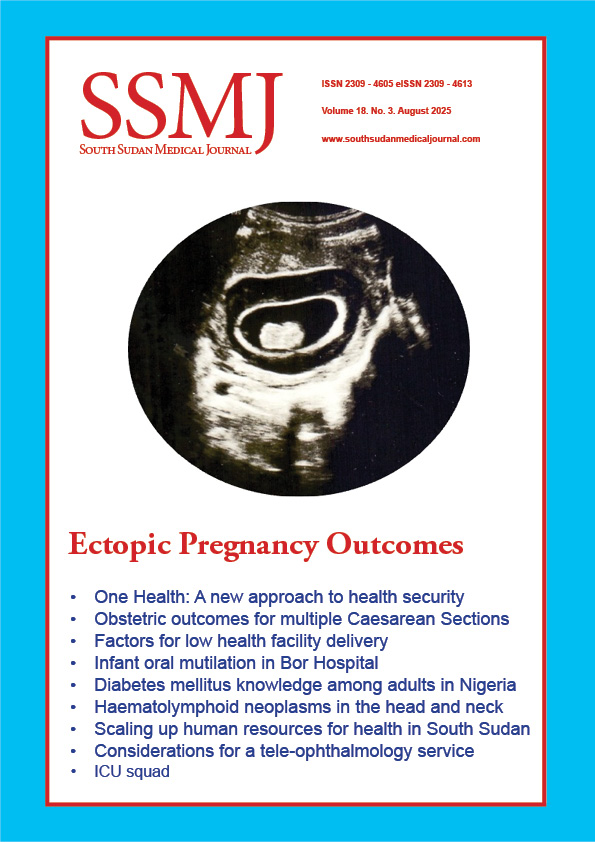
South Sudan Medical Journal. August 2025 18:3.

Dear Reader,

The full issue of our August 2025 issue is now available online here; the articles are listed below.

Also note that SSMJ is looking for a volunteer with time and interest in South Sudan, and experience in academic editing to join our Editorial team.

Editorial

Research Articles

Review Articles

  • A review of recent publications on haematolymphoid neoplasms in the head and neck region Karthik Shunmugavelu and Arun Vijaianandh A.
  • Scaling up human resources for health in South Sudan: A strategic imperative for achieving universal health coverage Gabriel Loi
  • Eyes in the sky: Considerations for a tele-ophthalmology service in South Sudan Garang M. Dut

Case Reports

  • Ectopic gestational-sac encapsulated in an ovarian cyst: A case report  Adam Moyosore Afodun, Alain Jabo, Mecthilde Mukangendo, Akeem Ayodeji Okesina, Olivier Mizero, Emmanuel Adeyemi Odumeru and Khadijah Kofoworola Quadri
  • Death due to ruptured tubal pregnancy: A case report P. Vinod Kumar 
  • ICU Squad: A possible solution for critical care service in low-resource areas Esraa Suliman Omer Abdelmageed and Ihab B Abdalrahman

Short Communications

  • The role of government in advancing private hospitals to improve healthcare services in South Sudan Jok Thikuiy Gang
  • 10th East African Health and Scientific Conference
  • Letter to the Editor: Self-medication Thomas Akuith Ngong 
  • Obituaries: Dr Baba Allan Ngachigoi Lanyanga and Dr Abdu Mohammed Abdudrbo Gilo
  • Call for Abstracts: Association of Surgeons of South Sudan First Scientific Conference

We thank the copyeditors and reviewers who helped prepare these papers. 

Articles in SSMJ are indexed by Scopus African Journals Online (AJOL), and the  Directory of Open Access Journals (DOAJ), and as well as being on our websiteSSMJ is included in the EBSCO scientific research collection.
 
Thanks to everyone who supports SSMJ. Invite your colleagues to join our mailing list here.
 
The SSMJ team
Email: southsudanmedicaljournal AT gmail.com 
Website: http://www.southsudanmedicaljournal.com
Follow us on X  @SSMedJournal and our Facebook Group,

SSMJ is published by the Health and Social Science Research Institute of South Sudan (HSSRI-SS)
All links provided at - 
https://www.southsudanmedicaljournal.com/archive/august-2025/

Tuesday, August 19, 2025

Dementia in 4x5 by Katherine Hubbard

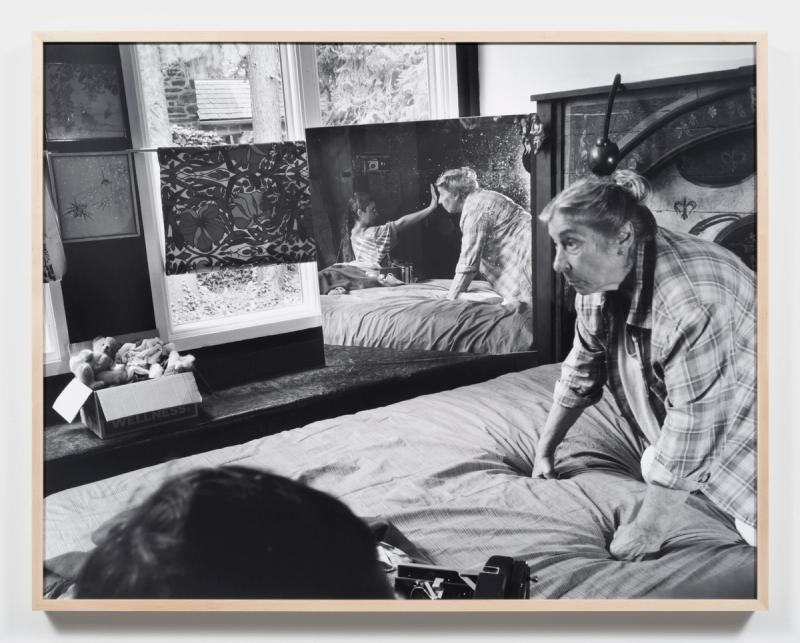
"The American interdisciplinary artist Katherine Hubbard has spent the past five years documenting her relationship with her ageing mother, Antonette Berger, who in 2020 began exhibiting the first signs of memory loss. Her book The Great Room, set between the four walls of Berger's home in Philadelphia, is a culmination of grief and intimacy, as Hubbard steps into her role as caregiver. Using two large- format 4x5 cameras (which she is both behind and in front of) and drawing on her background n performance art, Hubbard transforms the once safe, domestic space into a psychological playground as the pair navigate their new reality. ...
In this portrait, Hubbard sits with her mother on her bed. Their bodies are reflected in a square nirror offset by a series of other square and rectangular objects (picture frames, windows, the headboard) which fragment the viewer's gaze. "This photograph was taken before she had a diagnosis,' Hubbard tells me. "It was a very confusing time, with a lot of uncertainty and frustration between us. ... 
"І am using the camera as а means of creating time with my mom apart from the brutal task of managing her," Hubbard writes. And to the woman who gave her life: "You might like to know that, when І think of you and see you, it's as a whole person."  
Inès Cross. FTMagazine. 

Individual
|
      INTERPERSONAL    :     SCIENCES               
HUMANISTIC  --------------------------------------  MECHANISTIC      
 SOCIOLOGY  :    POLITICAL 
|
Group
one fifty one (hand to face), 2021. Silver gelatin photograph

'The
Great
Room'


Collaboration

Care in the Community

Direction

Gaze


Book: 
h290 x w219 mm. 88 pages
Text by Katherine Hubbard. Hardback. £46.00

https://loosejoints.biz/collections/current-titles/products/the-great-room

Photograph: https://companygallery.us/ - https://companygallery.us/exhibitions/the-great-room

Book cover: Amazon
https://www.amazon.co.uk/Katherine-Hubbard-Great-Room/dp/191271969X


My source:
Inès Cross. Katherine Hubbard, FTMagazine. August 9th 2025, #1137. pp.10-11.
Ack. Antonette Berger (mother ...).

Monday, August 18, 2025

28th Annual International Hybrid Nursing Philosophy Conference, July 22-24, 2026


Join the UC Irvine Sue & Bill Gross School of Nursing Center for Nursing Philosophy in association with the International Philosophy of Nursing Society (IPONS) for the 28th International Nursing Philosophy Conference.

The HYBRID conference will take place physically at the University of California, Irvine in sunny, coastal Southern California, USA, as well as virtually via Zoom.

This hybrid, multidisciplinary conference aims to generate conversations between philosophy and nursing through a series of invited panel conversations and events. Cutting-edge peer-reviewed abstract panels on current scholarship and ideas in nursing philosophy will also be featured.

Contacts and site ...

Sunday, August 17, 2025

TDS - 'Tariff Derangement Syndrome' ...

... is that all you have to worry about?


Individual
|
      INTERPERSONAL    :     SCIENCES               
HUMANISTIC  --------------------------------------  MECHANISTIC      
 SOCIOLOGY  :    POLITICAL 
|


Vasan S, Padhy RK. Tardive Dyskinesia. [Updated 2023 Apr 24]. In: StatPearls [Internet]. Treasure Island (FL): StatPearls Publishing; 2025 Jan-. Available from: https://www.ncbi.nlm.nih.gov/books/NBK448207/

Morrison PD, Jauhar S, Young AH. The mechanism of action of clozapine. Journal of Psychopharmacology. 2025;39(4):297-300. doi:10.1177/02698811251319458

Taylor D, Watanabe K. Tardive dyskinesia: understanding current challenges in diagnosis and treatment. Therapeutic Advances in Psychopharmacology. 2023;13. doi:10.1177/20451253221144347

'syndrome'?

Jablonski S,  Syndrome--a changing concept. Bulletin of the Medical Library Association. 1992;80(4), 323–327.

Calvo F, Karras BT, Phillips R, Kimball AM, Wolf F. Diagnoses, syndromes, and diseases: a knowledge representation problem. AMIA Annu Symp Proc. 2003;2003:802. PMID: 14728307; PMCID: PMC1480257.

Previously: 'psychosis' : 'mental illness'

My prompt: Claire Jones. Trump picks Powell critic and rates ally for Fed board. FTWeekend. 9-10 August 2025, p.6.

Saturday, August 16, 2025

Women, human rights after 4 years ...

. . . in Afghanistan


Individual
|
      INTERPERSONAL    :     SCIENCES               
HUMANISTIC  --------------------------------------  MECHANISTIC      
 SOCIOLOGY  :    POLITICAL 
|
Group

A woman
A girl

Personhood
Personal identity
Dehumanisation
Self-expression


objectification
defined


A girl
A women

Cultural life
Psycho-Social
Community life
- denied


Gender crimes against girls & women
Human Rights denial
Law?

National identity
Nationhood?

Previously: 'women' : 'girls' : 'boys' : 'gender'

Friday, August 15, 2025

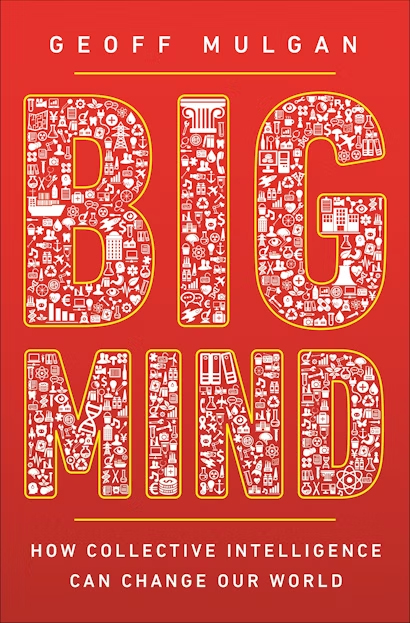
Big Mind: How Collective Intelligence Can Change Our World


It was COVID-19 that brought home to me the true significance of the 'collective' in the synonyms for group, population, polis, citizenry et al.. An integral part of Hodges' model, an individual, a person is clearly not an island.

Speech, gesture, behaviors, drawing, writing and other media all  provide a way of recording and representing information, and knowledge. Digital technologies are the latest tools to extend our memories, and ability to analyse, synthesise and abstract from and to our experiences.

How we see the individual and collective (society) is a subject of much debate across many disciplinary fields, spanning the sciences and humanities; economics, healthcare, sociology, ethics, and philosophy. Mulgan considers as infrastructure, the measures that have emerged to support collective intelligence:


'They have evolved from physical objects (such as steel production) through aggregate concepts (like GDP and GNP) to intangibles (such as innovation indexes or measures of the value of creative industries). They have evolved from single measures of things like population to indexes (like the UN Human Development Index), and from activities to outputs and then outcomes (such as QALYs - quality adjustied life years - and DALYs - disability adjusted life years in relation to health). In all these ways, both states and societies watch themselves and recognize well-calibrated observation as the precondition for thought.' (p.52)
Using Hodges' model the focus is primarily upon individuals and teams application. Mulgan's chapter 12 (pp.145-160) on 'Problem Solving' is subtitled 'How Cities and Governments Think'. An excellent question, that was asked of me in February. How can a national government be informed of Hodges' model and its potential utility? Cities have repeatedly had to solve problems created by changes in transport, work, housing, population density, the movement of people, goods, materials, and links to rural and agricultural centers. The logistics of access to routes, ports, airports, and where to place industries efficiently (and safely)? 'City planning' is a key example of our cities thinking?

Perhaps, we need to think of mobility in a cognitive sense, and not just AI-mediated. So as we walk, run, seek access - we should take care we don't get stuck!

Individual
|
      INTERPERSONAL    :     SCIENCES               
HUMANISTIC  --------------------------------------  MECHANISTIC      
 SOCIOLOGY  :    POLITICAL 
|
Group
subjectivity

models we use can be a trap (p.120)

emotional intelligence
quality
objectivity

SYSTEMS energy, food, transport..

physical media & 'memory'
quantity

'Society Thinking as a System?' Chap. 16.

Group - Collective

collective intelligence

Patient Reported Outcome Measures (PROMs)?

See also: 'literacy' : 'prevention' : 'service' : 'severe' : 'change'

Geoff Mulgan (2017) Big Mind: How Collective Intelligence Can Change Our World, Princeton University Press.

Image: Princeton University Press.

Wednesday, August 13, 2025

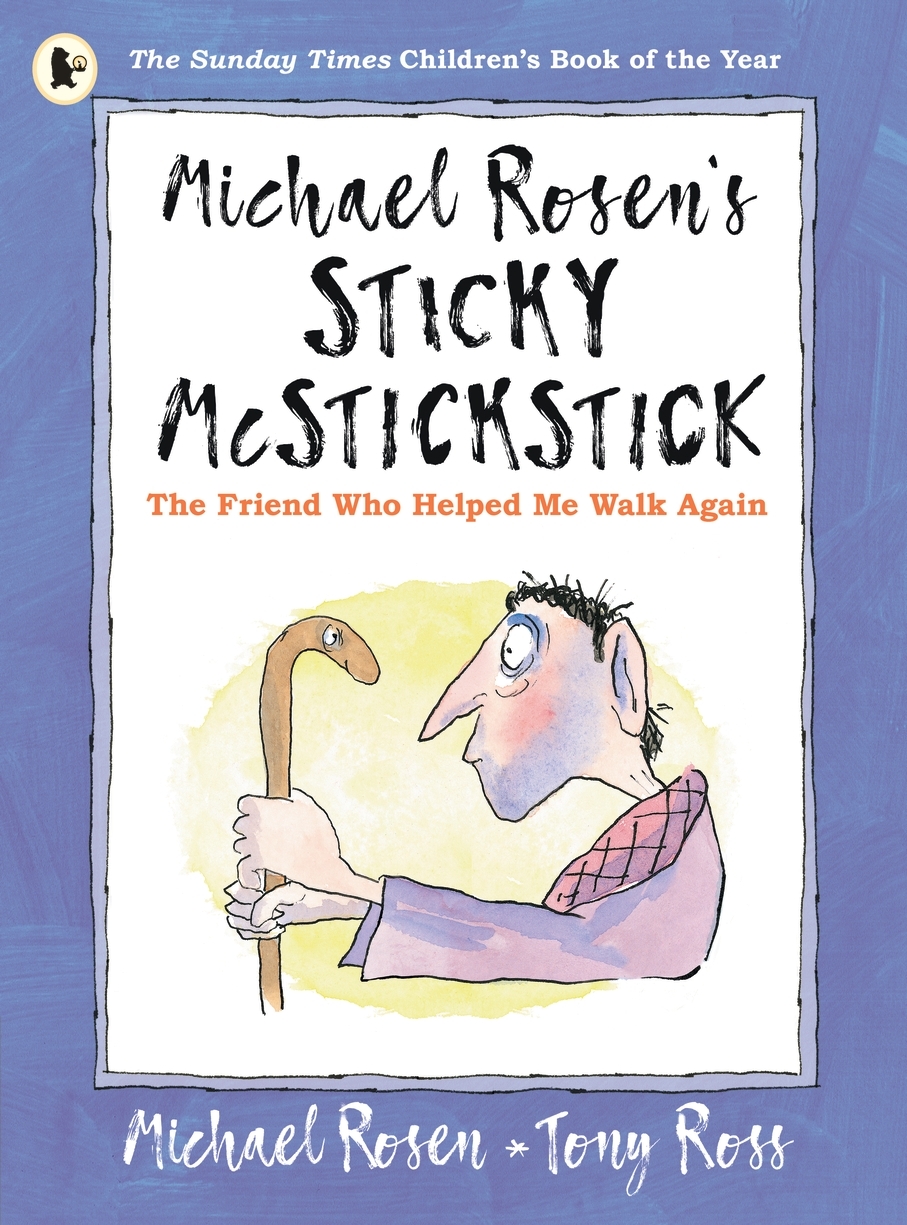
Jackanory: Parity of Esteem 'read' c/o Mr Rosen

Individual
|
      INTERPERSONAL    :     SCIENCES               
HUMANISTIC  --------------------------------------  MECHANISTIC      
 SOCIOLOGY  :    POLITICAL 
|


My source: 
Shop window of The Addyman Annexe - bookshop, Castle St, Hay-on-Wye, 12th August 2025.

Images: 
'STICKY McSTICKSTICK' - https://www.walker.co.uk/
Illustration - https://www.walker.co.uk/author/tony-ross/

Illustration - https://www.walker.co.uk/author/quentin-blake/

Previously: 'parity'

Tuesday, August 12, 2025

Revisiting the G7 ... G20

'Under the Trump administration, the US is retreating from the global leadership role it has played since the end of the second world war. The world is bedevilled with challenges and there is a desperate need for stability and co-ordinated solutions to global problems. Where will the leadership to solve them come from? 

Some have argued that we are now in a "G zero" world in which no one is in charge. There is great uncertainty and the powerful dictate solutions to smaller players. Others say we are moving to a regional carve up - a G3 where the US. Russia and China have spheres of influence in a modern day version of the Three Emperors League. 
Some version of a new multi-polar order may yet take shape. But it also seems clear that a G minus one world is starting to fill the vacuum in some domains — with countries coming together to find solutions to global problems without the US.' p.11.
 
Individual
|
      INTERPERSONAL    :     SCIENCES               
HUMANISTIC  --------------------------------------  MECHANISTIC      
 SOCIOLOGY  :    POLITICAL 
|
Group
imaginary -

*You cast your vote and get the 
global leadership we all deserve. ...

- numbers


... Discuss.

G20
G7
G-0?
Goto*


My source: 
Minouche Shafik, How to live in a G minus one world, Opinion, FTWeekend. 26-27 July 2025, p.11.
https://www.ft.com/content/7b884f20-e44e-4afe-9c0c-0c602f76b3f6

Previously: 'G7'