Saturday, February 28, 2026
Friday, February 27, 2026
Rare Disease Day 2026 Official Video
28 February is
Rare Disease Day
'Raising awareness and generating change for the 300 million people worldwide living with a rare disease, their families and carers.'
Manchester, UK https://www.rarediseaseday.org/event/light-up-for-rare-2/
Continued ... https://www.rarediseaseday.org/
Thursday, February 26, 2026
New Journal Alert - Philosophy and Urban Affairs
Dear Philosophers,
I'm pleased to announce that Philosophy and Urban Affairs is now operational. Below is a description.
Philosophy and Urban Affairs is a peer-reviewed journal that explores the ethical, political, epistemological, metaphysical, and social dimensions of cities. Articles may be theoretical, applied, or both, provided they illustrate how philosophical investigation can elucidate, critique, or inform city living.
Unsolicited manuscripts are not accepted. Instead, the journal solicits submissions through public calls on emerging topics or through invitations to scholars working on specific themes. On occasion, a focus article will be published to prompt response papers and foster sustained scholarly dialogue.
Philosophy and Urban Affairs is fully open access and charges no fees of any kind.
Check out the first CFP, Philosophical Perspectives on Coastal and Island Cities.
All the best - Shane
Shane Epting, Ph.D.
Associate Professor of Philosophy
Missouri University of Science and Technology
Shane Epting, in Creating Future Cities, insightfully analyzes complex normative challenges in urban planning and design—from organizing urban residents' political power to building for resilience—and passionately argues that citizens of cities must fight for their cities and their futures. - Ronald R. Sundstrom, University of San Francisco, USA
My source:
Philos-L "The Liverpool List" is run by the Department of Philosophy, University of Liverpool https://www.liverpool.ac.uk/philosophy/philos-l/ Messages to the list are archived at http://listserv.liv.ac.uk/archives/philos-l.html. Recent posts can also be read in a Facebook group: https://www.facebook.com/PhilosL/ Follow the list on Twitter @PhilosL. Follow the Department of Philosophy @LiverpoolPhilos
Wednesday, February 25, 2026
IFS Report: 'From fiscal rules to fiscal traffic lights: rethinking the UK fiscal framework'
'In other words, the current framework means that macroeconomic volatility is mainlined into policy volatility, which adds unnecessarily to economic uncertainty and makes good policymaking less likely. There is also a problem of asymmetry: when the forecast improves, any additional ‘headroom’ is typically treated as free money and happily spent. Yet when the forecast worsens, the rules tend to get changed or ‘gamed’: Chancellors of all political stripes have proved adept at promising future tax rises or spending cuts which are unlikely to be delivered, but which allow them to meet the letter of their rolling fiscal targets.
All this is to say, the current framework is not delivering good outcomes. It is not achieving sustainable public finances, it has limited credibility with financial markets, and it is not creating the conditions for good policymaking or for a high-quality public debate about the important issues at play. It seems likely that any framework, left in place for long enough, will start to create problems in practice, as unhelpful norms emerge and actors find ways to game the system. Just as the tendency of HM Treasury to fudge its forecasts in the 2000s was one reason for the creation of the OBR as a corrective mechanism, the dysfunction around the current framework necessitates a change in thinking and approach.'
INDIVIDUAL
|
INTERPERSONAL : SCIENCES
HUMANISTIC -------------------------------------- MECHANISTIC
SOCIOLOGY : POLITICAL
|
GROUP
'Fixation upon - lived [ equilibrium ] experience 'RAG' assessment of patients in mental health services - caseload management | fiscal headroom' GOOD - BAD PASS - FAIL Equilibrium Outcomes 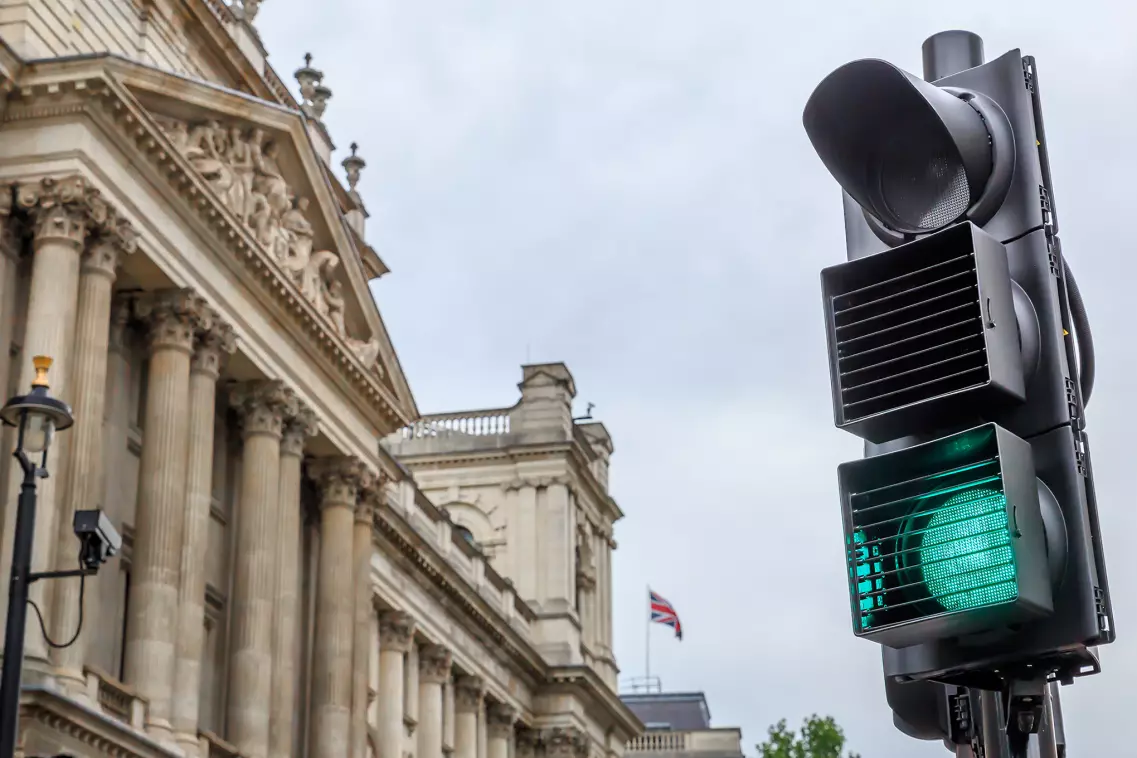 | ||
Public Policy Interviews sustainable public finances good policymaking (here) high-quality public debate Cost of Living |
Policy |

My source: Valentina Romei, IFS urges end to fixation on fiscal 'headroom', Financial Times, 19 February, 2026, p.3.
Images: IFS
Tuesday, February 24, 2026
c/o RollingStone UK - "U2 surprise-drop politically charged ‘Days of Ash’ EP with six new songs"
The collection delves into ICE, Israel, the West Bank, Ukraine, Iran — and features a guest vocal by Ed Sheeran
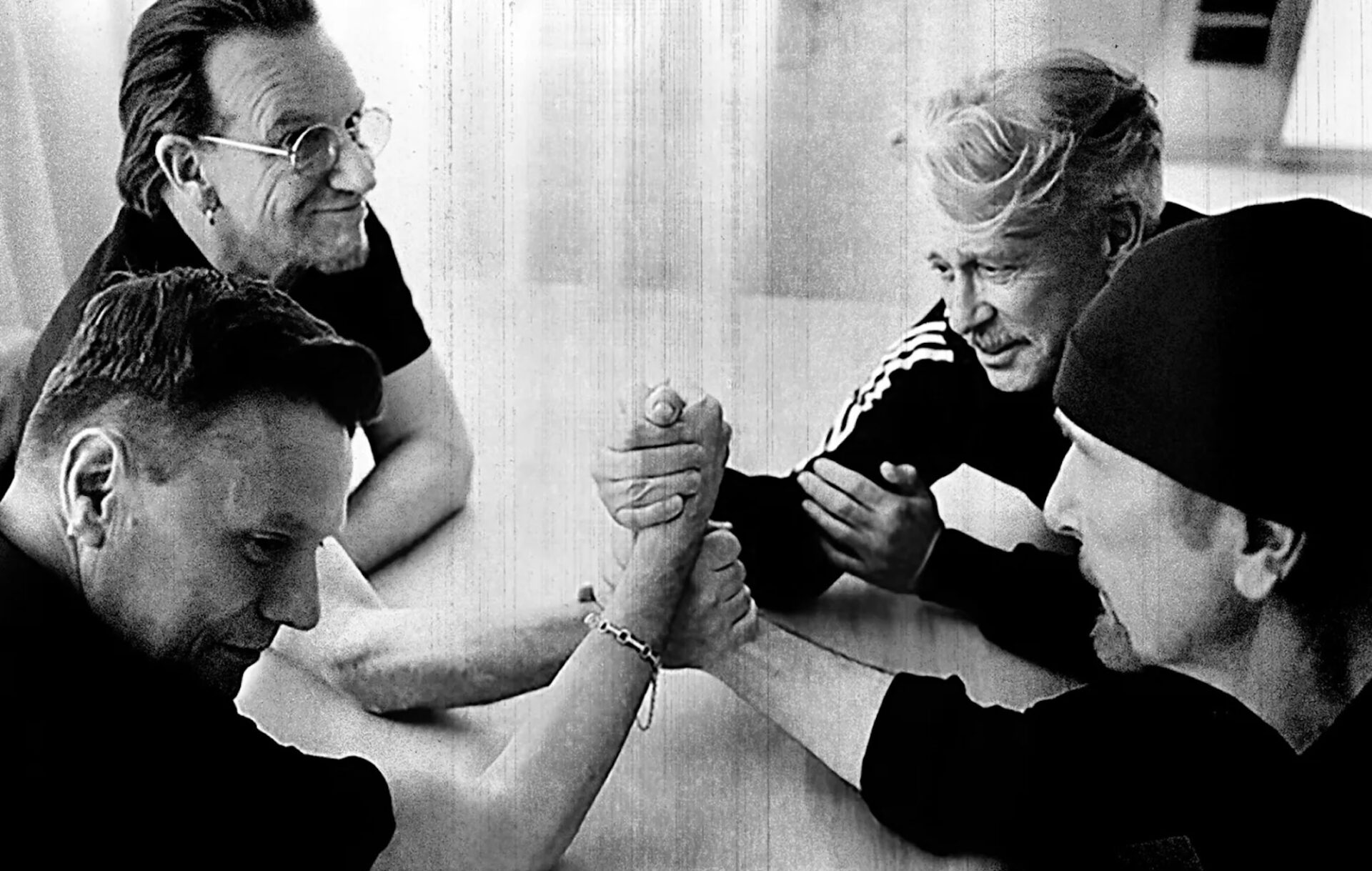 |
| U2 (RollingStone UK - Picture: Anton Corbijn) |
By Andy Greene
'U2 have emerged from a long hiatus with a surprise six-song EP, Days of Ash, available now, in which they address political flashpoints around the world, including ICE raids in the US, the Iranian uprisings, the war in Ukraine, and Israeli settlements in the West Bank.
The six songs — ‘American Obituary’, ‘The Tears of Things’, ‘Song of the Future’, ‘Wildpeace’, ‘One Life at a Time’ and ‘Yours Eternally’ (featuring Ed Sheeran and Taras Topolia) — are all on streaming platforms. They’ve also created lyric videos for each one.'
Continued ...
Monday, February 23, 2026
Millikan's Unicepts and Unitrackers
An underpinning theory of Hodges' model must help us make sense of what is happening within the care domains, between the domains, and possibly say something about what may be significant relation[s]-ships that are diametric. Arriving at threshold concepts I wondered in Hodges' model about there being compound threshold concepts. Consider, when 2-3 thresholds are (b)reached in one (the sciences) domain? Contrast this then, with 4-5 thresholds across care domains? There may also be care concepts applicable that are for example, person-centred: that is, patient, carer, 'management', or policy defined? These concepts while not threshold related per se, are nonetheless relevant.
I came across the work of Ruth G Millikan in London, several years ago as I followed 'epistemology' around the shop. It is time to pick this up and earlier work:
Millikan, Ruth Garrett. “Biosemantics.” The Journal of Philosophy 86, no. 6 (1989): 281–97. https://doi.org/10.2307/2027123
https://www.researchgate.net/publication/235734046_Biosemantics
INTRODUCTION TO PART I
0.4 Unicepts and Unitrackers
'Neither the clusters in the world nor their properties are found at the sensory surfaces. The properties characterize distal objects and events. They are manifested in diverse and irregular ways through signs impinging on the sensory surfaces, energy patterns that are contingent on shifting intervening circumstances.' ...
'A unitracker is a mechanism or faculty for same-tracking something, for recognizing when incoming information concerns it, then linking and storing this information together as information about one and the same thing. Only then can it can be brought to bear together on inference and action. The link connecting stored information about the same thing together is a "unicept." The information is recognized, paradigmatically,by the initiation or strengthening of an intentional attitude of credence, which we tentatively model as a temporary or enduring connection between the unicept and unicepts for other things.'
'Both unicepts and unitrackers are particulars. You and I do not have any of the same unicepts or unitrackers. What we have in common is unicepts and unitrackers for many of the same things.' ...
'Unitrackers are same-trackers used for collecting knowledge about their targets.' pp.7-8.
Millikan, Ruth Garrett, Beyond Concepts: Unicepts, Language, and Natural Information (Oxford, 2017; online edn, Oxford Academic, 19 Oct. 2017), https://doi.org/10.1093/oso/9780198717195.001.0001, accessed 16 Feb. 2026.
Sunday, February 22, 2026
BCS SPECIALIST GROUP ON ARTIFICIAL INTELLIGENCE: Virtual seminar 'Generative AI'
BCS SPECIALIST GROUP ON ARTIFICIAL INTELLIGENCE (SGAI)
The next in our series of free evening virtual seminars will be on Wednesday March 11th from 6 p.m. to 7.30 p.m. (UK time). The topic will be Generative AI.Synopsis
Generative AI is rapidly reshaping the landscape of intelligent systems. This virtual seminar covers cutting-edge research and visionary perspectives on the design, deployment, and governance of generative models. It explores how generative models are enabling adaptive control, task planning, and embodied intelligence in dynamic environments. It also addresses GenAI robustness, interpretability, and alignment which are critical pillars for deploying generative systems in high-stakes domains.The virtual seminar series is free and open to all. For further details and for the zoom link to use go to http://https://bcs-sgai.org/seminars/2026-03-11/.
The speakers will be Dr Mark Post (University of York) on 'Safety, Trust, and Perception of Generative AI: Is it deceiving us, or are we deceiving ourselves?' and Dr Erfu Yang (University of Strathclyde) on 'Generative AI in Robotics and Automation: Applications, Advancements and Challenges'.
Details of future SGAI events will be placed on the website at https://bcs-sgai.org as they become available. To register to be sent information about future SGAI events by email go to https://www.bcs-sgai.org/register/.
Max Bramer
Chair, BCS SGAI
----------------------------------------------------
Chair, British Computer Society Specialist Group on Artificial Intelligence
Emeritus Professor, School of Computing, University of Portsmouth, UK
http://www.maxbramer.org
My source: BCS-AI mail list.
Saturday, February 21, 2026
London: 'The Weight of Being: Vulnerability, Resilience and Mental Health in Art'
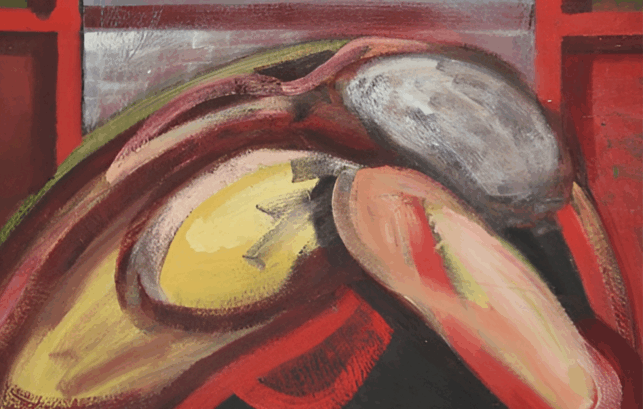 In London currently, 20th - 23rd I was on my way to Bankside Gallery and walking by Temple Place, #2 to be precise, on a board outside I read:
'The Weight of Being: Vulnerability, Resilience and Mental Health in Art'
Taking in the mental health and illness of artists, gender, domesticity, industrial and political struggle, COVID, and Gaza I spent and enjoyed a two hour detour. The building is also amazing. The exhibition is on until 19 April 2026, closed on Monday's and today 21st February. Before I share some text from their website, the interior of the building was a 'virtual' experience, but without the technology. Helpfully, the exhibition is spread across several rooms.
'Curated by Angela Thomas, this new exhibition explores artistic expression and mental health. Through depictions of deeply personal and collective experiences, it examines the powerful ways in which artists capture vulnerability, resilience, and their search for solace.
Including the work of a diverse range of twentieth century and contemporary artists and their varying perspectives, The Weight of Being showcases how artists have captured the psychological and emotional impact of societal pressures, resilience in the face of adversity, and existential uncertainty.
Alongside dozens of artworks drawn from galleries and collections across the UK, the portraits, landscapes, and figurative studies of the lesser-known artist John Wilson McCracken (1936–1982) are woven throughout. Denied the opportunity to return to the Slade School of Art following a period of hospitalisation for mental health reasons, McCracken spent much of his career in Hartlepool, producing work that reflects a profound sensitivity to the emotional and social pressures of his time. Shaped by personal and collective struggles, his art offers a deeply human perspective on the exhibition’s themes, revealing how external forces imprint themselves on the mind, body, and creative spirit.' Continued . . .
The building as a whole - Two Temple Place is owned and run by a registered charity, the Bulldog Trust.
I will definitely (hopefully!) visit again, on the way or returning from the South Bank of the Thames. The video below presents key aspects of the building's amazing interior and history:
Friday, February 20, 2026
Presentation: 'An example of open research sharing Hodges’ Health Career Model'
From: Ulster University Open Research Conference 2026
Simms, V., Jacobs, N., Magee, J., De Ornellas, K., Mollik, E., Kernohan, W. G., Leacock, J., Akter, J., Sempey,
C., Beech, S. E., Naz Asif, R., Yap, L. K., & Miller, K. (2026, Jan 16). Ulster University Open Research
Conference 2026: Conference Speaker Abstracts. Ulster University. Advance online publication.
https://doi.org/10.21251/0d7780ce-ce97-468f-b5d5-69201ca90b20
Speaker: Professor George Kernohan
School or Department: School of Nursing and Paramedic Science Ulster University
Email: wg.kernohan AT ulster.ac.uk
The area(s) of open research talk relates to:
Practice as research; Open data/ Open code
Talk Title:
An example of open research sharing Hodges’ Health Career Model
Abstract:
This paper examines a blog post [see below, pj], “Thinking about a comprehensive framework for dementia,” as a case study illustrating the integration of open research practices within dementia palliative care research. The post introduces the Hodges’ Health Career Model— a four-domain conceptual framework encompassing biomedical, psychological, social, and policy perspectives— to articulate the multidimensional nature of dementia and inform care planning. As an openly accessible research communication, the blog contributes to transparent and inclusive knowledge exchange beyond traditional academic channels.
The blog exemplifies practice-as-research, translating conceptual development from theory into a form of scholarly exposition that invites engagement from practitioners, policymakers, carers, and people living with dementia. It forms part of a wider programme of work in which the research team openly documents methods, emerging findings, and reflections across scoping reviews, surveys, and service case studies hosted on the same platform. These materials complement peer-reviewed open access outputs, including open publications.
The project demonstrates alignment with open research principles through prospective protocol registration: the scoping review protocol is publicly available on PROSPERO. The team’s prior work on blogging as a mechanism for knowledge mobilisation strengthens the methodological coherence of using this medium to disseminate conceptual frameworks and preliminary insights.
Although the blog does not itself provide underlying datasets or analytic code, it outlines methodological approaches that could facilitate future open data practices, particularly in qualitative and mixed-methods research. Overall, the case illustrates a pragmatic and pluralistic adoption of open research methods across dissemination, protocol transparency, and public engagement, offering a model for enhancing accessibility and reproducibility in dementia palliative care research.
.
Title: “Thinking about a comprehensive framework for dementia”
Author: Professor George Kernohan
Date: 7 November 2019
Link: https://pallcare4dementia.com/thinking-about-a-comprehensive-framework-for-dementia/
Thursday, February 19, 2026
2026 Lancaster Philosophy of Psychiatry Work in Progress Workshop
I am looking forward to, and preparing for this event next week:
====================================================
Thursday 26 February 2026, 11:00am to Friday 27 February 2026, 3:30pm
Venue: Storey Lecture Theatre, Lancaster , LA1 1TH
Open to: Postgraduates, Staff
Event Details:
Sponsored by the British Society for the Philosophy of Science.
This workshop provides an informal forum where PhD students, and more experienced researchers, can present and discuss short works in progress. All paper slots are taken for 2026.
Please email r.v.cooper AT lancaster.ac.uk if you'd like to attend.
THURSDAY 26th FEB
Sponsored by the British Society for the Philosophy of Science.
This workshop provides an informal forum where PhD students, and more experienced researchers, can present and discuss short works in progress. All paper slots are taken for 2026.
Please email r.v.cooper AT lancaster.ac.uk if you'd like to attend.
THURSDAY 26th FEB
10.45-11 Welcome
11-11.30 Hane Maung - Philosophy in Healthcare Practice: A Case Study.
11.30-12 Peter Jones - Hodges' model: A work-ALWAYS-in-progress and this is why...
12-12.30 Matthew Williams - The failure of the harm-minimisation argument for BID Surgery and the necessity of therapeutic justification
12.30-1 Clive Duddy – Autonomy in mental health care
1-2 LUNCH
2-2.30 George Turner - Difference denied.
2.30-3 Dieneke Hubbeling - Different ways of medical knowing in Walzer's different spheres of justice?
3-3.30 Ali Walker - Forget Fictionalism: Psychiatric Disorders are Quasi-Real
3.30-4 Ewa Grzeszczak - Philosophy of psychiatry and the methodology of social ontology.
4-4.30 Break
4.30-5 Alessandra Civani - What kind of concept is ‘incongruence’?
5-5.30 Anna Golova - Self-illness ambiguity without a self-illness distinction.
5.30-6 Break
6-7 Prof Miriam Solomon – Royal Institute of Philosophy talk ‘Stigma as an actant in the history of psychiatry’
FRIDAY 27th Feb
11-11.30 Sam Fellowes - Modelling psychiatric diagnoses when self-diagnosing - how does this work?
11.30-12 Giulia Russo - Epistemic and political role of experience
12-12.30 Frank Denning - Using Stebbing’s Directional Analysis to Evaluate ‘Mentalizing’.
12.30-1 Gloria Ayob - Flourishing as mental health
1-2 LUNCH
2-2.30 Richard Hassall - Hermeneutical Injustice and Damaged Intellectual Self-Trust in Psychiatric Service Users.
2.30-3 Lara Calabrese - Exploring epistemic injustice in dementia care: a scoping review and a qualitative study
3-3.30 Jacob Barlow - Epistemic borders: experts, communities, communication
11.30-12 Giulia Russo - Epistemic and political role of experience
12-12.30 Frank Denning - Using Stebbing’s Directional Analysis to Evaluate ‘Mentalizing’.
12.30-1 Gloria Ayob - Flourishing as mental health
1-2 LUNCH
2-2.30 Richard Hassall - Hermeneutical Injustice and Damaged Intellectual Self-Trust in Psychiatric Service Users.
2.30-3 Lara Calabrese - Exploring epistemic injustice in dementia care: a scoping review and a qualitative study
3-3.30 Jacob Barlow - Epistemic borders: experts, communities, communication
<>
Wednesday, February 18, 2026
Move Over LLMS! AI Legends Yann LeCun and Alex LeBrun Debut AMI Labs' Bold Ambitions for World Models in Healthcare
The math behind world models might just blow your mind 🤯
— Offcall (@OffCallDotCom) February 14, 2026
All public text: ~30T words.
Four years of vision: ≈10¹⁴ bytes.
That’s why text-only AI falls short.
And for us as physicians, this matters.
🎧 Listen to the full conversation with Offcall’s co-founder, Dr.… pic.twitter.com/DRhe52onaC
My source: https://x.com/OffCallDotCom/status/2022708074105242035?s=20
Tuesday, February 17, 2026
CFP - 2026 International Conference on Artificial Intelligence for Health and Education (ICAIHE2026)
July 8-10, 2026, Tokyo, Japan

Dear Colleagues,
We are writing to invite you to submit your papers for publication and presentation at 2026 International Conference on Artificial Intelligence for Health and Education (ICAIHE 2026) scheduled on July 8-10, 2026 in Tokyo, Japan.
https://icaihe.org
Also, we invite you to submit a workshop/special session proposal to participate in ICAIHE 2026.
The workshop/special session proposal submission deadline has been extended to: February 28, 2026.
The regular paper submission deadline is: March 1, 2026.
----------------------------------------
INTRODUCTION
---------------
With the spread of digital technology in healthcare and education, there is a growing interest in using artificial intelligence (AI) to promote human well-being in the extensive areas of health and learning. As more data becomes available from IoT, wearable devices, sensors, social media and many other online platforms, new possibilities emerge for understanding and revolutionizing digital health and learning.
ICAIHE 2026 focuses on AI-enhanced and data-driven approaches to health and education. It aims to leverage advanced AI technology to provide new opportunities in the healthcare and education sectors. This conference is committed to bringing together researchers to explore how these cutting-edge AI technologies can optimize personal health and learning environments, and to demonstrate how these emerging technologies can drive transformative practices that promote human well-being.
IMPORTANT DATES
---------------
Workshop/SS Proposal Due: February 28, 2026 (Extended)
Regular Paper Due: March 1, 2026
Workshop/SS Paper Due: March 8, 2026
Author Notification: May 1, 2026
Paper Registration Due: May 15, 2026
Camera-ready Submission Due: May 22, 2026
SCOPE AND TRACKS
---------------
Prospective authors are invited to submit papers on topics including, but not limited to:
We are writing to invite you to submit your papers for publication and presentation at 2026 International Conference on Artificial Intelligence for Health and Education (ICAIHE 2026) scheduled on July 8-10, 2026 in Tokyo, Japan.
https://icaihe.org
Also, we invite you to submit a workshop/special session proposal to participate in ICAIHE 2026.
The workshop/special session proposal submission deadline has been extended to: February 28, 2026.
The regular paper submission deadline is: March 1, 2026.
----------------------------------------
INTRODUCTION
---------------
With the spread of digital technology in healthcare and education, there is a growing interest in using artificial intelligence (AI) to promote human well-being in the extensive areas of health and learning. As more data becomes available from IoT, wearable devices, sensors, social media and many other online platforms, new possibilities emerge for understanding and revolutionizing digital health and learning.
ICAIHE 2026 focuses on AI-enhanced and data-driven approaches to health and education. It aims to leverage advanced AI technology to provide new opportunities in the healthcare and education sectors. This conference is committed to bringing together researchers to explore how these cutting-edge AI technologies can optimize personal health and learning environments, and to demonstrate how these emerging technologies can drive transformative practices that promote human well-being.
IMPORTANT DATES
---------------
Workshop/SS Proposal Due: February 28, 2026 (Extended)
Regular Paper Due: March 1, 2026
Workshop/SS Paper Due: March 8, 2026
Author Notification: May 1, 2026
Paper Registration Due: May 15, 2026
Camera-ready Submission Due: May 22, 2026
SCOPE AND TRACKS
---------------
Prospective authors are invited to submit papers on topics including, but not limited to:
Track 1: Emerging AI Technologies for Health and Education
- Generative AI and LLM
- Agentic AI and AI Agents
- Explainable AI
- Multimodal AI Models
- Small Smart AI Models
- Knowledge Graphs
- Privacy Protection, Security, and Ethics in Emerging AI Applications
Track 2: AI-Enhanced Healthcare and Medical ServicesTrack 3: AI-Enhanced Education and Learning
- AI-Enhanced Big Data Analytics in Healthcare and Medical Services
- Multimodal Data Fusion in Digital Health
- AI-Enhanced Biometric Analysis in Digital Health
- Machine Learning and Deep Learning for Healthcare and Medical Services
- AI-Enhanced Precision Healthcare
- Metaverse and Digital Twin for Healthcare and Medical Services
- Human-AI Interaction in Digital Health and Well-being Promotion
- LLM-Enhanced Educational Content Generation
- LLM-Enhanced Personalized Learning
- LLM-Enhanced Automated Learning Feedback and Assessment
- AI-Enhanced Collaborative Learning
- AI-Enhanced Learning Analytics
- AI-Enhanced VR/AR/Metaverse for Immersive Learning
- AI Agents for Learning Management Systems
ICAIHE 2026 CALLS
---------------
Prospective authors are invited to submit original papers. Formats for the submissions are either
---------------
All accepted papers will be published in Springer CCIS series. Selected high quality papers will be recommended for possible publications on journal special issues.
For further details, please refer to https://icaihe.org/sub.html
Submission Link: https://cmt3.research.microsoft.com/ICAIHE2026
---------------
Prospective authors are invited to submit original papers. Formats for the submissions are either
- Full Paper: 12-15 pagesSUBMISSIONS AND PUBLICATIONS
- Short Paper: 6-11 pages
- Work-in-Progress Paper: 6-7 pages
---------------
All accepted papers will be published in Springer CCIS series. Selected high quality papers will be recommended for possible publications on journal special issues.
For further details, please refer to https://icaihe.org/sub.html
Submission Link: https://cmt3.research.microsoft.com/ICAIHE2026
-------------
Hosted by
Waseda University, Japan
Hosted by
Waseda University, Japan
My source: AI-SGES list - https://www.bcs-sgai.org/?section=server
Monday, February 16, 2026
Webinar [18th] Maternal Mortality and the impact of health system stability
Dear IBP Network Colleagues,
Please see the webinar happening this week!
Maternal deaths are increasingly concentrated in humanitarian and fragile settings. This webinar will present key findings, aligned with the latest maternal mortality ratio data published in 2025.
🌍 Speakers from HRP and WHO will discuss trends, data gaps and implications for policy and programmes, with country case studies from Myanmar, Haiti, Papua New Guinea and Ukraine, as well as perspectives from UNFPA.
🧭 The session will explore how health system stability can help protect maternal health amid conflict, fragility and crisis.
The session will be in English with French interpretation
Register Here:https://bit.ly/4kAKloC
My source:
Nandita Thatte, DrPH
Department of Sexual and Reproductive Health
World Health Organization
Geneva, Switzerland
Email: thatten AT who.int
The UK Dementia Awards 2026
Dear CHAIN member,
We would like to draw your attention to the following opportunity. Please pass on as appropriate. Thank you.Dementia Community
The UK Dementia Awards 2026
 |
The awards are judged by a panel of dementia experts, including people with lived experience, ensuring that every nomination is seen, valued, and understood.Regards,
Whether nominating a colleague, a team, a service, or someone whose quiet dedication deserves the spotlight, this is the chance to say: you matter, and your work matters too.
Friday 27 February 2026, 5pm: Nominations Close.
For more details please see: https://journalofdementiacare.co.uk/awards/listings
Irina Johnston
CHAIN Administrative Assistant
If you wish to publicise information on the CHAIN Network please email your request to: enquiries AT chain-network.org.uk
CHAIN - Contact, Help, Advice and Information Network – is an online international network for people working in health and social care. For more information on CHAIN and joining the network please visit website: www.chain-network.org.uk
Follow CHAIN on X: @CHAIN_Network ; Connect with CHAIN on LinkedIn
Previously: 'dementia' : 'carer'
Sunday, February 15, 2026
vii Book: Bill Ross - 'Order and the Virtual'
'The Philosophy and Science of Deleuzian Cosmology'
On the publisher's site, the content listing is limited to the chapter (section) titles (as shared in iii).
There is also one review:
'In classical physics and its mechanical paradigm, events are stories about fundamental objects. In quantum physics, it is the objects that are the stories by which we understand physical systems in their most fundamental form--as histories of events. In Order and the Virtual, Bill Ross makes a compelling case that the event-ontological philosophies of Deleuze and Whitehead will become for the new physics what the philosophies of Newton and Locke were for the old.'
It is worth listing the content details in full:
Series Editor's Preface vii
Preface by Robin Durie and David Webb ix
Abbreviations xii
Chaos I
Chaos and Complexity Theory I
Nietzschean Chaos and the Superior Principle of Sufficient Reason 5
The Eternal Return and the Disparity of Forces 8
Ergodicity and Infinite Duration 10
Post-Classical Physics and the Question of Entropy 15
2. Entropy and the Complete Concept in Leibniz and Deleuze 24
Dissymmetry, Energy Gradients and the Ultimate Origination of Things 29
On the Ultimate Origination of Things 30
From Many Worlds to Chaosmos 34
The Calculating God 36
Mathematical Thought, the Problem and the Cosmos 38
The Compete Concept and Disjunctive Synthesis in Sufficient Reason 44
Physical Systems, Disparity and Disjunctive Synthesis 50
Chaosmos as Cosmology 56
Absolute Zero, Limits and the Infinite 60
Simple Order 68
3. Order 71
Mechanism and Vitalism, Order and Complexity 73
The Game Analogy #I: Leibniz and Kant 81
The Game Analogy #2: Claude Shannon and Michel Serres 83
Game #2.1: Claudo Shannon's 'A Mathematical Theory of Communication' 86
Game #2.2: Michel Serres The Birth of Physics 94
Game #3.0: Deleuze's Ideal Game 984. Order as Complexity 109
Complexity as Principle 122
Limits without Negation 127
5. Sufficient Reason as Dissymmetry and the Evolutionary Paradigm 131
Limits and Non-Locality 135
A Network Paradigm: Loop Quantum Gravity 150
A Holographic Paradigm: David Bohm's Implicate Order I54
Evolutionary Expansiveness 161
Conclusion 175
Notes 182
Bibliography 207
Index 217
I can see why my reading of OatV is not at the usual 21st century pace. 'Section 2. Entropy and the Complete Concept in Leibniz and Deleuze', pp.24-68, as already noted, is a real melange of ideas from several sources. As noted already, you have to unpick Deleuze, Simondon and Ross's guiding thought. your reading and purpose also matters however; an amazing gift of texts like this.
'CHAOSMOS AS COSMOLOGY
If energy gradients are the sufficient reason of all that appears for ther- modynamics, symmetry is to most intents and purposes the sufficient reason from which modern physics draws its rationale. Mathematical relations of symmetry have come to take the place of 'law` in classical physics: where there is symmetry, science identifies an underlying order, As we shall see, however the point of contention between Deleuze and the prevailing scientific consensus is by no means so black and white. and far from universally upheld among the scientific community. Once again, it is in the particularities of this tension that productive exchange may be found.' p.56.
Leibniz's 'individual' (and monads) differs from that in Hodges' model, but there is the question of time and scale (at both ends of the vertical axis in Hodges' model):
'Each individual is in contact with, expresses, all individuals in the world, but obscurely, again, as with Leibniz, through infinitely ramifying lines of divergence.' p.54.
'Each individual, then, remains necessarily the sum of all its predicates, but in the same sense as a singularity contains its own power of expressing innumerable contradictions; here is Deleuze's 'object = x', the concept which overcomes the idea of world understood merely as a circle of convergence.' p.55.
 |
| Order and the Virtual |
We often speak in terms of 'take-aways'. Ross provides a packed (yet nutritious!) lunch and really useful snippets:
'Disjunction becomes a relation' (p.49).
Identity runs through section 2. Difficulties of orientation are noted. I wondered about a symbol for singularity, but I cannot find one(?). Ross, himself, describes as dense, Leibniz's essay on 'Origination'.
Is the nursing process, predicated up Aristotlean 'hylomorphism' (p.50)? To capture the (cognitive) orientation of an individual, do we locate the basis for the immanence of nursing, in problems that are potential, or actual?
Amongst, particle physics, absolute zero, a two-dimensional plane, and 'symmetry'; I found 'ill health'. At least, I did in a spontaneous pencilled note. And, nearby: 'Symmetry is Law'; (p.59)'.
There is grist-for-the-mill in producing new formulations for Hodges' model. Do 'non-commutative relationships, and vectorial transformations abound? (p.60)
Health and ill-health break symmetry (which Deleuze resists), and do so within and across all the domains of Hodges' model.
Ross quotes in Section 3 'Order', page 73 in Bergson's Creative Evolution (236): '[The mechanistic order] may be defined as geometry which is its extreme limit; more generally, it is that kind of order that is concerned, whenever a relation of necessary determination is found between causes and effects'. I could go on ... but scribbled 'cogeography/cogeographical'.
Many thanks to Edinburgh University Press for my review copy.
More to follow here ...
Bill Ross (2024) Order and the Virtual: The Philosophy and Science of Deleuzian Cosmology. Edinburgh: Edinburgh University Press.
https://edinburghuniversitypress.com/book-order-and-the-virtual.html
Bill Ross (2024) Order and the Virtual: The Philosophy and Science of Deleuzian Cosmology. Edinburgh: Edinburgh University Press.
https://edinburghuniversitypress.com/book-order-and-the-virtual.html
Friday, February 13, 2026
{ Humanise } ARChITECTURE
INDIVIDUAL
|
INTERPERSONAL : SCIENCES
HUMANISTIC -------------------------------------- MECHANISTIC
SOCIOLOGY : POLITICAL
|
GROUP
ARChITECTURE | |
 |
My source: Francesca Specter, Which is the fairest of them all? House&Home, FTWeekend, 11-12 October, 2025. pp.1-2.
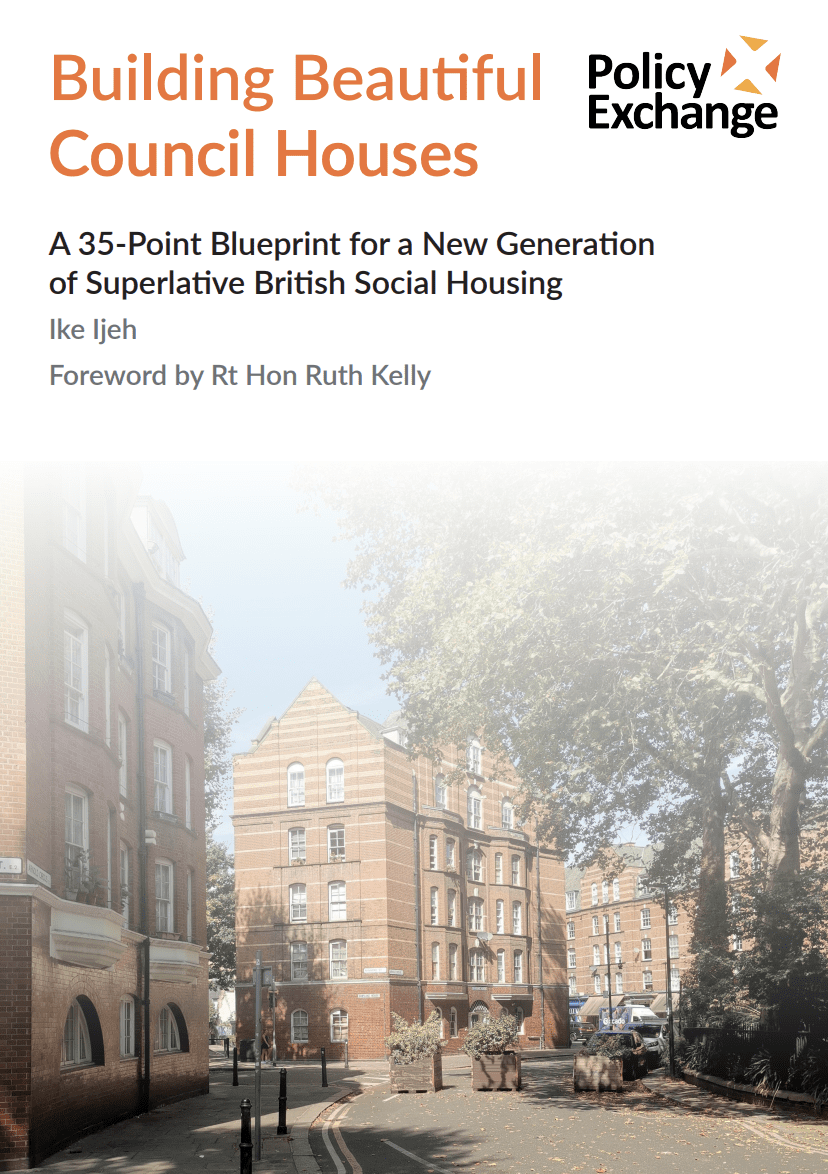
Spector refers to the Policy Exchange publication above, and other works:
McAdams P, Svobodova S, Newman T-J, Terry K, Mather G, Skelton AE, et al. (2025) The edge orientation entropy of natural scenes is associated with infant visual preferences and adult aesthetic judgements. PLoS ONE 20(2): e0316555. https://doi.org/10.1371/journal.pone.0316555
Valentine, C.; Wilkins, A.J.; Mitcheltree, H.; Penacchio, O.; Beckles, B.; Hosking, I. Visual Discomfort in the Built Environment: Leveraging Generative AI and Computational Analysis to Evaluate Predicted Visual Stress in Architectural Façades. Buildings 2025, 15, 2208.
https://doi.org/10.3390/buildings15132208
Calder, B. (2016). Raw Concrete: The Beauty of Brutalism. London: William Heinemann.
Previously: 'housing' : 'homeless' : 'architecture'
Subscribe to:


 orcid.org/0000-0002-0192-8965

