Rachel Jones: Gated Canyons
Hodges' model is a conceptual framework to support reflection and critical thinking. Situated, the model can help integrate all disciplines (academic and professional). Amid news items, are posts that illustrate the scope and application of the model. A bibliography and A4 template are provided in the sidebar. Welcome to the QUAD ...
Posted by
Peter Jones
at
8:45 am
| PERMALINK
Labels: abstraction , art , artist , body , canyons , colour , dental care , exhibition , figuration , interface , landscape , layers , meaning , mouths , oral health , painting , self , teeth , writing
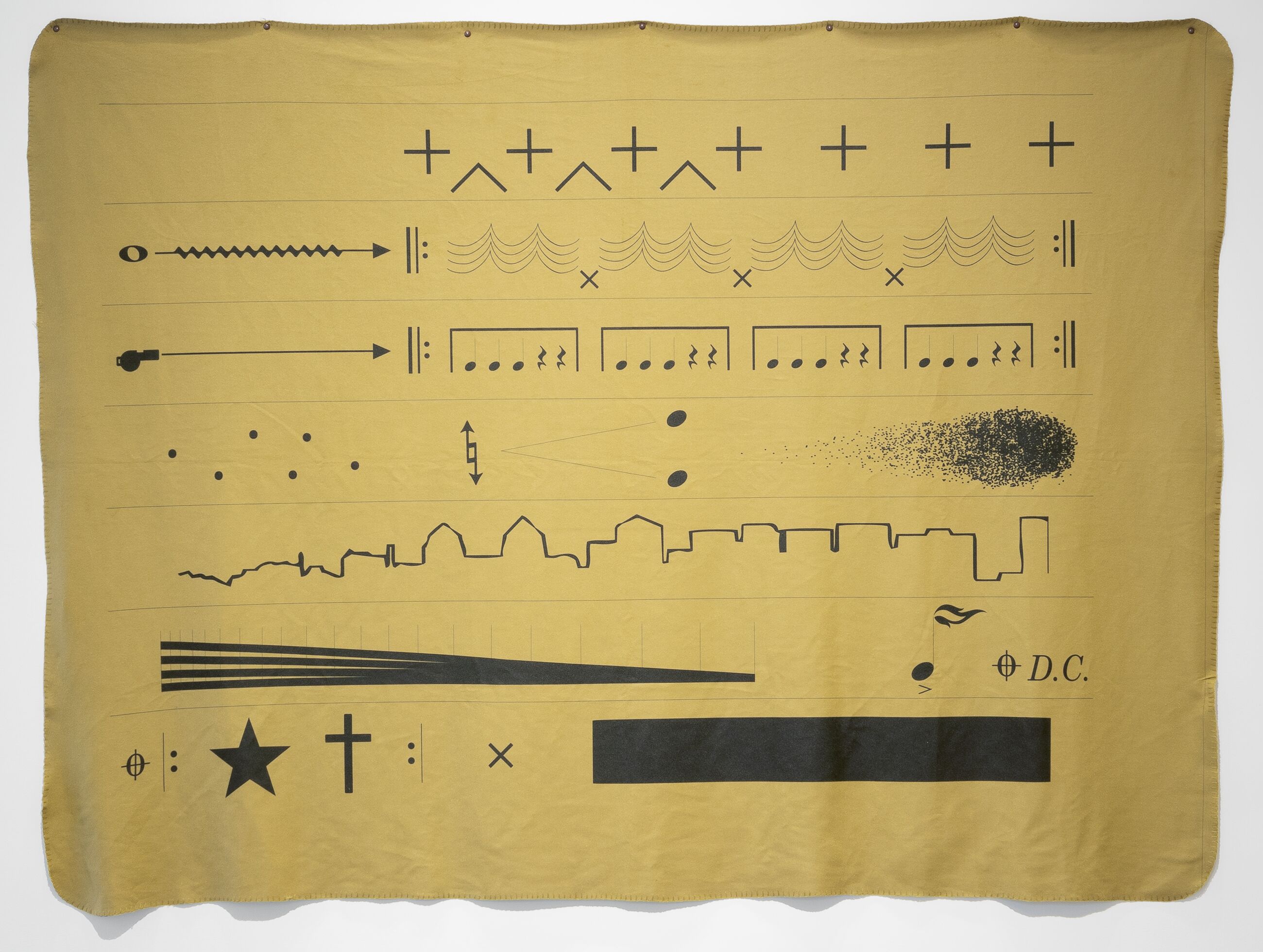
'The artist and composer Raven Chacon, 46, who grew up in Albuquerque and now divides his time between the city and upstate New York, used to explore these lava fields as a youngster, ingesting psychoactive plants such as jimson weed and searching for petroglyphs on the sides of rocks. Some - spirals, zigzags and dotted lines, for example - have found their way into the graphic musical scores for which he is now known. When I visited him in Albuquerque, he drove me out to see them.' |
| ||
|
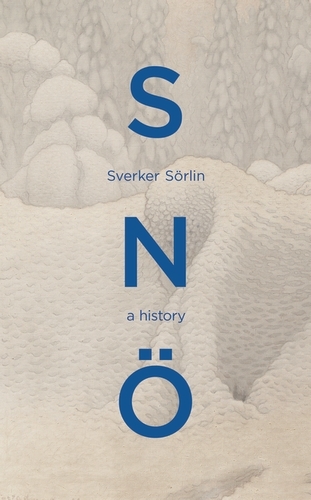
'Snow. A single word, for an infinite variety of water formulations, frozen in air. The study of snow is physics, chemistry, meteorology, anthropology, geography, poetry and art. It is hope – annually renewed. And it is history, too.
Earth saw its first snowfall 2.4 billion years ago. The world's oldest skis, made by hand five thousand four hundred years old, pre-date the pyramids of ancient Egypt. To humanity, snow has variously been an ally and an adversary; an inspiration to countless artists and a place of breathtaking tragedy and survival. But it’s always been there. And now it is melting.
In 1927, the snow was already more than nine metres deep on Japan's Mount Ibuki when a remarkable 230cm fell in 24 hours, bringing about the greatest depth of snow - 11.82m - ever recorded. Yet it is a fact today that, ironically not only has this mountain's resort been forced to close due to lack of snow, most people in the world have never been near snow: never felt the soft crunch of snow underfoot, never held snow to see it melt in their hands, let alone stood on a pair of skis.' continued ...
Posted by
Peter Jones
at
9:31 pm
| PERMALINK
Labels: action , ageing , change , childhood , climate change , environment , Gaia , glaciers , global warming , history , hope , leisure , lived experience , loss , memory , seasons , senses , Snow , weather , winter
Doing a search on 'person-centered care' the following paper was listed. It is useful too in contrasting personhood, and selfhood in relation to dementia, through 'The Relational Care Framework'
Abstract
We argue that contemporary conceptualizations of “persons” have failed to achieve the moral goals of “person-centred care” (PCC, a model of dementia care developed by Tom Kitwood) and that they are detrimental to those receiving care, their families, and practitioners of care. We draw a distinction between personhood and selfhood, pointing out that continuity or maintenance of the latter is what is really at stake in dementia care. We then demonstrate how our conceptualization, which is one that privileges the lived experiences of people with dementia, and understands selfhood as formed relationally in connection with carers and the care environment, best captures Kitwood’s original idea. This conceptualization is also flexible enough to be applicable to the practice of caring for people at different stages of their dementia. Application of this conceptualization into PCC will best promote the well-being of people with dementia, while also encouraging respect and dignity in the care environment.
The authors may find Hodges' model of relevance.
See also: 'subject' : 'object' : 'relational' : 'objective' : 'subjective' : 'personhood' : 'self' : 'identity'
Posted by
Peter Jones
at
11:15 pm
| PERMALINK
Labels: cognition , continuity , dementia , framework , history , ideas , identity , lived experience , object , objective , person , person-centred care , personhood , relational , relationships , selfhood , subject , subjective
Posted by
Peter Jones
at
11:54 pm
| PERMALINK
Labels: approach , arts , belief , book , culture , environment , global , history , humanities , love , nature , open access , plants , pollution , practice , protection , society , trees , UN , water
Stephen Fry and Gemma Whelan star in a new FT drama written by David Baddiel, exploring AI, memory and truth. Fry plays a grandfather with dementia who uses AI to fill in gaps in his memory. While reviewing the archive of his life his family makes a shocking discovery. Which memories are really true? And how AI is defining who we are?
See also: FT Standpoint unveils David Baddiel digital-first drama about AI and dementia -https://www.dropmedia.co.uk/ft-standpoint-unveils-david-baddiel-digital-first-drama-about-ai-and-dementia/
My source: Times Radio. Dom Joly in for Ayesha Hazarika. 1300-1600 BST From 1405-21.
https://www.thetimes.com/radio/show/20250919-32052/2025-09-19
I still need to catch up with last weekend's FT.
https://www.ft.com/video/a4d2ba19-051e-47c5-98ae-c27c59f1b3f0
Posted by
Peter Jones
at
6:26 pm
| PERMALINK
Labels: ageing , archive , artificial intelligence , coherence , dementia , drama , ethics , film , FT , gaps , intellect , memory , objective , prompts , quality of life , reality , storytelling , subjective , transhumanism , truth
I received an email from RCNi subject heading - 'Q. What questions are nurses asking?'
An invitation to sign-up and ask five free questions: https://rcni.com/ask
Question 1
Question 2
Posted by
Peter Jones
at
8:07 pm
| PERMALINK
Labels: AI , answers , Hodges' model , holistic , holistic bandwidth , language , LLMs , models of care , nurses , nursing , nursing theory , parity of esteem , practice , prompts , questions , RCN , RCNi , references , theory , understanding
A workshop in memory of Bill Ross, and to celebrate the posthumous publication of his book Order and the Virtual: The Philosophy and Science of Deleuzian Cosmology (2024).
Convened by the British Society for Phenomenology with the family and friends of Bill.
I never met Bill Ross, nor had I learned of his work prior to receiving news of this workshop. I attended today in Manchester; also realising I'd intended to post the details. It was well worth the effort in the (predictable!) rain. The speakers and sessions were as follows:
![]() |
| Order and the Virtual (2024) |
'Bill Ross (1964 – 2022) had interests ranging widely across contemporary philosophy and culture, with a particular interest in the relations between science and philosophy. As managing editor, he was the driving force behind Clinamen Press, which in the early 2000s published new works by contemporary philosophers, and English translation of important works by continental philosophers such as Henri Bergson, Gaston Bachelard and Michel Serres. He completed his PhD in philosophy at Staffordshire University, where he taught on the MA in the Philosophy of Nature, Information, and Technology. Bill had a lifelong passion for the connections between science and philosophy, on which he had published several important articles. Bill was working on a monograph on the philosophy and science of Deleuzian cosmology, which was has been posthumously published by Edinburgh University Press. This event is to celebrate Bill’s book and his life, and to allow his friends, his colleagues, and anyone interested in his work or the topics and issues addressed by his work to continue the conversation that Bill’s work inspires.'
Posted by
Peter Jones
at
9:38 pm
| PERMALINK
Labels: book , cosmology , culture , Deleuze , imagination , knowledge , message , metaphysics , myth , ontology , philosophy , physics , quantum mechanics , reality , relational ontology , science , space , subject , virtual , workshop
It wasn't that long along ago, I tweeted about the prospect of our clinical information systems 'listening' and autotranscribing one-to-one clinical contacts and even formal psychotherapy sessions. How time flies!
AI therapy chatbots 'Conventional' Counselling / Psychotherapies Mental health - illness Issue of: 'Titles' I can call myself ... therapist, nurse ... | (New) Evidence-based Workflow: intake, assesses needs, booking into care, offers CBT based on guidelines. Uses a person's details, asks questions to identify the likely problem ... clinical |
Empathy: Human - Machine Public safety DEMAND <-> supply Access to Therapy: Untreated? Other AI solutions - | validation Regulatory approval unvalidated 'solutions' risk of a huge industry setback |
Posted by
Peter Jones
at
9:12 pm
| PERMALINK
Labels: administration , AI , artificial intelligence , assessment , business , CBT , chatbots , clinical , clinical reasoning , counselling , demand , evidence , LLMs , mental health , needs , psychiatry , psychotherapy , quality , safety , validation
Posted by
Peter Jones
at
1:02 pm
| PERMALINK
Labels: accountability , action , activism , art , arts , climate , climate crisis , deserts , economics , environment , false economy , illustration , information , leadership , policy , politics , responsibility , sciences , time , urgency
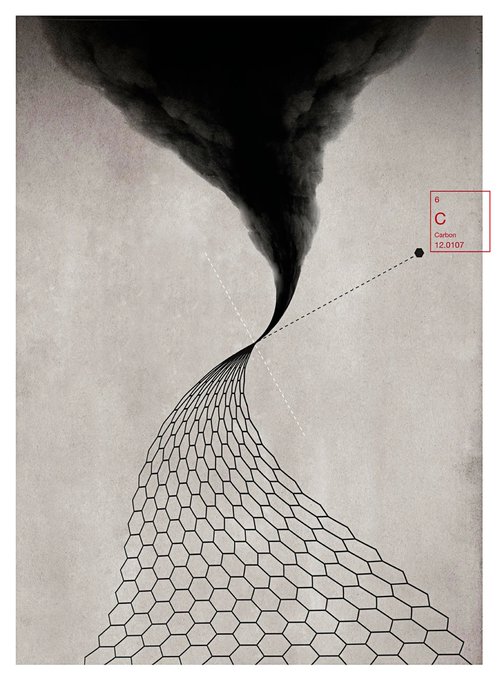
Graphene just broke a fundamental law of physics.
Its electrons just did something physicists thought was impossible. For nearly 200 years, metals have obeyed the Wiedemann-Franz law – the rule that electrical conductivity and thermal conductivity always rise and fall together.But in ultra-clean graphene, researchers at the Indian Institute of Science found the opposite. As electrical conductivity increased, thermal conductivity dropped, shattering a principle taught in every physics textbook.The key lies at the “Dirac point,” a strange electronic tipping point where graphene is neither a metal nor an insulator. Here, electrons stop behaving like individual particles. Instead, they flow collectively as a nearly perfect fluid – a state called a “Dirac fluid.”This discovery doesn’t just rewrite the rules for graphene. It provides a tabletop window into extreme physics usually reserved for black holes and high-energy colliders. Scientists say this behavior could help probe mysteries of quantum entanglement, black hole thermodynamics, and the very fabric of matter itself.["Universality in quantum critical flow of charge and heat in ultraclean graphene." Nature Physics, 2025] ...
While I can't fully understand this paper (even the abstract!), I realise that it is taking what seems a long time^ for industry and business to understand and realise the potential of graphene in industrial and technological applications. | |
Hopefully, applications will emerge, that are beneficial to all. Reducing energy use, improving efficiency, removing pollutants even more effectively, imcreasing the durability and hence lifetime of materials and products, and more. | Also, marvellous to see global collaboration at work, as science continues to asks questions. ^I could have written exploitation there, but could we put the collective and planetary first? |
My source: https://x.com/Rainmaker1973/status/1966896966316474505
Which includes a video 5m 'Quantum Critical Flow in Graphene: Charge & Heat Dynamics'
https://www.youtube.com/watch?v=LrImy9PAHGk
Posted by
Peter Jones
at
11:45 am
| PERMALINK
Labels: application , benefits , commerce , conduction , discovery , energy , graphene , heat , industry , laws , materials , paper , physical , physics , quantum mechanics , relationships , research , sciences , states , unification
In my student nursing days late 1970s there was a big-stick of motivation. It wasn't management, and yet it was. There was a stigma attached to a patient developing a pressure sore - decubitus ulcers. The NHS then had many psychogeriatric wards, but that care is now with nursing homes. Despite the best efforts some patients did, especially on the mental health infirmary, which was staffed by 'general' trained nurses too. Using aseptic technique wounds had to be packed (stage 3-4?). Some of the treatments, were not exactly 'evidence-based'. There is a historical account of previous treatments provided on 'Asylum Years'.
In the 1990s I was working on a 'book' about health, nursing and informatics (it was simpler then?). Submitting the project as a book proposal, a letter from one publisher reads: 'thanks but no thanks'. Although unsuccessful, that exercise accounts for the range of interests I still maintain today, and the scope of posts here on W2tQ. Continuing to clear and sort notes, one is for the 'book':
Abbott, P., & Payne, G. (Eds.). (1990). New Directions in the Sociology of Health (1st ed.). Routledge. https://doi.org/10.4324/9781351141727
From the above book, I've a page of notes headed "For chapter 2" drawing on a brilliant chapter 4:
Distance Decay and Information Deprivation: Health Implications for People in Rural Isolation
By George G. Giarchi
Abstract
Deprivation is frequently associated with the lives of inner city dwellers in old densely packed terraced housing, or with the residents in high-rise city slums and concrete council houses. In substantive socio-economic terms the deprivation of both the urban and the rural setting are the effects of the same structural dysfunctions, as aptly demonstrated by Townsend's 1968 classic study of poverty. On the basis of empirical studies rural deprivation affects the standards of health of many people in the countrysides of the UK particularly the most vulnerable dependent populations, such as younger children and older adults at the lower end of the social scale. The houses which are 'unfit' are damp, poorly lit, badly ventilated or lack healthy sanitation: clothes are rotten with mildew. Leschinsky's nationwide survey of rural health services indicates that centralization of health provision is a major reason for health disparities in rural areas.
I looked up the author, guessing that they were possibly still in academia, emeritus, or more likely (then, a decade or more in their career) retired by now. The search did not take long, but filled me with sadness and anger:
'A coroner has said there were "missed opportunities" to prevent the death of a hospital patient who died after developing a bedsore.
George Giacinto Giarchi, 86, died in November 2017 at Plymouth's Mount Gould Hospital after being treated for weeks at Derriford Hospital after a fall.
At Plymouth Crown Court coroner Ian Arrow said Mr Giarchi died of multi-organ failure from the pressure ulcer.
His family urged ministers to ensure hospitals had adequate staffing levels.
The former Plymouth University professor was admitted to Derriford Hospital after falling and fracturing his arm at home on 25 September 2017.
He was later transferred to Mount Gould where the lesion was first noticed.'
Pressure ulcers, known as bed sores, are injuries caused by pressure on the skin often seen in bedridden patients.'
https://www.bbc.co.uk/news/uk-england-devon-48798285
Thank you and bless you Prof. George G. Giarchi RIP.
Jones, P. (2012). Exploring several dimensions of local, global and glocal using the generic conceptual framework Hodges's model. The Journal Of Community Informatics. 8(3). Retrieved from https://www.academia.edu/3794699/Reflecting_on_the_glocal_through_the_conceptual_framework_of_Hodges_s_model
Posted by
Peter Jones
at
9:22 am
| PERMALINK
Labels: deprivation , distance , falls , geography , health , history , information , knowledge , NHS , nursing care , observation , pressure ulcer , quality of care , remote , risk assessment , rural , skin , sociology , standards , treatment
![]() |
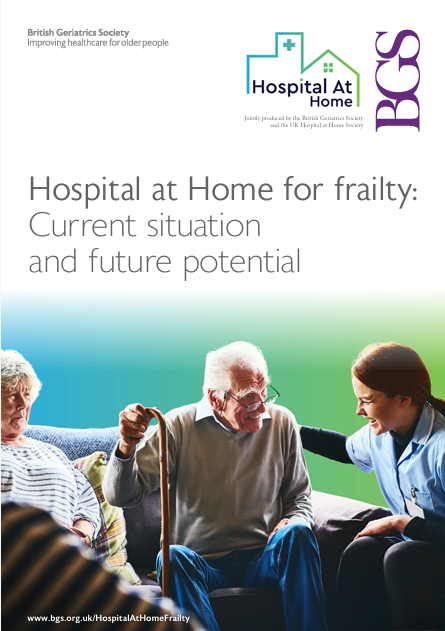
| Report: Hospital at Home for frailty |
Posted by
Peter Jones
at
7:54 pm
| PERMALINK
Labels: BGS , change , community , deconditioning , England , evidence , frailty , future , health services , hospital , hospital at home , in-patient , infections , long stay , older people , policy , report , risk , safety , study
News - this morning brought provisional acceptance of a paper, and hence a potential new citation. I greatly appreciate being involved with this project. So, fingers-crossed even at this late stage ...
Title: Toward a Roadmap for Addressing Today's Health Dilemma -The 101-Statement Consensus Report
Submitted By: Katharina C. Wirnitzer
Authors: Katharina C. Wirnitzer, Mohamad Motevalli, Derrick Tanous, Clemens Drenowatz, Maximilian Moser, Holger Cramer, Thomas Rosemann, Karl-Heinz Wagner, Andreas Michalsen, Beat Knechtle, Zlatko Fras, Merel Ritskes-Hoitinga, Adilson Marques, Nataša Fidler Mis, Fatima Cody Stanford, Christian Schubert, Nandu Goswami, Claus - Leitzmann, Per Morten Fredriksen, Gerhard Ruedl, Doris Wilflingseder, Rodrigo Antunes Lima, Christian S. Kessler, Michael Jeitler, Naim Akhtar Khan, Hassan Joulaei, Maryam Fatemi, Andrew Knight, Karl W. Kratky, Kara K Palmer, Bernd Haditsch, Bostjan Jakse, Walter Kofler, Tomas Pfeiffer, Kathya Lorena Cordova-Pozo, Patrizia Tortella, Simon Straub, Heidi Lynch, Manuel Schätzer, Anupama Krishnan, Shahnaz Fathima, Lukas Gatterer, Fabian Kriwan, Mittal Abhishek, Hemant Nandgaonkar, Shalaka Nandgaonkar, Abiola O. Adedara, Josep Maria Haro, Corina Gericke, Gaby Neumann, Aysha Akhtar, Amir Rashidlamir, Madan Thangavelu, Ngoumou Gonza, Éva Perpék, Michael Klaper, Bhaswati Bhattacharya, Werner Kirschner, Kathelijne Bessems, Peter Jones, Gregory E Peoples, Raul Bescos, Christina Duftner and Georg Johannes Seifert
Journal: Frontiers in Nutrition, section Food Policy and Economics
Research Topic: Sustainable Approaches to Public Health Via Food Policy Actions
Accepted on: 10 Sept 2025
Posted by
Peter Jones
at
4:13 pm
| PERMALINK
Labels: activism , activity , awareness , children , consensus , diet , economics , food , global health , interventions , journal , lifestyle , nutrition , policy , politics , public health , quality of life , report , research , sustainability
Posted by
Peter Jones
at
8:57 am
| PERMALINK
Labels: control , diseases , evidence , health protection , immunisation , information disorder , monitoring , objectivity , organisations , policy , politics , public health , public mental health , research , sciences , vaccination , validity , vigilance
Online event organised by British Computer Society (BCS)
*** Agenda (UK time) ***
18:30 - Meeting opens
Welcome and Introductions
18:40 - Hand-over to speaker
19:30 - Questions
20:30 - End
Scope of workshop
This is to support you in putting together your application for the FEDIP application and the workshop will focus on:
- What level you should apply for
- How to work with the Standard
- How to map your evidence
- Putting together context
- Preparing your evidence in the best way
- What the assessors will look for
Posted by
Peter Jones
at
7:44 pm
| PERMALINK
Labels: assessment , BCS , care , computing , data , digital , EHR , FEDIP , health , healthcare , informatics , interoperability , neurosymbolic AI , records , skills , software , standards , structure , webinar , workshop
To Howden's editorial it's worth highlighting that Hodges' model is situated. So, whether the 'challenge' that is faced is individual, or collective Hodges' model can help to identify the issues, problems, strengths, opportunities, threats, where we are, where we would like to be and more. Surely, reflection, critical thinking is about confiming, or regaining our perspective, correcting our orientation or improving alignment and synchronisation with others? The time this entails, whether exercised on paper, or cognitively (yes, humans thinking is still an option) this is equivalent to a time-out even if momentary. This can be critical in clinical encounters, were emotions are raised, or there is risk of escalation.
So whether the challenge is personal, lived experience, bullying, finance, physical, or mental health, simulation (fidelity, testing), ethical ...; or collective (a team) - service and organisational change, major incident, policy, clinical or management supervision, whistleblowing, public / patient engagement, complaints and challenging relationships; Hodges' model is a tool (one of many) to call upon.
It could be the context causes you to focus on one or two care (knowledge) domains. Or, there is a need to step back in order to 'see' the big picture (integrated care, risk assessment, holistic care, psychosocial view ...) - the spiritual too.
While Hodges' model is simple, please consider this: there aren't many tools that can facilitate articulation and dissemination of the 'big picture' in a form that is (imho) readily transferable and translatable.
Howden, S. (2025). Editorial: Persistent Positive Change in Challenging Times. International Journal of Practice-based Learning in Health and Social Care, 13(1), ii-iii.
Posted by
Peter Jones
at
3:36 pm
| PERMALINK
Labels: accommodation , big picture , challenges , context , editorial , formulation , Hodges' model , holistic , implementation , orientation , perspective , situation , situational awareness , transferability , translation , vision
'What then is the common theme for this issue? It is the persistence of these authors, practitioners and academics to be curious about what could be better and engage with scholarly enquiry to advance practice-based learning.'
The editorial introduces the content of -
International Journal of Practice-based Learning in Health and Social Care Vol. 13 No 1 August 2025
https://publications.coventry.ac.uk/index.php/pblh/issue/view/96
Howden, S. (2025). Editorial: Persistent Positive Change in Challenging Times. International Journal of Practice-based Learning in Health and Social Care, 13(1), ii-iii.
- which I have mapped to Hodges' model (with some additions):
restlessness (- in mind) (curiosity) patient's lived experiences* intra- inter-personal pastoral support engagement - enjoyment workshop, case study ... psycho- | restless legs syndrome remote, rural, urban community-based :: clinical settings (infra-) structures processes - procedures simulation, major incident forensic, podcasts |
-social factors interdisciplinary (integrated?) working social structures (This is how we 'do it' here) | 'Institutional? “positive restlessness"' *clinical subjective exposure (determinants of health) organisational (Inst.) structures |
The final paper is on workshops and continuing professional development:
Kenny, B., Bourne, E., & Li, J. (2025). Knowledge Translation from Clinical Education Workshop to Workplace. International Journal of Practice-based Learning in Health and Social Care, 13(1), 56-76. https://doi.org/10.18552/ijpblhsc.v13i1.1084
The editorial notes:
'The authors integrate goal setting as part of a development session on supervision skills and follow up survey, to ask what happened next in relation to their goals and practice. When resources are scarce and CPD is so critical, these ideas about enhancing workshop effectiveness and feeding participants’ experiences back into sessions has never been more important.'
When presenting Hodges' model at events I will often tick for a workshop. This reflects former work experience with student nurses, OTs, social workers and other learners: when a workshop could cover the some 2 hours with a break in the middle. Hodges model is flexible, adaptable and in a workshop can be applied on an individual basis, or small group work - breakout sessions [this does not necessarily mean the participants are bored :-)]. A wide range of learning and teaching approaches can be considered.
Kenny, Bourne & Li utilise role play, case studies for example, their approach and paper framed by the KTA Framework:
'Workshop design was underpinned by the Knowledge to Action (KTA) Framework. KTA acknowledges the importance of social interaction in the adaptation of research evidence, taking account of local context and culture (Graham & Tetroe, 2011).' p.58. ...
'The KTA framework comprises two major components: knowledge creation and an action cycle. During the workshop, knowledge creation was supported by CEs identifying factors that contribute to challenging clinical education situations and reflecting upon the impact of these factors in their workplace contexts. During Part 1 of the workshop, attendees focussed on understanding challenging situations. Each group was assigned a case study that included a complex mix of student, educator and workplace factors thatinteracted to create a challenging learning situation.' p.58. ...
'A focus on active learning within the workshop prepared CEs for translation of their knowledge of supervisory practices when they returned to their workplaces. In Part 2 of the workshop, CEs worked through a structured process for managing placement challenges by engaging in peer learning role play activities. The process was adapted to address challenges that included mental health issues in workplace learning, developing professionalism, providing inclusive learning environments, and facilitating clinicalreasoning and reflection.' p.58.
clinical educators (CEs)
Reading KB&L: I wonder if Hodges' model provides a more 'accessible' map - as an output / summary, evidence of learning and teaching activity? 'Filtering' would be essential of course, as to what exactly is mapped. While I've no evidence (in theory), Hodges' model in being (imho) accessible, might also be primed for transferability (after all what does transferable mean?^); by being recognised more consistently across larger groups, and (as per the conclusion) other individuals, and broader educational contexts.
Currently, working with three co-authors on a draft paper revision (dental health and policy frameworks) for a journal, I noticed our leading author refers to 'translational'. In the paper below, (cited by KB&I):
Graham, Ian D. PhD1; Logan, Jo RN, PhD2; Harrison, Margaret B. RN, PhD3; Straus, Sharon E. MD, MSc4; Tetroe, Jacqueline MA5; Caswell, Wenda RN, MEd2; Robinson, Nicole6. Lost in knowledge translation: Time for a map?. Journal of Continuing Education in the Health Professions 26(1):p 13-24, Winter 2006. | DOI: 10.1002/chp.47
Graham et al's, Table 1 Definitions of Terms, is (still) really helpful.
See also on W2tQ: 'reflect' : 'holistic' : 'map' : 'situation'
^Translation; transfer - dual, two-way, inversion?
Posted by
Peter Jones
at
5:14 pm
| PERMALINK
Labels: change , community , editorial , Hodges' model , interpersonal , journal , lived experience , map , organisation , practice , psychosocial , reflect , research , restless , simulation , situation , social care , structures , transferability , translation
Born in Liverpool, UK.
Community Mental Health Nurse NHS, Part-time Lecturer,
Researcher Nursing & Technology Enhanced Learning
Registered Nurse - Mental Health & General
Community Psychiatric Nursing (Cert.) MMU
PG Cert. Ed.
BA(Joint Hons.) Computing and Philosophy - BIHE - Bolton
PG(Dip.) Collaboration on Psychosocial Education [COPE] Univ. Man.
MRES. e-Research and Technology Enhanced Learning, Lancaster Univ.
Live and work in NW England - seeking a global perspective.
The views expressed on W2tQ are entirely my own, unless stated otherwise.
Comments are disabled.
If you would like to get in touch please e-mail me at h2cmng AT yahoo.co.uk
orcid.org/0000-0002-0192-8965